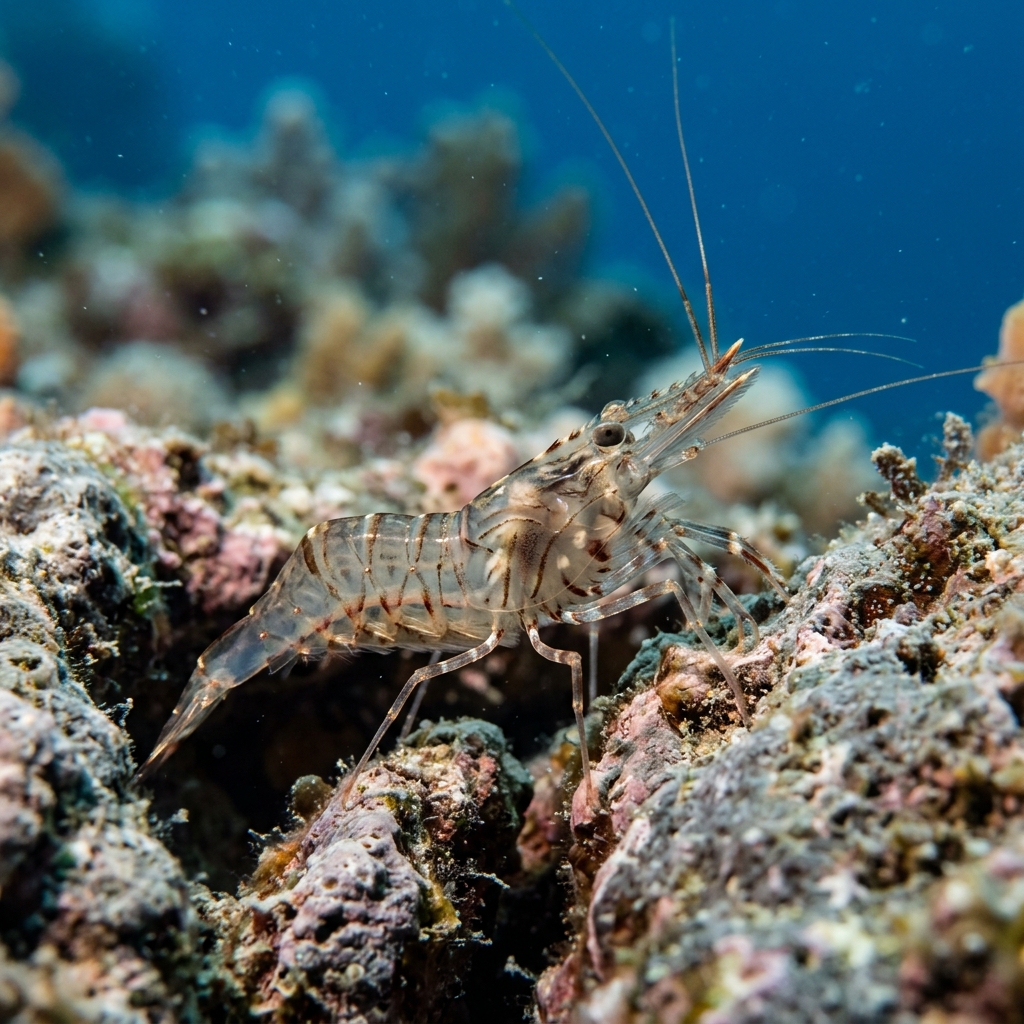
Palaemon elegans
Spot rockpool prawns year-round from the French Riviera to Croatia's Kvarner Gulf. Here's how to identify them and where divers log them most often.
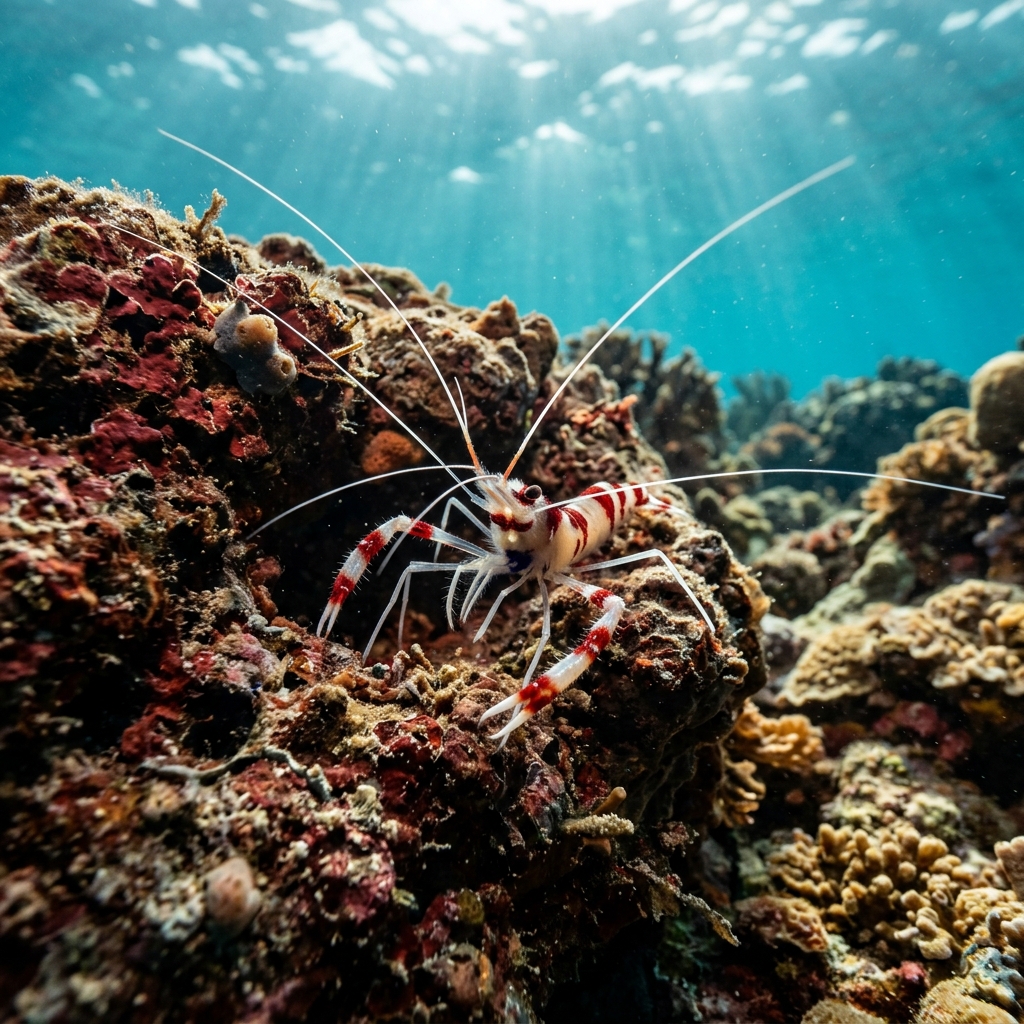
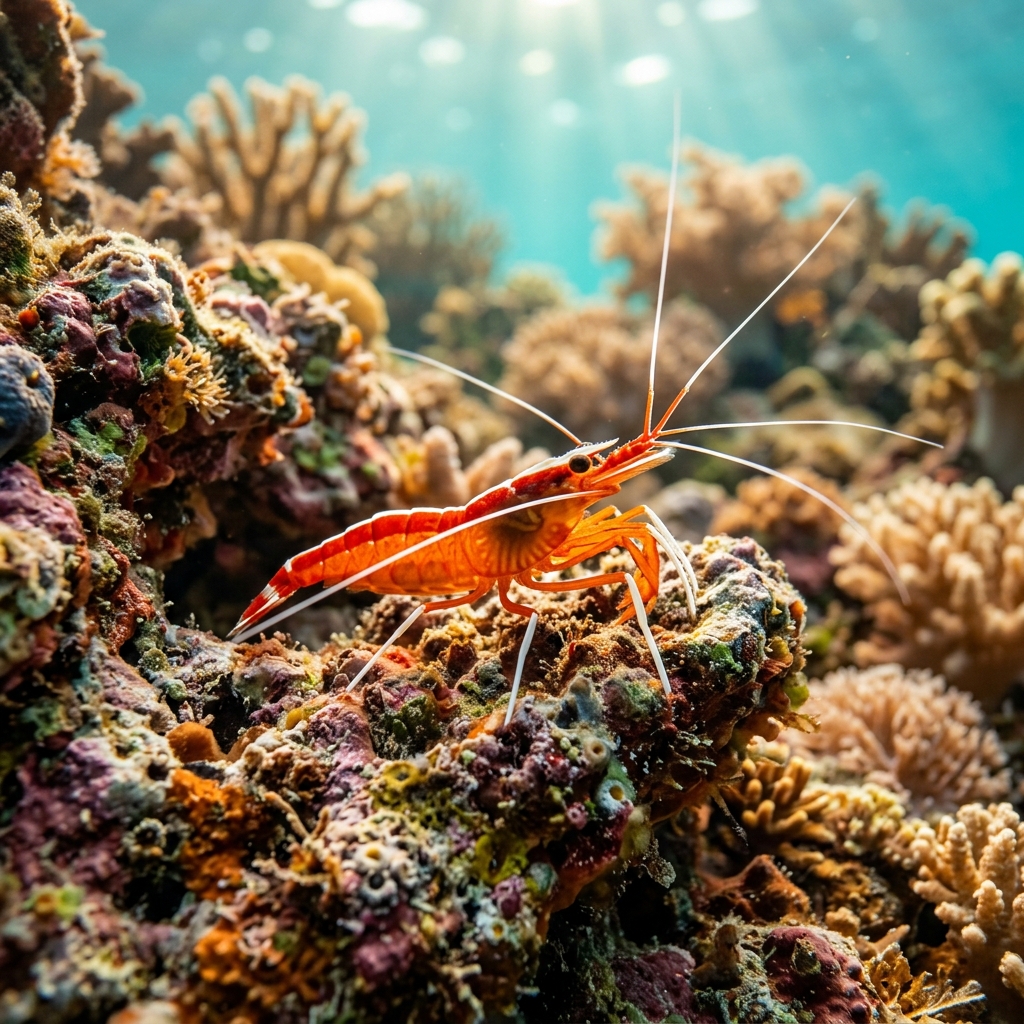
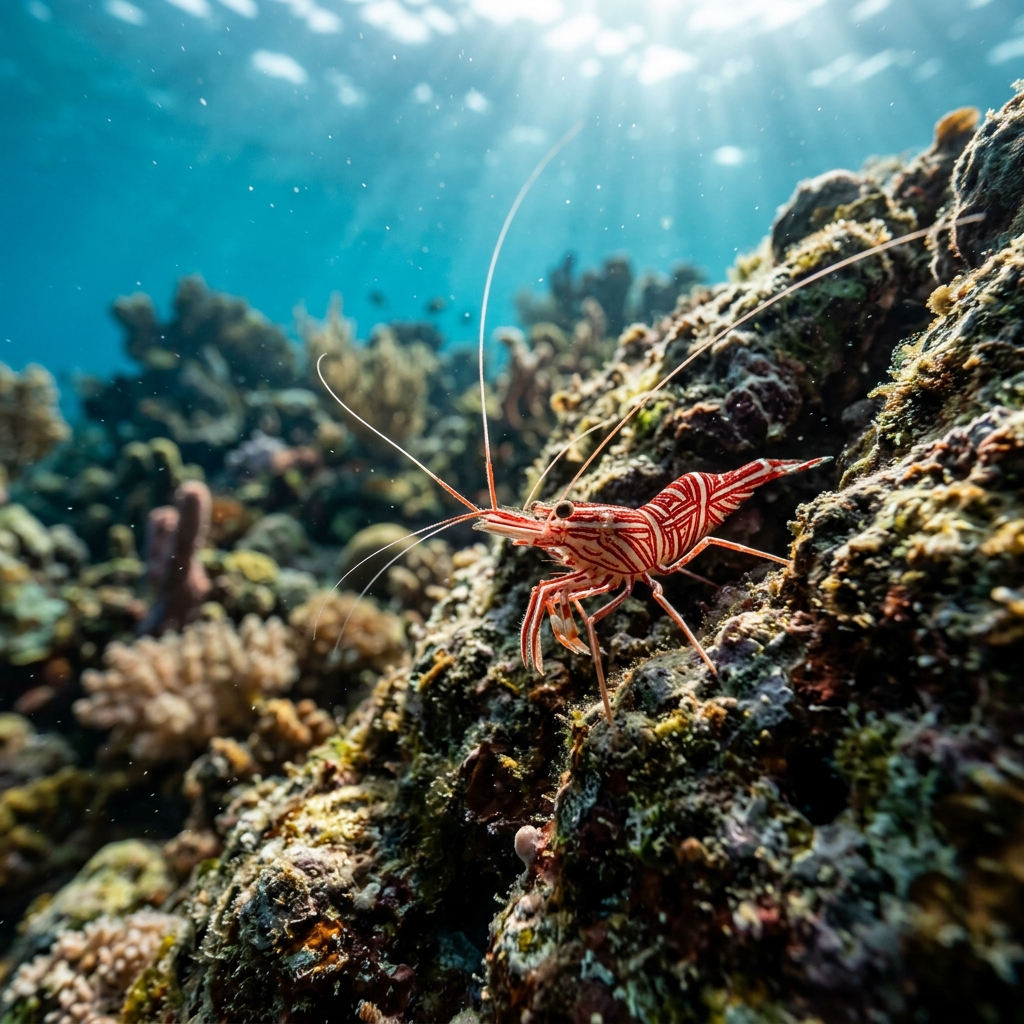
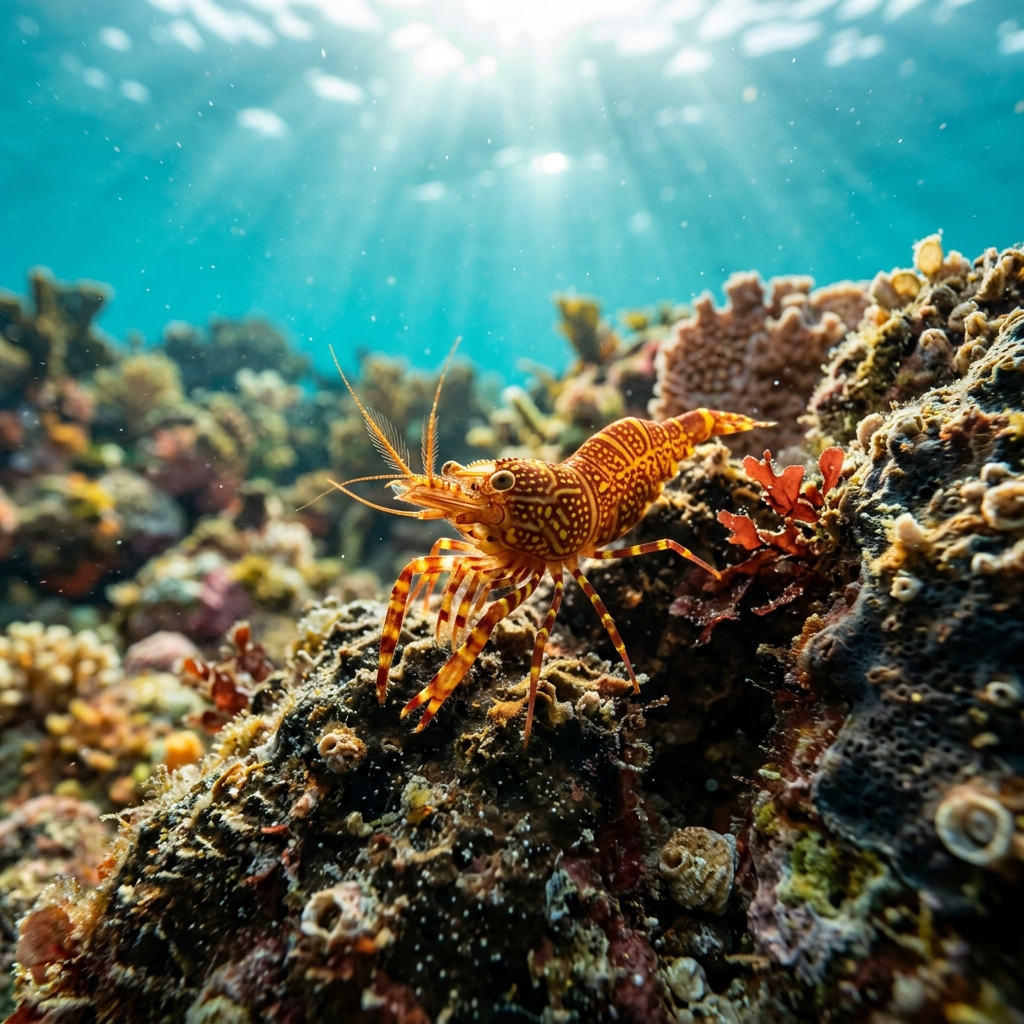
At around 4 cm, this is a slender, largely transparent prawn with a faint pattern of brown or greenish bands across the abdomen that helps it blend into rocky, weedy backgrounds. The long, paired antennae often exceed the body length and are the first thing you notice as the animal darts between rocks. Look for the slightly upturned rostrum (the pointed spike projecting forward from the head), which is a reliable field mark. Under a torch, the eyes appear dark and prominent against the see-through body.
Rockpool prawns are skittish by default, retreating fast into crevices or under rock ledges the moment they sense movement. Stay still for a minute or two and they tend to relax, resuming their constant, restless foraging, picking at algae, detritus, and small invertebrates with their small front claws. They are most active during the day and often gather in loose groups where food and shelter are plentiful, so finding one usually means others are close by.
Like many palaemonid shrimps, rockpool prawns can act as opportunistic cleaners, occasionally picking parasites or debris from fish. This behaviour is informal rather than the dedicated cleaning-station routine of true cleaner shrimps, but patient observers near rocky reefs do record it.
Present year-round with no concentrated season, which makes sense given the species tolerates water temperatures from below 2 °C to around 23 °C, covering everything from UK winter rockpools to warm Mediterranean summers.
Most commonly logged across European Atlantic and Mediterranean coasts, with France topping the list, particularly the French Riviera, Provence, and Brittany and Normandy. Spain, the United Kingdom, Croatia's Istria and Kvarner Gulf regions, and Portugal's Algarve all have strong representation. Sightings extend into the Canary Islands and Germany's North Sea coast, reflecting a wide but cool-water-focused range.
Mapping where Rockpool Prawn is logged…
They are most reliably logged along European Atlantic and Mediterranean coasts. France leads by number of sites, especially the French Riviera and Brittany. Croatia, Spain, Portugal's Algarve, and the United Kingdom are also strong options. The species has a broad coastal distribution, so it turns up across temperate European waters.
Year-round. Diver records show no concentrated season, and the species is active across a wide temperature range from near-freezing to about 23 °C. You can find them in winter in UK rockpools and in summer on Croatian reef walls.
Look for a small, mostly transparent prawn around 4 cm long with faint brown or greenish abdominal banding and a noticeably long pair of antennae. The upturned rostrum projecting from the head is a helpful feature at close range. Under a dive torch, the dark eyes and banded pattern stand out against the clear body.
Typically around 4 cm body length. They are small animals, roughly the size of a thumbnail, so a macro lens or dioptre makes photography much more rewarding.
Mostly uncommon rather than common at the sites where divers log them, with only a minority of sites rating them as easy to find. Slow, careful searching of rocky crevices, weed beds, and shallow rubble zones gives you the best chance. Snorkellers in rockpools often see them more easily than open-water divers.
Site and sighting data is aggregated from diver logs, iNaturalist and GBIF. For taxonomy and conservation status:
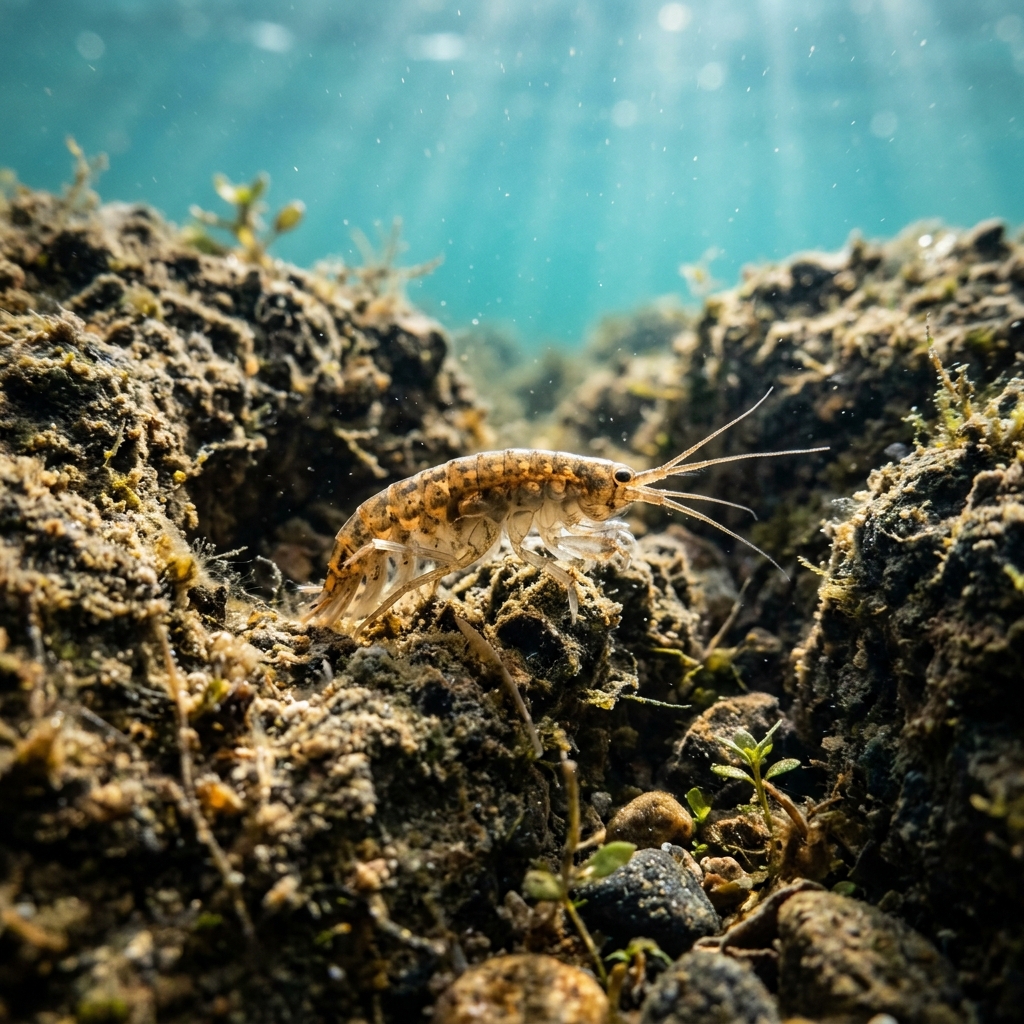
Freshwater Shrimp
2,168 sites