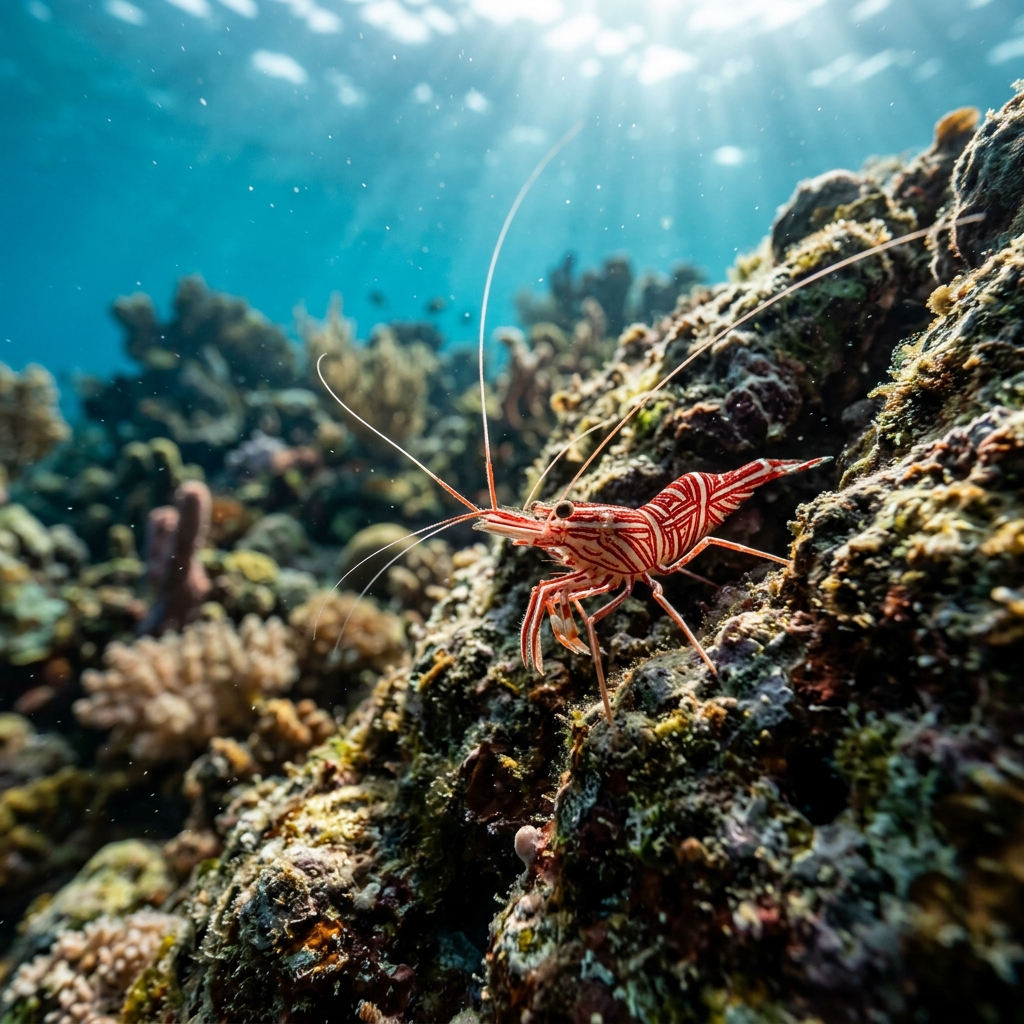
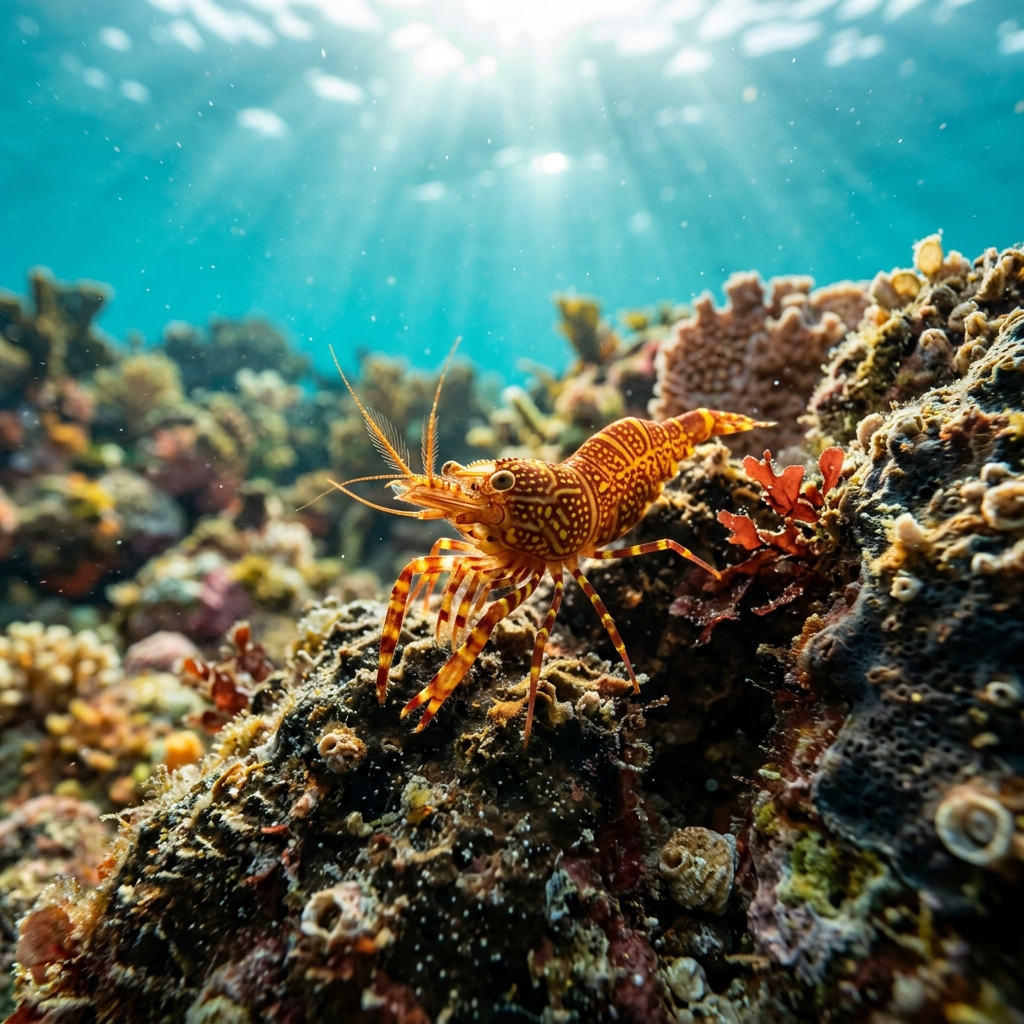
Palaemon spp.
Common but easy to miss: transparent shrimp turning up year-round in Zeeland's eelgrass and along Brittany's rocky shores.
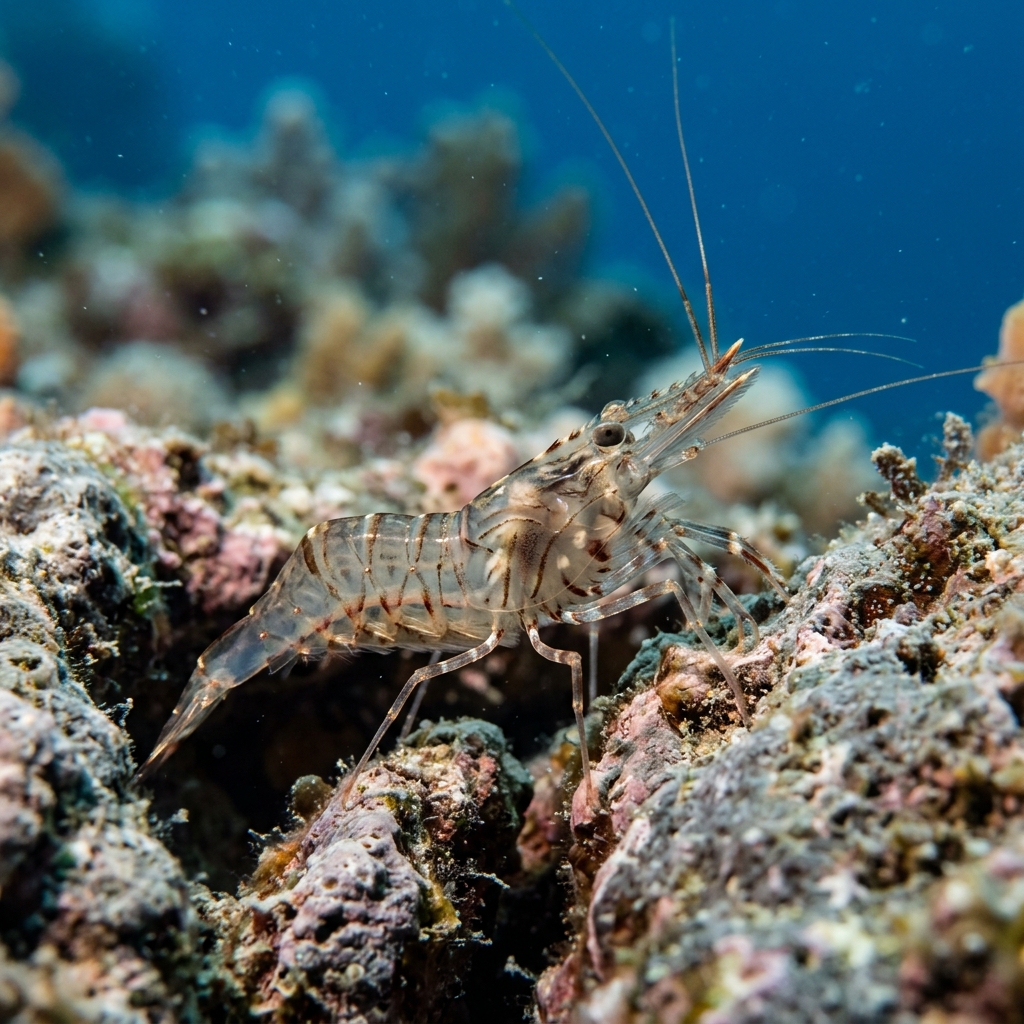
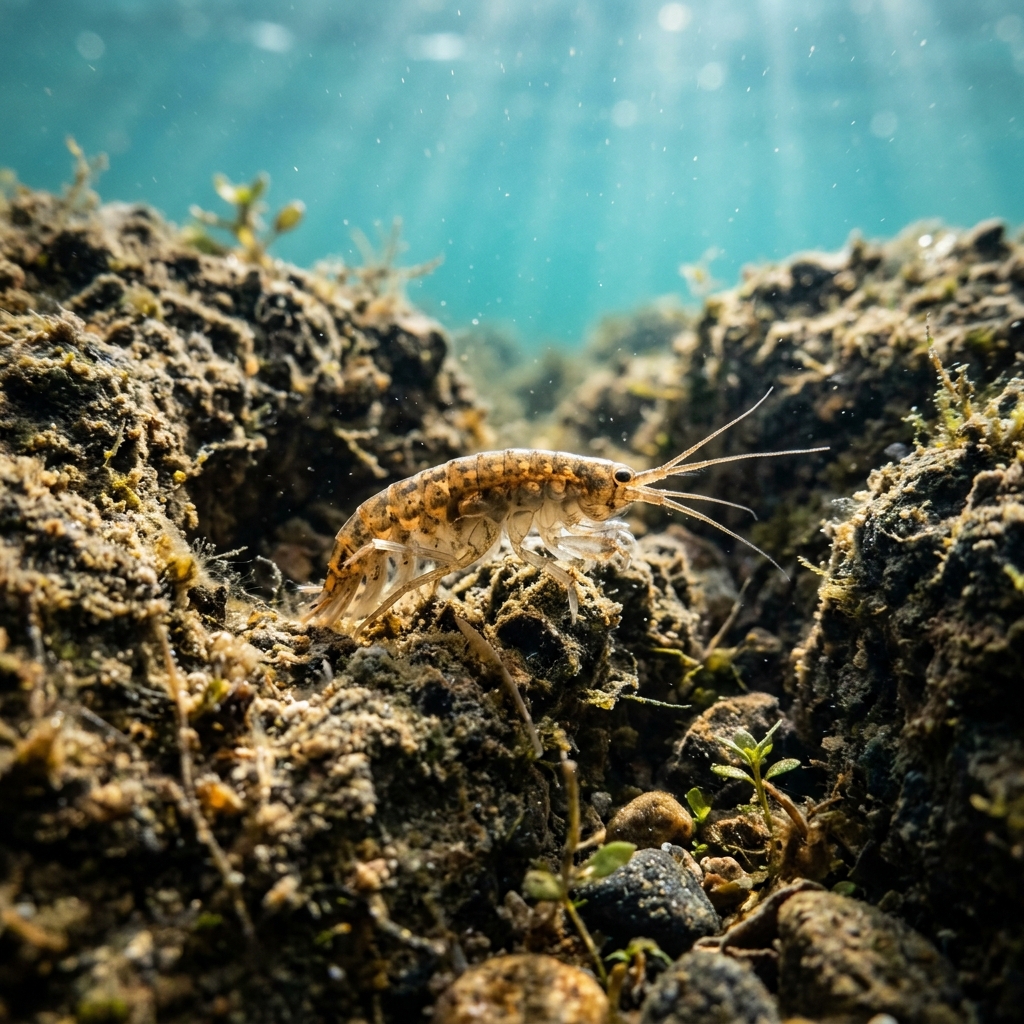
Look for a near see-through body with faint brown or olive speckling that lets you spot the internal organs and eggs through the shell. Body shape is a classic slender shrimp form with a laterally flattened tail (abdomen) and long antennae reaching well past the rostrum. Size varies across the genus but most divers encounter individuals a few centimetres long, often noticed only when they move or when a torch beam catches their eyes. Because they blend so well with sand, weed and rubble, the giveaway is usually a quick tail-flick rather than colour.
Expect to find them tucked among seagrass, algae, rocky crevices and rubble rather than out in the open, often holding still against a background they match closely. They tend to be unbothered by a slow-moving diver or snorkeller, relying on their transparency to stay unnoticed rather than fleeing outright, though a sudden light or hand will send them darting backward with a flick of the tail. Most sightings come from shallow, sheltered water where a careful look at weed beds and under ledges pays off.
Their see-through bodies are a real camouflage strategy in open, well-lit shallow water where solid colour would stand out, letting light pass through rather than reflect off them.
There is no clear seasonal peak in the data, and with a temperature range spanning 9.3 to 29.0 C, glass shrimp are logged across cool and warm water alike, so plan on a year-round, if uncommon, sighting rather than a specific season.
This is a genus most reliably found in temperate and coastal waters rather than tropical reefs, with strong logs from the Carolinas in the United States, Zeeland in the Netherlands, Brittany in France, and along the coasts of England. It also turns up consistently in Queensland and Western Australia, and across much of coastal Italy, Greece and Spain, making it one of the more geographically widespread shrimp groups divers and snorkellers log.
Mapping where Glass Shrimp is logged…
They are most consistently logged in Zeeland in the Netherlands, Brittany in France, the Carolinas in the United States, and coastal England, with reliable sightings also reported in Queensland and Western Australia.
There is no strong seasonal pattern in the sighting data, and their wide temperature tolerance from around 9 to 29 C means they can be found in coastal habitats throughout the year.
Look for a slender, mostly transparent body with faint speckling, long antennae, and a flattened tail typical of shrimp. They are usually spotted by a sudden movement against seagrass, rubble or rock rather than by colour.
Exact sizes vary across the genus, but most individuals logged by divers and snorkellers are small, only a few centimetres long, which along with their transparency makes them easy to overlook.
Their transparent bodies act as camouflage in bright, shallow water, letting light pass through instead of casting a solid, visible outline against sand, weed or rock.
Site and sighting data is aggregated from diver logs, iNaturalist and GBIF. For taxonomy and conservation status:
Freshwater Shrimp
2,168 sites