Leviprora inops
Sand-coloured and croc-headed, this flathead lies still on the seabed across Western Australia and South Australia in cool 15 to 22C water.
Safety warning
Carries venomous spines along the dorsal fin, and because it lies still and camouflaged on the bottom it's easy to miss until a hand or fin is right on top of it. Keep an eye on where you place your hands and knees on sandy bottoms in its range, and avoid touching or handling any flathead-shaped fish you spot resting on the seabed.
If you're stung
Venomous spinesGeneral first-aid guidance, not a substitute for professional medical care. In an emergency, call your local emergency number.
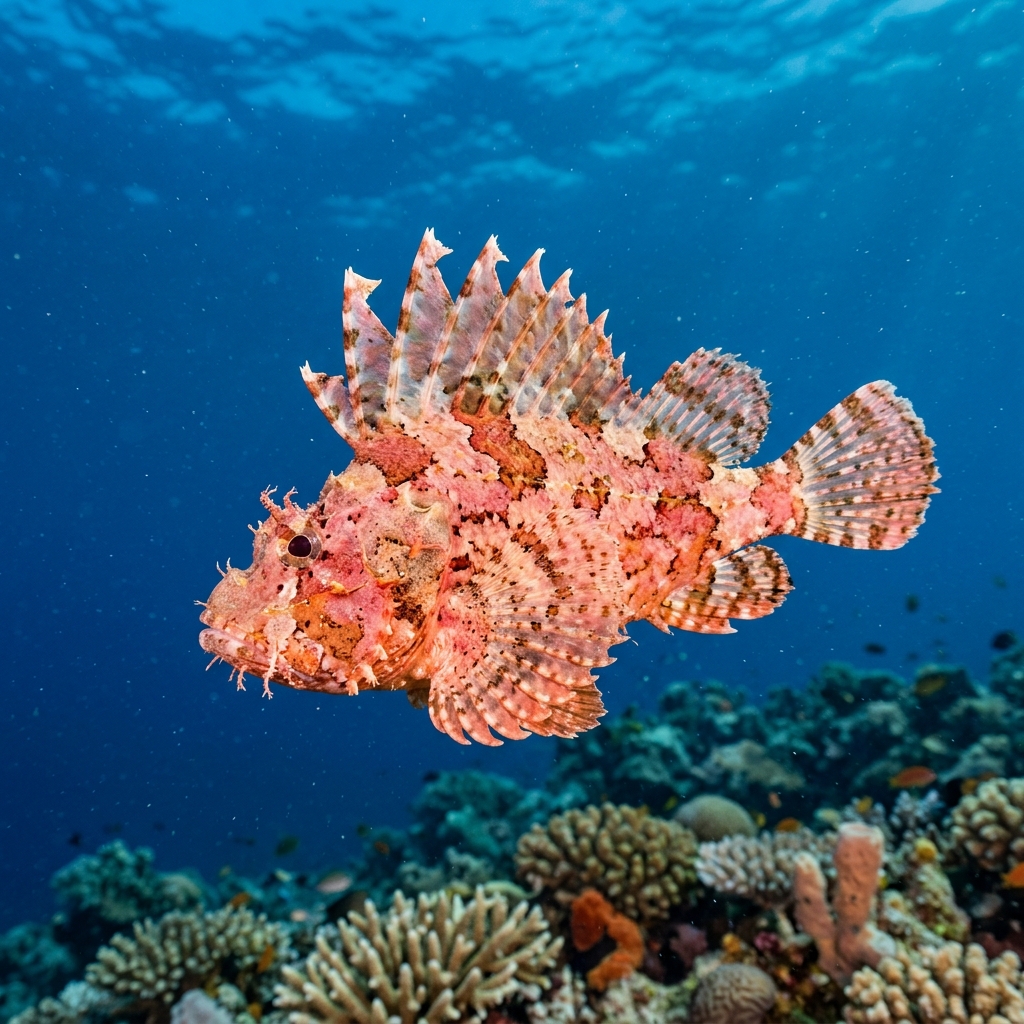
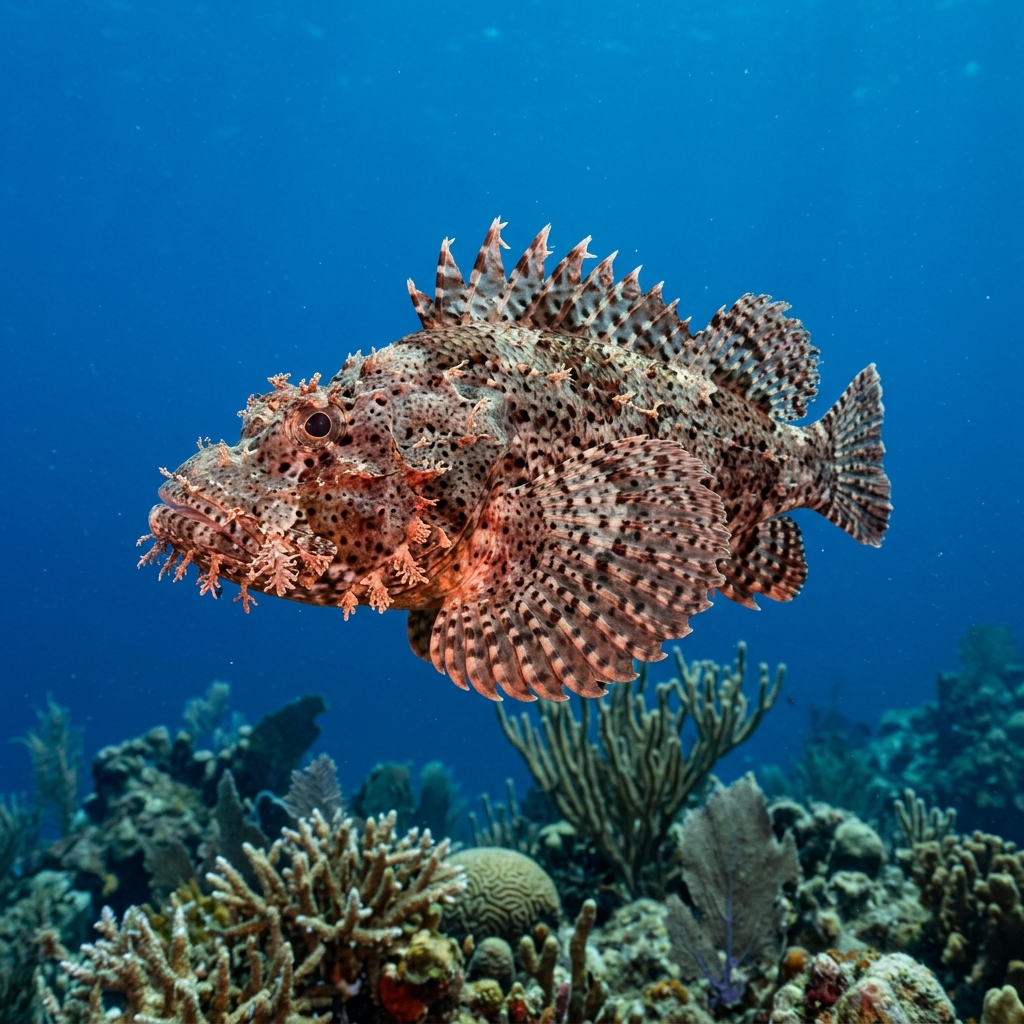
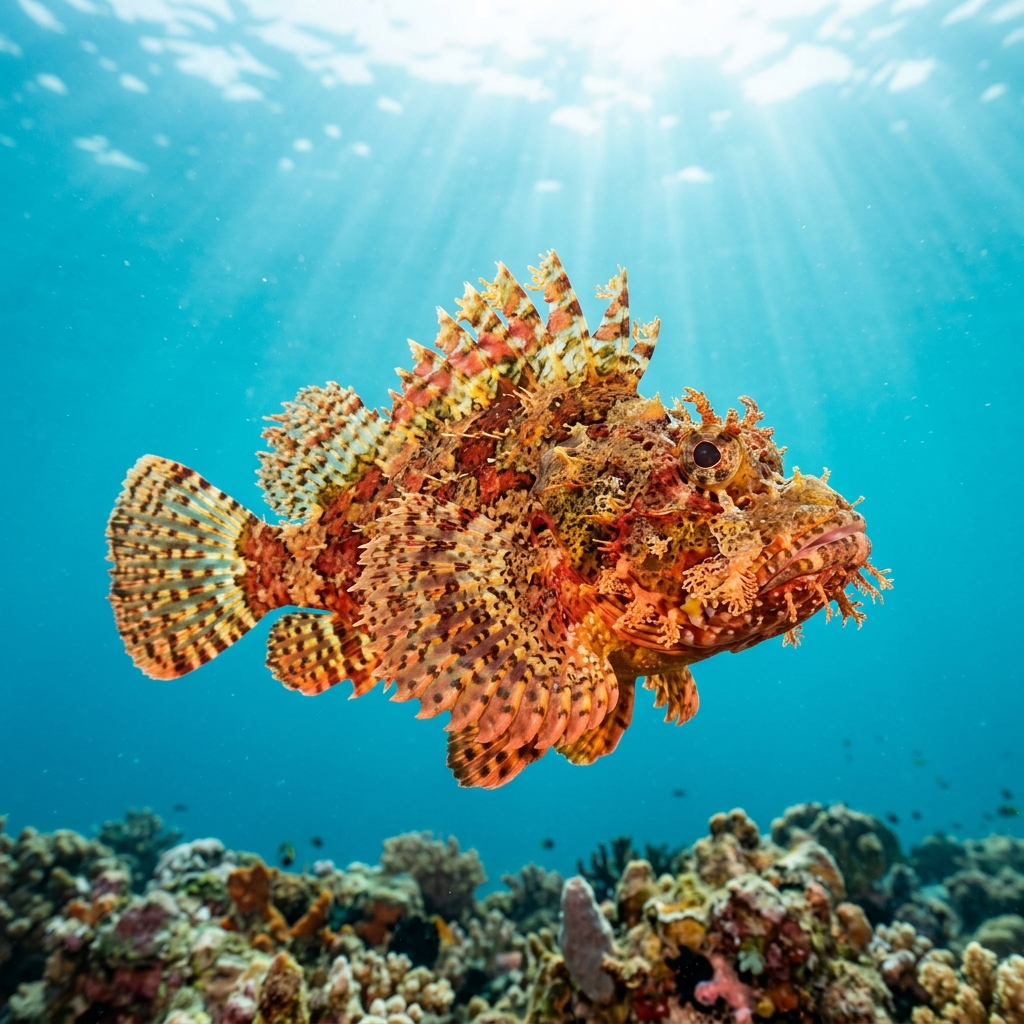
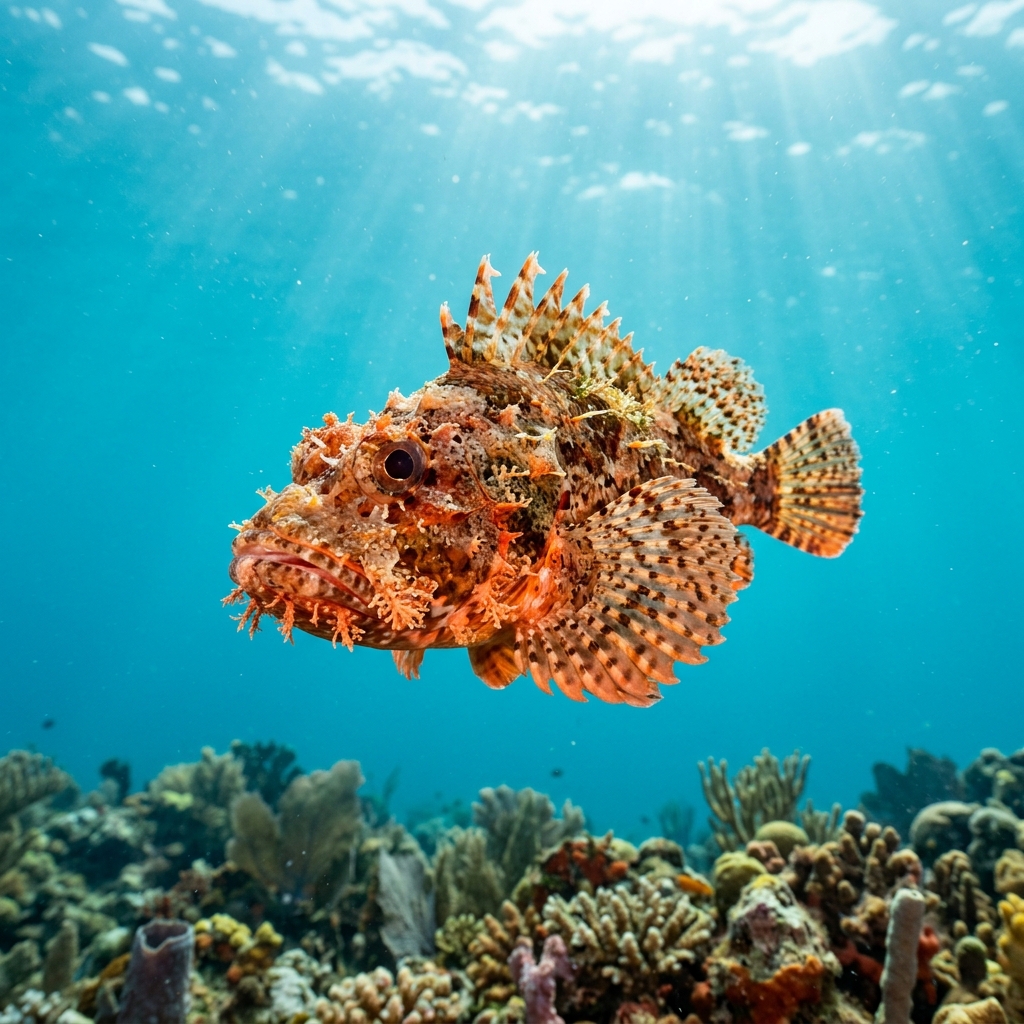
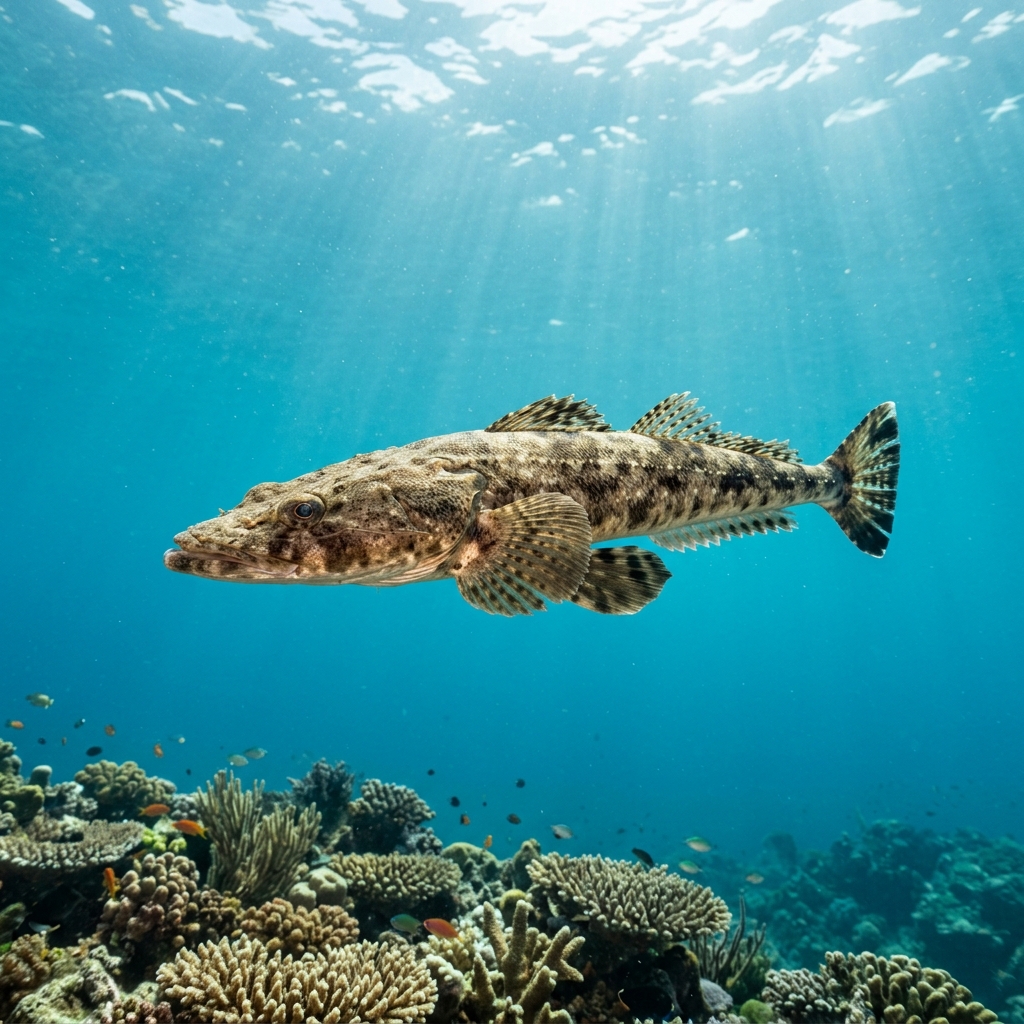
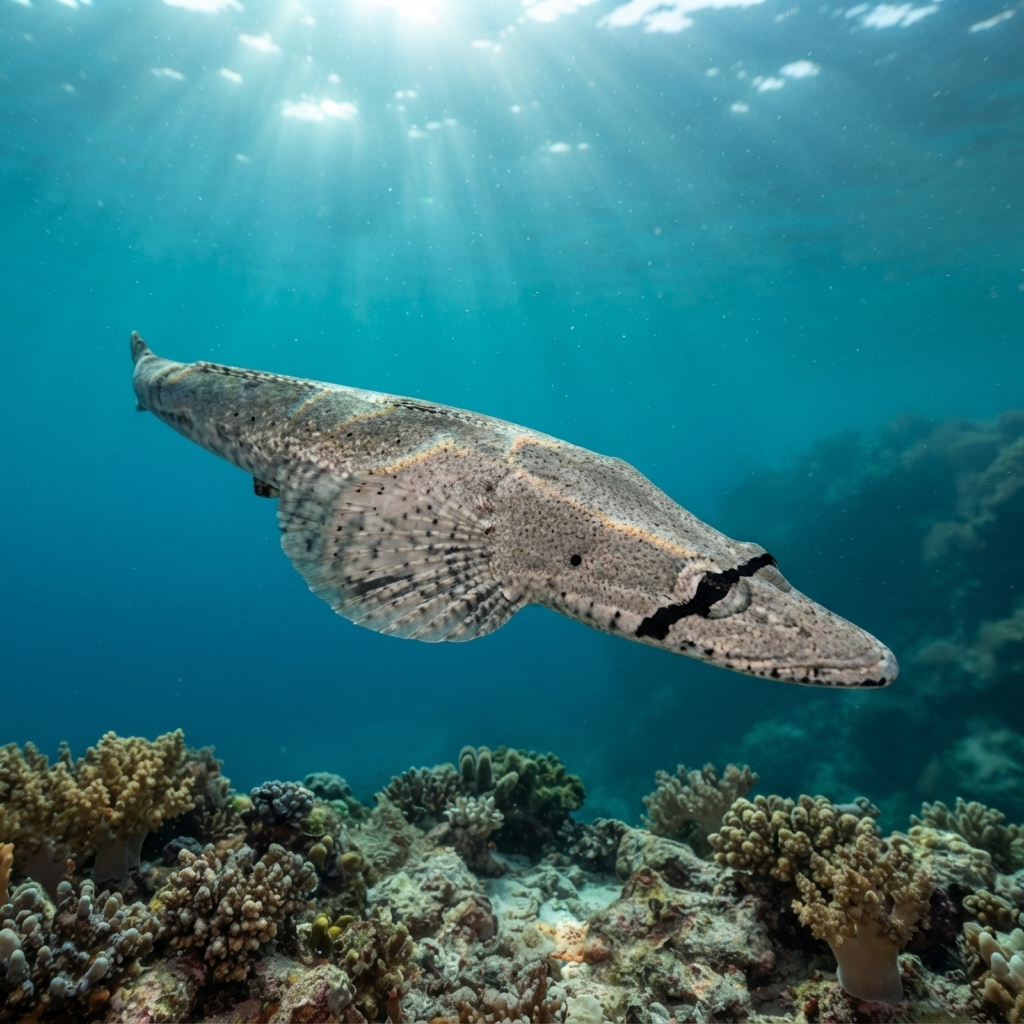
Grows to around 36cm and lies flat on the sand rather than swimming in open water, which is where the name comes from: a long, flattened, crocodile-like head with eyes set on top so it can watch for prey while staying almost buried. Body colour is mottled brown, grey and sandy tones that break up its outline against the seabed. Look for the low, wide head profile and the way it holds dead still until you are almost on top of it.
Spends most of its time motionless on sand or rubble, half-buried and relying on camouflage rather than flight to avoid attention. Divers typically find it during a slow scan of the bottom rather than mid-water, and it tends to stay put unless disturbed at close range, at which point it can flick off in a short burst before settling again nearby.
That flattened, upward-facing eye position is a classic ambush-predator adaptation, letting it stay buried in sand with just its eyes and head profile exposed while it waits for small fish and crustaceans to pass overhead.
Sighting data doesn't show a clear season, and observed water temperatures range from 15.3 to 21.9C, so it appears to be a year-round resident of these cooler southern Australian waters rather than a seasonal visitor.
Reef neighbours a diver could mistake it for. Use the identification notes above to tell them apart.
Logged almost exclusively in Australia, with Western Australia the strongest region by far and South Australia a solid second. Divers find it on sand and rubble patches at sites across both states, most often as an uncommon rather than everyday sighting.
Mapping where Crocodile Flathead is logged…
Almost all logged sightings come from Australia, with Western Australia the strongest region and South Australia a reliable second. Look for it on sandy or rubble seabeds rather than reef structure.
There's no strong seasonal pattern in the sighting data, and it's found across a 15.3 to 21.9C temperature range, suggesting it can turn up year-round in southern Australian waters.
Yes, it has venomous dorsal spines and relies on camouflage to sit unnoticed on sandy bottoms. The main risk is accidentally putting a hand or knee down on one, so watch your placement on sand.
Look for a flattened, crocodile-shaped head with eyes on top, a mottled brown and grey body up to about 36cm, and a habit of lying motionless on sand rather than swimming openly.
They typically reach around 36cm in length, with a low, elongated body built for lying flush against the seabed rather than height or bulk.
Its eyes sit on top of a flattened head, letting it stay almost fully buried in sand while still watching for prey overhead, a classic ambush hunting adaptation shared with other flatheads.
Site and sighting data is aggregated from diver logs, iNaturalist and GBIF. For taxonomy and conservation status:
Madeira Rockfish
2,773 sites