Haemulon melanurum
Look for a silvery grunt with a dark tail patch on reefs around the Yucatán Peninsula, where it's a reliable year-round sighting in warm water.
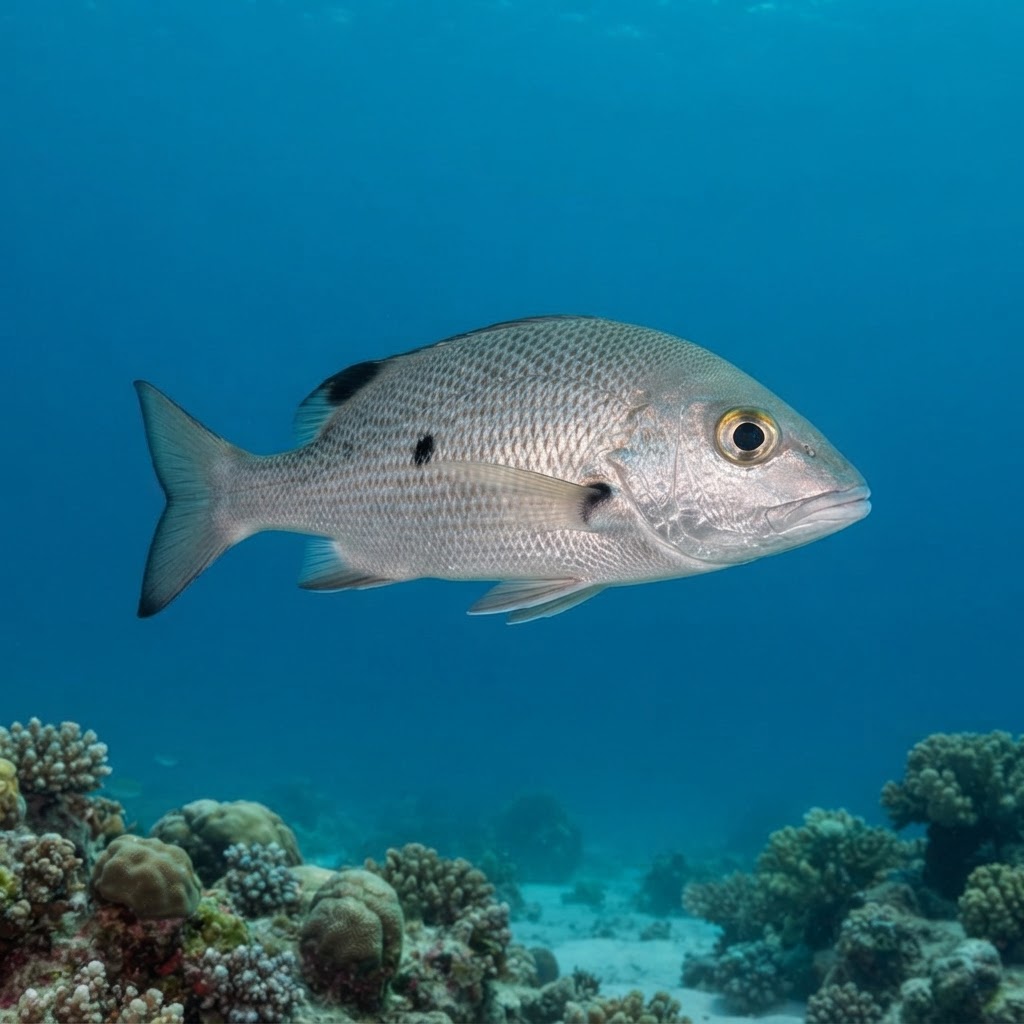
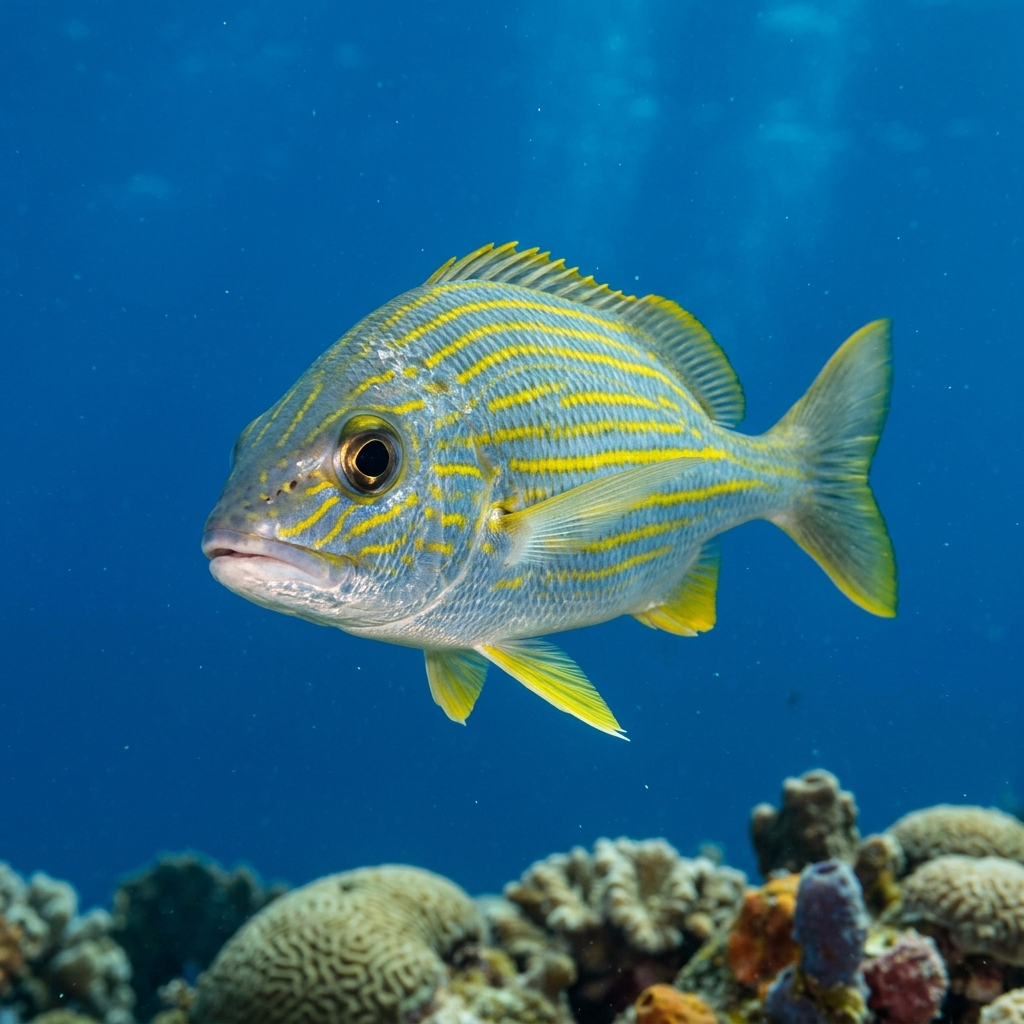
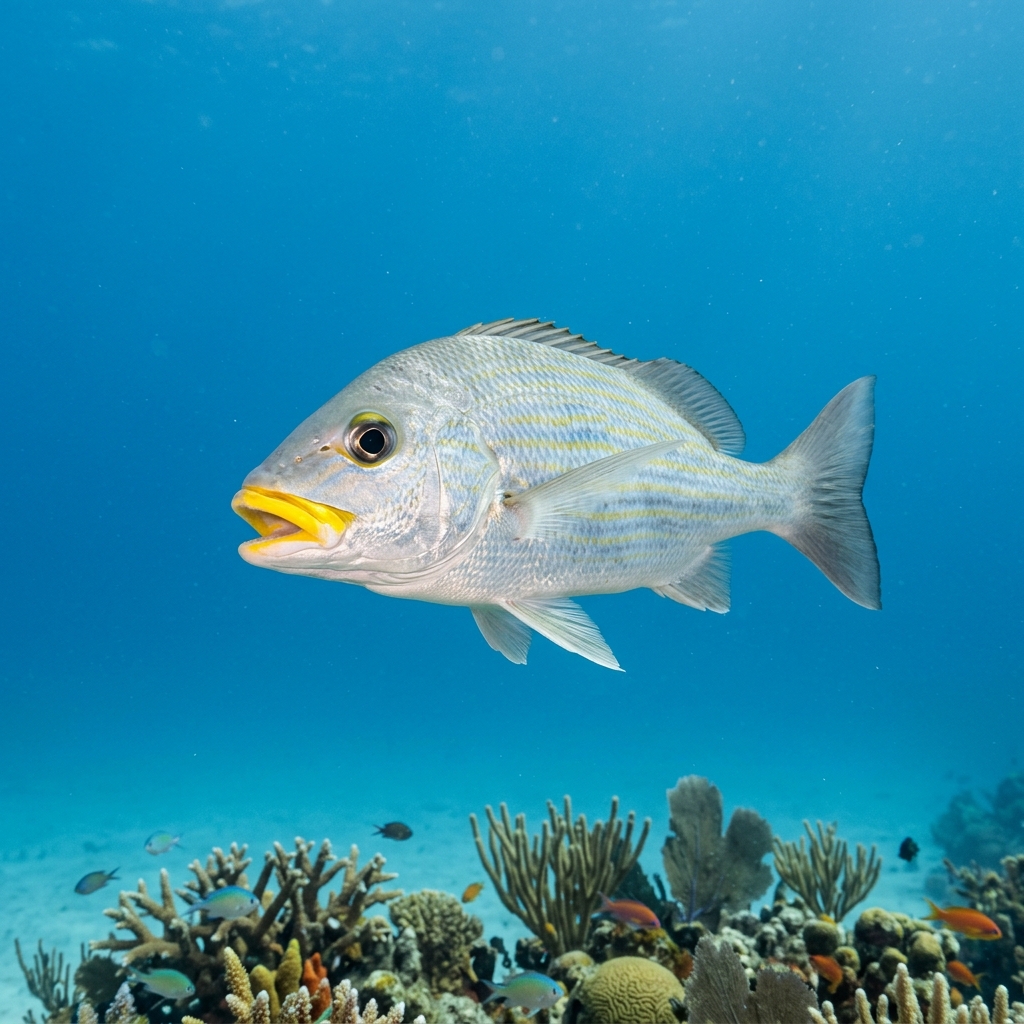
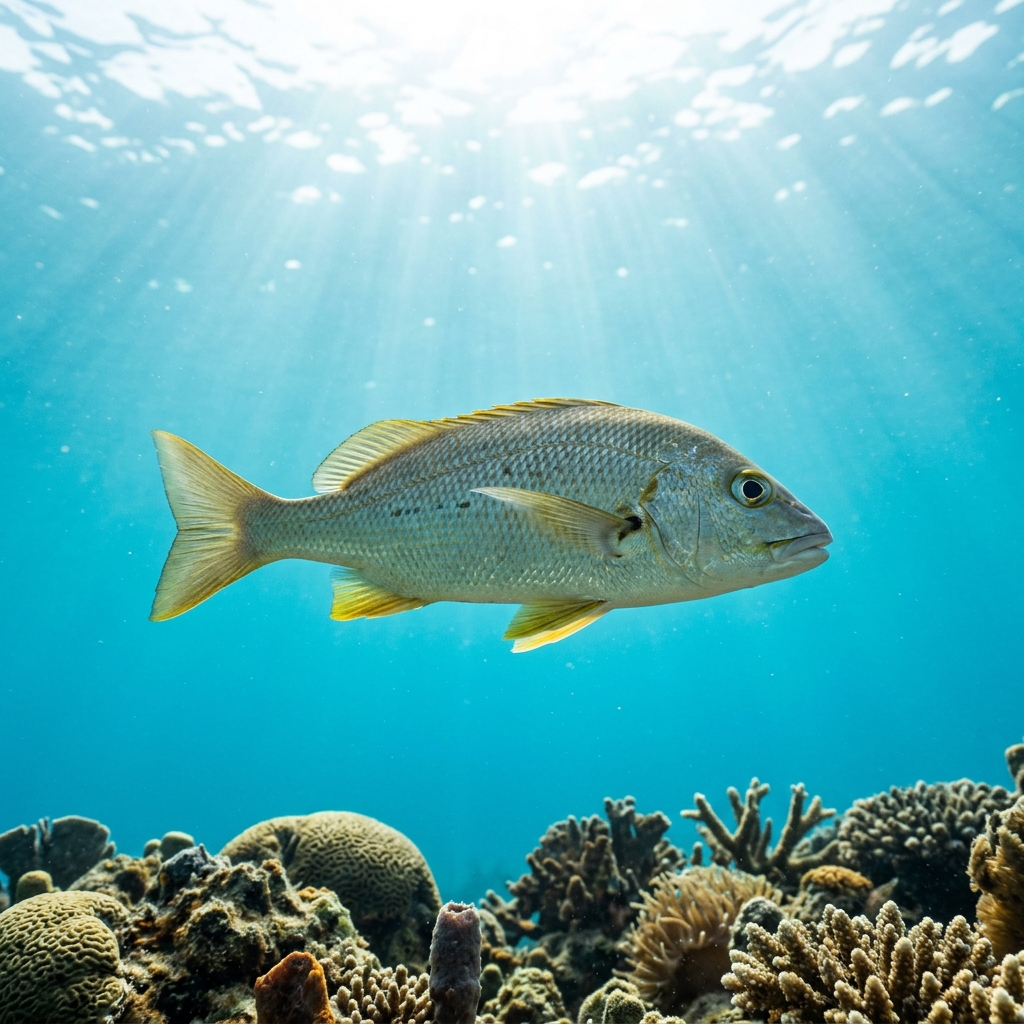
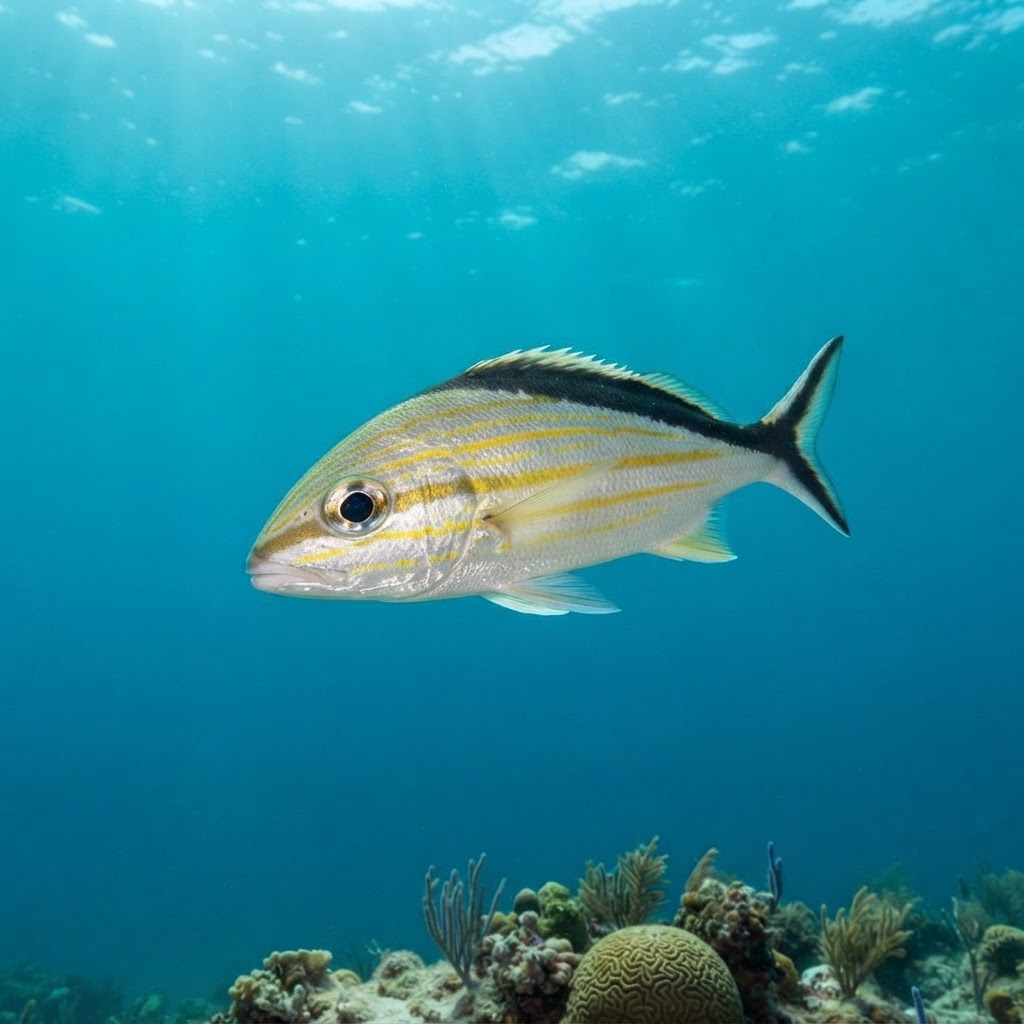
Look for a slim, silvery-bodied fish around 23 cm with a distinct dark, almost black patch straddling the base of the tail, a mark that gives the species its name and is the easiest field cue underwater. Faint yellowish stripes run along the upper body, fading toward a pale belly, and the snout is short and blunt compared to other grunts. It usually holds a slightly humped posture near the reef rather than swimming in open water.
Divers most often find cottonwick hanging in loose groups near reef structure by day, drifting close to ledges and coral heads rather than out over sand. They tend to hold position as you approach and peel away slowly rather than bolting, making them an easy, unhurried subject for a photo. Like other grunts, they're thought to feed more actively after dark, so daytime sightings usually show fish resting or schooling rather than actively hunting.
The name comes from that dark saddle-shaped patch at the tail base, which stays visible even as the rest of the body's stripe pattern fades with light and depth, so it's the one mark worth memorising.
No strong seasonal pattern shows up in the data, so treat this as a year-round sighting on Caribbean and Gulf reefs. Observed water temperatures run from 23.7 to 28.0 C, comfortably within the range these reefs hold most months.
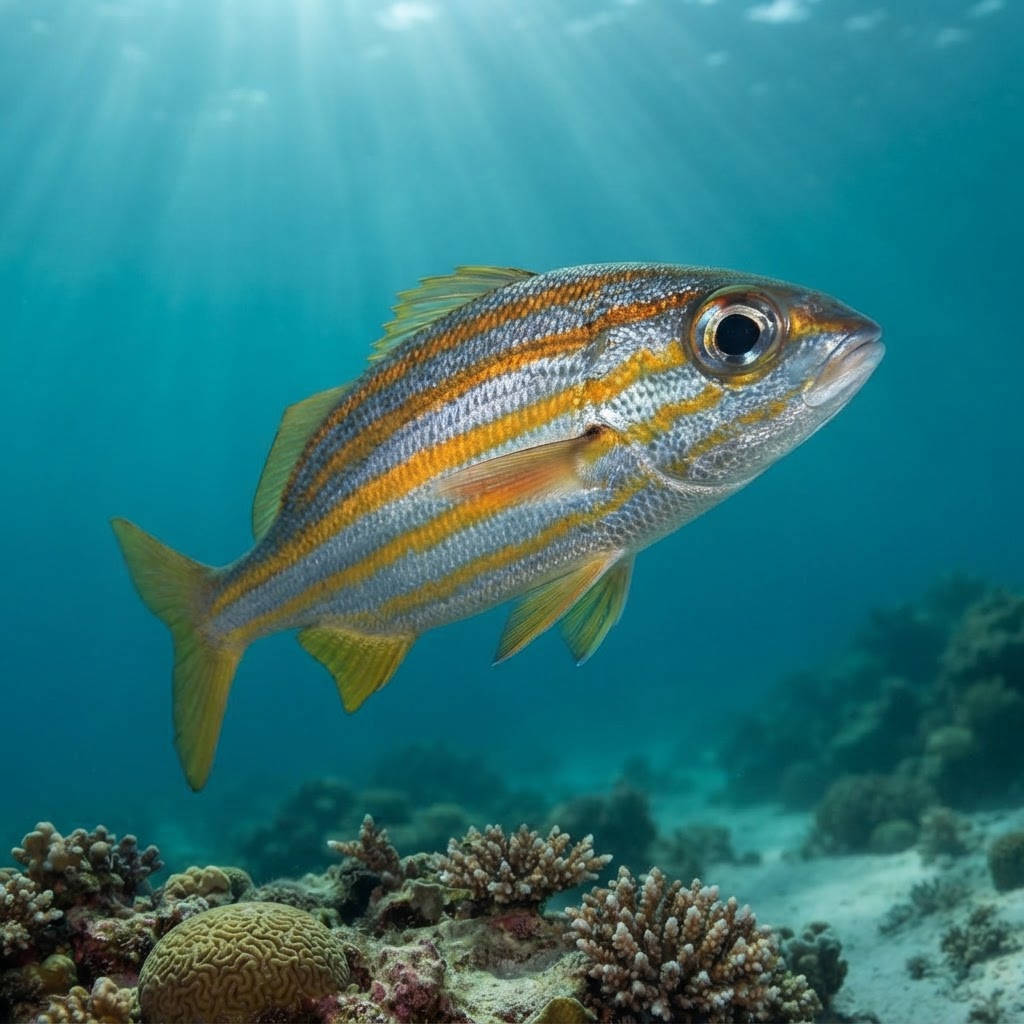
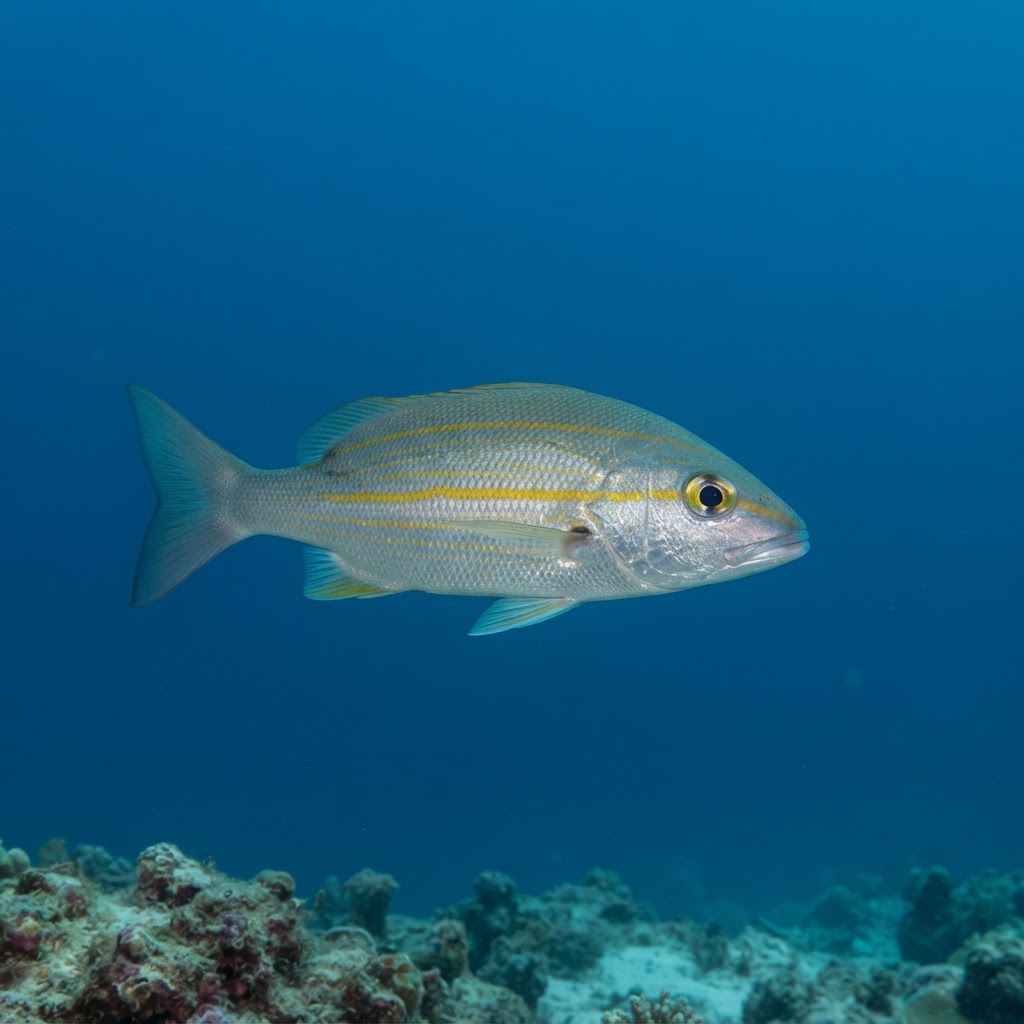
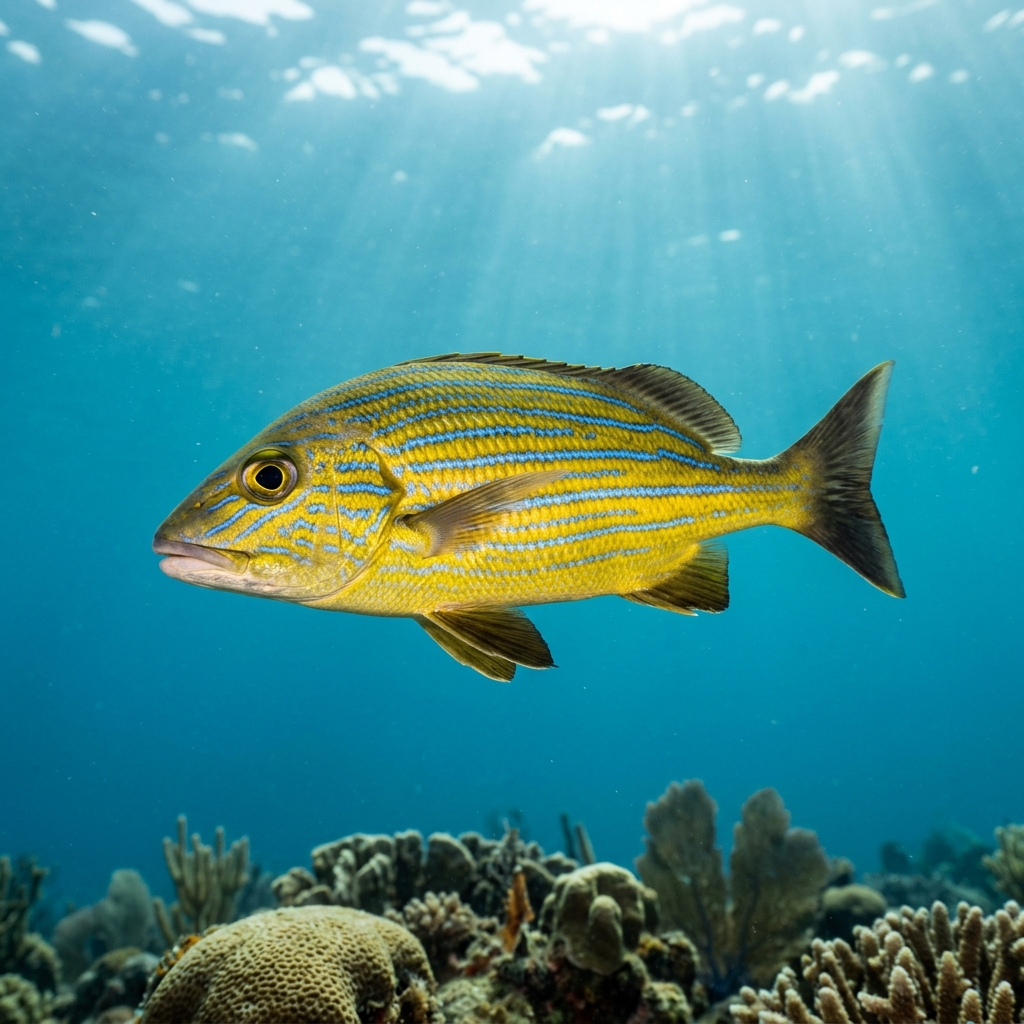
Reef neighbours a diver could mistake it for. Use the identification notes above to tell them apart.
Most reliably logged around the Yucatán Peninsula in Mexico, which accounts for the bulk of sightings, with a solid secondary population along Florida in the United States. Smaller but consistent sightings come from Aruba's Arashi and Boca Catalina area, Tobago in Trinidad and Tobago, and Saint-Pierre in Martinique.
Mapping where Cottonwick is logged…
The strongest populations are logged around the Yucatán Peninsula in Mexico and along the Florida coast in the United States. Smaller numbers turn up around Aruba, Tobago, and Martinique.
There's no clear seasonal pattern in sightings, so they're considered a year-round find on warm Caribbean and Gulf reefs where water stays between roughly 24 and 28 C.
Look for a silvery grunt around 23 cm with a dark blotch straddling the base of the tail. Faint yellow stripes and a blunt snout help separate it from similar grunts nearby.
They typically reach about 23 cm, a modest size that keeps them tucked close to reef structure rather than roaming open water.
Across the sites where they've been logged, most divers rate them uncommon rather than common or rare, so spotting one is a solid but not guaranteed find on a given dive.
Site and sighting data is aggregated from diver logs, iNaturalist and GBIF. For taxonomy and conservation status:
Bluestriped Grunt
1,907 sites