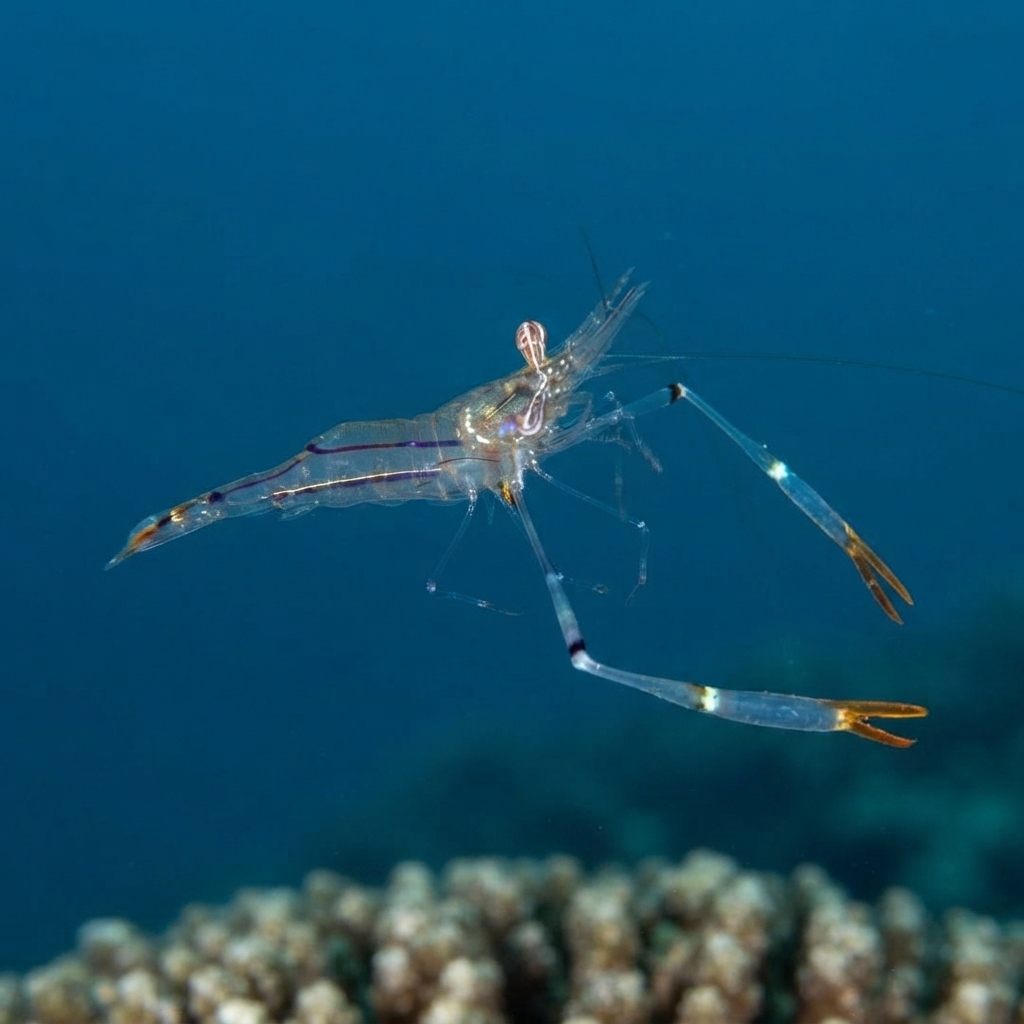
Cuapetes tenuipes
A near-transparent reef shrimp common on 37 of its 65 logged sites, from Sabah's reefs to Jordan's Gulf of Aqaba, year-round.
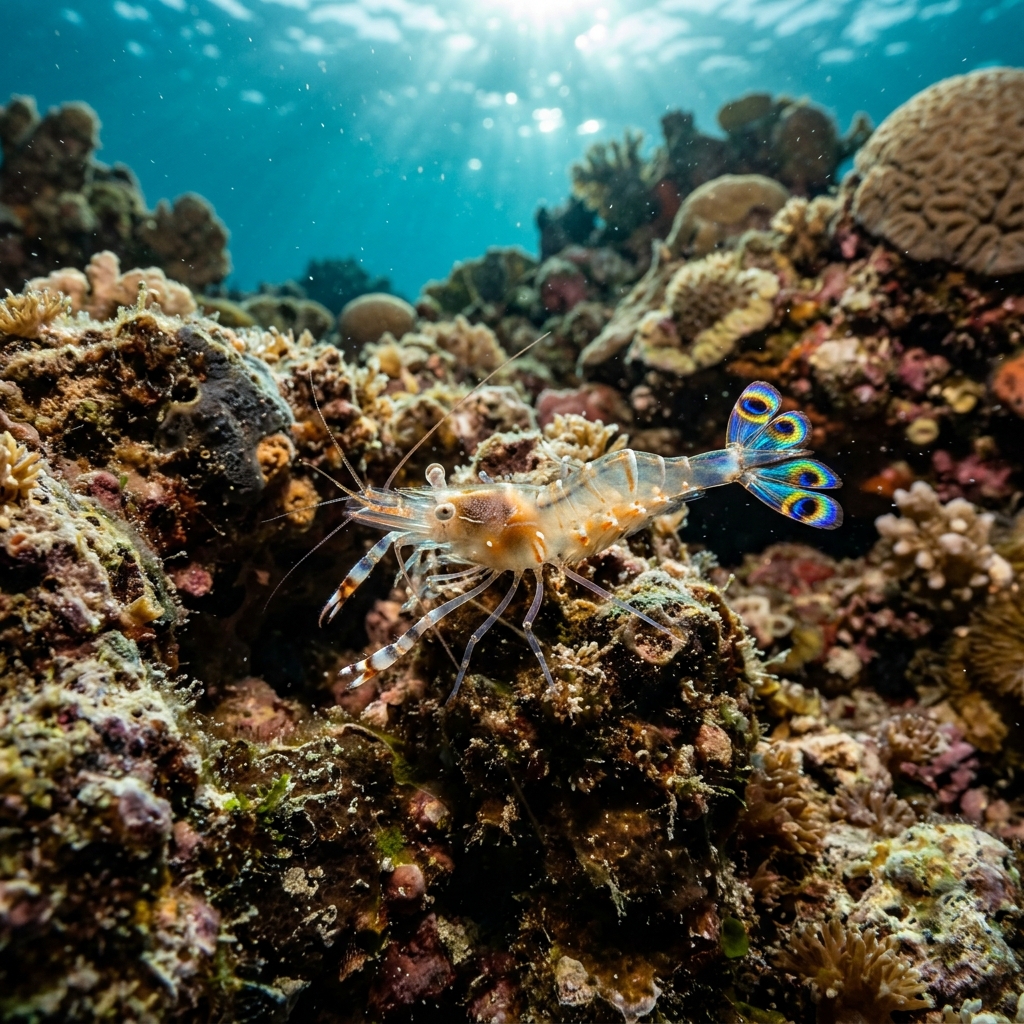
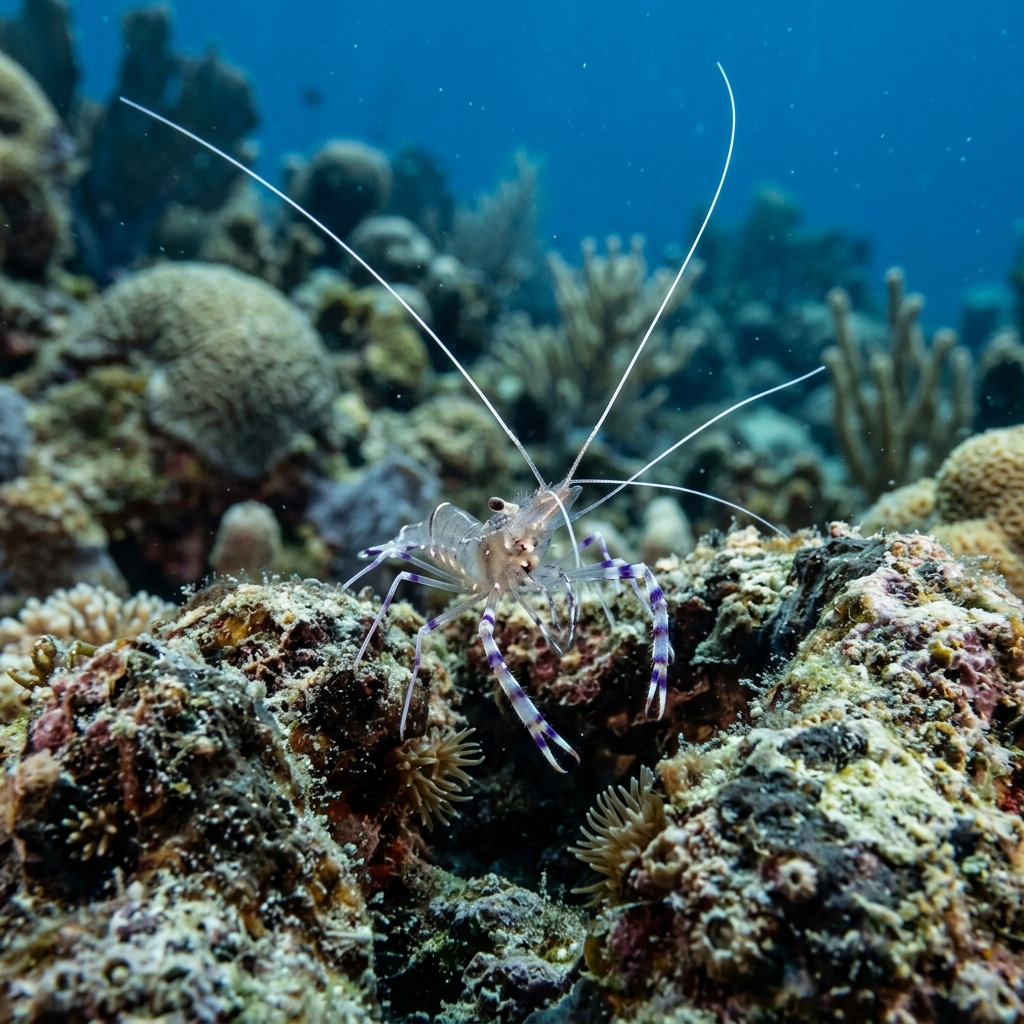
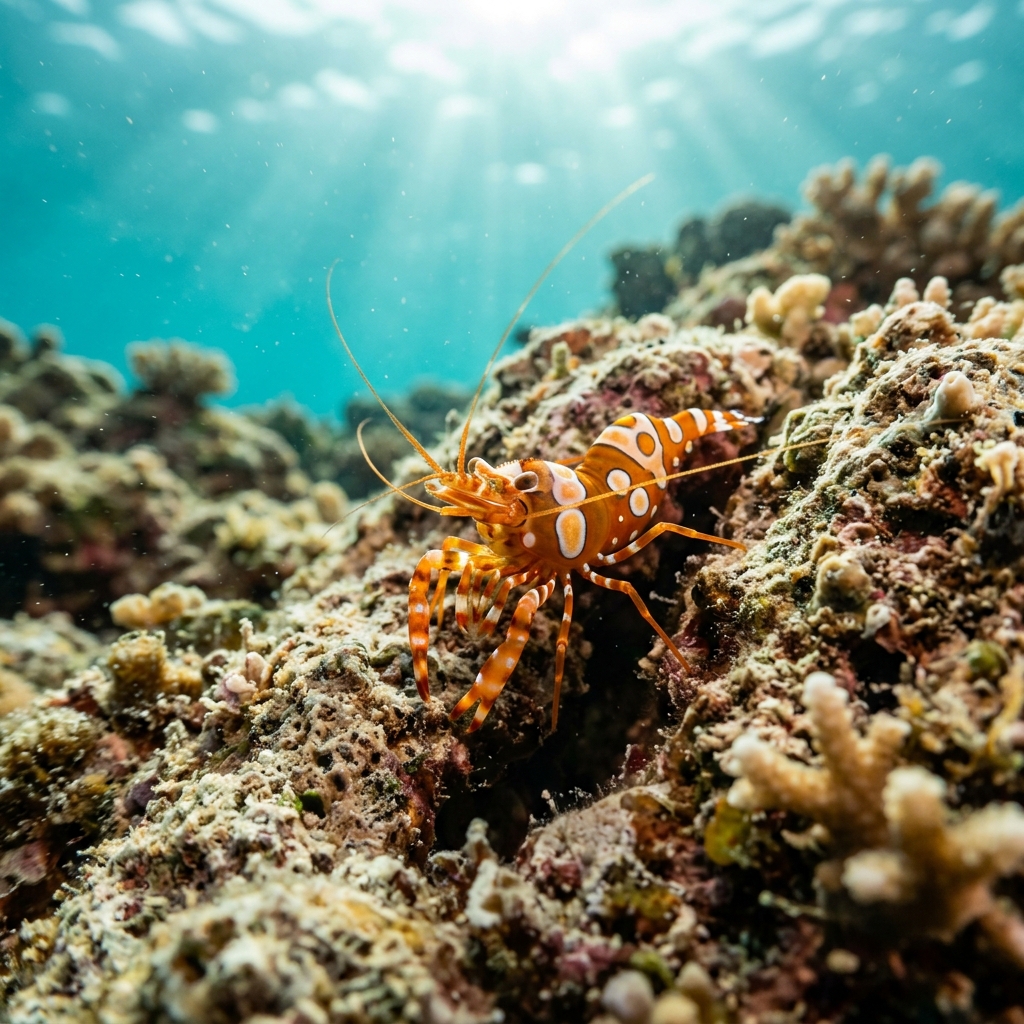
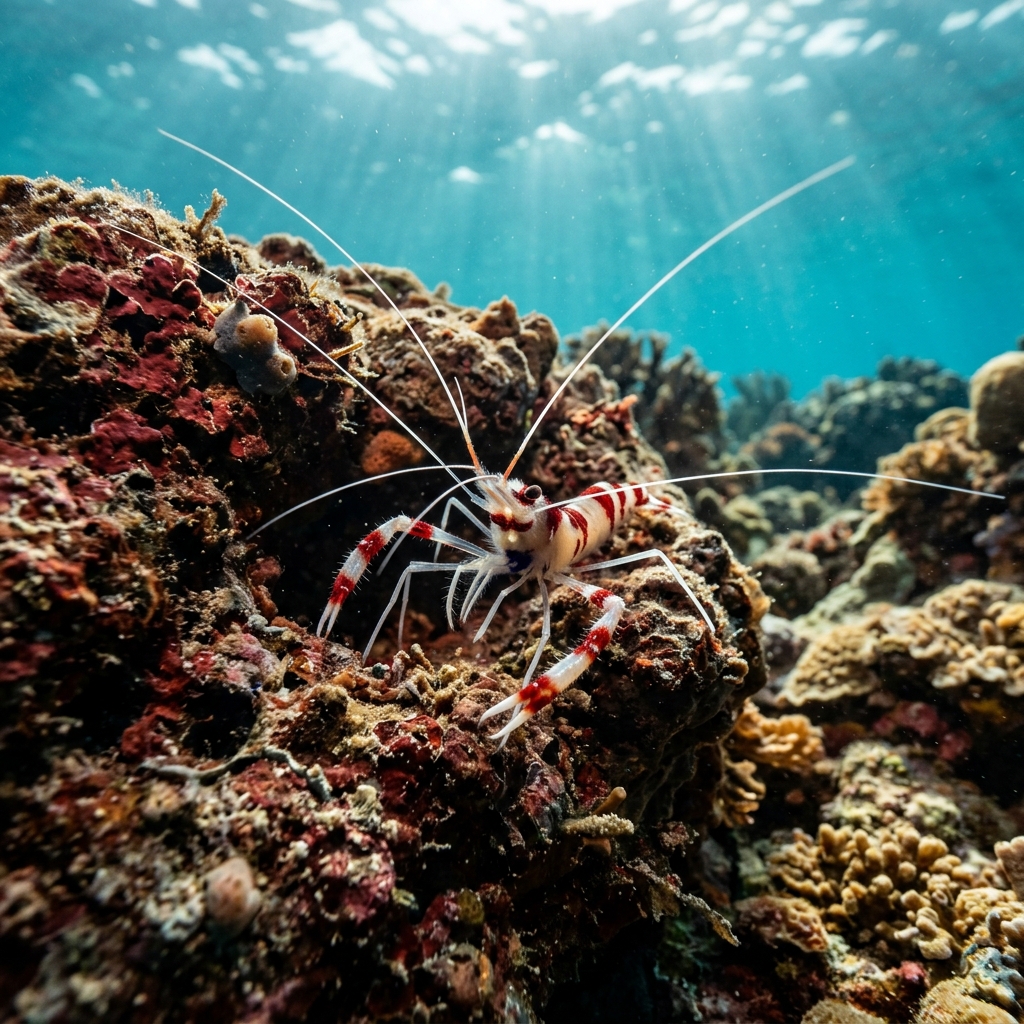
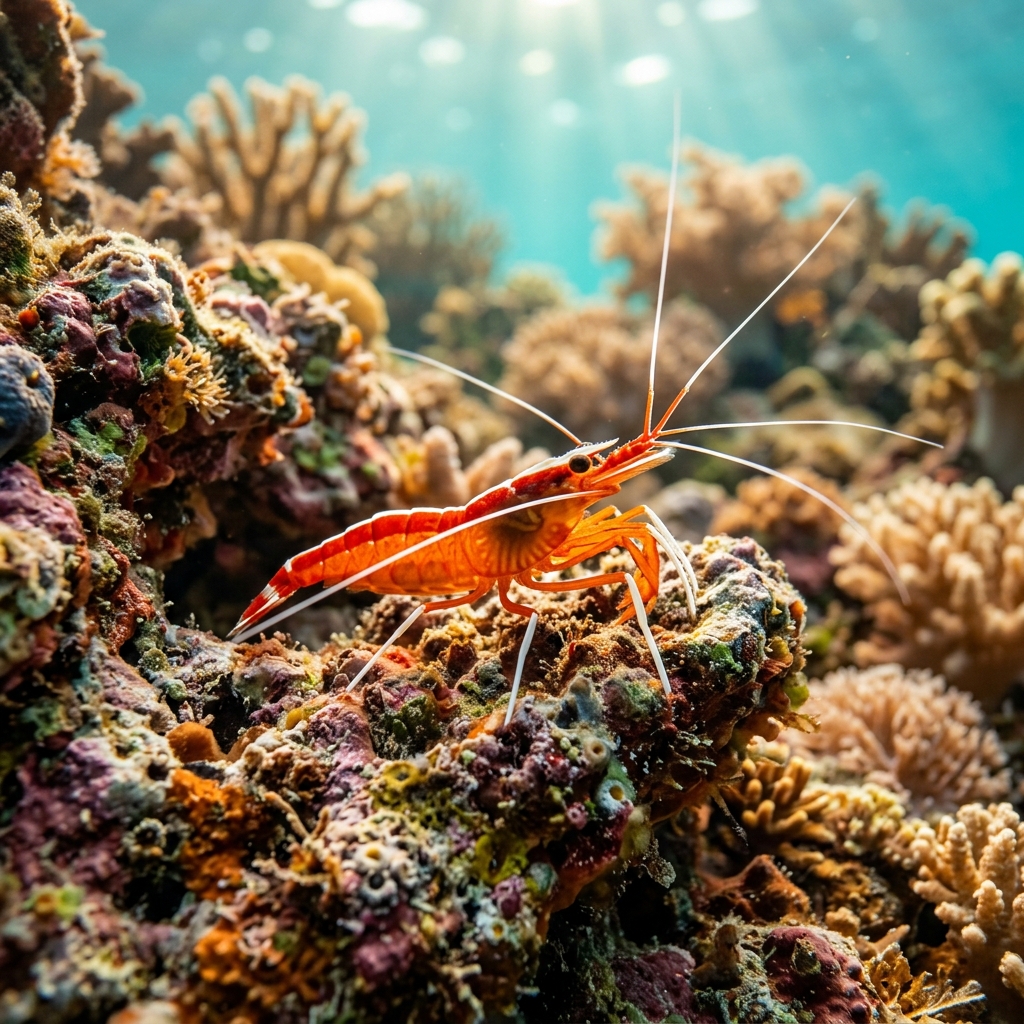
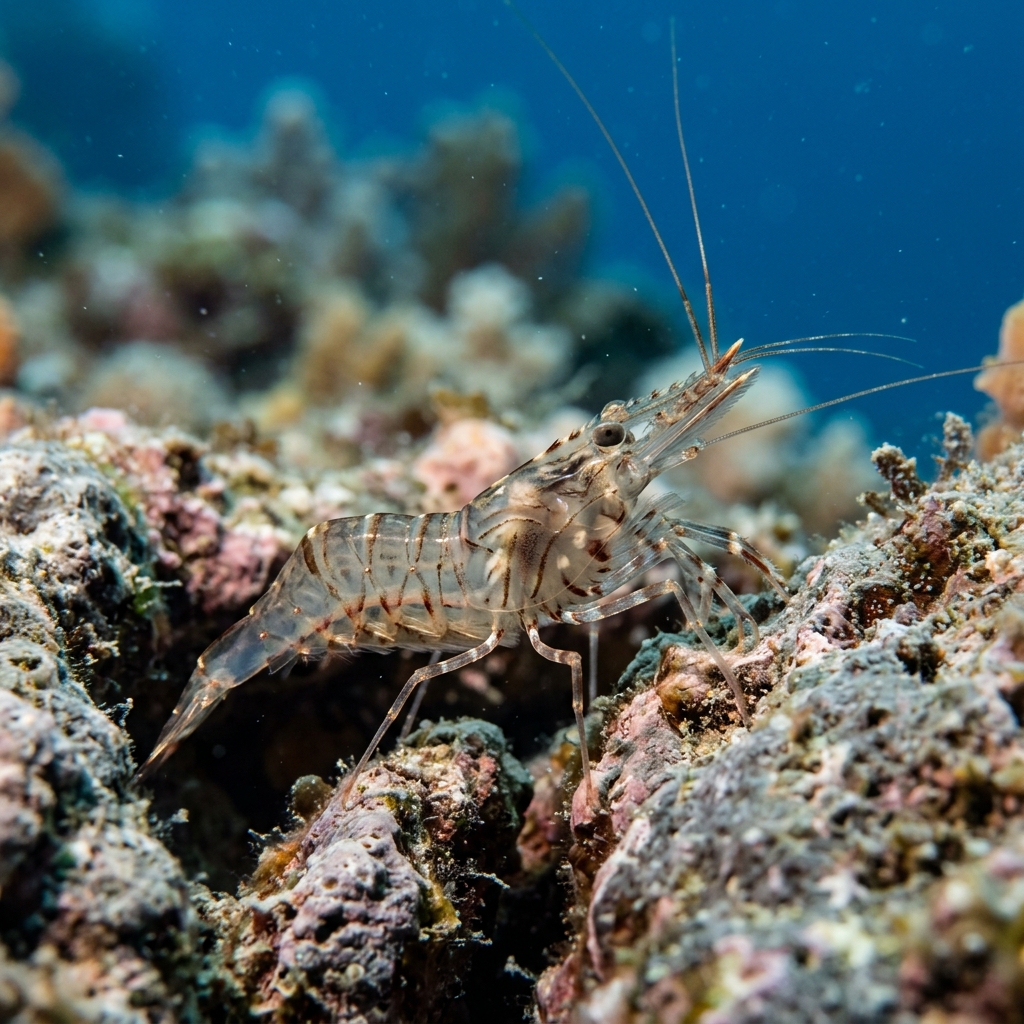
A small, slender, mostly translucent shrimp with thin banded legs and fine red or brown speckling along its body that breaks up its outline against a reef background. Its long, thread-like antennae are often the first thing divers notice moving before the body comes into focus. It sits low and still on its host, body angled with the long walking legs tucked close, rather than swimming freely in open water.
Divers find it parked on its host, usually a coral, sponge or another invertebrate, moving in short deliberate steps rather than darting about. It tolerates a slow, close approach with a torch or macro lens far better than it tolerates sudden movement, and most sightings happen during standard daytime reef dives rather than night dives. Look low on the reef structure and check any likely-looking coral head carefully, since its patterning is built for disappearing into the background.
Its common name comes from a commensal lifestyle: it lives closely associated with a host organism on the reef, sheltering among its structure without harming it, which is also why patient macro divers find it by searching hosts rather than open reef.
No clear seasonal pattern shows up in the sightings, and with a comfortable range of 23.5 to 29.9C on tropical and subtropical reefs it is realistically a year-round find wherever it is logged. Plan the trip around the destination's general dive season rather than this species specifically.
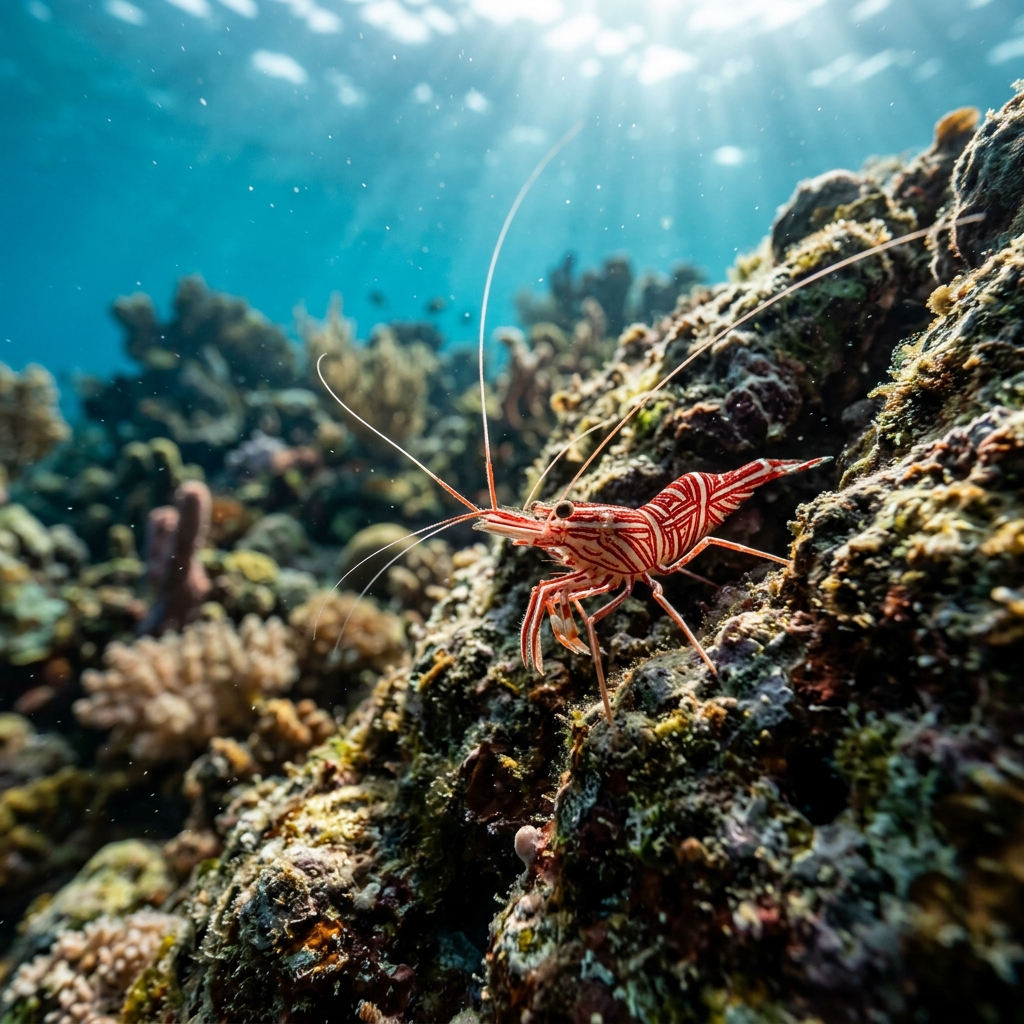
Reef neighbours a diver could mistake it for. Use the identification notes above to tell them apart.
Most reliably logged in Sabah, Malaysia, where it turns up at more sites than anywhere else in the data, and it is also a strong find across the Visayas in the Philippines. Smaller but consistent populations are logged in Jordan's Gulf of Aqaba and at a handful of sites in Raja Ampat, Luzon and Bali in Indonesia.
Mapping where Commensal Shrimp is logged…
Sabah in Malaysia and the Visayas in the Philippines are the strongest areas, with additional sightings logged in Jordan's Gulf of Aqaba and at sites in Raja Ampat and Bali in Indonesia.
Sightings show no clear season in the data, and it lives in water from about 23.5 to 29.9C, so it is a realistic find on tropical reefs at any time of year.
Look for a small, near-transparent shrimp with fine red or brown speckling and long thin antennae, sitting still and low on a coral or sponge host rather than swimming in open water.
No. It has no venom or defence relevant to divers and simply moves away or stays still if approached slowly.
It lives a commensal life, sheltering on a host organism such as coral or sponge for protection without harming it, which is where its common name comes from.
Site and sighting data is aggregated from diver logs, iNaturalist and GBIF. For taxonomy and conservation status:
Freshwater Shrimp
2,168 sites