Scorpaenodes evides
A rare, camouflaged find on North Island, New Zealand reefs, comfortable in 20.7 to 28.8C water year-round.
Safety warning
Carries venomous spines along its dorsal fin, and because it sits still and blends into the reef it is easy to miss with a hand or knee. Keep hands off rock ledges and rubble at sites where it has been recorded, and if stung, seek medical attention as scorpionfish venom causes significant pain and swelling.
If you're stung
Venomous spinesGeneral first-aid guidance, not a substitute for professional medical care. In an emergency, call your local emergency number.
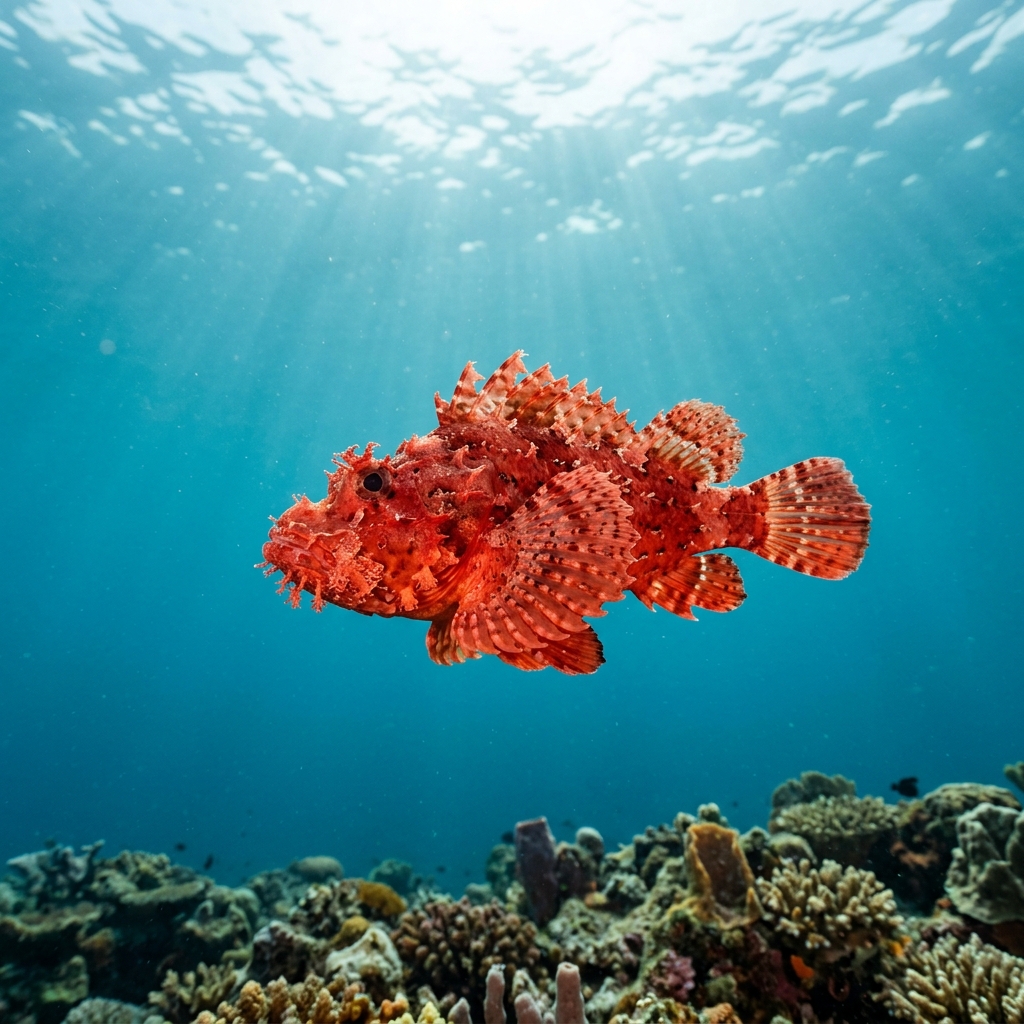
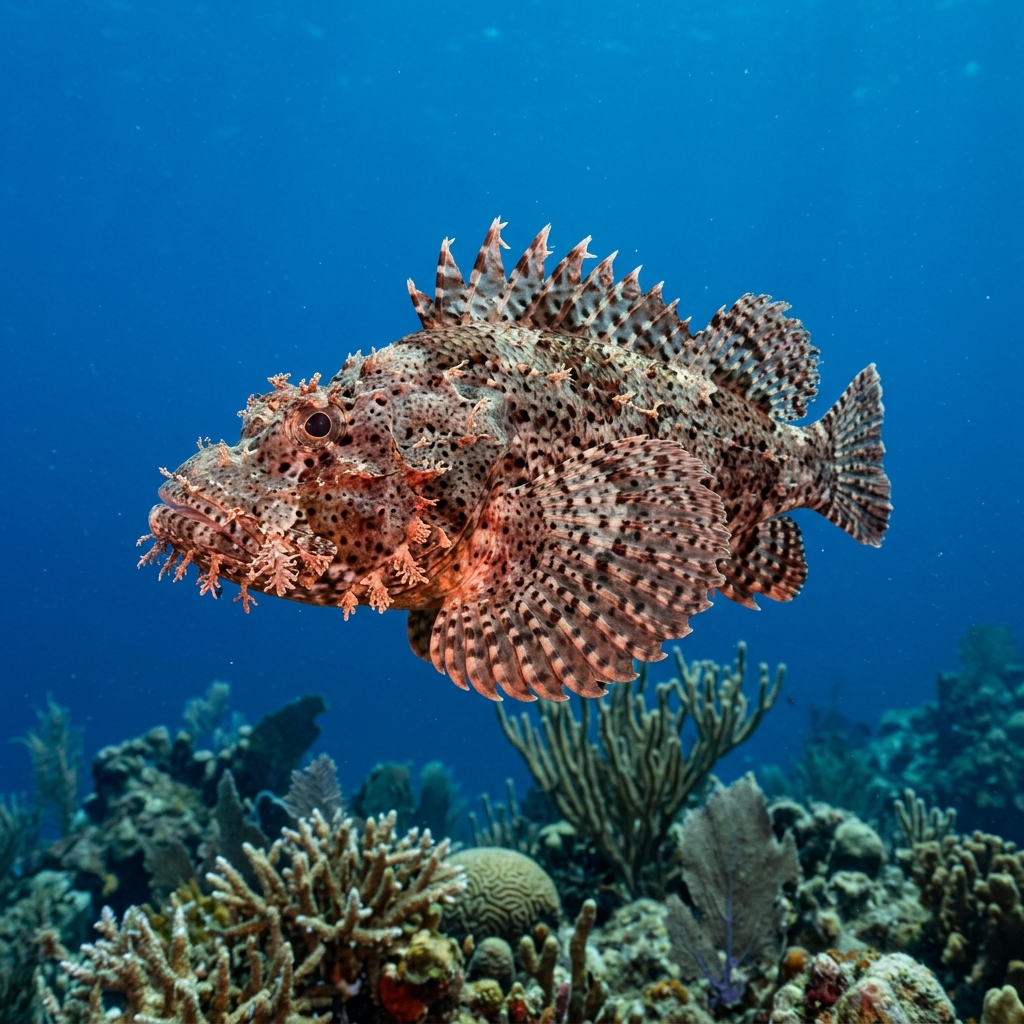
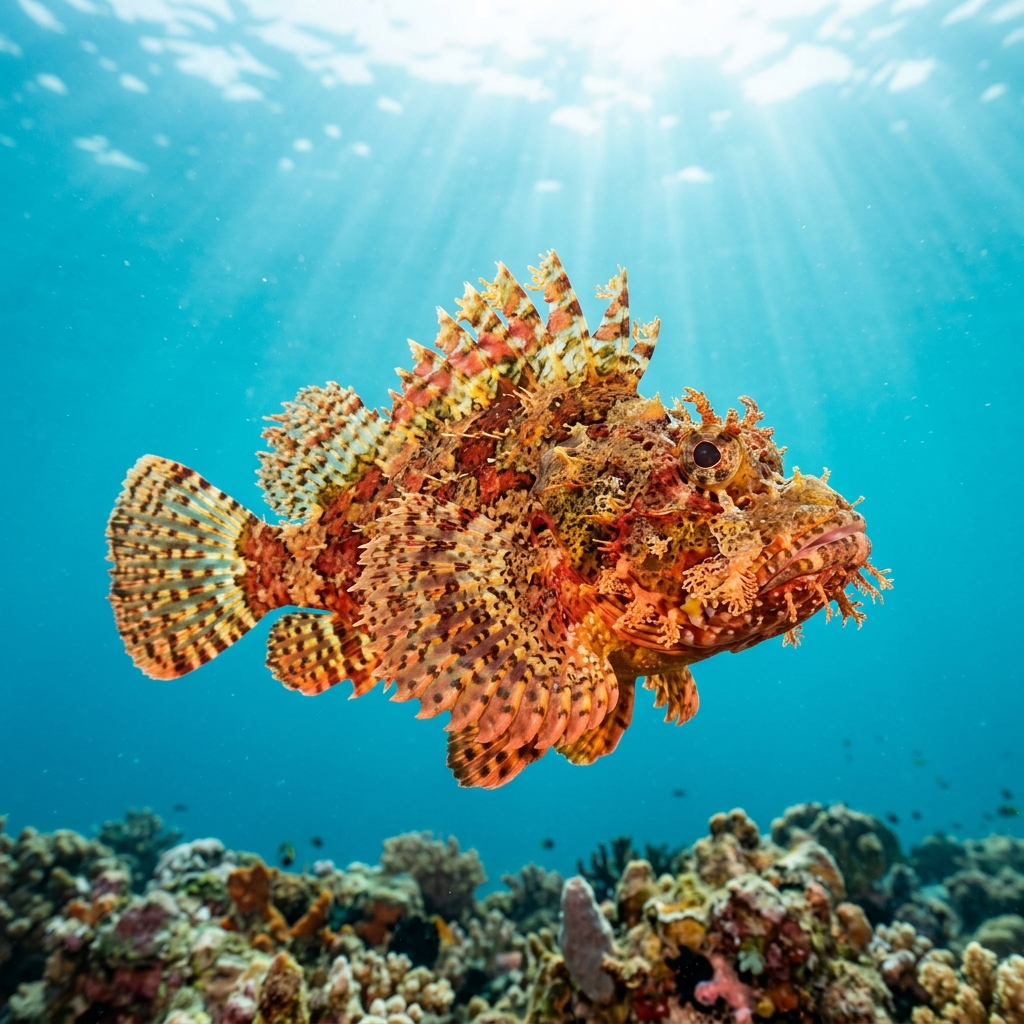
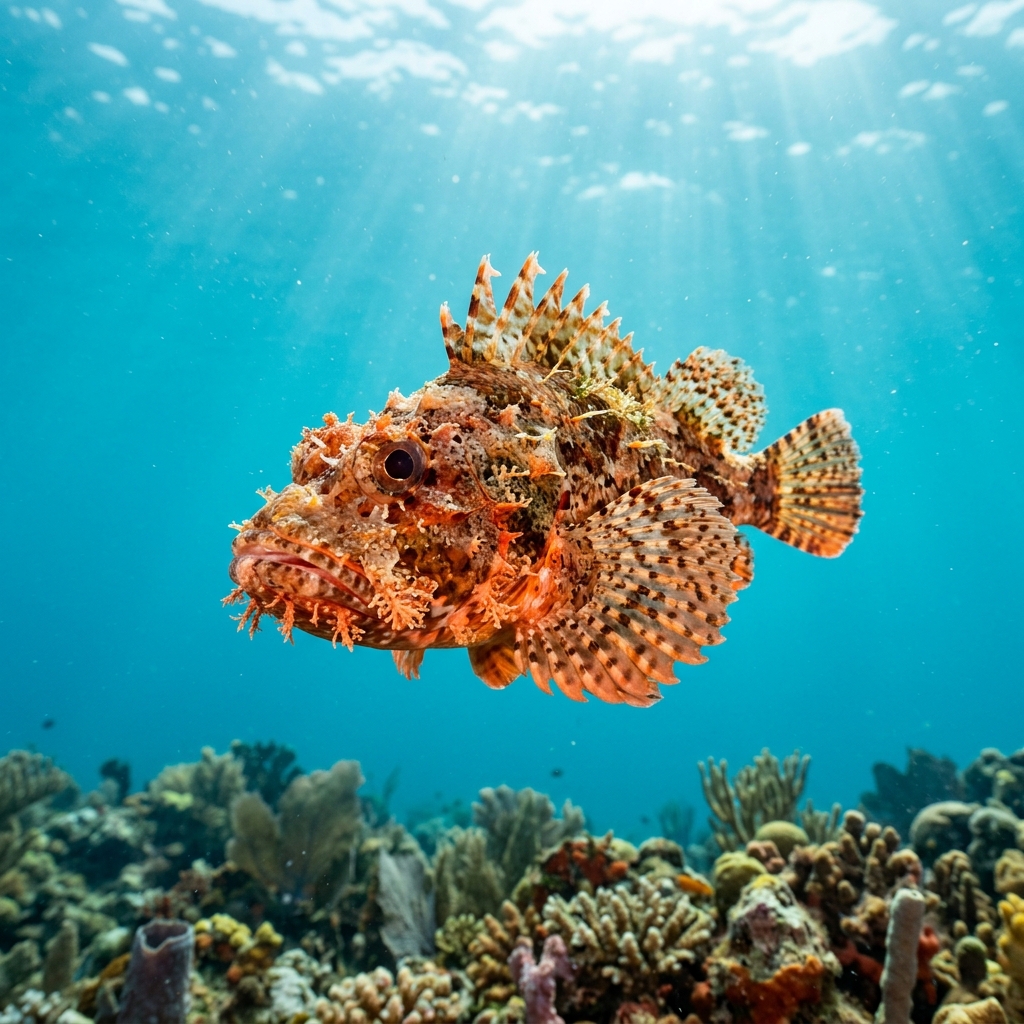
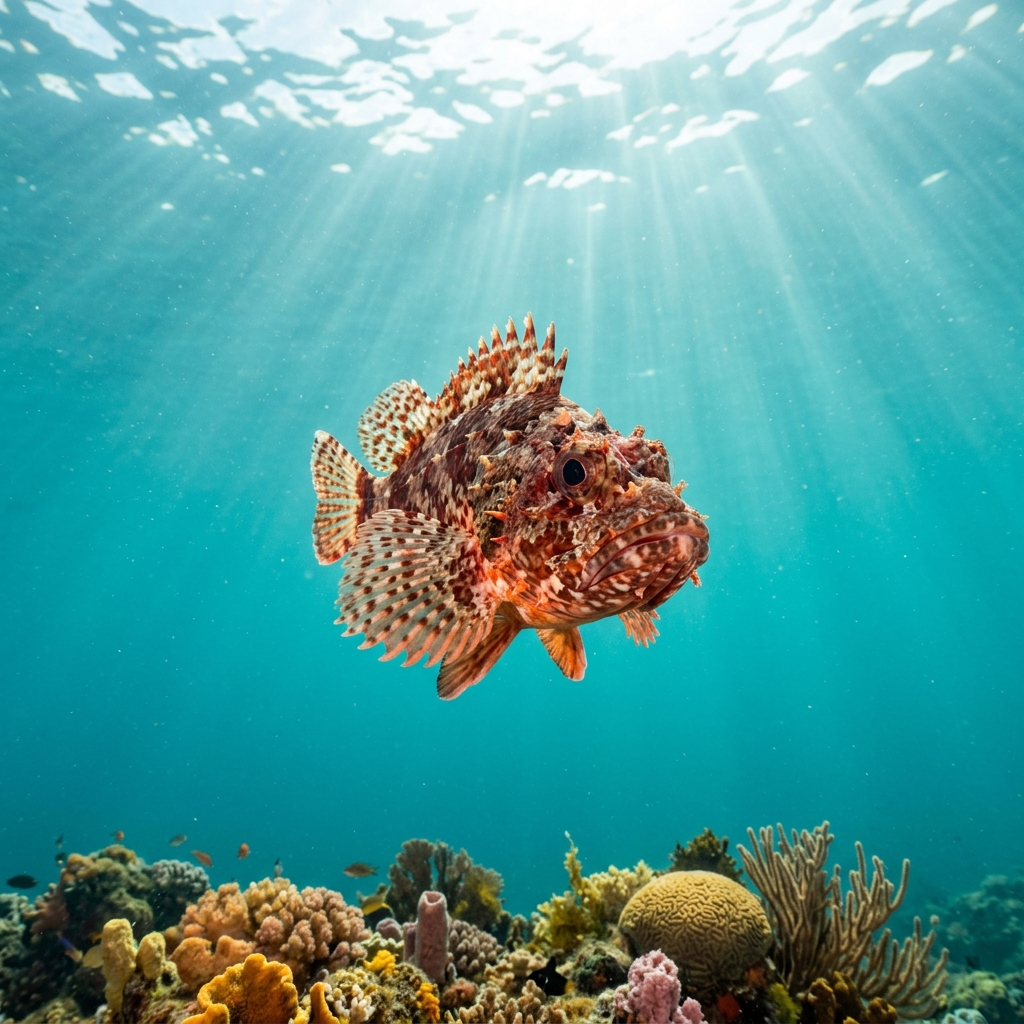
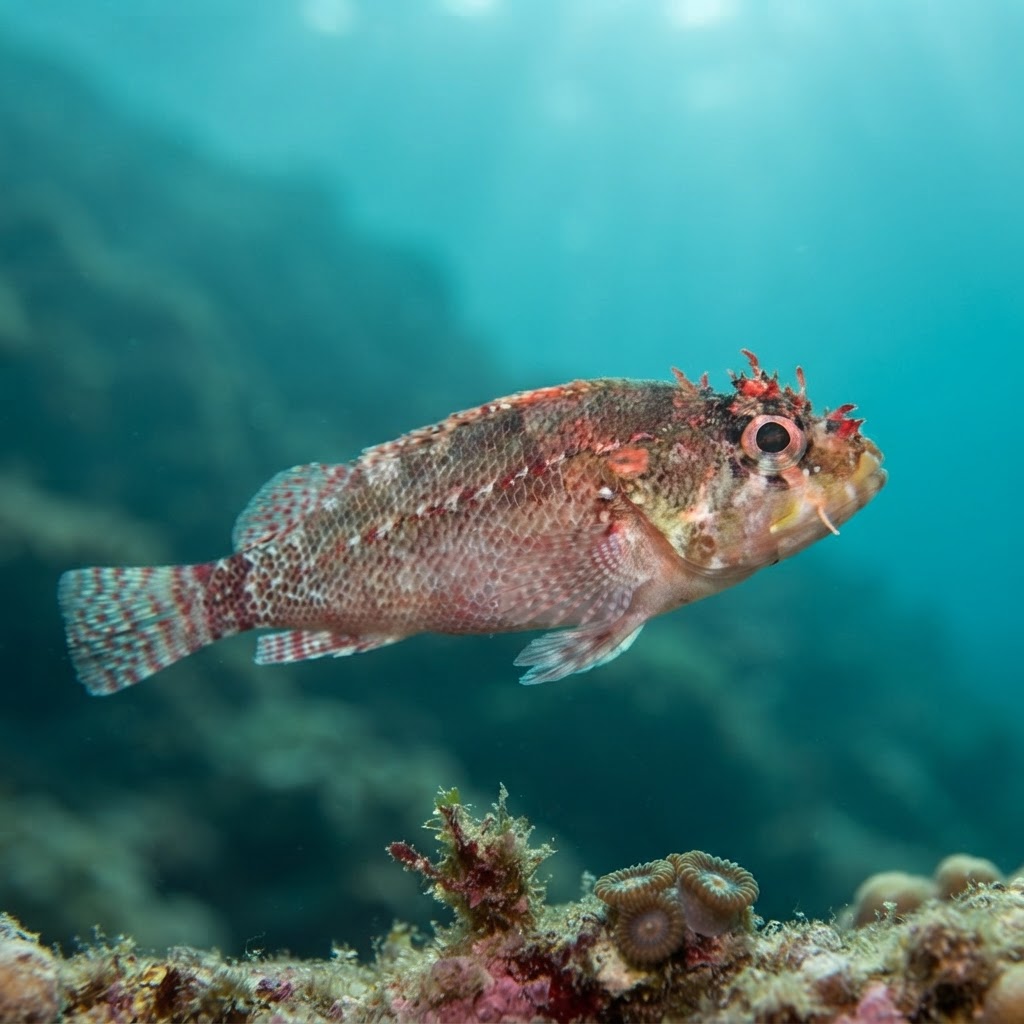
Small, thick-bodied fish topping out around 7 cm, built low and camouflaged against rock and rubble. Mottled reddish-brown to grey colouring breaks up its outline, and the diagnostic mark is the dark cheekspot (a blotch) below the eye that gives the species its name. Look for the heavy, spiny head typical of scorpionfish and a stillness that makes it disappear against the substrate until you are right on top of it.
Sits motionless on rock ledges and rubble, relying on camouflage rather than flight, so divers who do spot one usually find it parked in the same spot for the whole dive. It is not attracted to divers and shows little reaction to a slow, close approach, which is exactly how most sightings happen: by accident, on a careful scan of the bottom.
Like other scorpionfish, it likely ambush-feeds on small crustaceans and fish that wander too close, using its camouflage to strike rather than to hide from predators alone.
No clear seasonal pattern shows in the data, and its temperature range of 20.7 to 28.8C spans warmer and cooler months alike, so it is a year-round possibility wherever it is found.
Reef neighbours a diver could mistake it for. Use the identification notes above to tell them apart.
Most logged on North Island, New Zealand, which accounts for the bulk of confirmed sightings, with a smaller number of records from New South Wales, Australia. It is a rare find at nearly every site it turns up, so treat any sighting as a bonus rather than a target.
Mapping where Cheekspot Scorpionfish is logged…
It is most reliably logged on North Island, New Zealand, with a smaller number of sightings from New South Wales, Australia. Even in these areas it is considered rare, so it is a lucky find rather than a guaranteed one.
There is no detected season in the sighting data, and its temperature tolerance from 20.7 to 28.8C covers most of the year at its known sites, so it can turn up any month.
Yes, they carry venomous dorsal spines that deliver a painful sting if touched. They are not aggressive, but their camouflage means divers can put a hand down without seeing them, so watch where you place your hands on rock and rubble.
Look for a small, mottled reddish-brown fish around 7 cm long, sitting still on rock or rubble, with a distinct dark cheekspot beneath the eye and a heavy, spiny head.
They are a small species, typically reaching around 7 cm, which along with their camouflage makes them easy to swim straight past.
Site and sighting data is aggregated from diver logs, iNaturalist and GBIF. For taxonomy and conservation status:
Madeira Rockfish
2,773 sites