Anisotremus interruptus
Thick-lipped and grey-gold, this grunt turns up uncommonly across Baja California's rocky reefs in 23.5 to 29.1 C water.
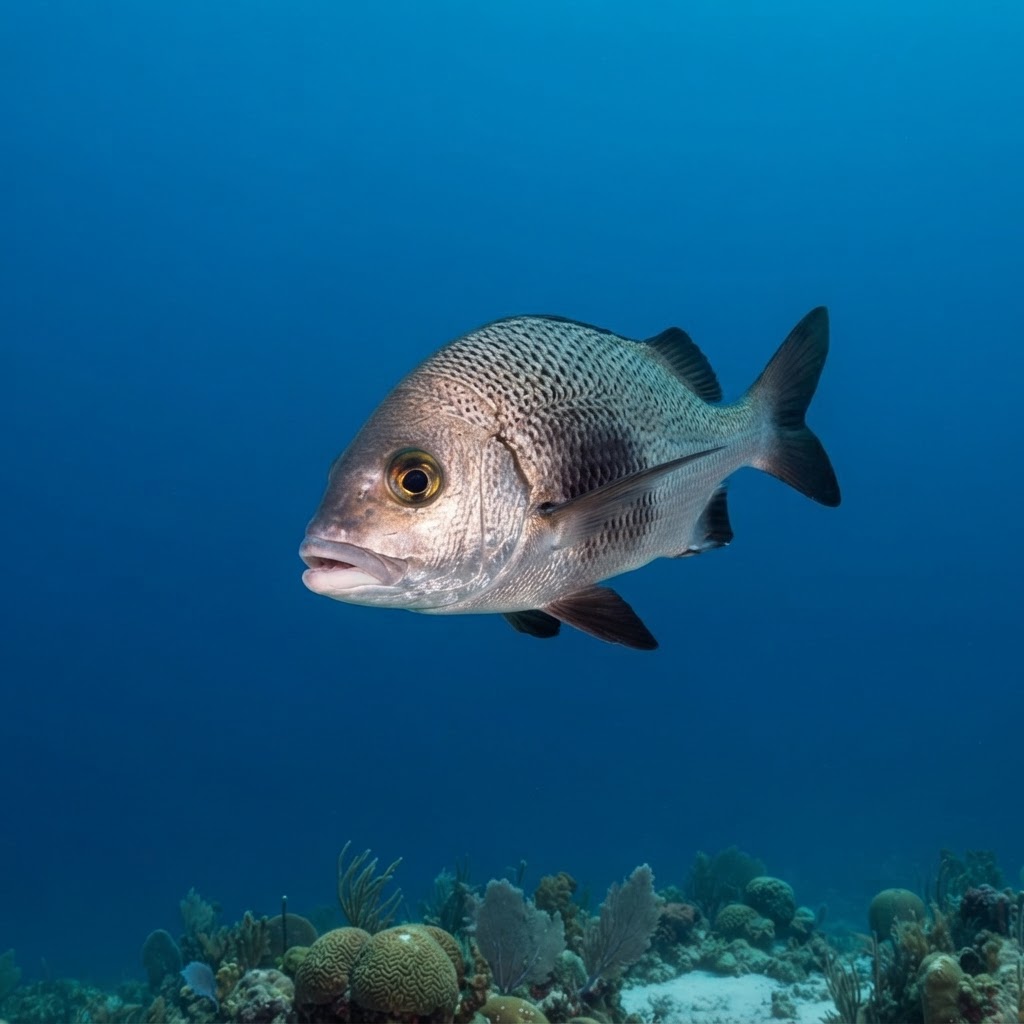
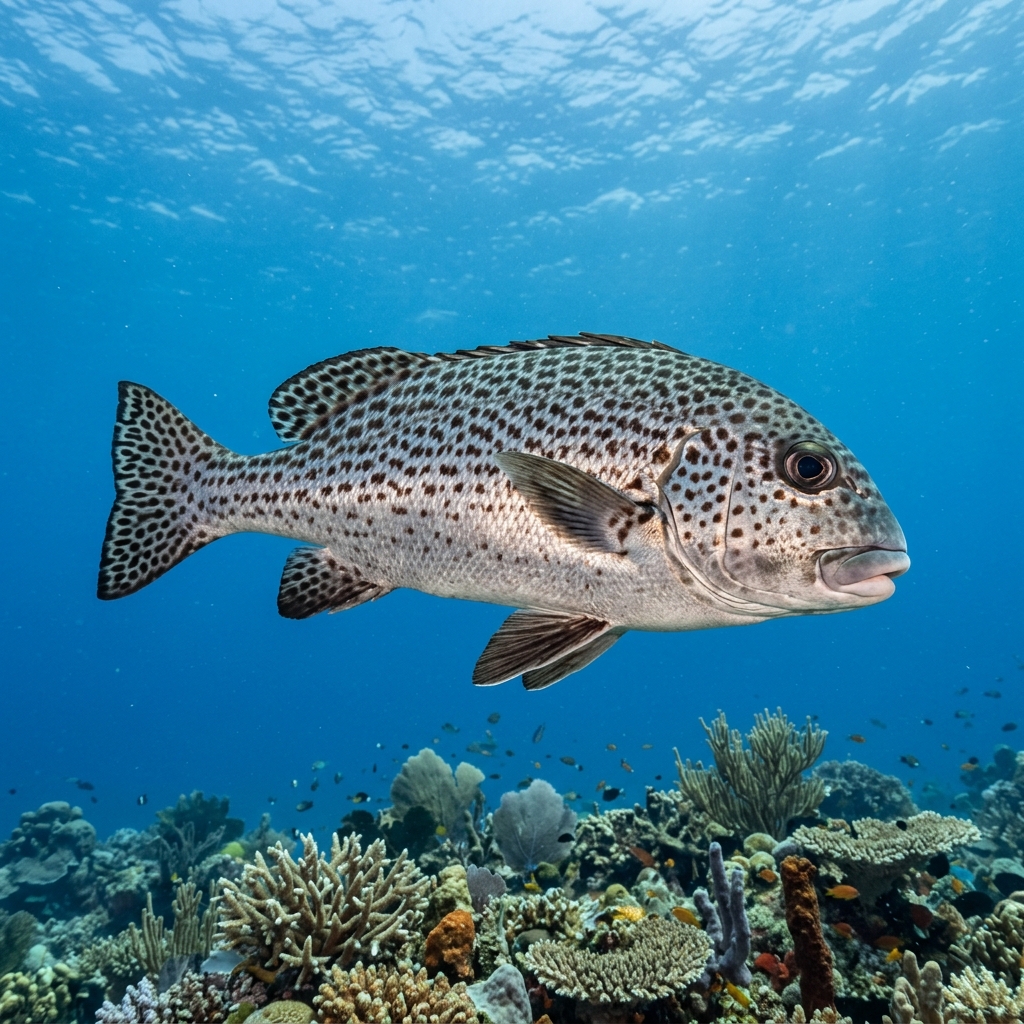
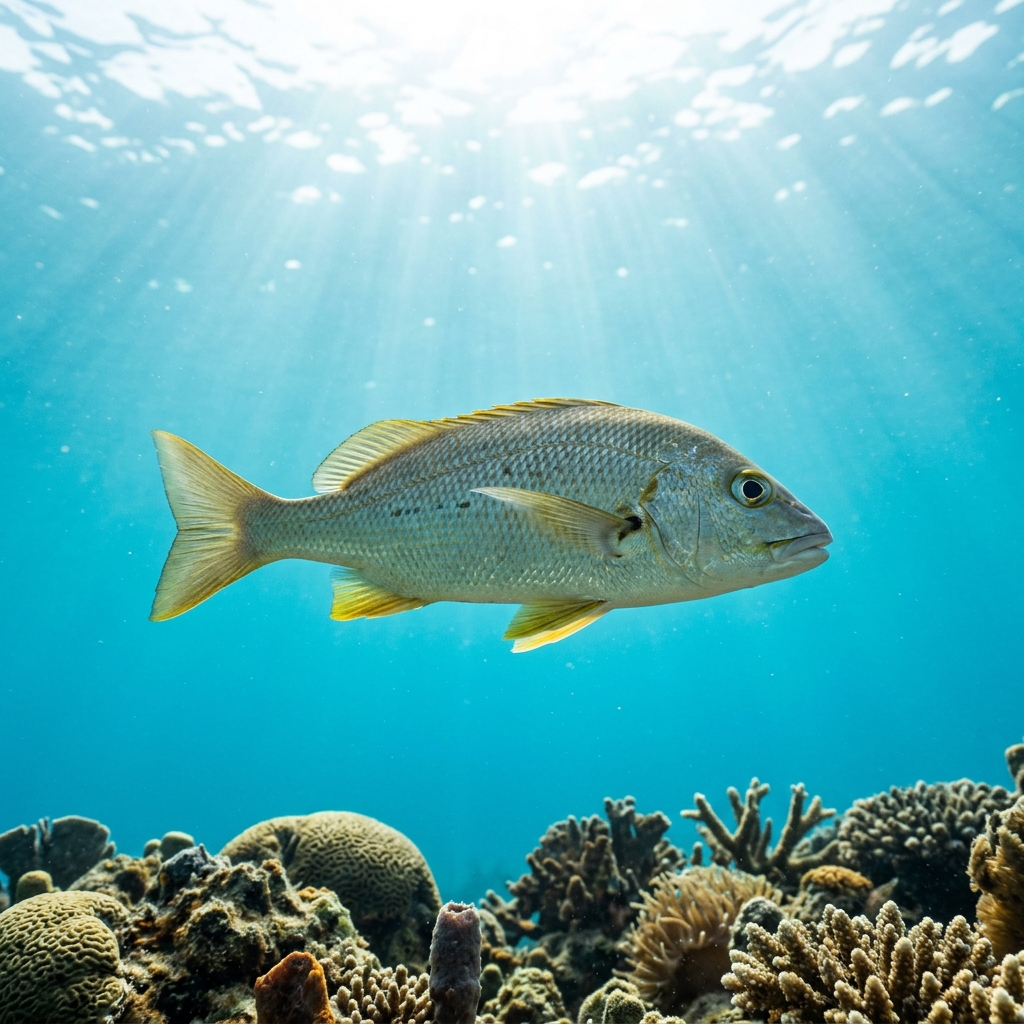
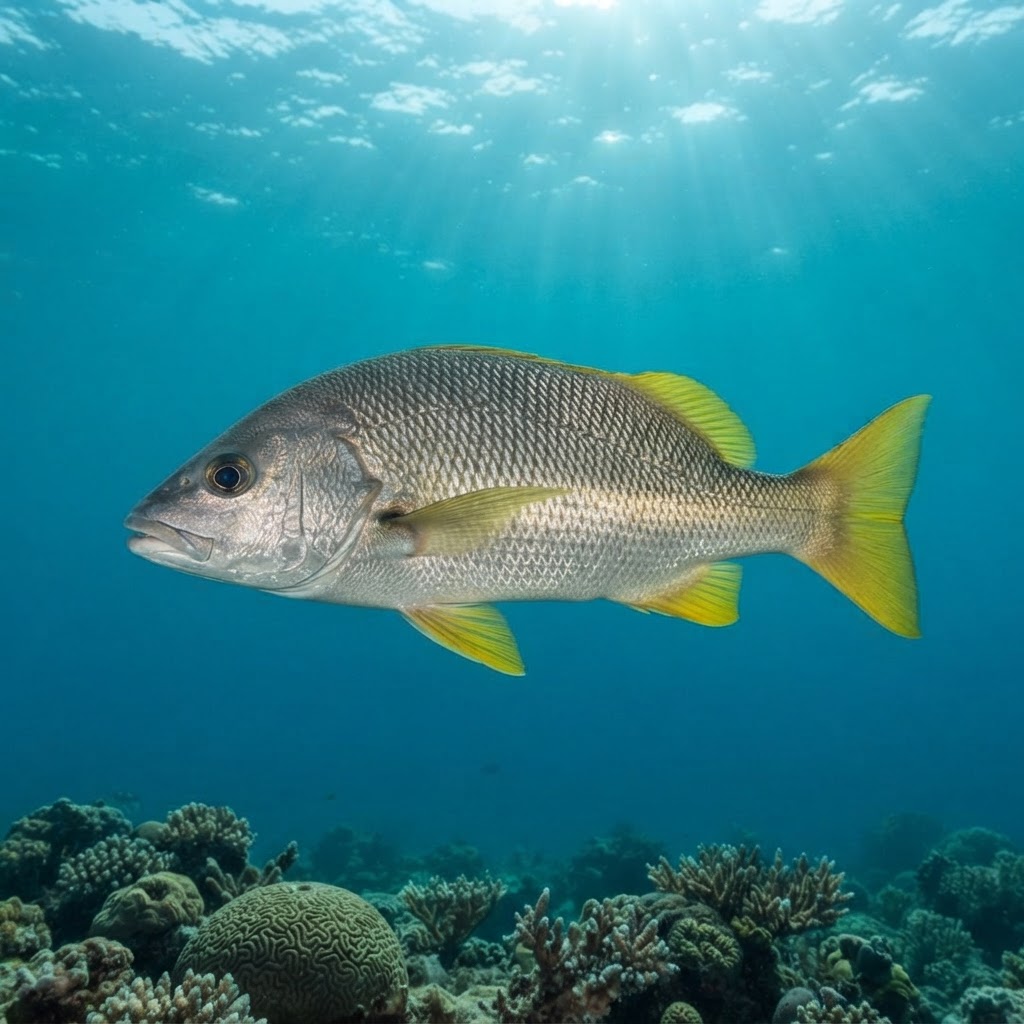
Grows to around 36 cm, with a deep, laterally compressed body and noticeably thick, fleshy lips typical of grunts. Colour runs grey to gold-brown, often with a darker saddle or blotch toward the tail and a paler belly. Look for the stout body shape and the heavy lips rather than any bold stripe pattern, since its patterning is fairly plain compared to other sweetlips and grunts.
Typically found hovering or resting near rocky ledges and reef structure rather than out in open water, often alone or in small loose groups. Divers log it as uncommon to rare at most sites, so sightings tend to be a matter of checking crevices and overhangs rather than expecting it in open sand or on every dive. It is not flighty around divers but tends to hold position near cover rather than approach.
The thick, fleshy lips that give grunts their family look are used to root through sand and rubble for small invertebrates, a feeding style that keeps them tied to structured, rocky bottoms rather than open reef flats.
No clear seasonal pattern shows up in the sighting data, and its comfort range of 23.5 to 29.1 C spans most of the year on Baja's reefs, so it is best treated as a year-round sighting rather than something tied to a specific month.
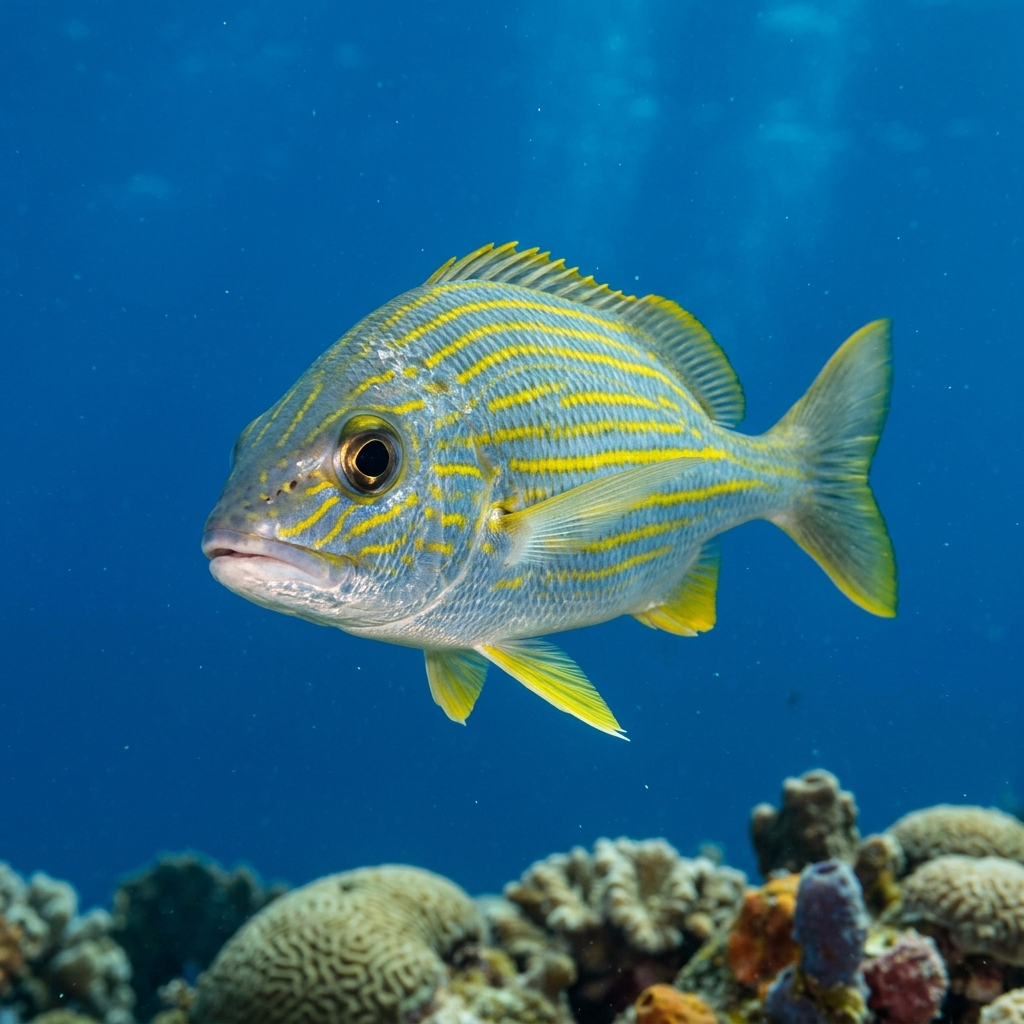
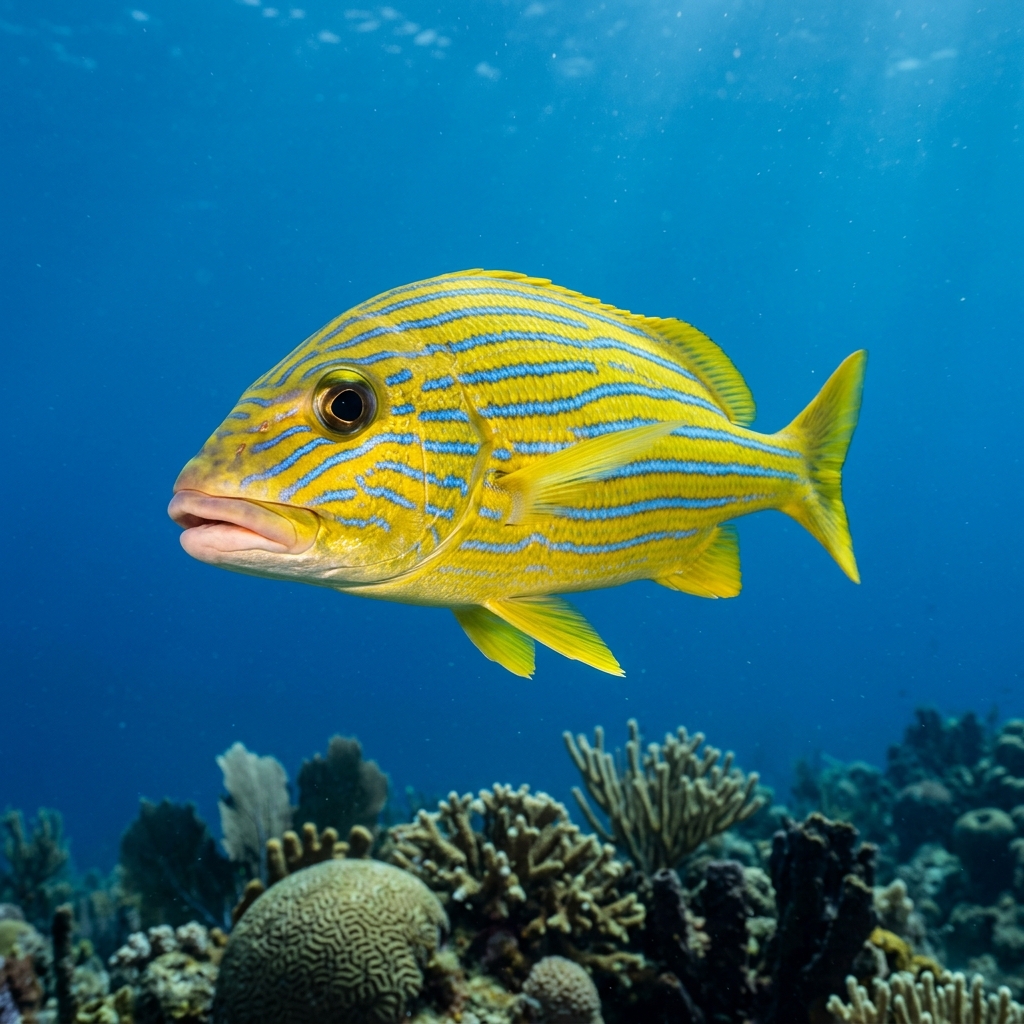
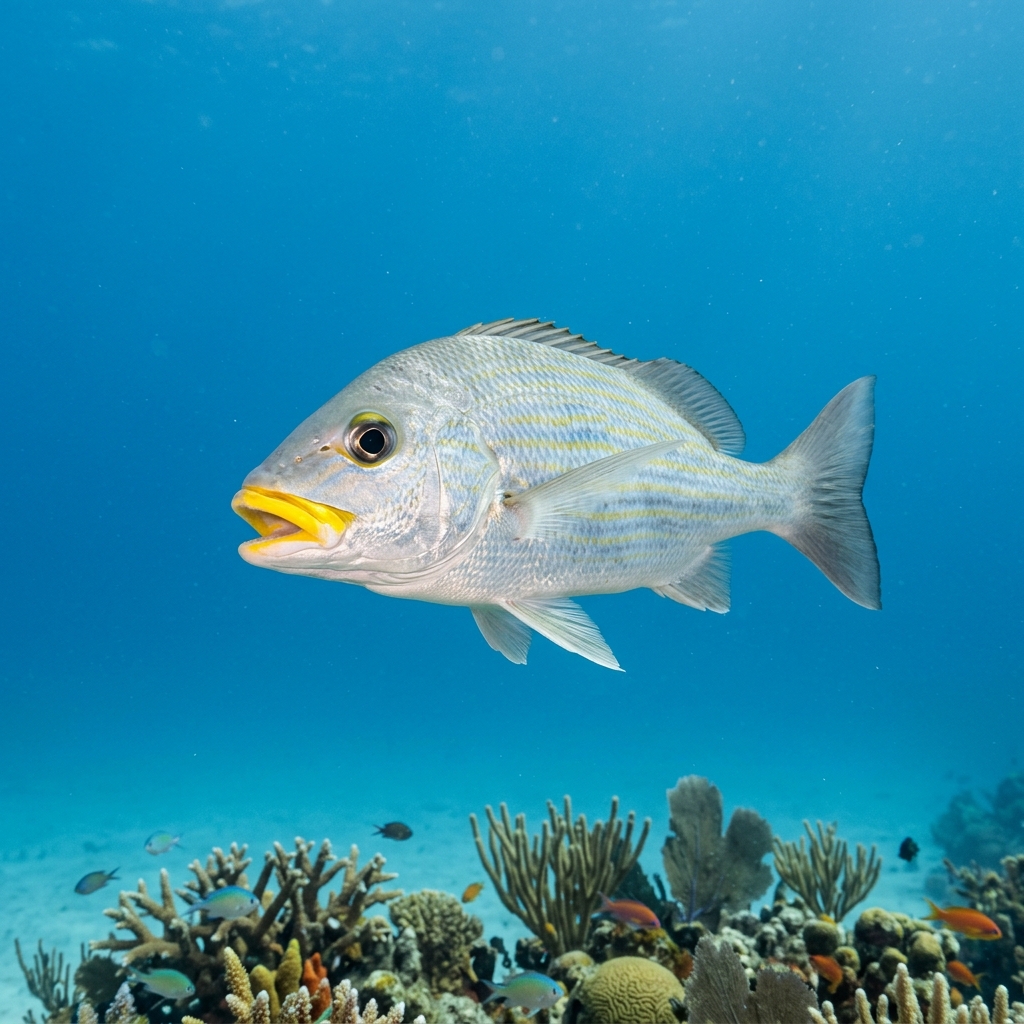
Reef neighbours a diver could mistake it for. Use the identification notes above to tell them apart.
Most reliably logged along Baja California, Mexico, which accounts for the vast majority of recorded sightings, with occasional records from the South Pacific coast of Costa Rica and the Pacific coast of Panama. If you are diving rocky reefs in the Sea of Cortez or Baja's Pacific side, this is the region to look.
Mapping where Burrito Grunt is logged…
Baja California, Mexico is by far the strongest region for sightings, with occasional records also logged in Costa Rica's South Pacific and Panama's Pacific coast. Rocky reef sites with ledges and overhangs are the best bet.
There is no detected seasonal peak in the sighting data, and its temperature range of 23.5 to 29.1 C covers most of the year on Baja's reefs, so it is essentially a year-round sighting.
Look for a deep-bodied, grey to gold-brown fish around 36 cm with thick, fleshy lips and a fairly plain body compared to other grunts. It is usually found close to rocky structure rather than swimming in open water.
They reach around 36 cm in length, a solid mid-sized reef fish rather than a giant, and are usually seen singly or in small numbers near rocky cover.
No, they pose no threat to divers and are not known for any defensive or aggressive behaviour. They simply hold near reef structure and are unbothered by divers keeping a respectful distance.
Like other grunts, its thick lips are adapted for rooting through sand and rubble to find small invertebrates, which is why it stays close to structured, rocky bottoms rather than cruising open reef.
Site and sighting data is aggregated from diver logs, iNaturalist and GBIF. For taxonomy and conservation status:
Bluestriped Grunt
1,907 sites