Rhina ancylostomus
Bowmouth guitarfish turn up as uncommon sightings on Queensland reefs, warm water year-round from 24 to 29 C.
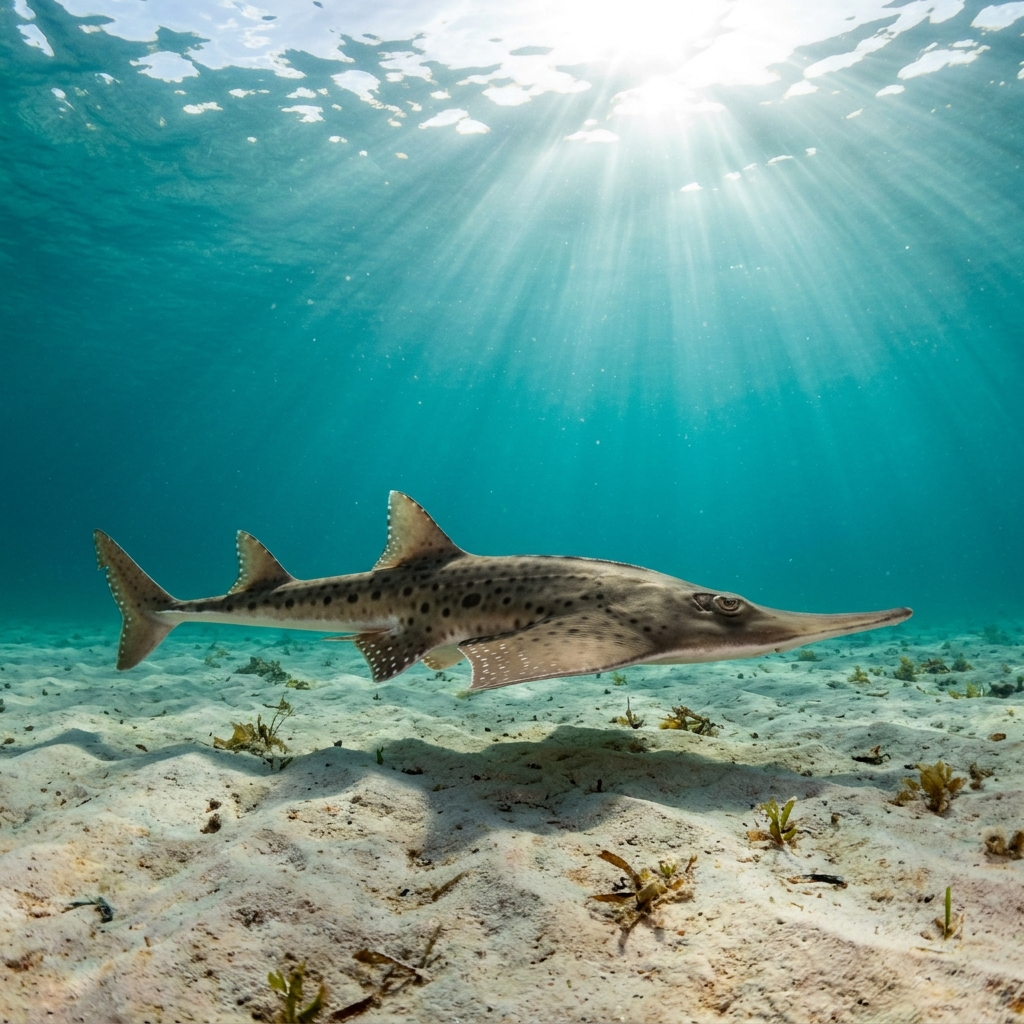
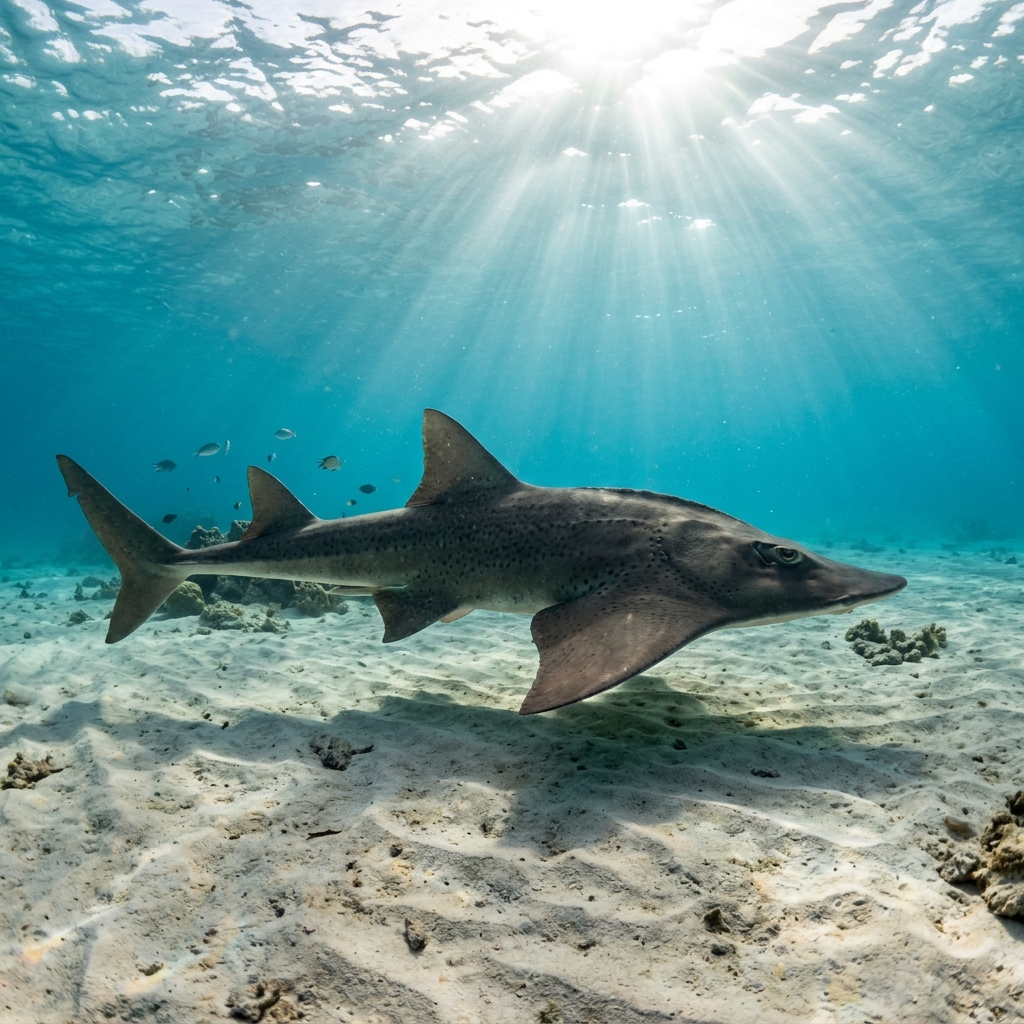
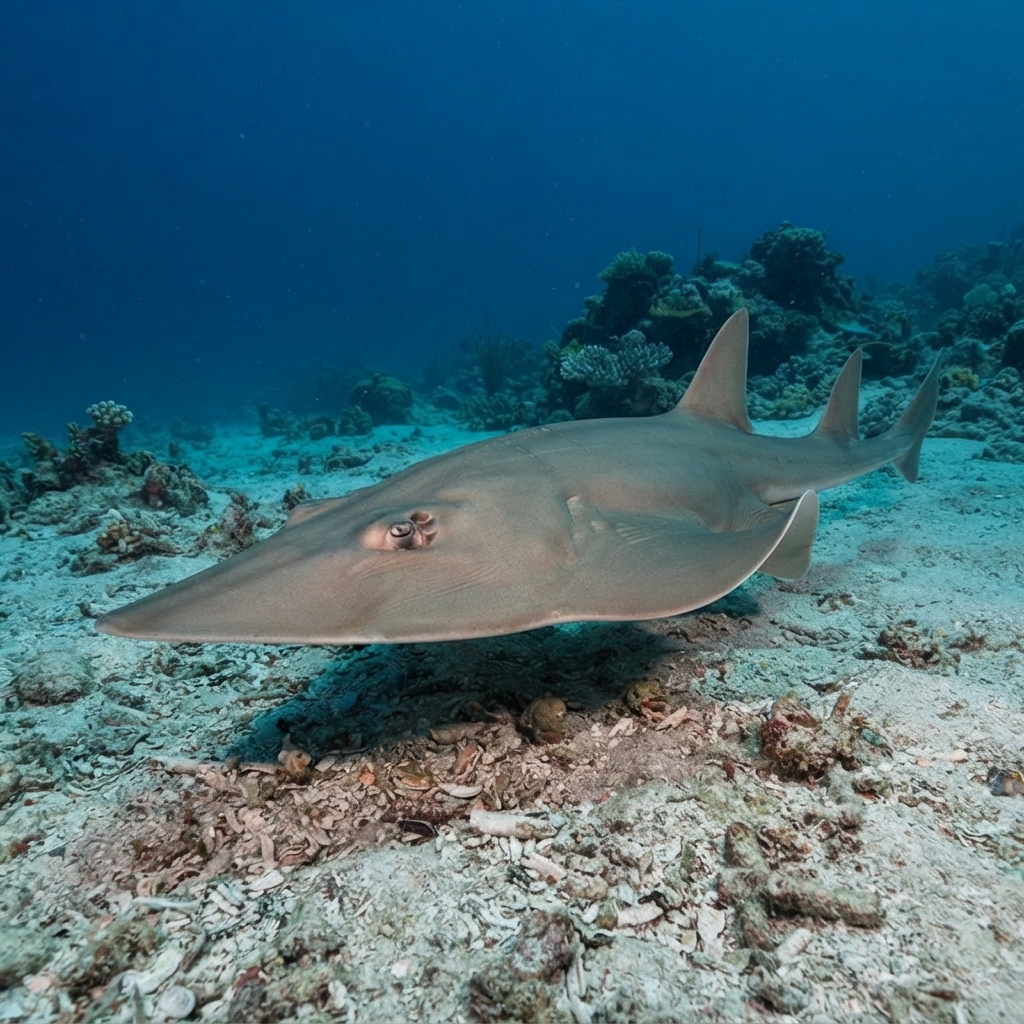
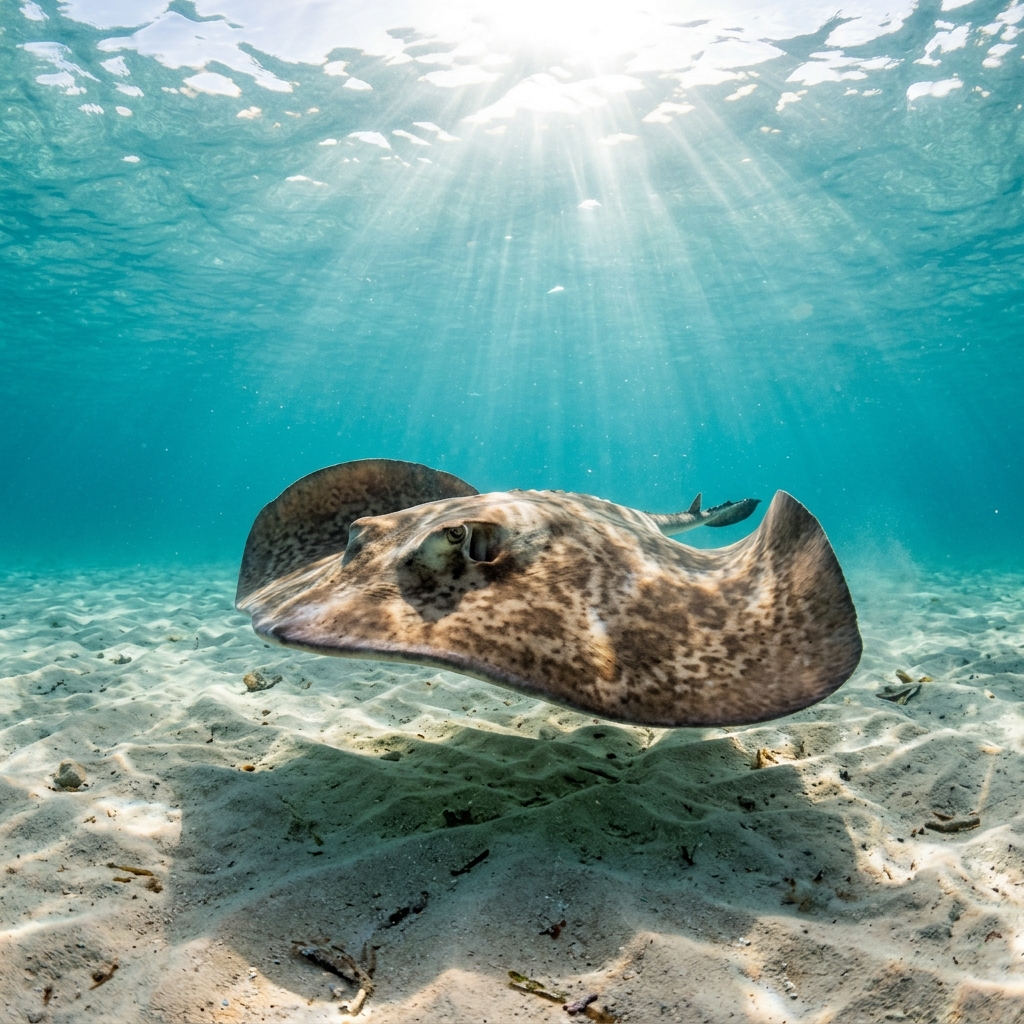
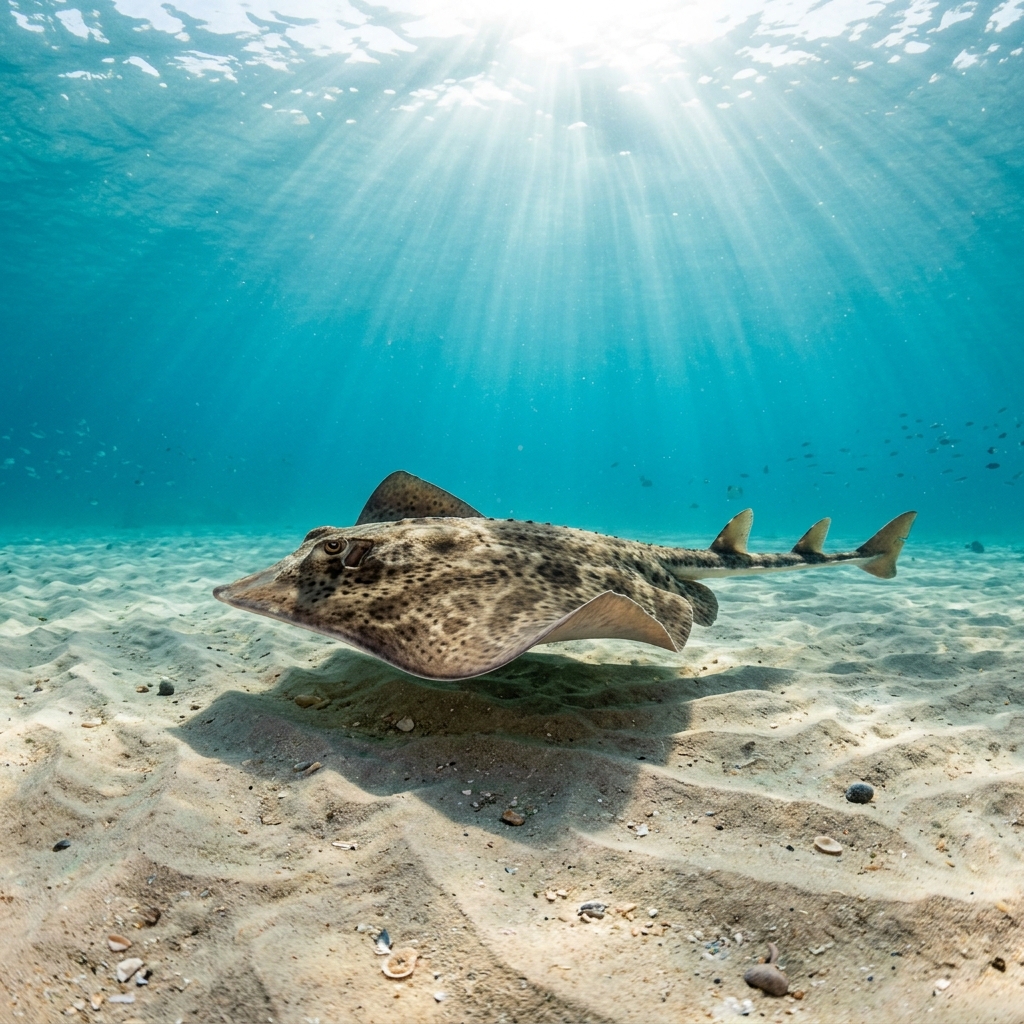
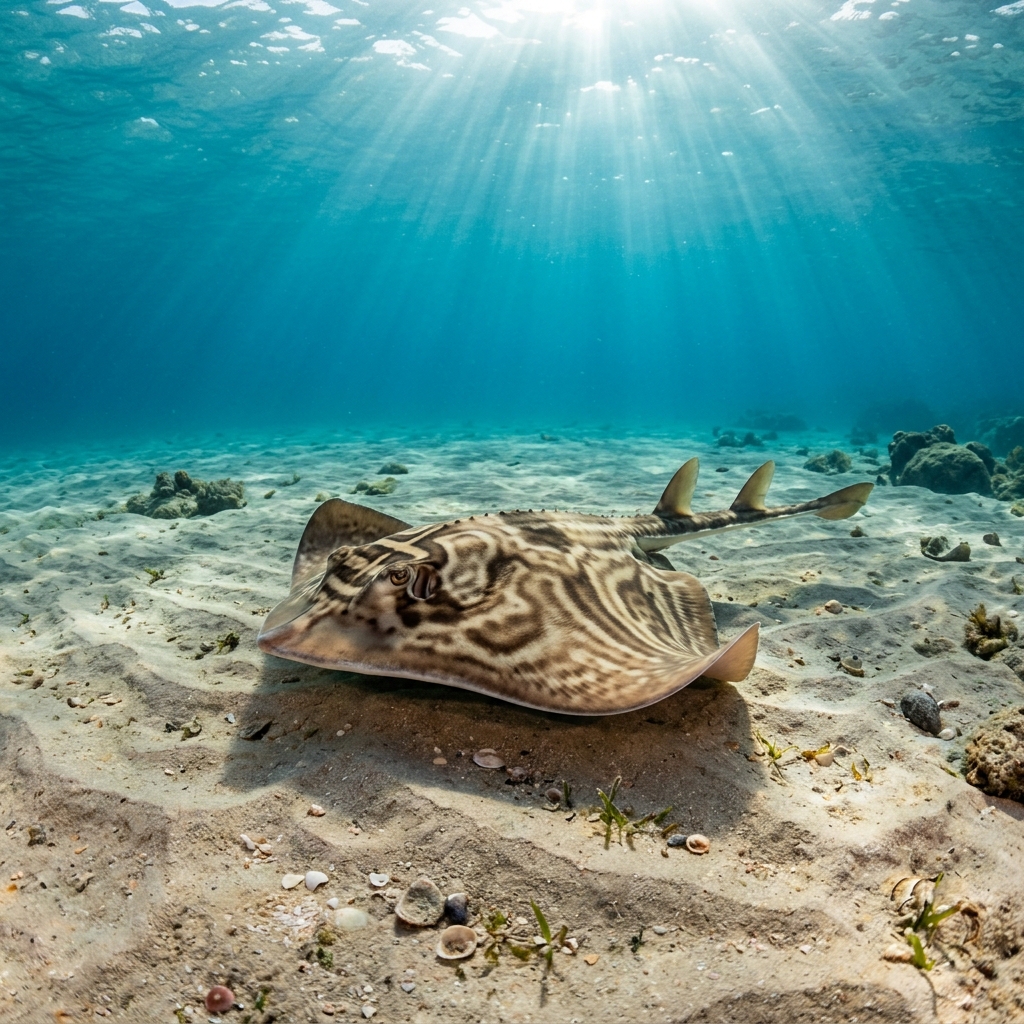
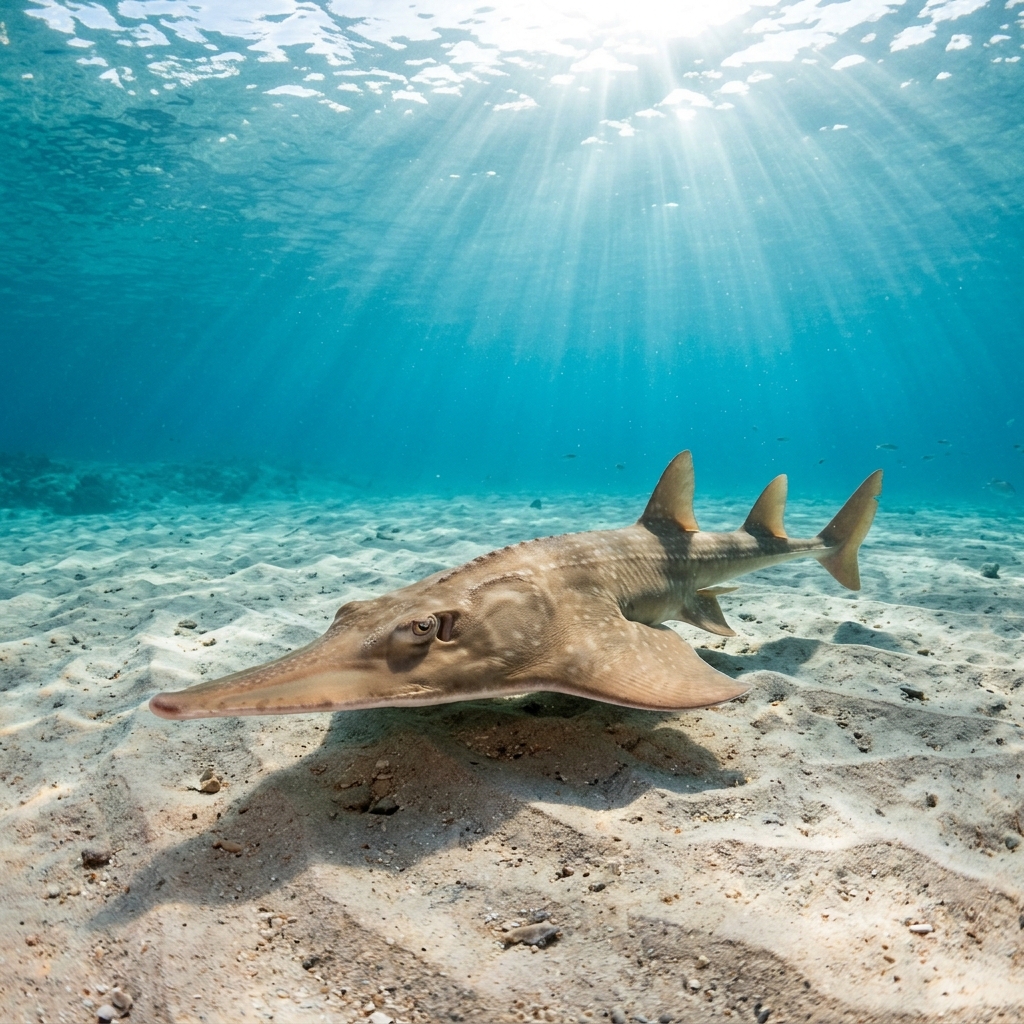
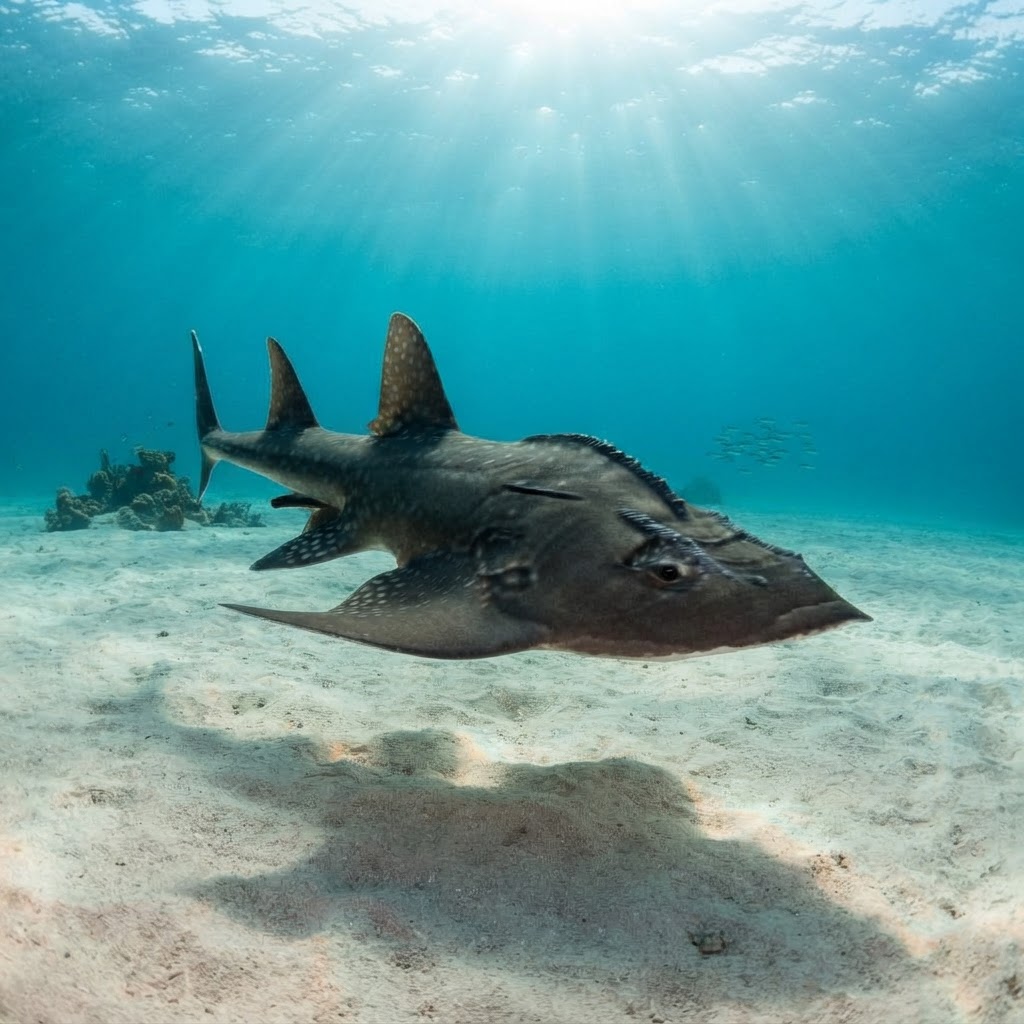
Unmistakable head shape: broad, flattened and rounded with heavy ridges above the eyes, more like a shovel than a shark or a skate. Body is grey to brown with scattered white spots, and the strong shark-like dorsal fins and thick tail set it apart from flatter rays. Adults reach around 2.1 metres and often rest motionless on sand or rubble, wings tucked, looking almost armoured.
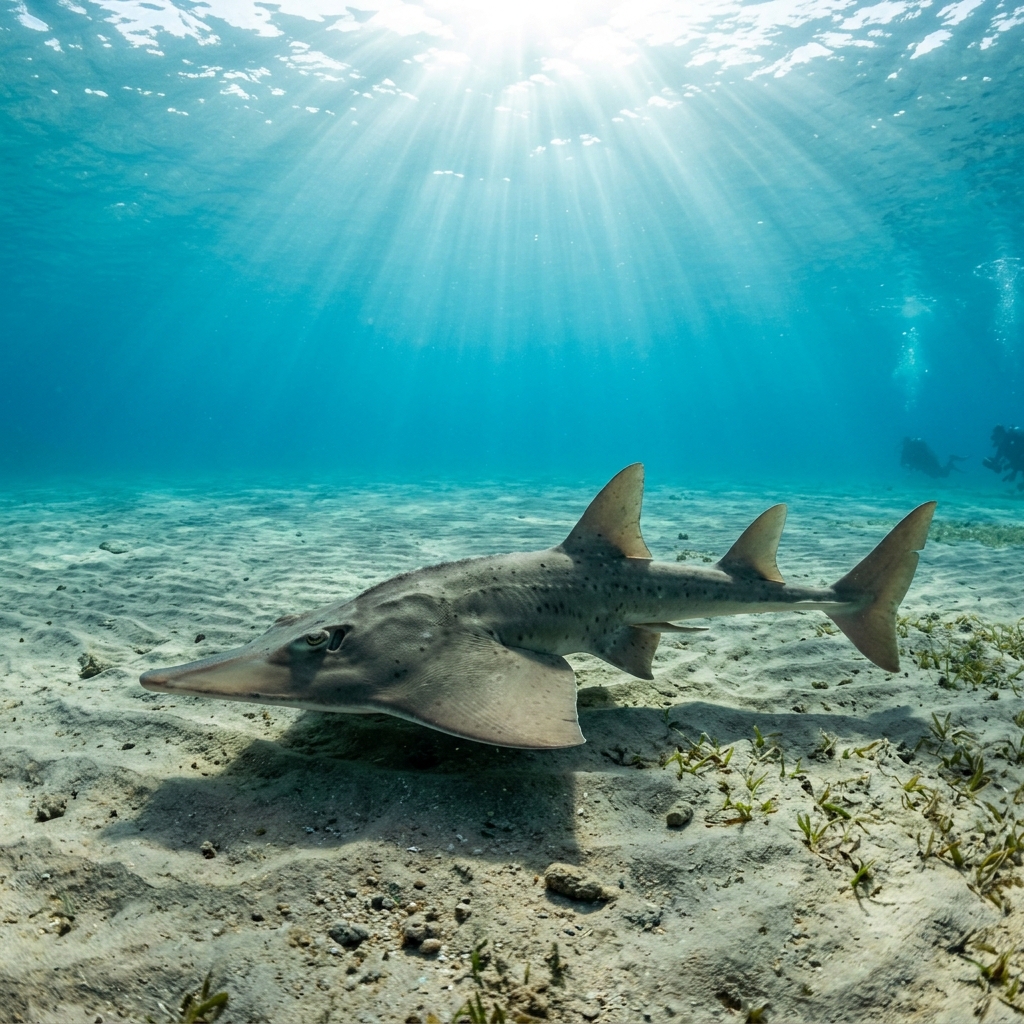
Usually found resting on sand, rubble or reef flats during the day, often tucked against a ledge or half-buried, relying on its blotchy pattern to blend in rather than fleeing. When approached calmly it tends to hold still or move off in an unhurried glide, giving divers a decent look before it settles again elsewhere.
That heavily ridged, shovel-like head is built for crushing shellfish and crustaceans, which it forages for by grubbing along the sea floor rather than hunting in open water.
No clear seasonal pattern in the data, and water temperatures of 24.4 to 29.1 C stay diver-friendly year-round in Queensland, so sightings can happen any month.
Reef neighbours a diver could mistake it for. Use the identification notes above to tell them apart.
Logged in Queensland, Australia, where it turns up as an uncommon find on reef and sand patches rather than a guaranteed sighting.
Mapping where Bowmouth Guitarfish is logged…
The strongest logged sightings come from Queensland, Australia, where divers find them resting on sand and reef flats. Records elsewhere are sparse, so Queensland is currently the most reliable region to look.
There is no detected season in the sighting data, and the species tolerates a wide 24.4 to 29.1 C range, so it can be encountered in any month on Queensland reefs.
Look for the broad, ridged, rounded head, shark-like dorsal fins, a thick tail and a grey-brown body scattered with white spots. It rests flat on the bottom and looks armoured rather than sleek.
They typically reach around 2.1 metres in length, making them one of the larger rays a diver is likely to encounter resting on a reef or sand flat.
No, they are not considered dangerous to divers. They tend to rest quietly on the bottom and move away calmly if approached, posing no real threat.
Site and sighting data is aggregated from diver logs, iNaturalist and GBIF. For taxonomy and conservation status:
Halavi Guitarfish
412 sites