Glaucostegus typus
Spot Giant Guitarfish in Queensland, the Red Sea, and Muscat. Sightings peak Oct, Feb in the south. Here's where and when divers find them.
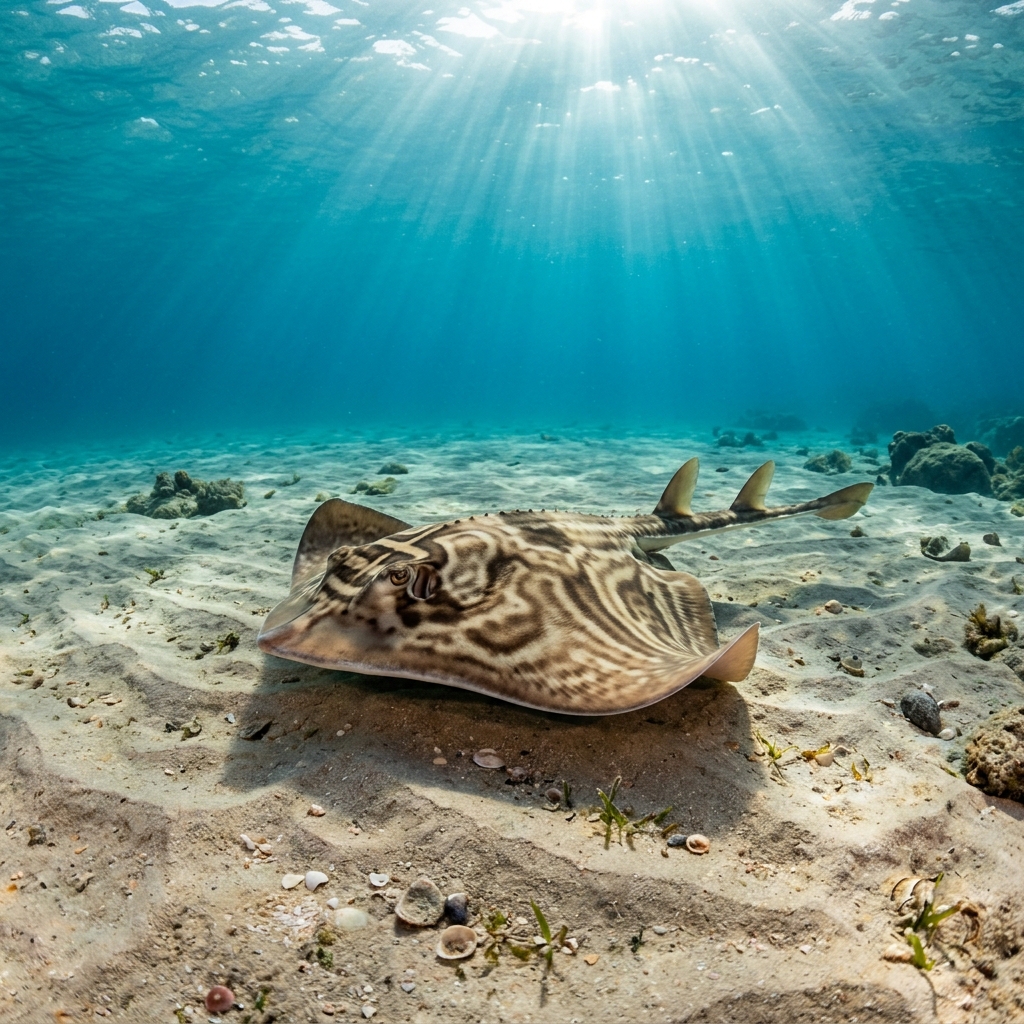
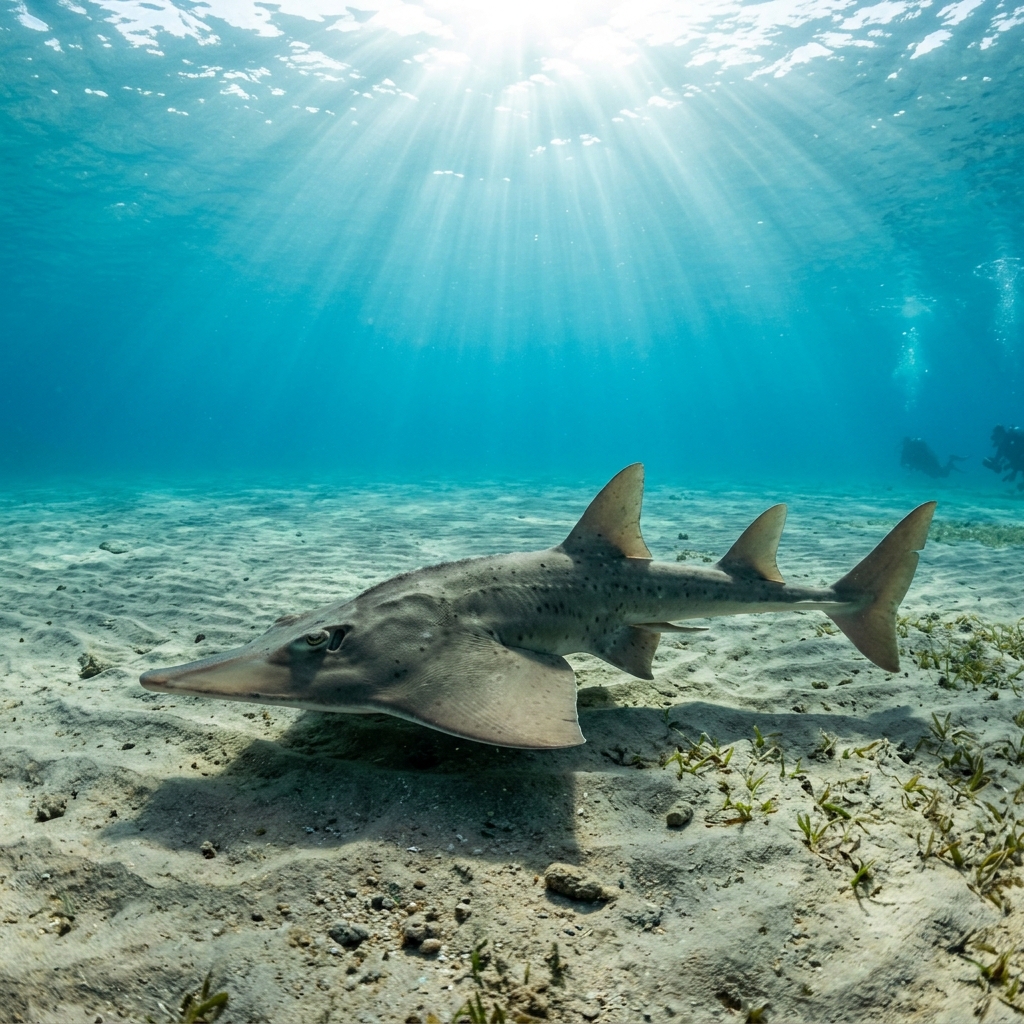
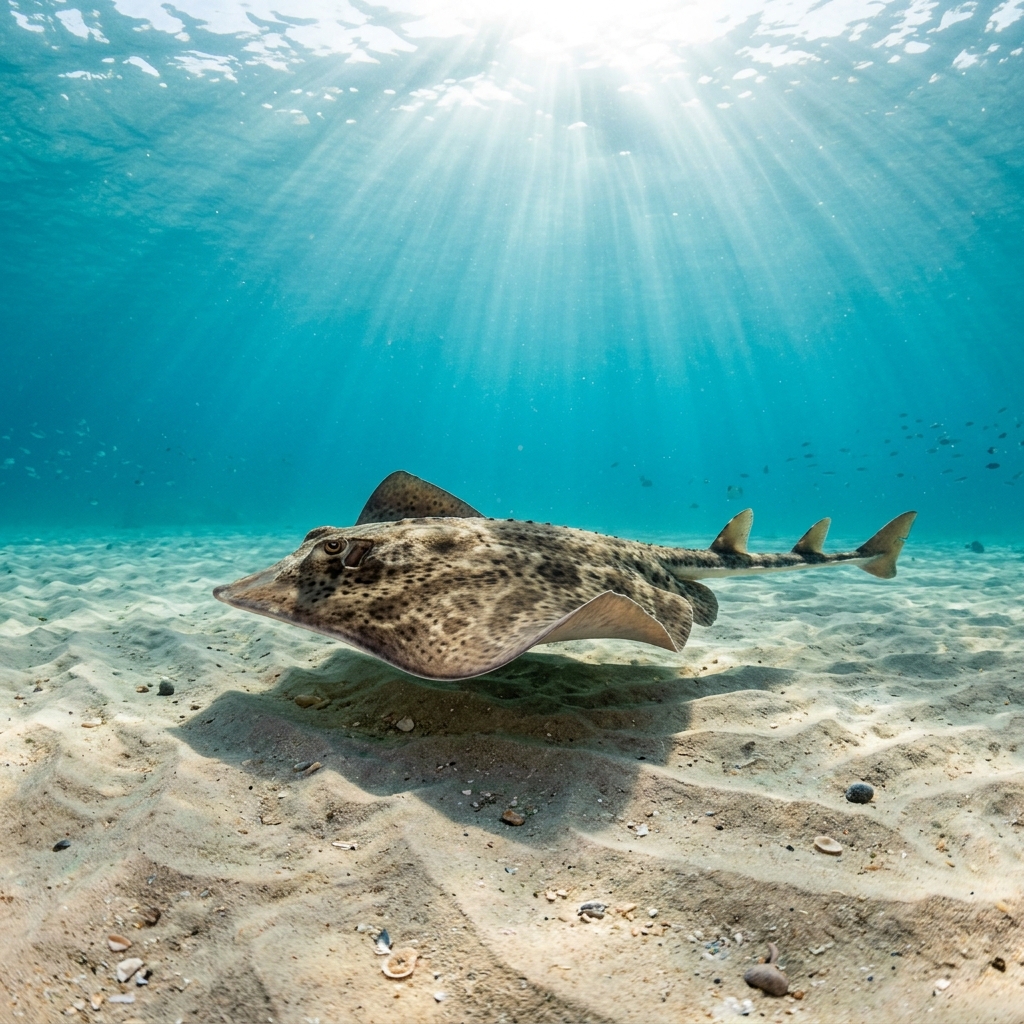
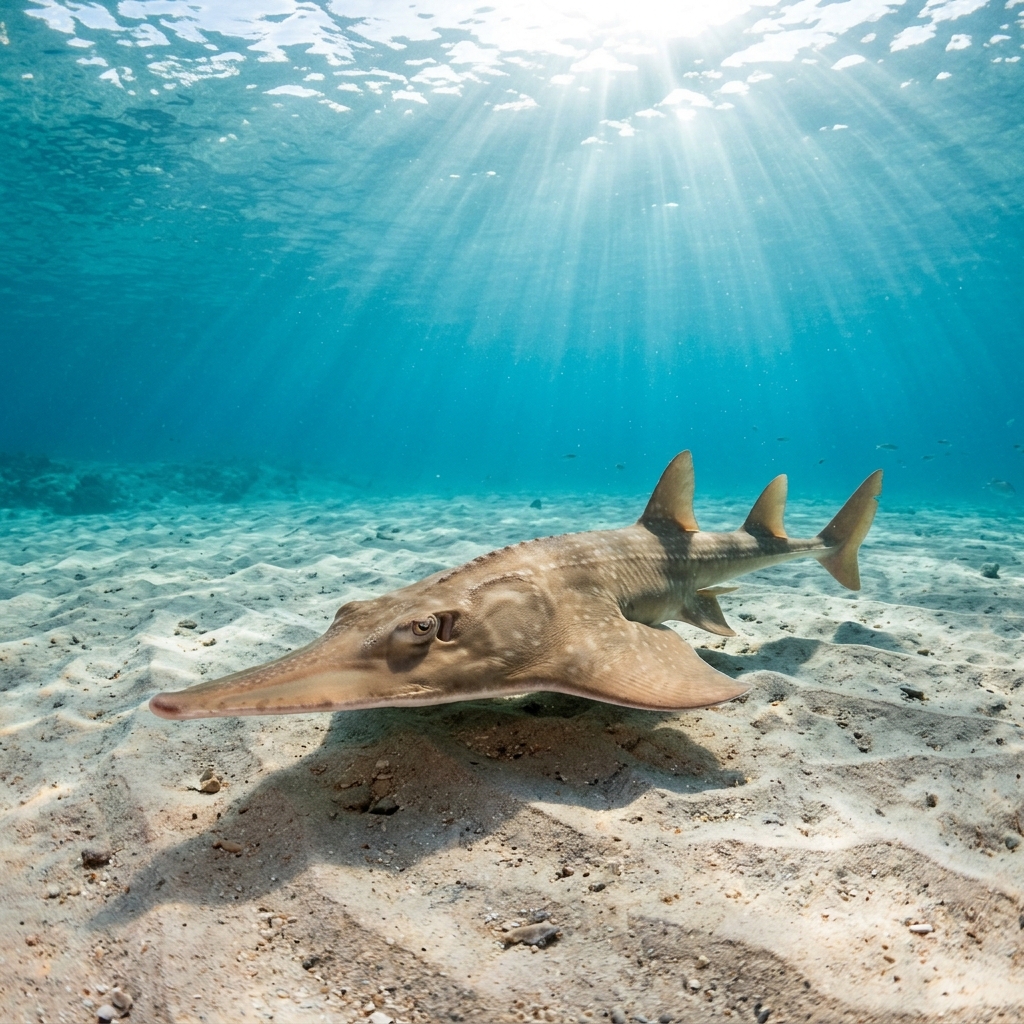
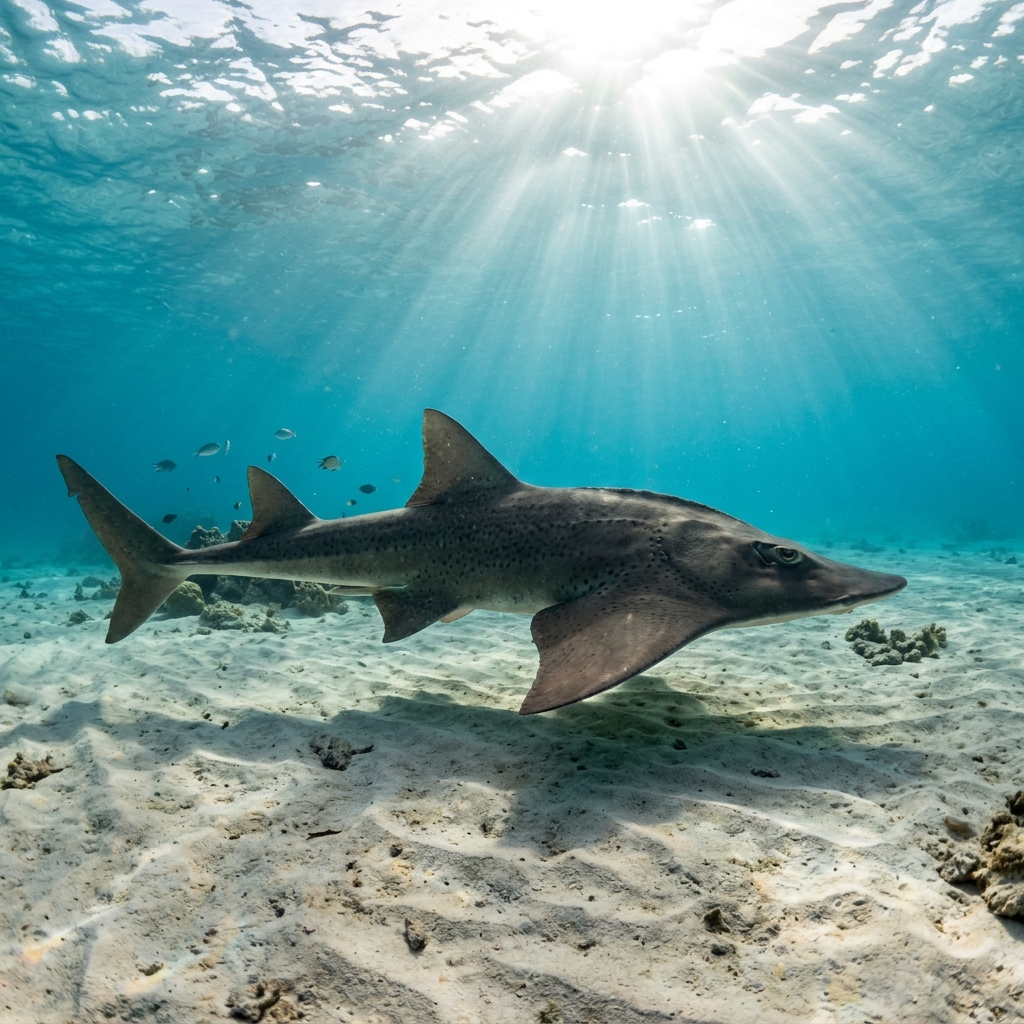
Flat, wedge-shaped head and pectoral disc blend into a thick, muscular tail that looks more shark than ray, the classic guitarfish body plan. Overall colour is sandy grey-brown on top, pale underneath, with no bold spots or markings to distract the eye. In the water the sheer bulk is the biggest giveaway: this is a large, heavy-bodied ray that dwarfs the smaller fiddler rays or common guitarfish you might also encounter. Look for the broad, rounded snout and the two prominent dorsal fins sitting well back along the tail.
Divers most often find Giant Guitarfish resting motionless on sandy or rubble patches, sometimes at the edge of reef structures, where their sandy colouring makes them easy to overlook at first glance. They are not aggressive and typically hold their position when approached calmly, giving patient divers a good look before sliding away with a few powerful tail strokes. Encounters at depth tend to be solitary; groups are occasionally reported but are the exception.
Despite looking like a flattened shark from the tail up, Giant Guitarfish are true rays, their gills open on the underside of the body, not the sides. They are powerful ambush predators of bottom-dwelling crustaceans and bony fish, using suction and crushing tooth plates rather than biting.
In the Southern Hemisphere (primarily Queensland and the Northern Territory) sightings concentrate between October and February. No concentrated seasonal signal is recorded for the Red Sea or Oman sites in this data, so those destinations may be worth targeting year-round, bearing in mind the species is observed in water temperatures between roughly 22 and 27 °C.
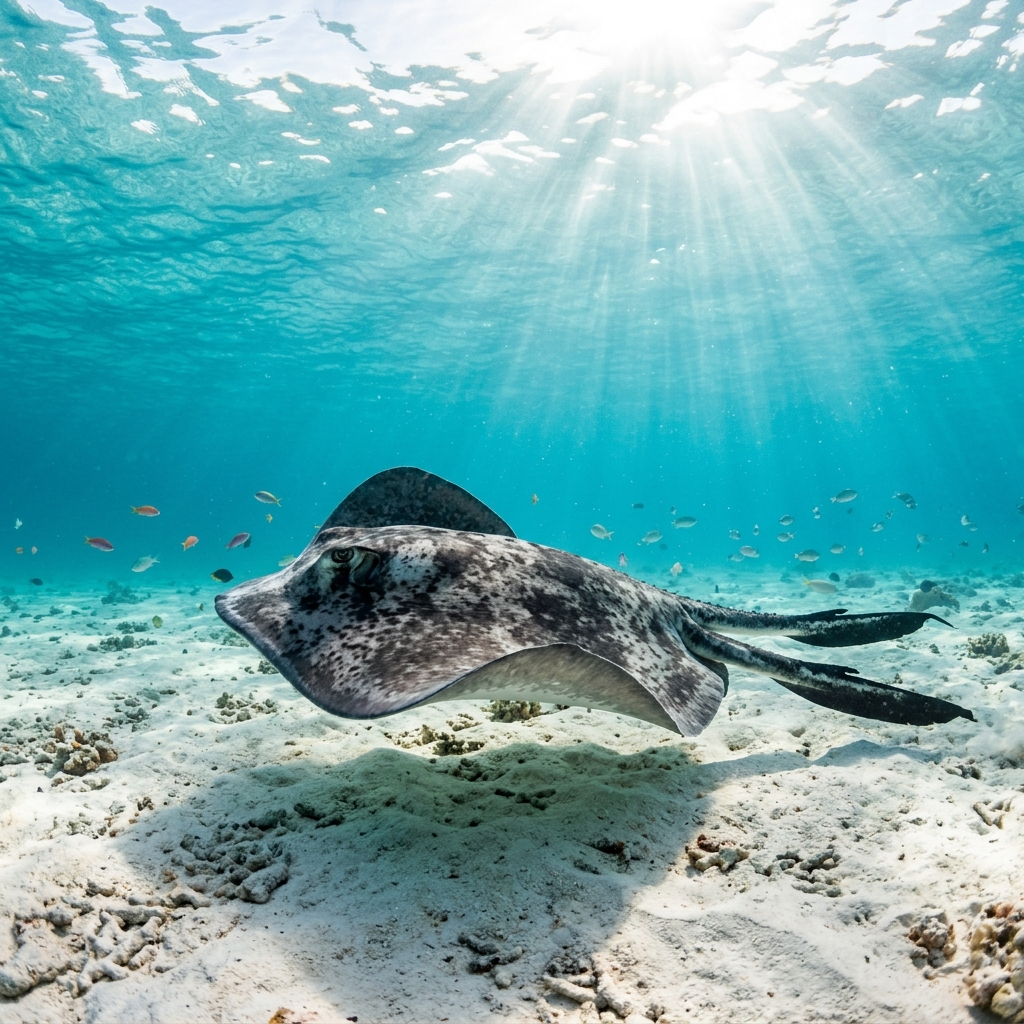
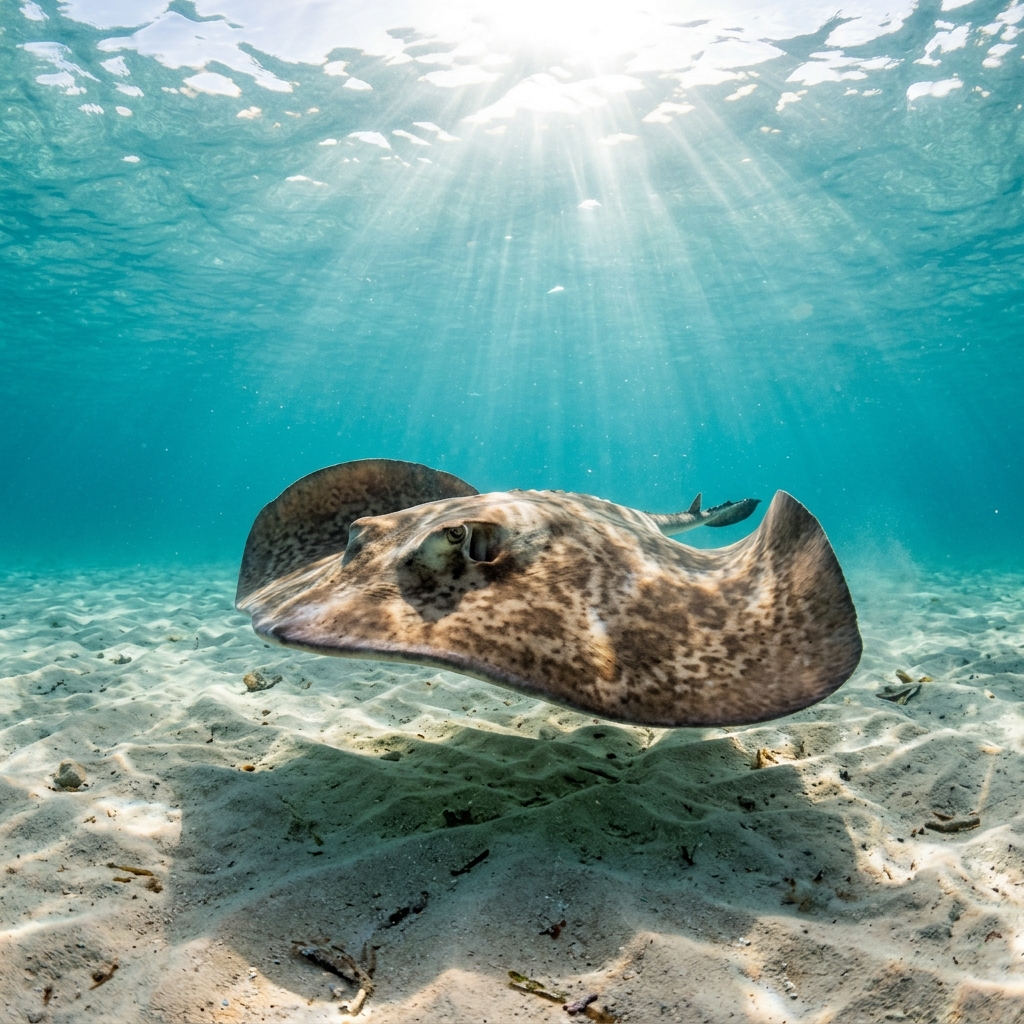
Reef neighbours a diver could mistake it for. Use the identification notes above to tell them apart.
Most commonly logged in Australia, Egypt, and Oman, with Queensland and the Northern Territory together accounting for the bulk of Australian records. In the Red Sea, Marsa Alam and Hurghada are the key areas, and Muscat provides strong sightings along the Omani coast. Sites where it is reported as common rather than merely uncommon tend to cluster in Queensland and Marsa Alam.
Mapping where Giant Guitarfish is logged…
The best-documented dive areas are Queensland and the Northern Territory in Australia, the Marsa Alam stretch of Egypt's Red Sea coast, and the waters around Muscat in Oman. Australia holds the most recorded sites overall, but the Red Sea and Oman offer solid chances too.
In Australian waters, sightings concentrate from October through February, the austral spring and summer. For Egypt and Oman there is no strong seasonal peak in the data, so visits at any time of year are plausible, particularly when water temperatures fall in the 22-27 °C range.
Look for the unmistakable guitar-body shape: a broad, flat disc at the front merging into a thick, muscular, shark-like tail with two dorsal fins. The upper surface is plain sandy grey-brown with no prominent spots. Size and bulk are the quickest field cues, this is a large, heavy animal compared with smaller local guitarfish relatives.
No. Giant Guitarfish pose no meaningful threat to divers. They are not aggressive and will usually stay still or swim calmly away when approached. Like any large animal, they deserve respectful distance, close pursuit can stress the animal, but there is no sting, no venom, and no record of unprovoked harm to divers.
Yes, they are listed as Critically Endangered by the IUCN, one step from extinction in the wild. Bycatch and targeted fishing have severely reduced populations across their Indo-Pacific range. Divers can help by logging verified sightings, which feeds into scientific monitoring efforts.
The Giant Guitarfish is listed as critically endangered by the IUCN. Observe from a distance, avoid touching or feeding it, and report sightings to local marine research organisations.
Giant Guitarfish are listed as Critically Endangered on the IUCN Red List, primarily because of overfishing pressure across their Indo-Pacific range. If you see one, log it, your observation contributes to population records that researchers and managers rely on, and give the animal space so it doesn't flee a resting site it may depend on.
Site and sighting data is aggregated from diver logs, iNaturalist and GBIF. For taxonomy and conservation status:
Halavi Guitarfish
412 sites