Pseudobatos productus
Flat-bodied and shark-tailed, this ray is a reliable sandy-bottom find off California, most often logged as an uncommon sighting year-round.
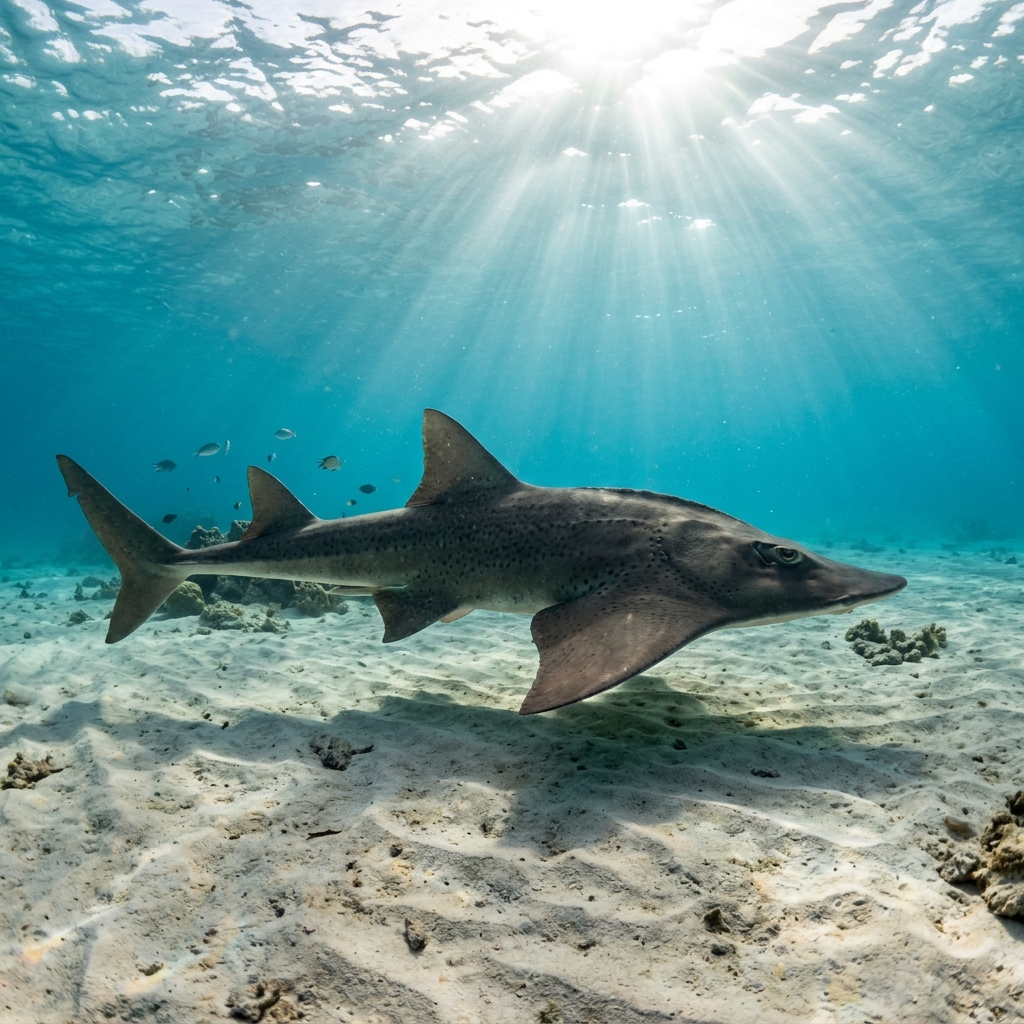
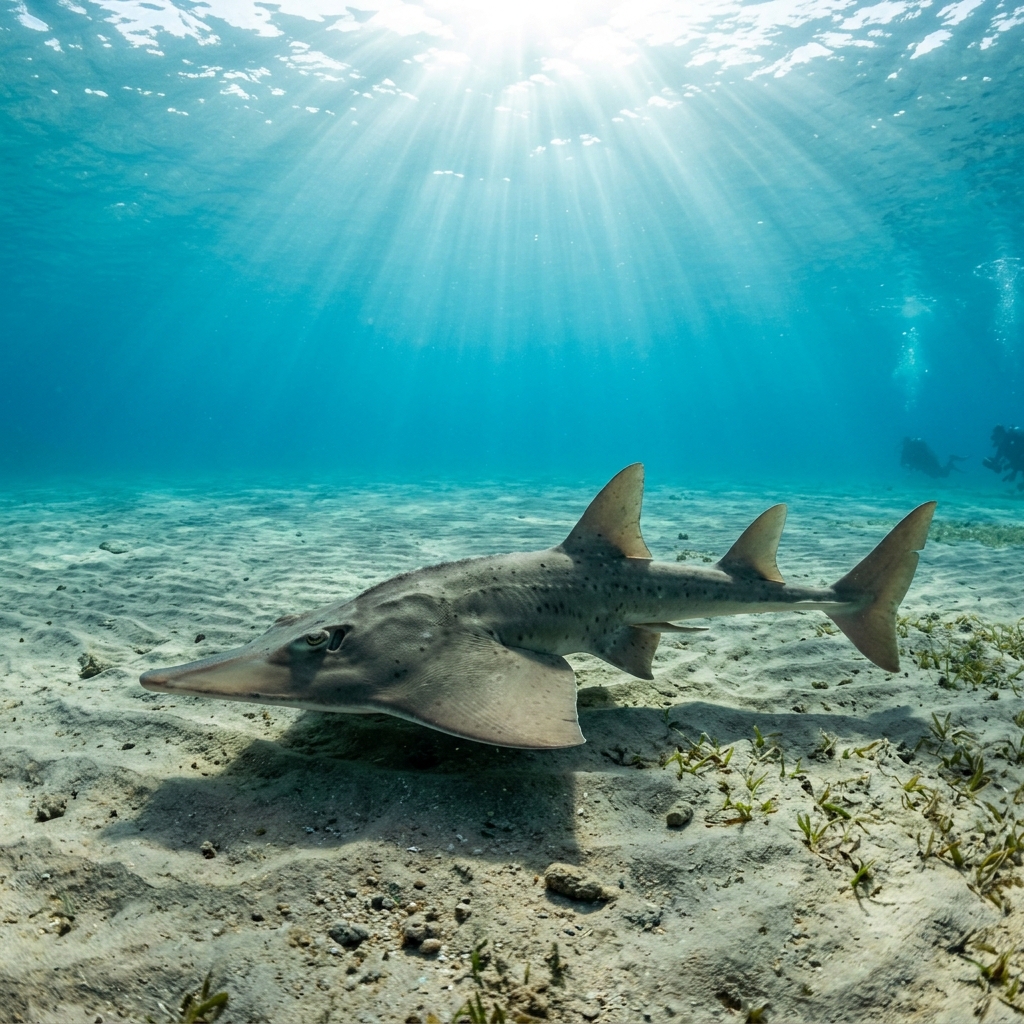
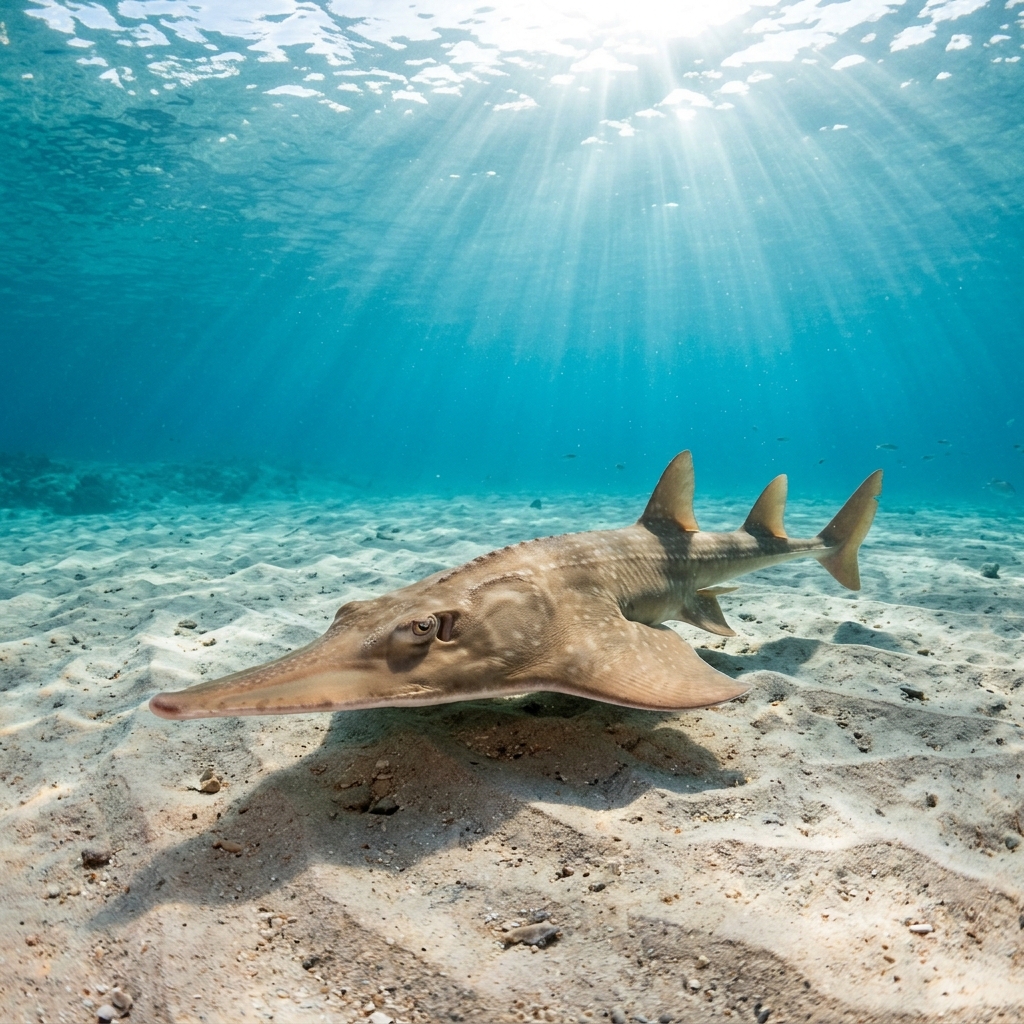
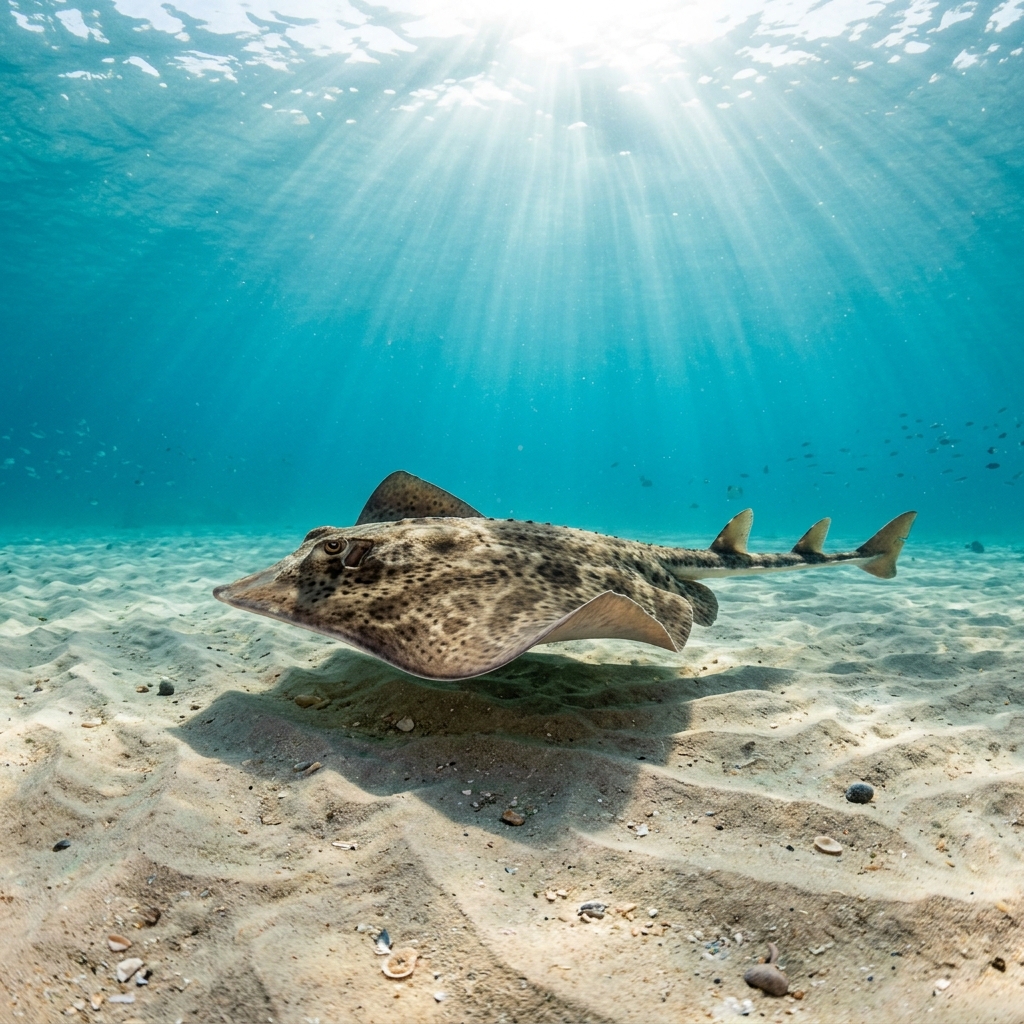
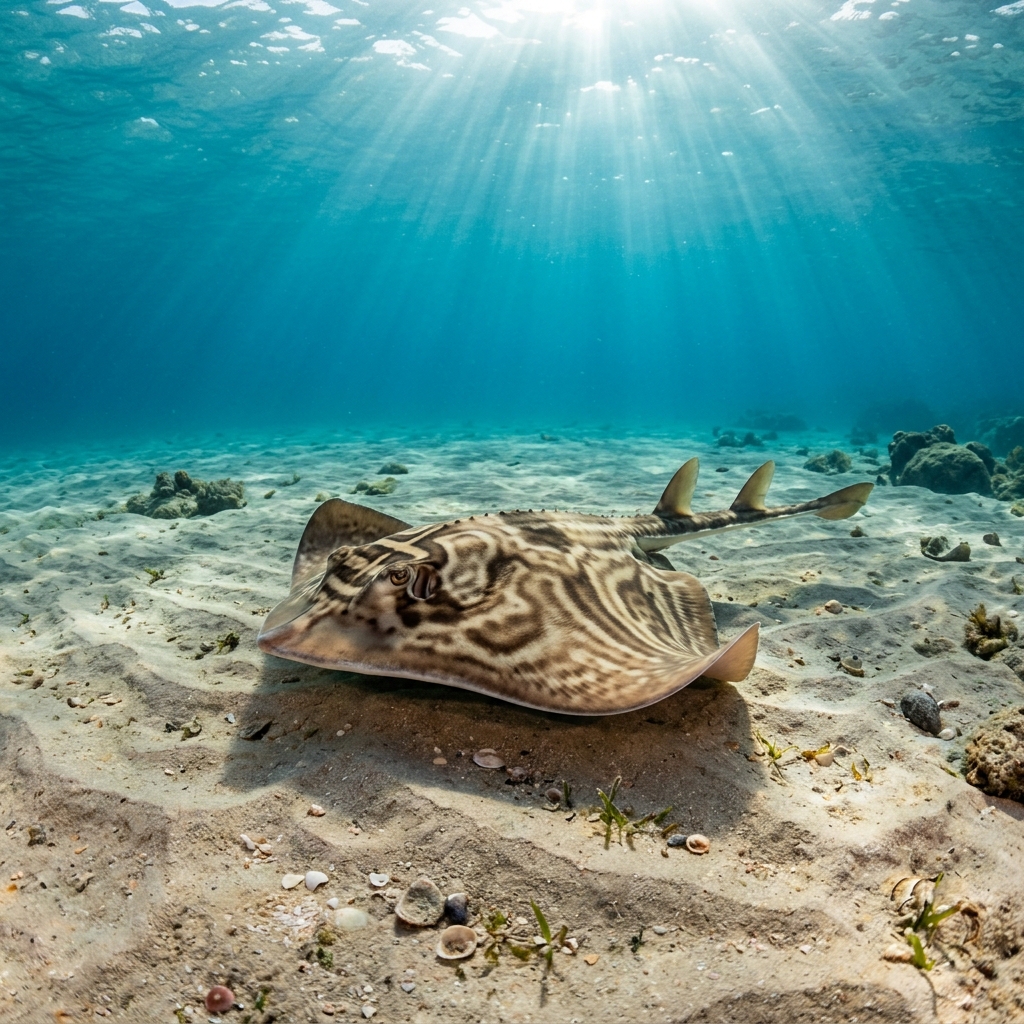
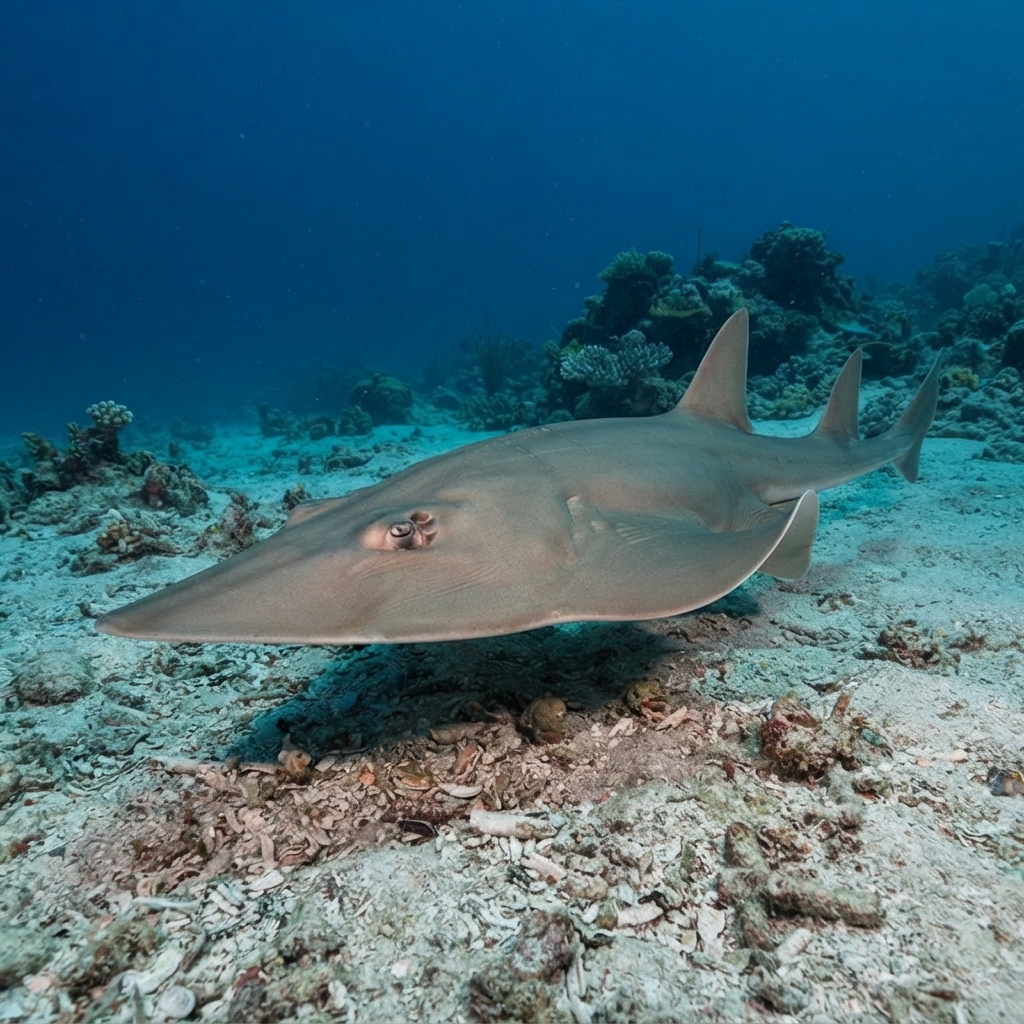
A guitar-shaped body sums it up: a broad, flattened triangular head and pectoral disc tapering into a long, shark-like tail with a distinct dorsal fin. Colouring runs sandy grey to olive-brown on top, pale underneath, which makes it blend into the seafloor it lies on. At around 83 cm it is midsized for the group, easy to mistake for a small shark from a distance until you spot the flattened, ray-like head.
Usually seen resting motionless on sand or partially buried with just the eyes and tail visible, often near structure like kelp holdfasts or rocky reef edges. It tends to hold still as divers approach and will glide off low over the bottom rather than bolt if disturbed. Most sightings are during the day on sandy flats between 1 and 91 m, generally in the shallower end of that range.
Despite the shark-like tail, this is a true ray, and it feeds by rooting through sand for worms, crustaceans and small molluscs rather than hunting in open water.
There is no detected seasonal peak in the data, so treat this as a year-round sighting. It sits comfortably in the 15.3 to 25.9 C range logged for California waters, which covers the site's temperature swings across the year.
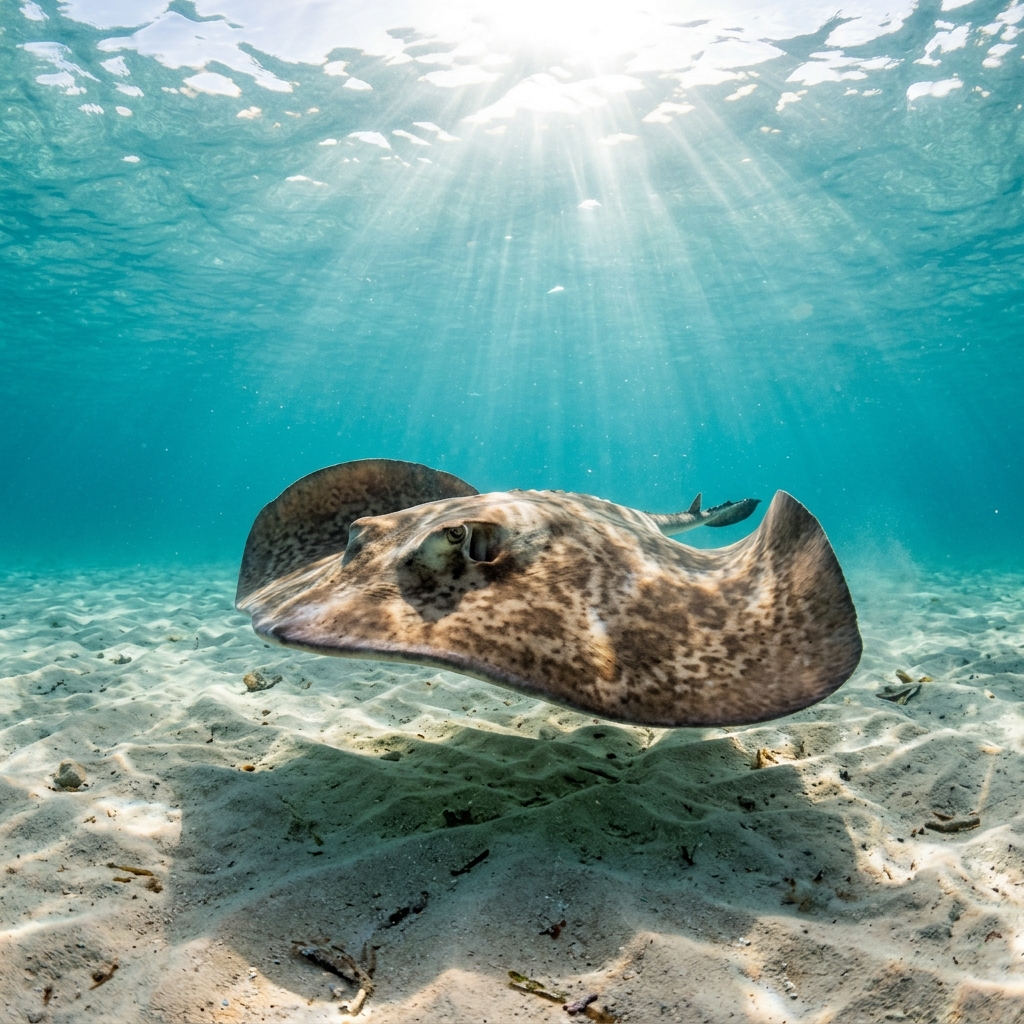
Reef neighbours a diver could mistake it for. Use the identification notes above to tell them apart.
Logged almost exclusively off the United States, with California carrying the vast majority of recorded sightings. Within California it turns up on sandy patches near kelp beds and reef edges rather than on hard structure itself.
Mapping where Shovelnose Guitarfish is logged…
California is by far the strongest region for sightings, with divers finding them resting on sandy bottoms near kelp beds and reef edges along the coast.
There is no strong seasonal pattern in sighting data, so they are considered a year-round find in California waters, which stay within a 15 to 26 C range.
Look for a flat, triangular head and disc that tapers into a long, shark-like tail with a visible dorsal fin. Sandy grey to olive colouring lets it blend into the seafloor where it usually rests.
They typically reach around 83 cm in length, making them a midsized member of the guitarfish family that is easy to spot but not intimidating in size.
No, they pose no danger to divers. They are bottom-dwelling and calm, usually just resting on sand and moving off slowly if approached.
Site and sighting data is aggregated from diver logs, iNaturalist and GBIF. For taxonomy and conservation status:
Halavi Guitarfish
412 sites