Rhynchobatus australiae
Rare but recorded across Queensland and New South Wales, the bottlenose wedgefish haunts warm Australian waters between 21 and 27 °C. Here's where to look.
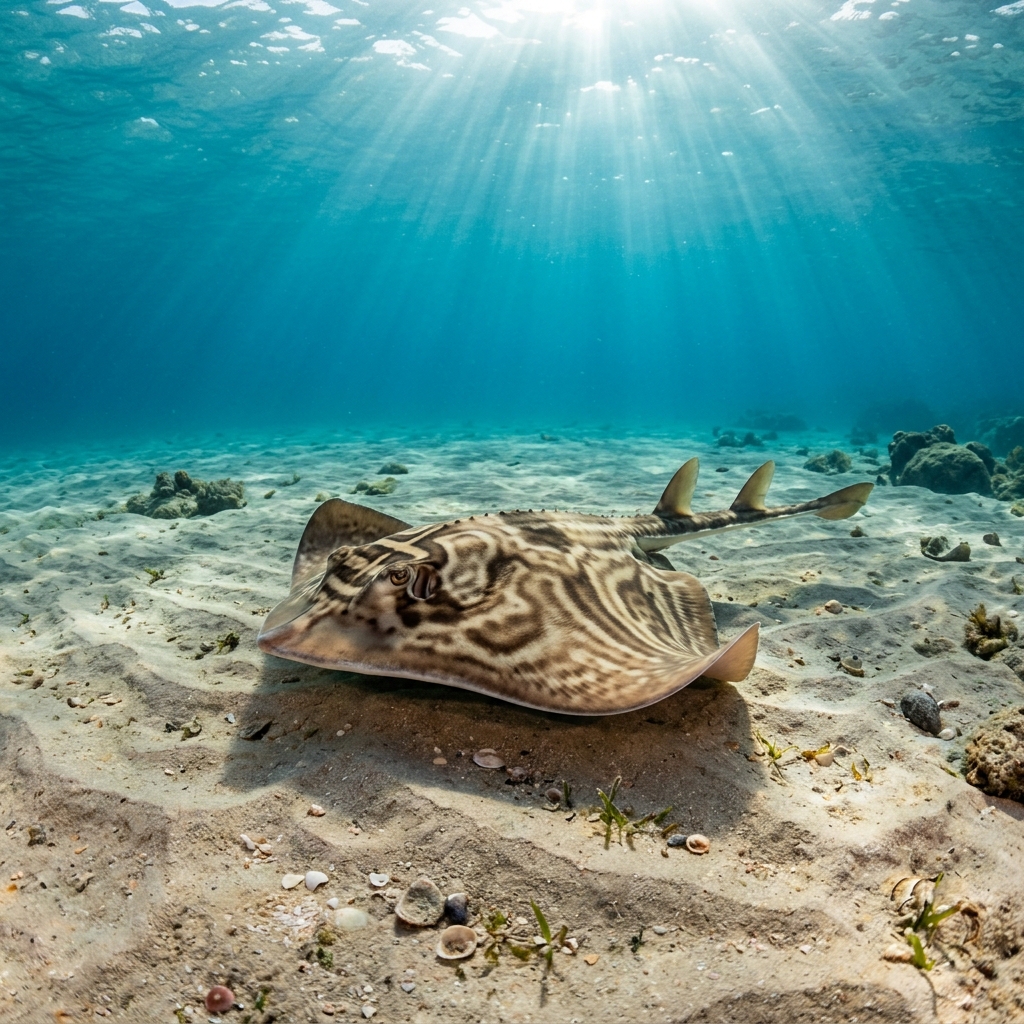
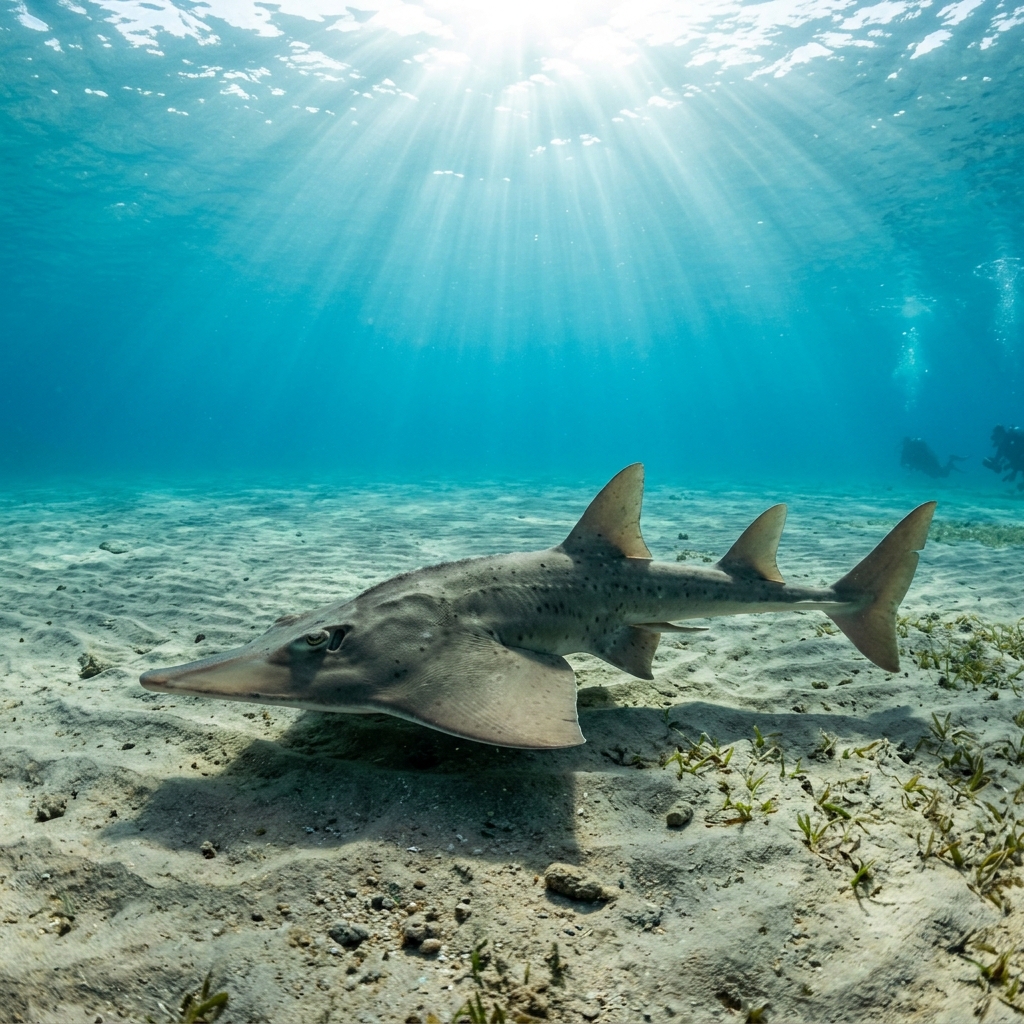
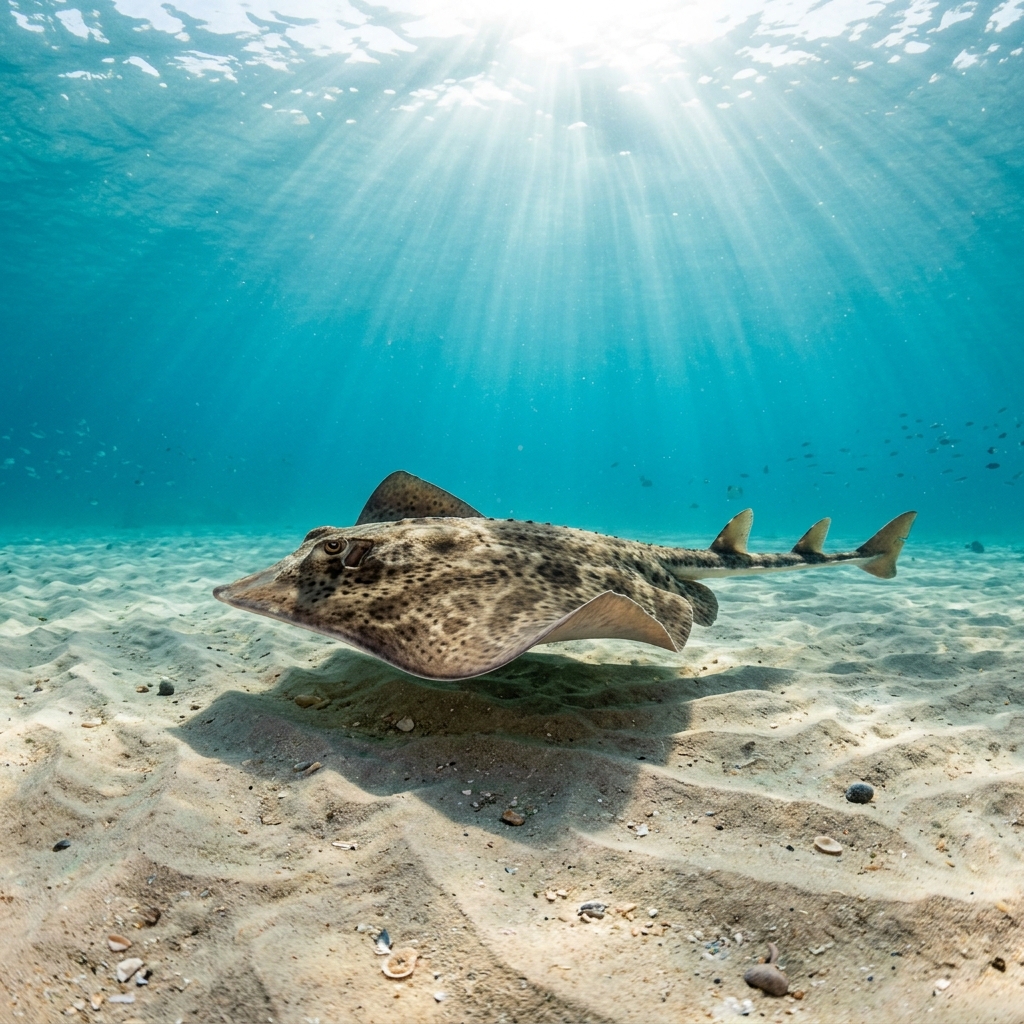
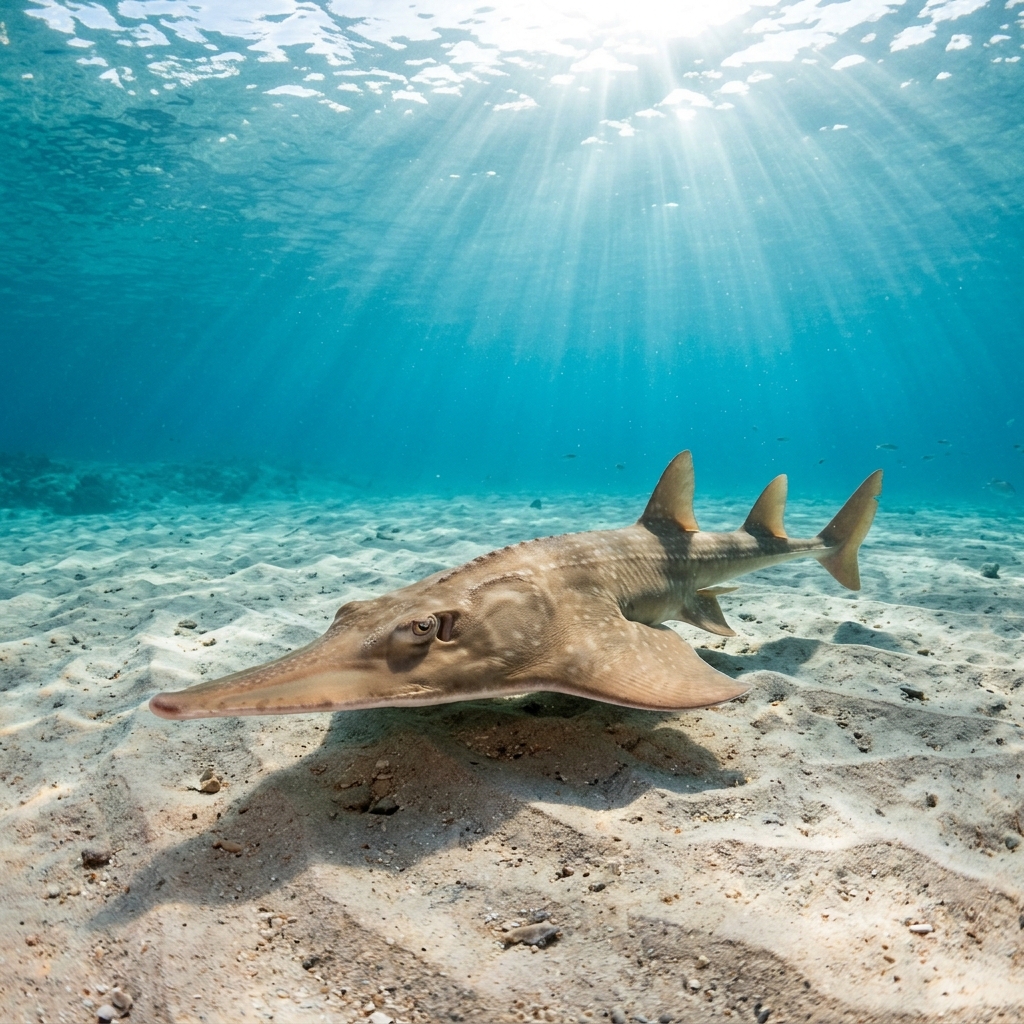
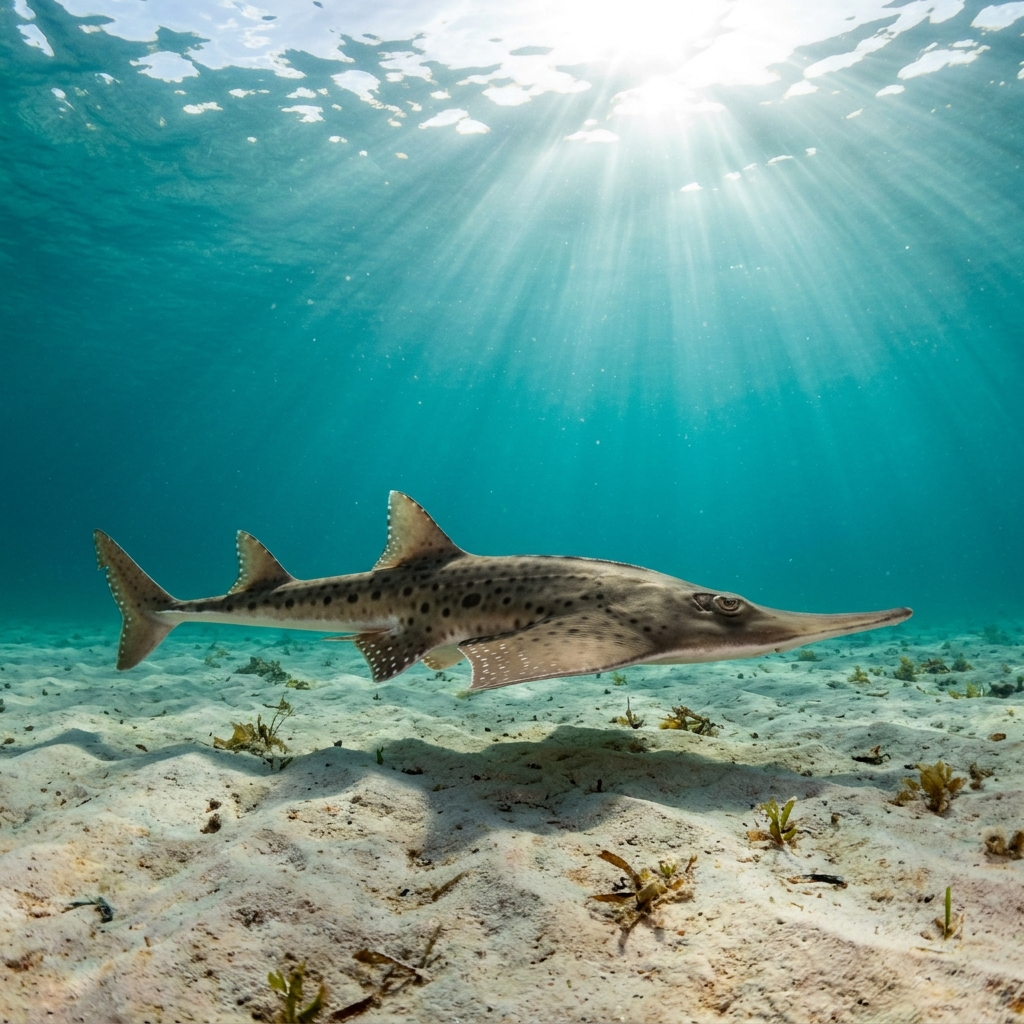
A flattened, guitar-shaped body sits midway between a shark and a ray: broad pectoral fins fused to the head, two prominent dorsal fins set well back, and a distinctly pointed, wedge-shaped snout that gives this animal its name. Colouration is typically grey to grey-brown on the dorsal surface, often with scattered pale or dark spots, and a white underside. In the water it can look disconcertingly shark-like from the side, but the flattened head and wide disc set it apart immediately. Size is difficult to judge without a reference object, but adults are substantial animals well over a metre in length.
Most encounters involve animals resting or cruising slowly over sandy or rubble substrate near reefs, typical behaviour for a benthic (bottom-associated) elasmobranch. They are not reported to be aggressive and tend to tolerate calm divers at a distance, though like most large rays they may move off if approached too quickly. Sightings are solitary in the vast majority of cases.
Wedgefish are part of an ancient lineage of rays that evolved a shark-like body plan independently, making them one of the few ray groups where the dorsal fins are large and functional for propulsion rather than just balance.
There is not yet enough monthly sighting data to define a peak season, so treat encounters as possible year-round. The observed water-temperature range of roughly 21 to 27 °C fits Queensland's warm-temperate to tropical coastal waters across most months.
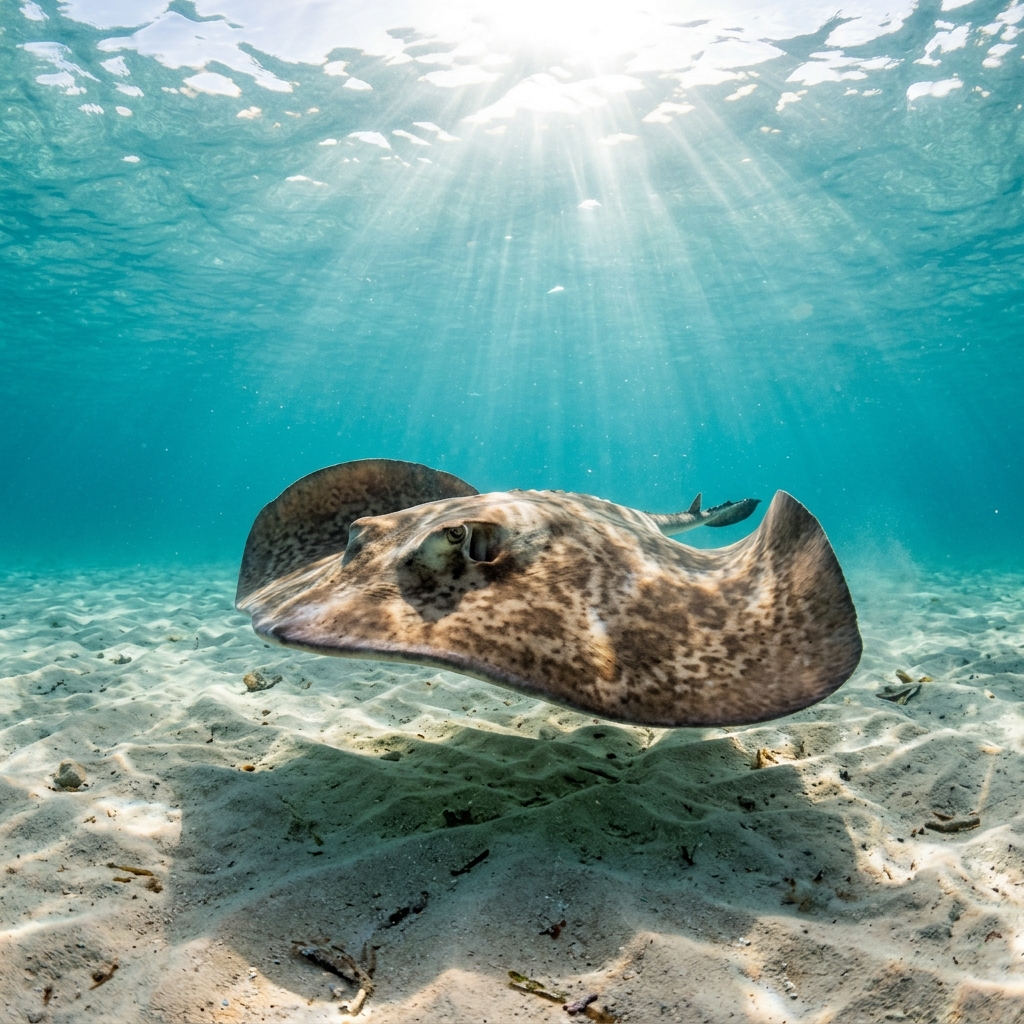
Reef neighbours a diver could mistake it for. Use the identification notes above to tell them apart.
All confirmed sightings come from Australia, with the overwhelming majority logged in Queensland, making the Great Barrier Reef region and surrounding Queensland coastal waters the best-known area to encounter one. A smaller cluster of records comes from New South Wales, suggesting the species extends down the eastern seaboard into cooler subtropical waters.
Mapping where Bottlenose Wedgefish is logged…
All known diver sightings come from Australia's east coast. Queensland accounts for the large majority of records, with additional sightings from New South Wales. Sandy and rubble areas near reef structures in these regions are the most likely habitats to search.
There is not enough seasonal data to point to a single best window. The species has been recorded in water temperatures between 21 and 27 °C, which spans much of the Queensland year, so encounters appear possible across all seasons.
Look for a large, flattened animal with a distinctly pointed wedge-shaped snout, wide pectoral disc, and two prominent dorsal fins set well back on the body. The overall shape is a cross between a shark and a ray. Grey-brown dorsal colouration with a white belly and occasional pale spotting are characteristic. It differs from guitarfish and fiddler rays by its larger size and more angular, pointed snout.
Yes. The bottlenose wedgefish is classified as Critically Endangered by the IUCN, the highest threat category before extinction in the wild. Populations have declined sharply due to fishing pressure across their Indo-Pacific range. Divers who encounter one are encouraged to log and photograph the sighting to support population monitoring.
Exact size data for this species is limited, but adults are large animals, with close relatives in the Rhinidae family commonly reaching 2 to 3 metres in total length. In the water they appear substantial, comparable in bulk to a large ray or small shark.
It is a ray, despite looking convincingly shark-like from the side. Wedgefish belong to the family Rhinidae and are part of the batoid group, the same broad lineage as stingrays and mantas. The shark-like dorsal fins and upright tail are the result of independent evolution, not close kinship with sharks.
The Bottlenose Wedgefish is listed as critically endangered by the IUCN. Observe from a distance, avoid touching or feeding it, and report sightings to local marine research organisations.
Listed as Critically Endangered on the IUCN Red List, this species faces severe pressure from targeted and bycatch fishing across its range. If you see one, log your sighting with as much detail as possible; diver observations contribute meaningfully to understanding where surviving populations occur.
Site and sighting data is aggregated from diver logs, iNaturalist and GBIF. For taxonomy and conservation status:
Halavi Guitarfish
412 sites