Glaucostegus halavi
Flat-bodied and shark-tailed, Halavi guitarfish turn up on sandy reef flats from Egypt's Marsa Alam to Oman's Musandam year-round.
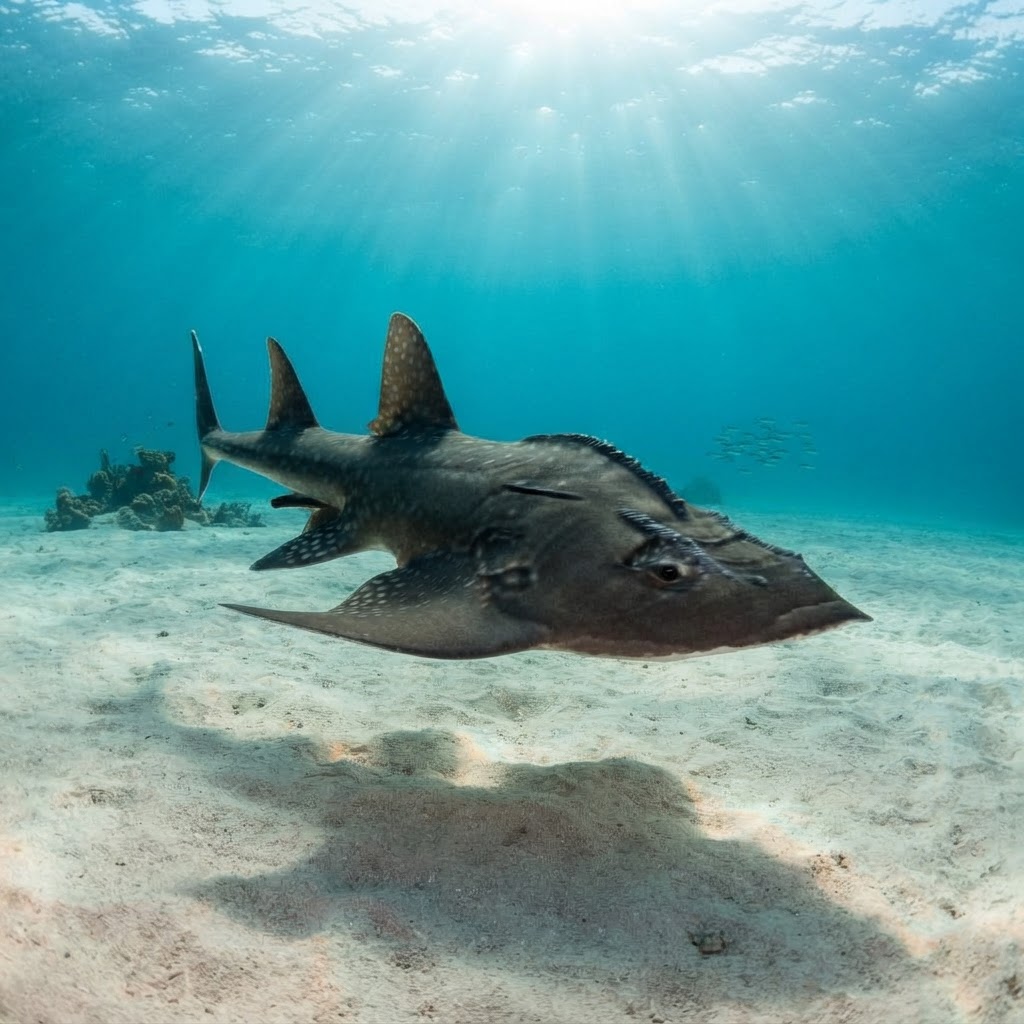
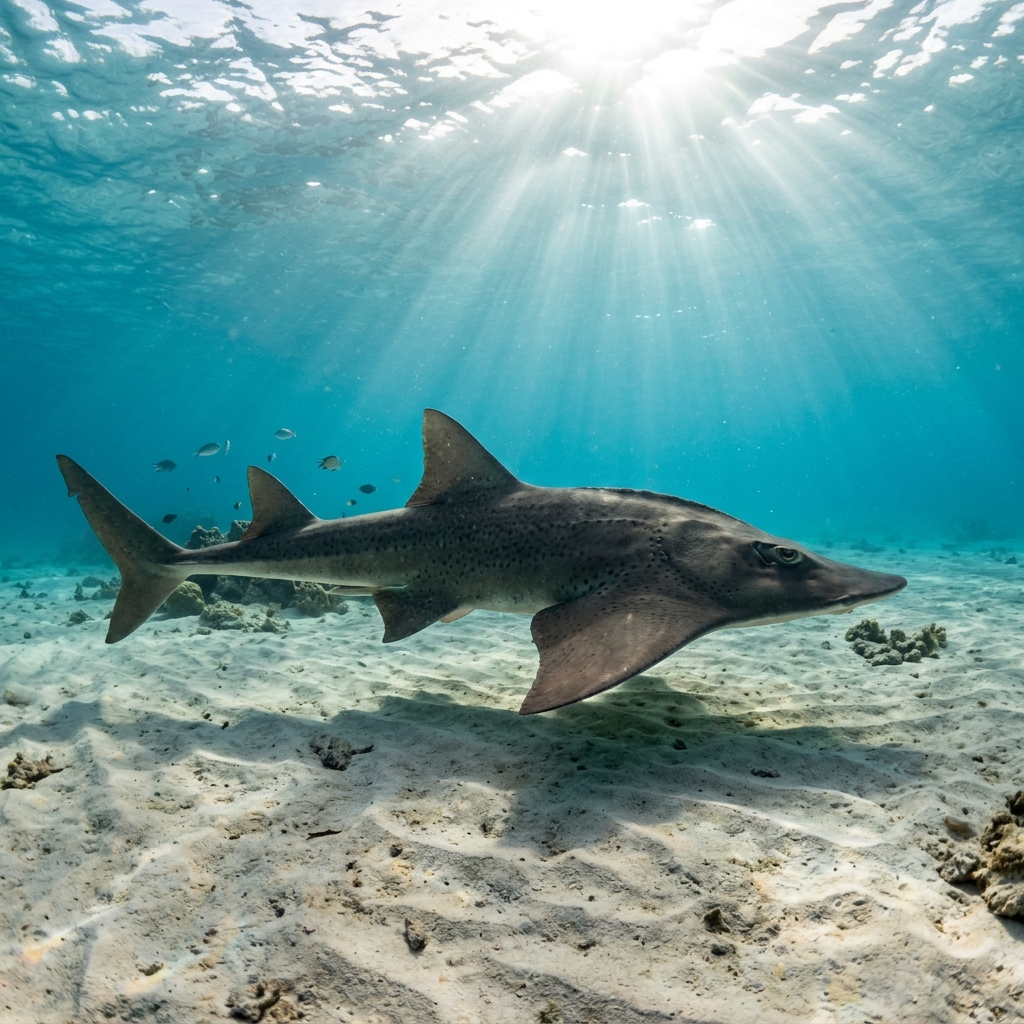
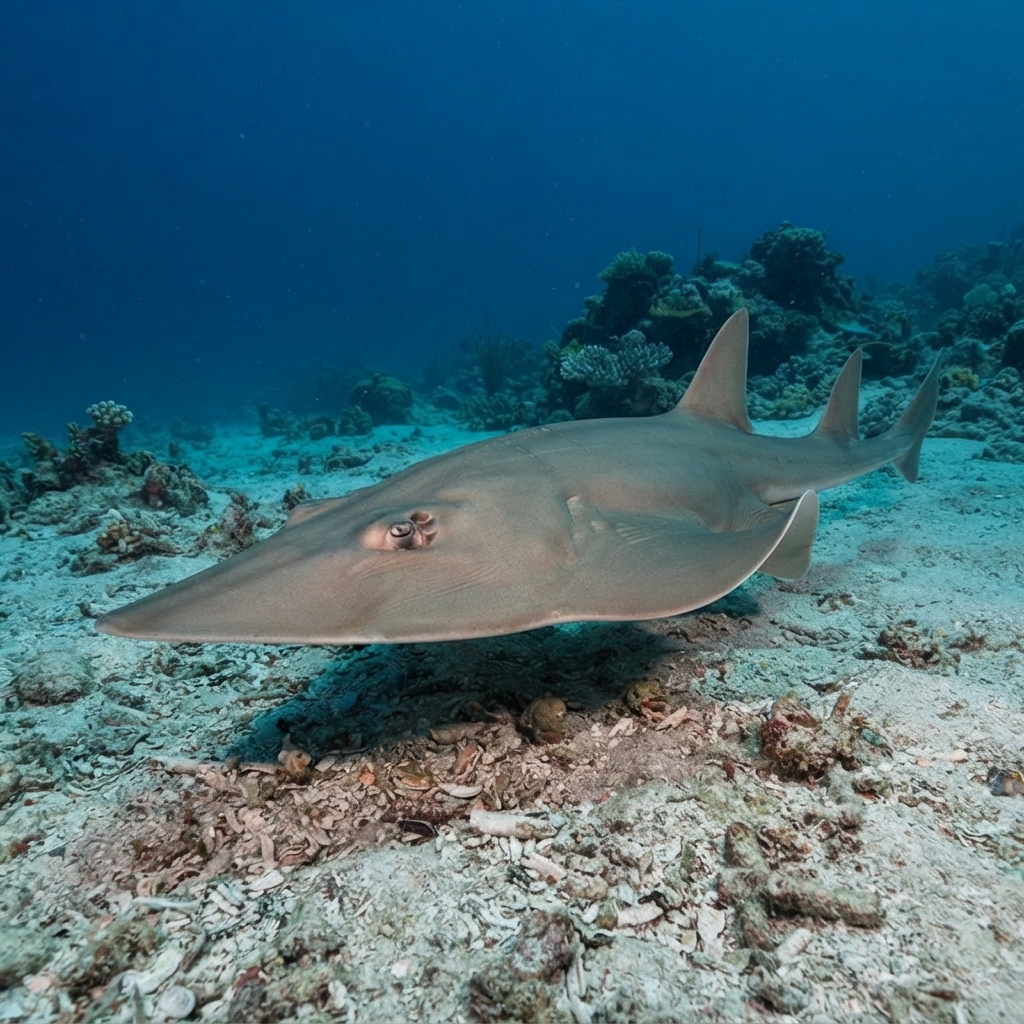
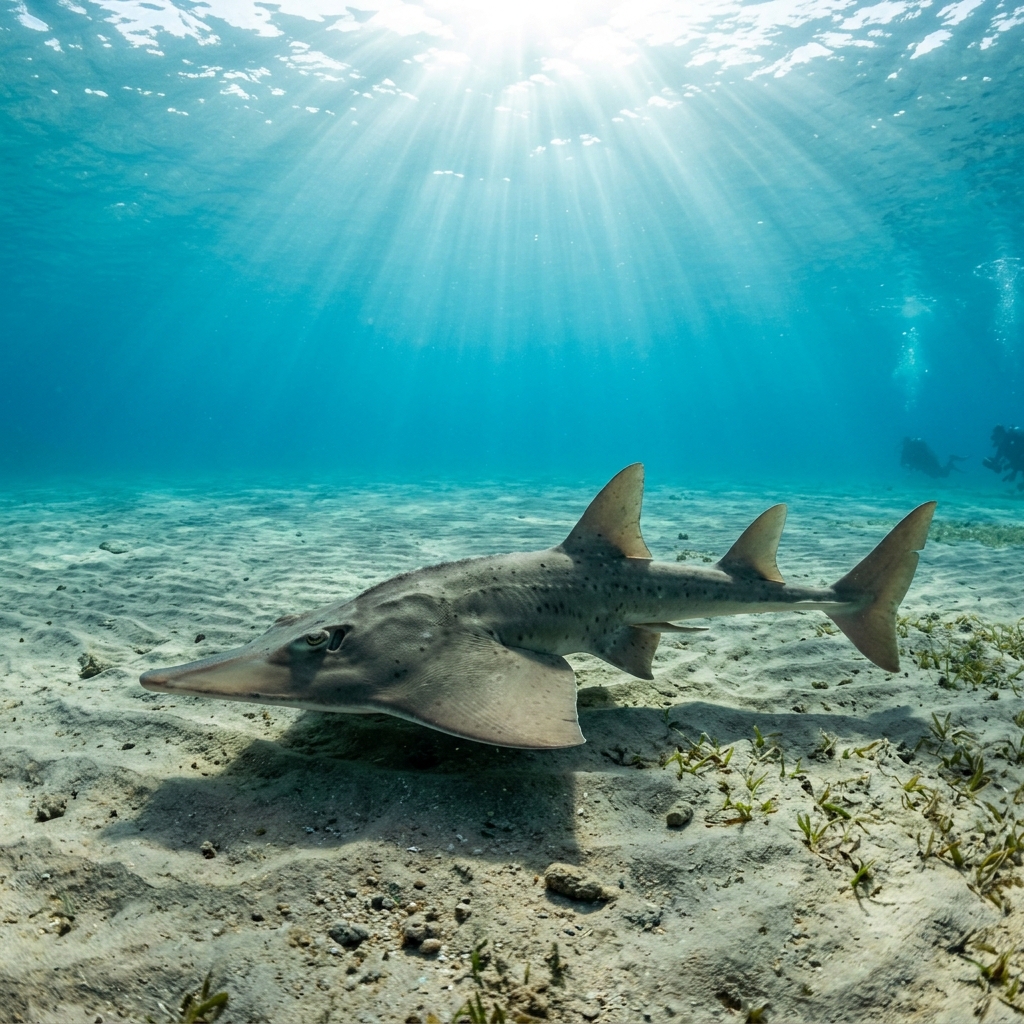
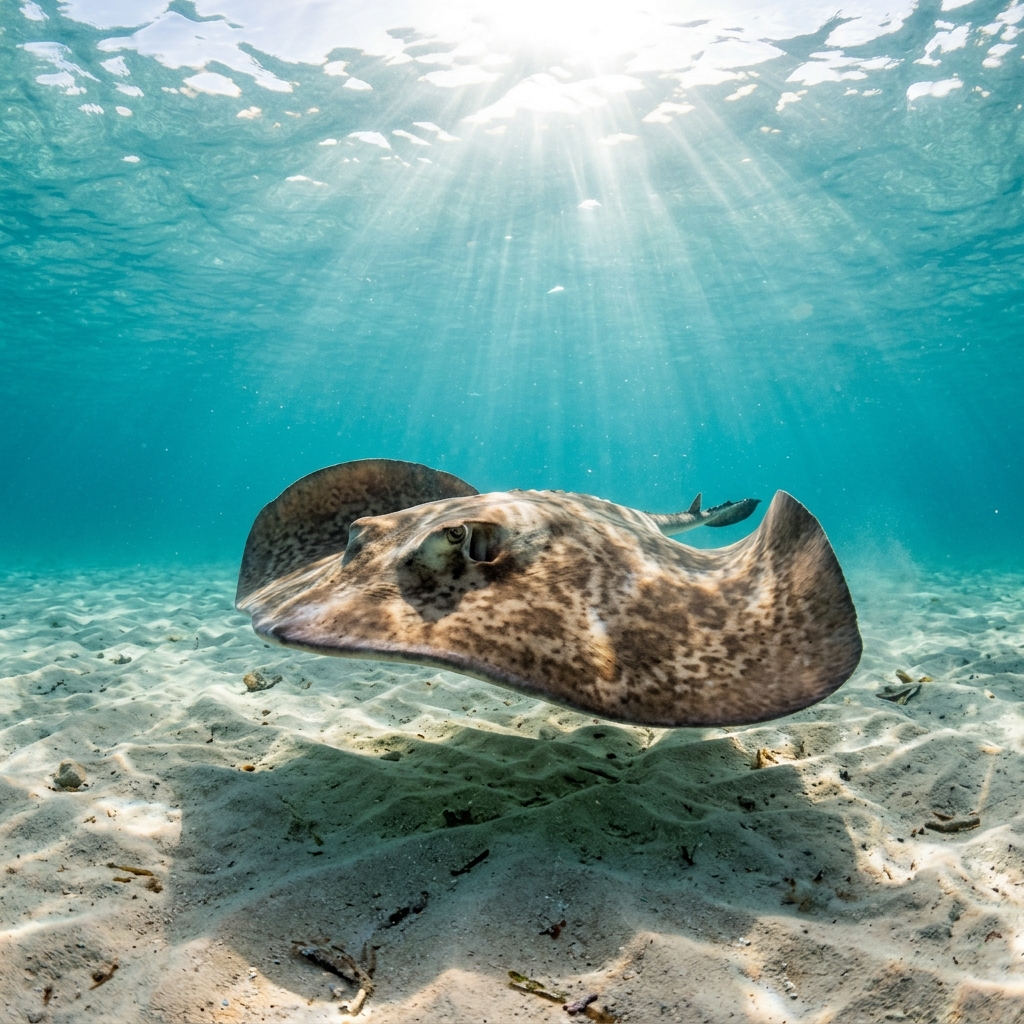
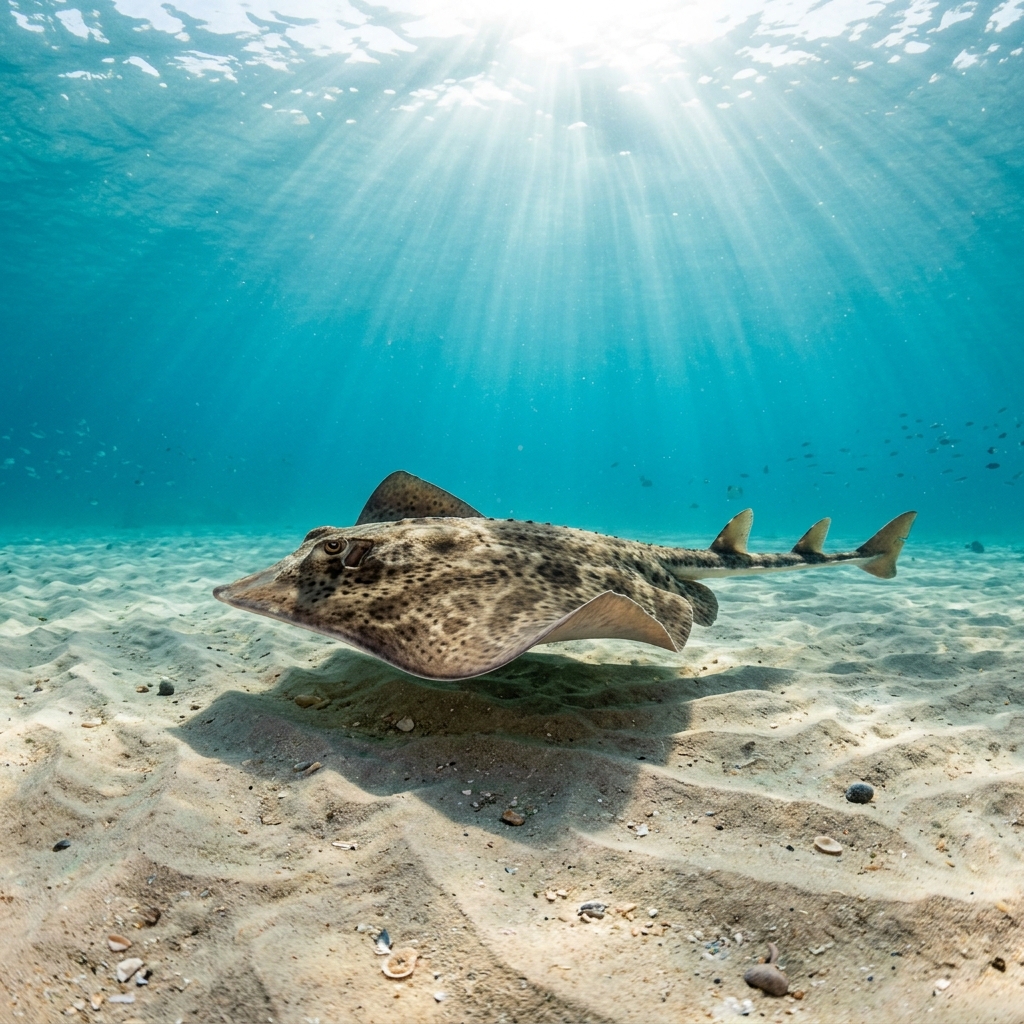
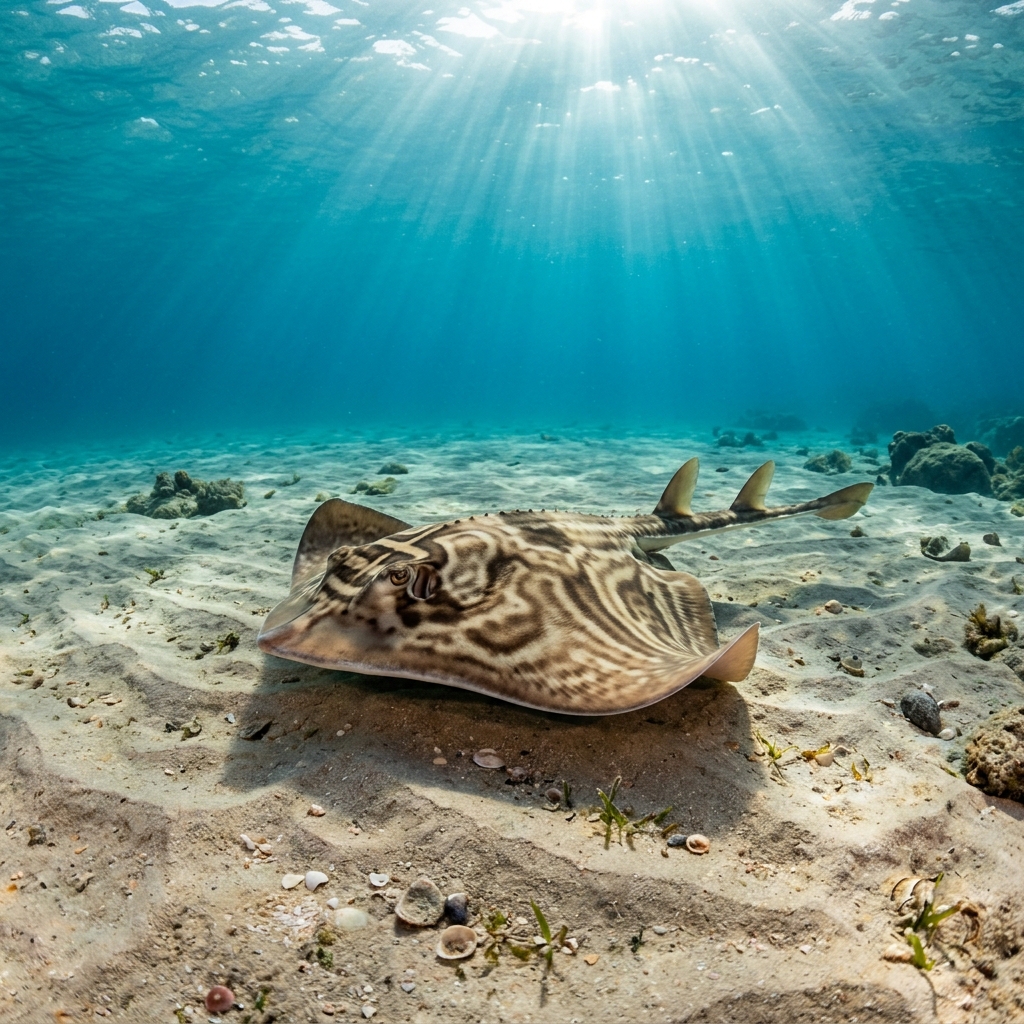
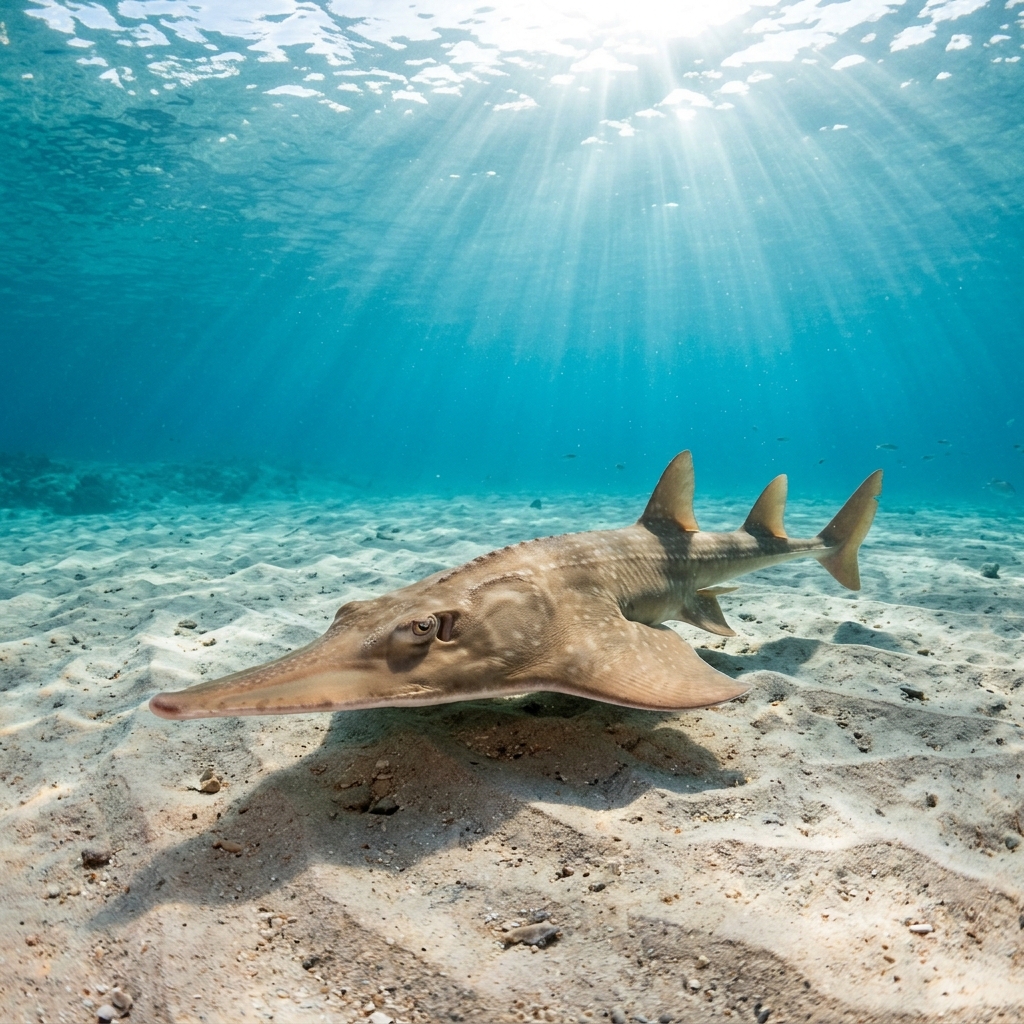
Flattened, wedge-shaped body with a pointed snout that blends a skate-like disc into a shark-like tail and dorsal fins. Grows to around 84 cm, plain grey to sandy brown above with no strong pattern, which is exactly why it can be easy to swim past on a sandy bottom. The long, narrow snout and unbroken line from head to tail fin are the quickest way to separate it from rounder-nosed rays nearby.
Usually found lying still on sand or rubble flats, often partly settled into the substrate, where its plain colouring makes it blend in until it moves. Divers report it as an uncommon sighting even at sites where it's known to occur, so it takes a slow, sand-scanning eye rather than a reef-cruising one to spot it. It tends to hold its position or glide off low over the bottom rather than bolt when approached.
Guitarfish like this one hunt by pinning small fish and invertebrates against the seabed, which is why they're almost always found resting on open sand rather than up in the reef structure.
No clear seasonal pattern shows up in the sightings, and with a comfortable range of roughly 23 to 30 C across its Red Sea and Indian Ocean sites, it's a year-round encounter rather than a seasonal one.
Reef neighbours a diver could mistake it for. Use the identification notes above to tell them apart.
Most reliably logged in the Egyptian Red Sea, especially around Marsa Alam and the Deep South, and along Saudi Arabia's Red Sea coast. Strong secondary populations show up in Oman (Musandam and Muscat), Sudan's Deep South and Suakin, the Arabian Gulf off the UAE, and Djibouti's Gulf of Tadjoura, with further sightings in Mozambique, Madagascar and the Seychelles' Outer Islands.
Mapping where Halavi Guitarfish is logged…
Best chances are in the Egyptian Red Sea around Marsa Alam and the Deep South, and along Saudi Arabia's Red Sea coast. Oman, Sudan, the UAE's Arabian Gulf and Djibouti's Gulf of Tadjoura also produce regular sightings.
There's no strong seasonal pattern in the sighting data, and water temperatures across its range stay within a comfortable 23 to 30 C year-round, so it's found on the same sand flats in any month.
Look for a flattened, plain grey-brown body with a pointed, wedge-shaped snout that tapers smoothly into a shark-like tail. It usually lies motionless on sand, growing to around 84 cm, so scanning open sandy patches rather than reef structure is the best way to spot one.
They typically reach about 84 cm in length, making them a modestly sized ray compared to some of their larger guitarfish relatives.
No, they're not considered dangerous to divers. They're bottom-resting and tend to glide away or hold still rather than react defensively when approached.
Site and sighting data is aggregated from diver logs, iNaturalist and GBIF. For taxonomy and conservation status:
Fiddler Ray
342 sites