Aptychotrema spp.
Sandy-bottomed encounters with shovelnose rays are most reliable in Western Australia and South Australia, in water from 15.7 to 25.4 C.
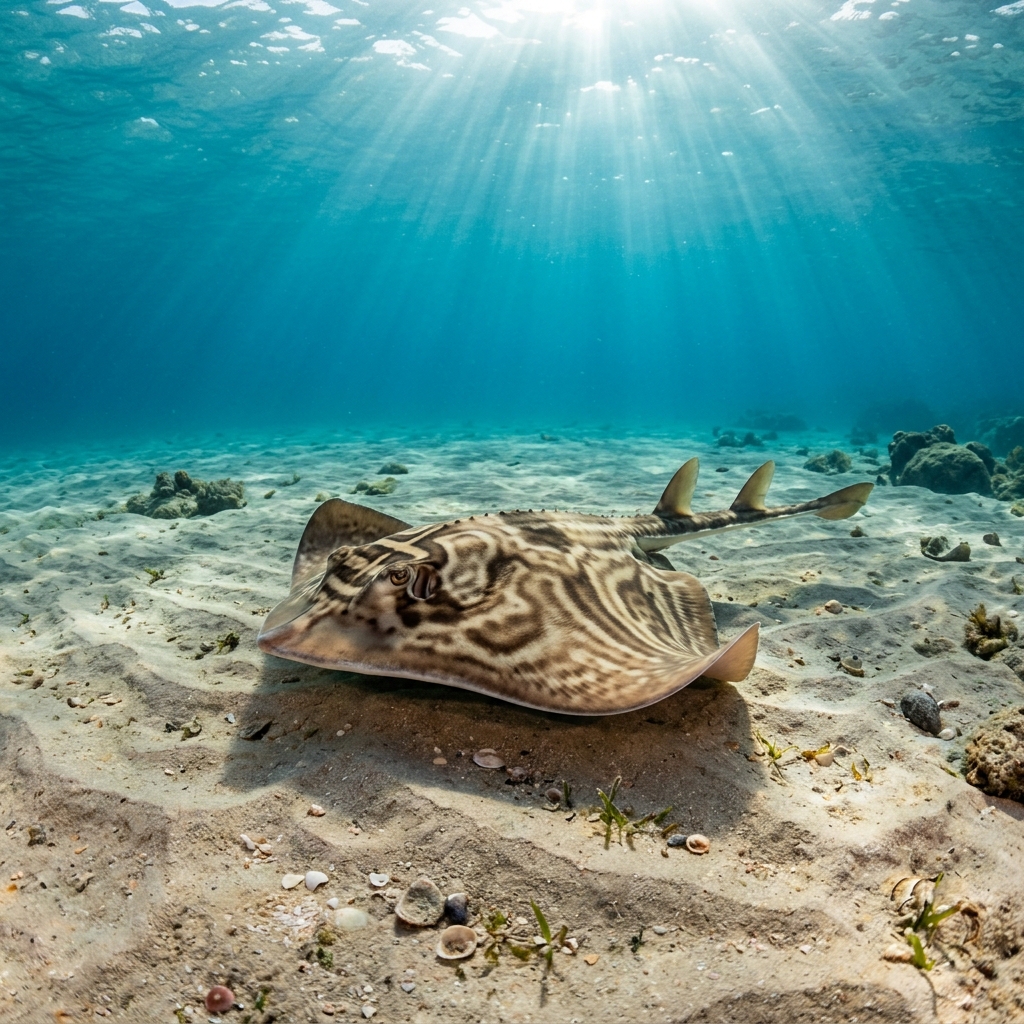
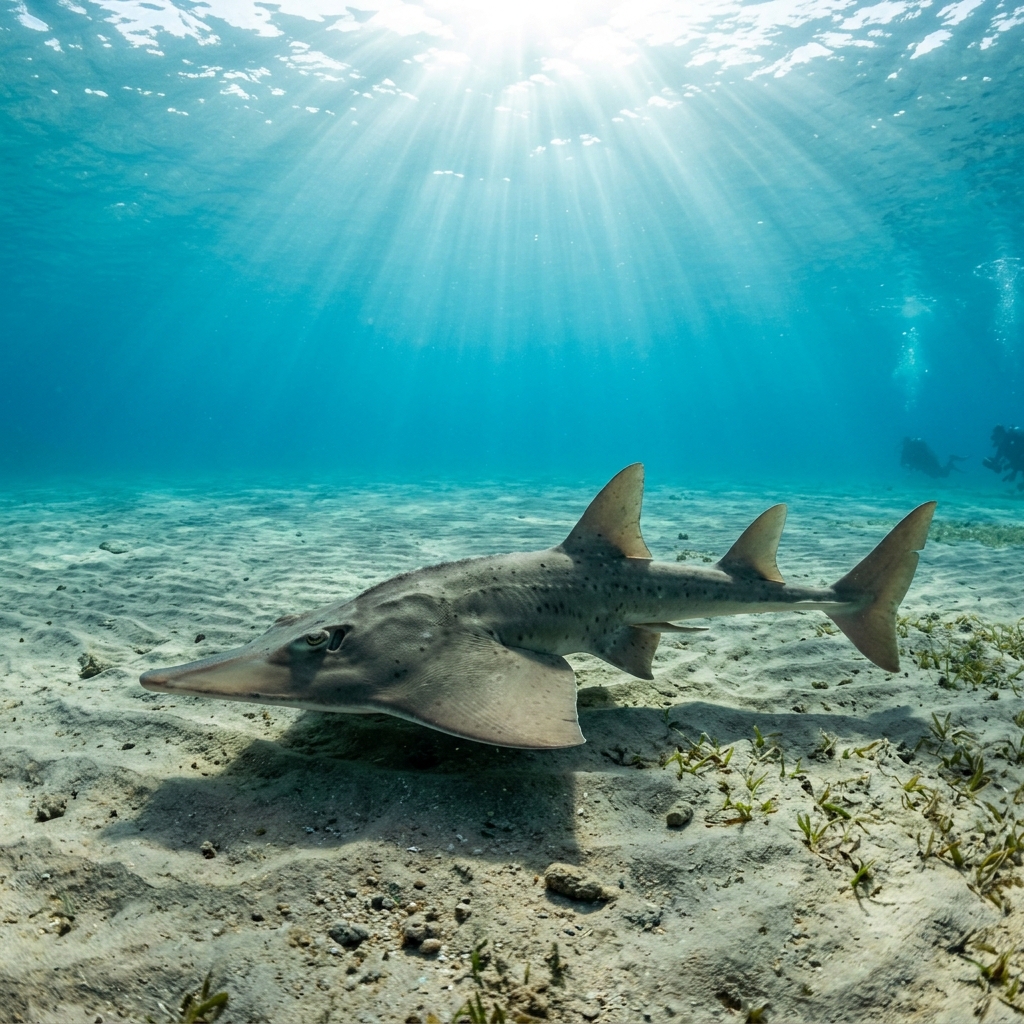
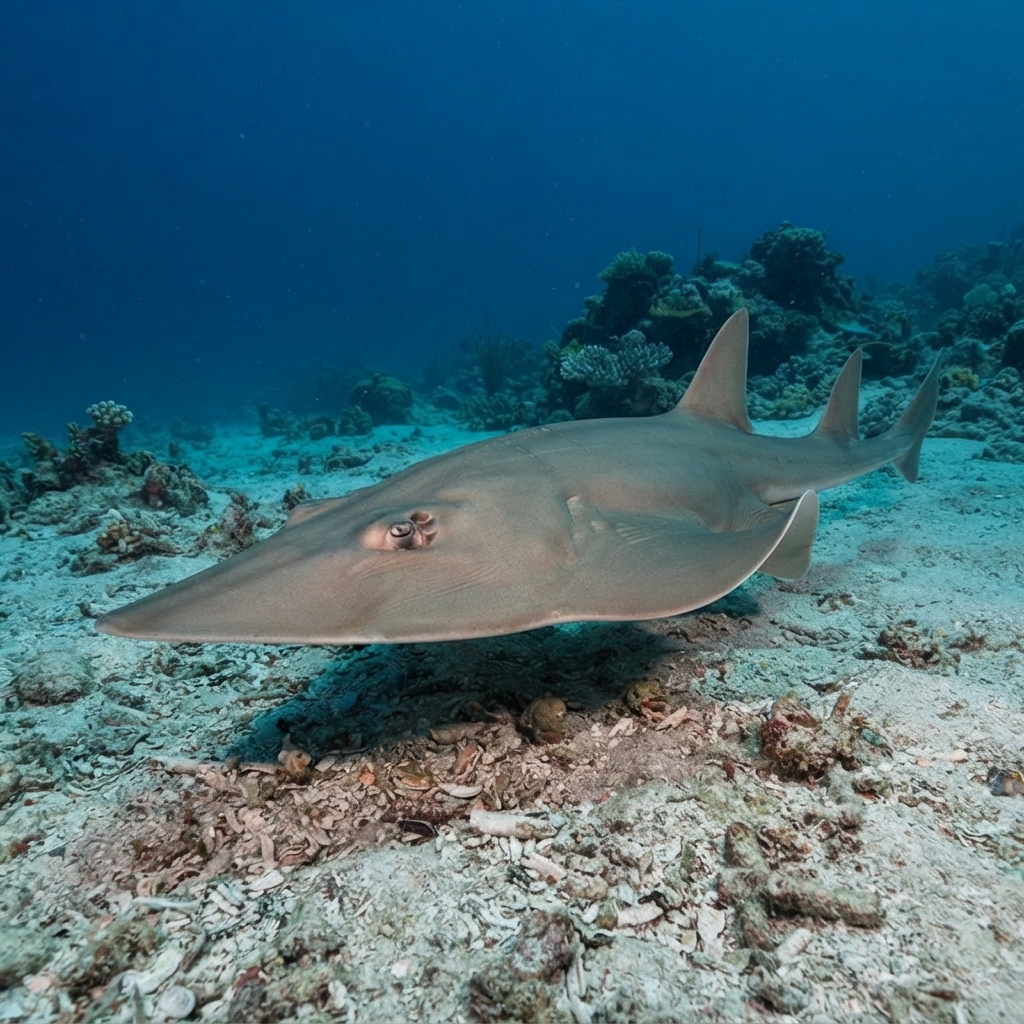
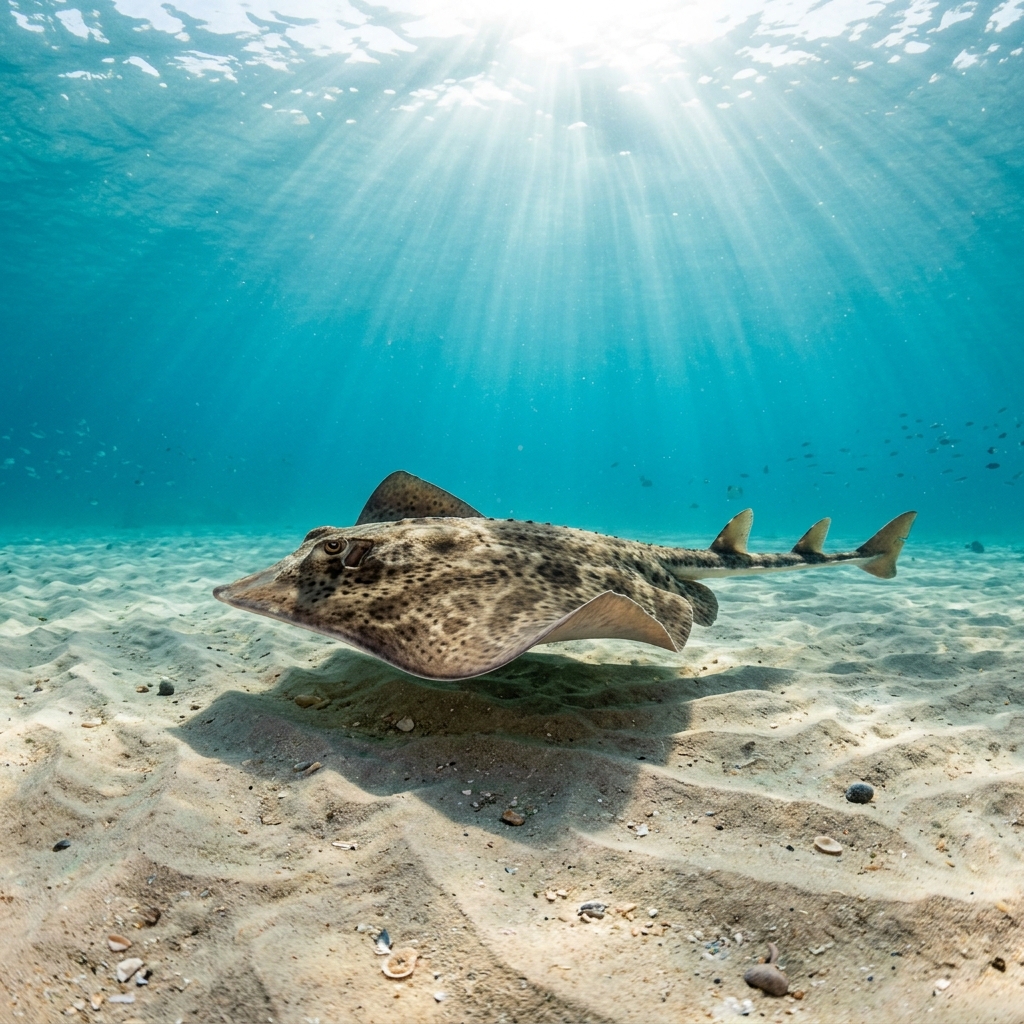
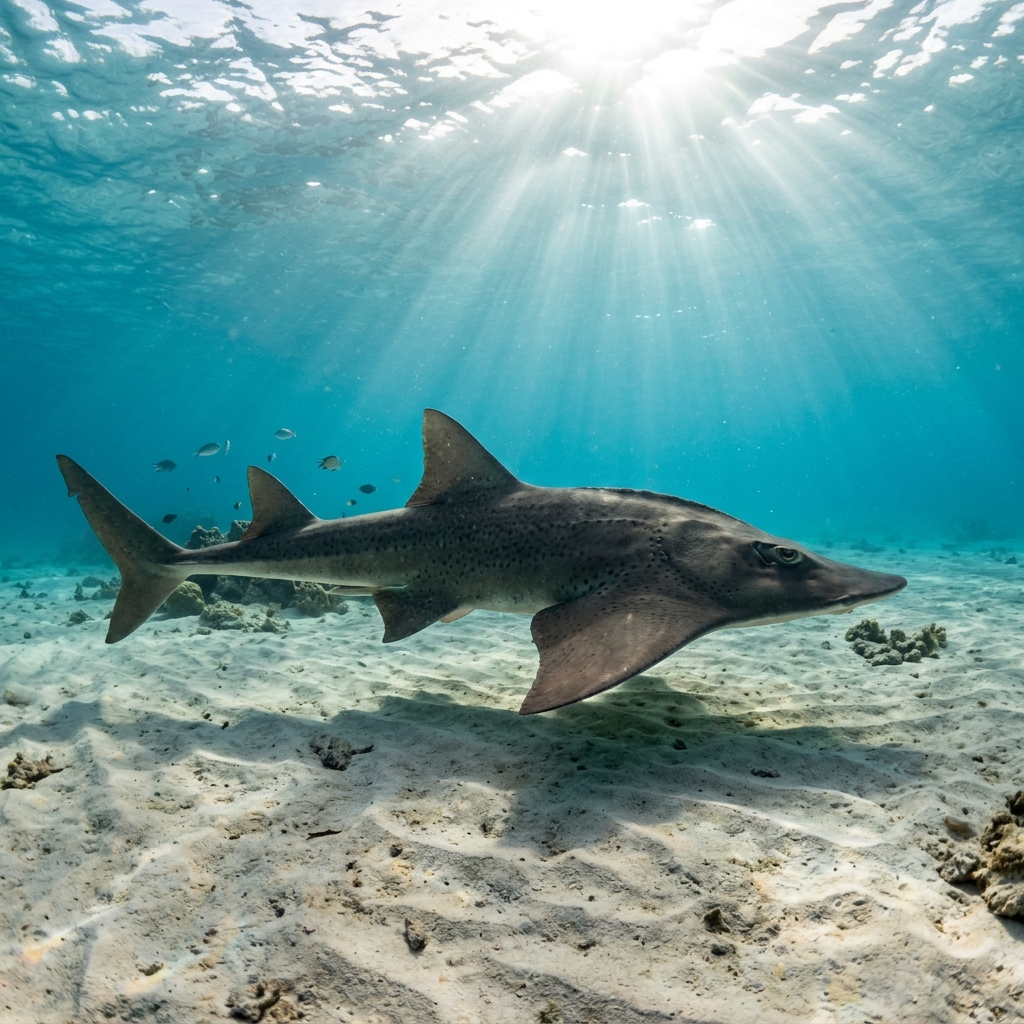
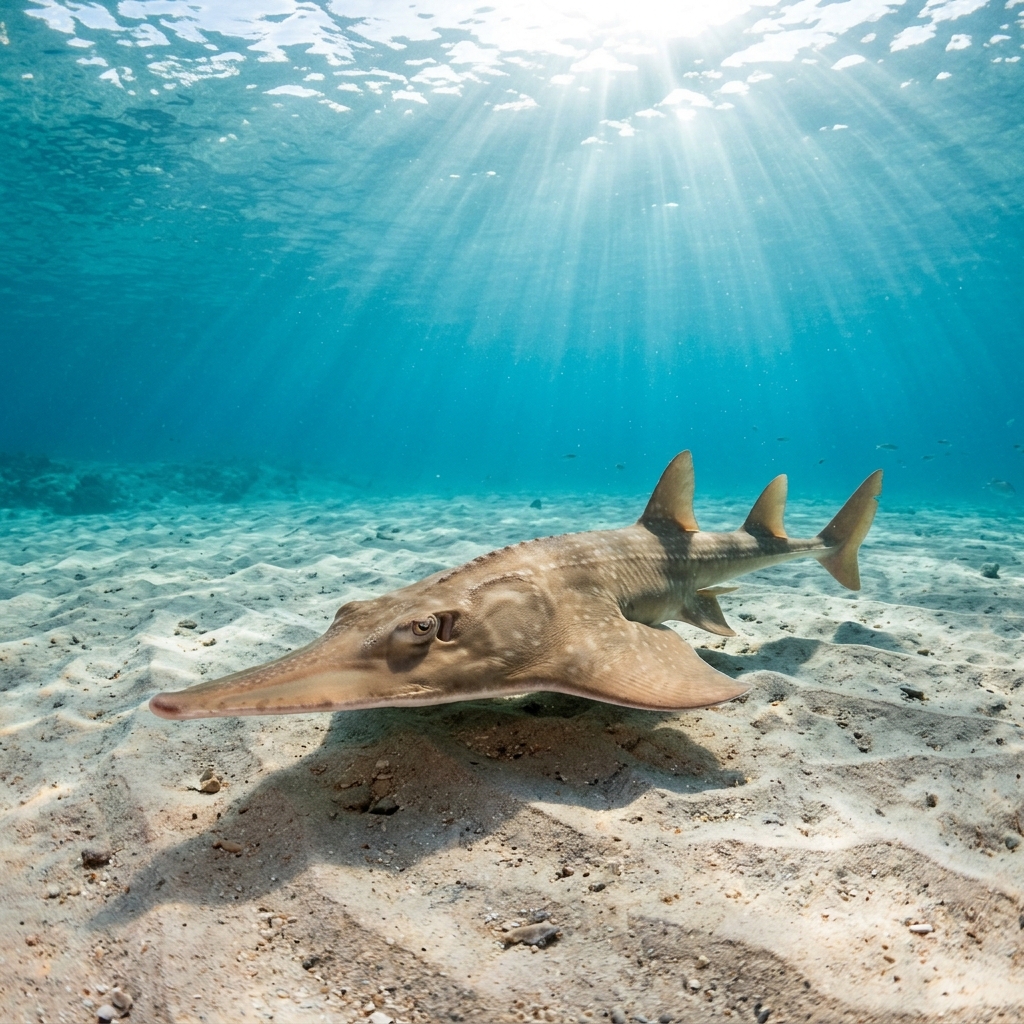
A flattened, wedge-shaped body around 70 cm long that tapers from a broad, guitar-shaped disc into a shark-like tail sets this genus apart from true rays. Look for the long, pointed snout it uses to plough through sand, and a mottled brown or sandy colouring that breaks up its outline against the seabed. Unlike stingrays, it has no whip tail or venomous spine, and it often lies motionless nose-down with only the tail visible above the substrate.
Most encounters are with an animal resting flat on sand or silt, or moving in a slow, nose-down glide as it noses through the substrate for buried invertebrates. It isn't a nervous animal and will often let a diver get a good look, but a direct approach from above tends to push it off; coming in low and from the side gives a longer, calmer encounter.
That pointed snout isn't just for show: it's a sediment-probing tool used to root out worms, molluscs and small crustaceans hidden below the surface, a feeding style closer to a bottom-feeding shark than a typical ray.
There's no detected seasonal pattern in the sighting data, so treat it as a year-round find. Its recorded temperature range of 15.7 to 25.4 C covers Australia's temperate and subtropical waters across all seasons, so timing your trip around a specific region matters more than picking a month.
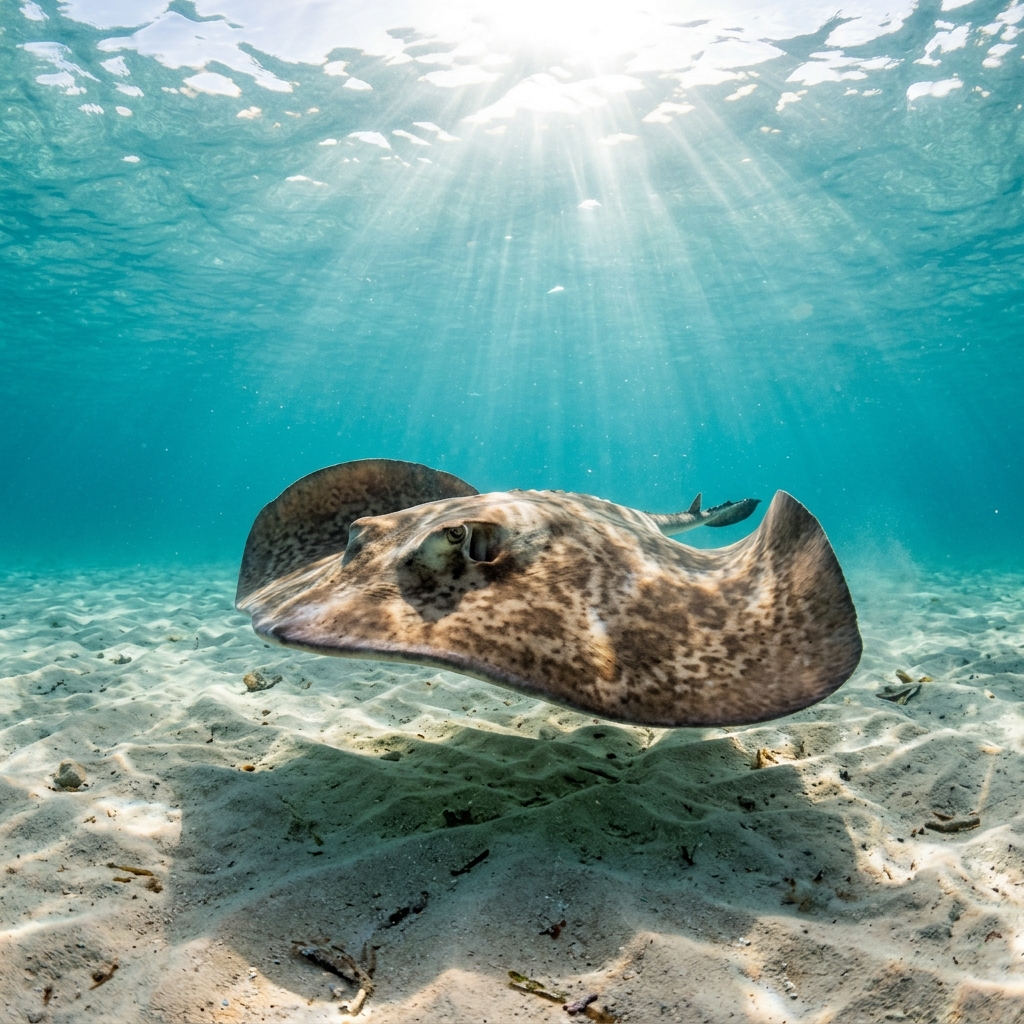
Reef neighbours a diver could mistake it for. Use the identification notes above to tell them apart.
This genus is overwhelmingly an Australian sighting, most logged across Western Australia and South Australia, with further records in Queensland, New South Wales, Victoria, Tasmania and the Northern Territory. A single logged site in Myanmar's Mergui Archipelago is the only record outside Australia.
Mapping where Shovelnose Ray is logged…
Australia is by far the most reliable place, with sightings concentrated in Western Australia and South Australia, and further records in Queensland, New South Wales, Victoria and Tasmania.
There's no strong seasonal signal in the data, so it's considered a year-round sighting wherever it's found, across a temperature range of roughly 15.7 to 25.4 C.
Look for a flattened, guitar-shaped body around 70 cm long with a long pointed snout, mottled sandy-brown colouring, and a shark-like tail rather than a stingray's whip tail. It's usually seen resting on or gliding just above sand.
Members of this genus typically reach around 70 cm in length, making them a modest-sized bottom-dweller rather than one of the larger rays divers encounter.
No, they're not considered dangerous to divers. They lack the venomous tail spine of true stingrays and tend to glide away calmly rather than react defensively.
They hunt by probing sand with an elongated snout to root out buried worms and small invertebrates, a feeding technique that sets them apart from most other rays.
Site and sighting data is aggregated from diver logs, iNaturalist and GBIF. For taxonomy and conservation status:
Halavi Guitarfish
412 sites