Haemulon vittatum
Slim, silver-striped grunt logged year-round off Saint-Pierre, Martinique in 23-28C water. Here's where to actually find one.
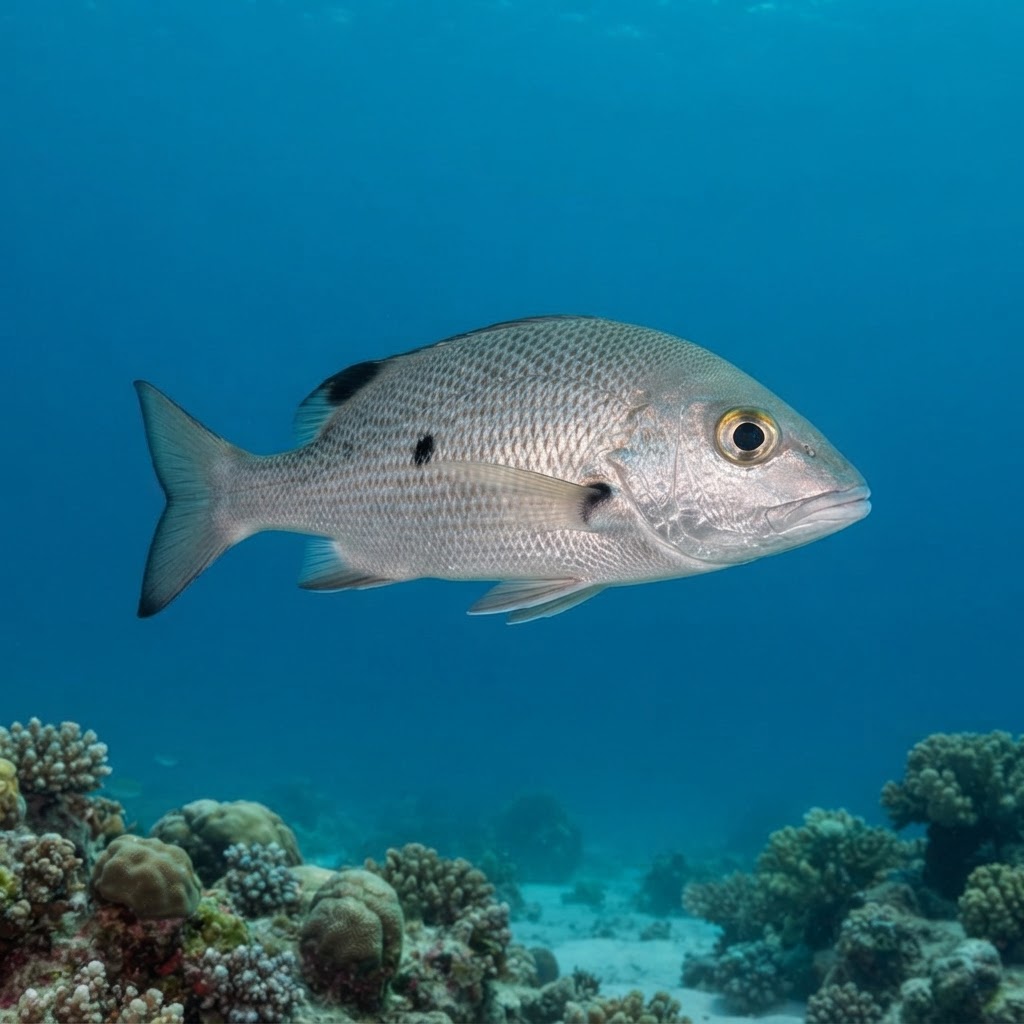
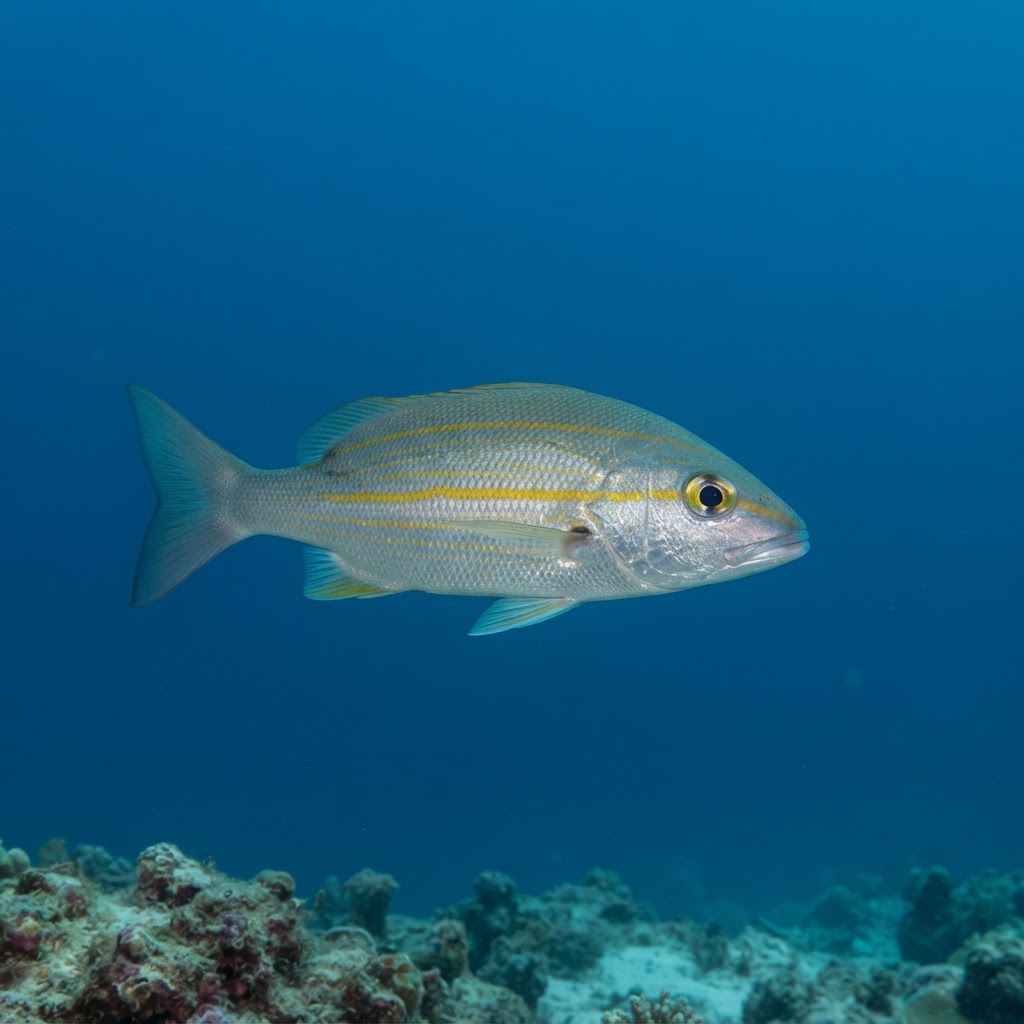
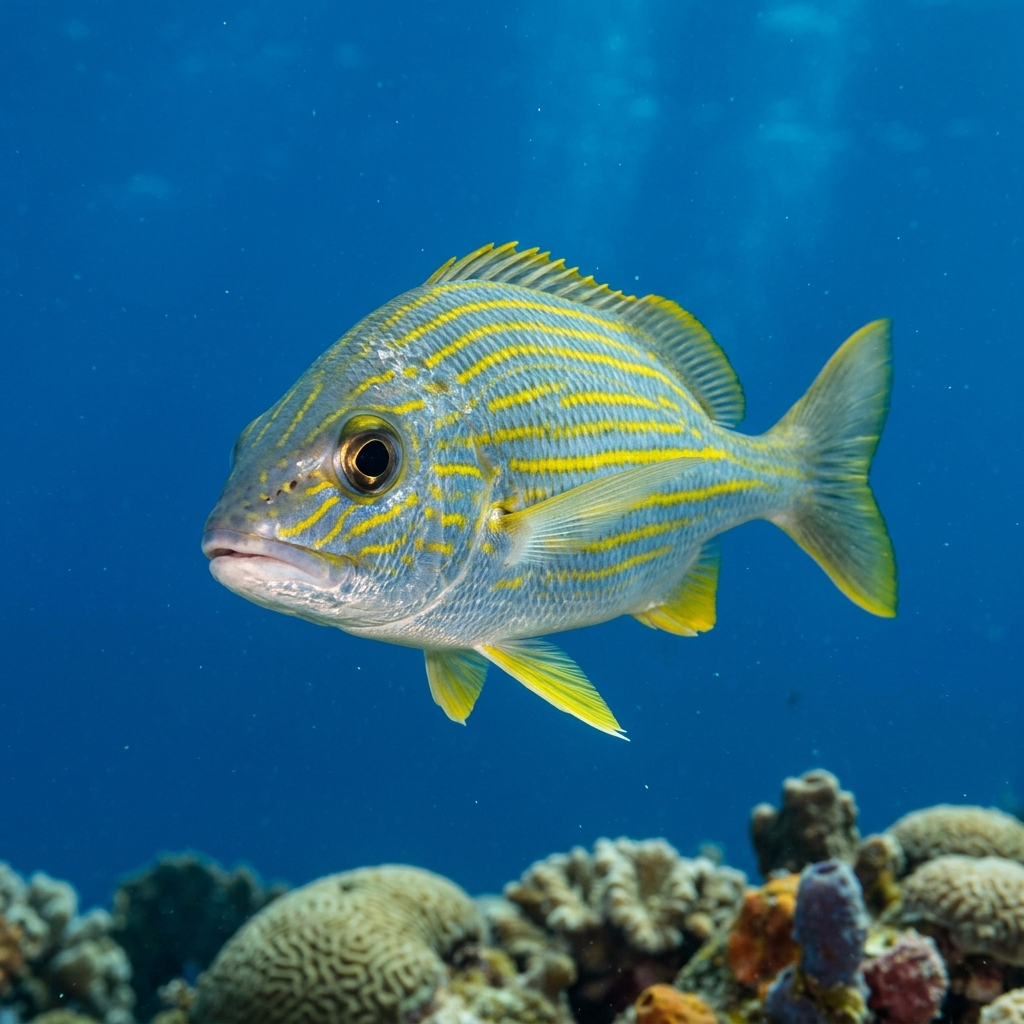
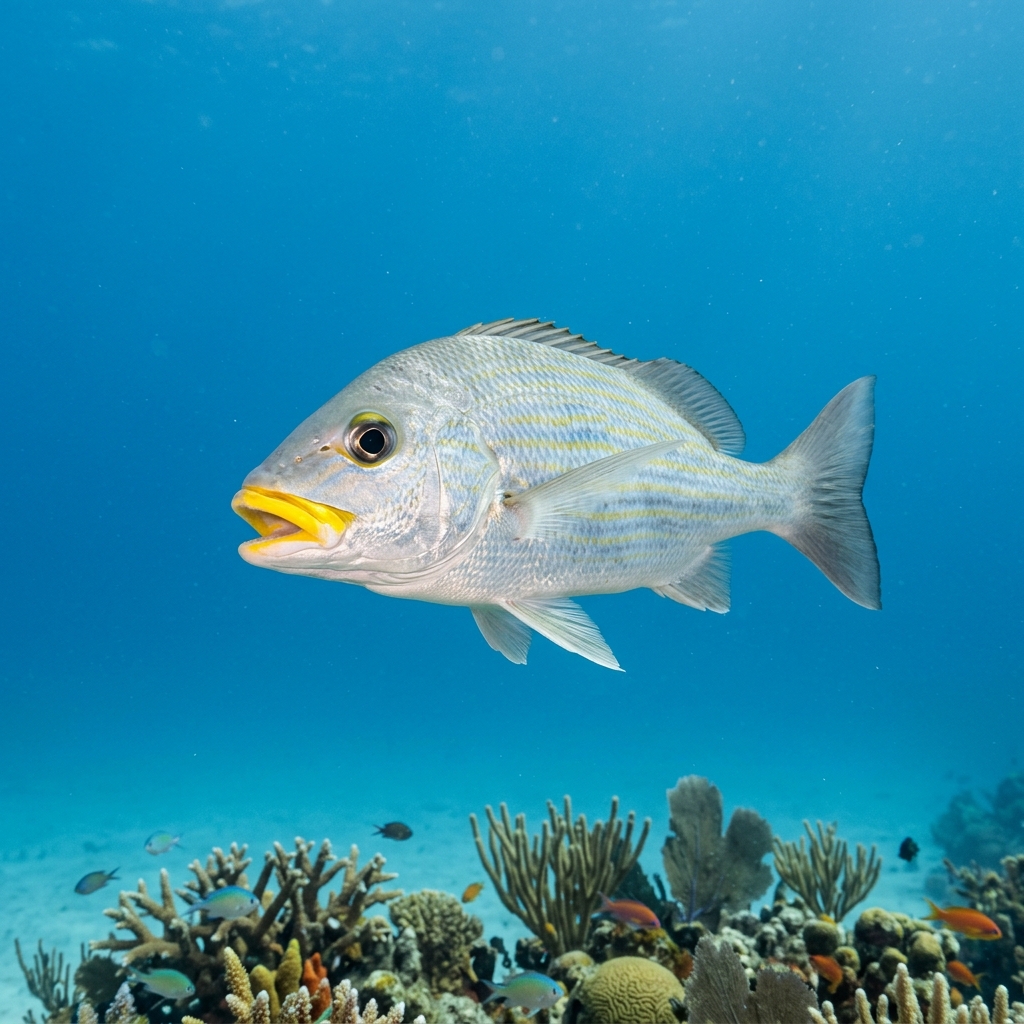
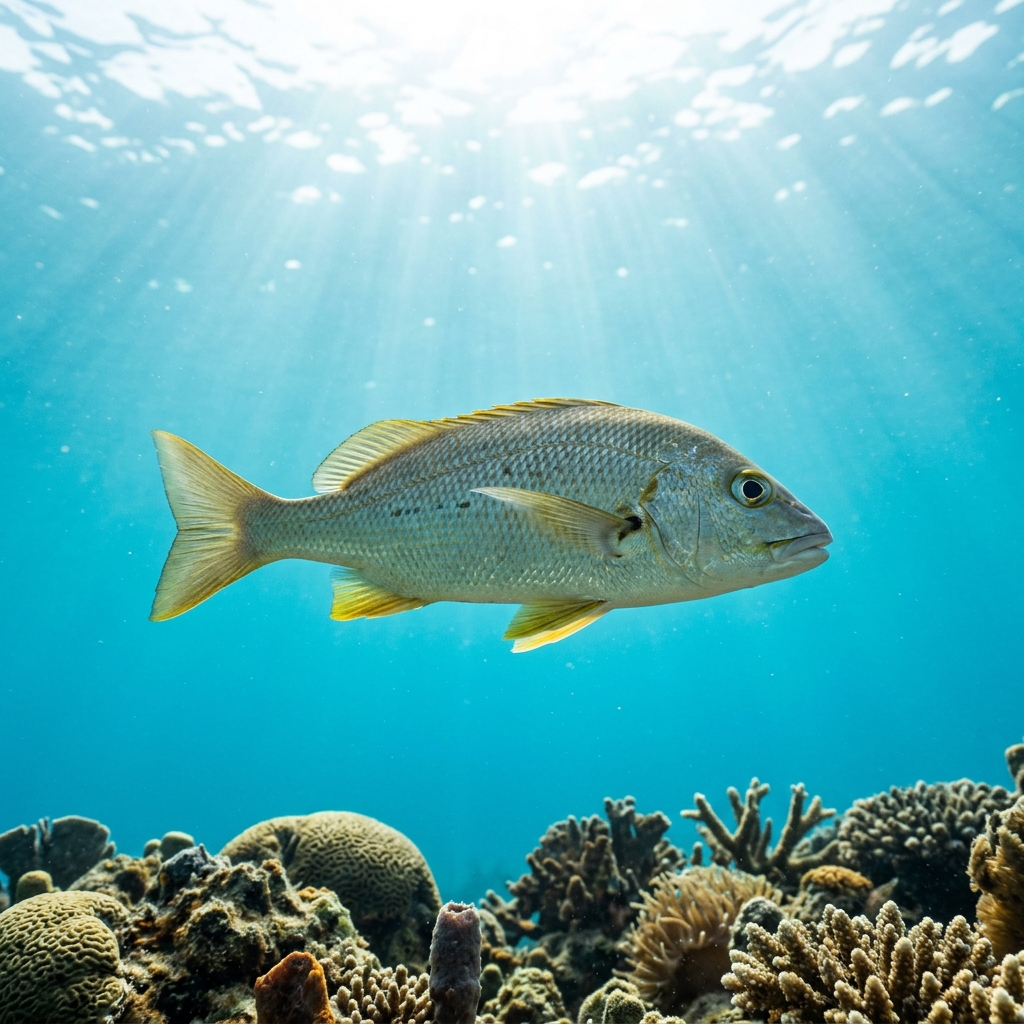
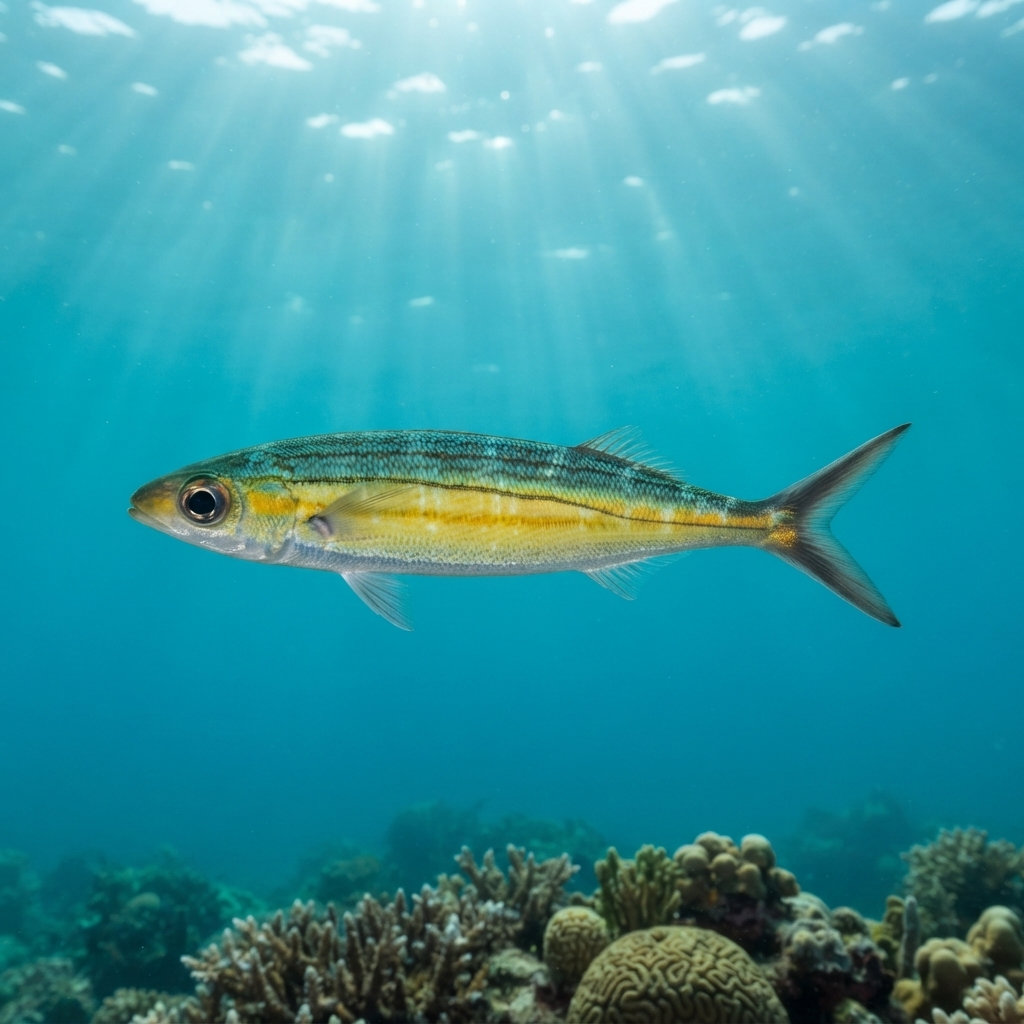
Slender, torpedo-shaped body running about 16 cm, with a silvery flank cut by a dark horizontal stripe from gill to tail. The stripe is the key mark, it stays crisp and continuous, unlike the blotchier patterning of similar grunts. Fins are pale and unremarkable, so most divers key off body shape and that single stripe rather than colour.
Usually seen hanging in loose groups near reef structure rather than out in the open water, holding a fairly steady position and letting divers approach without much fuss. Logged as uncommon at most sites and rare at a few, so it's more of a nice spot than a guaranteed sighting on any given dive.
Like other grunts, it likely produces its name-giving grunting sound by grinding pharyngeal teeth, amplified by the swim bladder, though this hasn't been specifically documented for this species.
No clear seasonal pattern shows up in the sightings, and the 22.9 to 28C range it's found in covers Caribbean reef water most of the year, so it's a year-round sighting rather than a seasonal one.
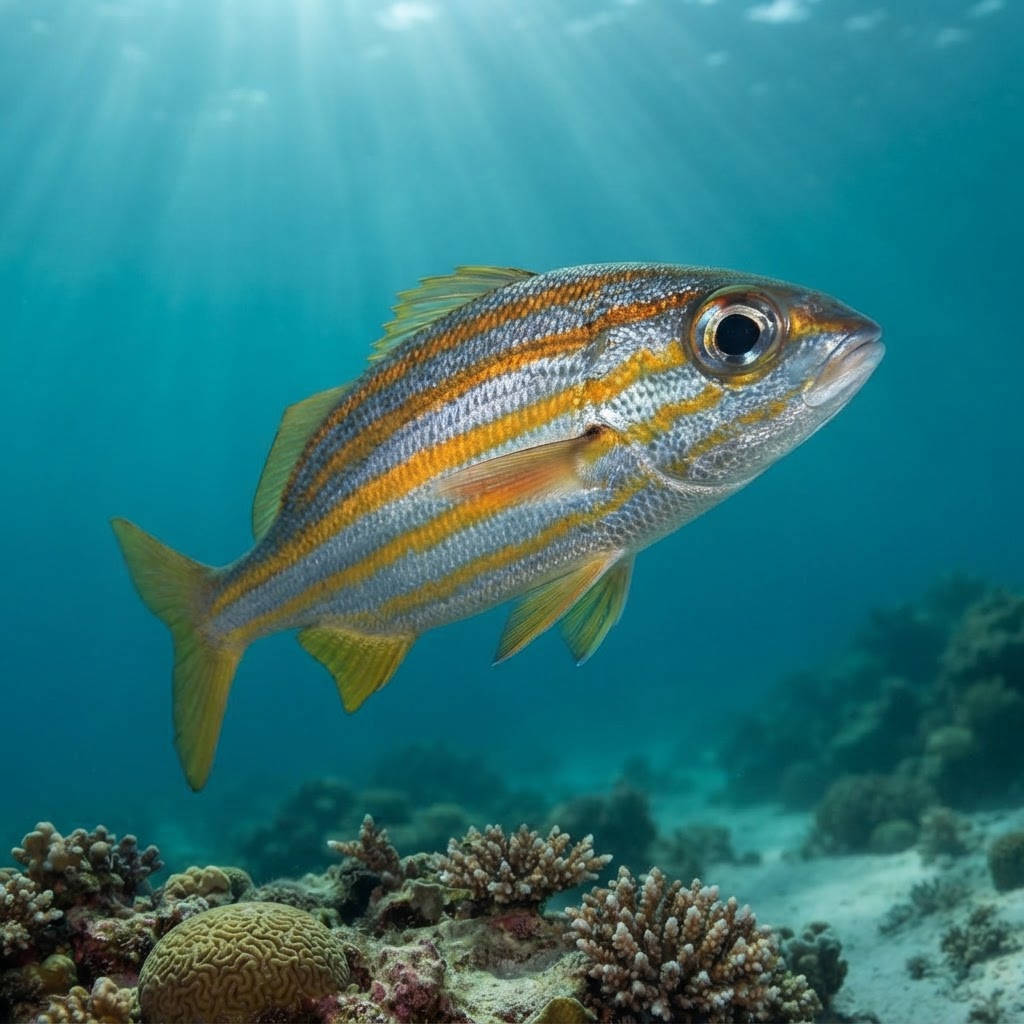
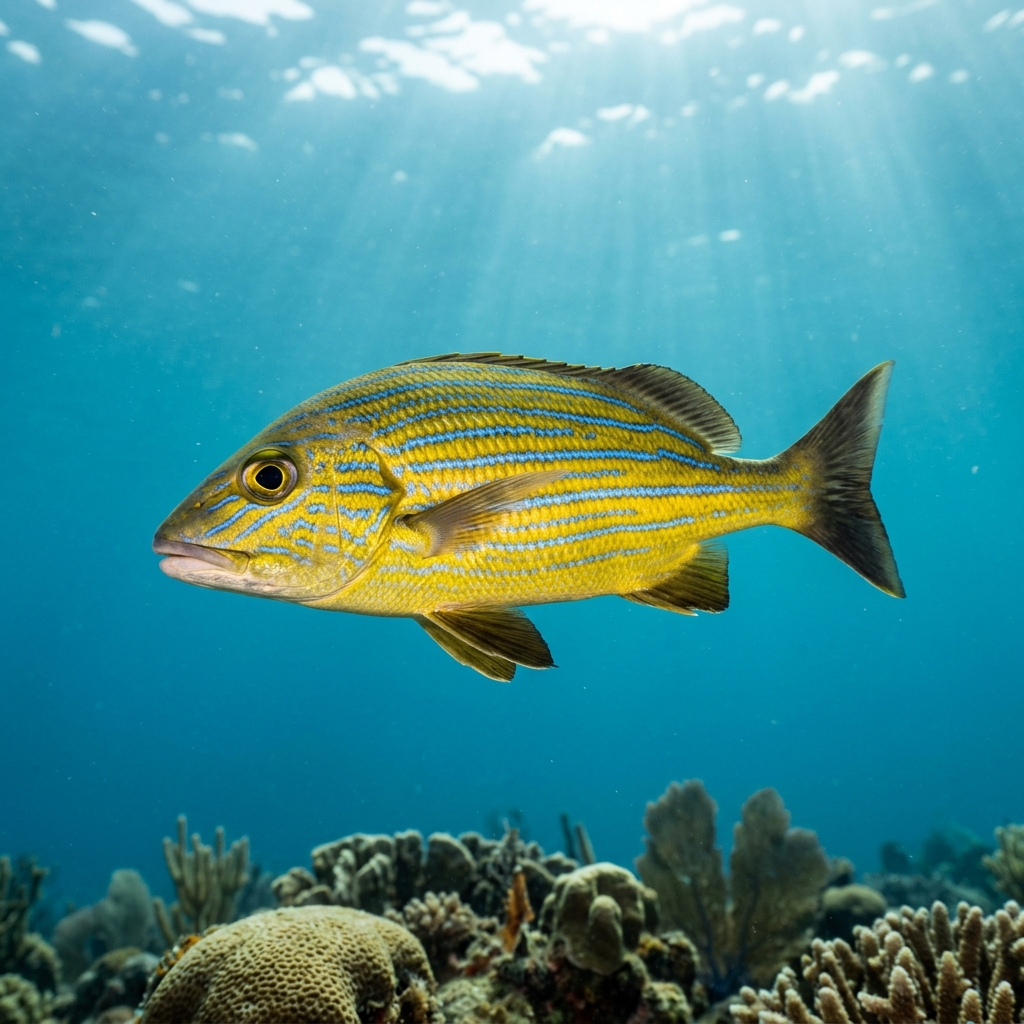
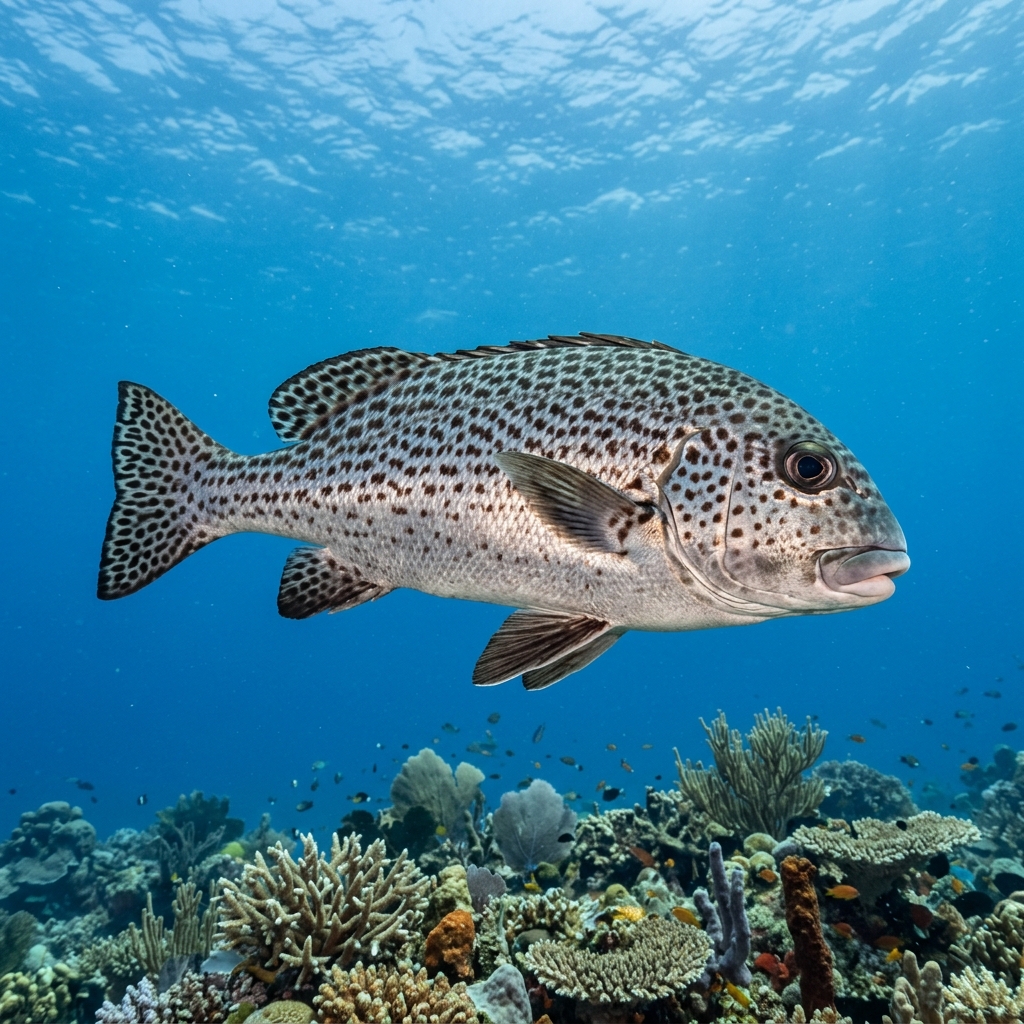
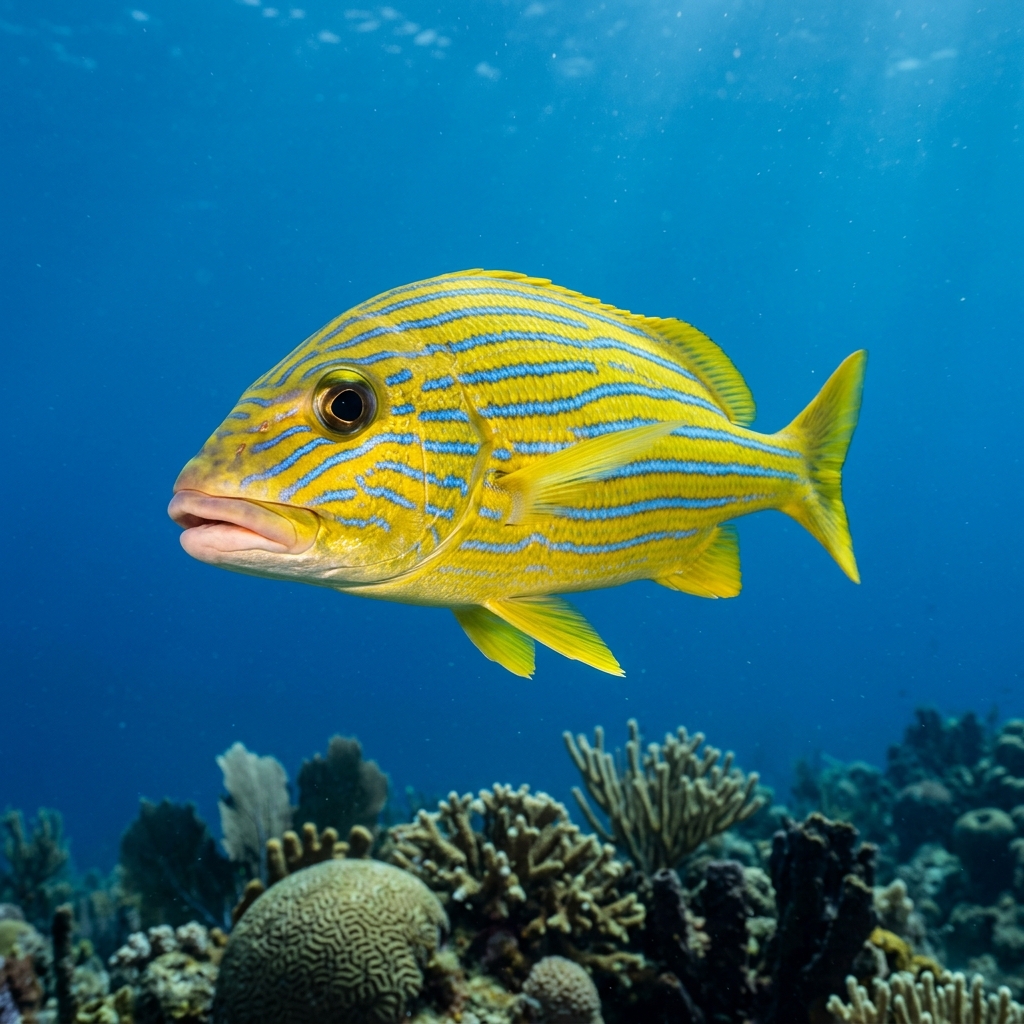
Reef neighbours a diver could mistake it for. Use the identification notes above to tell them apart.
Most reliably logged off Saint-Pierre in Martinique, where it turns up at more sites than anywhere else in the data, with a smaller but steady presence along Bonaire's Leeward Coast. Divers in the southern Caribbean have the best odds of ticking this one.
Mapping where Boga is logged…
Best chances are off Saint-Pierre in Martinique, where it's logged at more sites than anywhere else. It also shows up along Bonaire's Leeward Coast, though less frequently.
There's no strong season in the sighting data, so treat it as a year-round possibility on Caribbean reefs in the 23 to 28C range it favours.
Look for a slim, silvery body around 16 cm long with one continuous dark stripe running from the gills to the tail. That unbroken stripe is the fastest way to separate it from similar grunts.
They're small, typically reaching around 16 cm, which puts them among the more modest-sized grunts you'll encounter on a reef.
No. They're harmless, shy reef fish with no venom, spines, or aggressive behaviour towards divers.
Site and sighting data is aggregated from diver logs, iNaturalist and GBIF. For taxonomy and conservation status:
Bluestriped Grunt
1,907 sites