Choerodon cyanodus
Chunky blue-grey wrasse with tusk-like teeth, most reliably logged on Queensland reefs at 25-29C, year-round sightings.
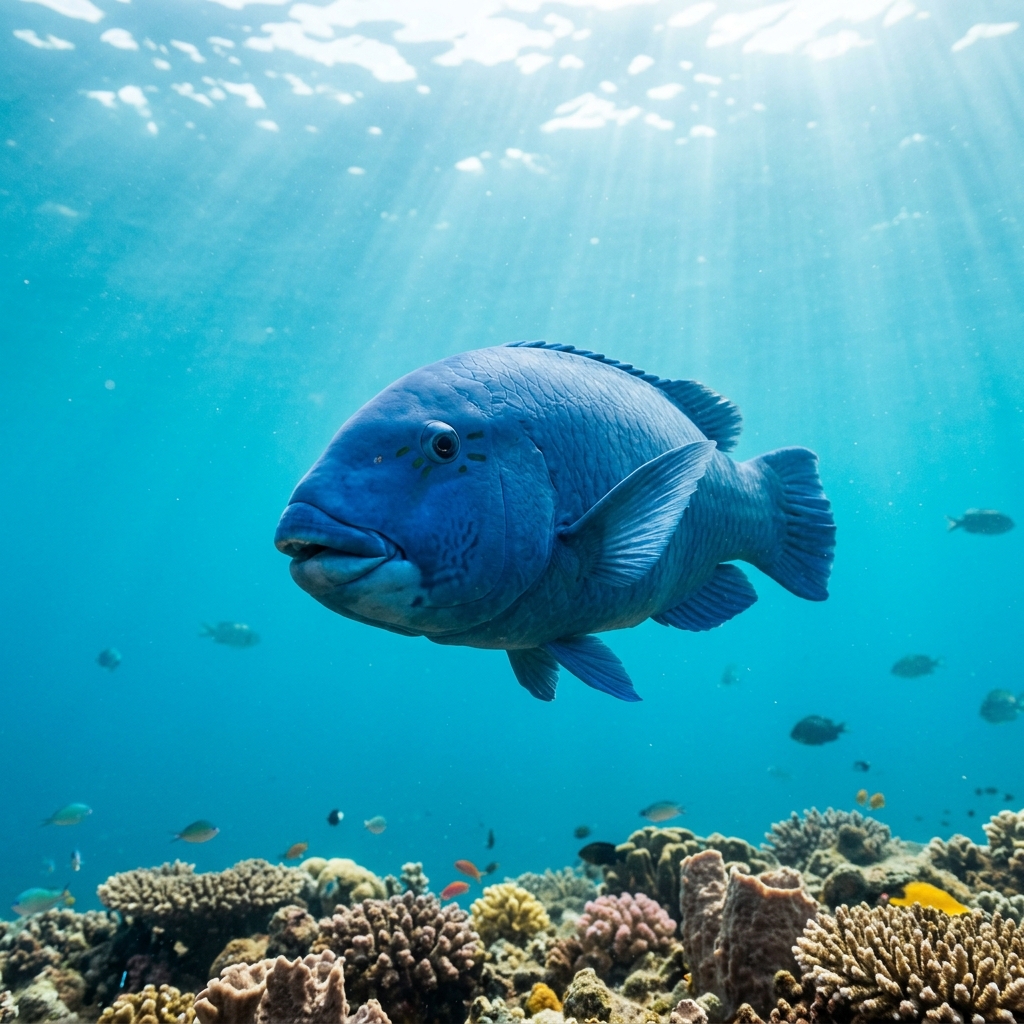
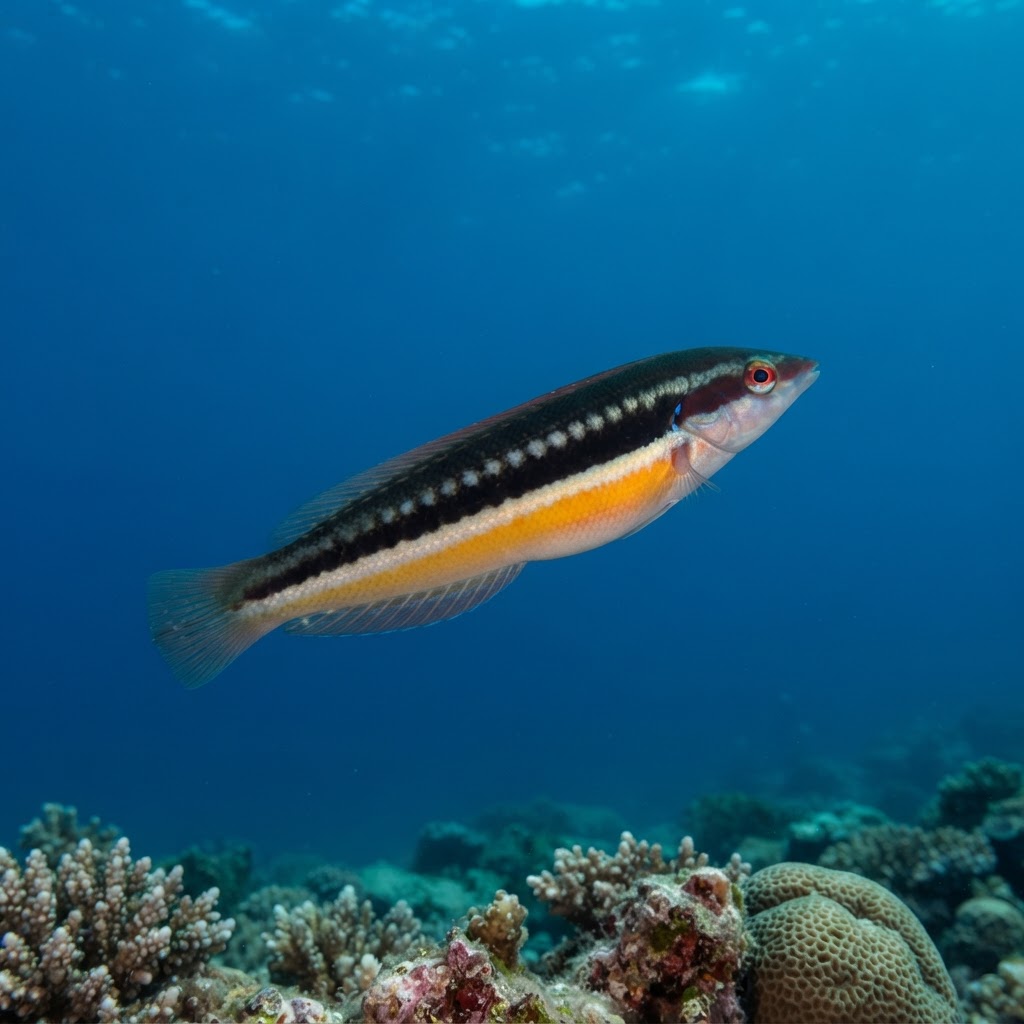
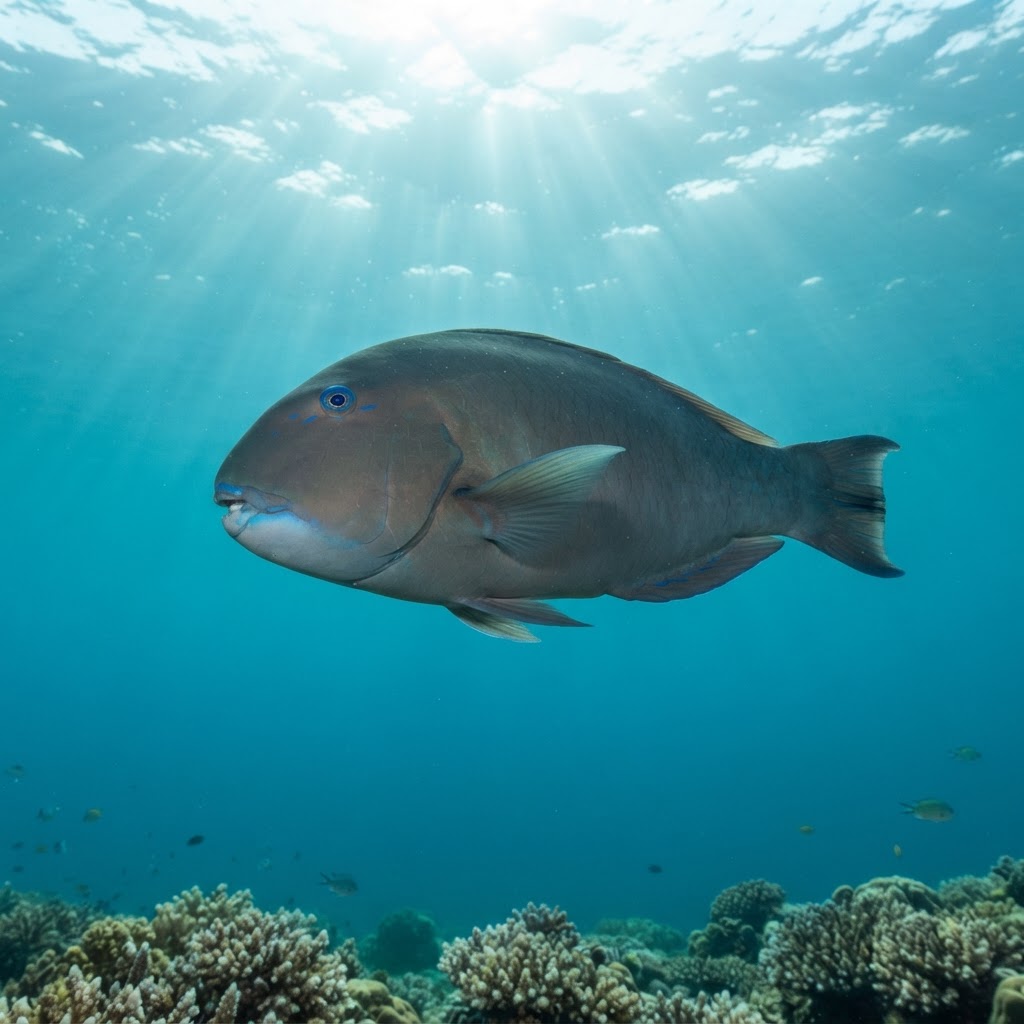
A solid, deep-bodied wrasse to around 49 cm, with a steel-blue to grey-blue body and a blocky head that narrows into a set of prominent front teeth (the 'tusks' that give it its name). Look for faint pale blue lines radiating across the cheek and a thick-set, almost bull-necked profile compared to slimmer wrasses on the same reef. It swims with a steady, unhurried pump of the pectoral fins rather than darting around.
Usually spotted working over rubble patches or reef flats, using those tusk-like teeth to crunch through hard-shelled prey such as molluscs and crustaceans. It tends to be a loner, cruising slowly along the bottom rather than schooling, and is generally unbothered by divers who keep a respectful distance rather than crowding it. Most logs describe it as uncommon rather than a guaranteed sighting, so a patient look along the reef base pays off.
Those protruding teeth aren't just for show: they're a dedicated crushing tool that lets it tackle armoured prey most reef fish can't be bothered with, giving it a distinct ecological niche on the reef floor.
Sightings show no detectable seasonal pattern, and with a comfortable range of 24.6 to 29.3C it's a year-round presence on Queensland reefs rather than a seasonal visitor.
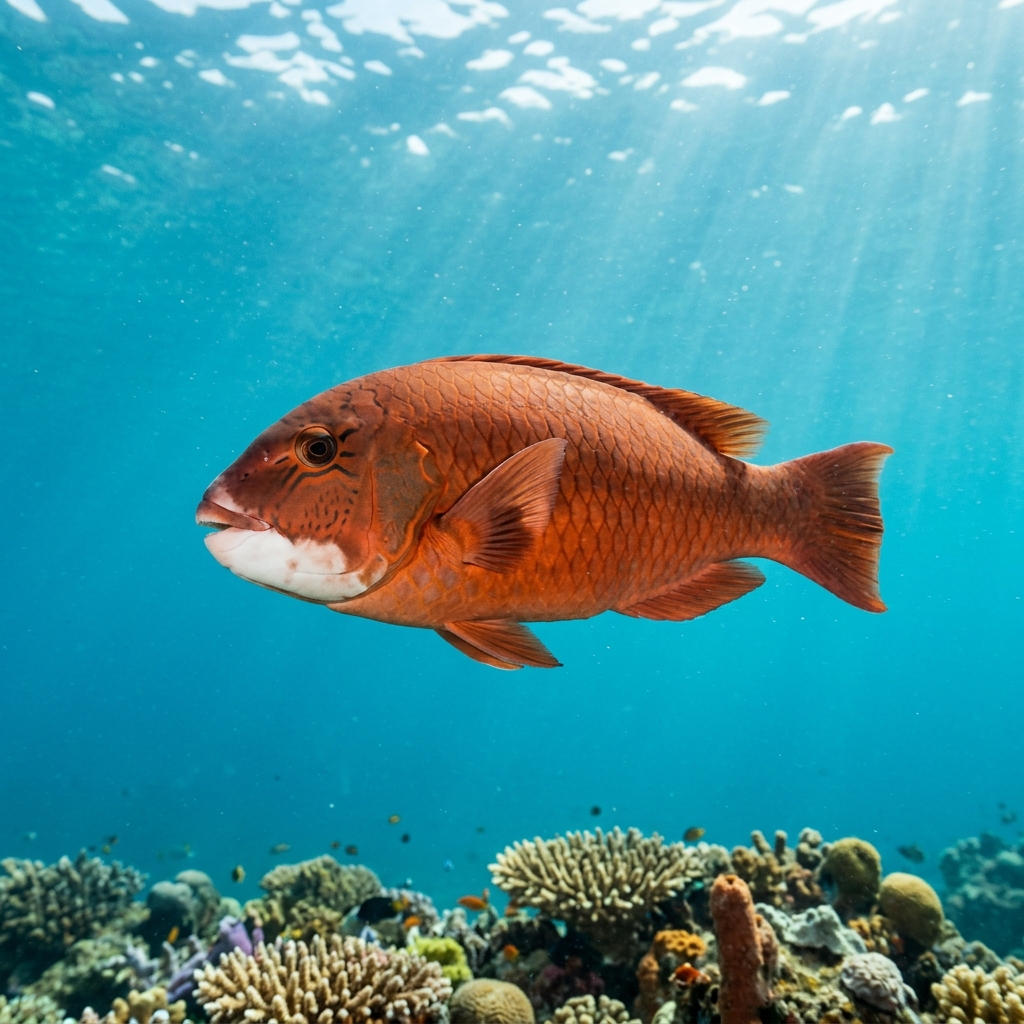
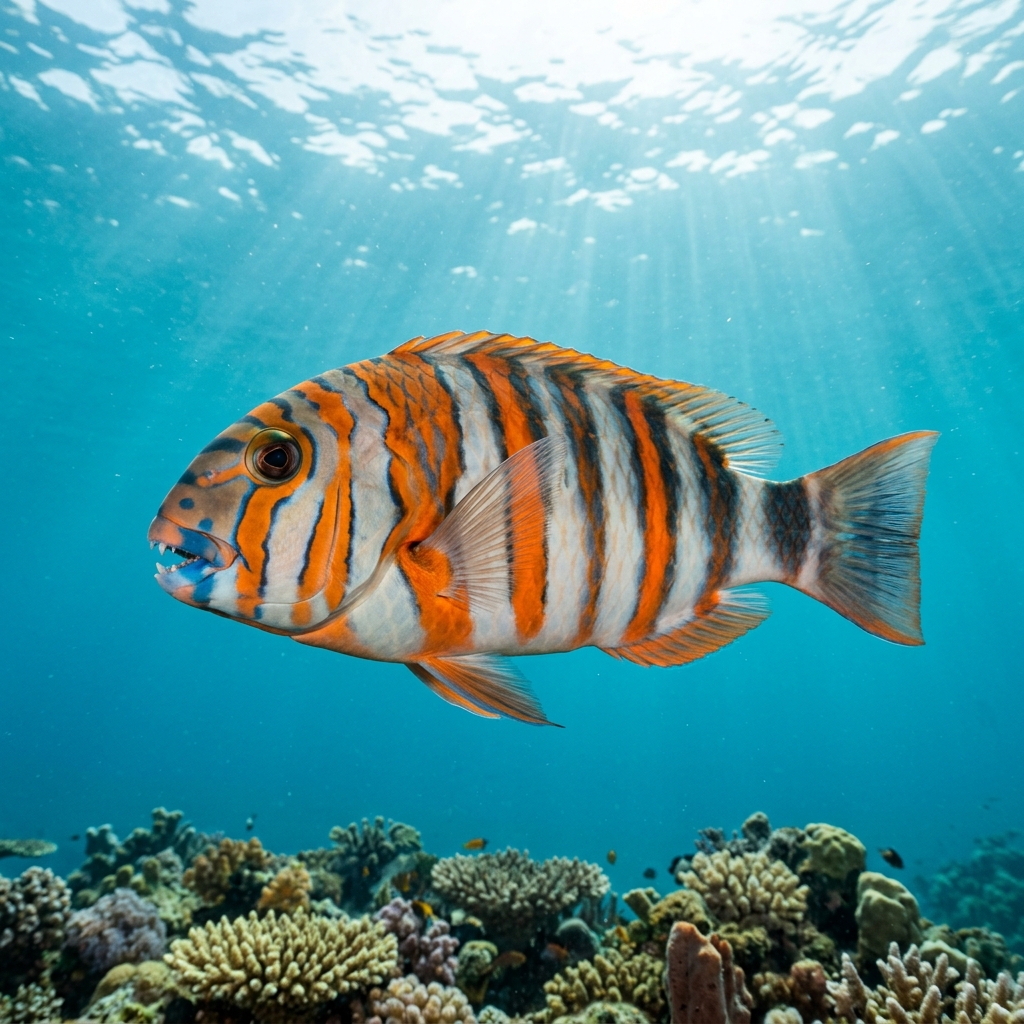
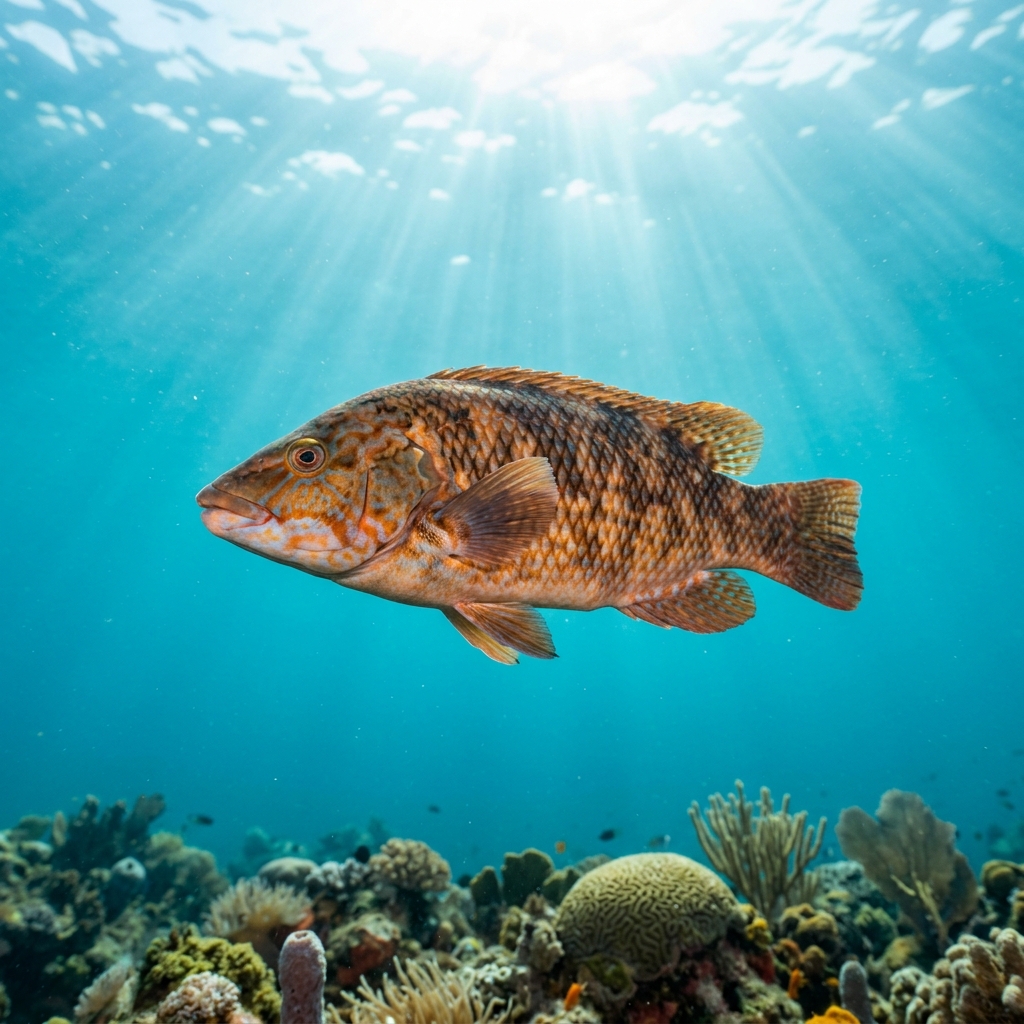
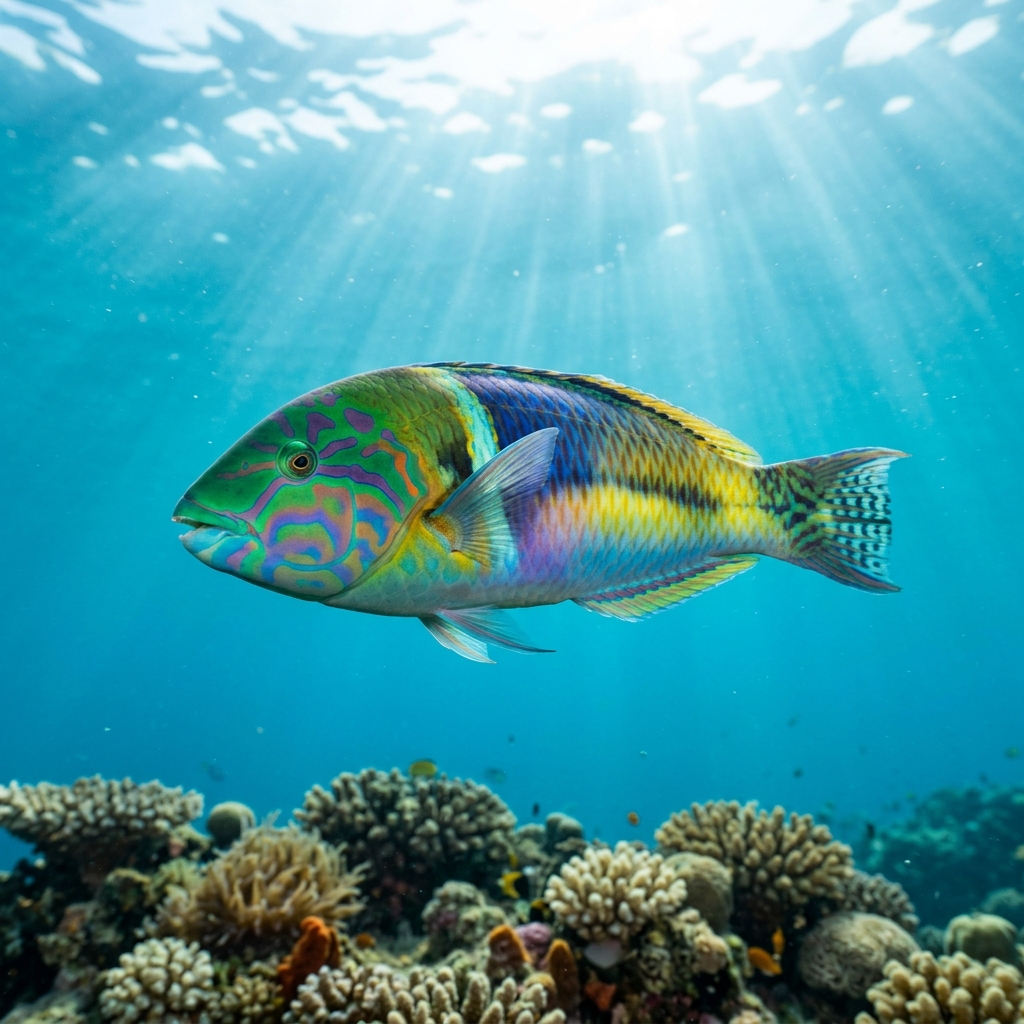
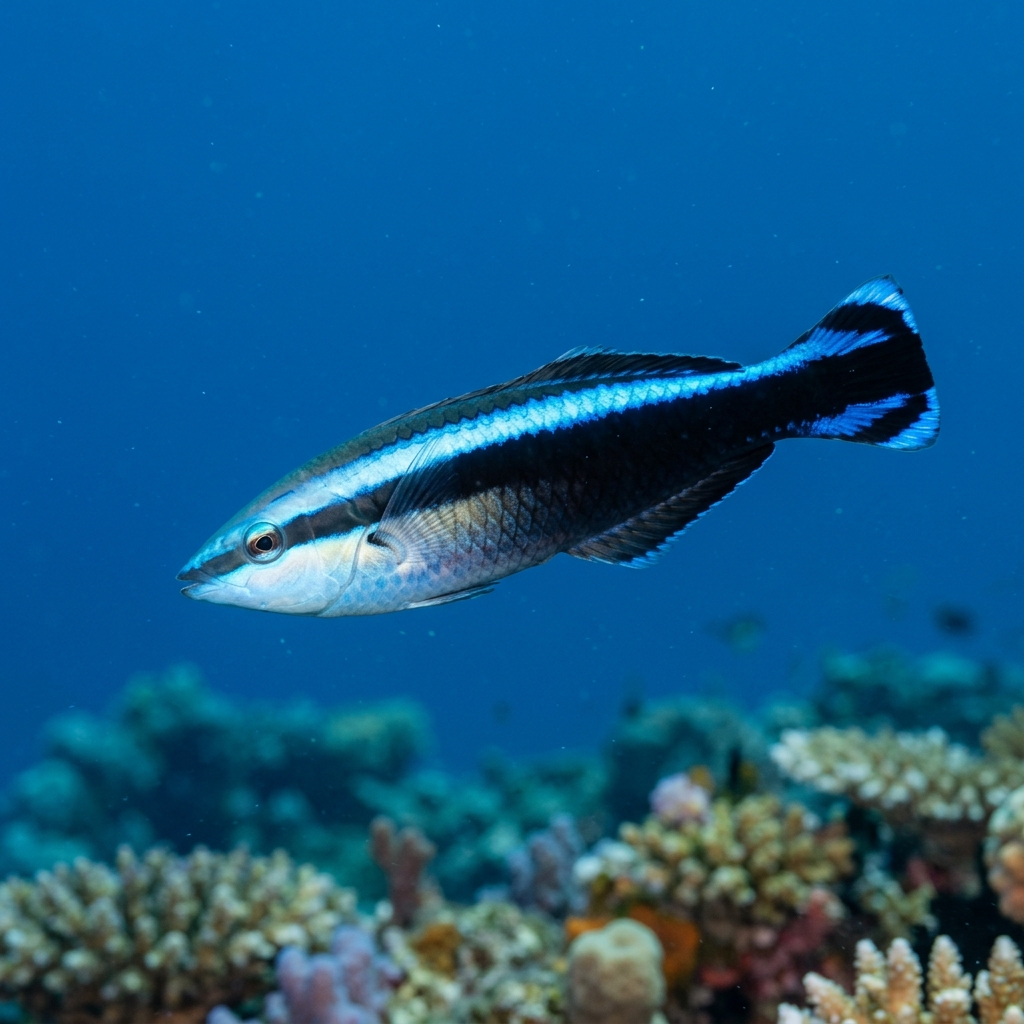
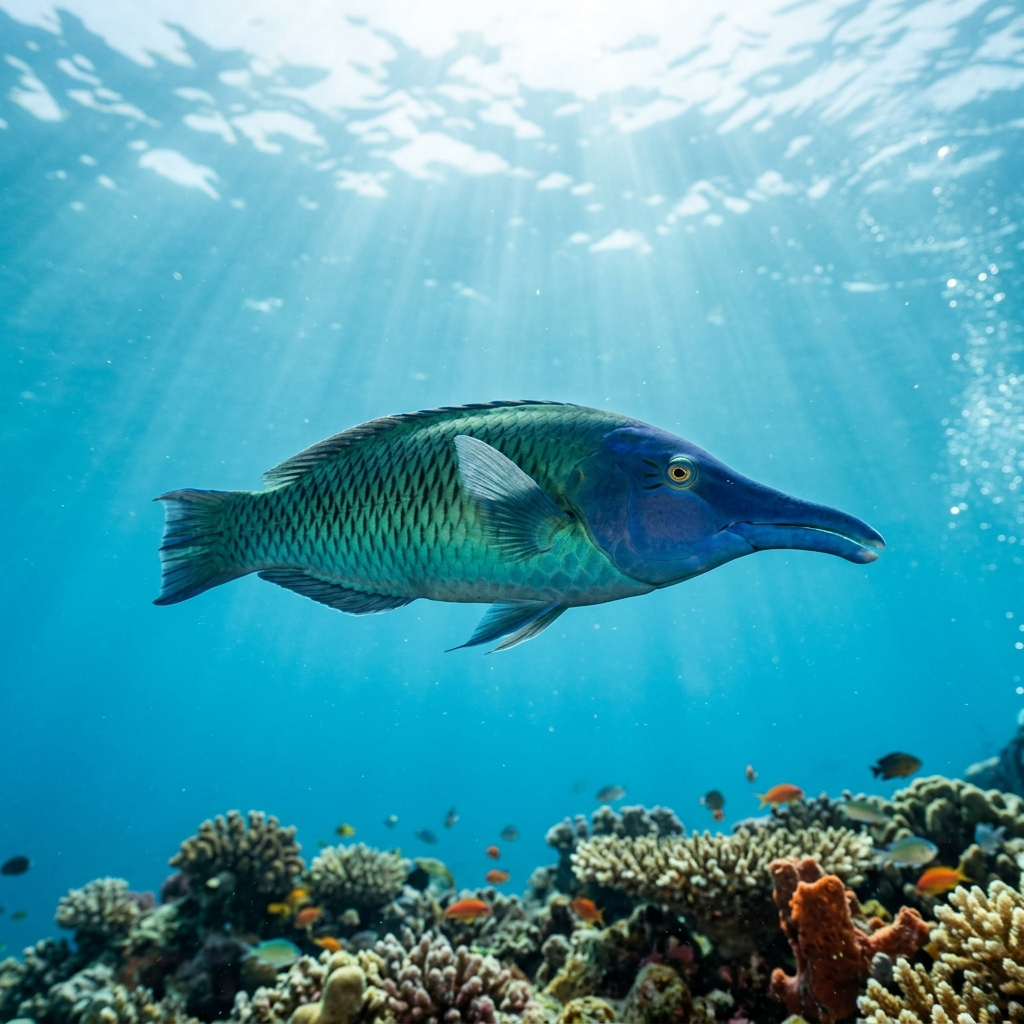
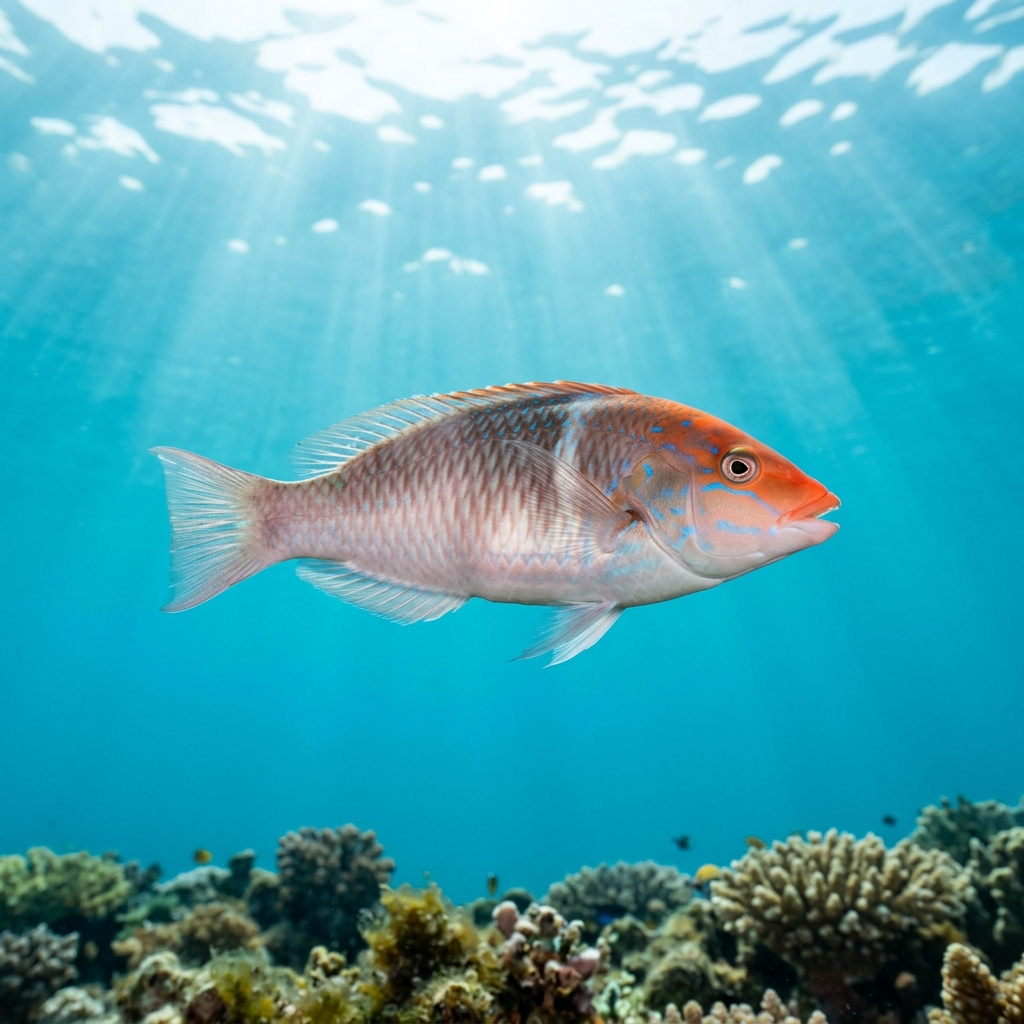
Reef neighbours a diver could mistake it for. Use the identification notes above to tell them apart.
This one is essentially a Queensland speciality among logged sightings, with every recorded dive site sitting in Australia and specifically Queensland's reefs. Divers looking for it should focus on Queensland dive operations rather than chasing it elsewhere, as no other country shows up in the data.
Mapping where Blue Tuskfish is logged…
Queensland, Australia is where this species is consistently logged, with sightings spread across a range of reef sites there. It hasn't been reliably recorded diving elsewhere, so Queensland is the place to plan around.
There's no strong seasonal pattern in the sightings, and the water temperature range it favours, roughly 25 to 29C, holds for most of the year on Queensland reefs, so it's a fair bet any time you're diving there.
Look for a stocky, steel-blue wrasse around half a metre long with a blocky head and visible tusk-like front teeth. Faint pale blue lines cross the cheek, and it moves with a slow, deliberate swim rather than quick darting.
They typically reach around 49 cm in length, making them one of the larger, more solidly built wrasses divers encounter on Queensland reefs.
Their protruding, tusk-like teeth are built for crunching hard-shelled prey like molluscs and crustaceans, a feeding trick that sets them apart from most other reef wrasses.
Site and sighting data is aggregated from diver logs, iNaturalist and GBIF. For taxonomy and conservation status:
Bird Wrasses
3,632 sites