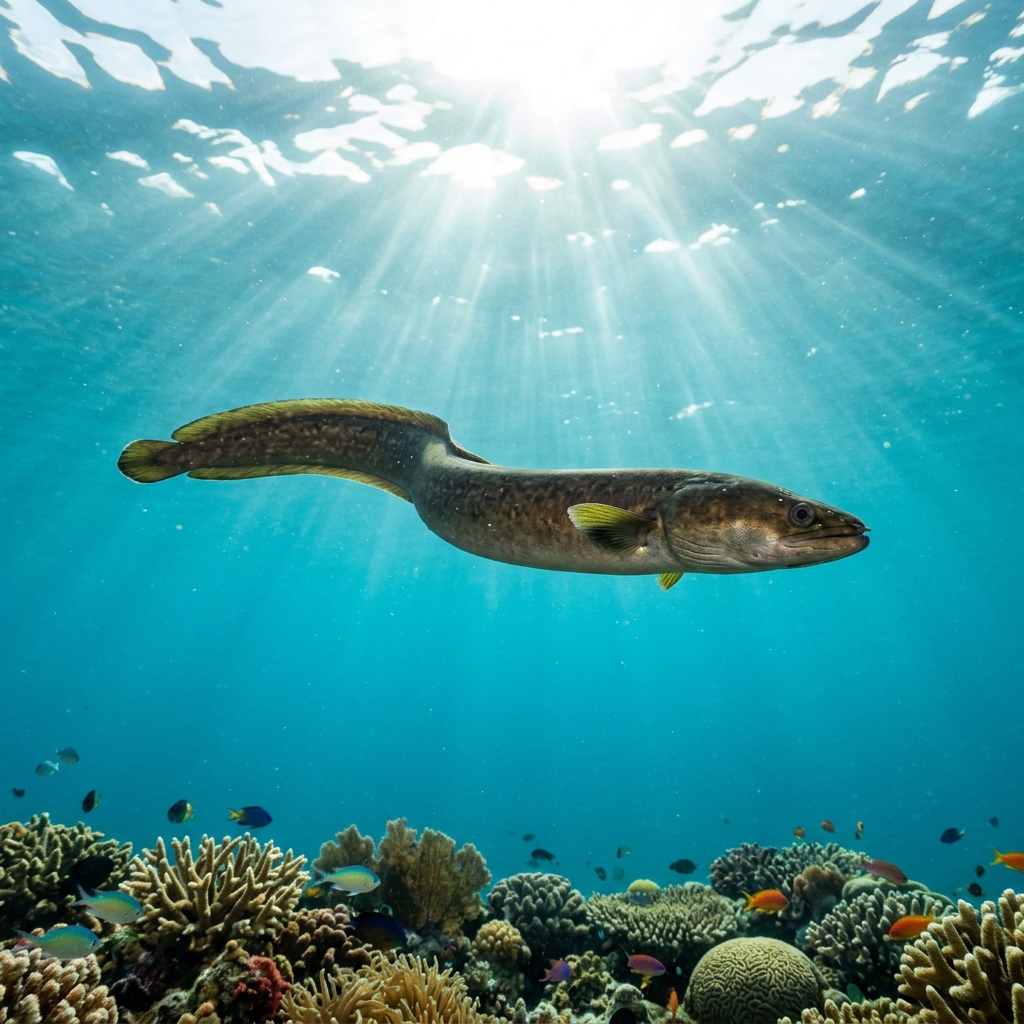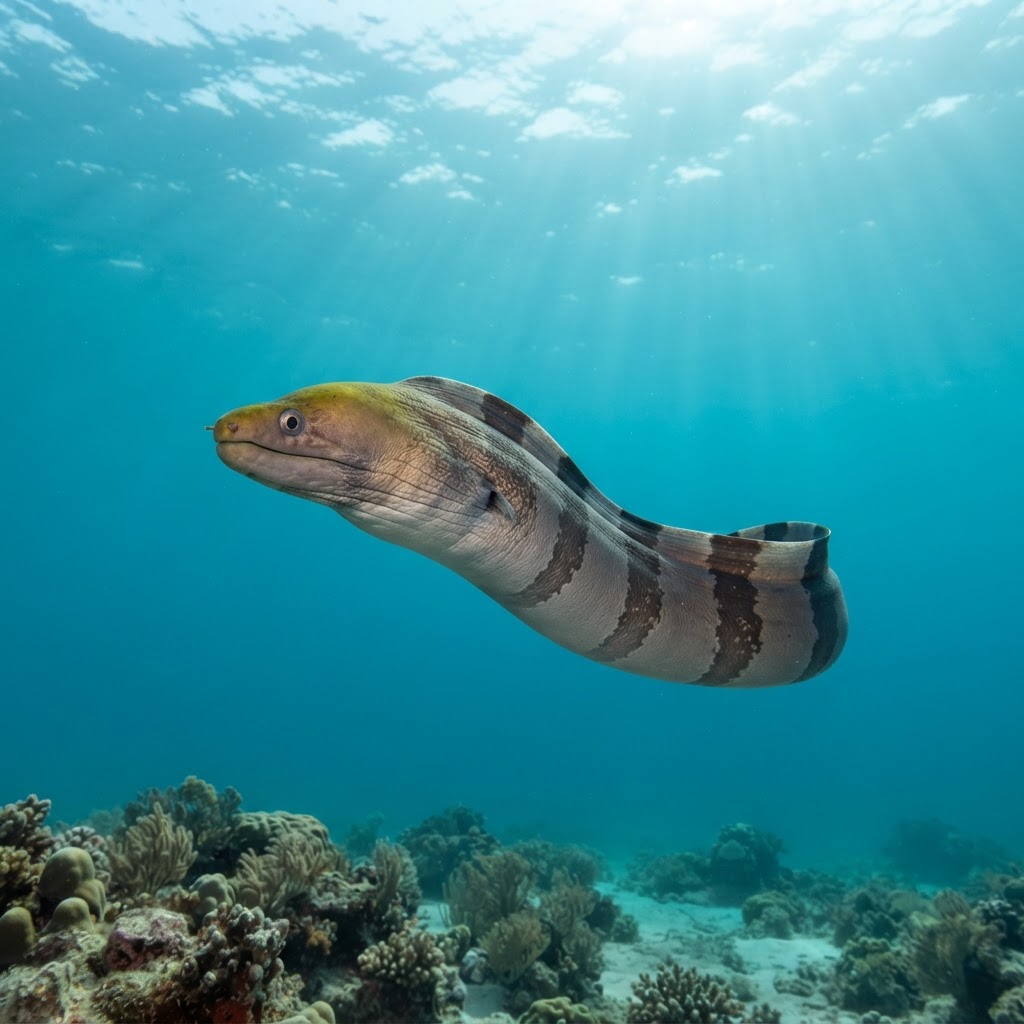
Gymnothorax rueppelliae
Uncommon but reliable on Okinawa's reefs, this small moray sits in 24.9-28.9C water year-round, tail poking from a crevice.
Safety warning
Bites happen almost exclusively when divers or snorkellers put a hand into a crevice without checking first, since morays have poor eyesight and react to touch as a threat. Keep hands and fingers away from holes and ledges, and it will generally stay put and let you observe from a comfortable distance.
If you're bitten
BiteGeneral first-aid guidance, not a substitute for professional medical care. In an emergency, call your local emergency number.
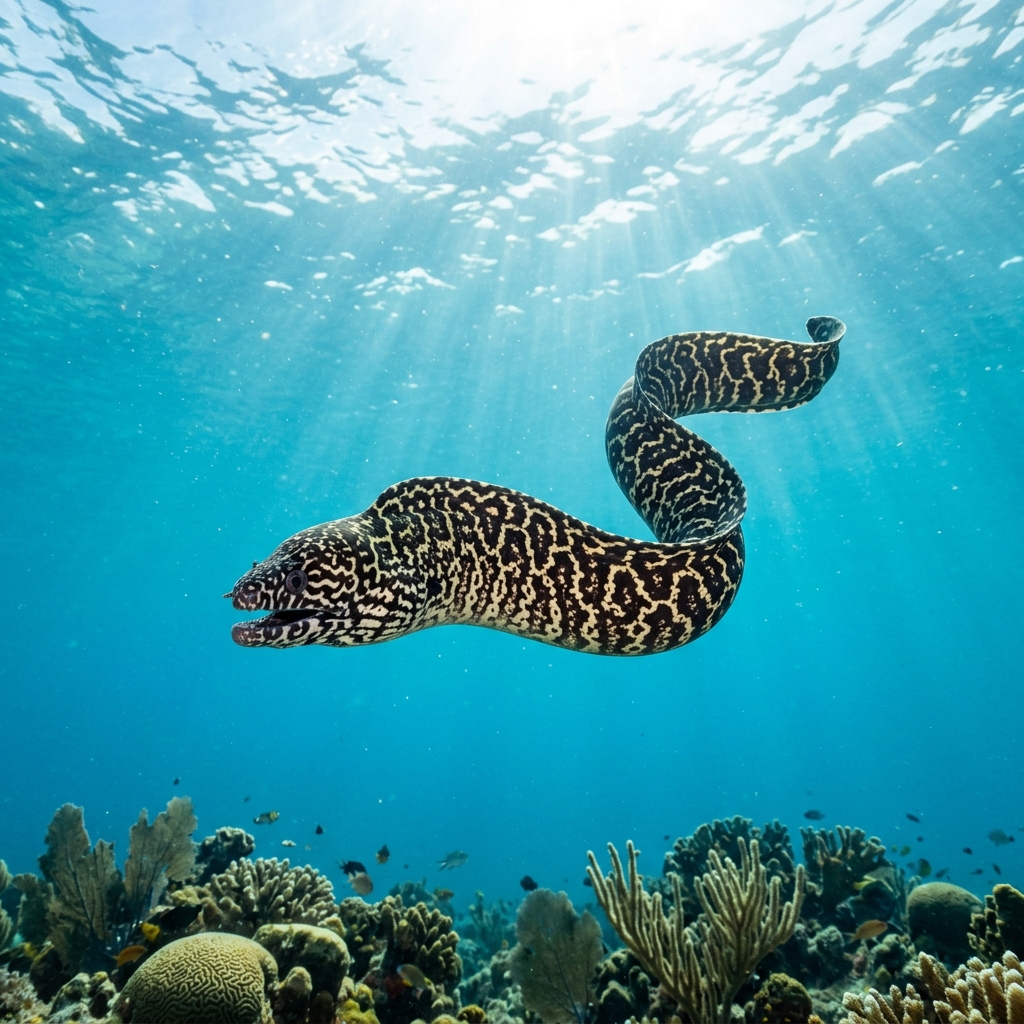
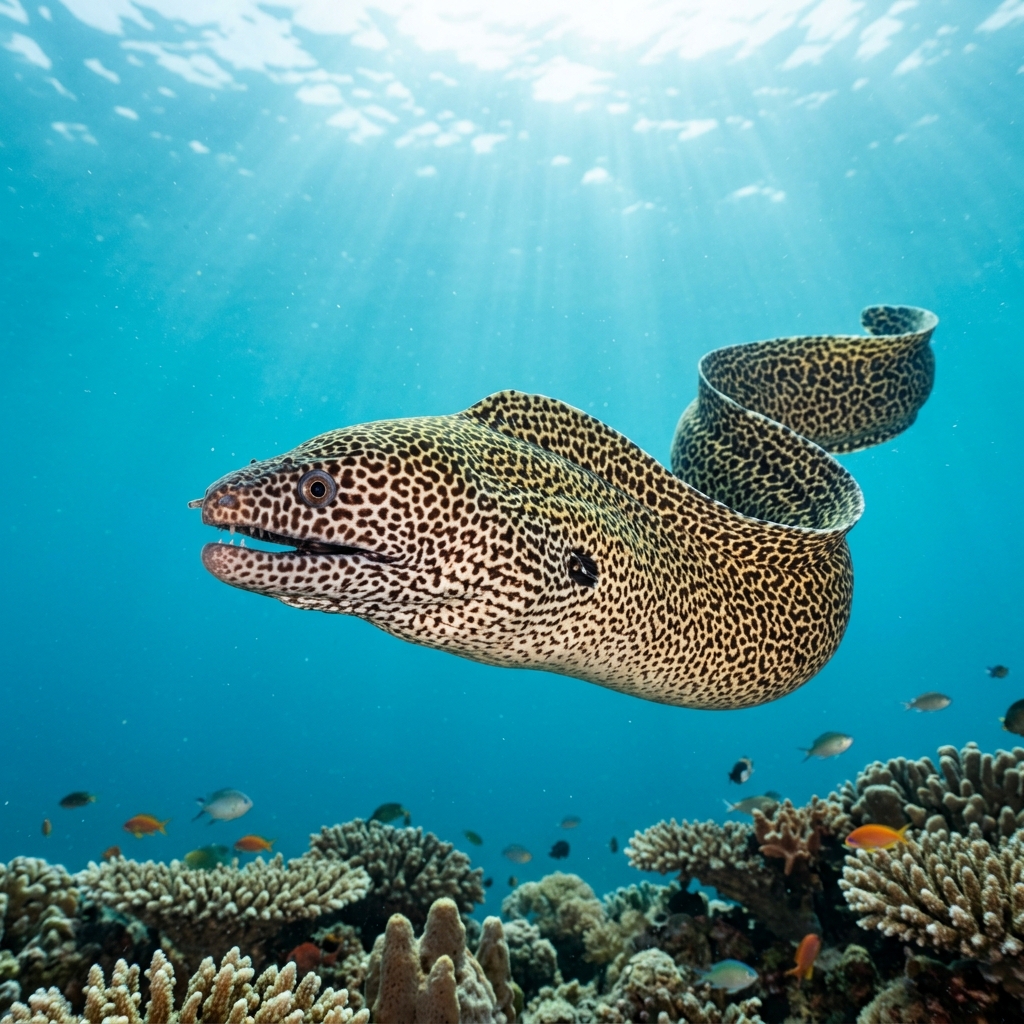
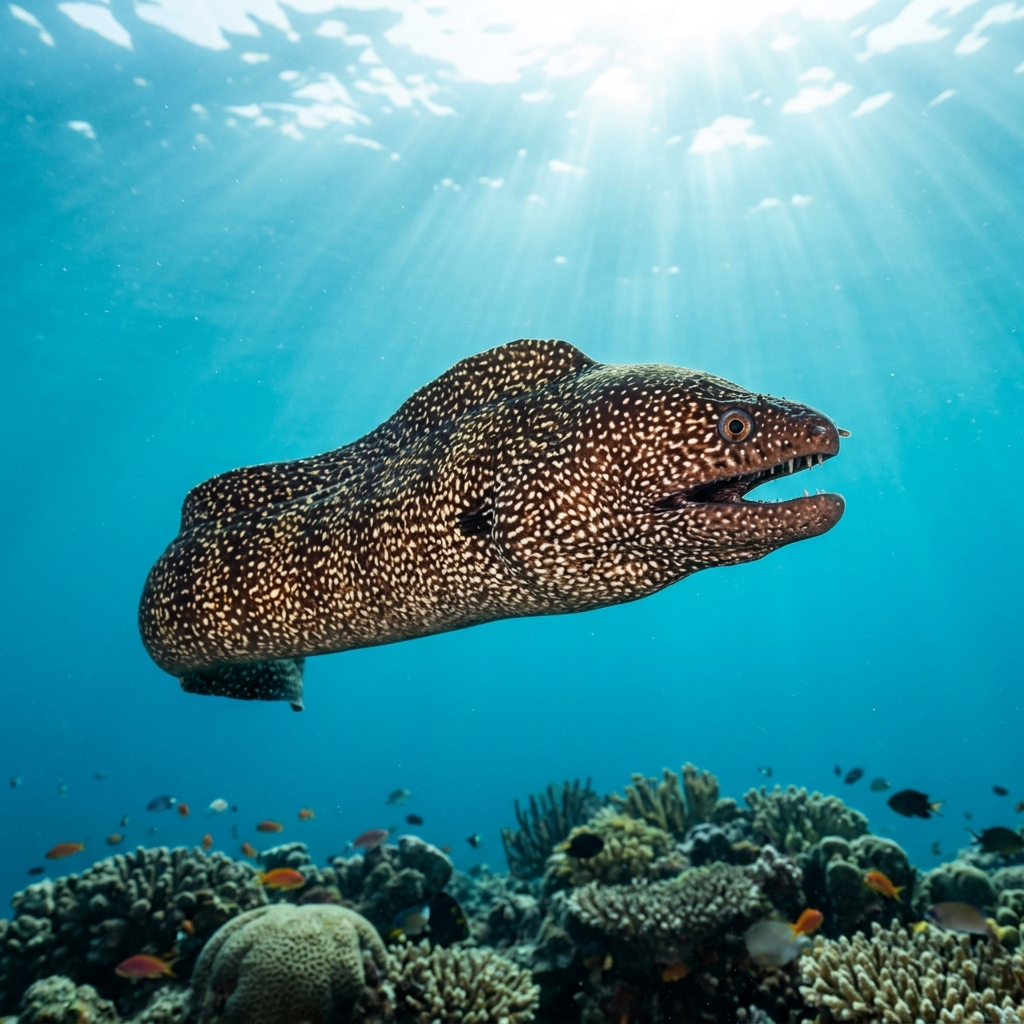
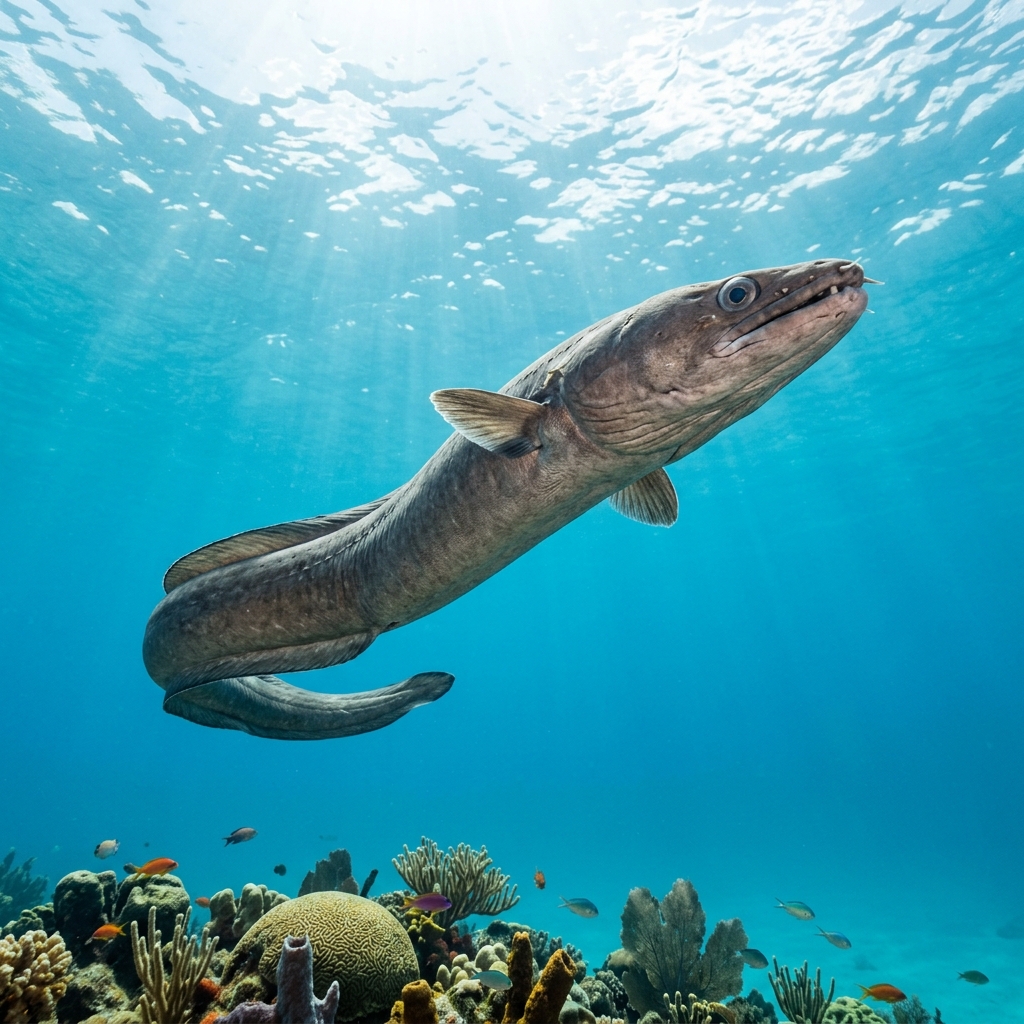
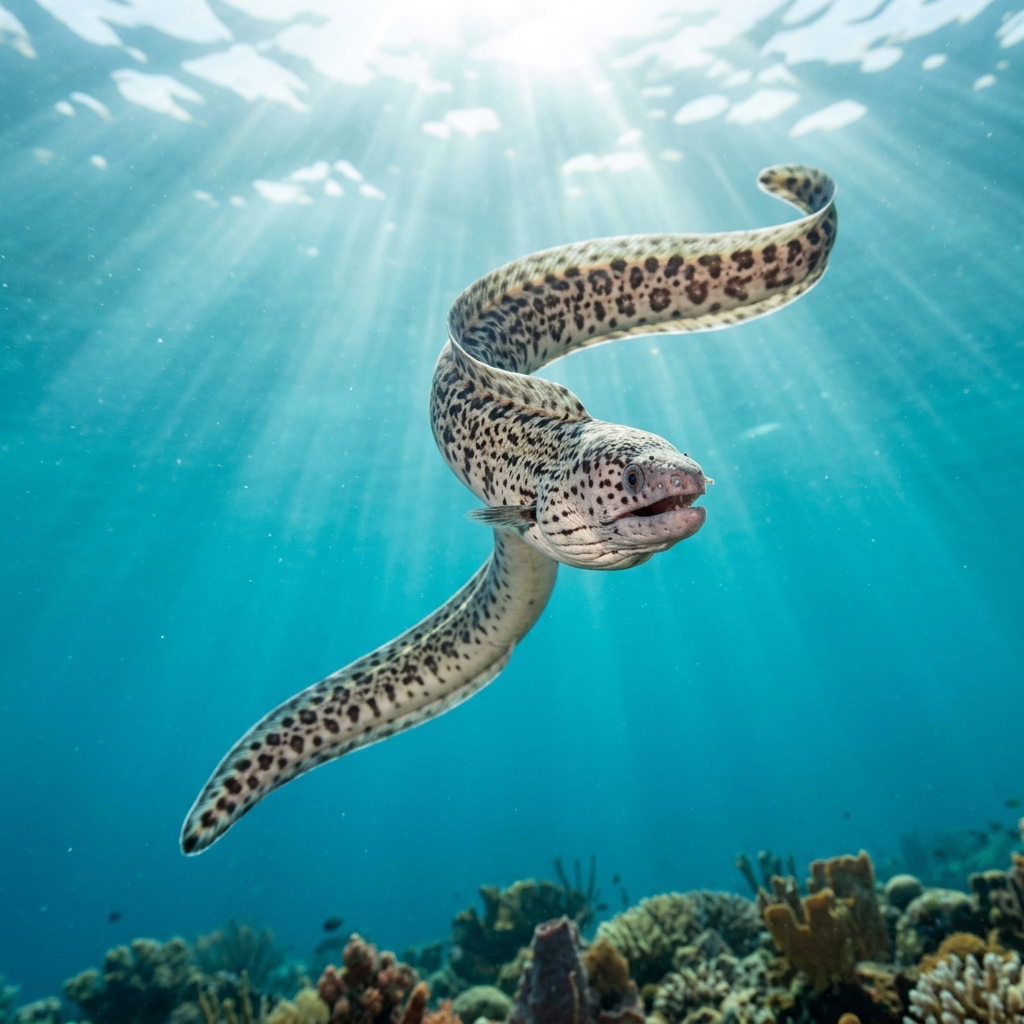
Grows to around 56 cm, a modest size for a moray, with a slim body patterned in dark brown to olive bands over a pale cream or yellowish background. The banding is broadest and most distinct toward the head, often fading into mottled speckling further down the body. Look for a blunt snout and the small size compared to the larger reef morays it shares habitat with.
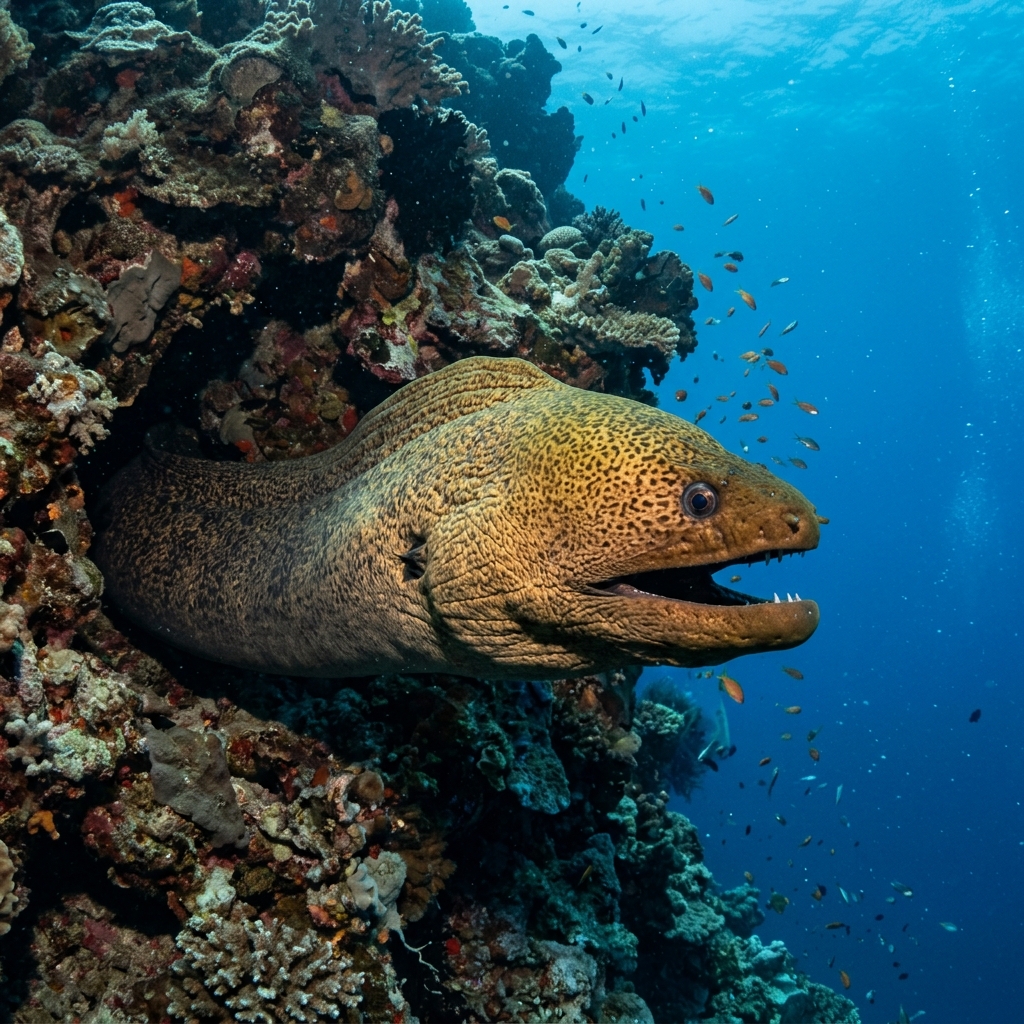
Typically seen with just its head and neck poking out from a crevice or under a coral ledge, watching the reef rather than actively hunting in the open. It tends to hold its ground when divers pass, retreating only if approached too closely, and most sightings are during daylight reef dives rather than night dives. Logged as uncommon at most sites, so it's more a case of scanning holes and overhangs than expecting one in open water.
Like other morays, it relies on a second set of jaws deep in its throat (pharyngeal jaws) to drag prey down its gullet, since it can't create suction to swallow the way most fish do.
No clear season shows up in the sighting data, and with a comfortable range of 24.9 to 28.9C, it's a year-round find on the reefs where it's logged. Plan around good visibility and calm conditions rather than a particular month.
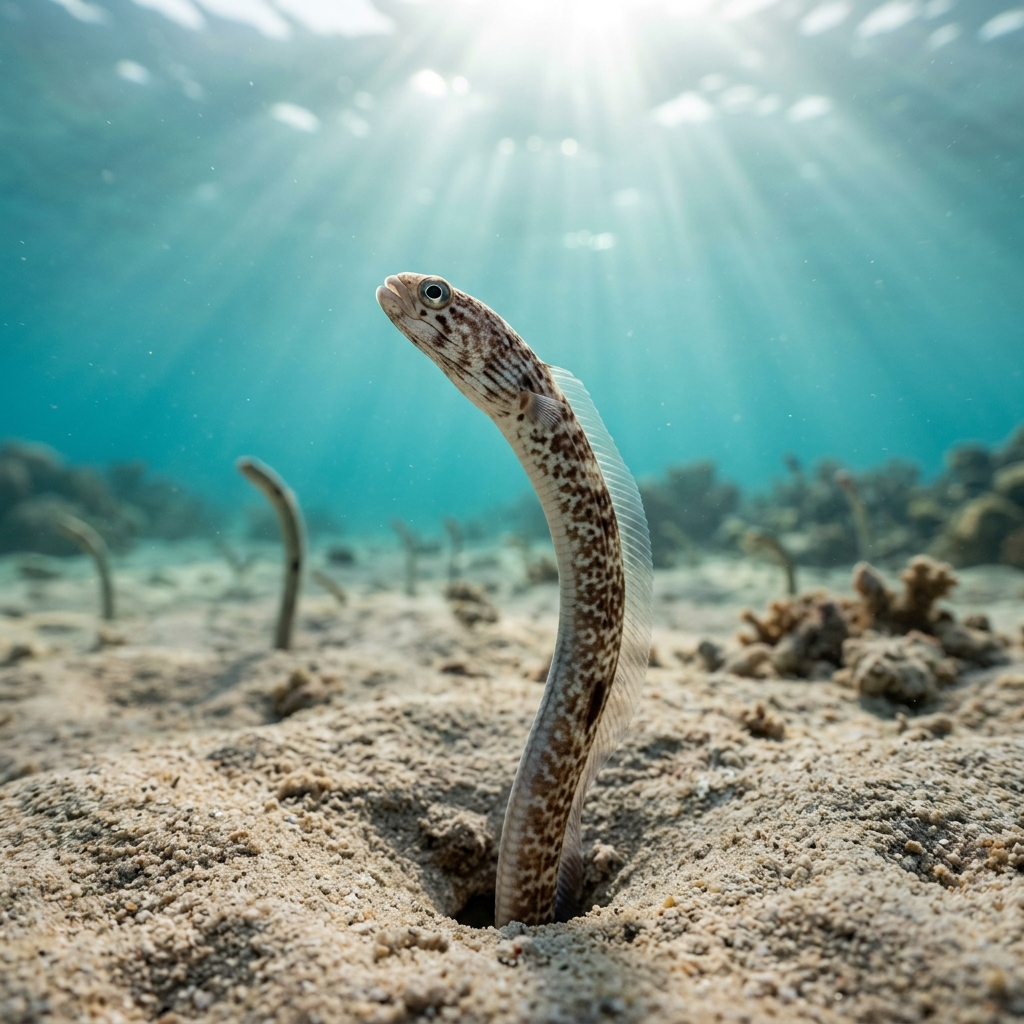
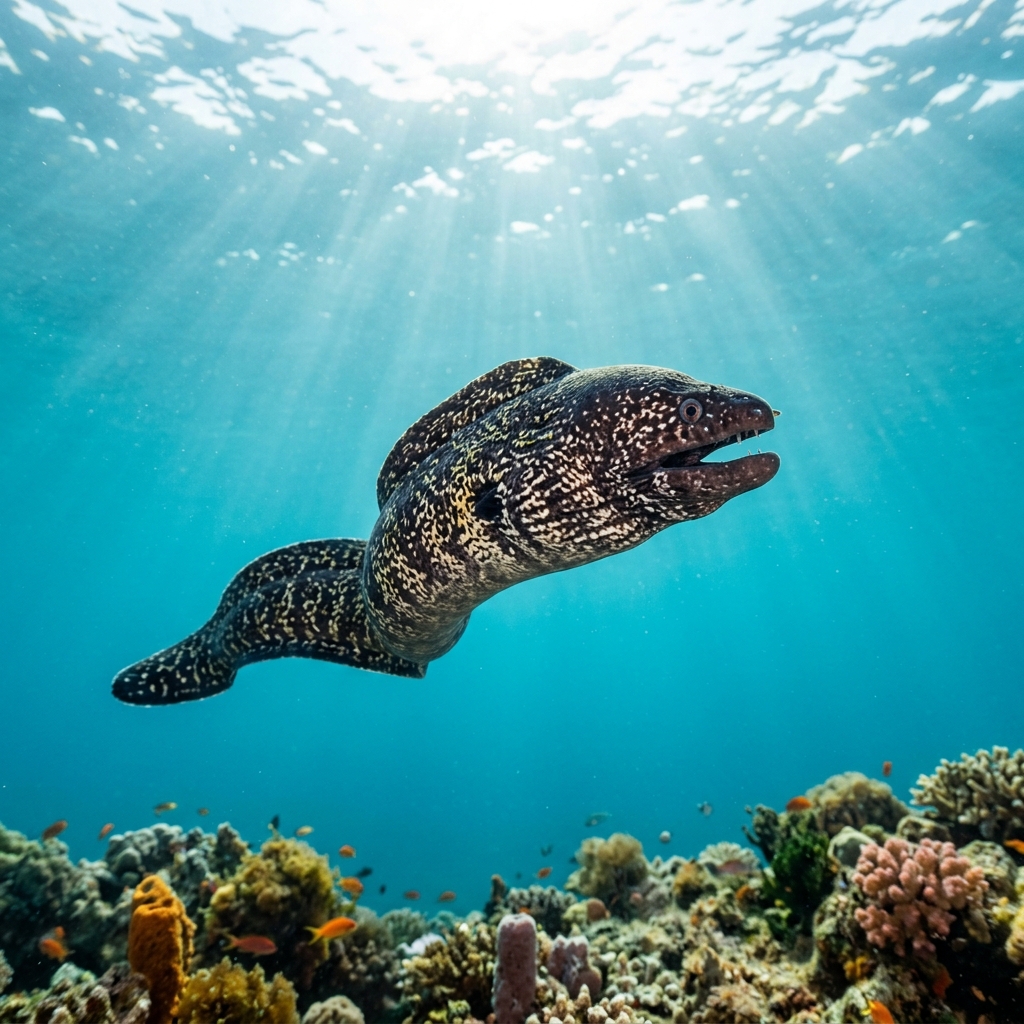
Reef neighbours a diver could mistake it for. Use the identification notes above to tell them apart.
Most reliably logged around Okinawa and the Ryukyu Islands in Japan, which accounts for the vast majority of sightings, with a smaller but steady presence in Hawaii, United States. A handful of sightings also come from the Society Islands in French Polynesia.
Mapping where Banded Moray is logged…
Okinawa and the Ryukyu Islands in Japan are by far the most reliable spot, with additional sightings logged in Hawaii and the Society Islands of French Polynesia.
There's no strong seasonal pattern in the sighting data, and it lives comfortably in water between about 25 and 29C, so it turns up year-round wherever it's found.
They're marked as dangerous mainly because of bite risk if provoked or if a hand is put into their crevice. Left alone and observed from a short distance, they pose little threat.
Look for a slim moray around half a metre long with dark brown bands over a pale body, usually with just the head showing from a reef crevice. The banding is clearest near the head and fades into mottling further back.
They typically reach around 56 cm, making them one of the smaller morays a diver is likely to encounter on a reef.
Like all morays, they use a second set of jaws in their throat to pull prey down, since their body shape doesn't allow them to swallow using suction like most fish.
Site and sighting data is aggregated from diver logs, iNaturalist and GBIF. For taxonomy and conservation status:
Garden Eel
2,448 sites