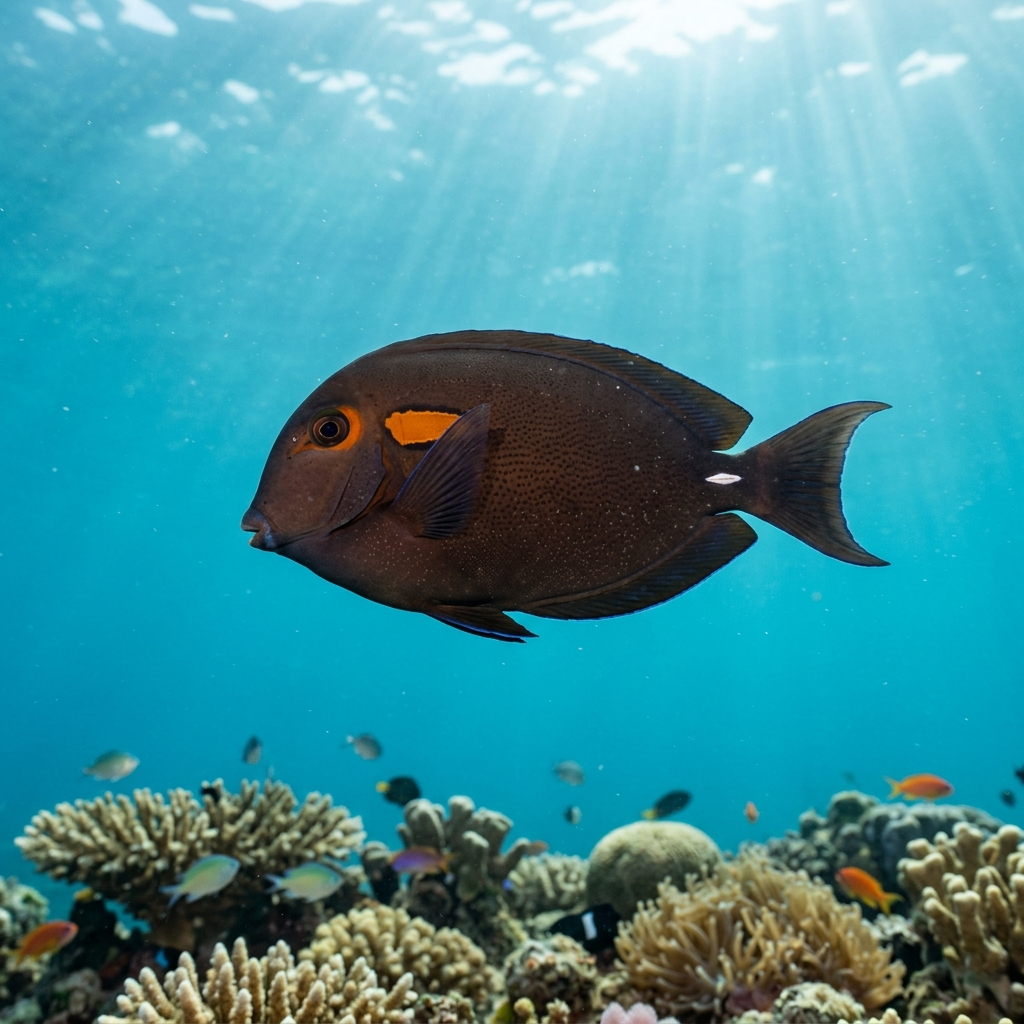
Acanthurus nigrofuscus
Spot dusky surgeonfish grazing in feeding fronts across Hawaii, the Red Sea and the Maldives. Tips on ID, best seasons and where sightings are strongest.
A small, oval-bodied surgeonfish reaching around 14 cm, it appears a uniform dark brown to charcoal-grey underwater, often with a faint violet or bluish wash depending on the light. Look for the short, pale blue lines and spots on the head and the characteristic sharp spine (scalpel) at the base of the tail, typical of all surgeonfish. At 14 cm it is noticeably smaller than most of its reef-dwelling relatives, which helps narrow it down quickly. Juveniles tend to show a slightly brighter, more orange-tinged brown tone before darkening with age.
Day-dive with these fish and you will often find them in loose to dense schools sweeping methodically across the reef, creating a coordinated feeding front as they graze on algae. They are not particularly wary of divers when in a group, so you can get close without much effort. Despite their relaxed attitude towards people, they can be feisty with rival fish competing for prime grazing territory.
Their coordinated group grazing, sometimes involving dozens of individuals moving in a wave across the reef, is thought to overwhelm the territorial defences of smaller damselfish that otherwise guard patches of algae. It is a rare example of fish behaviour that functions almost like a collective strategy.
Within its warm-water comfort zone of roughly 25 to 29°C, this species is present on tropical reefs for most of the year. In the Northern Hemisphere sightings concentrate from July through May, while Southern Hemisphere divers see them most reliably from October through June.
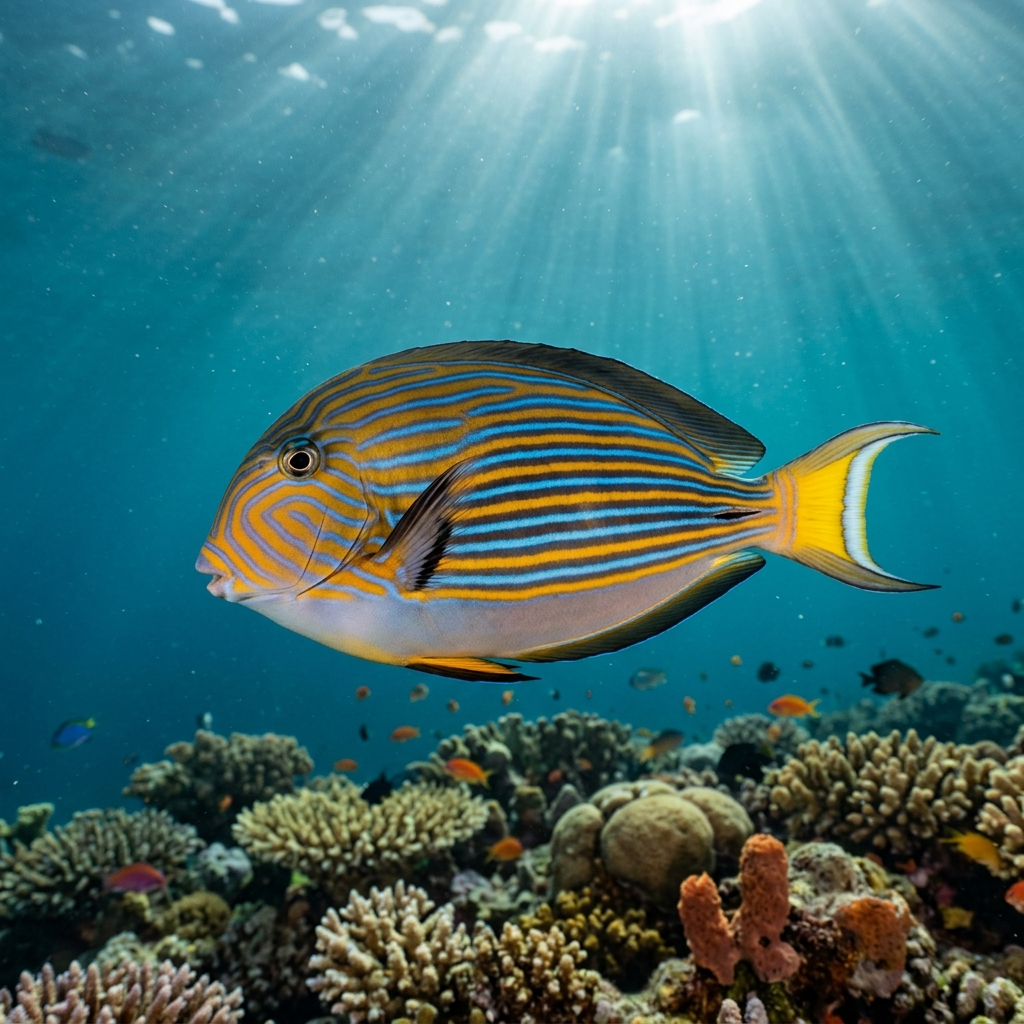
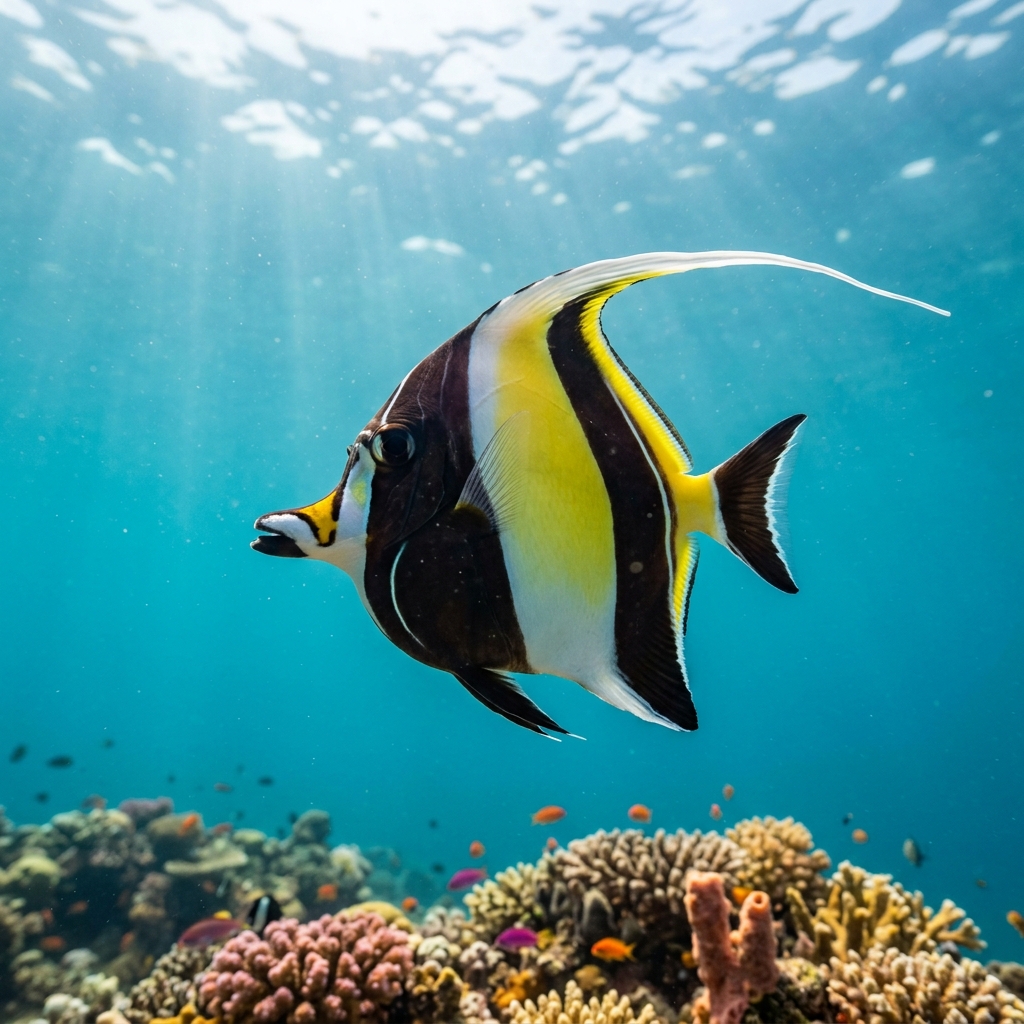
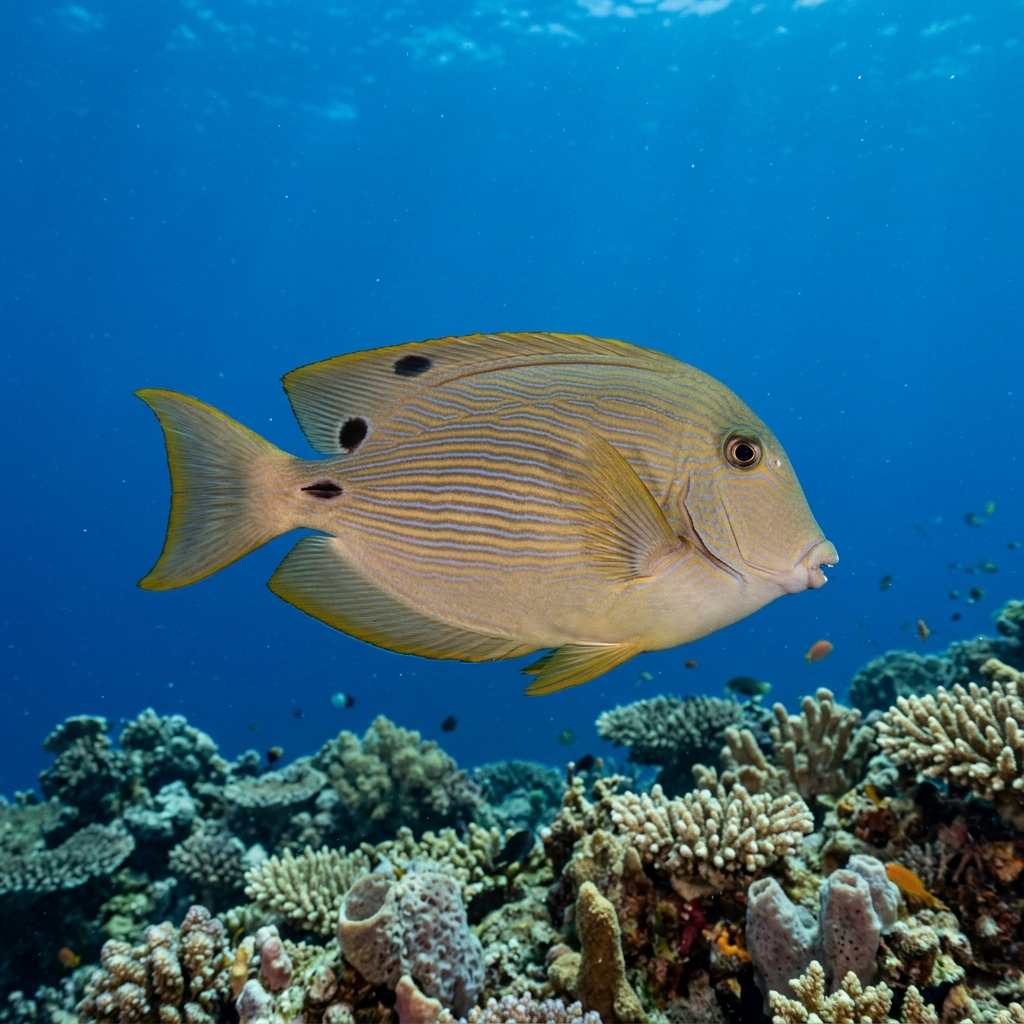
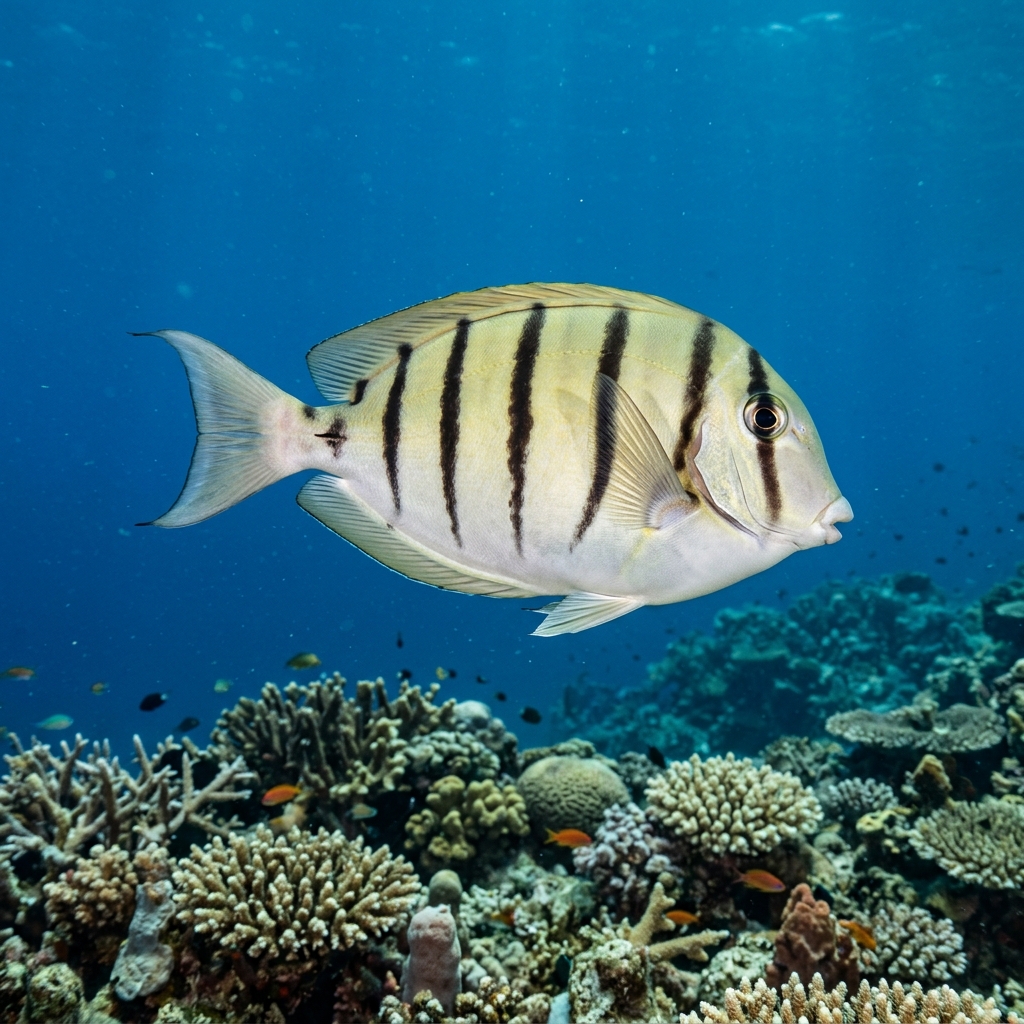
Reef neighbours a diver could mistake it for. Use the identification notes above to tell them apart.
Most commonly logged across the Indo-Pacific, with particularly strong representation in Egypt's Red Sea (especially Sharm el Sheikh and Marsa Alam), the Maldives, Indonesia, the Philippines, and Australia. Hawaii stands out as one of the top single regions for sightings, alongside Okinawa in Japan. Thailand and the wider Indo-Pacific complete the core range.
Mapping where Dusky Surgeonfish is logged…
They are most reliably encountered across the Indo-Pacific. Hawaii, Egypt's Red Sea (Sharm el Sheikh and Marsa Alam), the Maldives, Indonesia, the Philippines, and Okinawa in Japan are among the top destinations where divers log them. Australia and Thailand also have strong populations.
They are present on warm tropical reefs for most of the year. Northern Hemisphere sightings are strongest from July through May, and Southern Hemisphere sightings peak from October through June. Their preference for water temperatures between roughly 25 and 29°C means they are tied to tropical reef conditions year-round.
Look for a small, dark charcoal-brown surgeonfish around 14 cm long with faint blue markings on the head and a scalpel-like spine at the tail base. Its small size and near-uniform dark colouration are the quickest ID clues. Juveniles appear slightly more orange-brown before darkening.
They reach around 14 cm as adults, making them one of the smaller surgeonfish you will encounter on a reef dive. Their compact size is actually a useful identification feature when comparing them with larger relatives.
No. They pose no real risk to divers. Like all surgeonfish they carry a sharp spine at the base of the tail, but it is a defence used against fish rivals, not people. You can approach them closely, especially when they are feeding in schools.
Site and sighting data is aggregated from diver logs, iNaturalist and GBIF. For taxonomy and conservation status:
Striped Surgeonfish
3,289 sites