Acanthurus triostegus
Spot convict surgeonfish on reefs across the Maldives, Philippines and French Polynesia. Six bold black stripes on white make ID easy in warm 23-29 °C water.
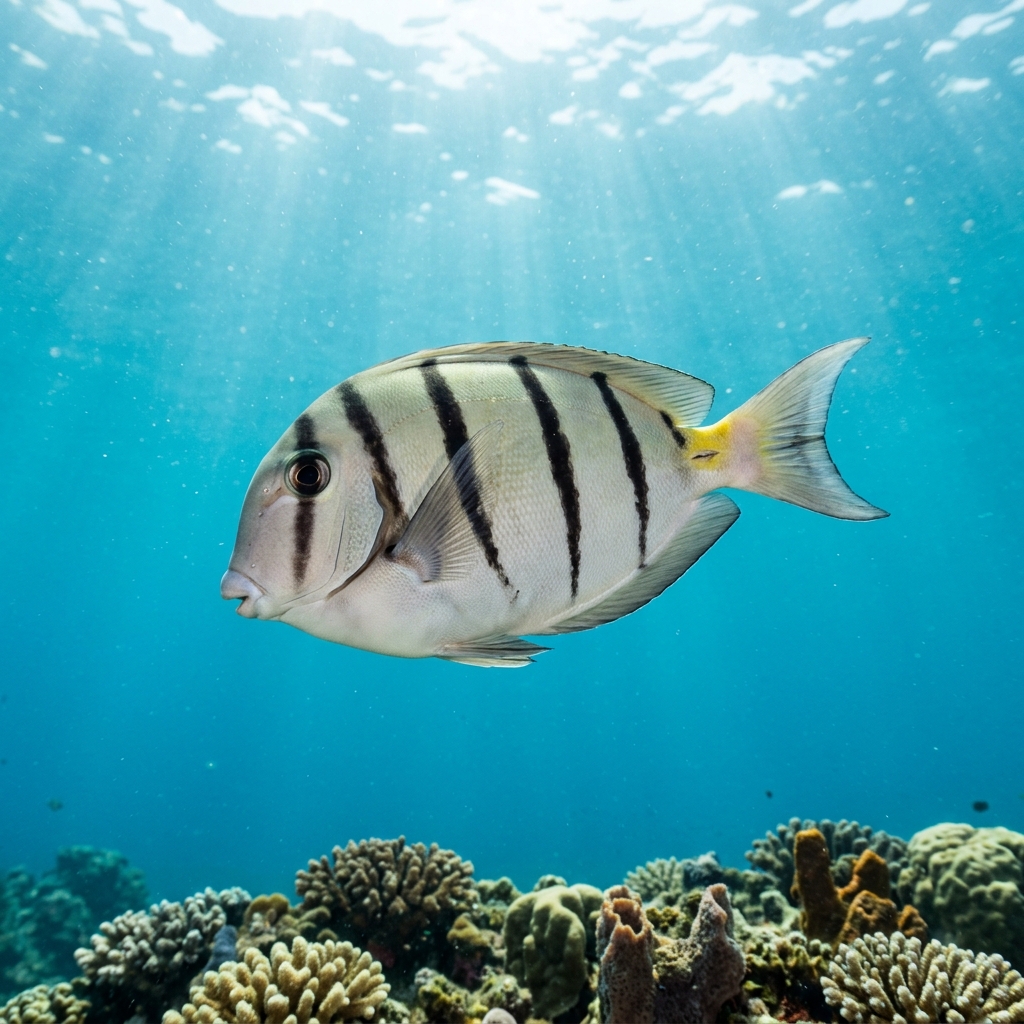
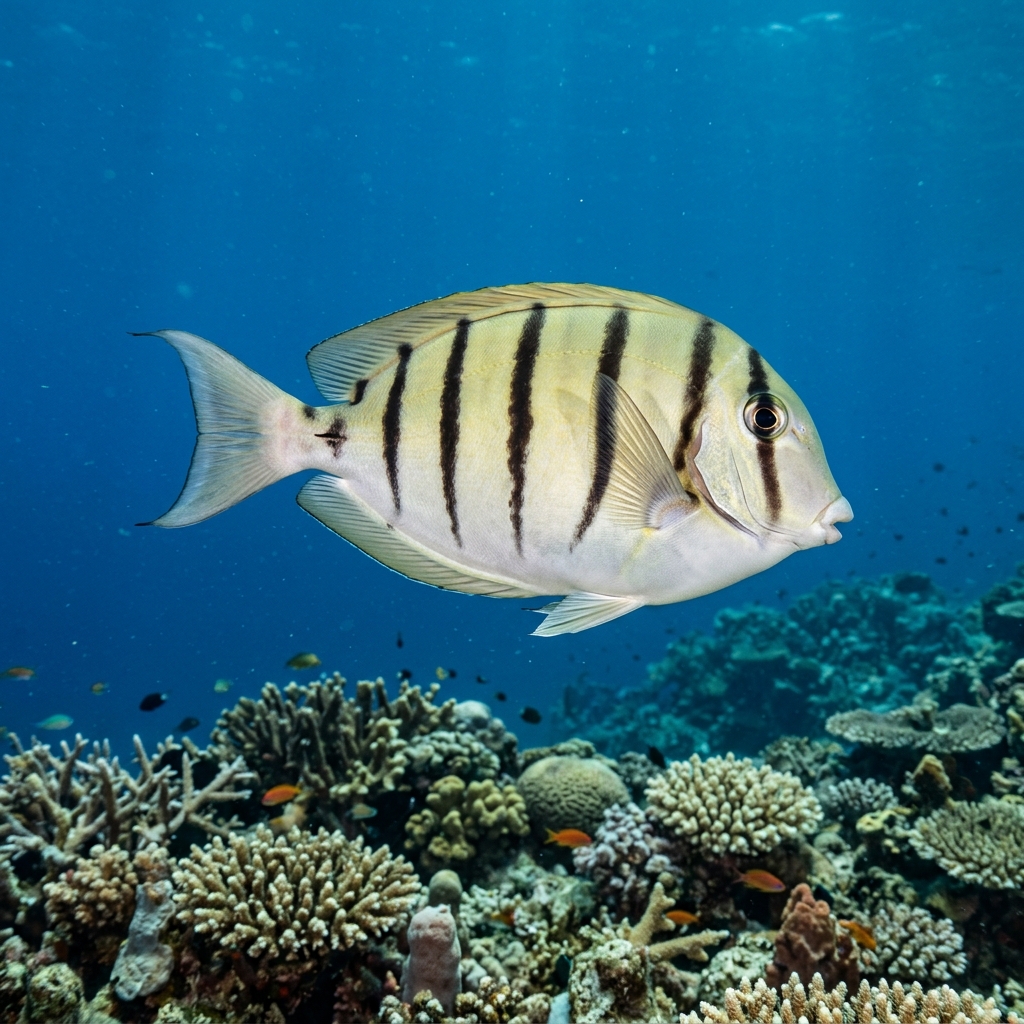
Six bold, vertical black bars on a white or pale silver body make this one of the easiest surgeonfish to name underwater. At around 18 cm it sits on the smaller end of the family, with an oval, laterally compressed (flattened side-to-side) body typical of surgeonfish. Look for the thin black line running through the eye, which extends the striped pattern onto the head. The tail is slightly forked and the fish often moves in loose schools, which makes the repeating black-and-white pattern very eye-catching.
Convict surgeonfish are active grazers and keep feeding even when divers are close, making them relaxed subjects to watch. They frequently form schools, sometimes quite large, rippling assemblages, that move methodically across reef flats and slopes, rasping algae from hard substrate throughout the day. During breeding periods you may catch territorial chases between individuals, a brief burst of energy before the group settles back into its steady, unhurried grazing rhythm.
Convict surgeonfish form some of the largest known spawning aggregations of any reef fish, with thousands of individuals gathering at specific reef promontories around new and full moons to release eggs and sperm in synchronised rushes, a spectacle that is rarely witnessed but is one of the more dramatic events on a tropical reef.
In the Northern Hemisphere tropics, sightings concentrate between October and March. In the Southern Hemisphere, covering Australian and Polynesian reefs, sightings are recorded across most of the year from June through April, with the warmest months seeing the most activity. The species is comfortable in water between about 23 and 29 °C, so it stays on tropical reefs year-round wherever those temperatures hold.
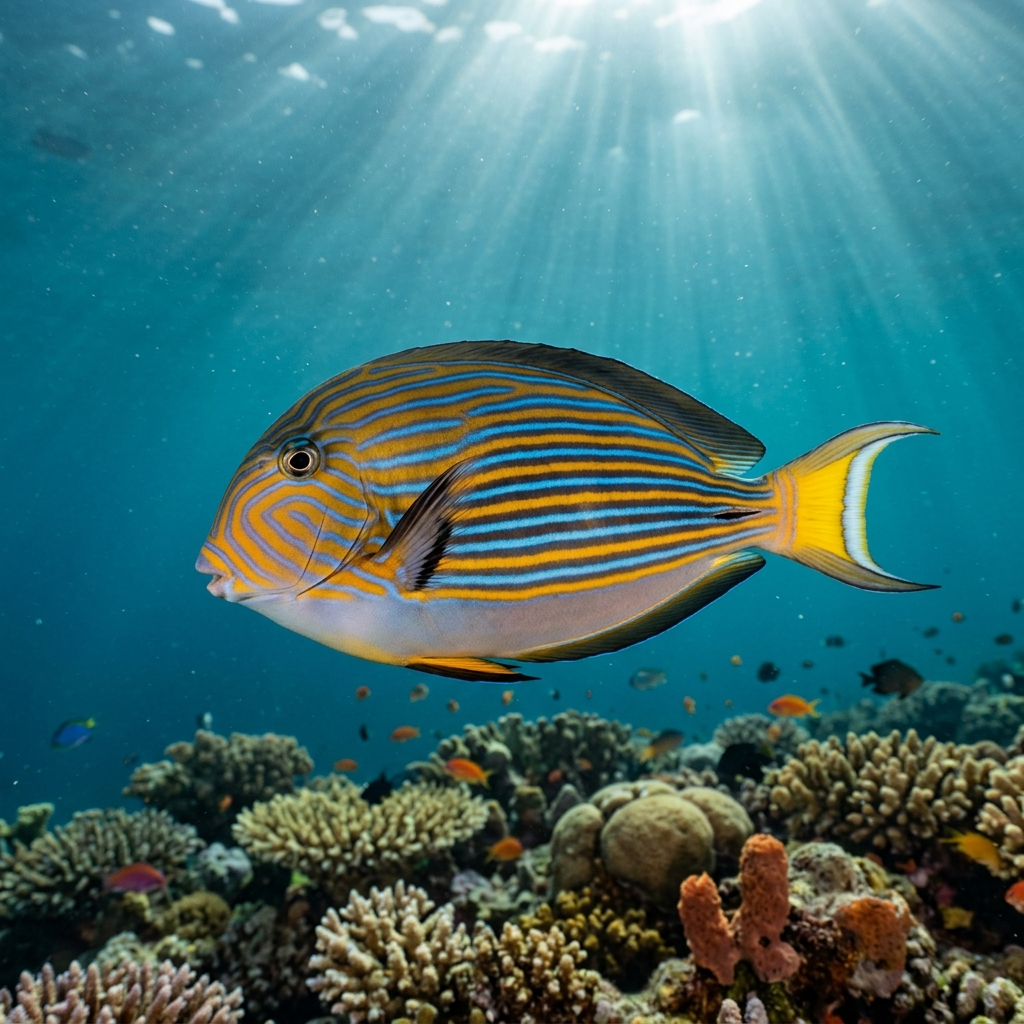
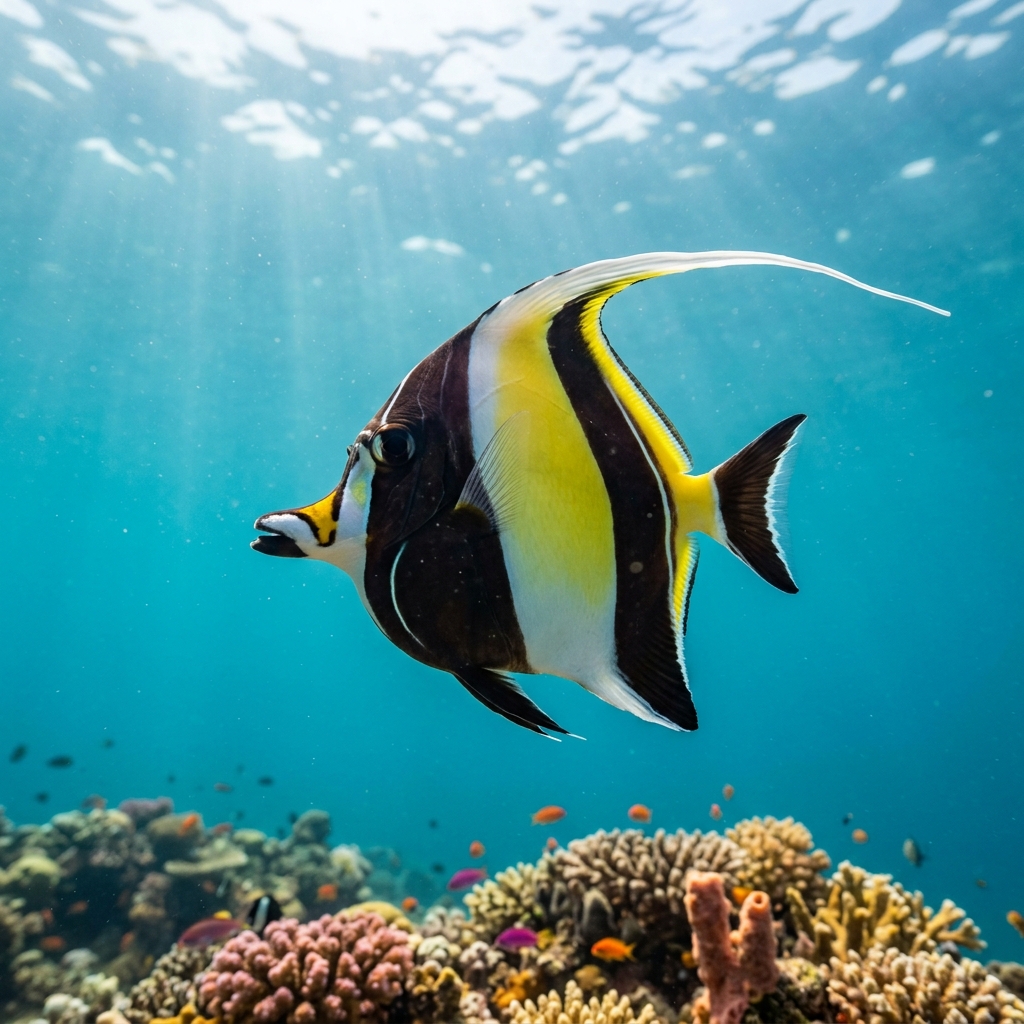
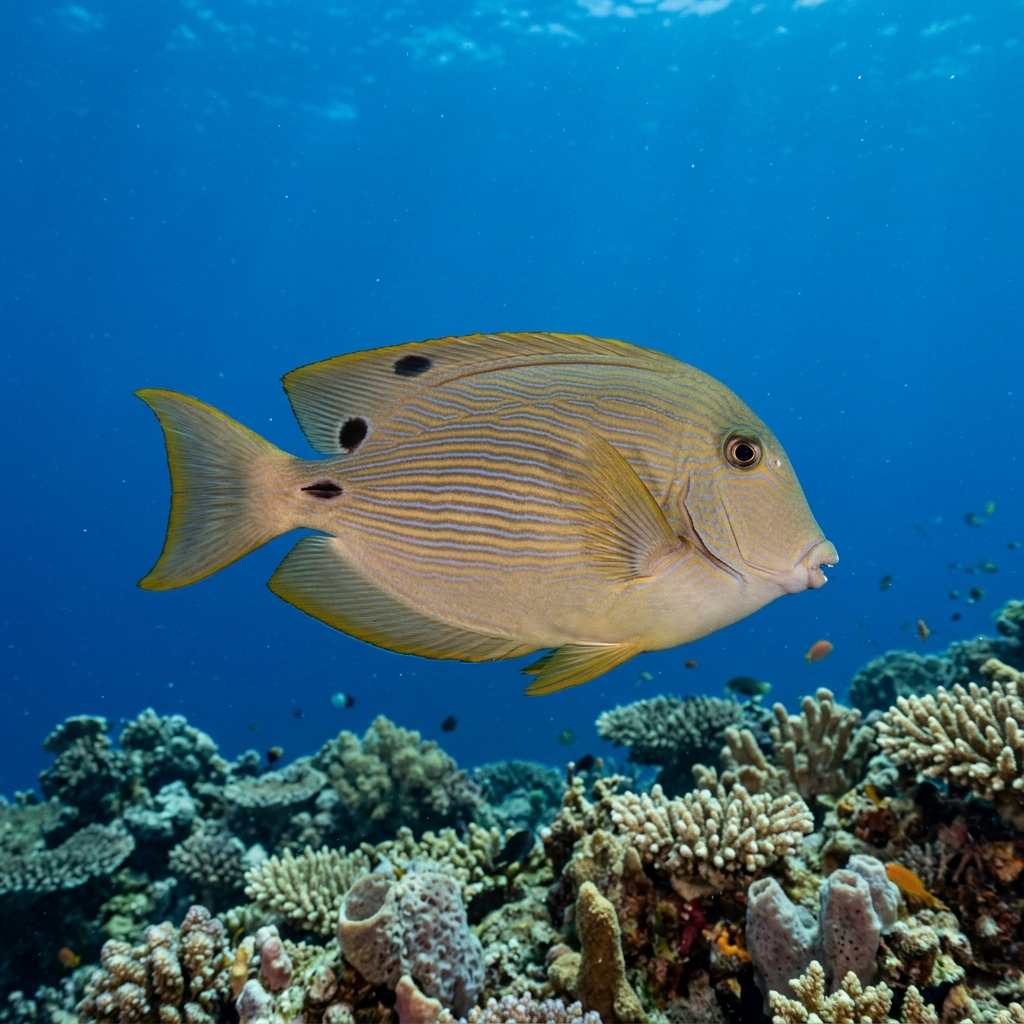
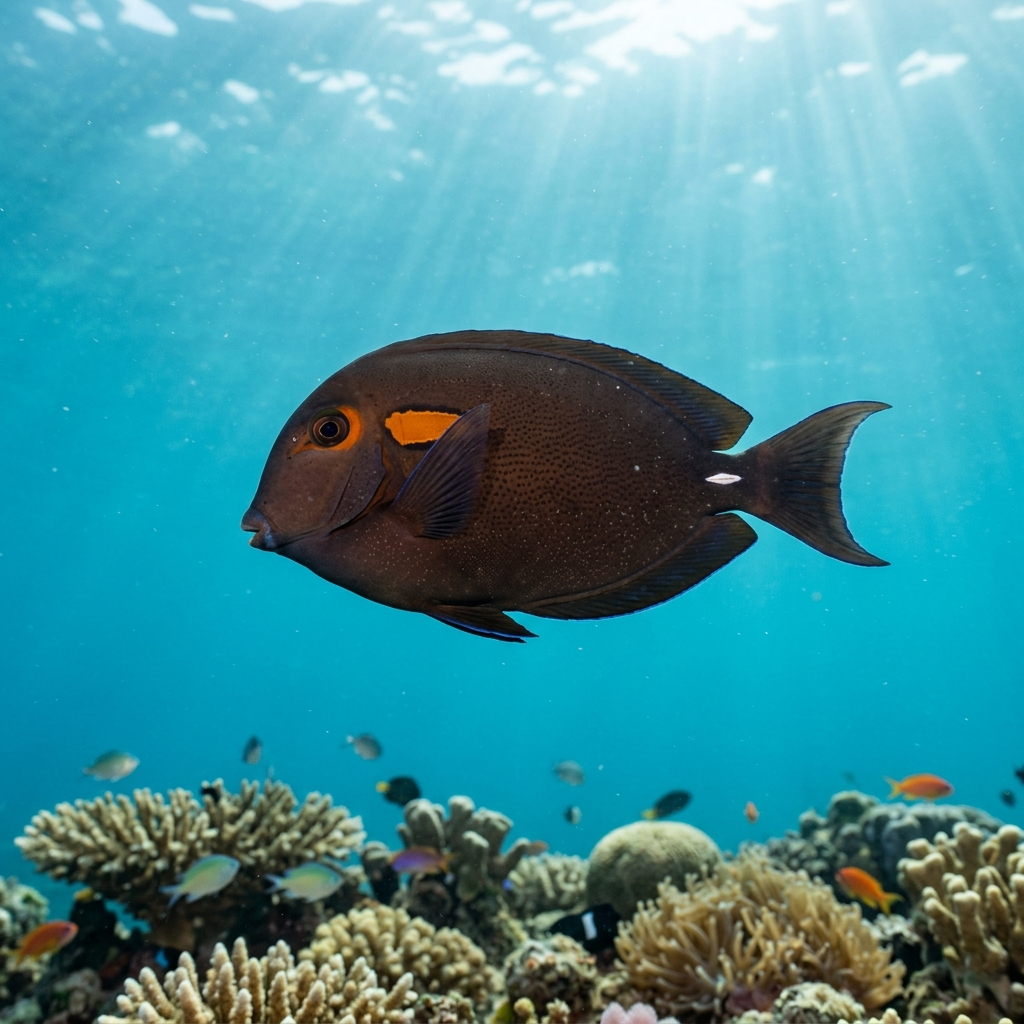
Reef neighbours a diver could mistake it for. Use the identification notes above to tell them apart.
Most commonly logged across the Maldives, where Male and Ari Atolls and the North and Central Atolls together account for a large share of sightings, making those atolls the standout destination. Strong populations are also recorded in the Philippines, Indonesia, French Polynesia (particularly Tahiti and the Society Islands), and Queensland, Australia. The Seychelles, especially Praslin and La Digue, and Thailand round out the reliable Indo-Pacific spread.
Mapping where Convict Surgeonfish is logged…
They are most reliably seen across the Maldives, Philippines, Indonesia, French Polynesia, and Australia. The Male and Ari Atolls in the Maldives are the top destination by sighting records, followed by Tahiti, Bali, and Queensland reefs. The Seychelles and Thailand also have solid populations.
In Northern Hemisphere destinations such as the Maldives and Thailand, sightings peak between October and March. On Australian and French Polynesian reefs in the Southern Hemisphere, they are seen across most of the year from June through April. Because they prefer water between 23 and 29 °C, tropical reefs within that range hold fish year-round.
Look for six crisp vertical black bars on a white or pale silver oval body, roughly 18 cm long. A black line runs through the eye, extending the stripe pattern onto the face. They almost always travel in schools, so the repeating barred pattern across a group of fish is a strong ID clue.
Most adults reach around 18 cm, placing them on the smaller side for surgeonfish. Their compact, oval shape means they look neat and tidy in the water rather than imposing.
No. Like all surgeonfish they carry a sharp spine (the scalpel-like caudal spine near the tail base) that can cause a cut if the fish is handled, but they are not aggressive and will not seek confrontation with divers. Watch from a relaxed distance and you will have no issues.
Site and sighting data is aggregated from diver logs, iNaturalist and GBIF. For taxonomy and conservation status:
Atlantic Blue Tang
3,045 sites