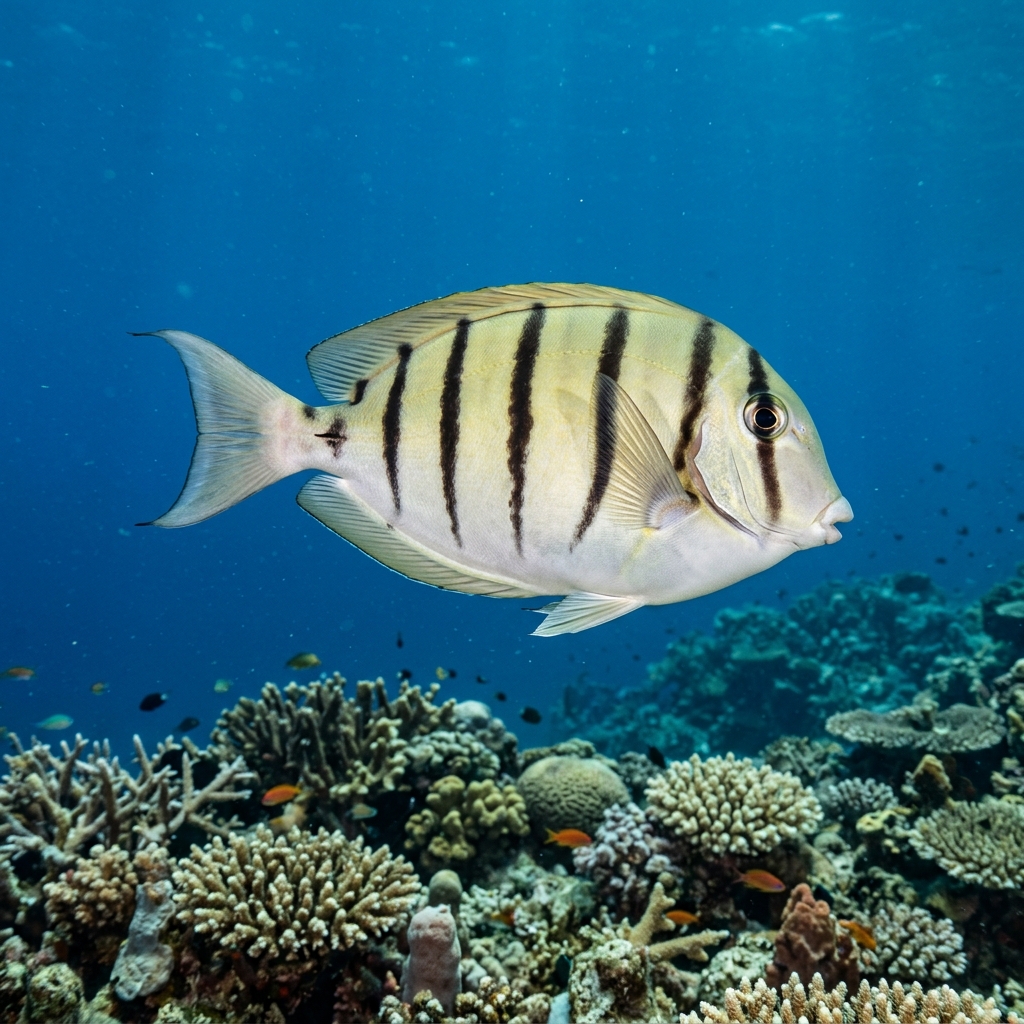
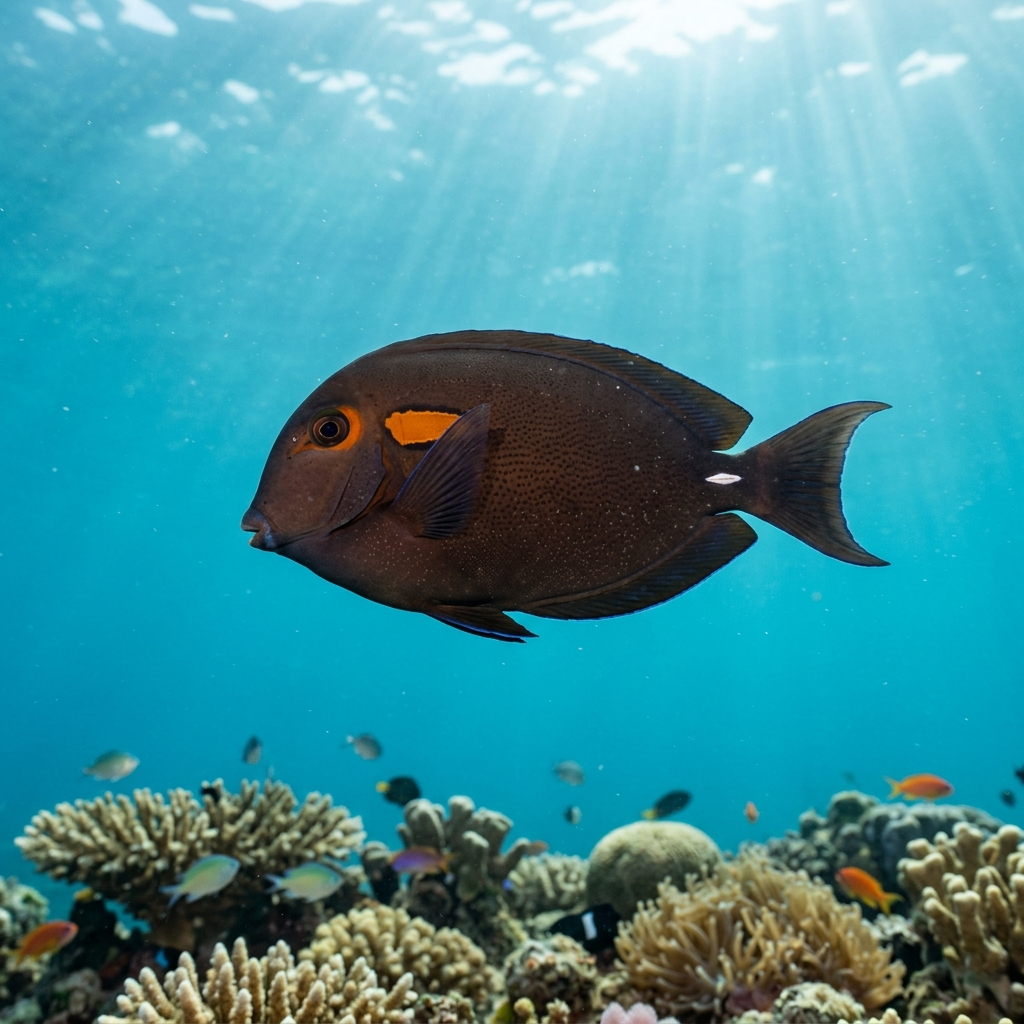
Acanthurus spp.
Common on reefs from the Maldives' Northern Atolls to Queensland, surgeonfish thrive in 25-29C water and turn up year-round.
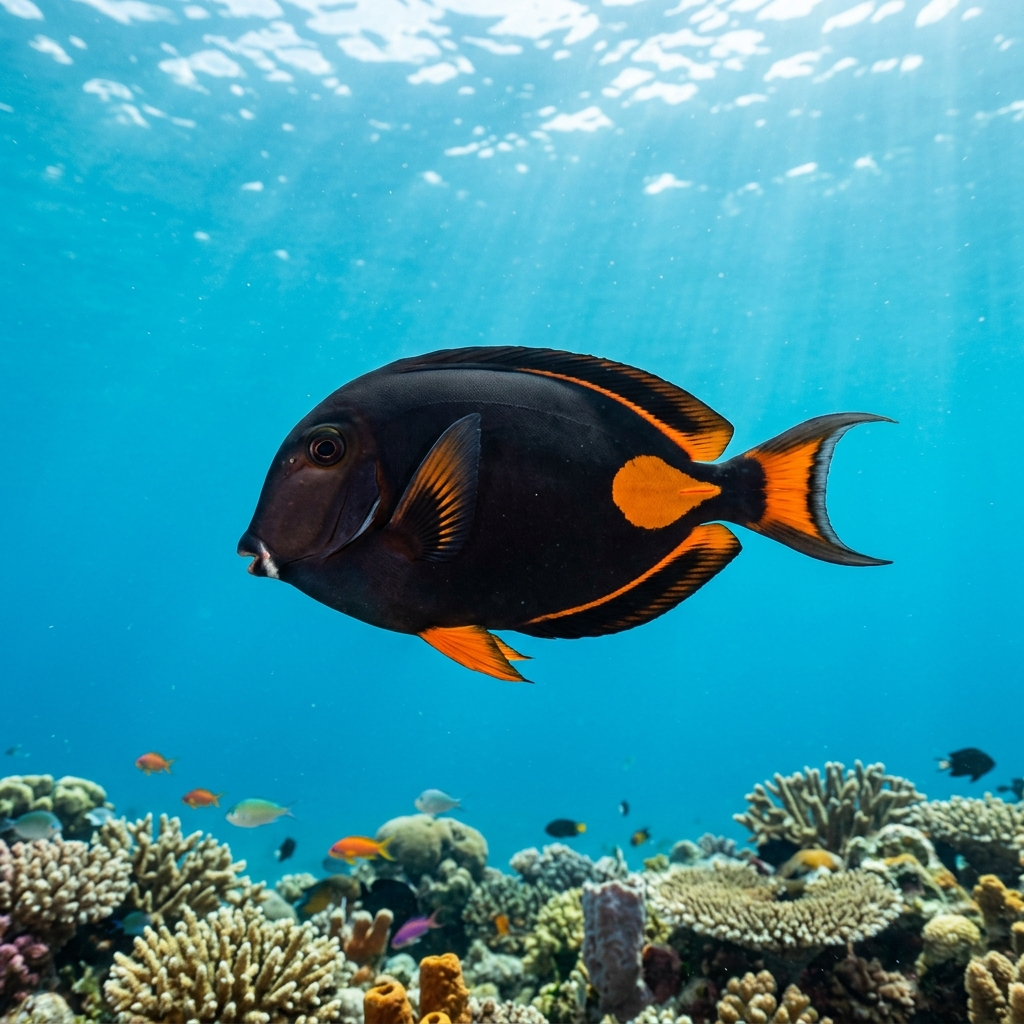
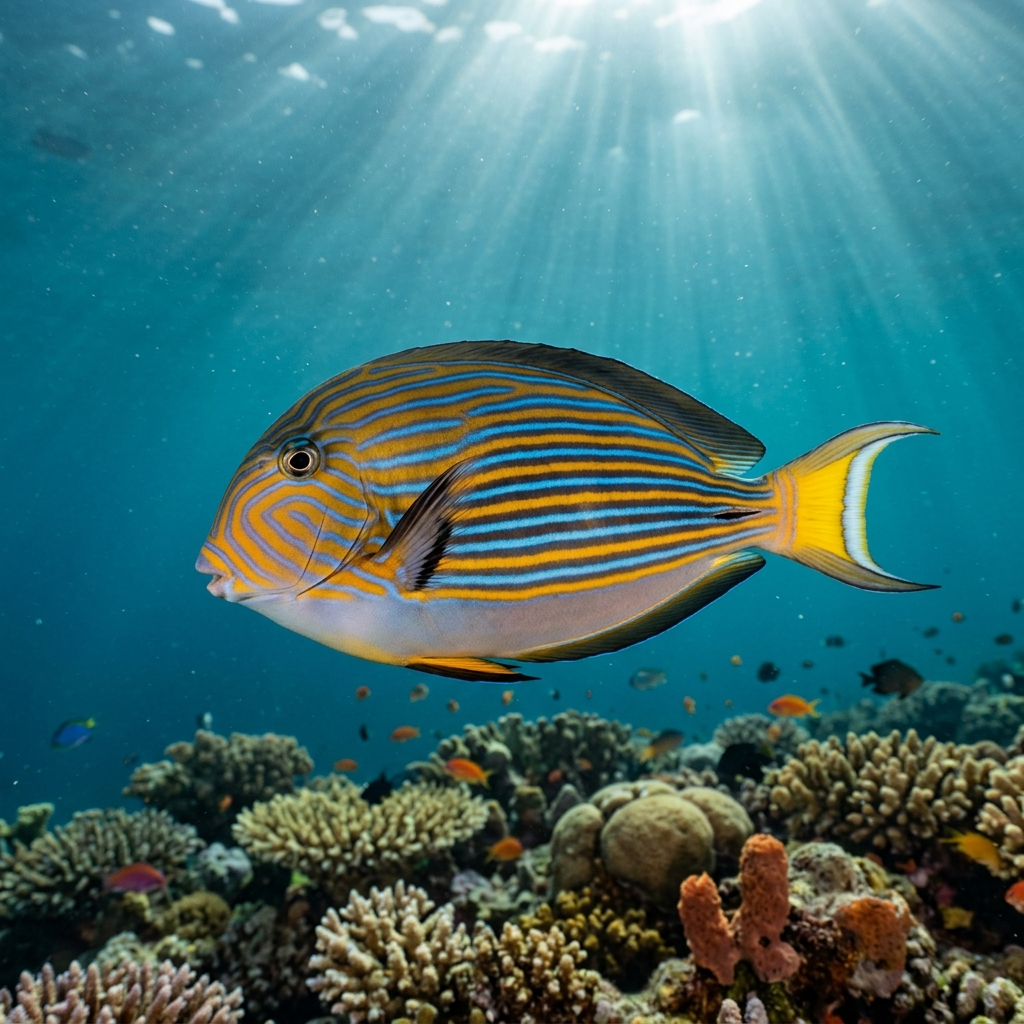
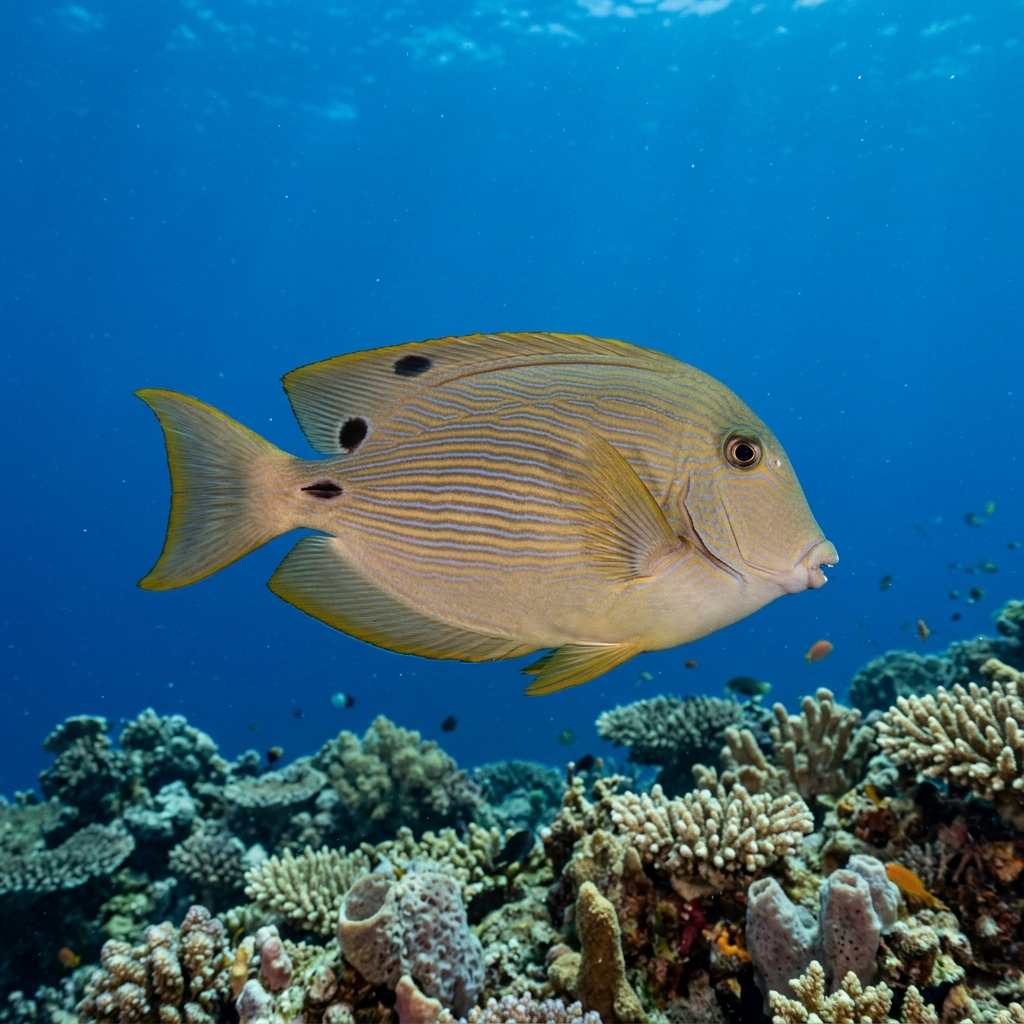
Look for a flattened, oval-shaped body with a small mouth built for grazing algae off rock and coral. The giveaway is the sharp, scalpel-like spine tucked at the base of the tail, which gives the whole family its name, and colours vary widely across species from plain grey-brown to bold blues, yellows and stripes. Many species also show a contrasting tail or a dark line running through the eye, which helps narrow down which one you're looking at once you're topside with a guide.
Expect to see them grazing steadily over rock and coral rubble during the day, often in loose groups or mixed schools with other grazers, rasping algae off the substrate with quick, repeated bites. They're generally unbothered by divers and will keep feeding as you pass, though a sudden approach can send a shoal scattering briefly before it regroups a few metres off.
That tail spine isn't just decoration: it can be flicked out sideways as a defensive blade against predators, which is exactly why careless handling or brushing past one head-on is worth avoiding.
No clear season shows up in the sighting data, and with a comfortable range of roughly 25 to 29C, tropical reefs hold them year-round rather than in a particular window.
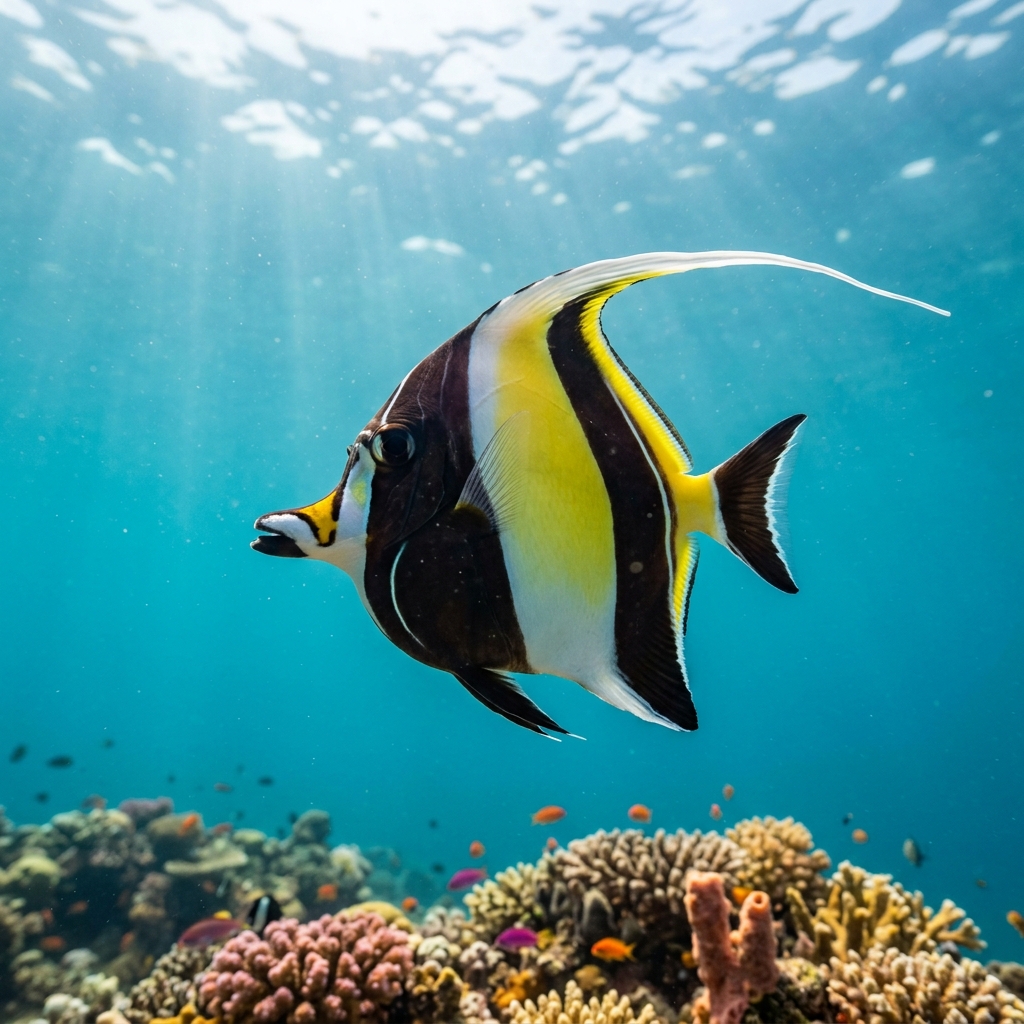
Reef neighbours a diver could mistake it for. Use the identification notes above to tell them apart.
Surgeonfish are a reliable sighting across the Maldives, especially the Northern and Southern Atolls, and turn up widely through Indonesia's Sulawesi and Sumatra, the Philippines' Luzon and Palawan, and Queensland's reefs in Australia. They're also logged steadily around Thailand, Cuba, Malaysia and Brazil, plus the Caribbean Coast of Colombia, making them one of the more geographically spread reef fish groups a diver will run into.
Mapping where Surgeonfish is logged…
They're most consistently logged in the Maldives' Northern and Southern Atolls, across Indonesia's Sulawesi and Sumatra, in the Philippines' Luzon and Palawan, and on Queensland's reefs in Australia. Thailand, Cuba and Malaysia also have steady sightings.
There's no strong seasonal pattern in the data, and with a preferred range of about 25 to 29C, they're present on tropical reefs throughout the year.
Look for a flattened oval body grazing on algae, a small mouth, and a sharp spine at the base of the tail that gives the group its name. Colours and patterns vary a lot between species, so the spine and grazing behaviour are the most consistent clues.
They're not considered dangerous and generally ignore divers while feeding. The main risk is the tail spine, which can cause a cut if a fish is handled or grabbed, so it's best appreciated at a normal viewing distance.
Each fish carries a scalpel-like spine near the base of its tail that it can flick outward as a defence against predators, rather than using it for feeding. It's the feature the whole family is named for and the one thing worth not touching.
Site and sighting data is aggregated from diver logs, iNaturalist and GBIF. For taxonomy and conservation status:
Striped Surgeonfish
3,289 sites