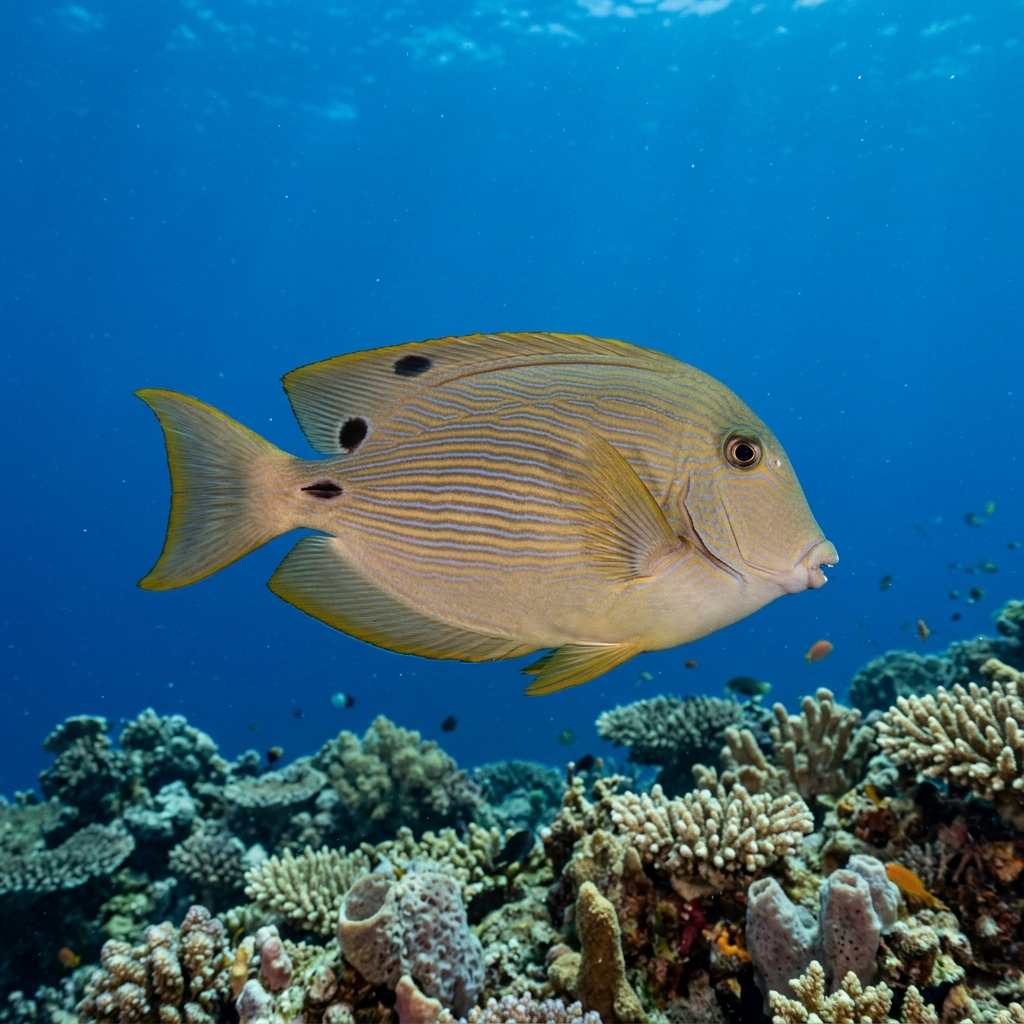
Ctenochaetus striatus
Spot the Lined Bristletooth on Indo-Pacific reefs from the Maldives to the Red Sea. Active daytime grazer, present year-round in 24-29 °C waters.
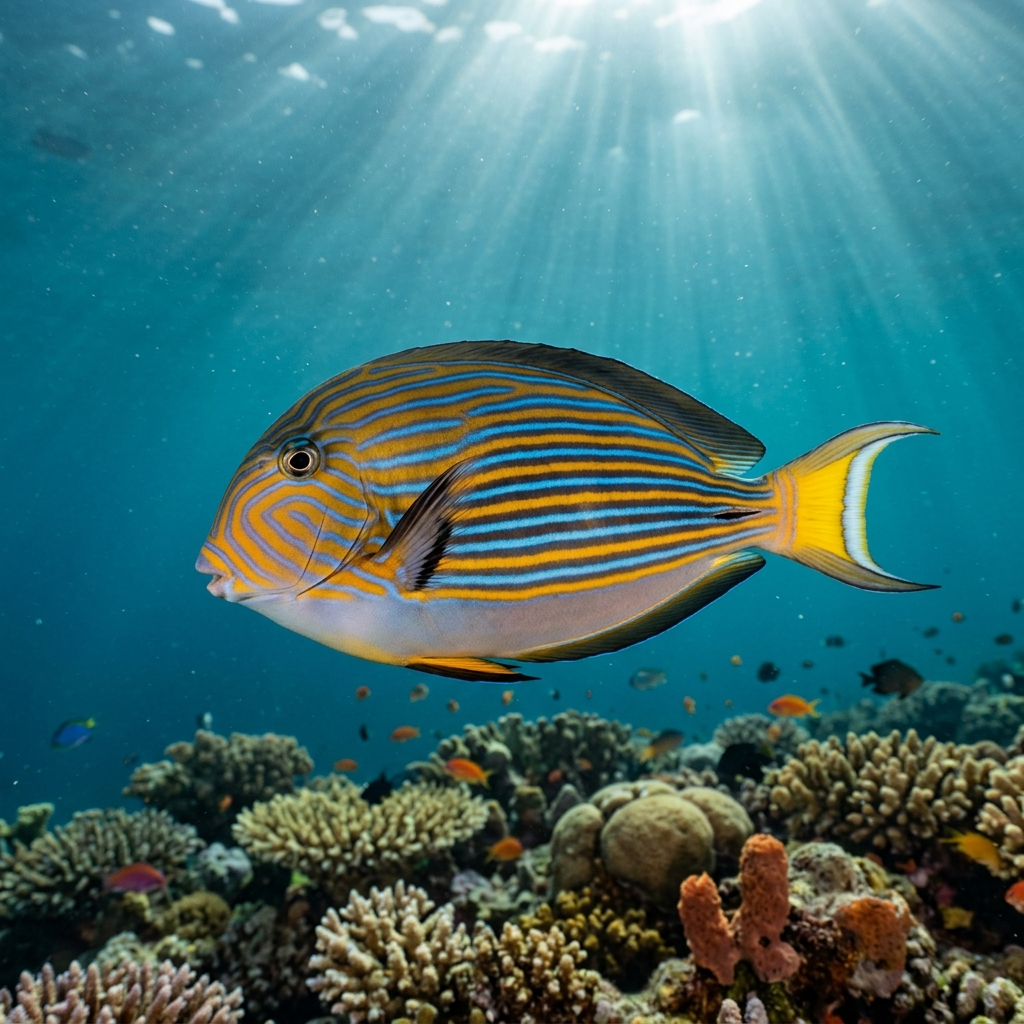
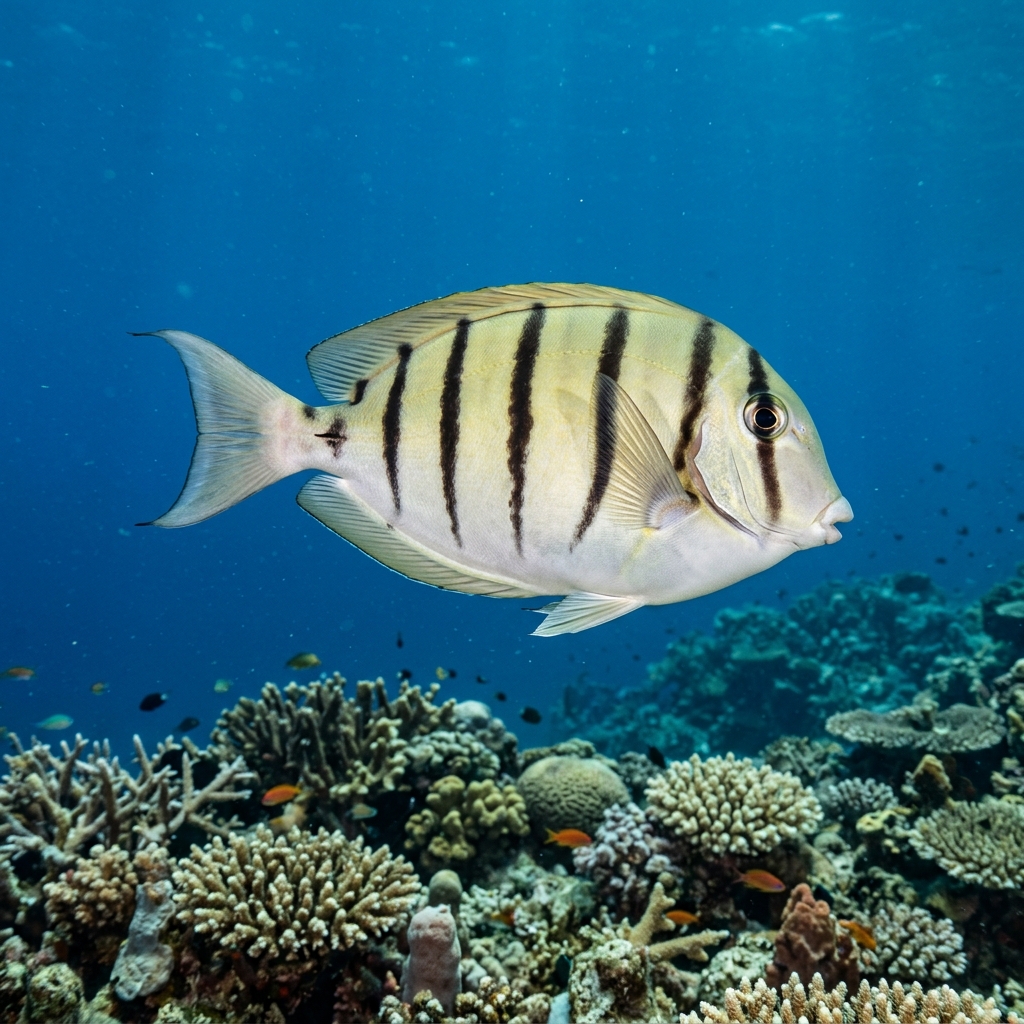
A small, oval-bodied surgeonfish around 18 cm long, best identified by the fine horizontal lines (stripes) running across its pale brown to grey body, these give it a subtly streaked look that sets it apart from other small tangs on the reef. Look for a blunt, rounded snout and a dark smudge around the eye. The tail is slightly forked and the overall impression is of a compact, fast-moving grazier hugging the reef surface.
Expect to find it nose-down and on the move, constantly scraping algae and detritus from hard surfaces, it is rarely still. It largely ignores divers, far more focused on the next patch of reef to graze than on anything hovering behind it. Occasional brief squabbles with other algae-eaters over prime feeding spots are worth watching for, but it is peaceful towards most other species and feeds through daylight hours.
Those fine bristle-like teeth, the feature behind its name, are highly flexible and designed to sweep up fine filamentous algae and detritus that other herbivores pass over, giving it a distinct ecological niche as a reef 'cleaner' of organic film.
In the Northern Hemisphere it is present year-round with no concentrated season, which makes sense given its comfort range of 24 to 29 °C across tropical reefs. Southern Hemisphere records show sightings concentrated between February and December, so austral summer through to late spring is the stronger window there.
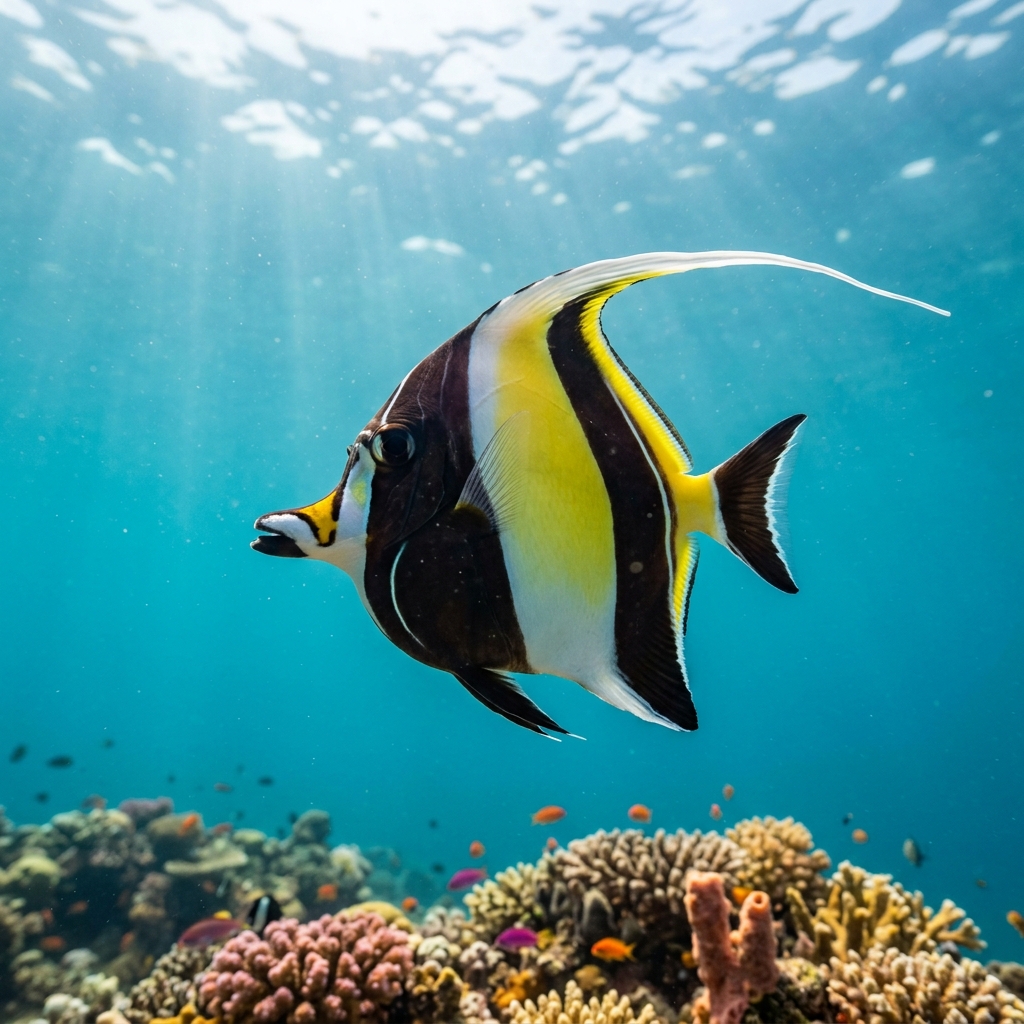
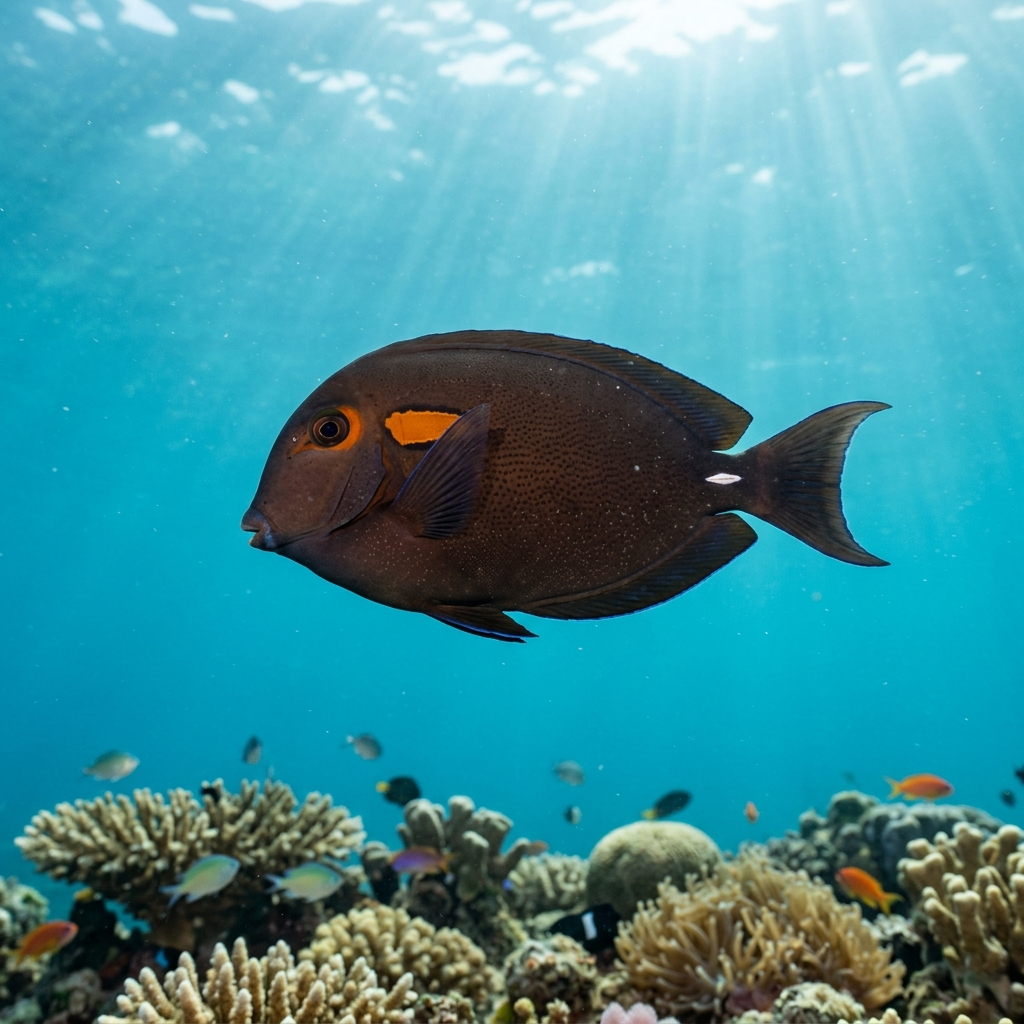
Reef neighbours a diver could mistake it for. Use the identification notes above to tell them apart.
Most commonly logged across the Indo-Pacific, with the strongest representation in the Maldives, particularly the Male and Ari Atolls, and in Egypt's Red Sea around Sharm el Sheikh and Marsa Alam. Reliable sightings are also reported across Bali and Indonesia more broadly, the Philippines' Visayas region, Queensland in Australia, and Okinawa in Japan.
Mapping where Lined Bristletooth is logged…
The Lined Bristletooth is logged across a wide spread of Indo-Pacific destinations. Top spots include the Male and Ari Atolls in the Maldives, Sharm el Sheikh and Marsa Alam in Egypt's Red Sea, Bali and the wider Indonesian archipelago, the Visayas in the Philippines, Queensland in Australia, and Okinawa in Japan.
In the Northern Hemisphere, covering the Red Sea, Maldives, and much of South-East Asia, sightings occur year-round with no single peak season. In the Southern Hemisphere, records cluster from February through to December, making austral summer and autumn a reliable window in places like Queensland.
Look for a small, compact surgeonfish about 18 cm long with fine horizontal streaks running across a pale brown or grey body and a dark patch around the eye. Its blunt snout and habit of grazing right on the reef surface are strong field clues. The streaked pattern distinguishes it from plainer small tangs in the same habitat.
Adults typically reach around 18 cm. On the reef they appear as a small, rounded surgeonfish, noticeably smaller than most tangs sharing the same habitat, which helps narrow down the ID.
They are herbivores specialising in fine filamentous algae and organic detritus scraped from hard reef surfaces. Their flexible, bristle-like teeth are adapted for this task, allowing them to access food films that larger grazers miss, making them a key part of reef-surface health.
Site and sighting data is aggregated from diver logs, iNaturalist and GBIF. For taxonomy and conservation status:
Atlantic Blue Tang
3,045 sites