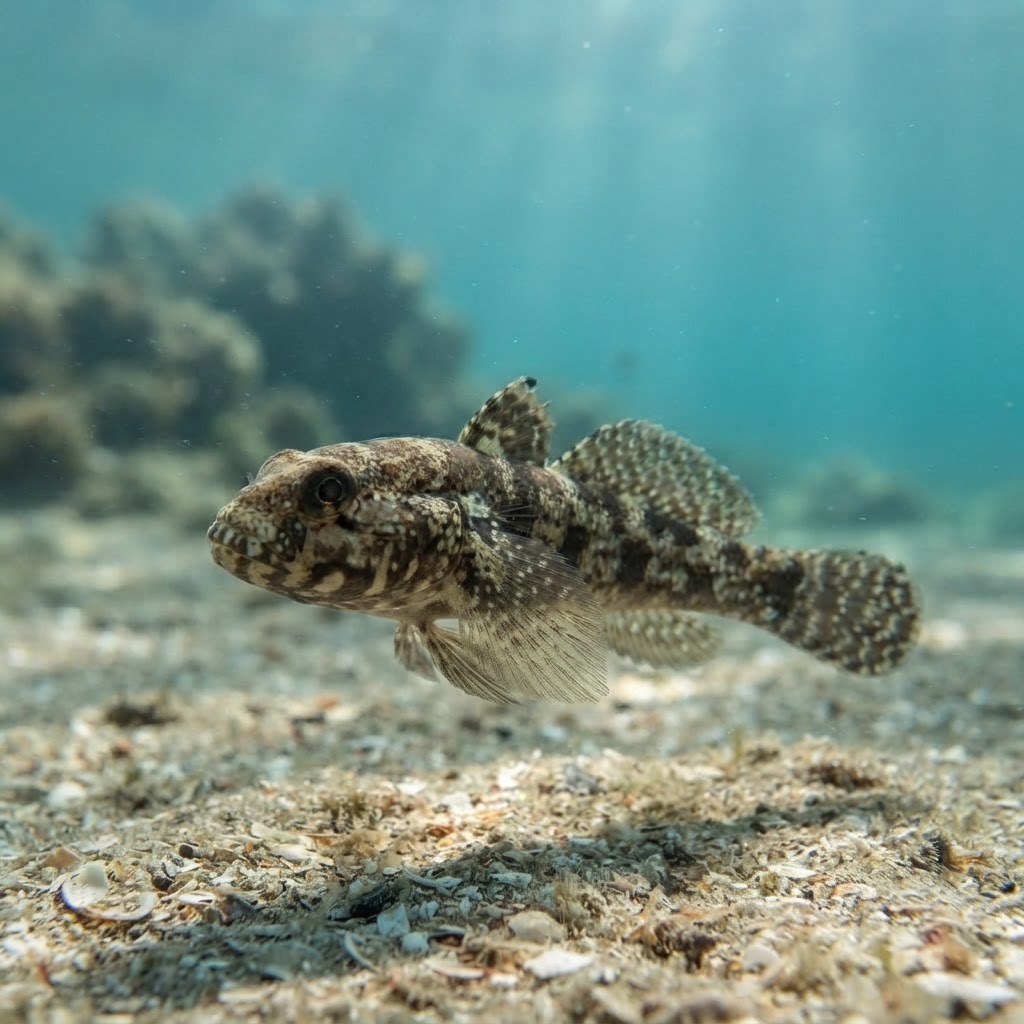
Amblyeleotris arcupinna
A pale, arc-marked goby paired with a burrowing shrimp on sandy slopes in Dili and Luzon, seen in 28-29C water year-round.
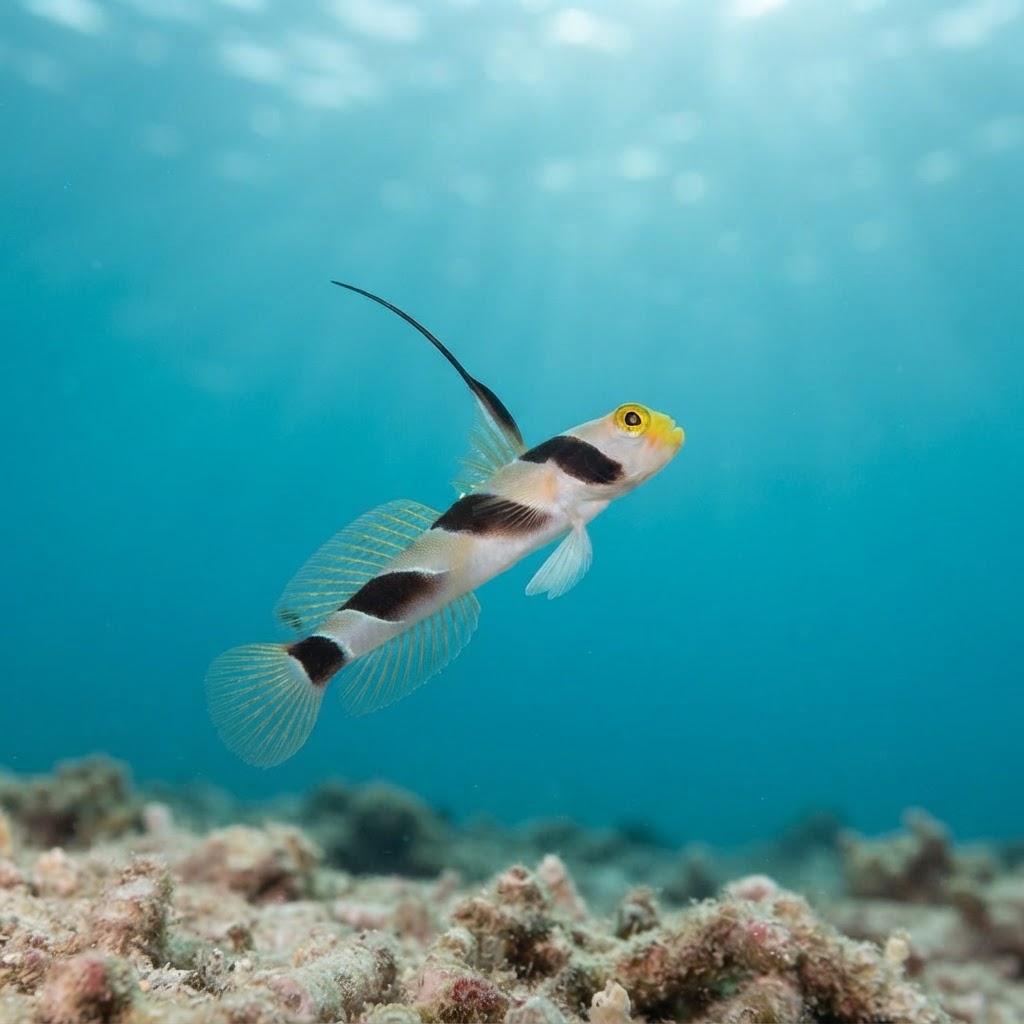
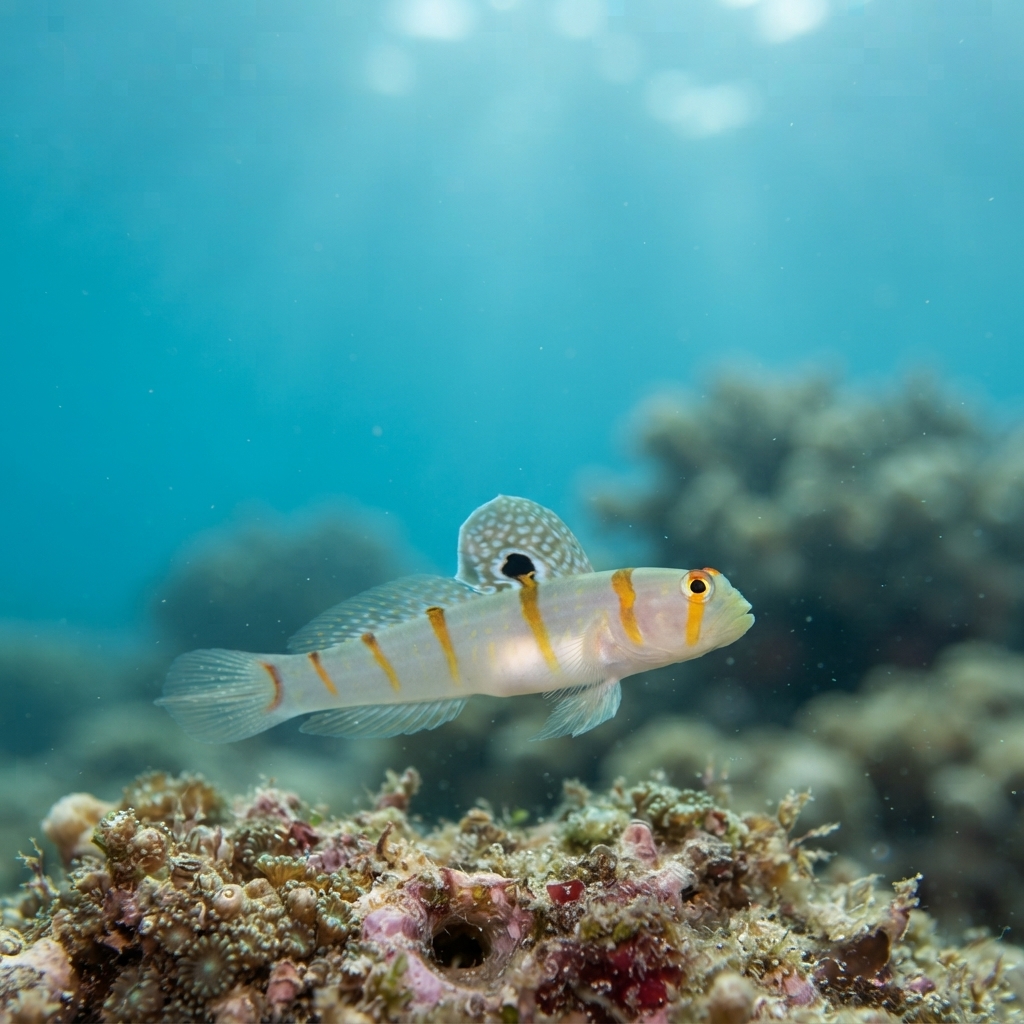
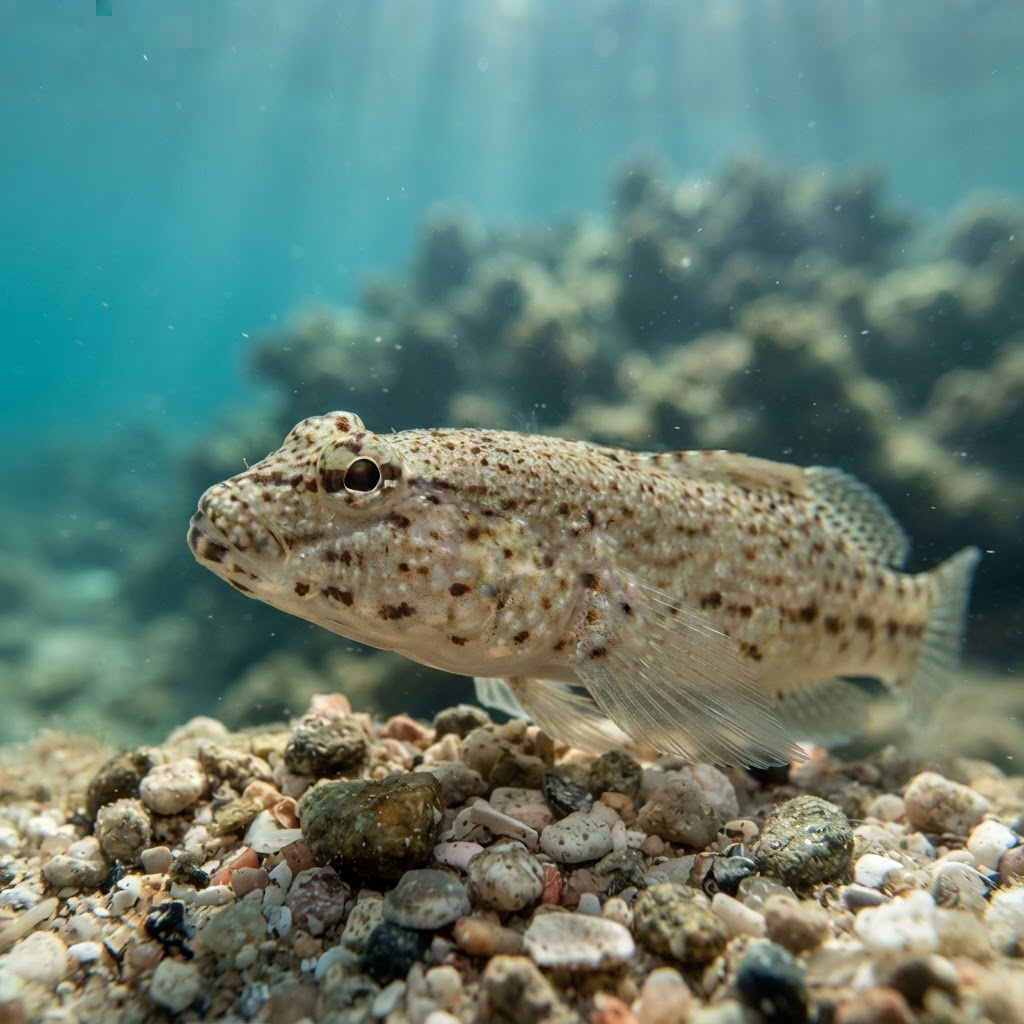
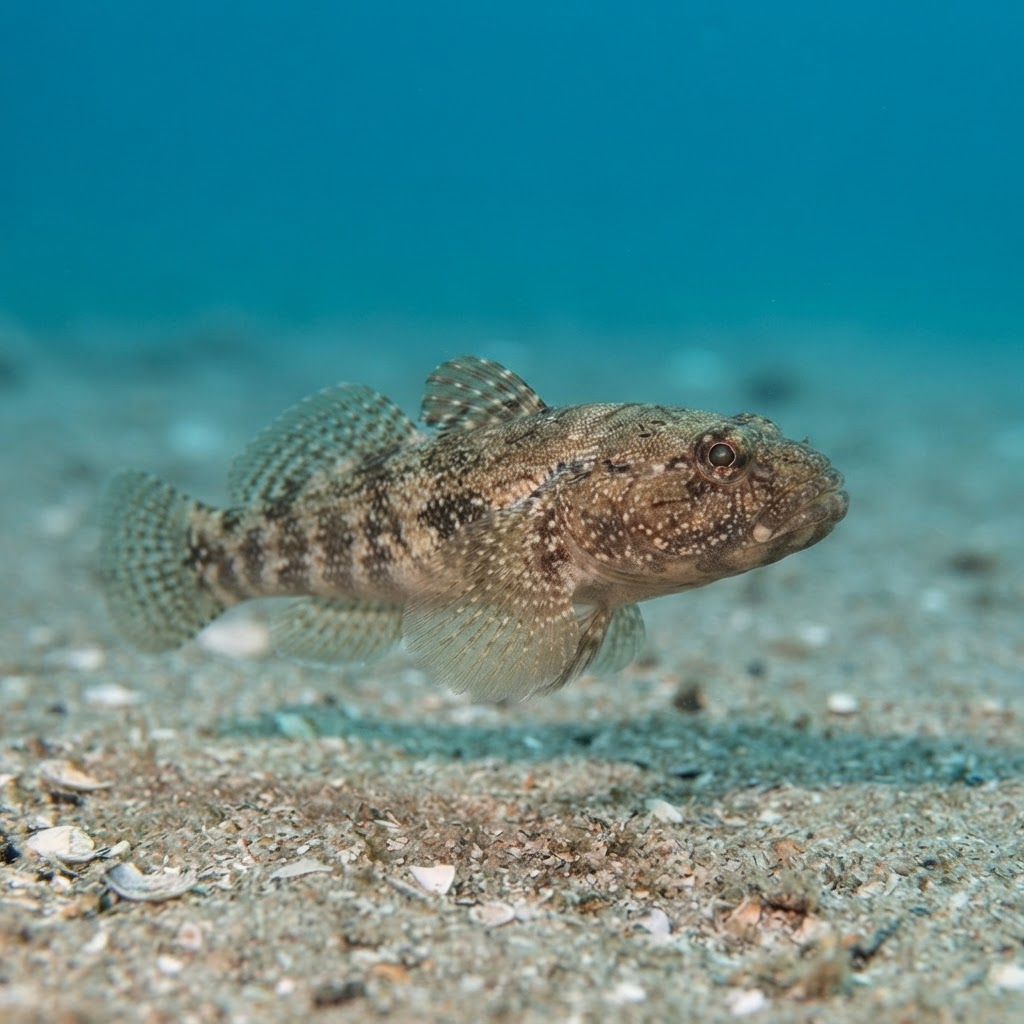
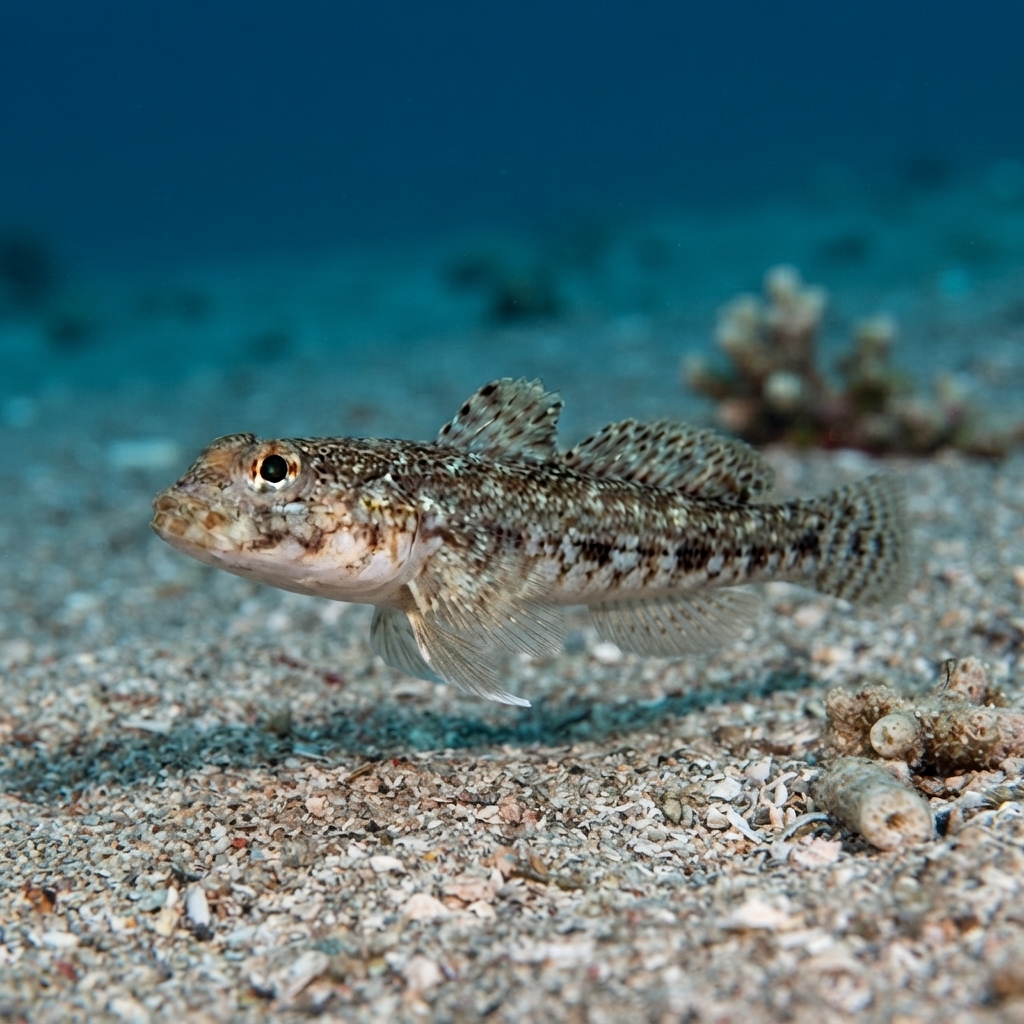
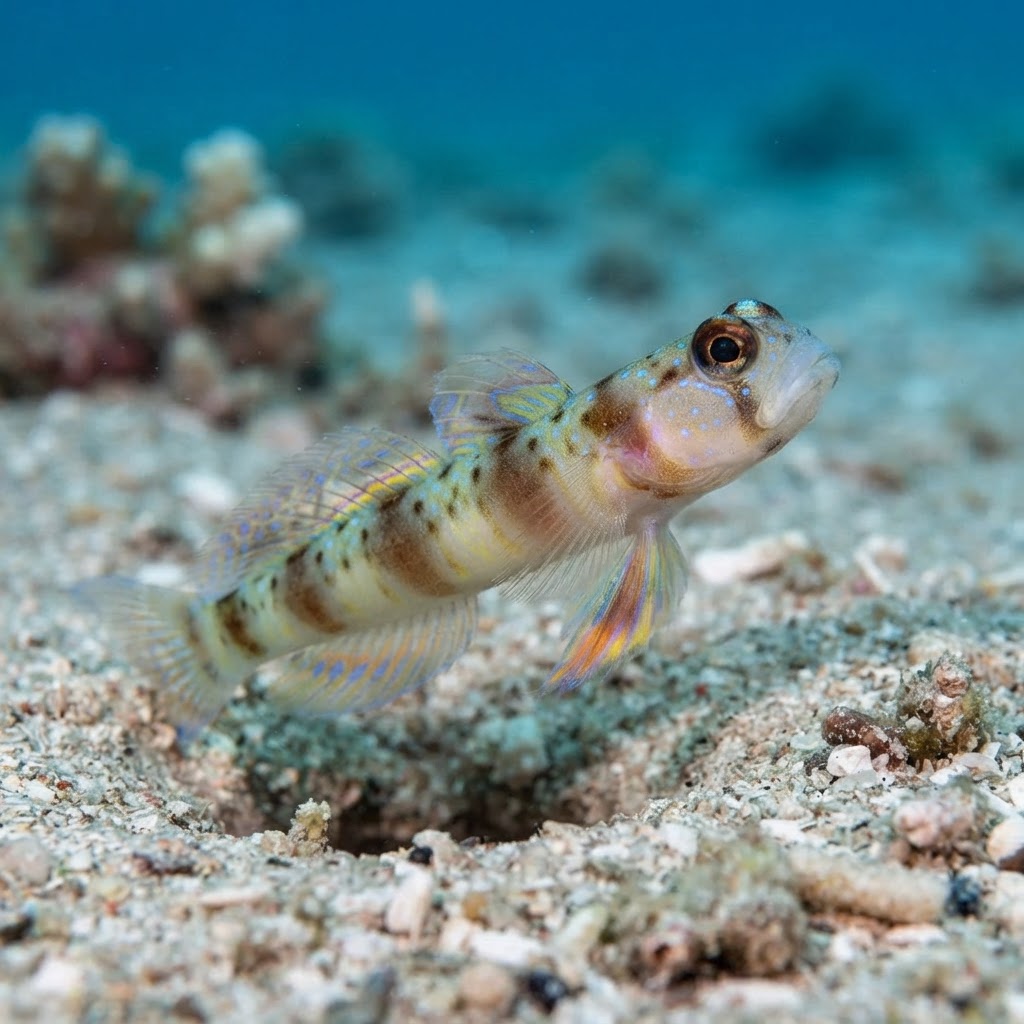
A slim, pale grey-white goby about 7 cm long that props itself on extended pectoral fins right at the mouth of its burrow. Look for a curved dark band across the base of the first dorsal fin, the arc-shaped mark that gives it its name, plus faint dark speckling along the flanks. It holds a near-vertical, alert posture and rarely strays more than a body length from its hole.
Spends most of its time hovering just above a shared burrow, tail curled down toward the entrance, watching the water column while a partner shrimp works below the surface unseen. It is skittish: a close, fast approach sends it diving into the hole in an instant, so divers get the best look by settling still a metre or two away and letting it resume its post. Most sightings come from sandy or rubble-strewn slopes in the 12 to 25 m range rather than shallow reef flats.
Like other shrimpgobies, it lives in a real partnership with a burrowing shrimp: the shrimp digs and maintains the shared burrow while the goby stands guard, flicking its tail to signal danger so both can retreat together.
No clear seasonal pattern shows up in the sightings, and it sits comfortably in 28.1 to 29.3C water, so it is a year-round target on the sandy slopes where it lives.
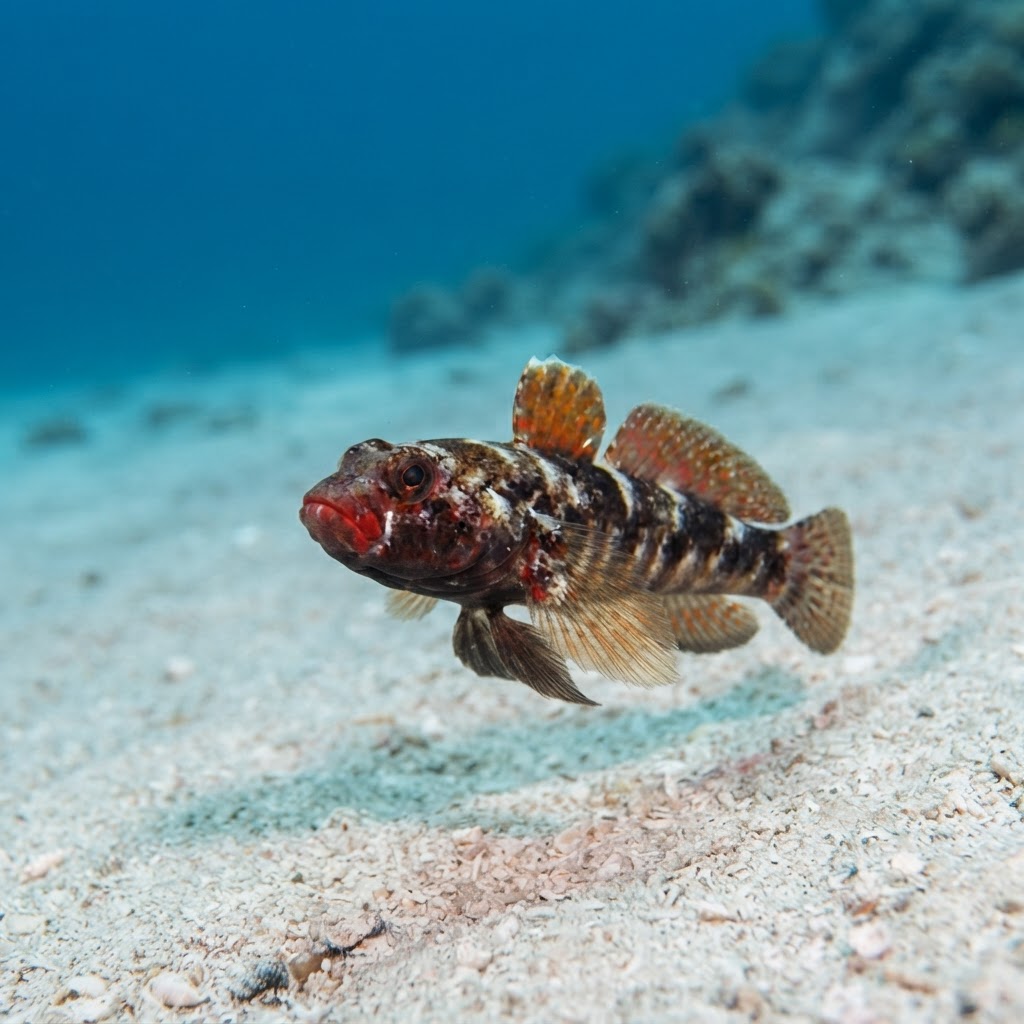
Reef neighbours a diver could mistake it for. Use the identification notes above to tell them apart.
Most reliably logged around Dili in Timor-Leste and across Luzon in the Philippines, with smaller but confirmed populations in Sulawesi, Indonesia and Kwajalein Atoll in the Marshall Islands. At most of these sites divers rate it uncommon, so it takes a deliberate sand-slope search rather than a casual reef swim to find one.
Mapping where Arcfin Shrimpgoby is logged…
Best chances are around Dili in Timor-Leste and along the Luzon coast in the Philippines, with smaller populations recorded in Sulawesi, Indonesia and Kwajalein Atoll in the Marshall Islands.
There is no strong seasonal pattern in the sightings. It lives in consistently warm water between about 28 and 29C, so it can turn up on the right sandy slopes at any time of year.
Look for a small pale goby around 7 cm long hovering at a burrow entrance on its pectoral fins, with a curved dark arc marking across the base of the first dorsal fin and faint speckling along the body.
They stay small, reaching roughly 7 cm in length, which is typical for the shrimpgoby group.
Like its relatives, this goby shares a burrow with a burrowing shrimp: the shrimp digs and keeps the tunnel clear while the goby stands guard outside, flicking its tail as a warning so both can dart underground together.
No. It is a small, shy sand-dweller that retreats into its burrow at the first sign of a close approach and poses no risk to divers.
Site and sighting data is aggregated from diver logs, iNaturalist and GBIF. For taxonomy and conservation status:
Slender Goby
806 sites