Pliopontonia furtiva
A translucent host-anemone specialist logged uncommonly off Luzon, Philippines, in warm 25 to 31 C water year-round.
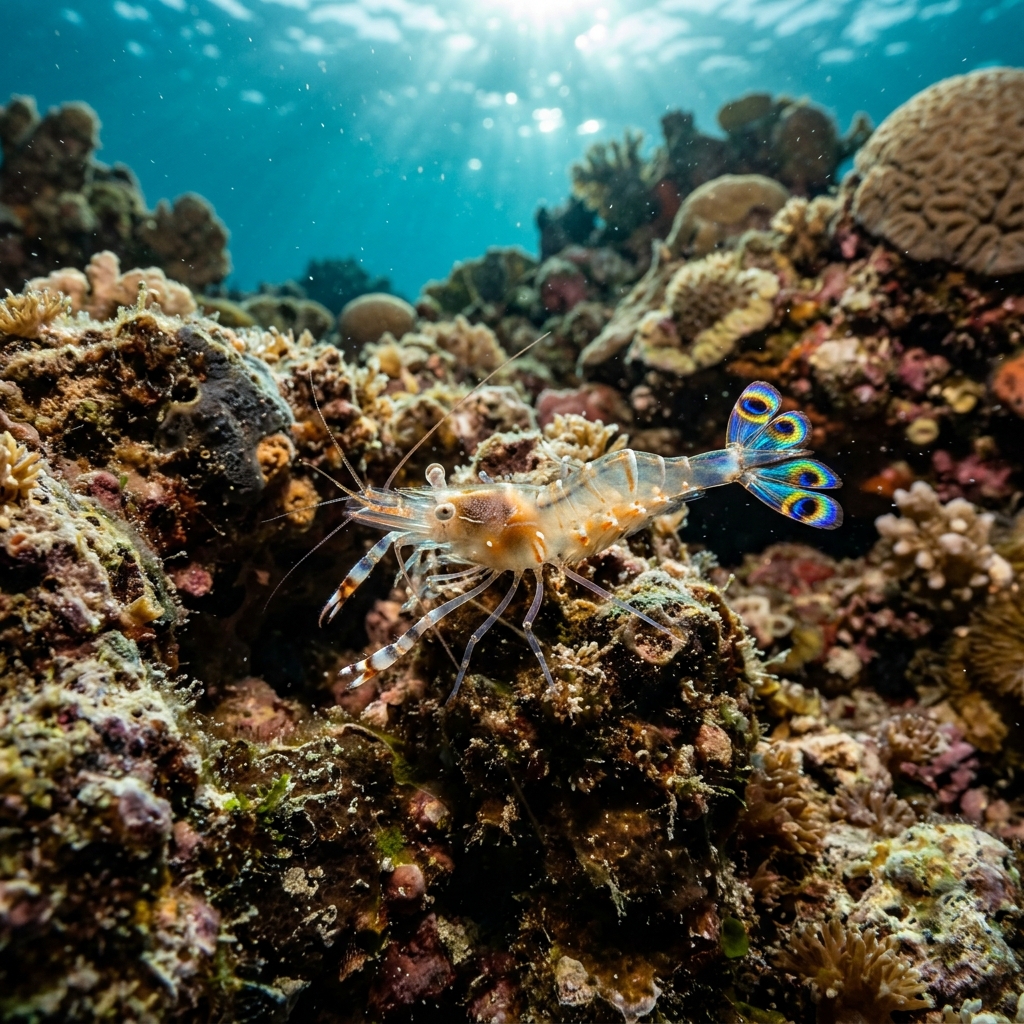
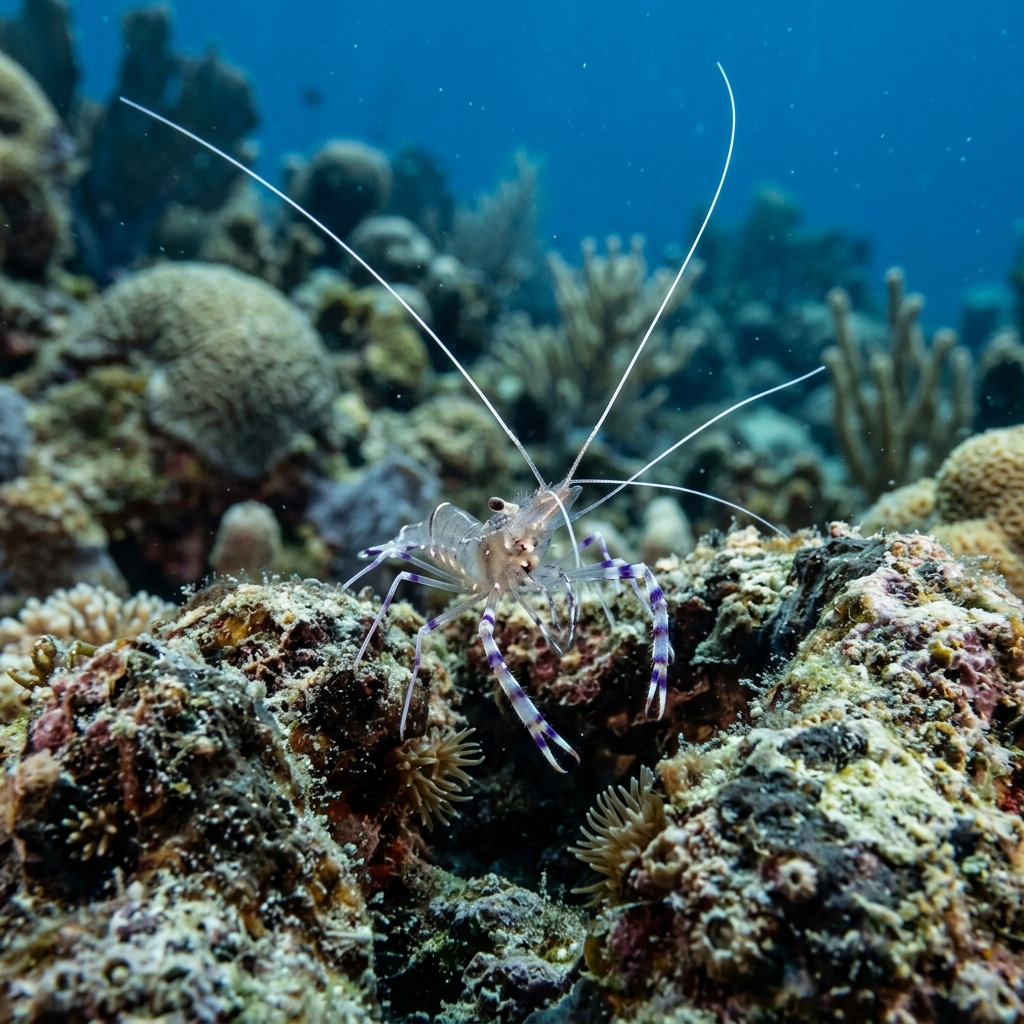
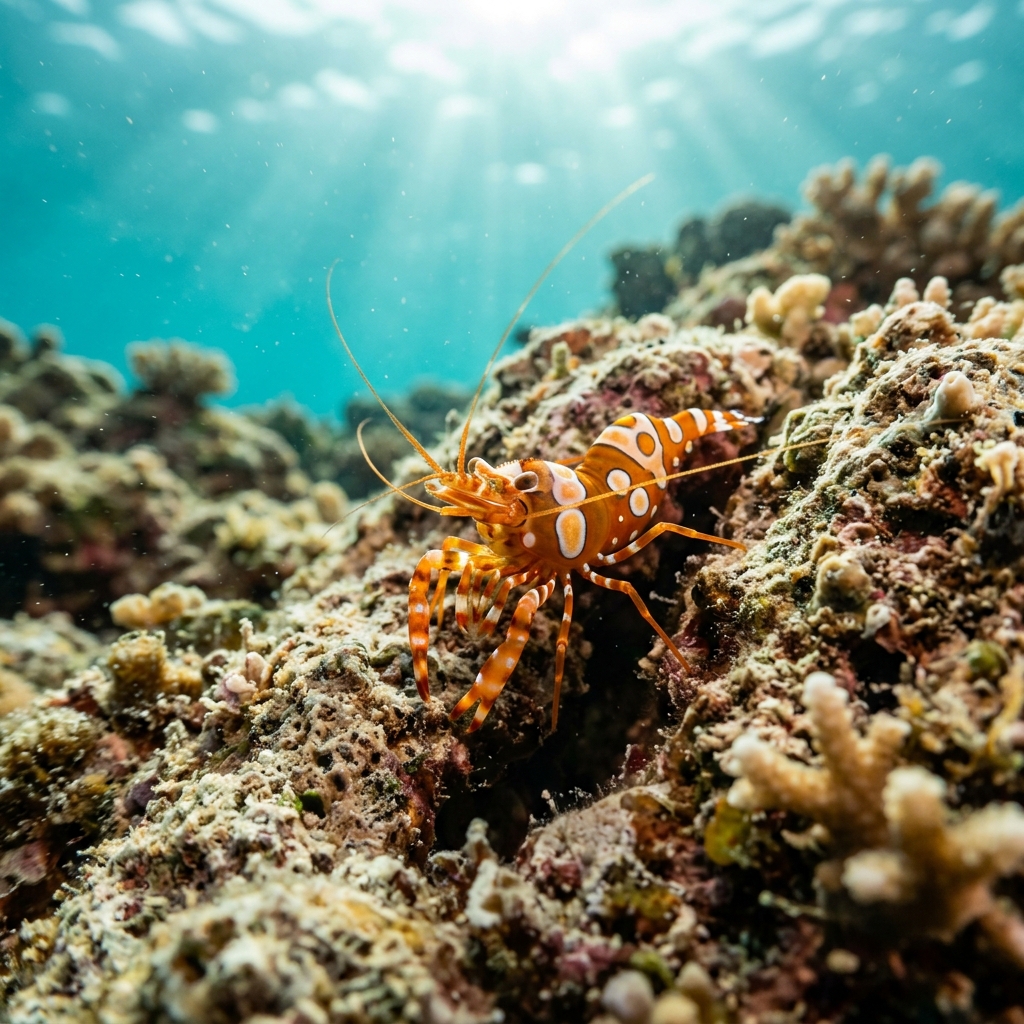
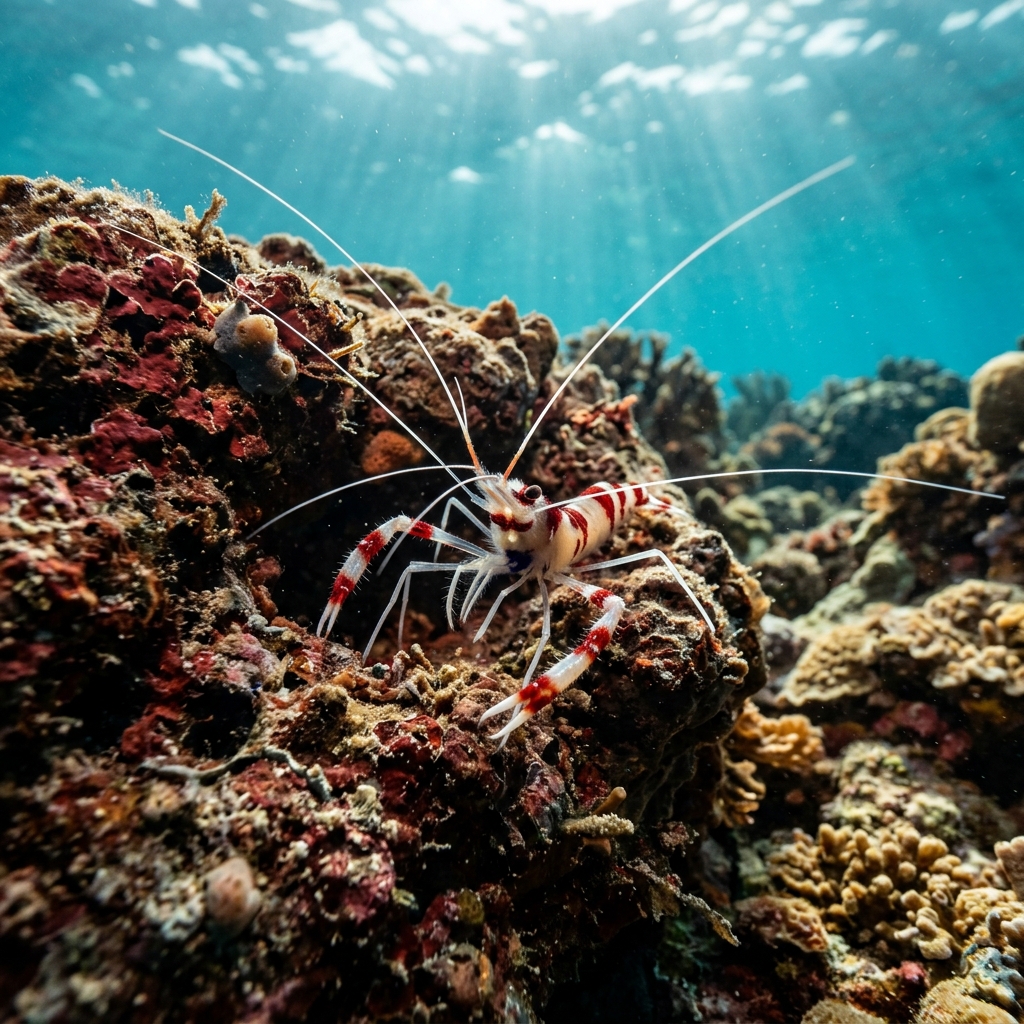
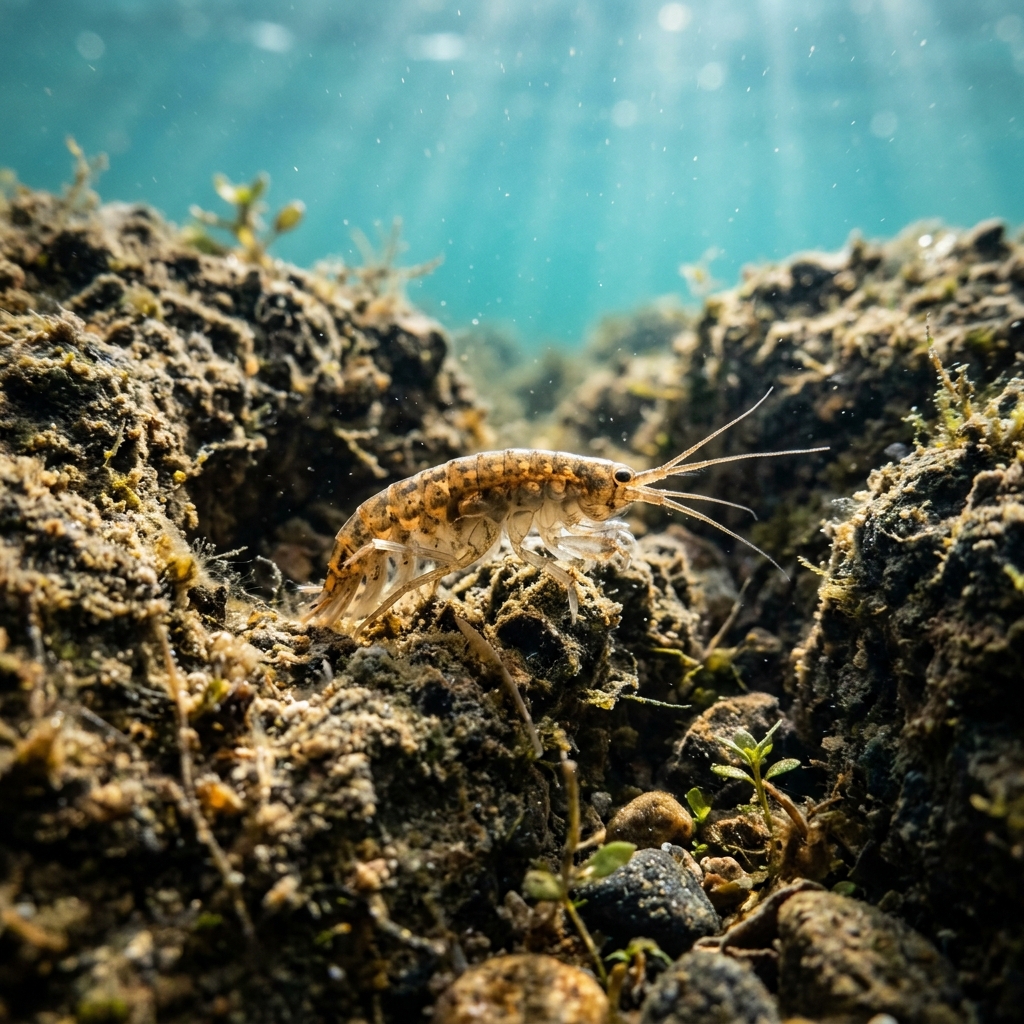
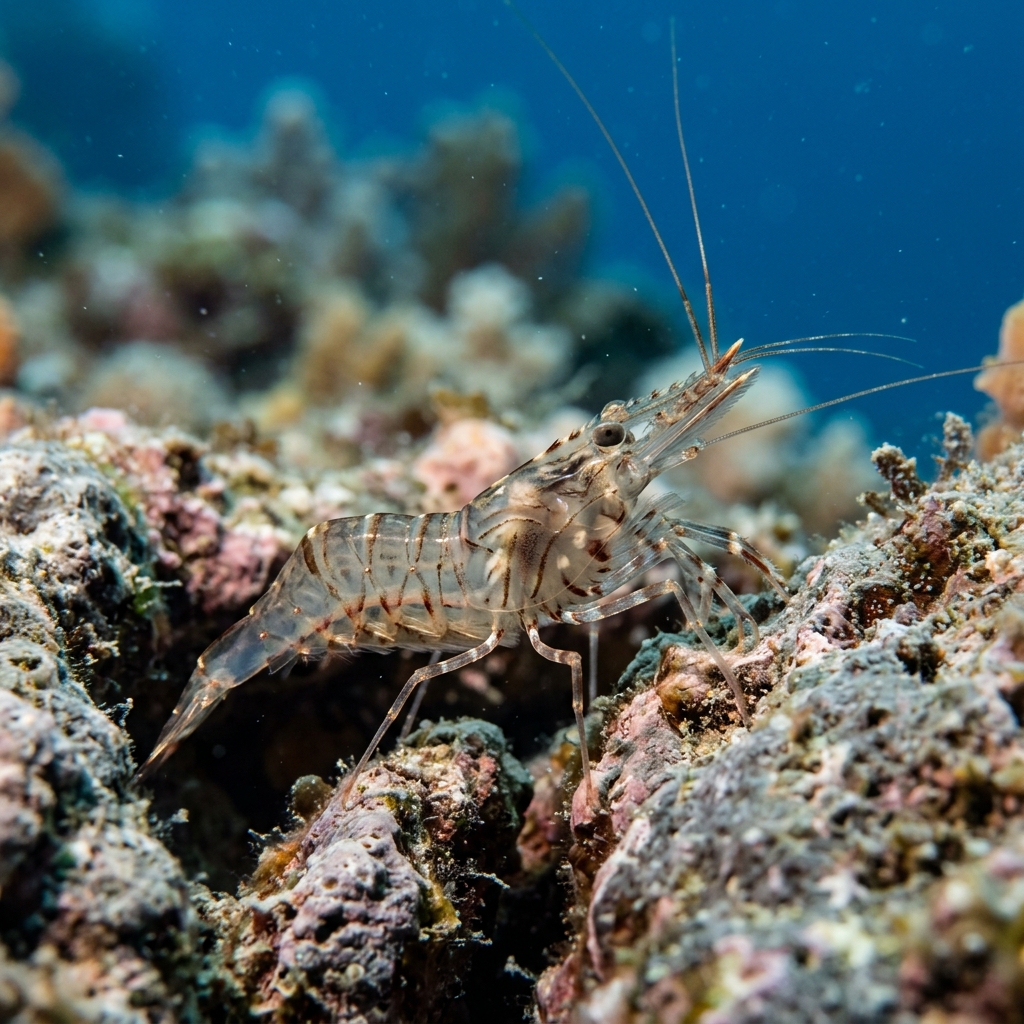
A small, mostly translucent shrimp that relies on near-invisibility against its host anemone rather than bold colour to stay hidden. Look for a slender, laterally flattened body tucked low between the tentacles rather than perched on top like some other anemone shrimps. Faint mottling or a pale wash over the shell is about the only break in the see-through body, so divers usually spot movement before they spot the animal itself. There is not enough documented data to describe reliable differences between males and females or between juveniles and adults.
Divers find it staying close to its host anemone, moving slowly among the tentacles rather than darting across open reef. It does not react much to divers hovering nearby, relying instead on its transparent body and the anemone's stinging tentacles for cover. Because it is small and easy to overlook, most sightings come from divers who slow down and scan anemones tentacle by tentacle rather than swimming past.
Like other anemone-associated shrimps, it appears to depend entirely on its host anemone for shelter from predators, which is likely why sightings cluster so tightly around anemone patches rather than open reef.
Sightings show no detectable seasonal pattern, and the observed water temperature range of 25.3 to 31.3 C stays comfortably tropical all year, so it is best treated as a year-round find rather than tied to a particular season.
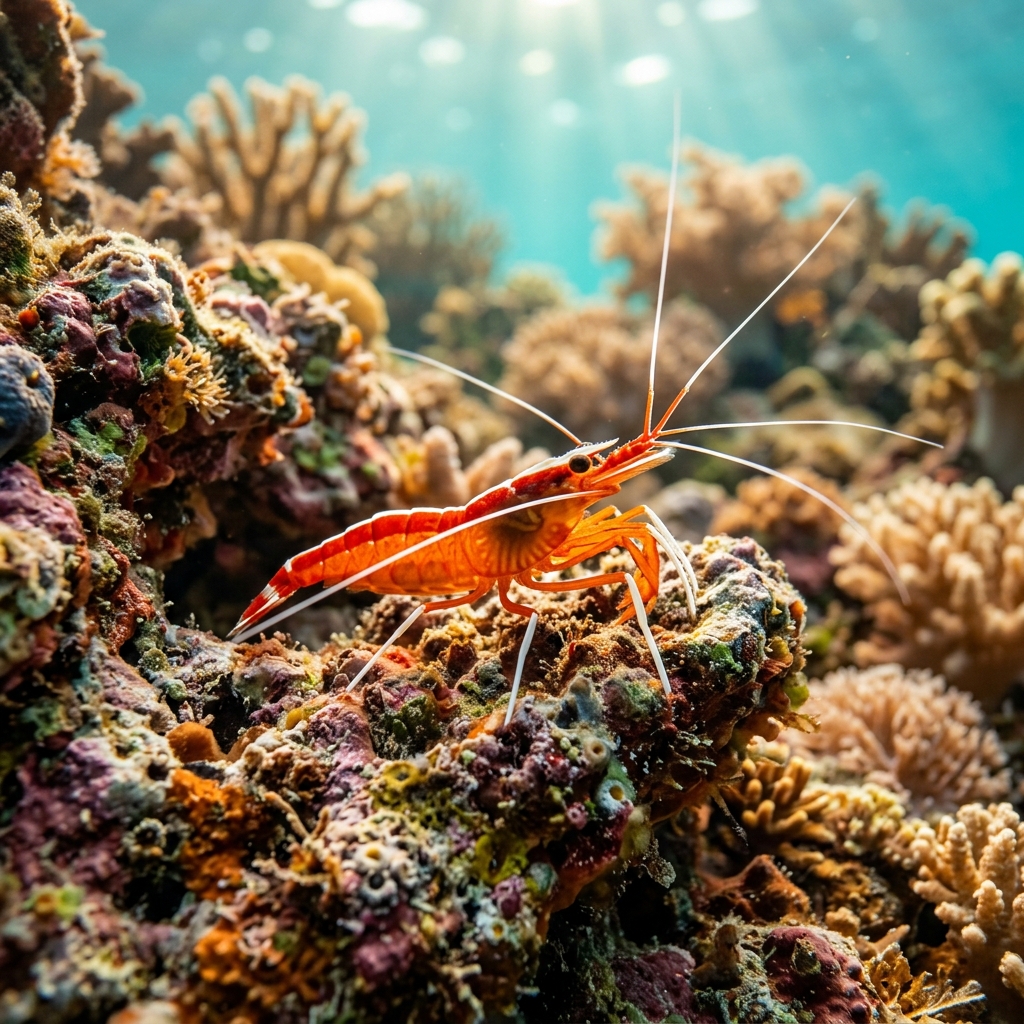
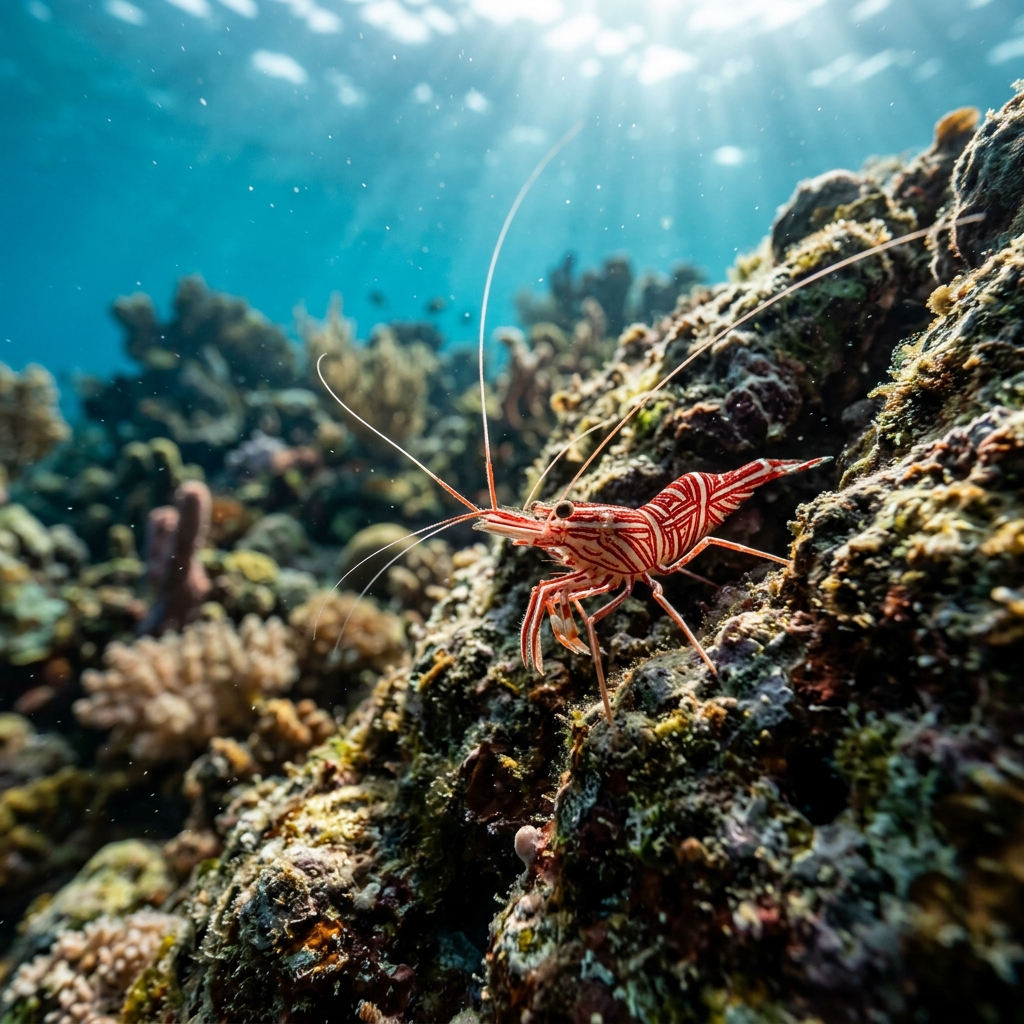
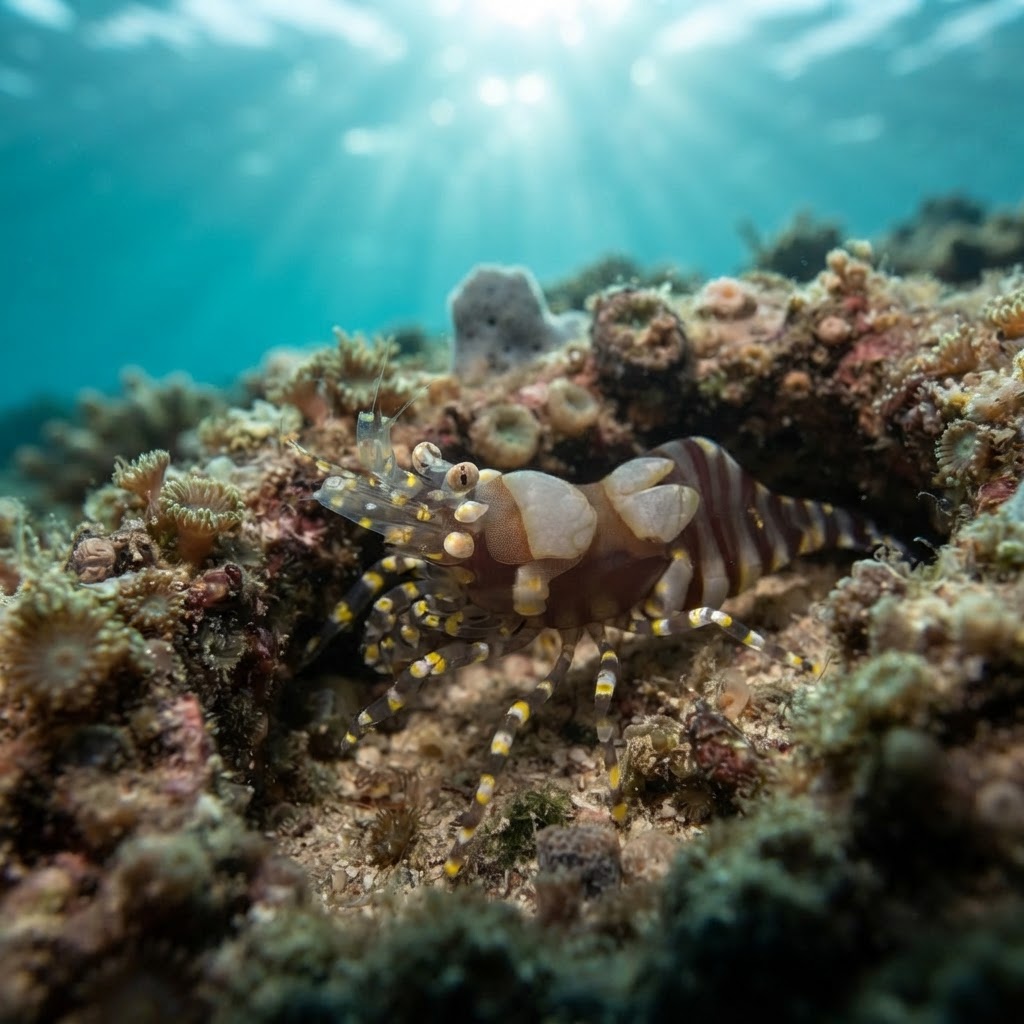
Reef neighbours a diver could mistake it for. Use the identification notes above to tell them apart.
Logged diving records currently centre on Luzon in the Philippines, where it turns up as an uncommon find on anemone-rich reef. It has not yet been documented at other sites, so Luzon is the place to focus a search for now.
Mapping where Anemone Shrimp is logged…
The only well-documented sightings come from Luzon in the Philippines, where divers find it uncommonly on anemone-covered reef sections. It is worth a dedicated slow search of host anemones rather than an incidental spot.
There is no clear seasonal pattern in the sighting data, and water temperatures in its known range stay between 25.3 and 31.3 C throughout the year, so it can be looked for on any dive trip to Luzon.
Look for a small, mostly see-through shrimp tucked low among an anemone's tentacles rather than sitting on top. Its transparency and low profile are the main clues, since it lacks the bold patterning of many other anemone shrimps.
Exact size data has not been confirmed for this species, but like most shrimp in the anemone-associated group it is small, likely only a few centimetres long, which contributes to how easily it is overlooked underwater.
No, it poses no danger to divers. It is a tiny, host-dependent shrimp that stays close to its anemone and has no defensive behaviour directed at humans.
Site and sighting data is aggregated from diver logs, iNaturalist and GBIF. For taxonomy and conservation status:
Rockpool Prawn
2,179 sites