Parapristipoma octolineatum
Look for schools of striped grunt in the Canary Islands and the Algarve, in water from 17 to 27C, year-round.
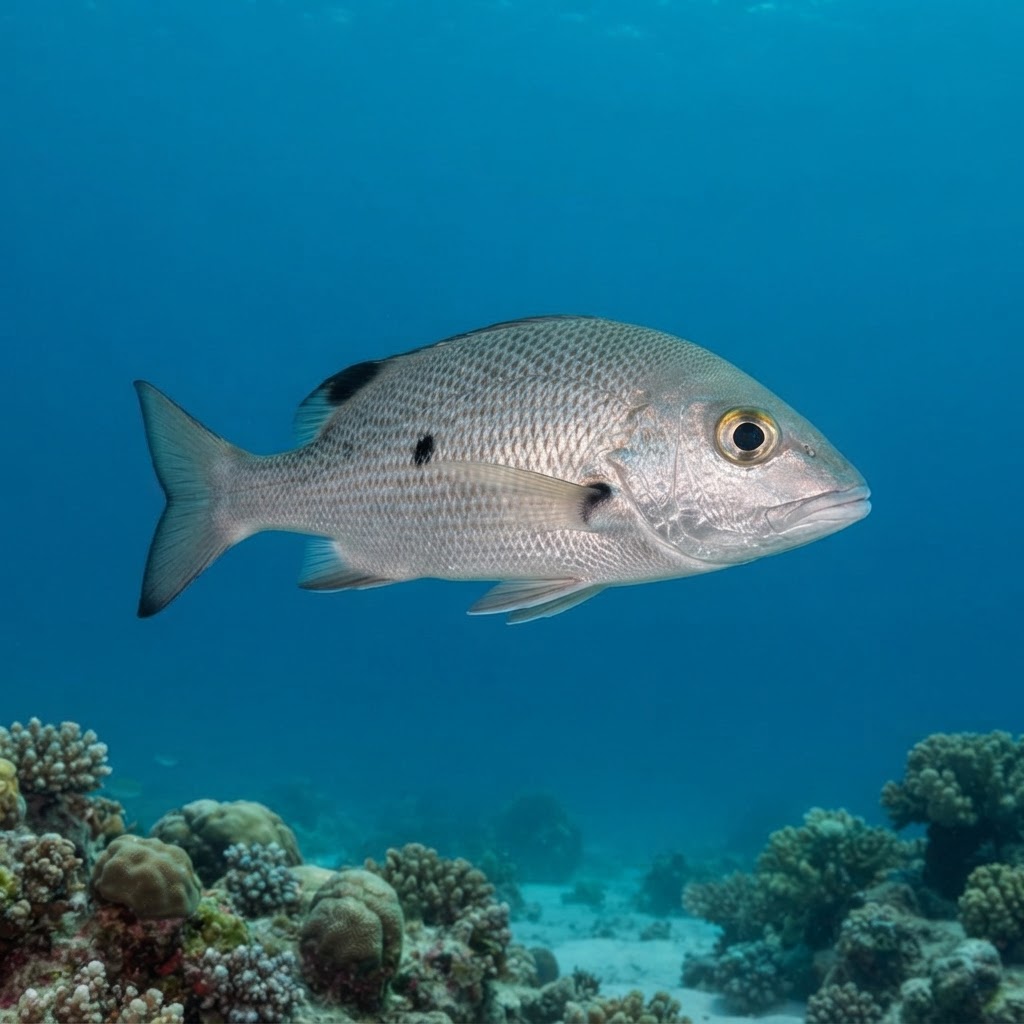
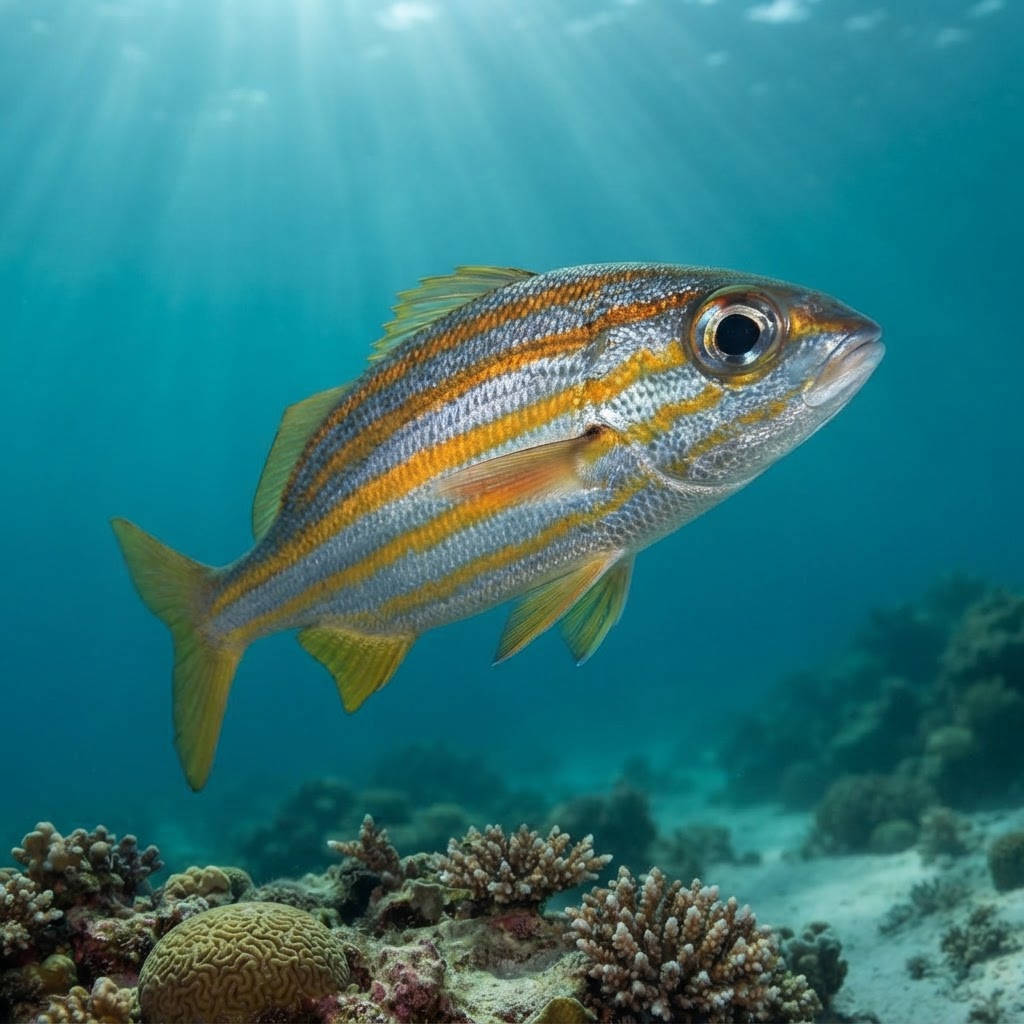
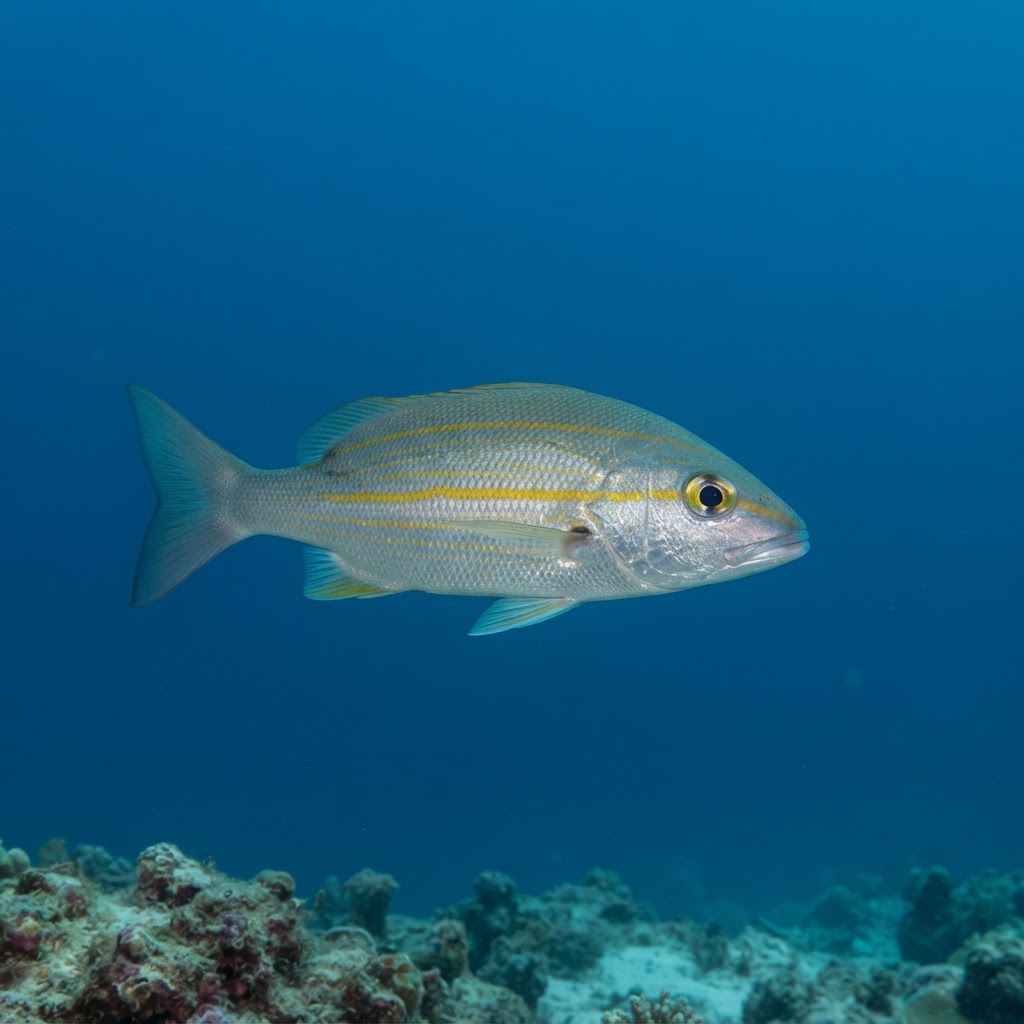
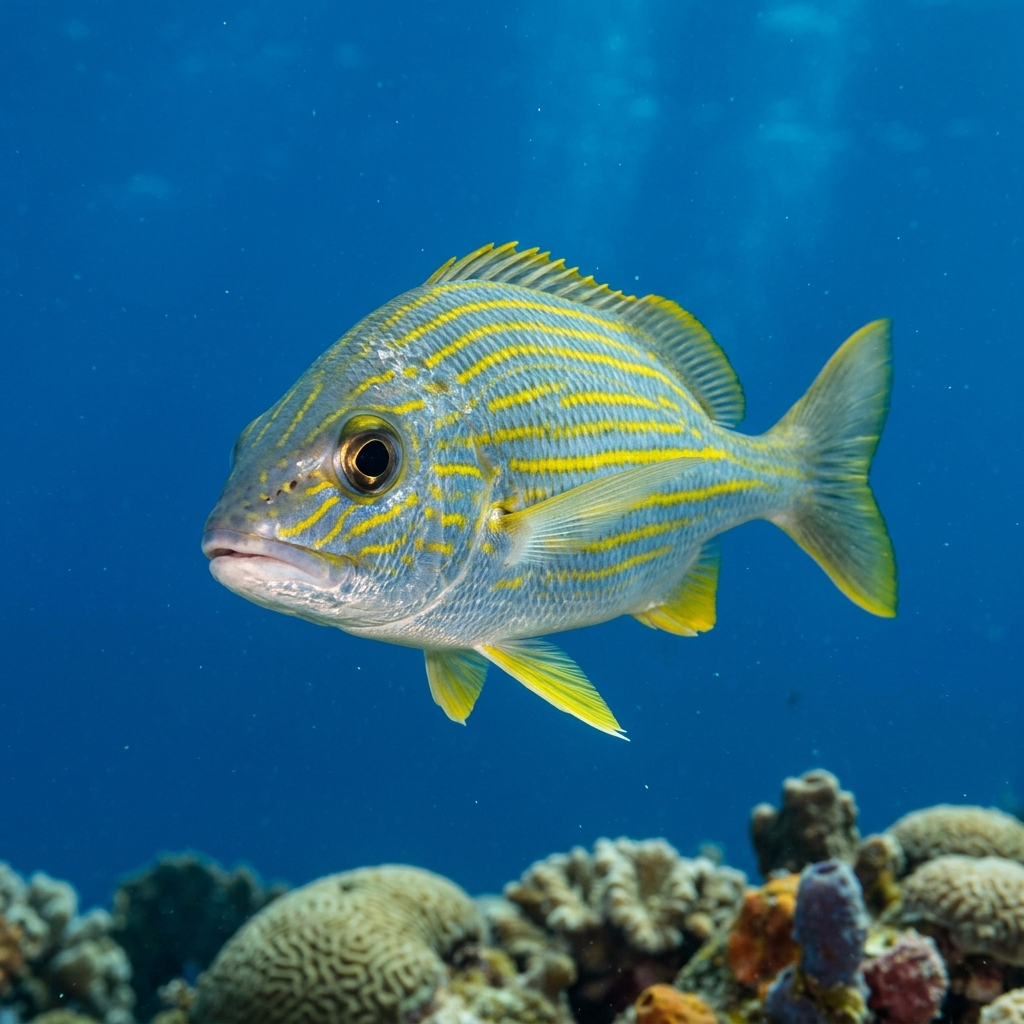
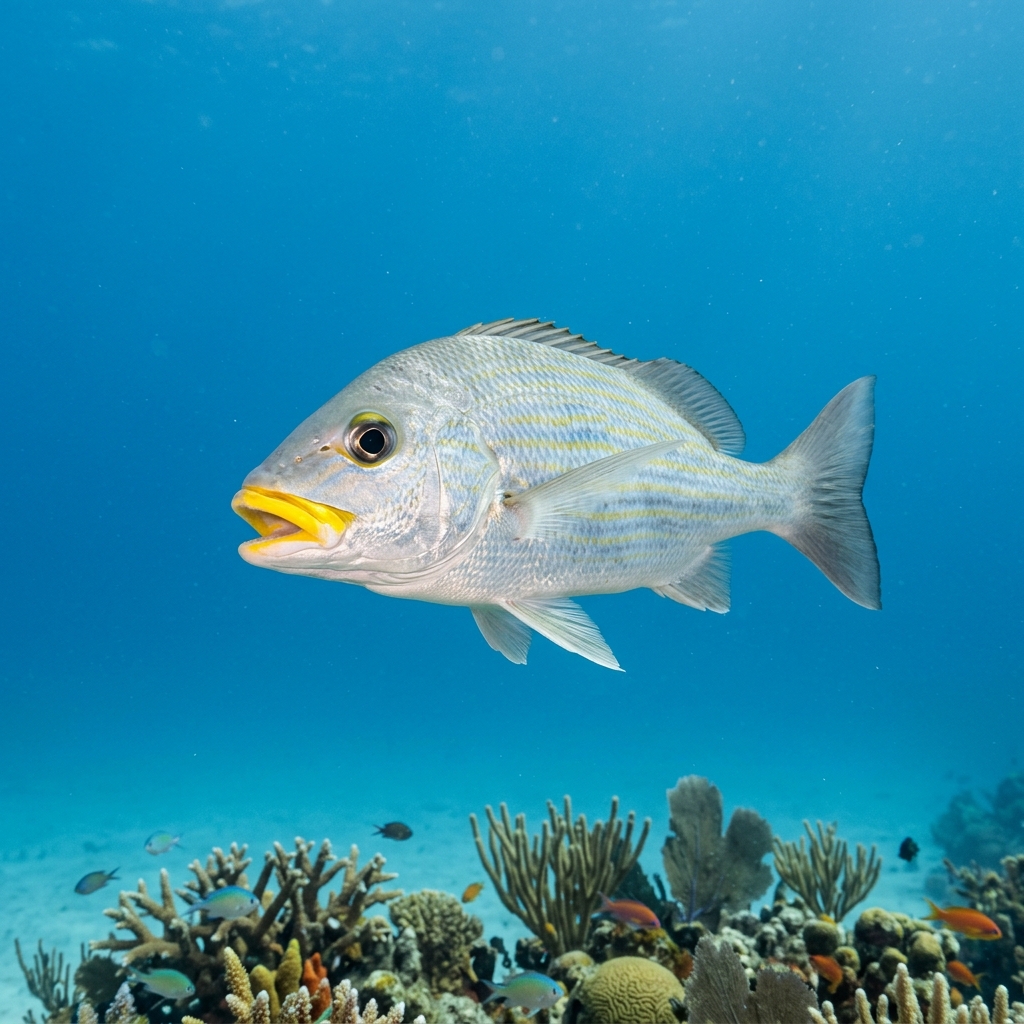
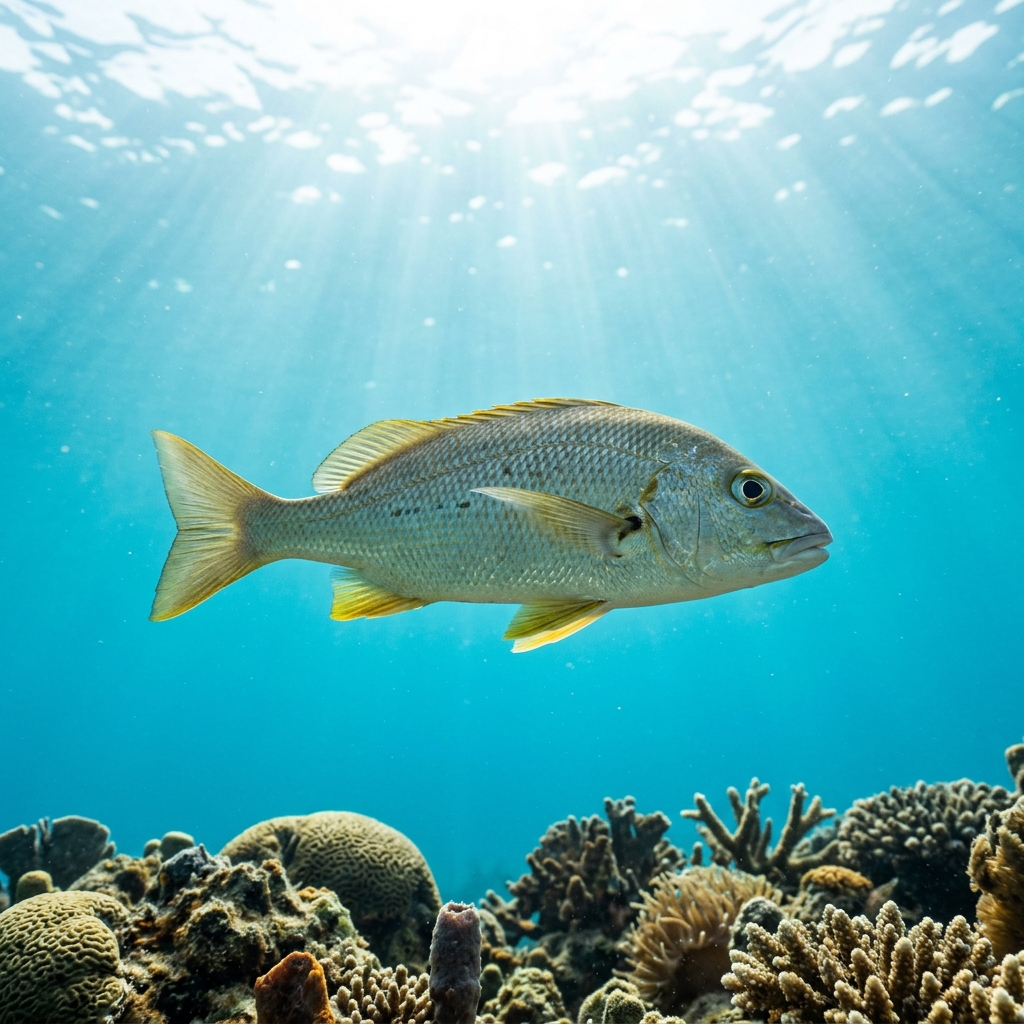
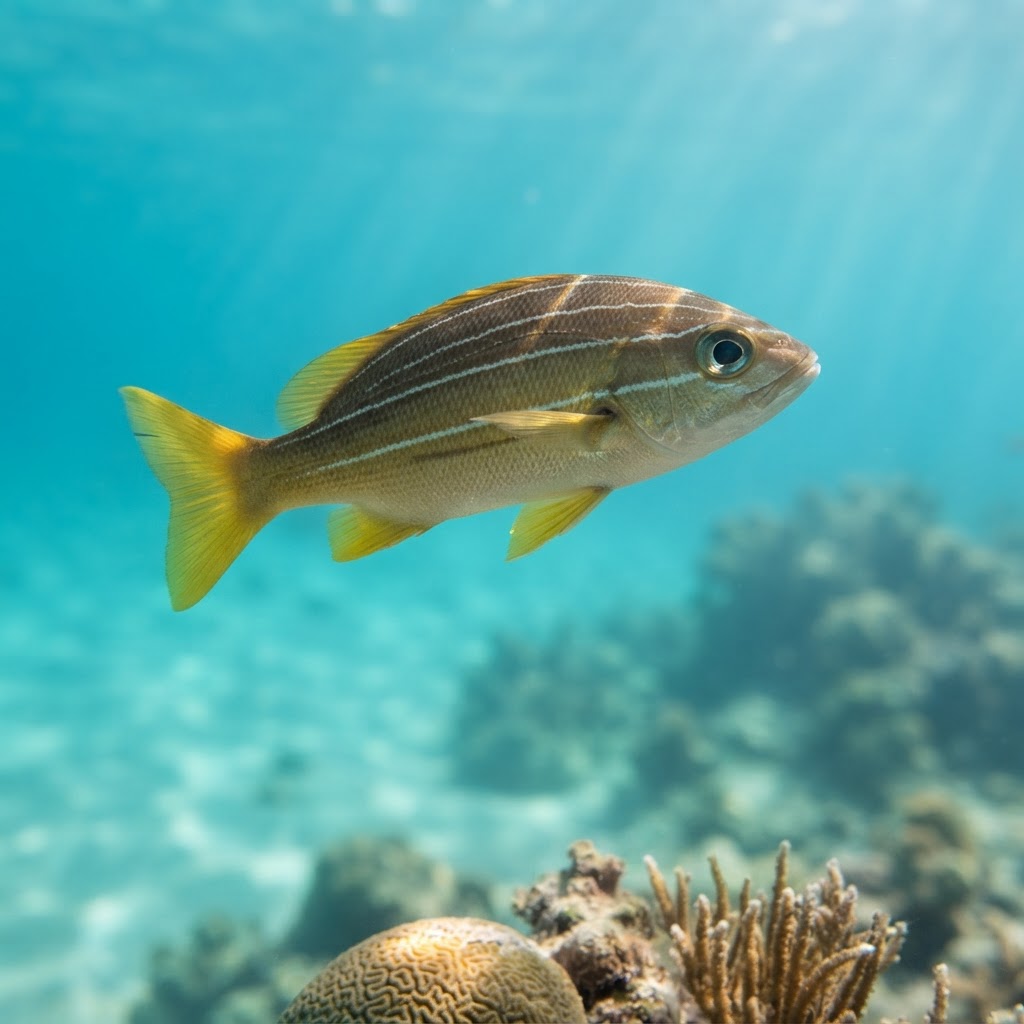
Look for a slim, silvery fish around 35 cm with a row of dark horizontal stripes running from head to tail, giving it a clean, striped look against rock or sand. The body is elongated and slightly deep-bodied near the head, tapering toward a forked tail, and it often shows a faint yellowish tinge along the upper flanks. There's no strong colour split between males and females noted for this species, so both sexes read the same underwater.
Divers typically find them hovering in loose schools over rocky reef and boulder terrain, often holding position in mid-water rather than hugging the bottom. They're generally unbothered by divers, drifting a little further off but not bolting, which makes them easy to approach slowly for a photo. Most sightings come from open rock and reef edges rather than caves or wrecks, suggesting they favour structure with some current flow.
Its dark longitudinal stripes are a classic school-fish pattern, breaking up the outline of individual fish when the group moves together, which likely helps confuse predators targeting a single target.
No clear seasonal pattern shows up in the sightings, so treat this as a year-round fish on these Atlantic reefs. Its recorded temperature range of 17.2 to 26.8C spans winter and summer conditions in the Canaries and Iberian Atlantic alike, which explains why divers log it across the calendar.
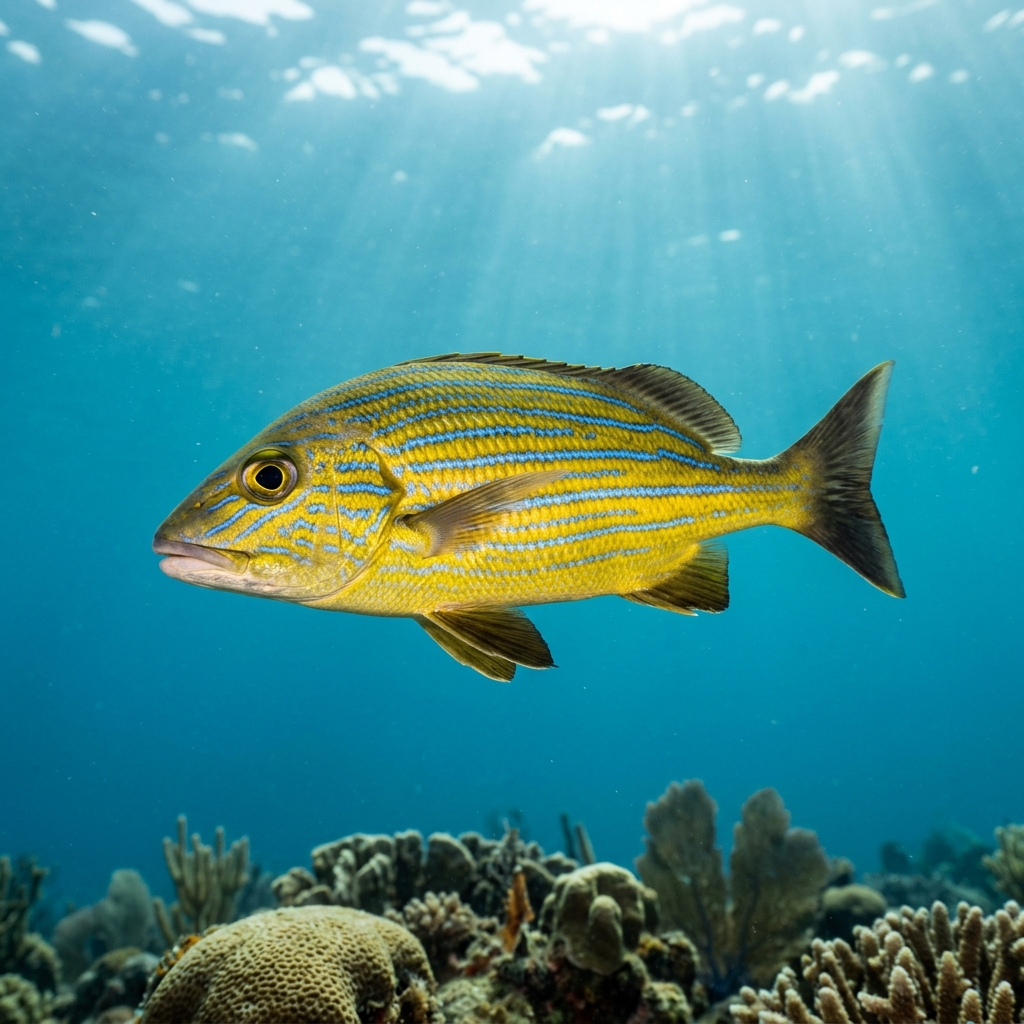
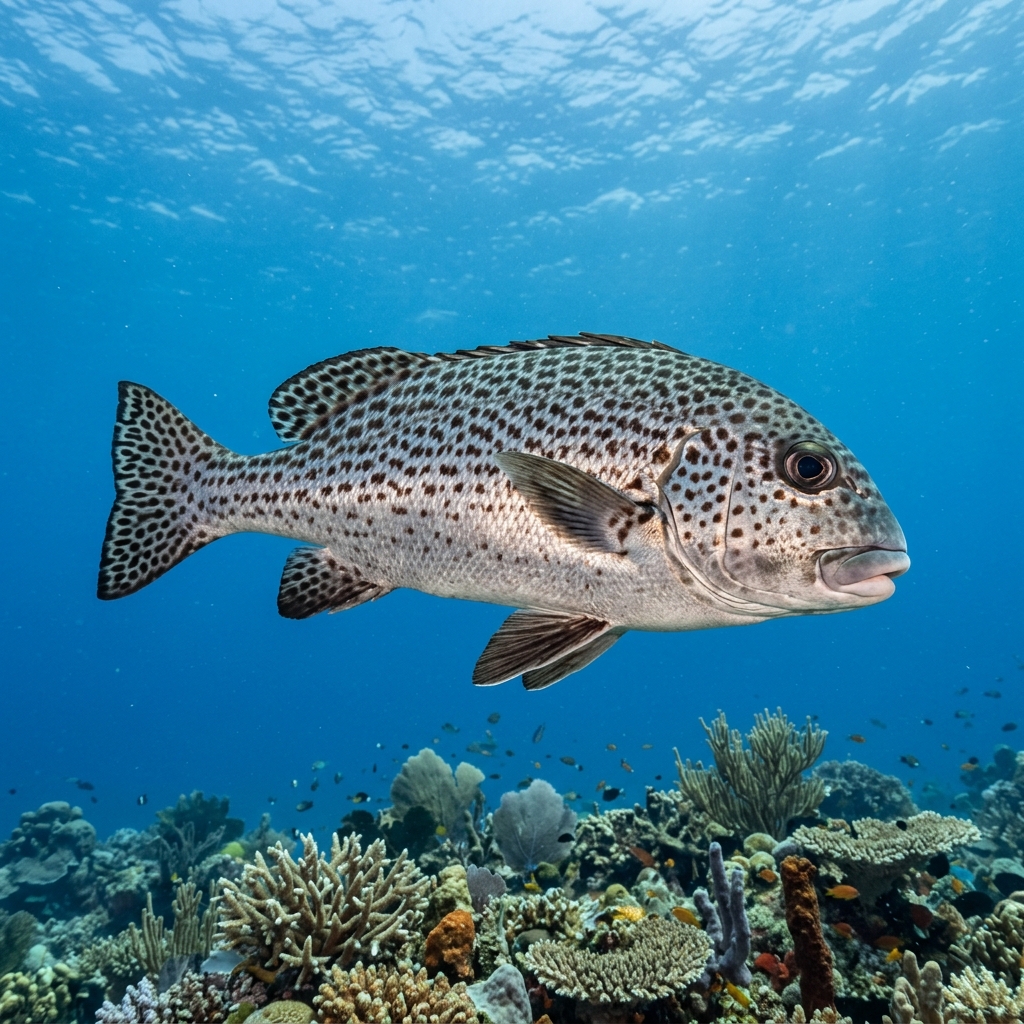
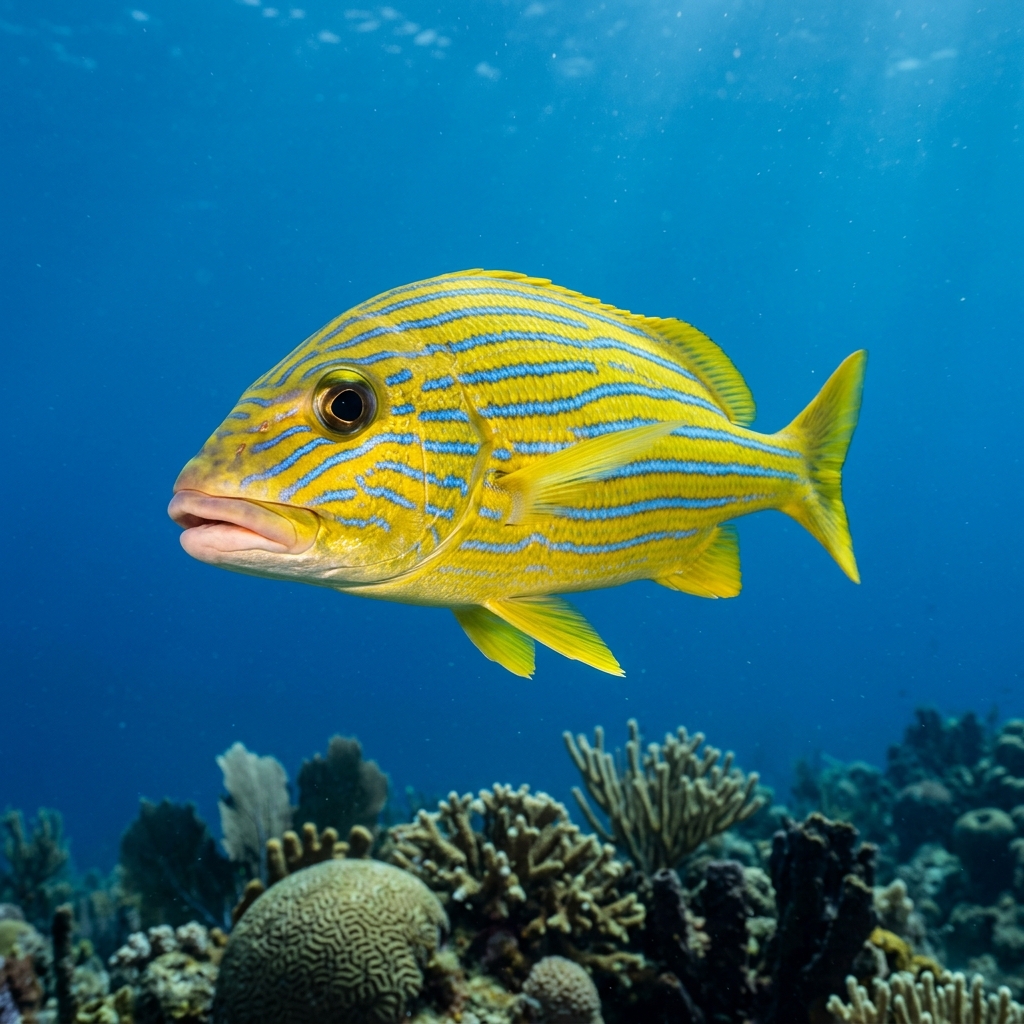
Reef neighbours a diver could mistake it for. Use the identification notes above to tell them apart.
This is a Macaronesian and Atlantic Iberian regular, most consistently logged around the Canary Islands, with strong numbers in Tenerife, La Palma, Lanzarote and Fuerteventura. On the mainland side it's a steady find along Portugal's Algarve and across Spain, particularly Andalusia and Murcia, with an additional West African population off Dakar, Senegal.
Mapping where African Striped Grunt is logged…
They're most reliably seen around the Canary Islands (Tenerife, La Palma, Lanzarote, Fuerteventura), along Portugal's Algarve, and across southern Spain in Andalusia and Murcia. There's also a population off Dakar, Senegal, on the West African coast.
There's no strong seasonal signal in the sightings, so they're logged year-round on these Atlantic reefs. Their comfort range of roughly 17 to 27C covers both winter and summer conditions in the region.
Look for a silvery, elongated fish around 35 cm with dark horizontal stripes running the length of the body and a forked tail. They're usually seen loosely schooling in mid-water over rocky reef rather than sitting on the bottom.
They typically reach around 35 cm, a mid-sized reef fish easily judged against nearby rock or other schooling fish for scale.
No, they pose no threat to divers and are generally calm around slow, non-intrusive approaches.
Site and sighting data is aggregated from diver logs, iNaturalist and GBIF. For taxonomy and conservation status:
Bluestriped Grunt
1,907 sites