Thaumoctopus mimicus
One of diving's most sought-after cephalopods, the mimic octopus is most logged in Sulawesi and the Philippines. Here's where to find it and what to look for.
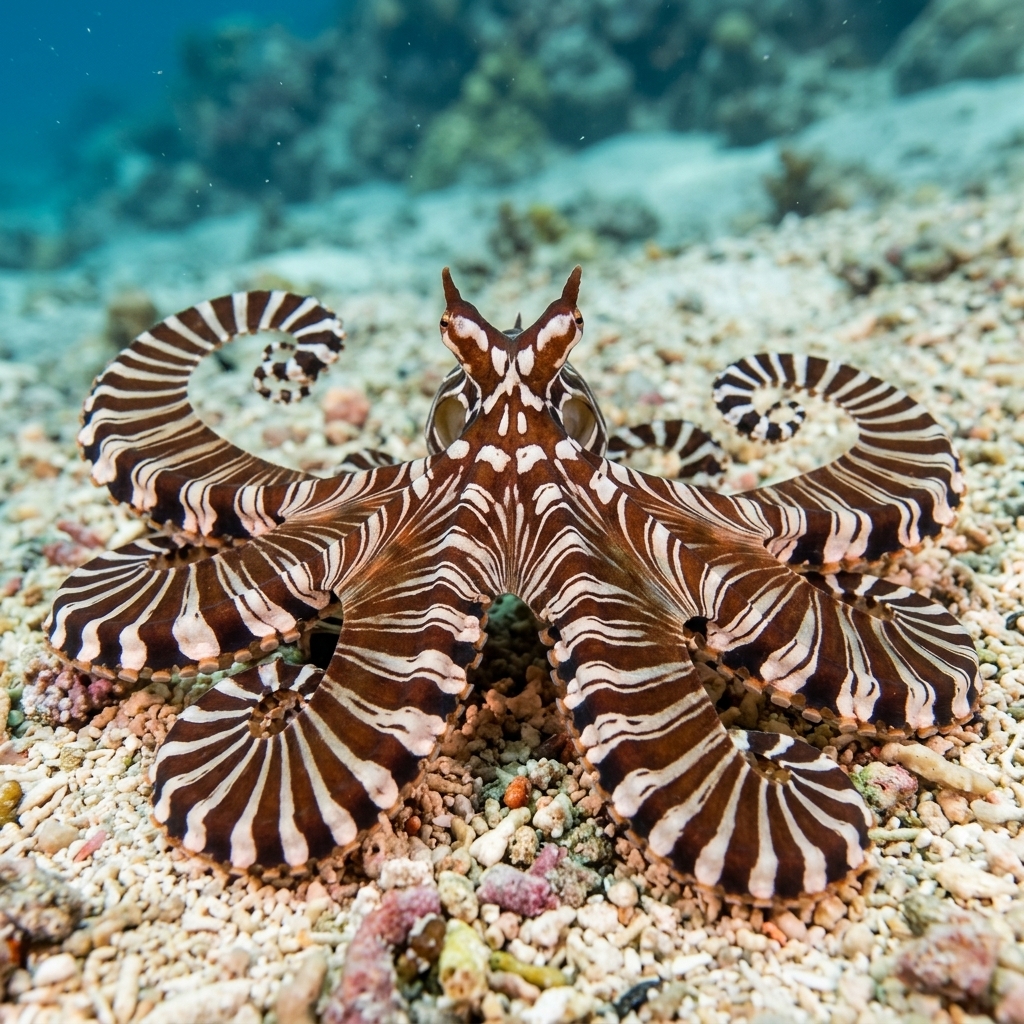
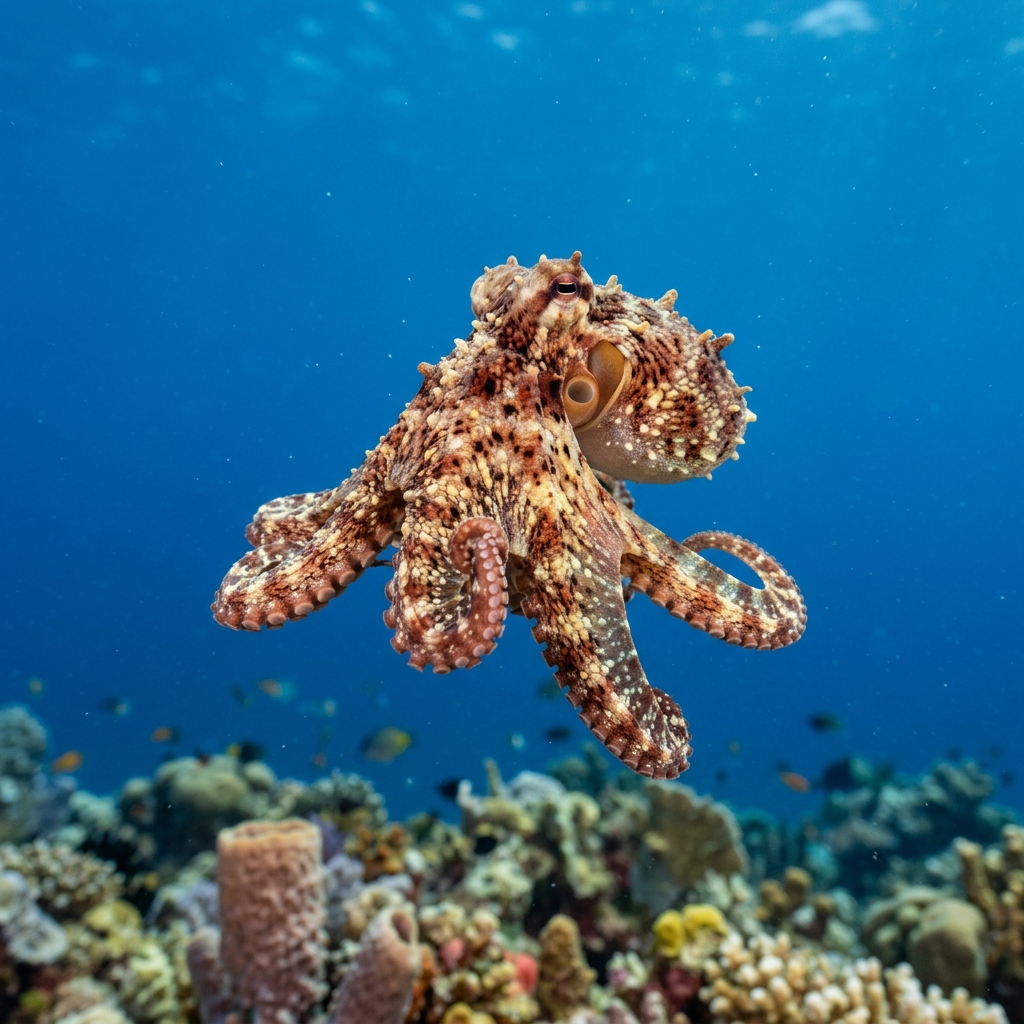
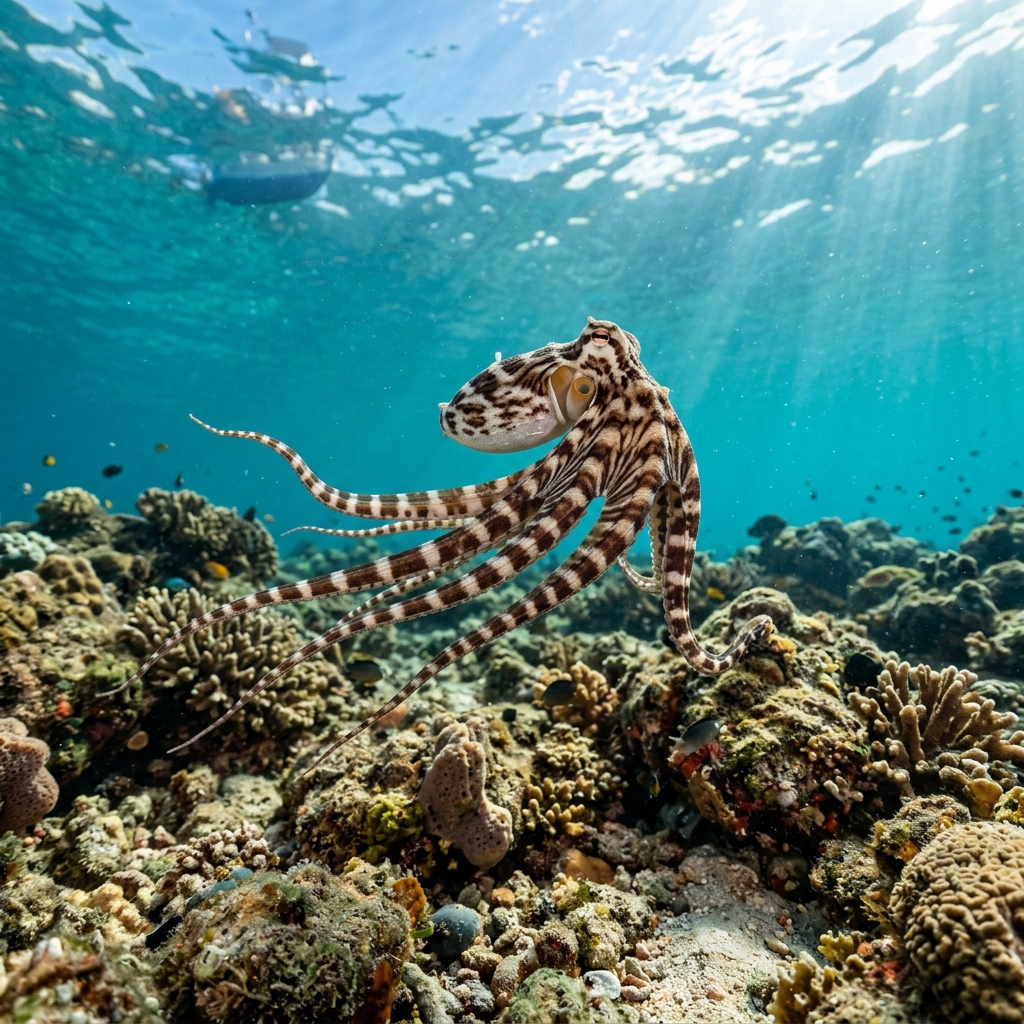
Bold alternating bands of dark brown and white running the full length of each arm are the key field mark, setting this species apart from most other octopuses you will encounter. At around 33 cm total length it is a medium-sized octopus, and the arms are notably long and slender relative to the body. Look for it on open sandy or silty seabeds rather than tucked into a reef crevice, often with several arms extended at once. The banding pattern stays visible even when the animal is moving, which is the moment to pay attention.
Mimic octopuses are active during the day, hunting small fish and crustaceans across open sandy and silty bottoms in the neritic (shallow coastal) zone, typically shallower than 37 m. When a diver approaches, the animal may freeze, pull its arms in, or deploy one of its well-documented impersonations, flattening the body to resemble a flounder or trailing arms to mimic a lionfish. Give it space and stay low, because a diver hovering directly overhead will usually send it retreating into a burrow.
It is the only known octopus to actively imitate multiple other species, choosing different models, including flatfish, lionfish, and banded sea snakes, apparently in response to different predators.
No strong seasonal pattern has emerged from the dive data, so it can be treated as year-round in its range. Water temperatures at sighting sites run from roughly 27 to 29 degrees Celsius, consistent with tropical conditions that persist all year across Sulawesi and the Philippines.
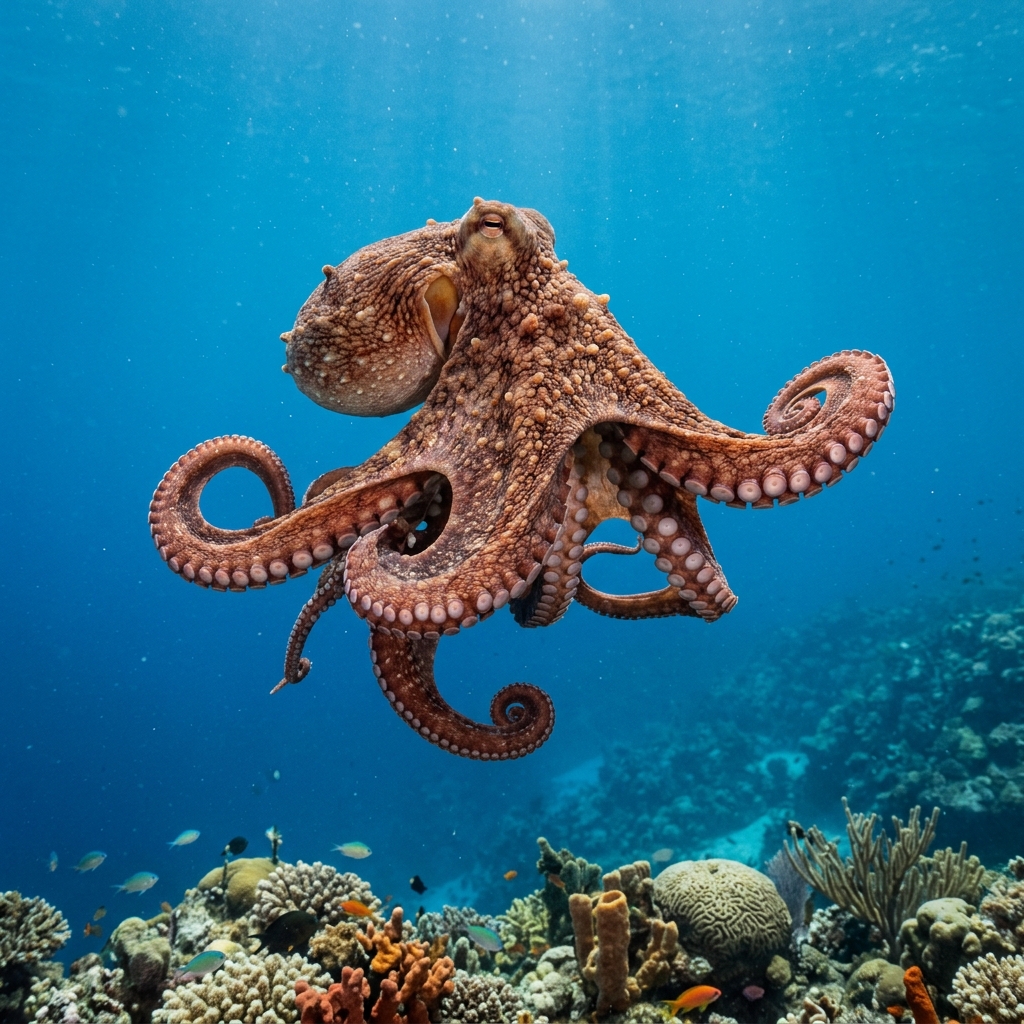
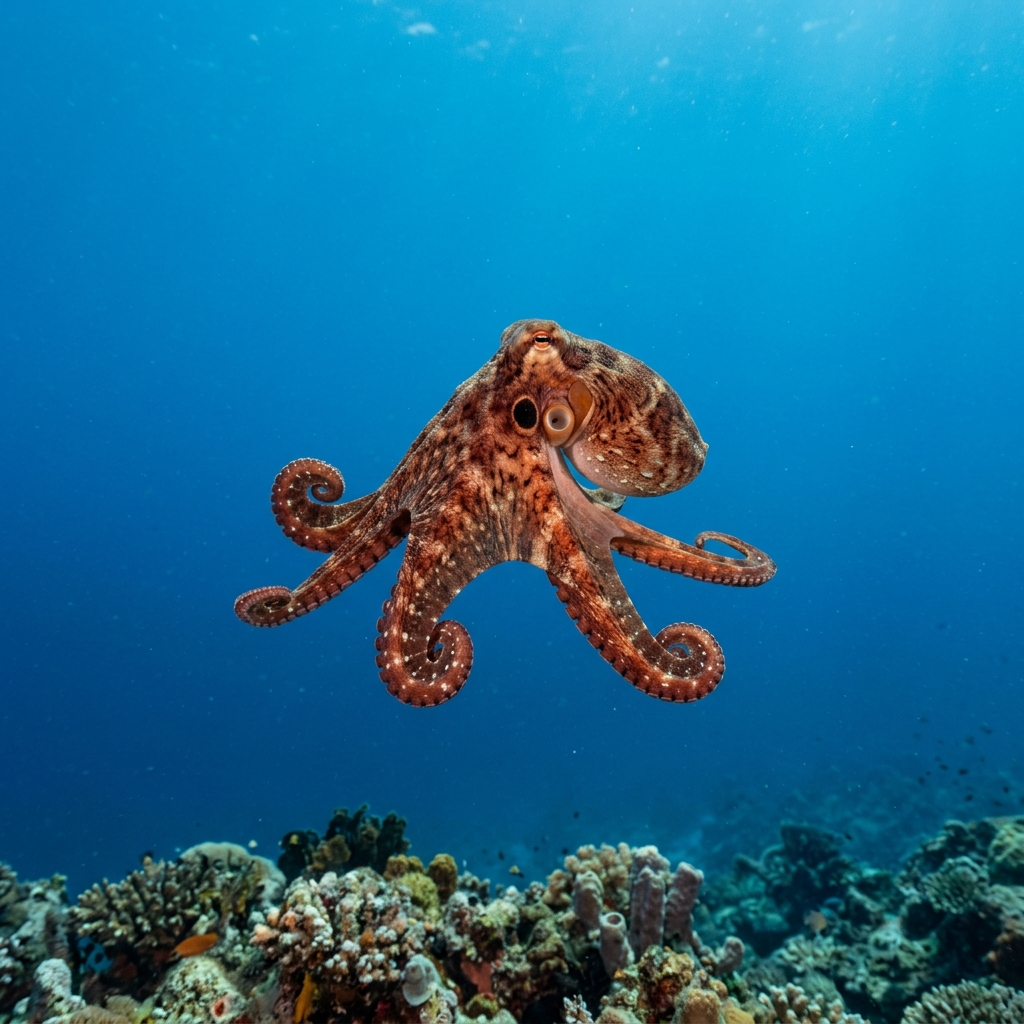
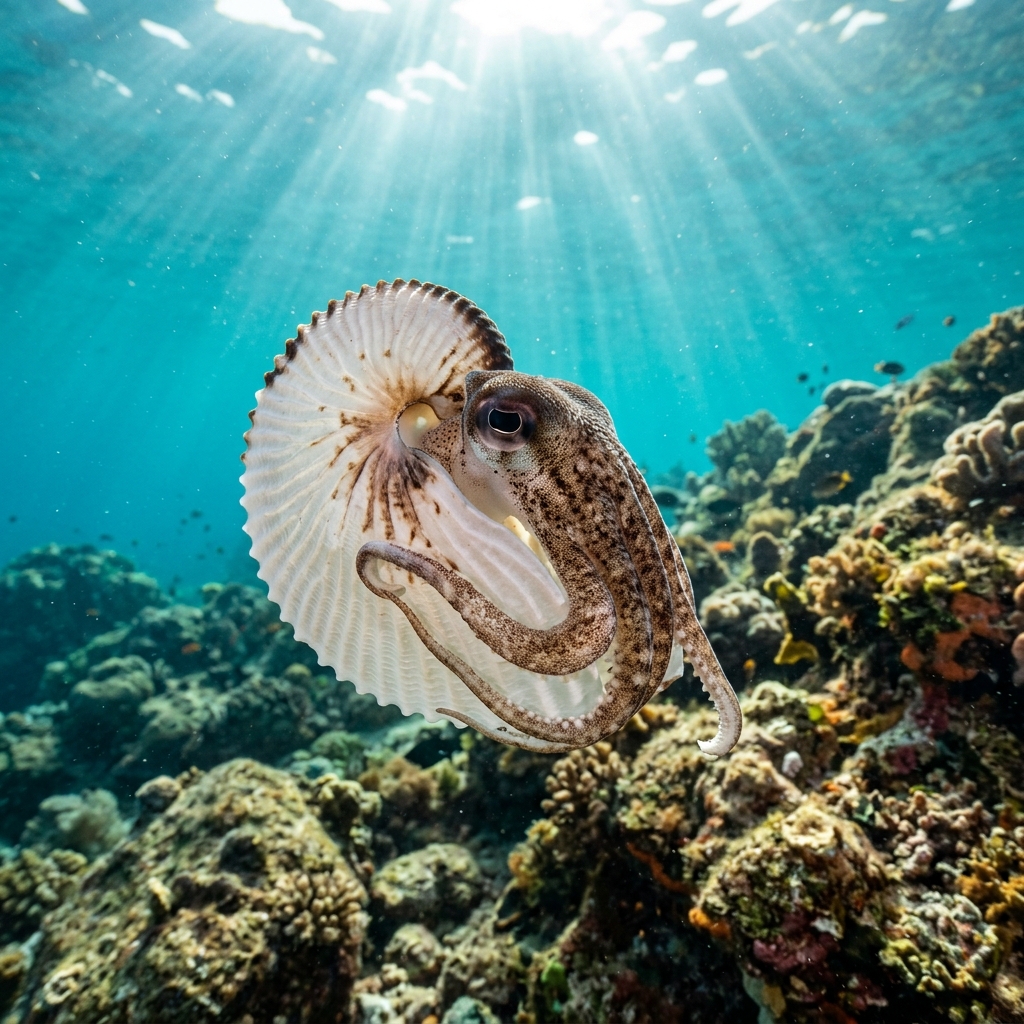
Reef neighbours a diver could mistake it for. Use the identification notes above to tell them apart.
Most observations come from Indonesia, particularly Sulawesi, which accounts for the majority of logged sites, with Bali, Lombok, and Java adding a handful more. The Philippines, especially Luzon and the north, is the second most reliable part of the range. A single site in northern Taiwan rounds out the recorded spread, making this effectively an Indo-Pacific specialty.
Mapping where Mimic Octopus is logged…
The species is most consistently logged in Sulawesi, Indonesia, which holds the largest number of recorded dive sites. The Philippines, particularly Luzon and the north, is the next best area. A site in northern Taiwan also has confirmed sightings. All locations are shallow, sandy or silty coastal environments.
Available data does not point to a concentrated season, so year-round diving is as good a guide as any. Water temperatures at sighting sites sit between 27 and 29 degrees Celsius, conditions that persist all year across Sulawesi and the Philippines, meaning there is no strong off-season.
Look for the consistent bold brown-and-white banding along every arm, which is visible even when the animal is in motion. It hunts in the open on sandy or silty seabeds rather than hiding in reef rock. The Wunderpus has a similar striped pattern but tends to show more intricate white spots and a different arm posture. If it actively flattens or drapes its arms into an unusual shape, you are almost certainly watching a mimic octopus.
Total body and arm length reaches around 33 cm. The arms are long and slender for the body size, which makes the animal look larger in the water than the mantle alone would suggest.
It is the only octopus documented to impersonate multiple other species as a defence strategy, shifting between models such as a flatfish, a lionfish, and a banded sea snake depending on the situation. Other octopuses change colour and texture to blend into backgrounds, but actively replicating the shape and movement of specific animals is unique to this species.
Site and sighting data is aggregated from diver logs, iNaturalist and GBIF. For taxonomy and conservation status:
Brazilian Reef Octopus
1,142 sites