Wunderpus photogenicus
Rare but unmistakable, wunderpus turns up on muck dives in Sulawesi and the Philippine Visayas in waters around 27-29 °C. Here's where and when to look.
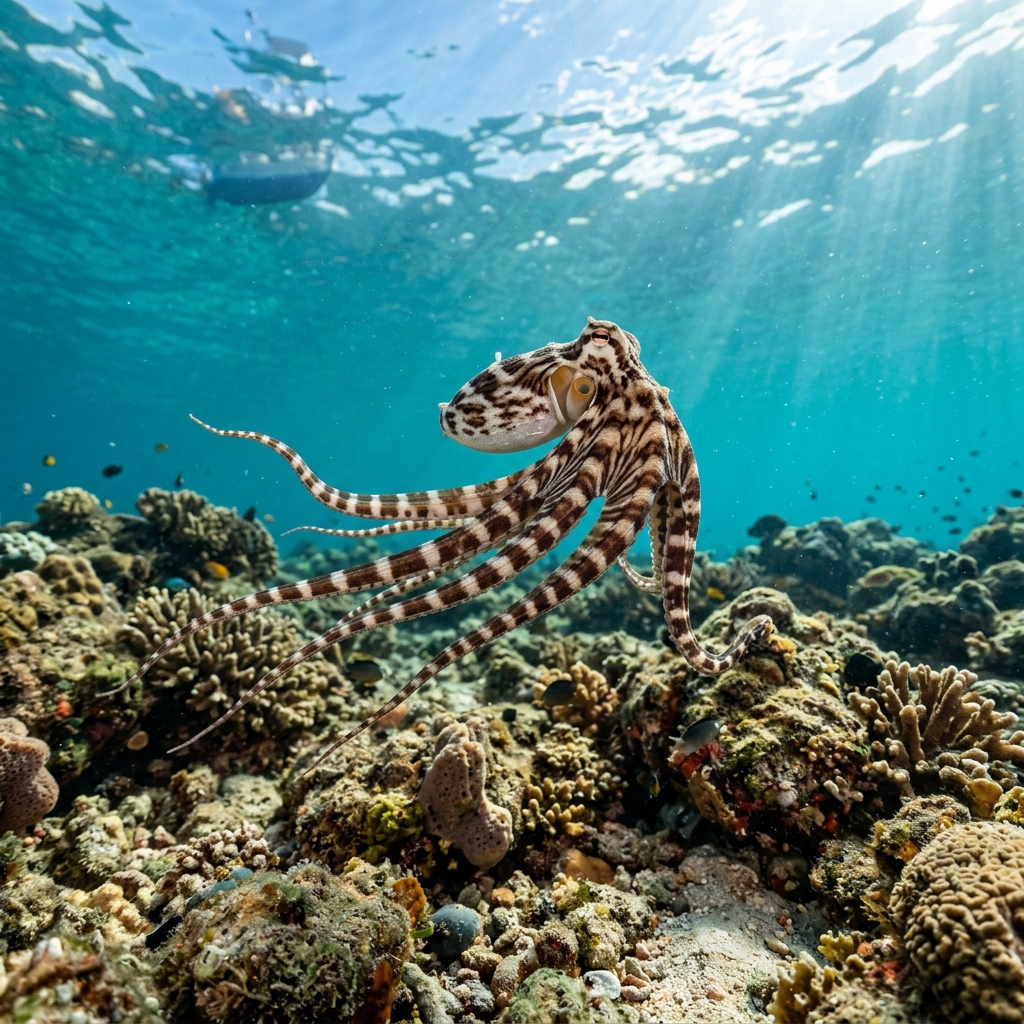
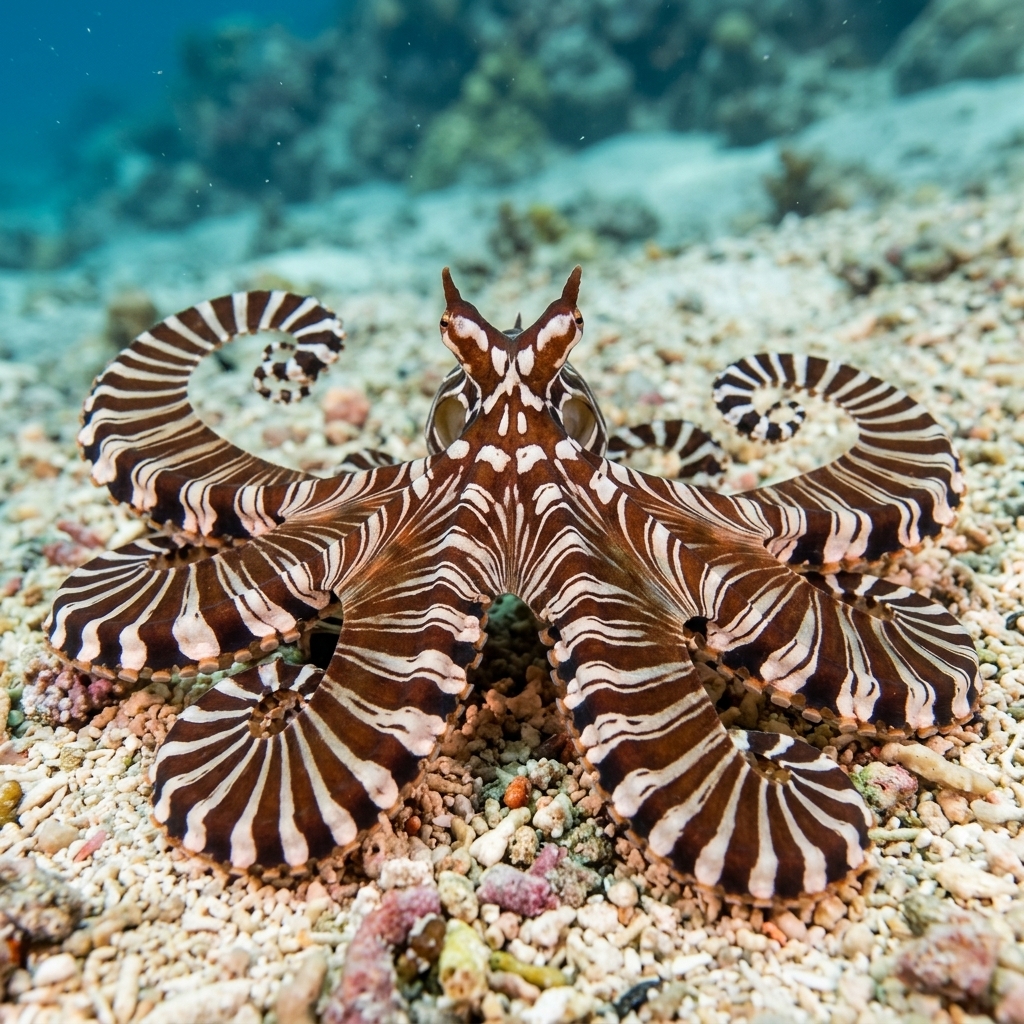
Bold, high-contrast white spots and broken white lines on a rich reddish-brown to orange-brown base make this one of the most distinctive octopuses in the ocean. The arms are noticeably long relative to the body, and the edges of the mantle (the head-like sac) carry a fringe of small skin flaps. Each individual's white spot pattern is unique, like a fingerprint, but the overall look is so striking that even a brief glimpse rules out most other octopuses.
Wunderpus are almost always encountered on open sandy or silty seafloors, often at the edges of rubble patches, prowling slowly during the day or at dusk with arms spread wide in a characteristic foraging posture. When a diver approaches, they typically freeze or retreat into a small hole; they rarely ink and do not usually arm-wave in the defensive display more associated with the mimic octopus. Slow, calm approaches from a distance tend to result in longer observations.
The white spot pattern on every individual is fixed at settlement and never changes, which means researchers and photographers can reliably re-identify specific animals over time, an unusual trait for an octopus.
Northern-hemisphere seasonality data points to September through March as the period when sightings are most concentrated, which aligns with the cooler end of the tropical wet season across Sulawesi and the Visayas.
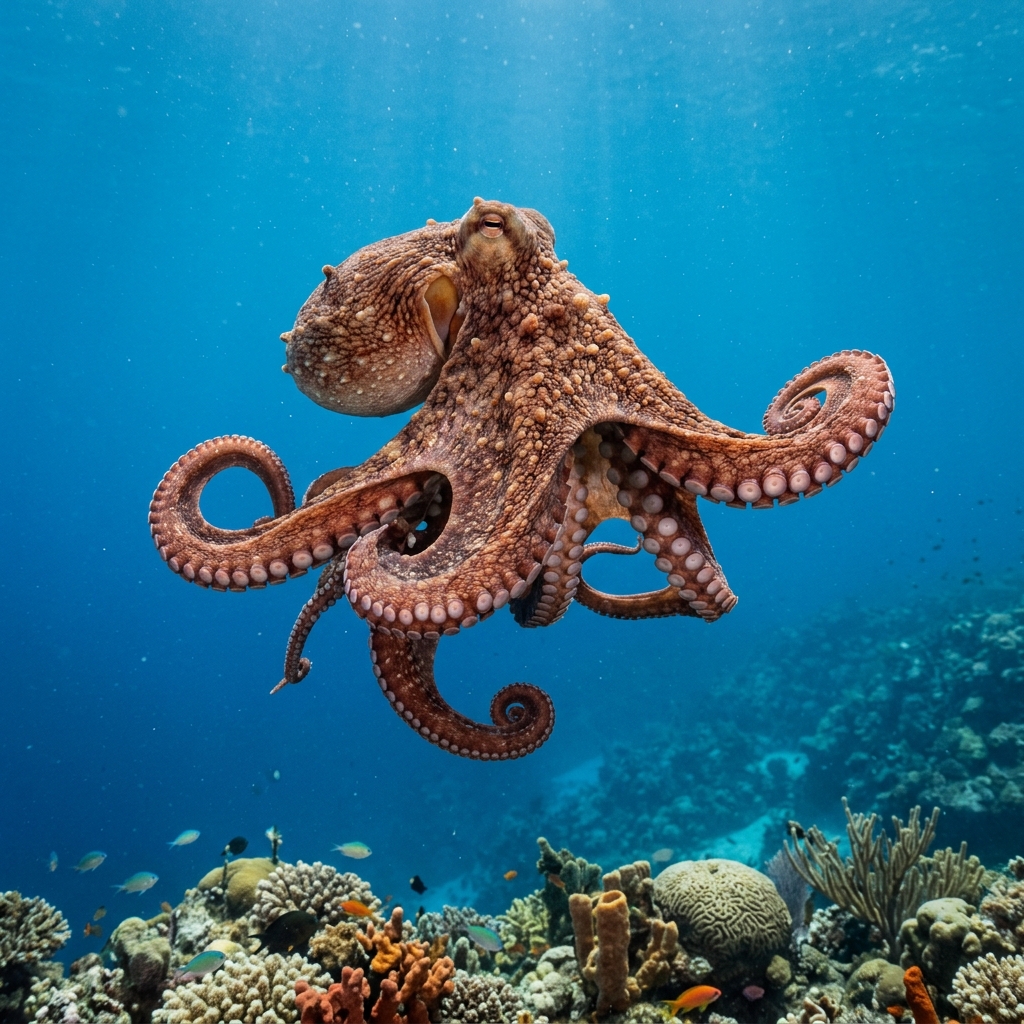
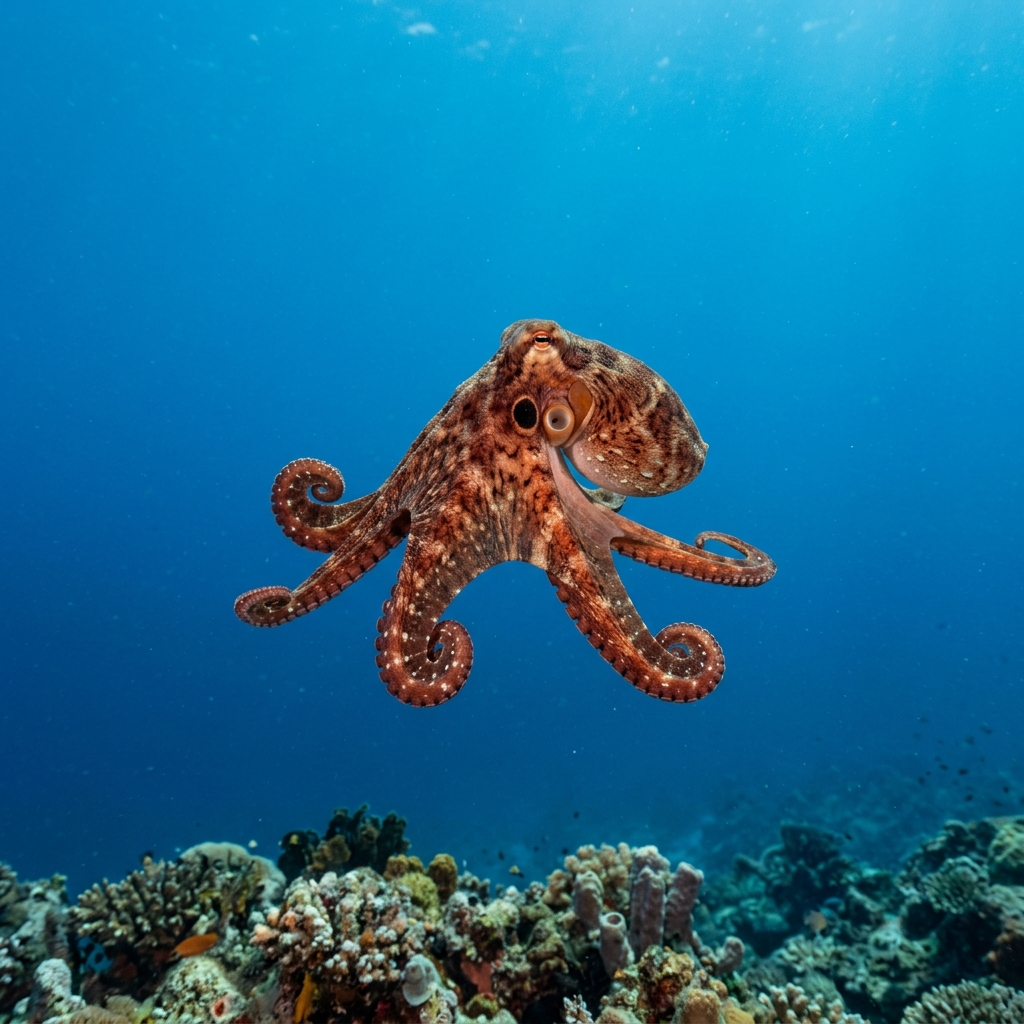
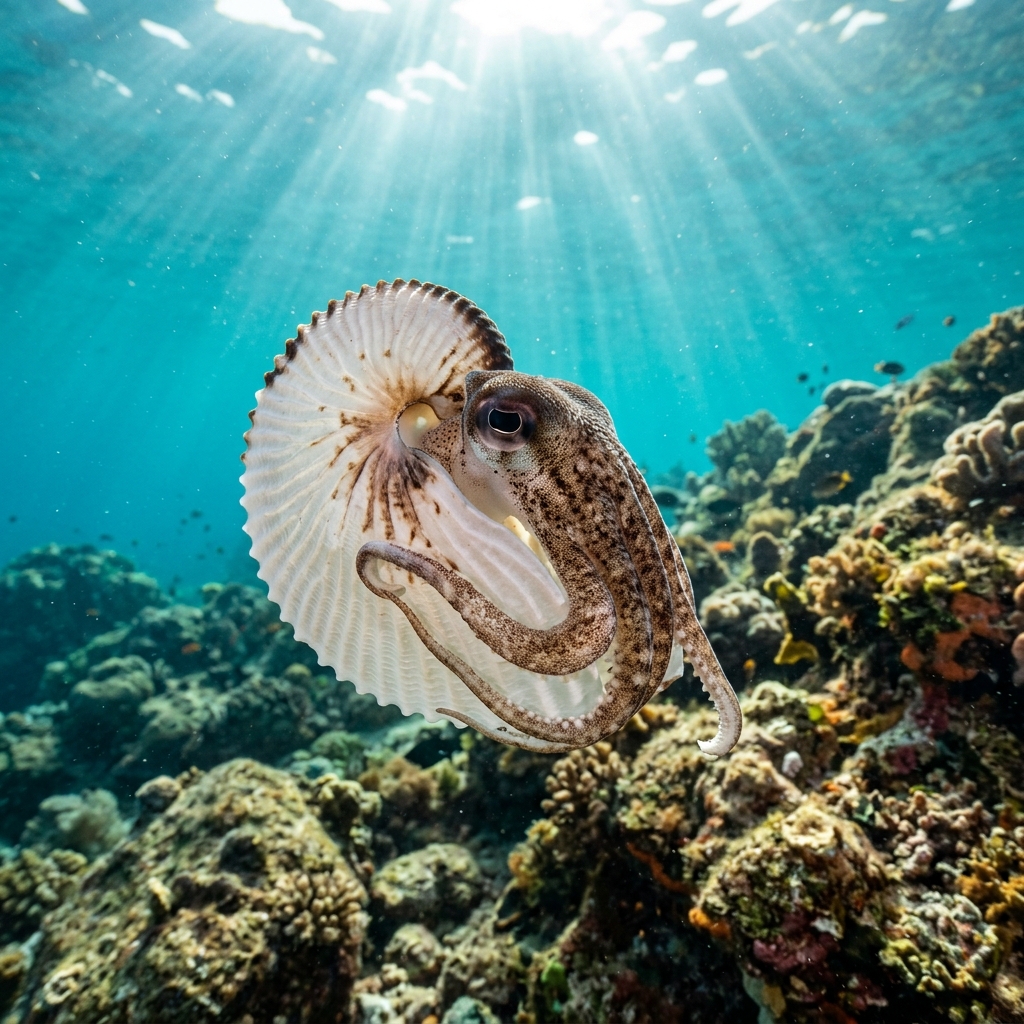
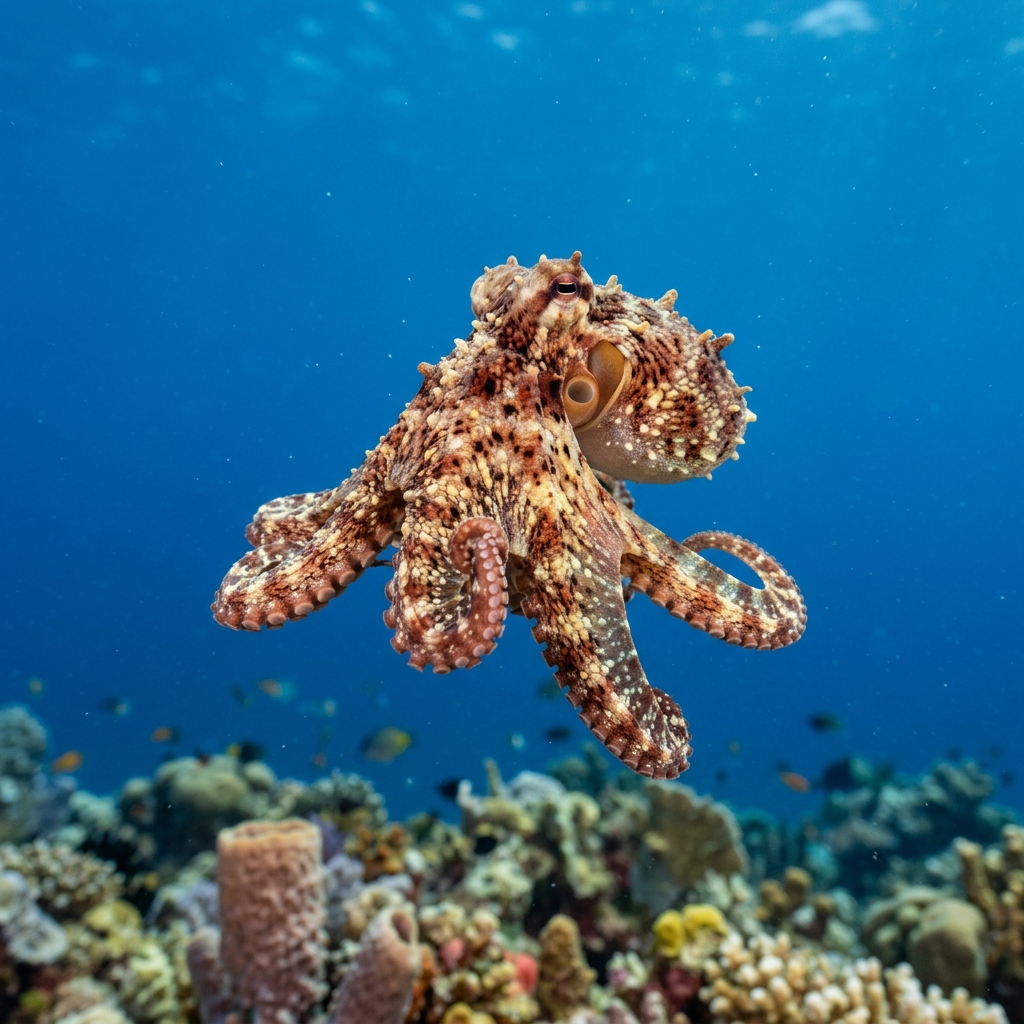
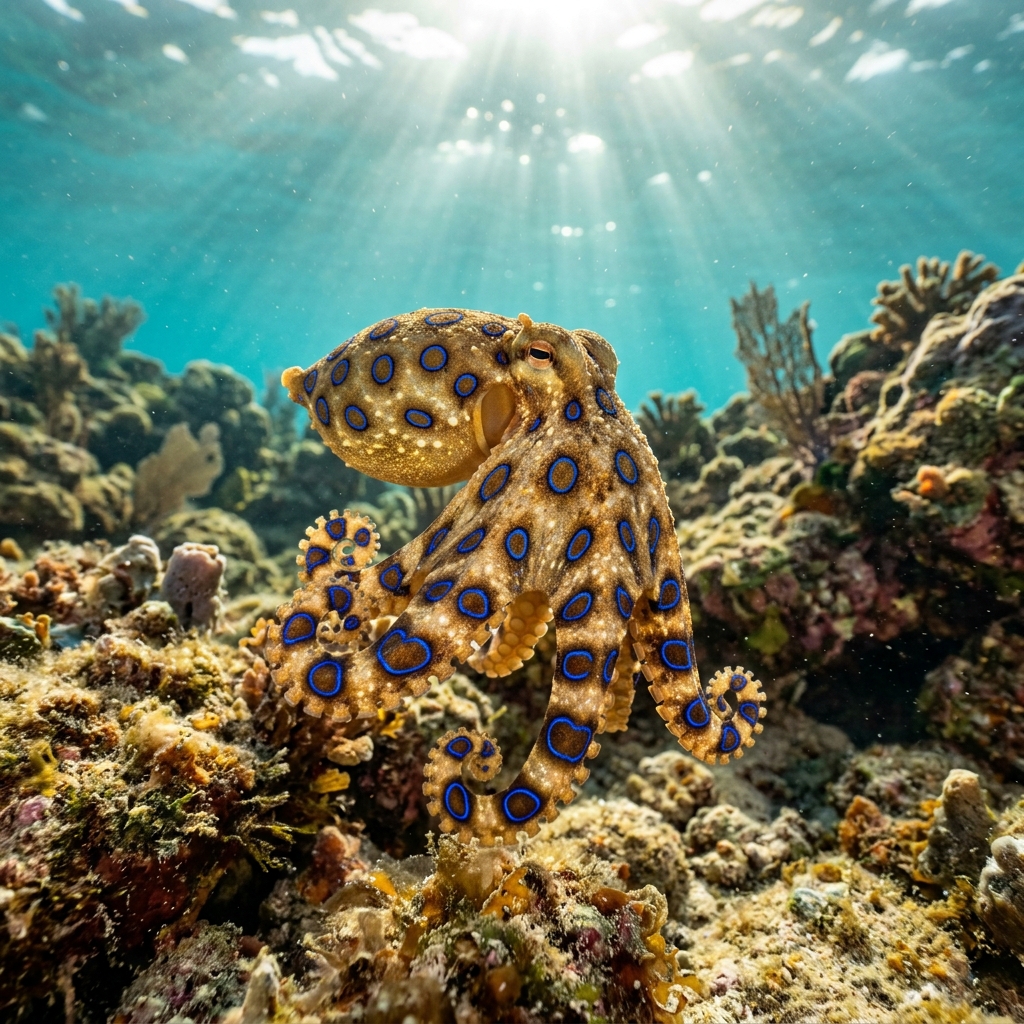
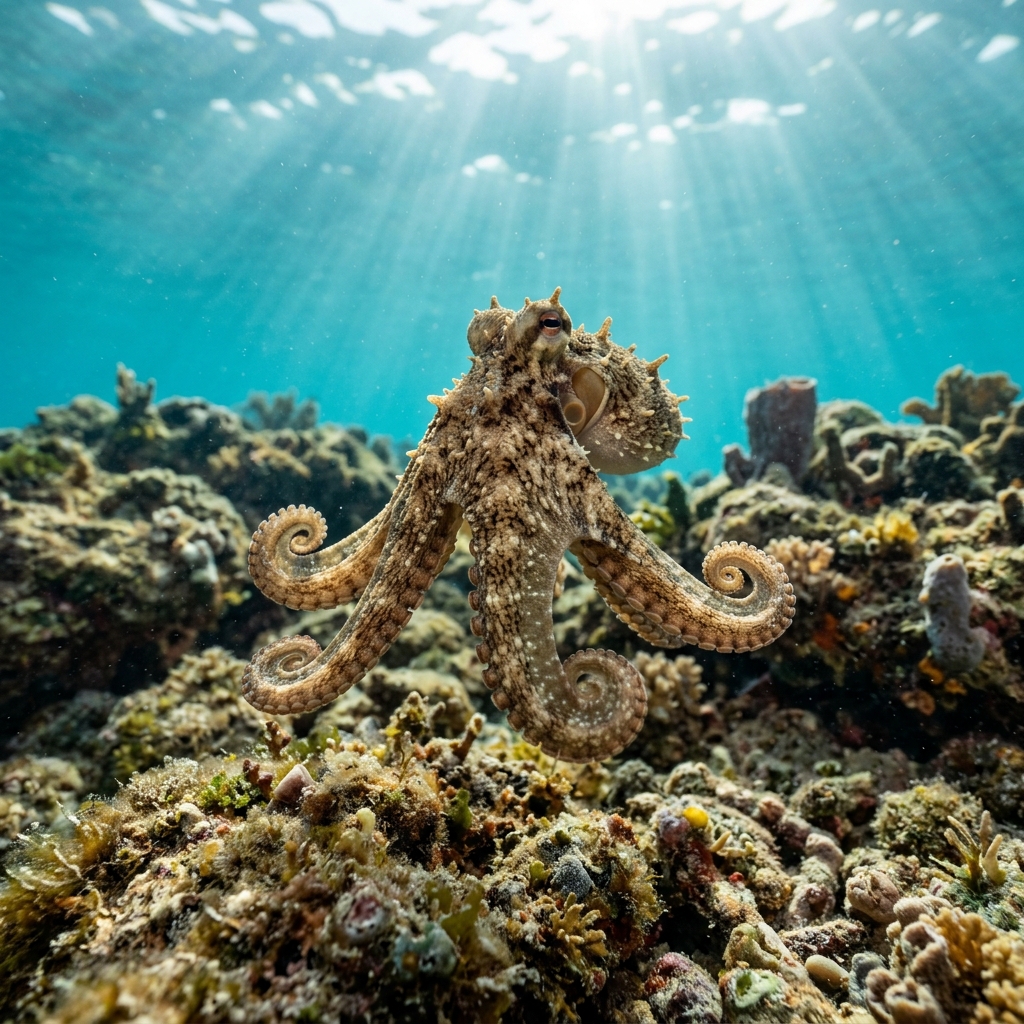
Reef neighbours a diver could mistake it for. Use the identification notes above to tell them apart.
Almost all logged sightings come from two countries: the Philippines and Indonesia. Within those, Sulawesi's muck-dive sites account for the largest concentration of records, with the central and eastern Visayas of the Philippines a close second. Bali and Maluku have produced scattered sightings but are far less reliable.
Mapping where Wunderpus is logged…
The strong majority of diver sightings come from Sulawesi in Indonesia and the Visayas islands of the Philippines. Classic muck-dive destinations in those regions, sandy, silty slopes with rubble, are the most productive habitat to search.
Sighting data from the Philippines and Indonesia points to September through March as the most productive window. Water temperatures in the 27-29 °C range are typical year-round in those areas, so the seasonal peak likely reflects behavioural or reproductive factors rather than temperature alone.
Look for the vivid white spots and broken white stripes on a reddish-brown body, combined with unusually long arms and a fringed mantle edge. No other commonly encountered octopus in the Coral Triangle shares that exact combination. If the markings look similar but less crisp, the mimic octopus is the main alternative to consider.
Precise size data for this species is limited, but adults are a small-to-medium octopus, broadly comparable in body size to a clenched fist, with arms that can extend considerably further. They are noticeably slender rather than bulky.
Each wunderpus has a unique arrangement of white spots that forms at settlement and remains fixed throughout its life. This means a sharp photograph is enough to tell one individual from another, which has made the species unusually well-suited to population studies despite being rarely seen.
Site and sighting data is aggregated from diver logs, iNaturalist and GBIF. For taxonomy and conservation status:
Brazilian Reef Octopus
1,142 sites