Best for intermediate divers, 20-35m, boat entry.
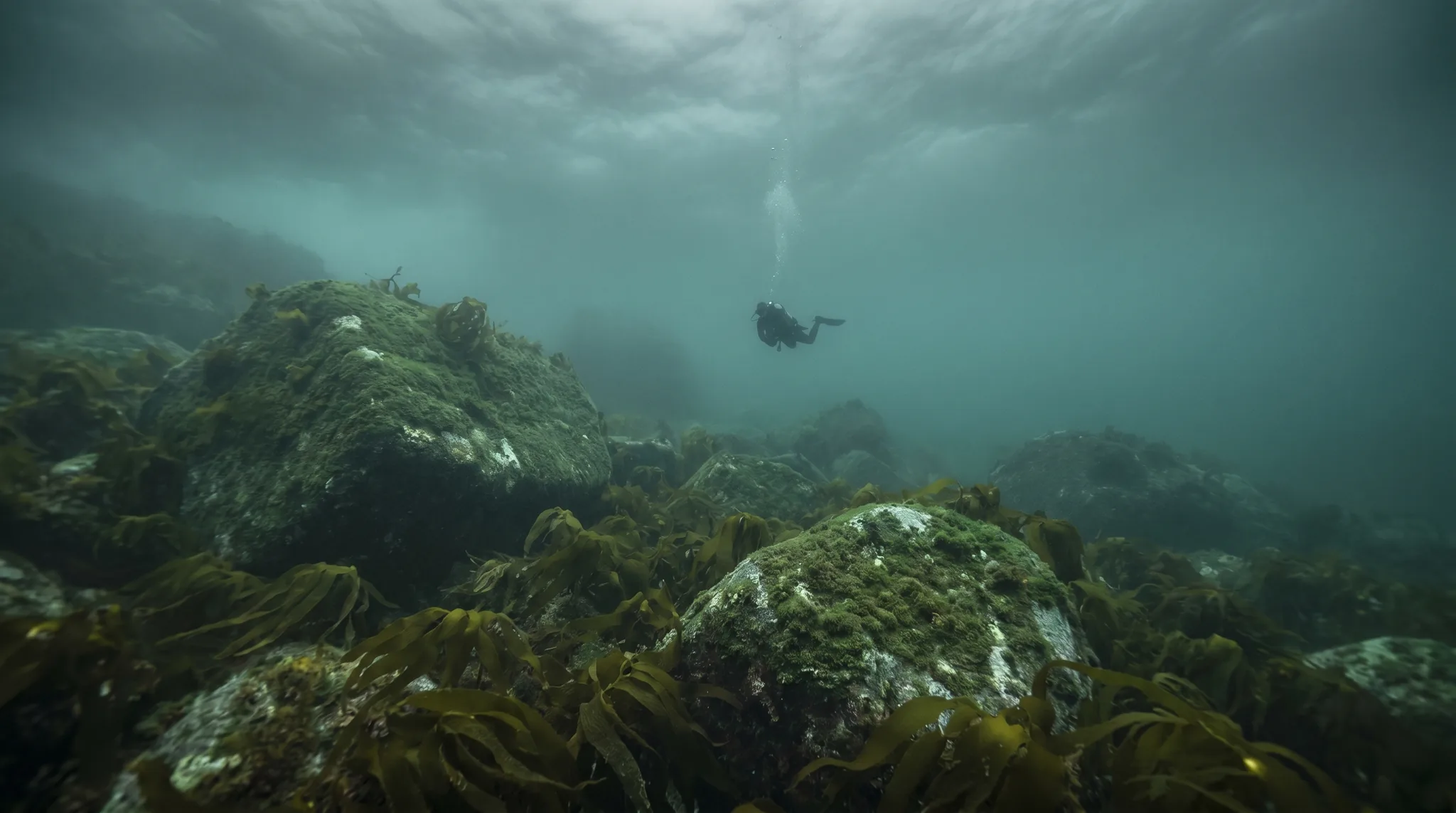
Kreyser Island offers a cold-water reef dive in the Nakhodka Area, suitable for intermediate divers. The site features depths ranging from 20 to 35 metres with visibility typically between 5 and 10 metres. Due to variable currents and water temperatures fluctuating between 1 and 11 degrees Celsius, a drysuit with thermal underlayers is essential. Access is by boat only, and divers must monitor air consumption closely to manage decompression requirements. Strong currents and heavy boat traffic are common hazards in the vicinity. Infrastructure is limited in this part of the Russian Far East, so confirm boat support and logistics locally before planning your dive.
42.72977, 133.23812
With water temperatures as low as 1 degrees Celsius and variable current, plan your dives around slack water and always enter the water in a well-serviced drysuit with appropriate thermal underlayers. Confirm boat availability and any shore support arrangements locally well in advance, as infrastructure in this part of the Russian Far East can be limited.
Access info coming soon
No known hazards
Expected in this region. No sightings logged here yet.
Depth
20-35m
Visibility
5-10m
Skill Level
Intermediate
Entry
Boat
Boat required
Water Temp
1-11°C
The site features depths between 20 and 35 metres.
No, this site is intended for intermediate divers due to the significant depth, variable currents, and cold water conditions.
Access to Kreyser Island is by boat only.
Divers should be aware of strong currents, heavy boat traffic, and the risks associated with deep diving, including nitrogen narcosis and the need for decompression stops.
A well-serviced drysuit with appropriate thermal underlayers is essential due to water temperatures ranging from 1 to 11 degrees Celsius.
Diving at Kreyser Island in Vrangel’ requires the following certifications: Open Water. Always dive within your training limits.
Visibility at Kreyser Island in Vrangel’ typically ranges from 5 metres to 10 metres. Conditions vary with weather, tides, and seasons.