Enteroctopus dofleini
Spot the world's largest octopus in British Columbia and the Pacific Coast US. Best sightings run Nov, Mar in cold water from 4-13°C.
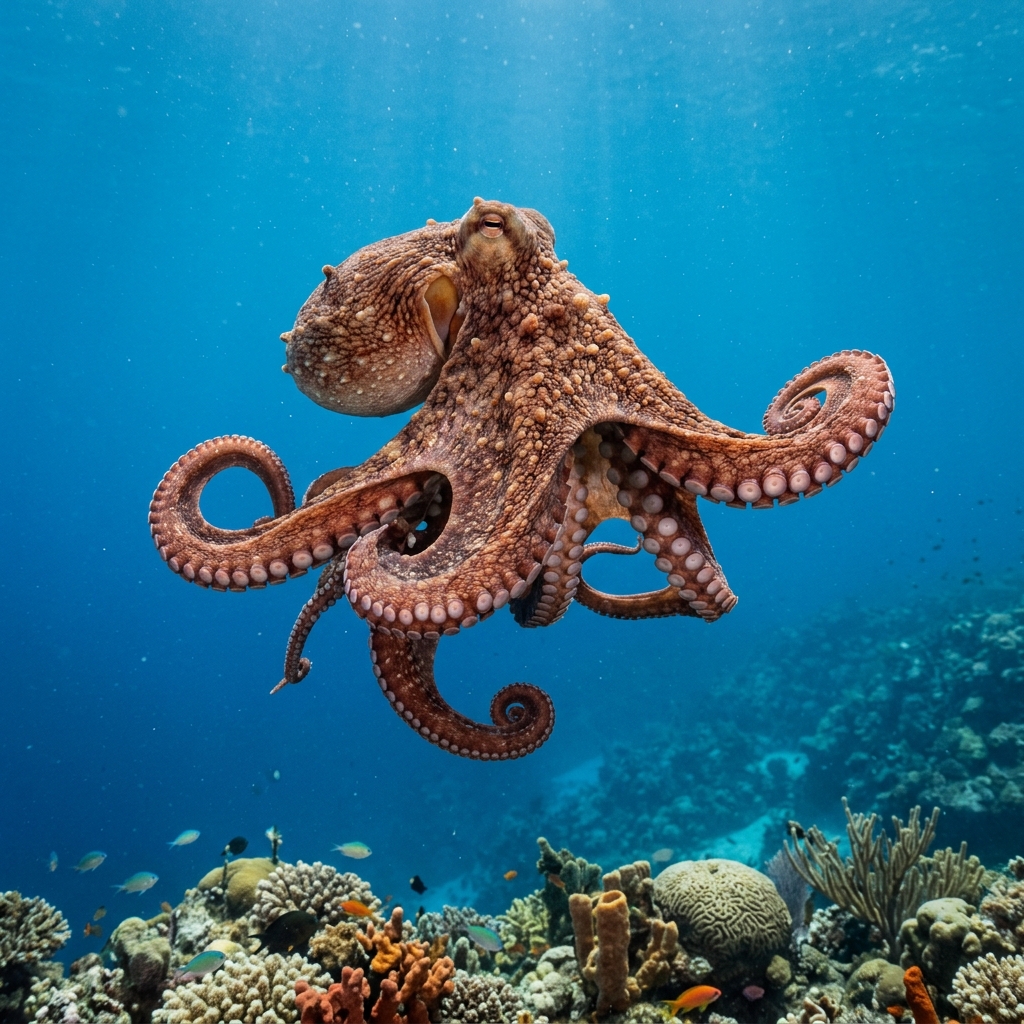
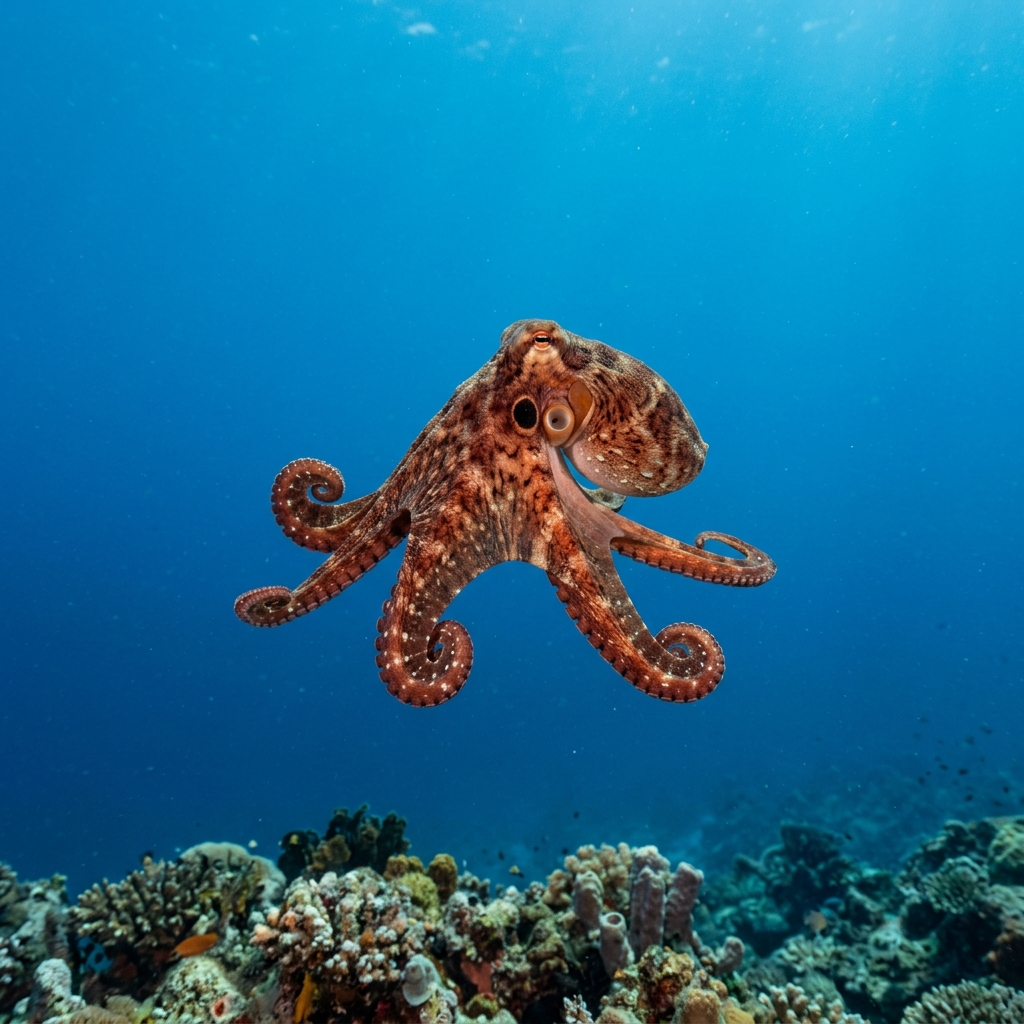
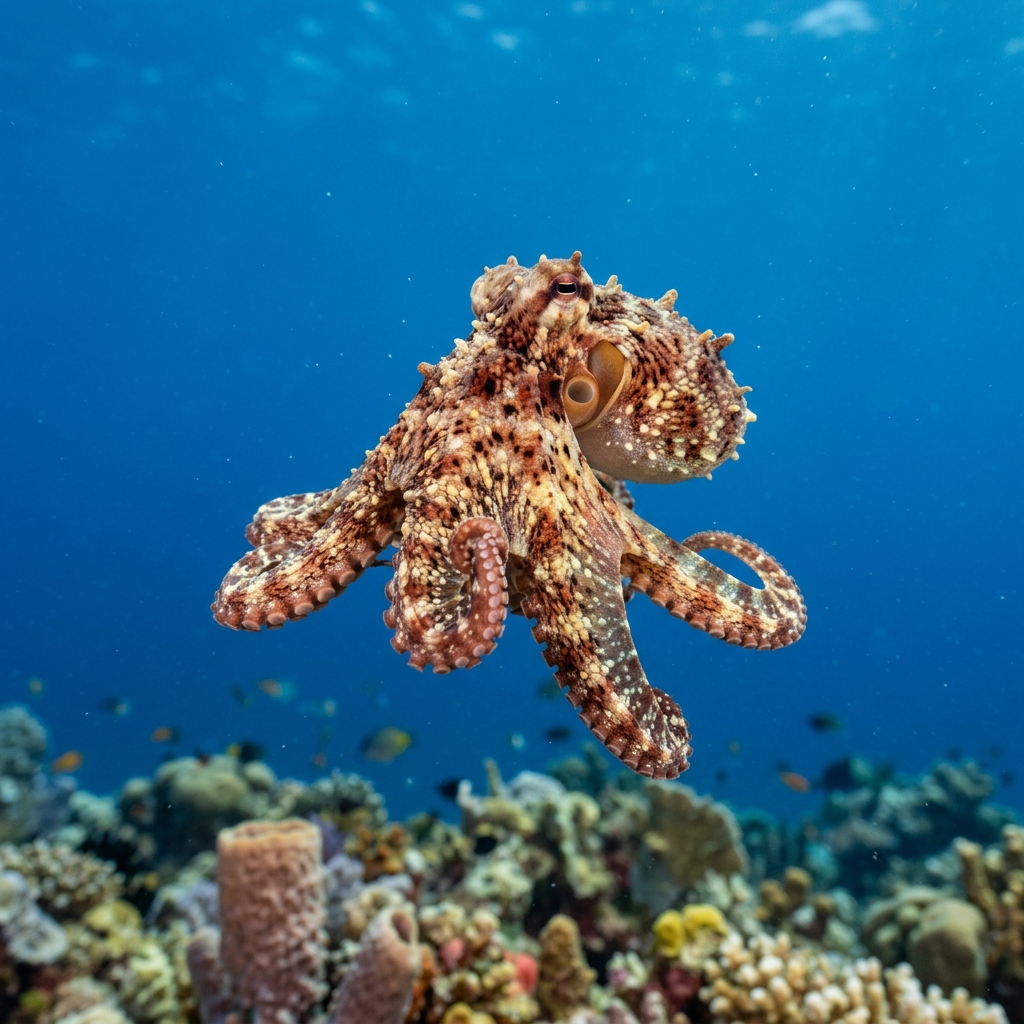
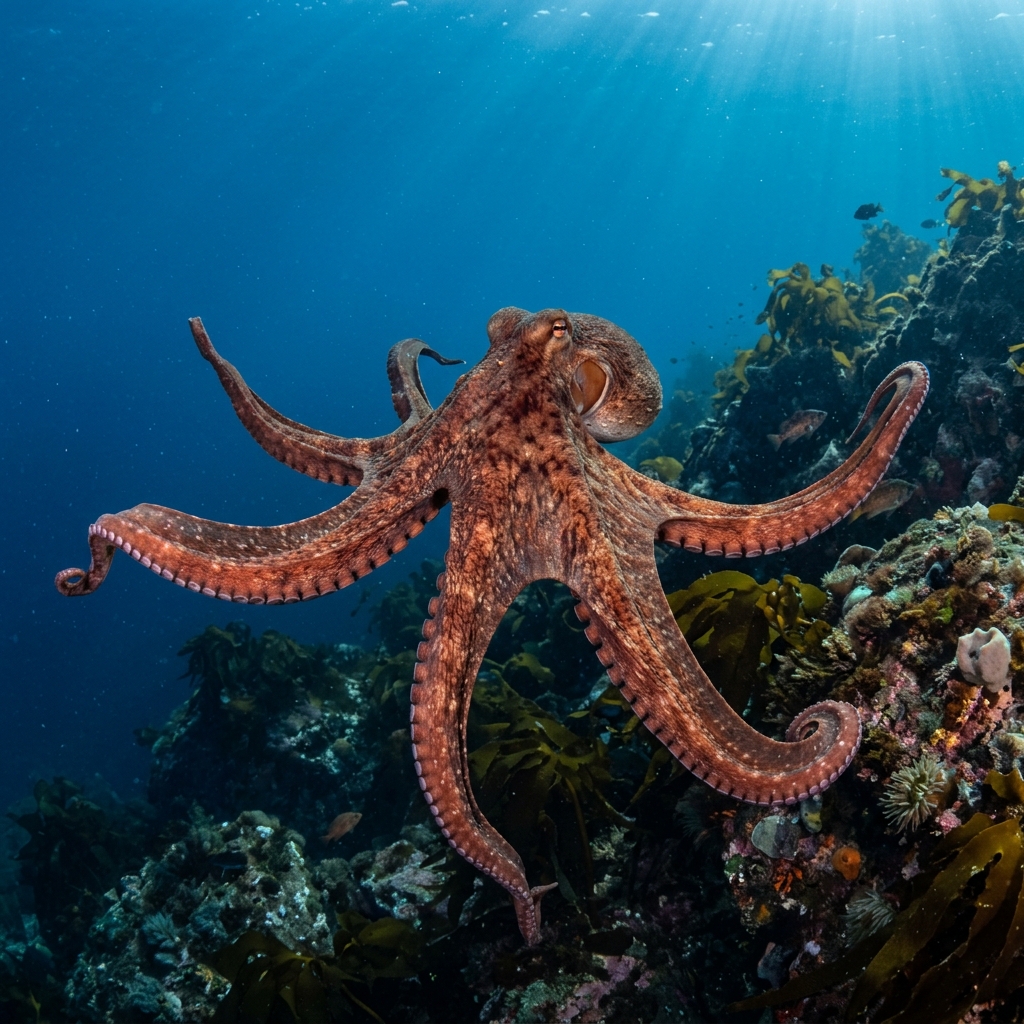
Size alone is the giveaway: arm spans regularly exceed two metres, making this the largest octopus in the world by a wide margin. Colouration is typically reddish-brown to brick-red, but it shifts rapidly through greys, whites, and oranges as the animal adjusts to its surroundings. Look for distinctively wrinkled, textured skin and the two large white-rimmed eyes set high on a bulbous mantle. The sheer bulk of the mantle and the thickness of the arms distinguish it from every other octopus in its cold-water range.
Most encounters happen when a diver spots the animal tucked into a rocky den, often surrounded by a telltale pile of discarded crab shells outside the entrance. If you hover quietly and avoid sudden movements, curiosity can outweigh caution and the octopus may extend an arm or edge forward for a closer look. Dawn and dusk are the best times to catch one actively moving across the seafloor in search of prey rather than sheltering in place.
A female lays up to 100,000 eggs in a single clutch and then guards them without feeding for the entire six-to-seven-month incubation period, dying shortly after the eggs hatch. It is one of the most dramatic examples of terminal parental investment in the animal kingdom.
In the Northern Hemisphere, sightings concentrate from November through March, aligning with the species' preference for cold water between roughly 4 and 13°C.
The vast majority of sightings come from the British Columbia coast and the Pacific Coast of the United States, with Alaska adding a solid number of sites further north. Russia's Far East also sits within its range, and a handful of sites in Japan's Sea of Japan round out the logged locations. If you want the best odds, British Columbia and the Pacific Northwest of the US are where divers encounter it most reliably.
Mapping where Giant Pacific Octopus is logged…
The top spots are along the British Columbia coast in Canada and the Pacific Coast of the United States, including sites in Alaska. Russia's Far East and several sites in Japan's Sea of Japan also fall within its range. British Columbia and the Pacific Northwest offer the greatest concentration of logged dive sites.
Diver sightings in the Northern Hemisphere peak between November and March. This lines up with the species' cold-water preference; it thrives at temperatures between about 4 and 13°C, which characterises these coastal sites through the winter months.
Arm spans commonly reach two metres or more, and large individuals can weigh over 15 kg. It is the largest octopus species in the world. Underwater, the bulk of the mantle and the thickness of the arms make size the single most reliable field identification clue.
Size is the key: no other octopus in its cold Pacific range comes close in bulk. Look for a reddish-brown body with deeply wrinkled, bumpy skin, thick arms with large suckers, and prominent eyes set on a rounded mantle. If it fits easily under a rock ledge and the water is above 15°C, it is likely something else.
They are not considered dangerous to divers. The species is generally shy and will retreat into a den if approached too quickly. Moving slowly and avoiding sudden gestures gives you the best chance of a calm, prolonged observation rather than a rapid ink-and-retreat exit.
The species typically lives three to five years, which is short given its size. Females spend the final months of their lives brooding a single clutch of eggs, guarding them continuously without eating until the eggs hatch, after which the female dies.
Site and sighting data is aggregated from diver logs, iNaturalist and GBIF. For taxonomy and conservation status:
Brazilian Reef Octopus
1,142 sites