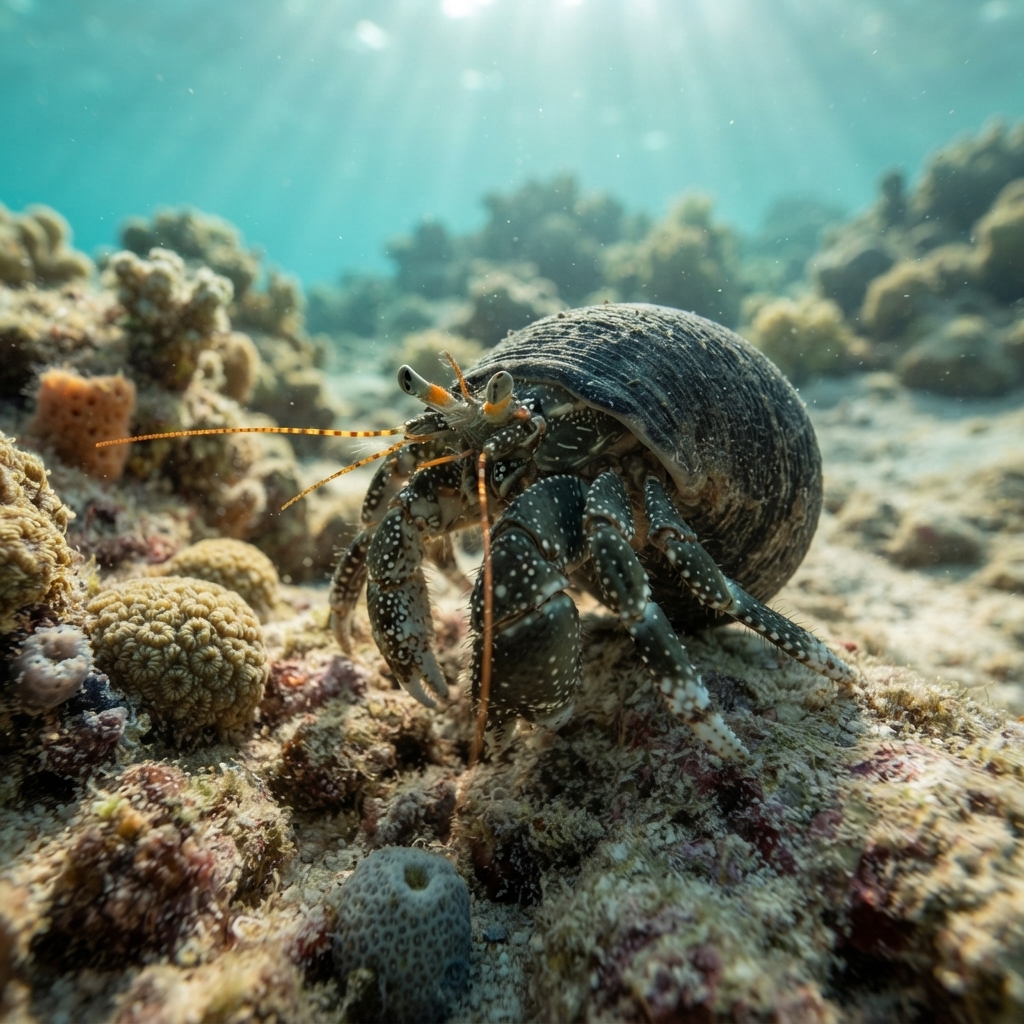
Clibanarius zebra
Striped legs, sharp eyes: zebra hermit crabs turn up rarely on Hawaii's reefs in water around 23-29C, year-round.
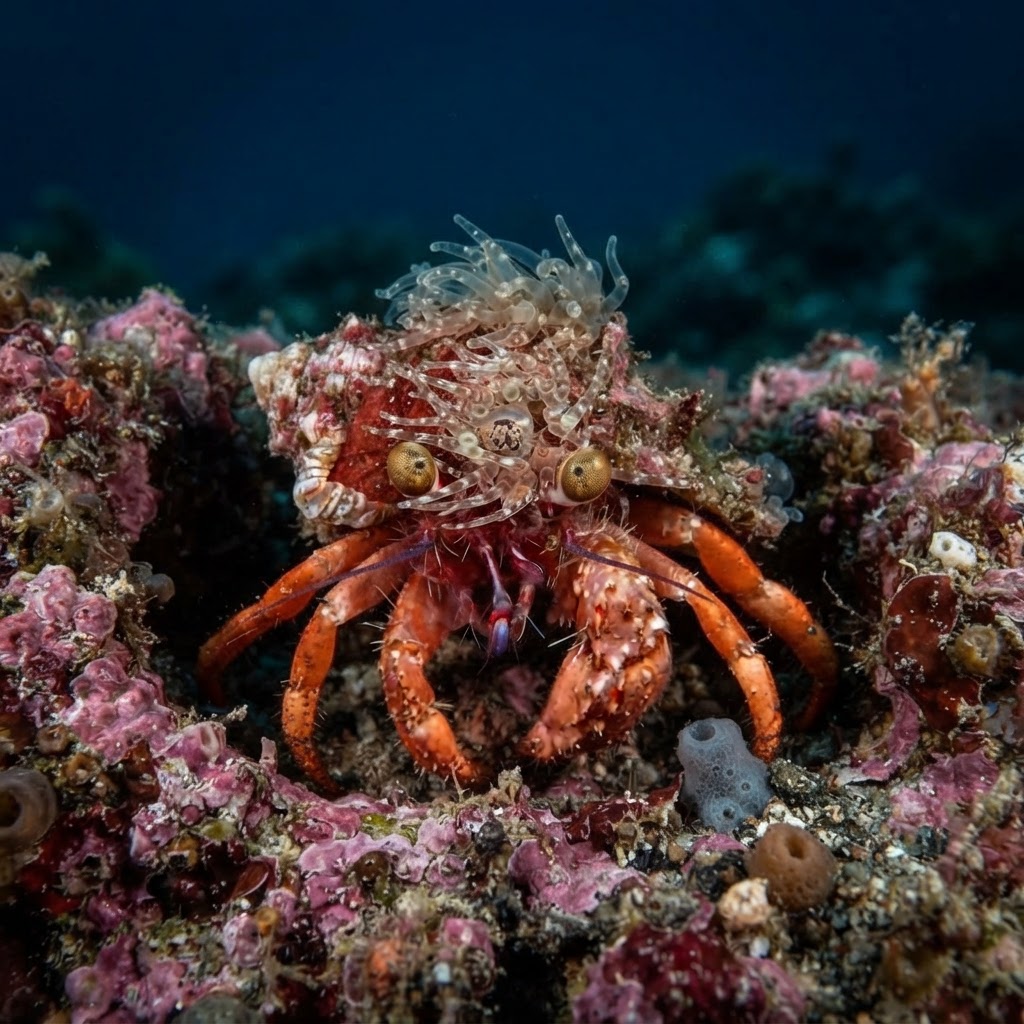
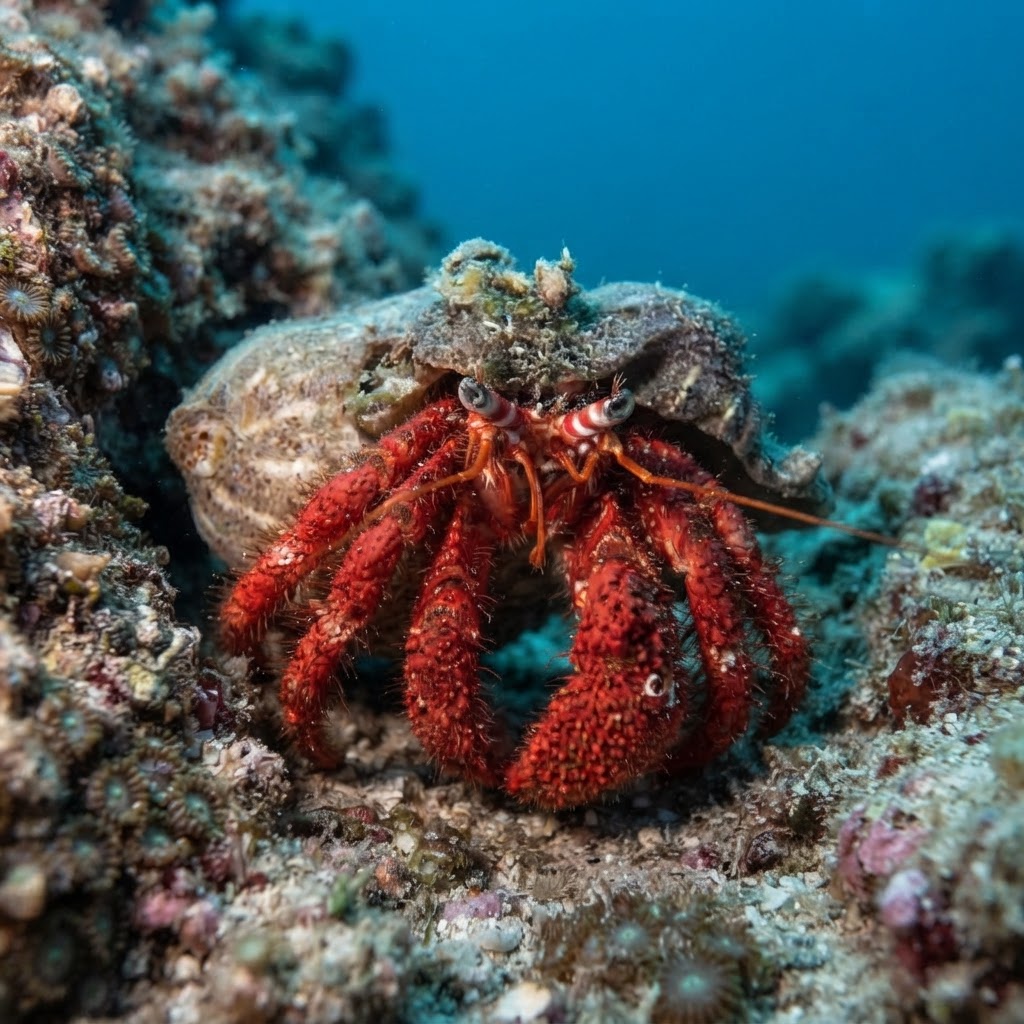
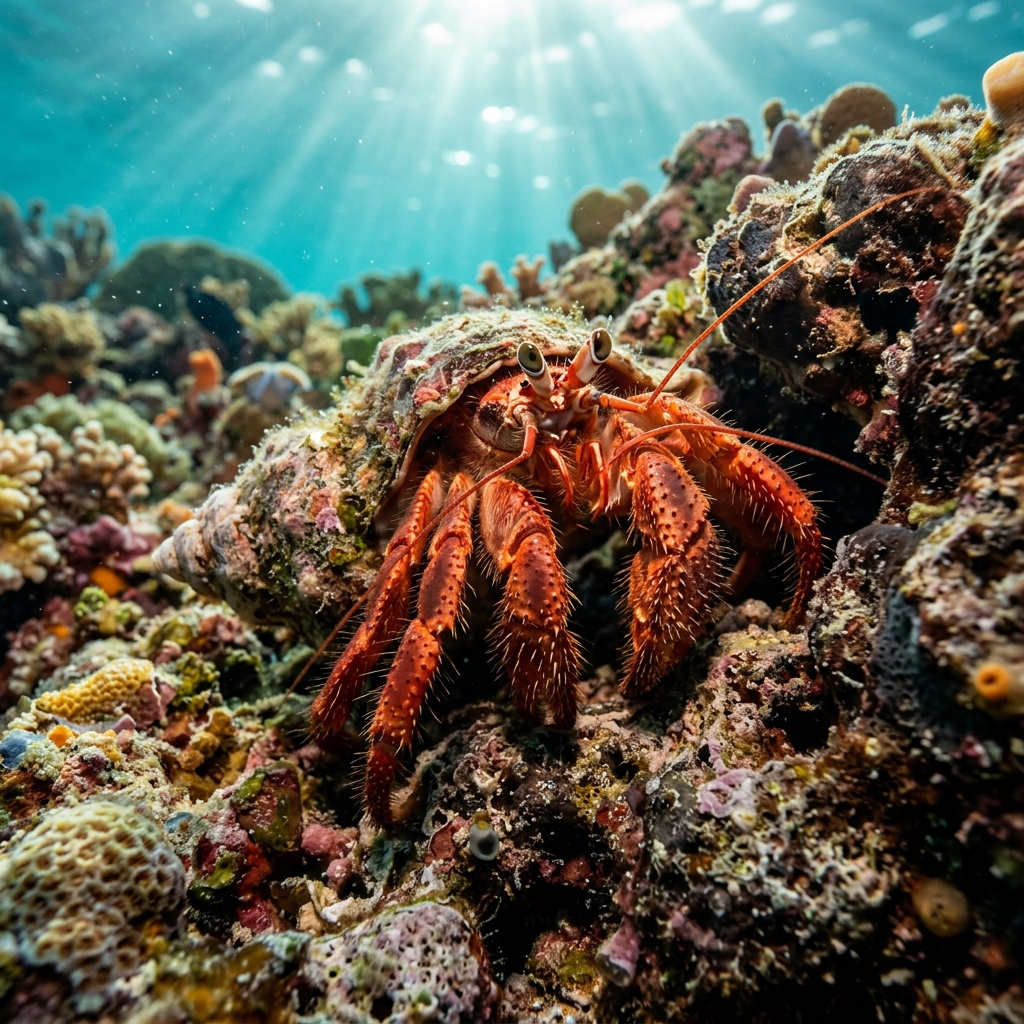
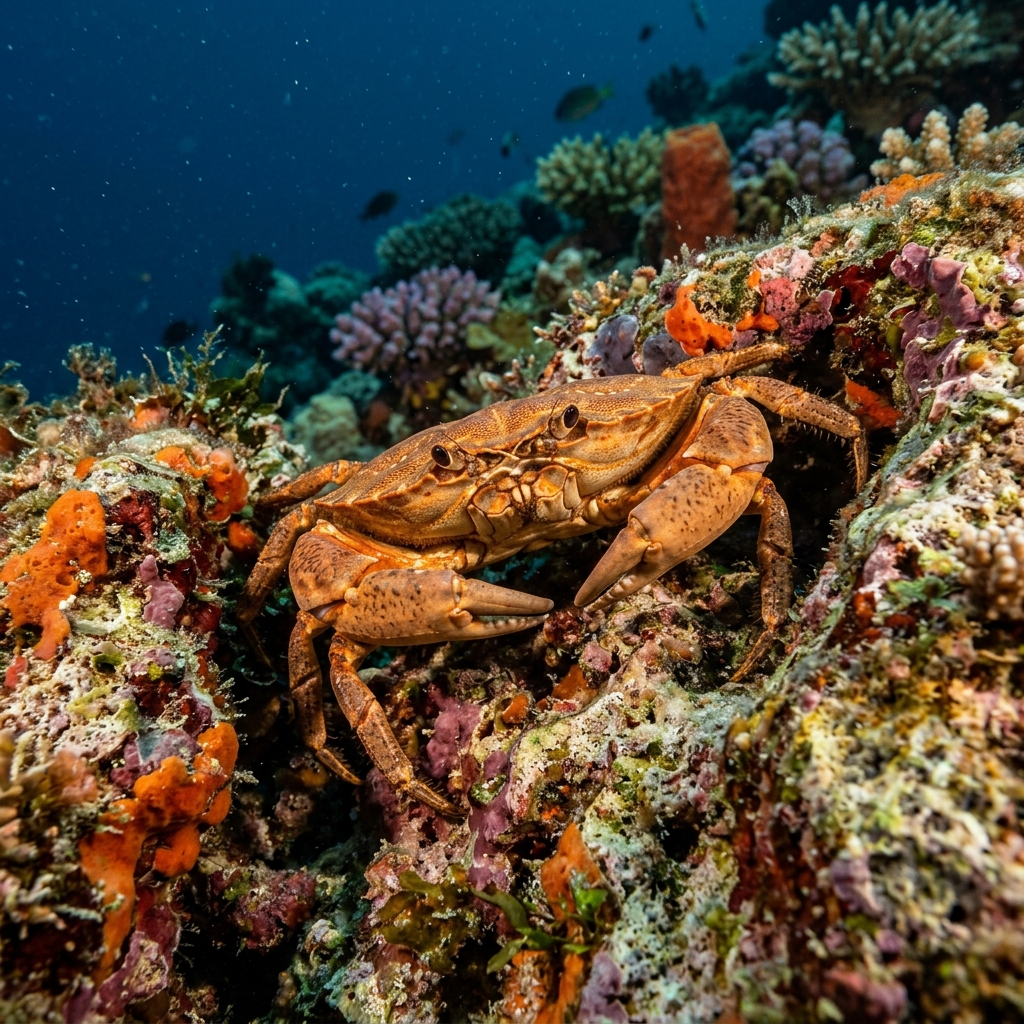
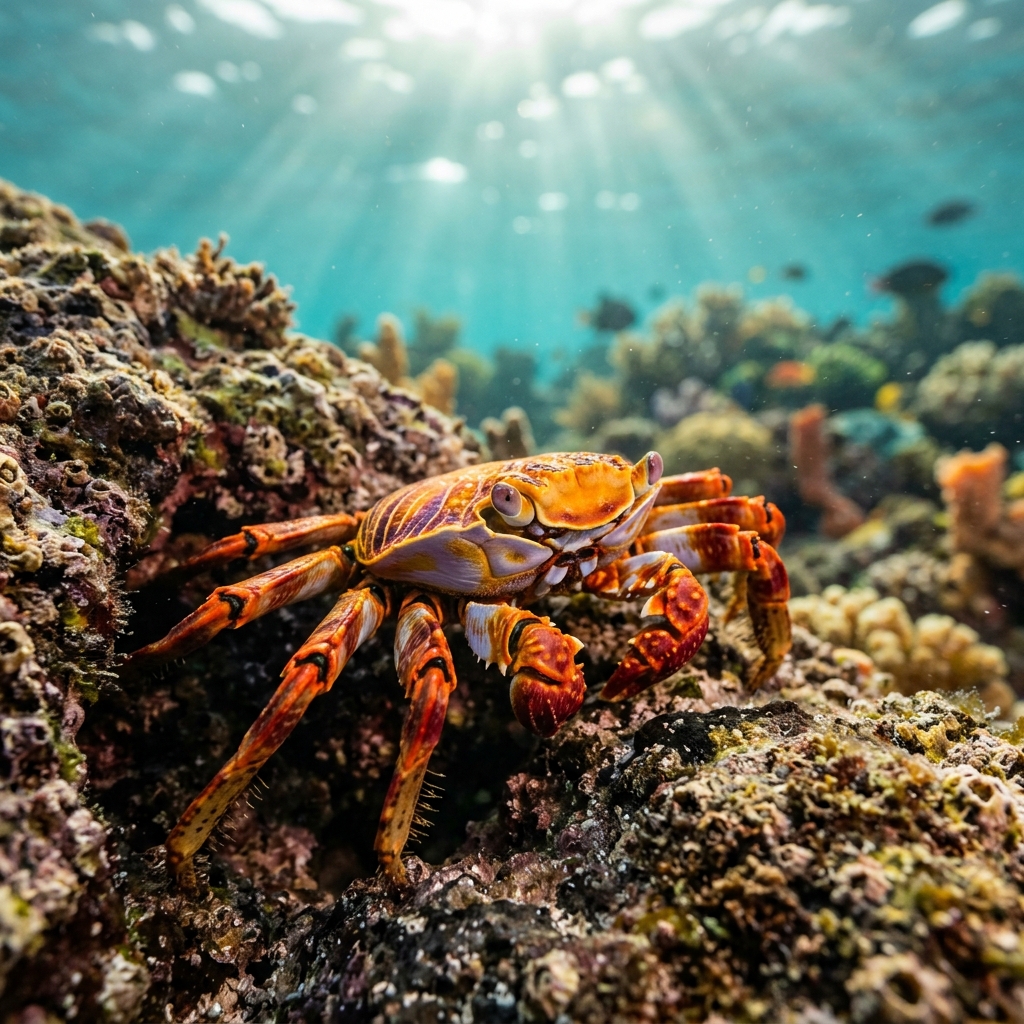
Look for a small hermit crab with legs banded in bold white and reddish-brown stripes, giving it a candy-cane look against the shell it's dragging around. The claws are similarly striped, and the eyestalks are pale with dark tips. It moves in short, jerky steps across rock and rubble rather than swimming, and tucks fully into its shell the instant a light or hand gets close.
Divers mostly find these tucked into rock crevices and rubble patches during the day, moving slowly over algae-covered surfaces while foraging. They're skittish and quick to withdraw into their borrowed shell when a torch beam or hand passes close, so a slow approach and a bit of patience gets the best look.
Like all hermit crabs, it doesn't grow its own shell but recycles an empty snail shell and has to find and move into a bigger one as it grows, sometimes fighting other hermit crabs over a good vacancy.
No clear seasonal pattern shows up in the sightings, and the observed water temperature range of 22.7 to 28.7C covers Hawaii's reefs comfortably all year, so any month is fair game.
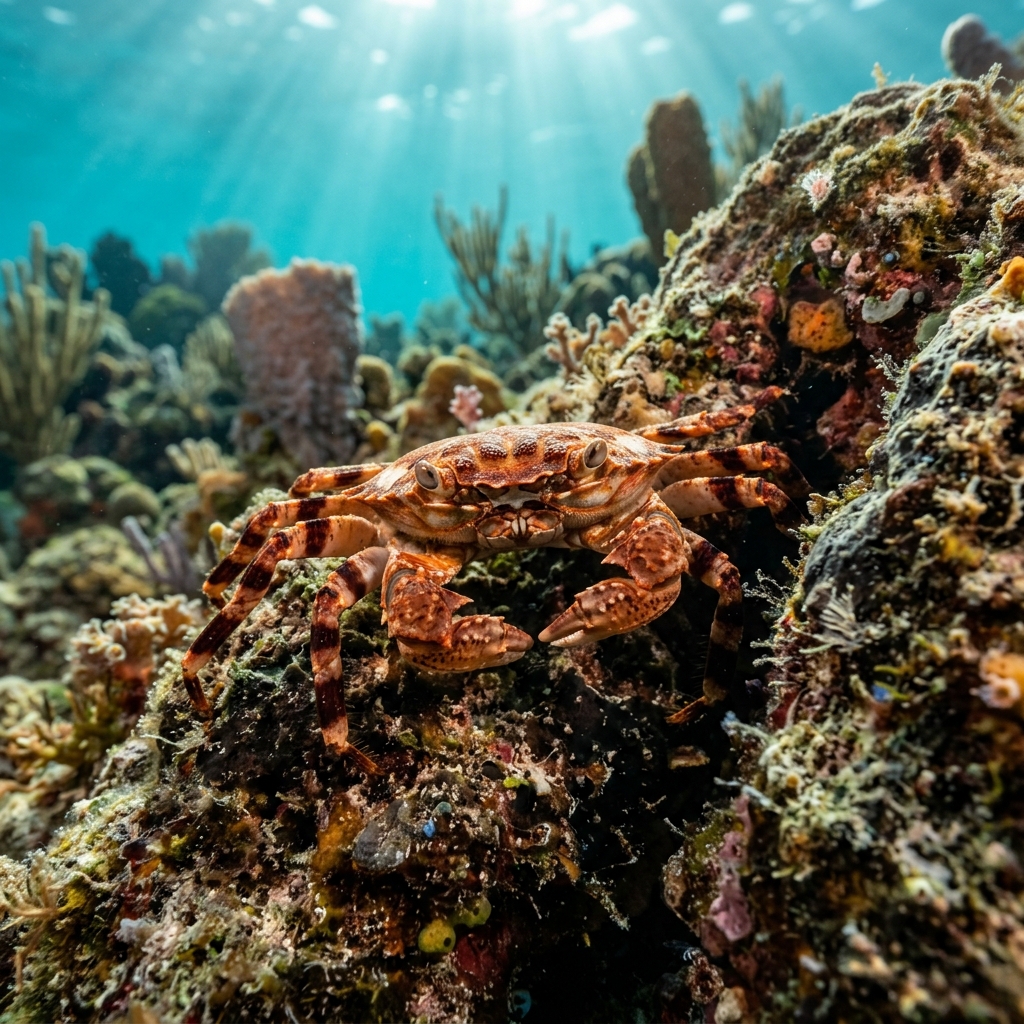
Reef neighbours a diver could mistake it for. Use the identification notes above to tell them apart.
Logged sites for this species sit entirely in Hawaii, United States, making it the only real place in the data to look for one. Within Hawaii it shows up as a rare to uncommon find rather than a guaranteed sighting, so treat it as a bonus spot on a reef dive rather than the main target.
Mapping where Zebra Hermit Crab is logged…
The only confirmed dive sightings are in Hawaii, United States, where it turns up rarely to uncommonly on rocky and rubble-strewn reef sections.
There's no detected season in the sighting data, and the 22.7 to 28.7C temperature range holds year-round in Hawaii, so it can be spotted in any month.
Check the legs and claws for bold white and reddish-brown stripes, a small body size, and a scavenged snail shell it retreats into when disturbed. It moves with slow, jerky steps rather than swimming.
No, they pose no threat to divers and simply withdraw into their shell if approached.
It never grows its own shell, instead recycling an empty snail shell and trading up for a roomier one as its body grows, sometimes competing with other hermit crabs for the best fit.
Site and sighting data is aggregated from diver logs, iNaturalist and GBIF. For taxonomy and conservation status:
European Green Crab
2,469 sites