Dardanus pedunculatus
Look for tiny anemones riding a hermit crab's shell in Visayas, Luzon and Bali reefs, mostly at night, year-round in warm water.
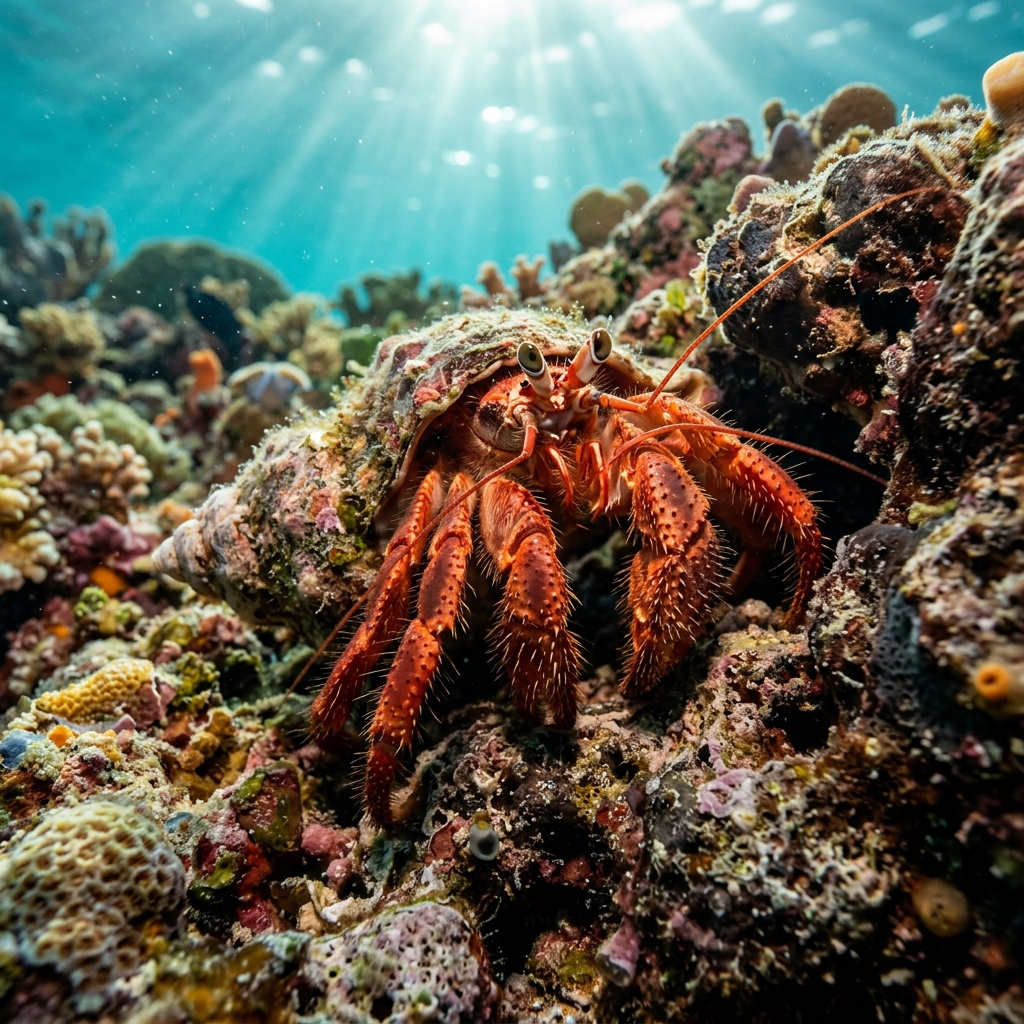
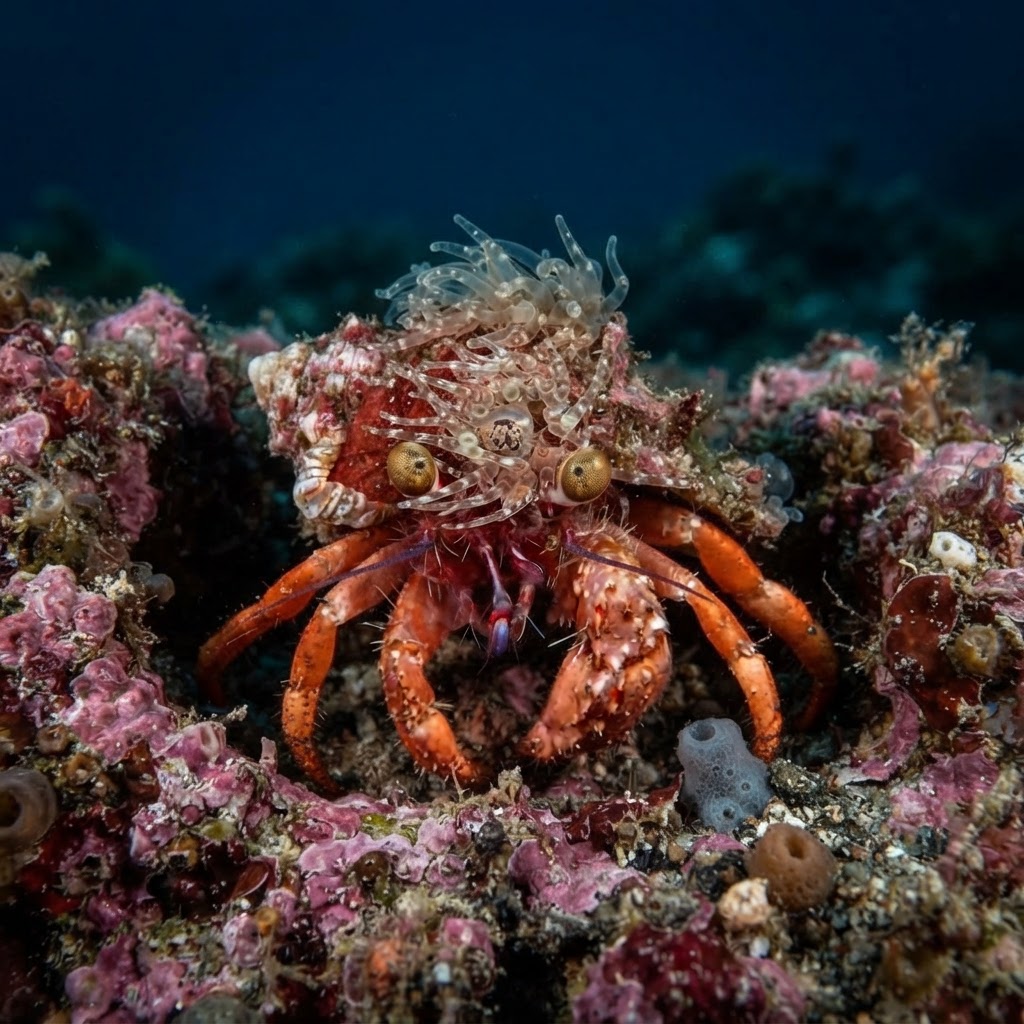
A small, mottled brown-and-white hermit crab whose most obvious feature isn't the crab at all but the handful of small anemones stuck onto its borrowed shell. Look for reddish-striped legs and eyestalks with fine banding, and antennae that flick constantly as it forages. The stinging anemones ride passively on top, giving the whole animal a shaggy, textured silhouette rather than a smooth shell outline.
Usually found shuffling over sand, rubble or coral debris on night dives, using its antennae to probe for scraps of dead animal matter to scavenge. It reacts to a torch beam by retreating deeper into its shell rather than fleeing, so a steady light and a bit of patience usually gets a good look. Divers most often spot it at muck-diving and rubble-patch sites rather than on open hard coral.
It deliberately transplants small anemones from old shells onto new ones whenever it upgrades its home, keeping a personal squad of stinging bodyguards that deters octopuses and other predators.
No clear seasonal pattern shows up in the data, and given its comfort range of roughly 22 to 30 C it's a year-round find on tropical and warm-temperate reefs rather than a seasonal target.
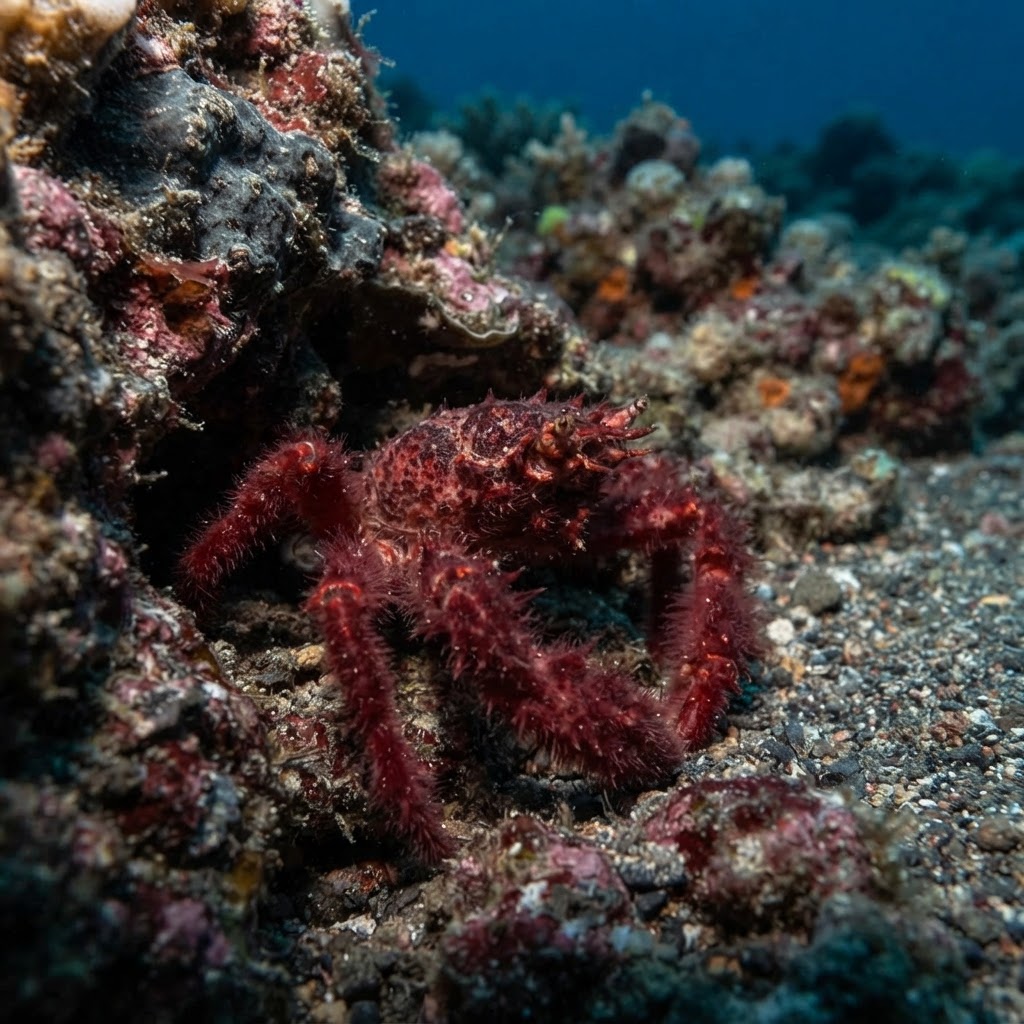
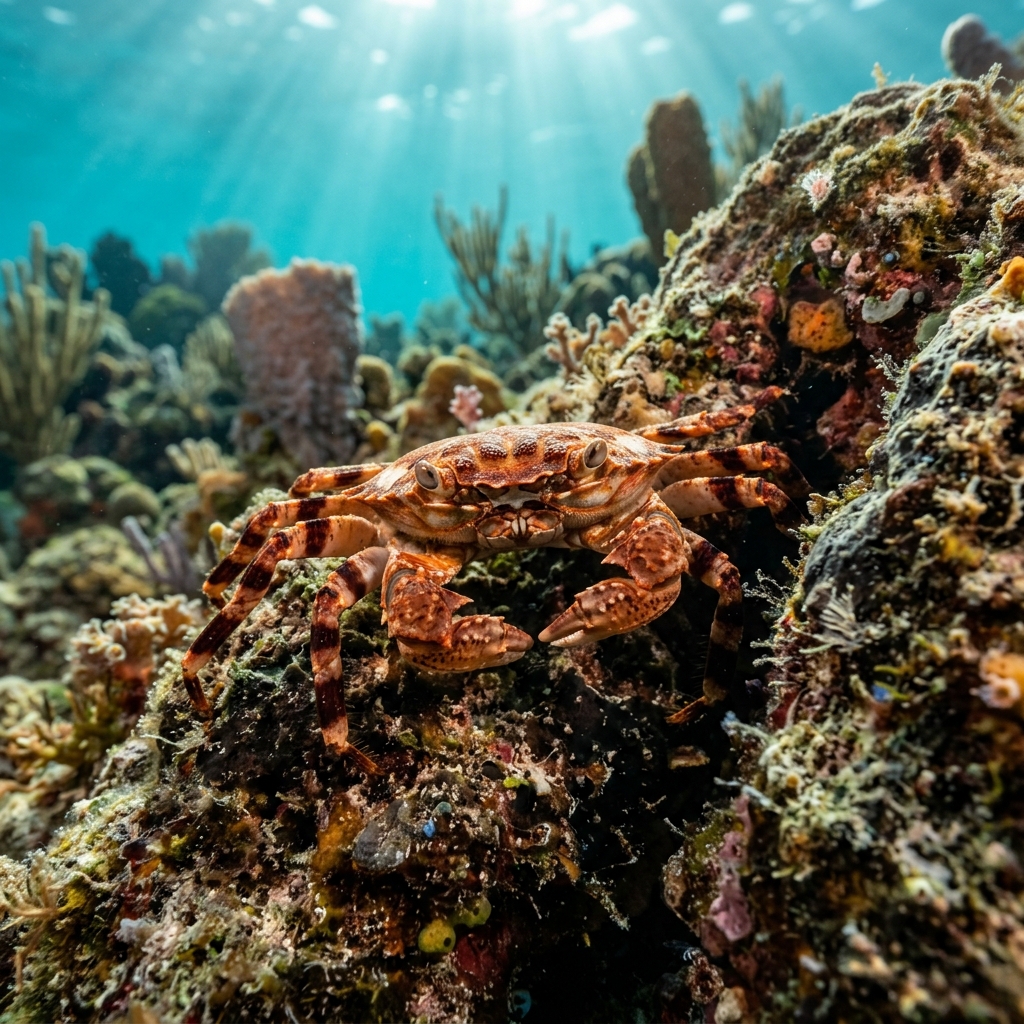
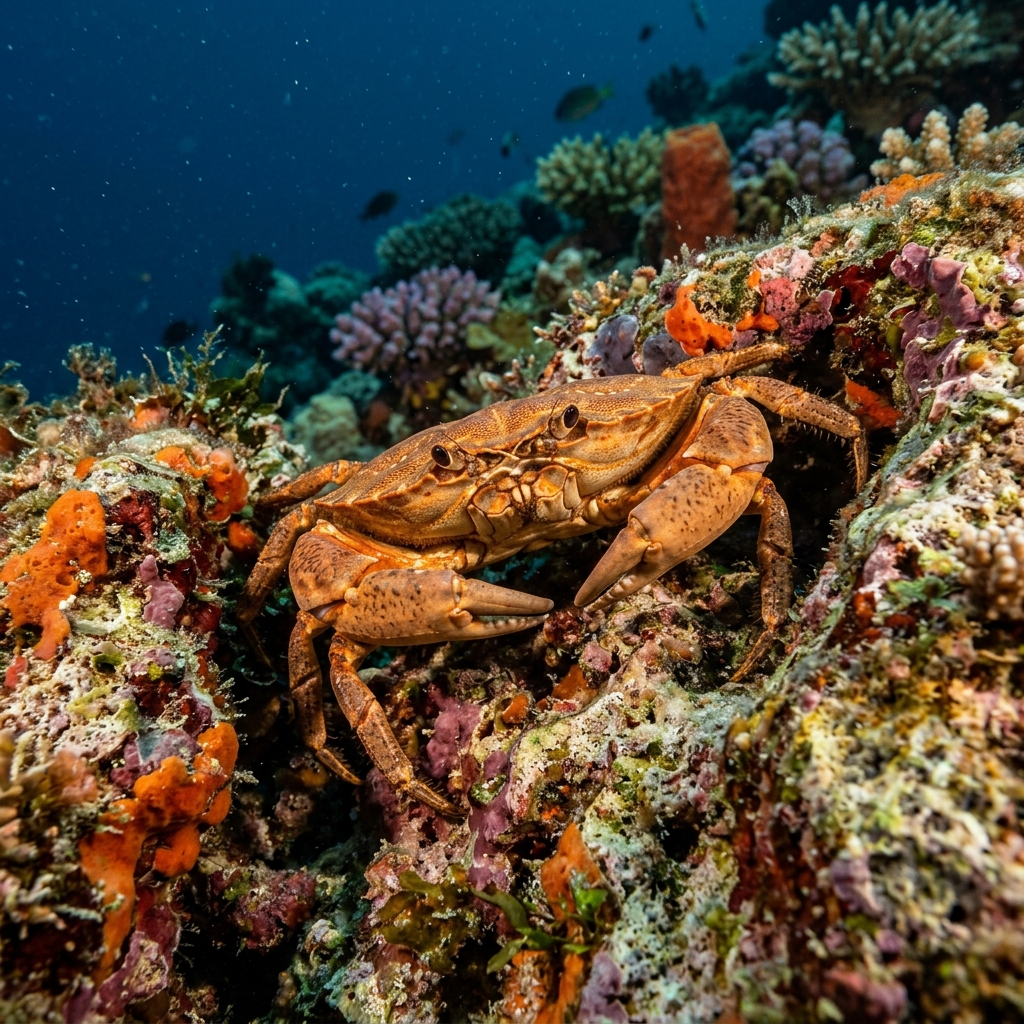
Reef neighbours a diver could mistake it for. Use the identification notes above to tell them apart.
Most reliably logged across the Philippines, especially Visayas and Luzon, where muck and rubble sites turn it up regularly. Indonesia is the next strongest region, with Bali and Sulawesi both producing steady sightings, and it also turns up in Australia (New South Wales), Malaysia (Sabah), Taiwan (Longdong) and Hong Kong (Sai Kung).
Mapping where Anemone Hermit Crab is logged…
It's most commonly logged in the Philippines, particularly Visayas and Luzon, with strong secondary populations in Bali and Sulawesi, Indonesia. Smaller but reliable sightings also come from Sabah in Malaysia, Longdong in Taiwan, and Sai Kung in Hong Kong.
There's no strong seasonal pattern in the sighting data, and it tolerates a wide warm-water range, so it's considered a year-round find rather than a seasonal one.
Check for a hermit crab with small anemones stuck directly onto its shell, giving it a shaggy, textured look. Its legs and eyestalks show fine reddish banding, and it forages slowly over sand or rubble, especially at night.
It actively peels small anemones off its old shell and replants them onto a new one whenever it moves house, keeping the same stinging bodyguards for life rather than picking up new ones each time.
No, it poses no danger to divers. It's a small, slow-moving scavenger that retreats into its shell when disturbed rather than defending itself against anything larger than a predator its own size.
Site and sighting data is aggregated from diver logs, iNaturalist and GBIF. For taxonomy and conservation status:
European Green Crab
2,469 sites