Dardanus calidus
Uncommon but findable across Catalonia and the French Riviera, this red-and-blue hermit crab hides in borrowed shells on Mediterranean reefs.
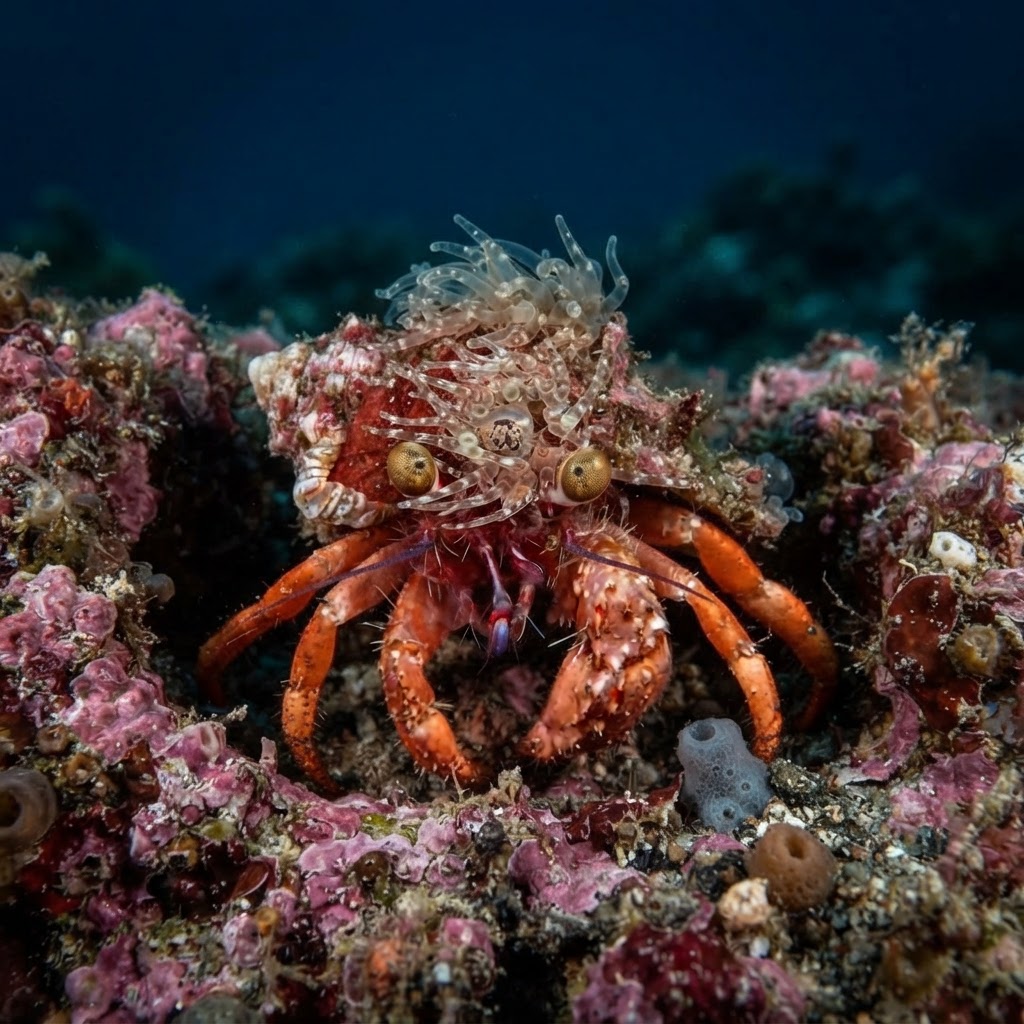
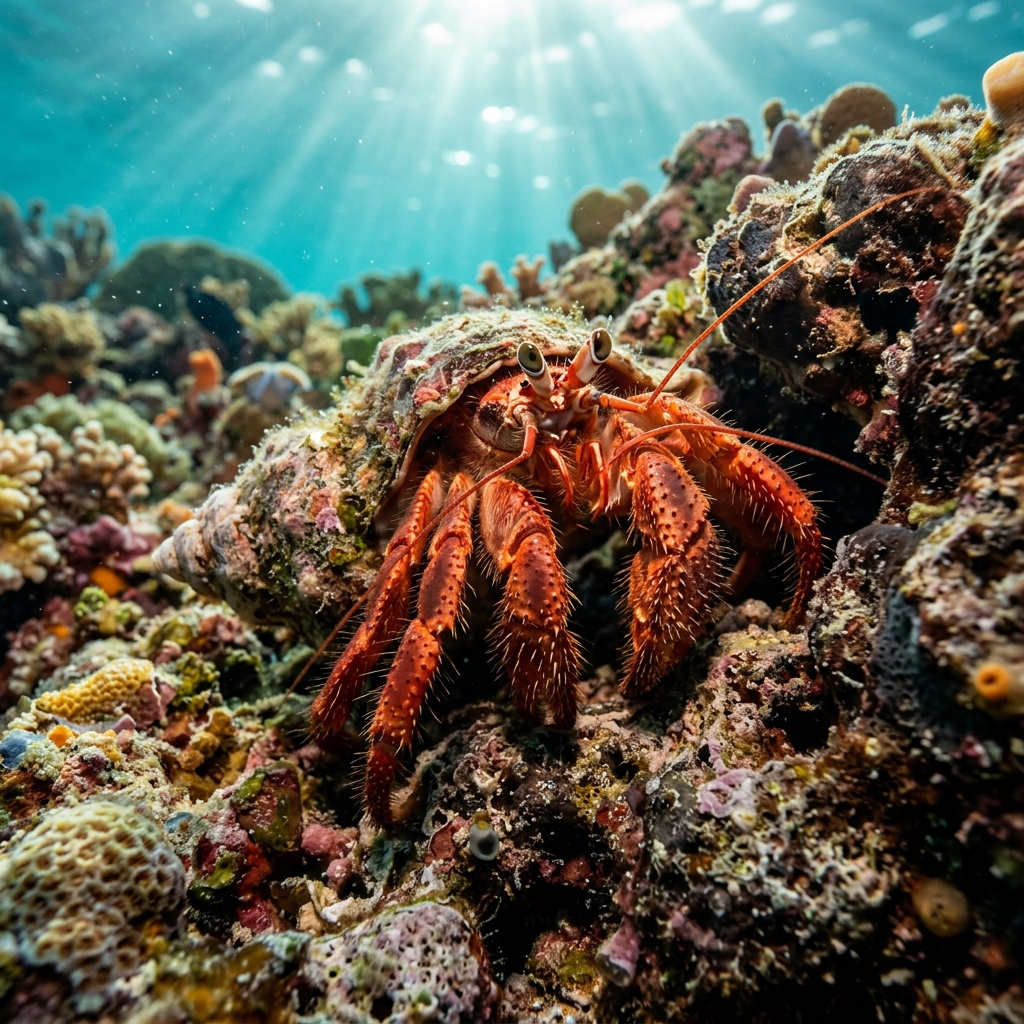
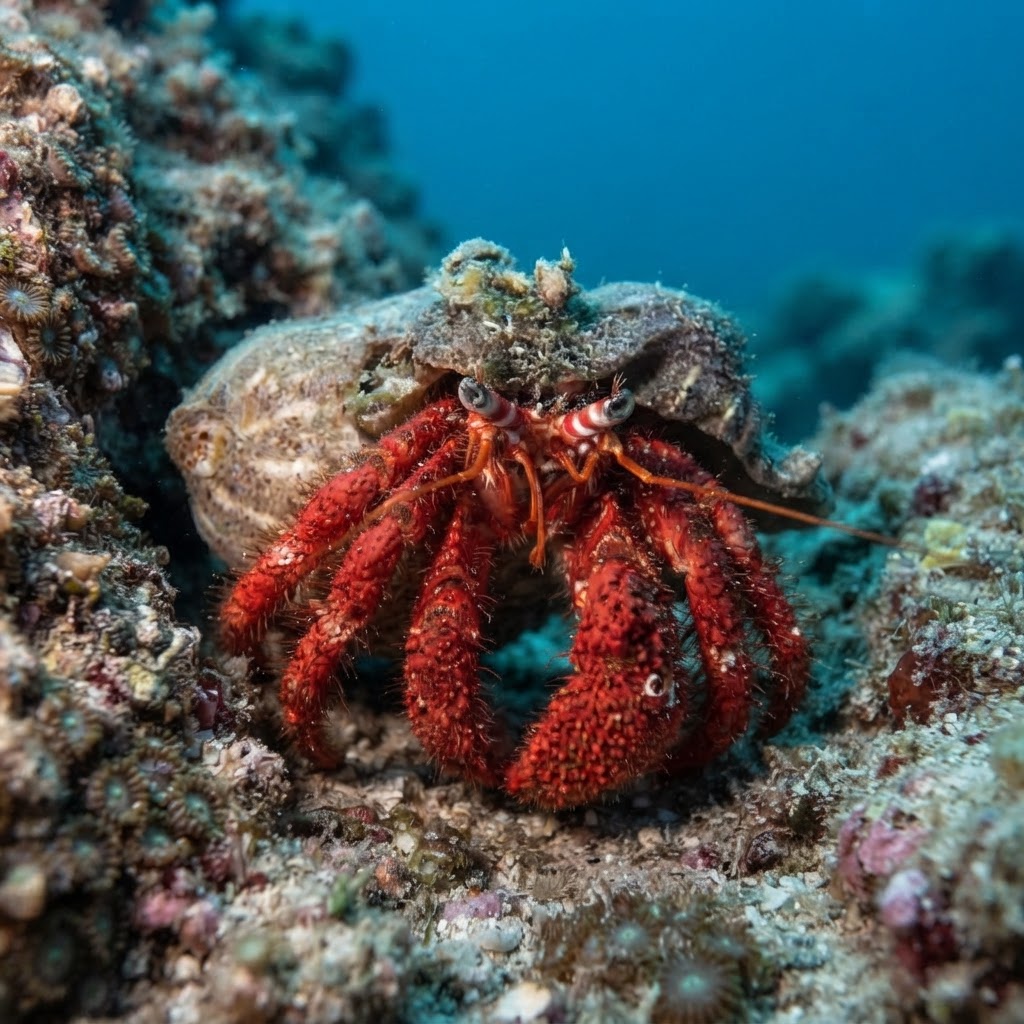
Look for a chunky hermit crab dragging a spiral shell, with reddish-brown legs covered in fine hairs and bright blue tips on the claws and walking legs. The eyestalks are pale blue and the large left claw is noticeably bigger than the right, used to block the shell opening when threatened. Body colour under the shell is hidden, so the leg pattern and that blue trim are the giveaway underwater.
Divers usually find it tucked into rocky crevices or ambling slowly across the seabed by day, often on boulder fields or sandy patches near reef structure rather than in the open. It reacts to a close approach by retreating into its shell and presenting that oversized claw as a shield rather than fleeing, so it tolerates a patient, still diver reasonably well. Night dives can turn up more active individuals foraging in the open.
As it grows it has to keep finding bigger empty shells to move into, and fights over a good vacant shell are a real part of hermit crab life on the reef.
Sightings show no strong seasonal pattern, so it is fair game year-round wherever water sits in its comfortable 15 to 21C range. Cooler months at the shallower end of its 3 to 30m depth range and warmer months a touch deeper both produce sightings.
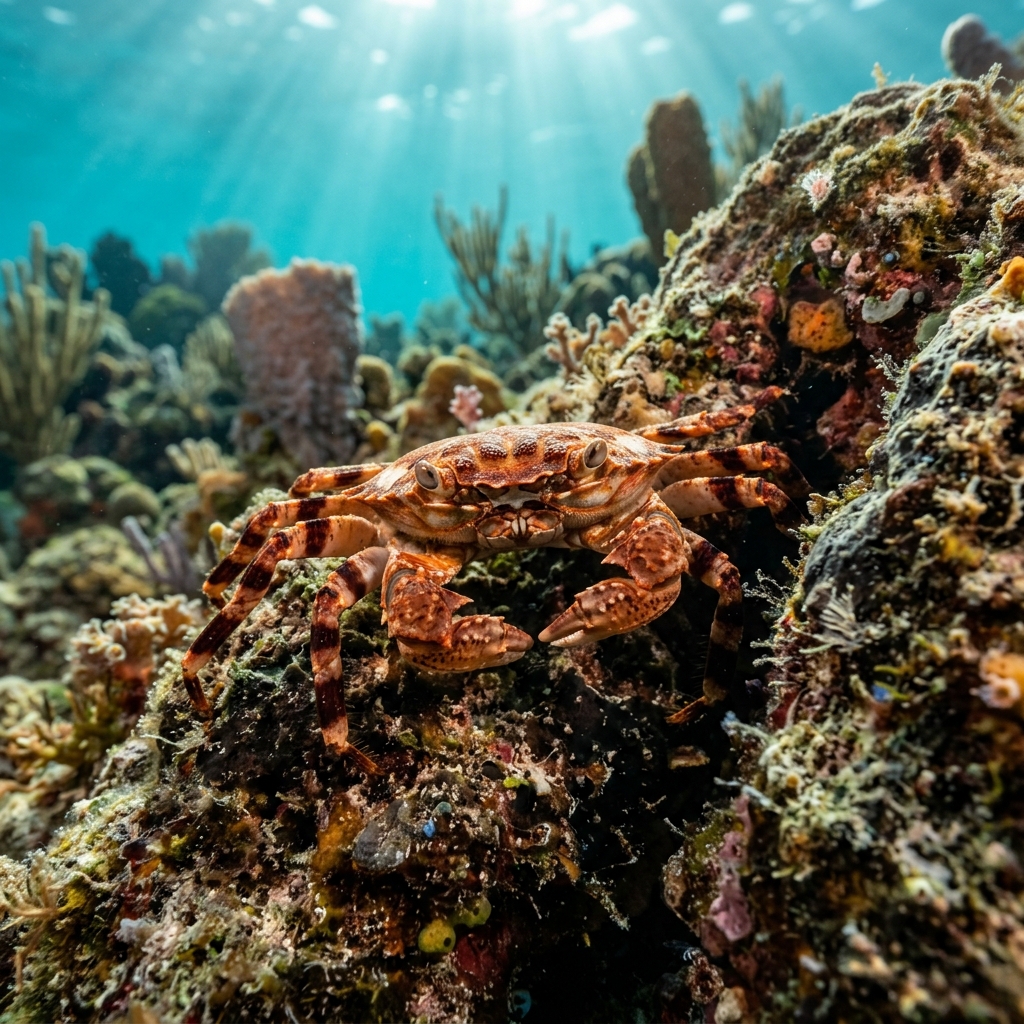
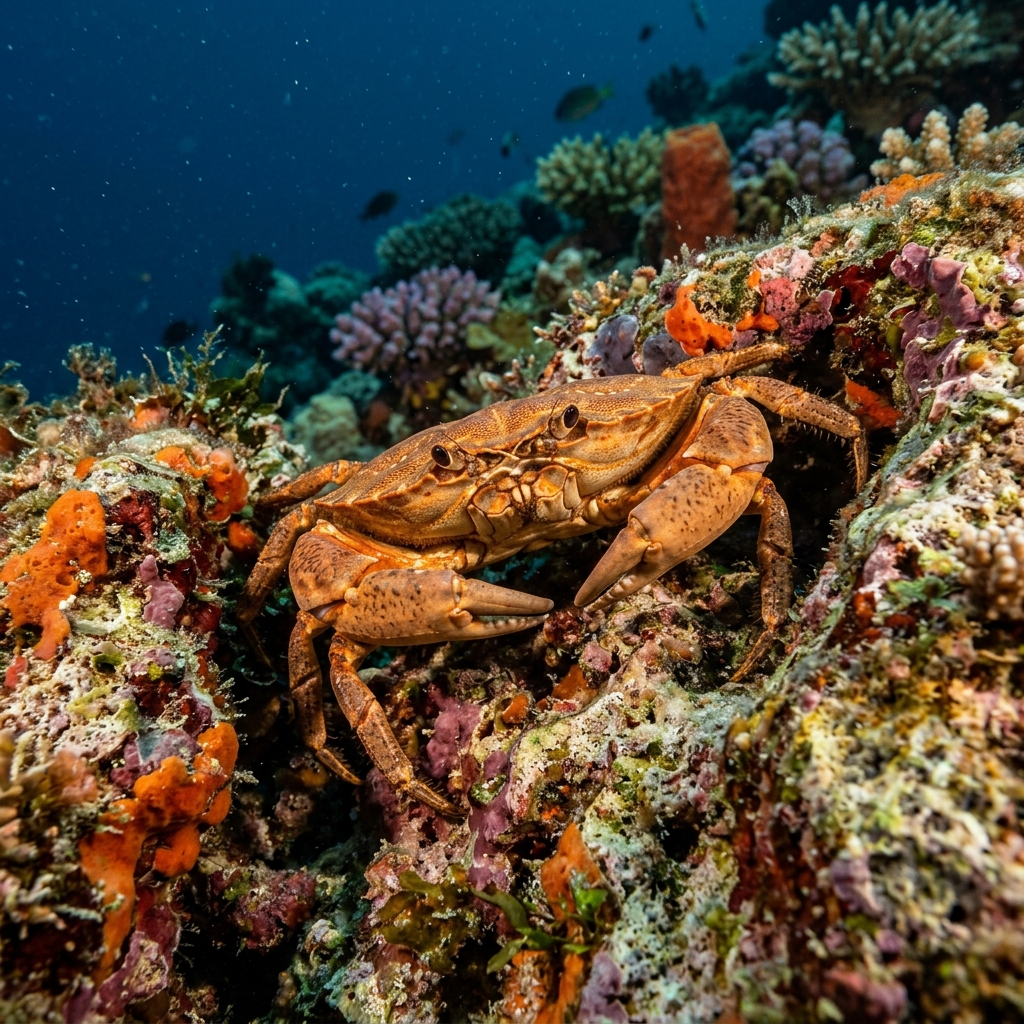
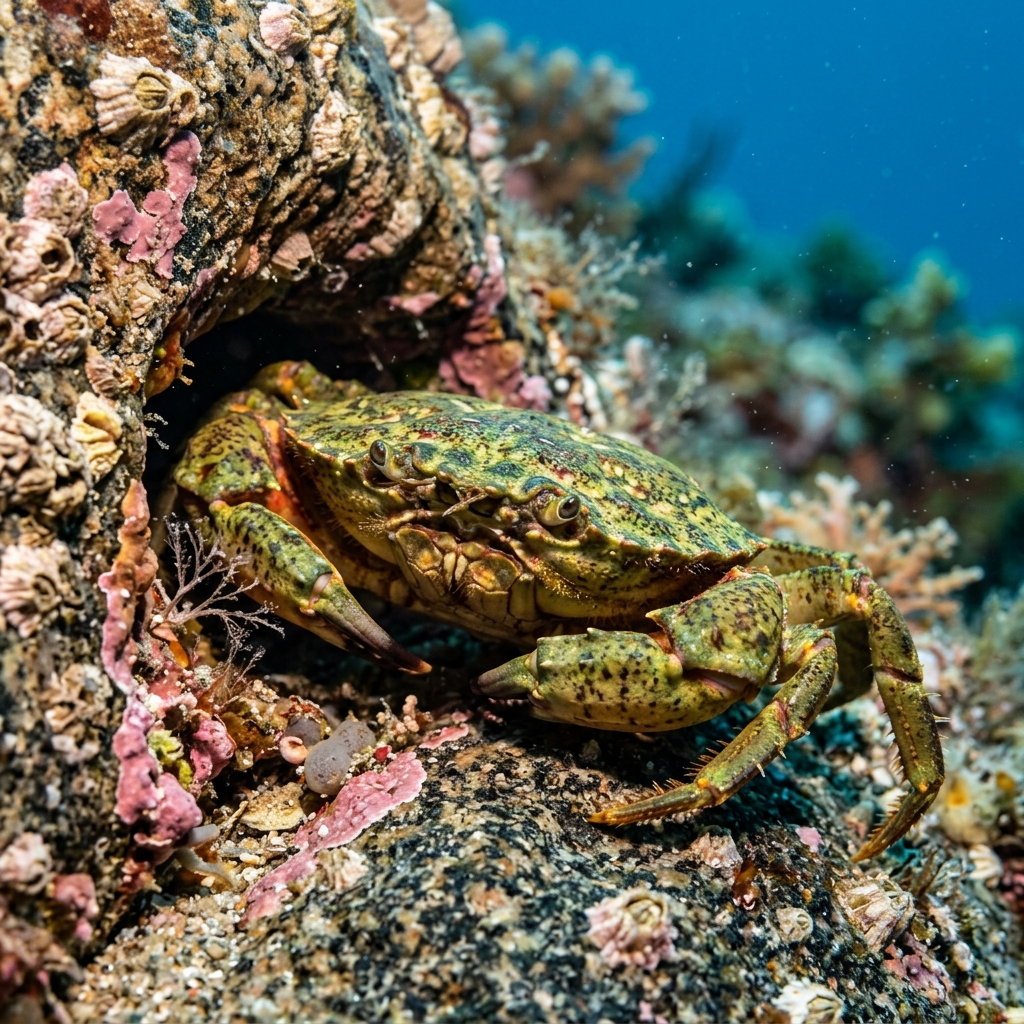
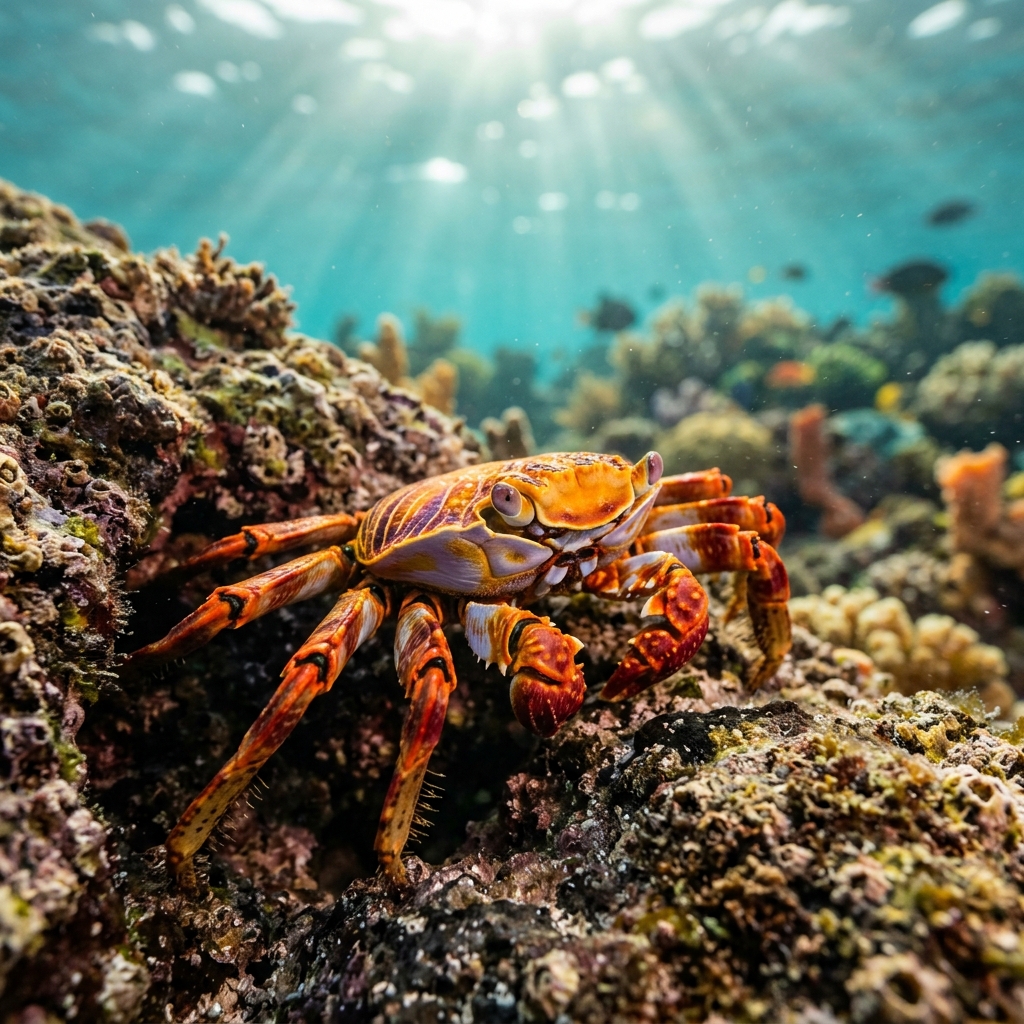
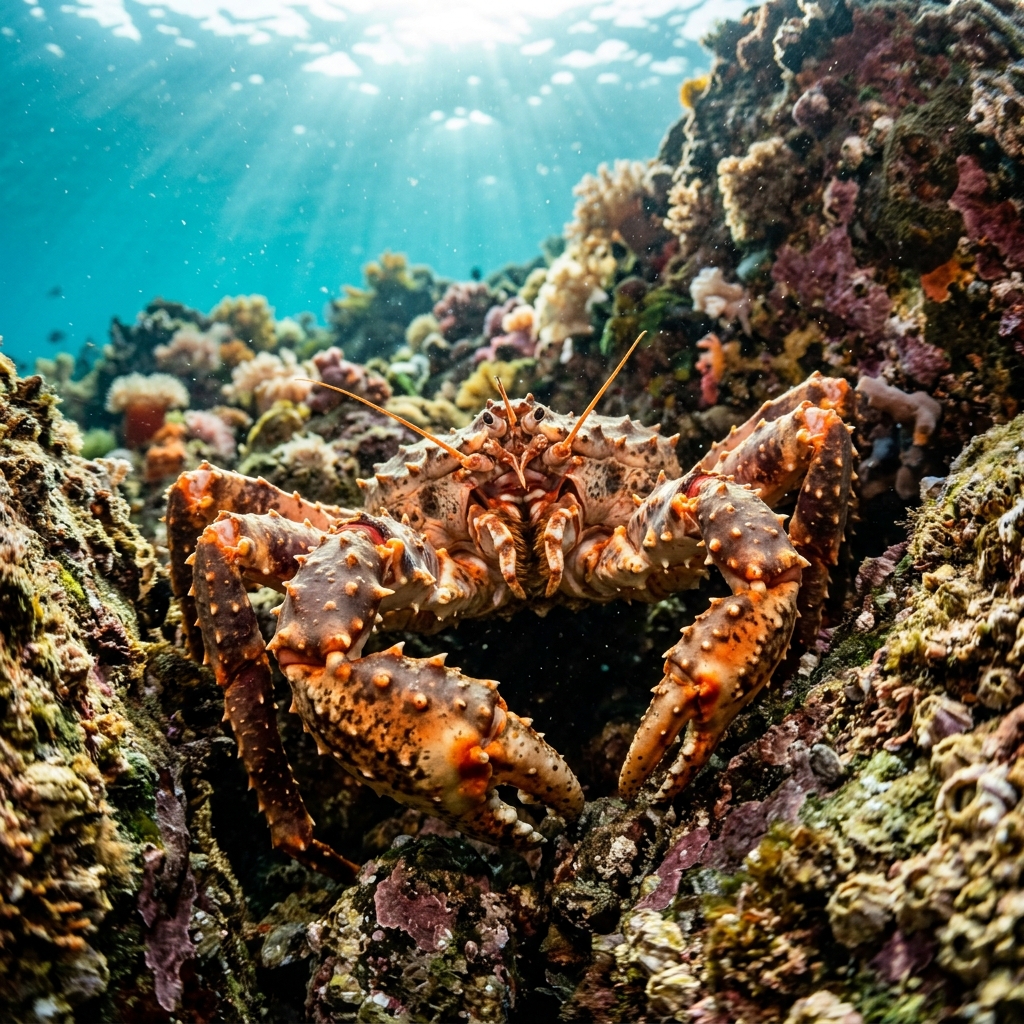
Reef neighbours a diver could mistake it for. Use the identification notes above to tell them apart.
Most commonly logged in Spain, with strong numbers in Catalonia, the Balearic Islands, Valencia and Andalusia, plus a reliable presence along the French Riviera and Provence. It also turns up regularly in Liguria and Tuscany in Italy, around Malta, and further out in the Canary Islands, Madeira and Cape Verde.
Mapping where Mediterranean Hermit Crab is logged…
Catalonia, the Balearic Islands and the French Riviera are among the most reliable areas, with further sightings in Liguria, Malta, the Canary Islands and Cape Verde.
There is no strong season in the data, so it is seen year-round in waters between about 15 and 21C. Any month with a dive trip to the Mediterranean or nearby Atlantic islands is fair game.
No. It is a slow-moving benthic crab that retreats into its shell when approached and poses no threat to divers.
Check the legs for a reddish-brown, hairy texture with blue-tipped claws, and note the oversized left claw it uses to seal the shell opening when disturbed.
It never grows its own hard shell, instead spending its life recycling empty snail shells and moving to a bigger one as it grows, sometimes fighting other hermit crabs for the best vacant option.
Site and sighting data is aggregated from diver logs, iNaturalist and GBIF. For taxonomy and conservation status:
European Green Crab
2,469 sites