Diplodus hottentotus
Vertical dark bars, reef-hugging habits, and Western Cape reefs at 15-24C: here's how to find zebra seabream underwater.
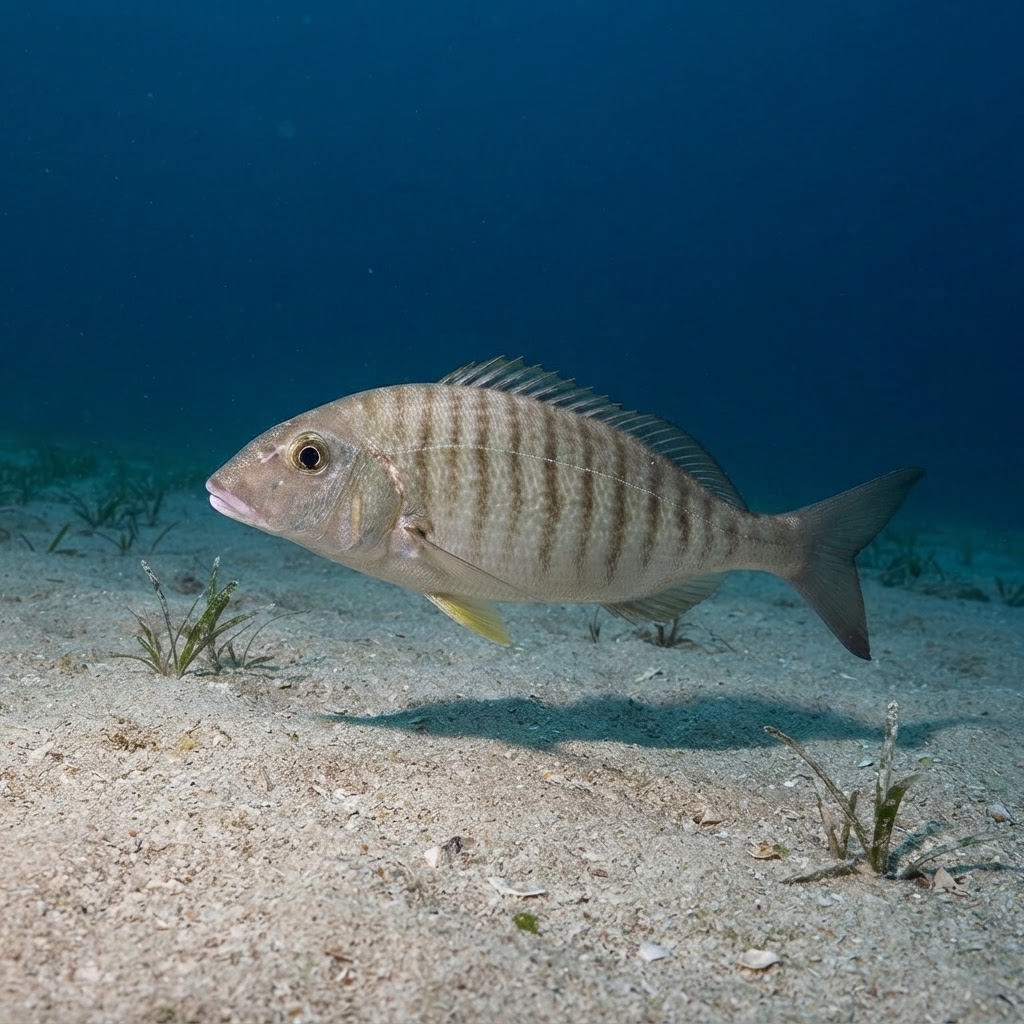
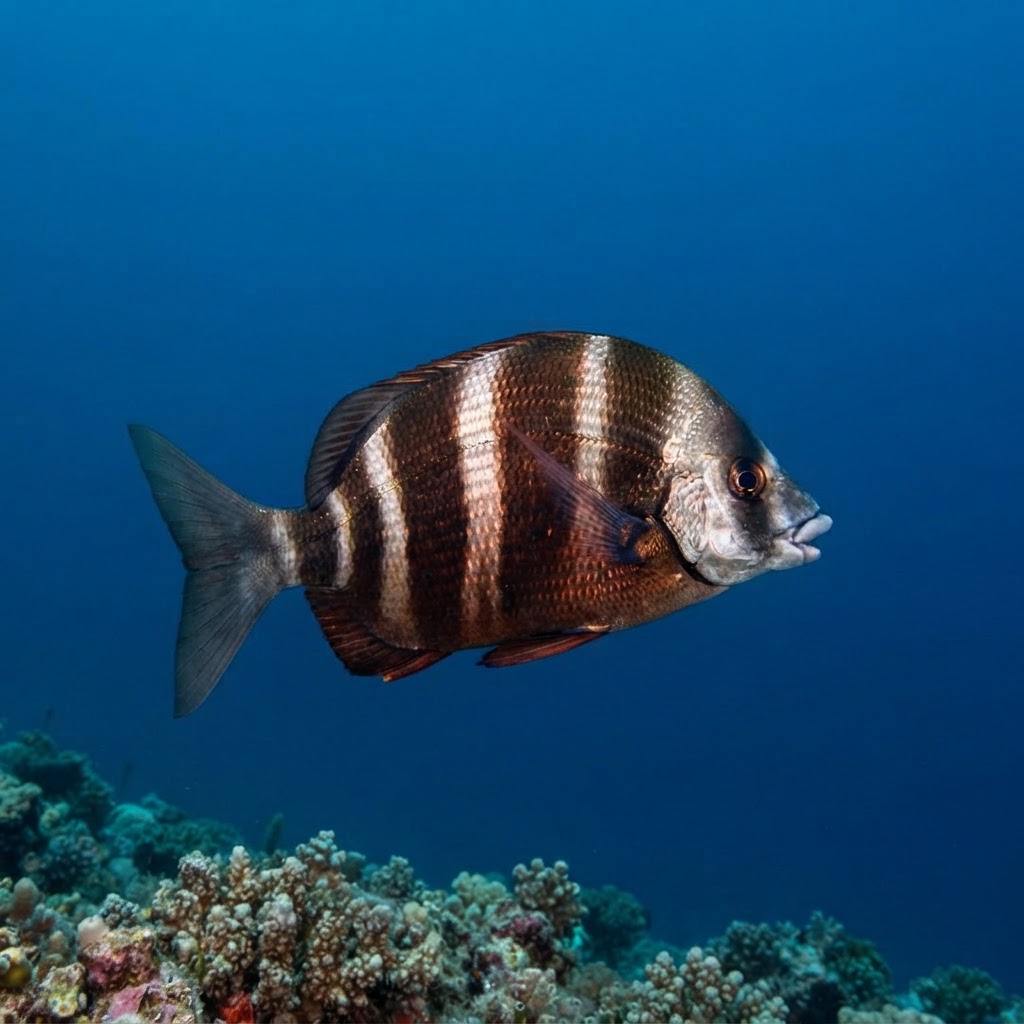
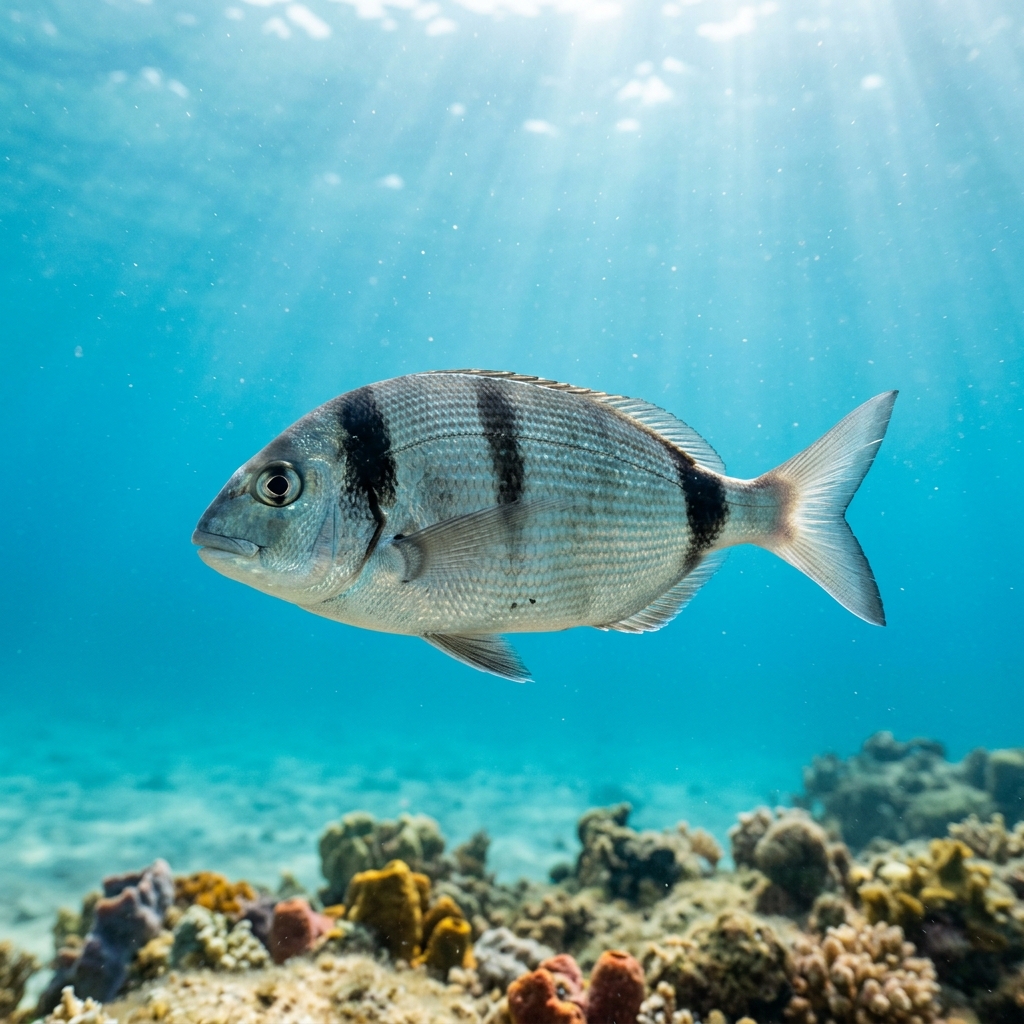
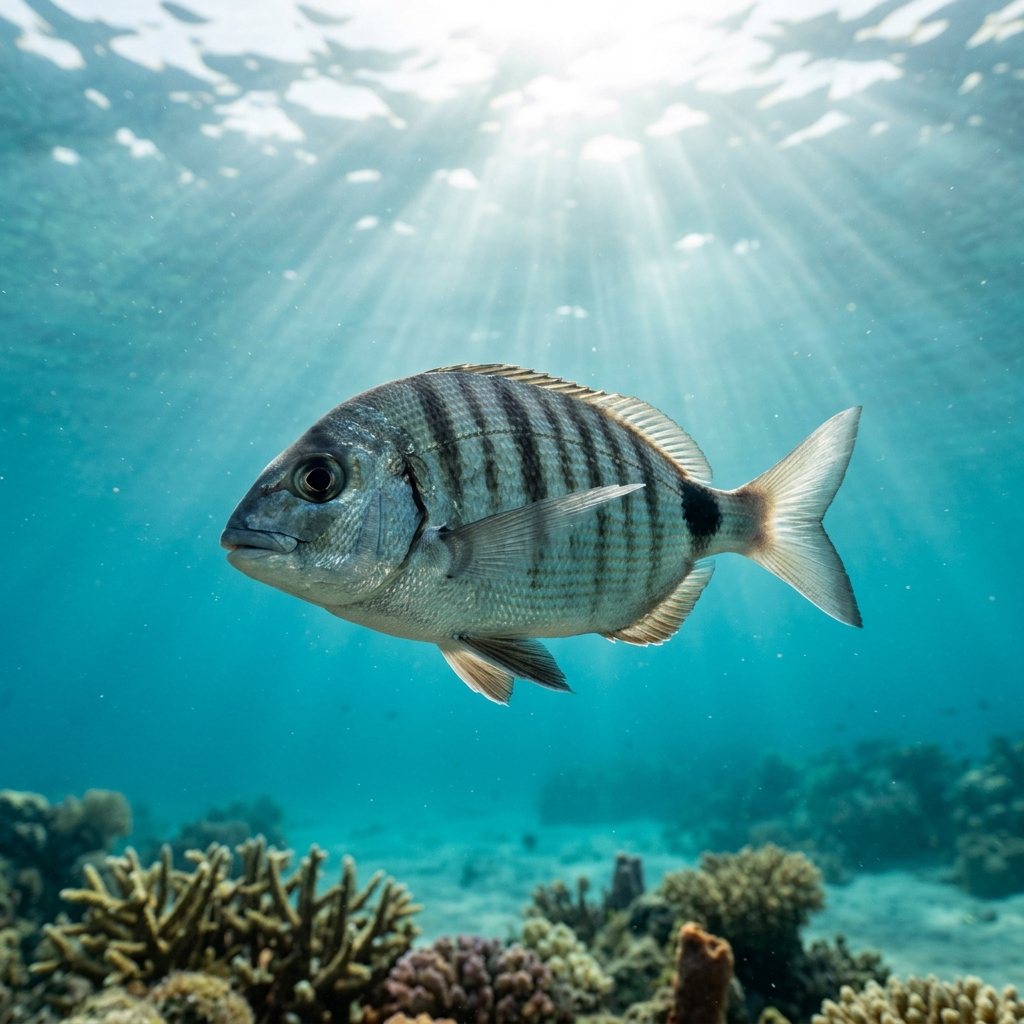
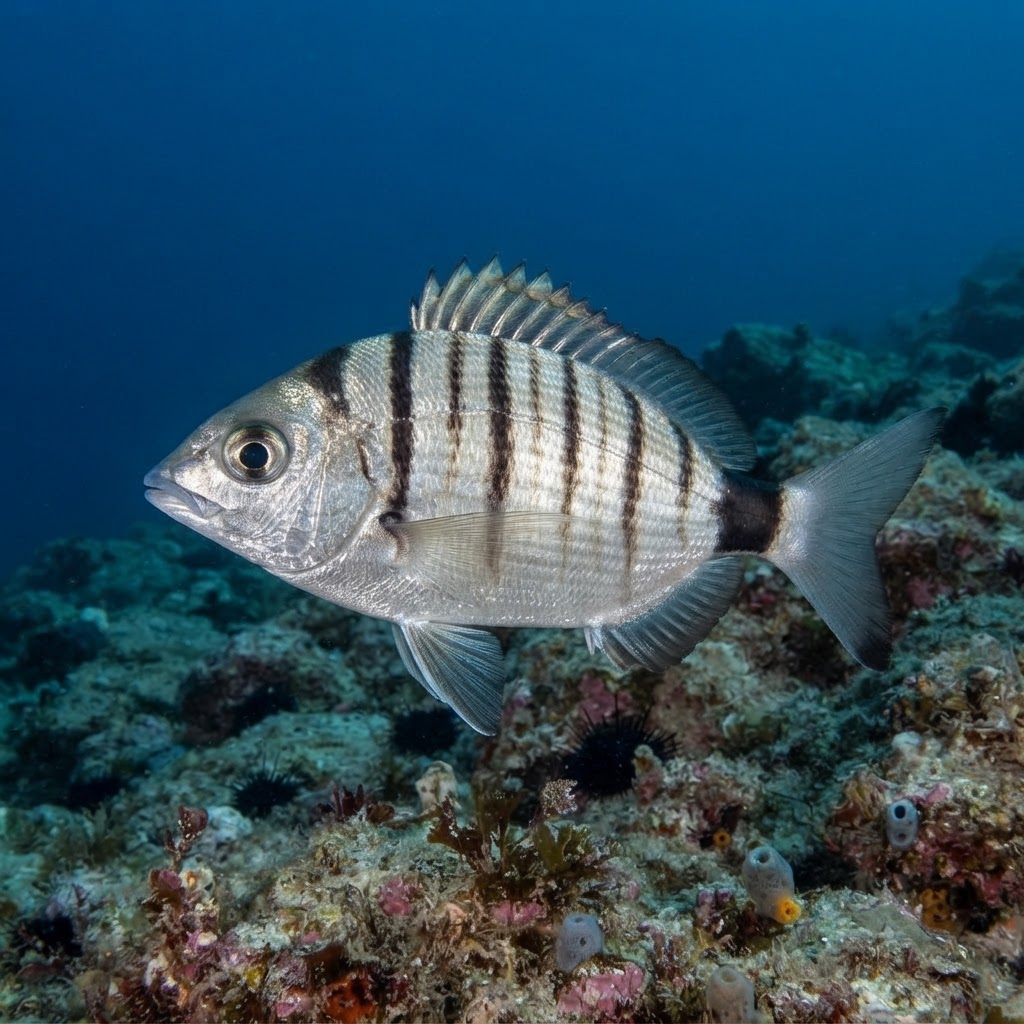
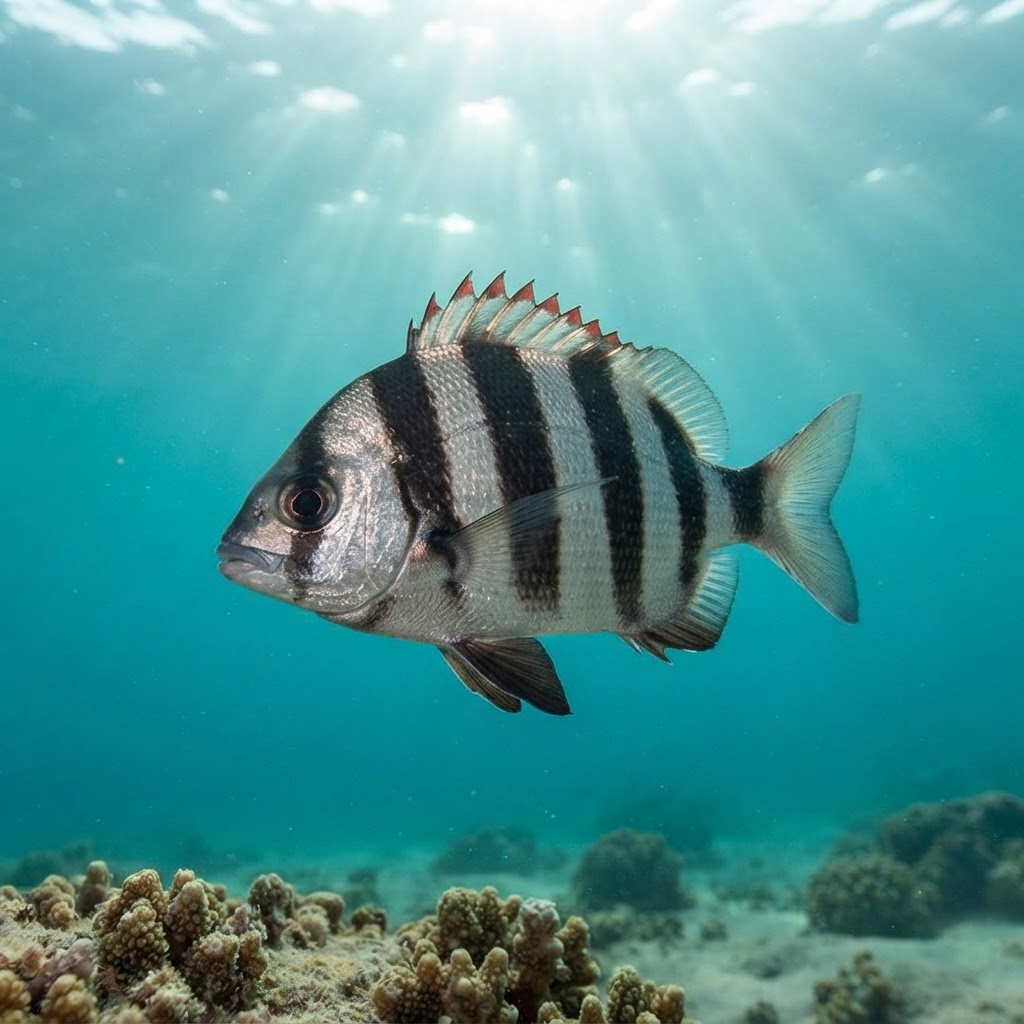
Look for a silvery, deep-bodied fish marked with a series of dark vertical bars running down its flanks, the trait that gives it the common name. It grows to around 42 cm, with a blunt head and the compact, oval profile typical of sea breams. The bars are usually most visible against pale sand or light rock, and can fade or sharpen slightly depending on the fish's mood and the background.
Divers most often log this fish as an uncommon but steady sighting, generally seen singly or in small numbers cruising over reef and rocky ground rather than schooling in open water. It tends to hold a cautious distance from divers, easing off rather than bolting, and is usually spotted moving along structure rather than out in the blue.
Its barred pattern is a form of camouflage against dappled rock and sand, which is why the fish can be surprisingly easy to miss until it moves.
Sightings are logged year-round with no strong seasonal pattern, matching a water-temperature range of roughly 15 to 24C that spans the region's cooler and warmer months alike. Plan around good Western Cape dive conditions generally rather than a specific season for this fish.
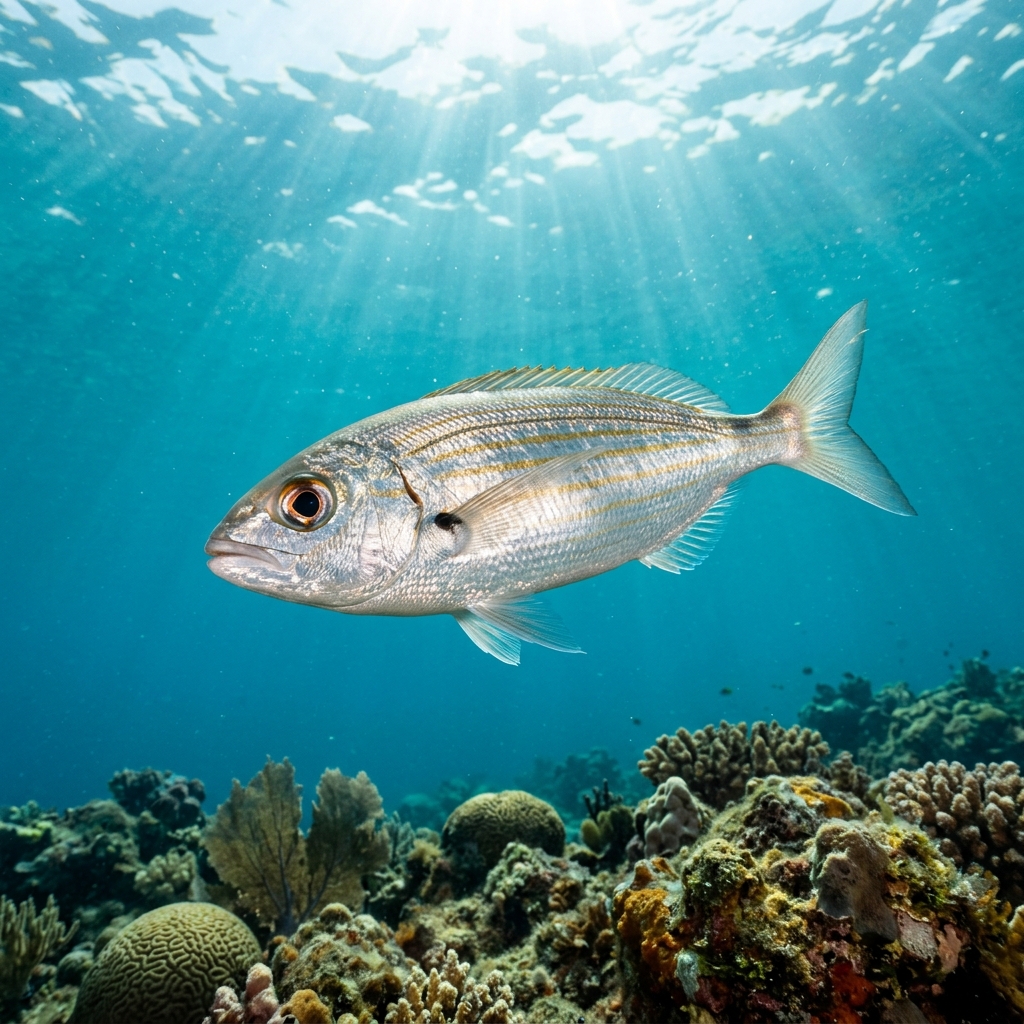
Reef neighbours a diver could mistake it for. Use the identification notes above to tell them apart.
This one is essentially a South African speciality in the logged data, with the Western Cape the most reliable place to find it, followed by KwaZulu-Natal and a smaller presence in the Eastern Cape. Divers exploring the reefs and kelp-fringed rock around Cape Town and along the Western Cape coast have the best odds of a sighting.
Mapping where Zebra is logged…
They are most reliably seen in South Africa, especially the Western Cape, with additional sightings in KwaZulu-Natal and the Eastern Cape. The Western Cape is by far the strongest region for this fish.
There is no strong season in the sighting data, so they are logged fairly consistently year-round. Water temperatures where they are found range from about 15.4 to 24.4C, covering both cooler and warmer months.
Look for a silvery, deep-bodied fish with a row of dark vertical bars along its sides, growing to around 42 cm. It is usually seen alone or in small numbers close to reef or rocky structure rather than in open water.
They typically reach around 42 cm in length, putting them in the mid-size range for sea breams seen on South African reefs.
No, they are not considered dangerous to divers. They tend to keep a cautious distance and pose no threat during a normal dive.
Site and sighting data is aggregated from diver logs, iNaturalist and GBIF. For taxonomy and conservation status:
Saddled Bream
3,846 sites