Diplodus sargus
White Seabream frequent Mediterranean reefs from the French Riviera to Croatia. Know the silver stripes, spot them April to November.
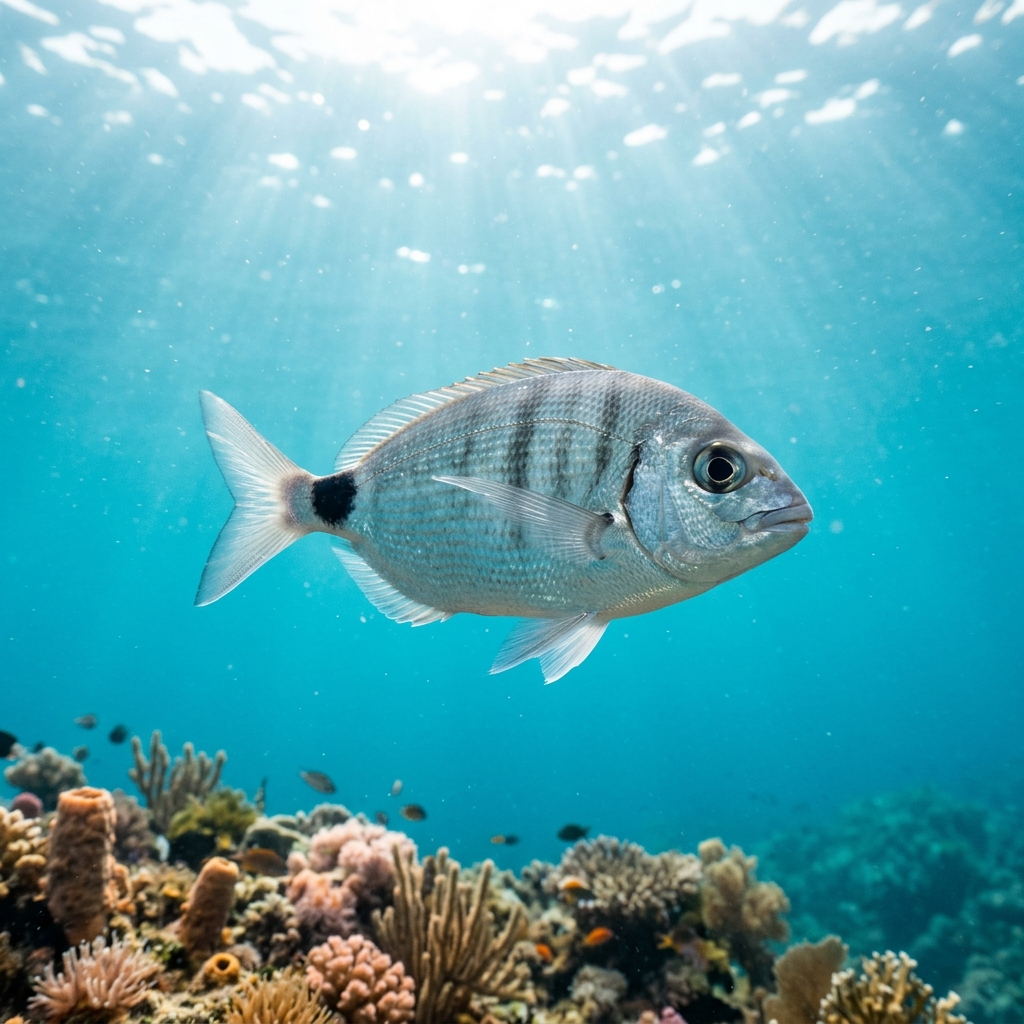
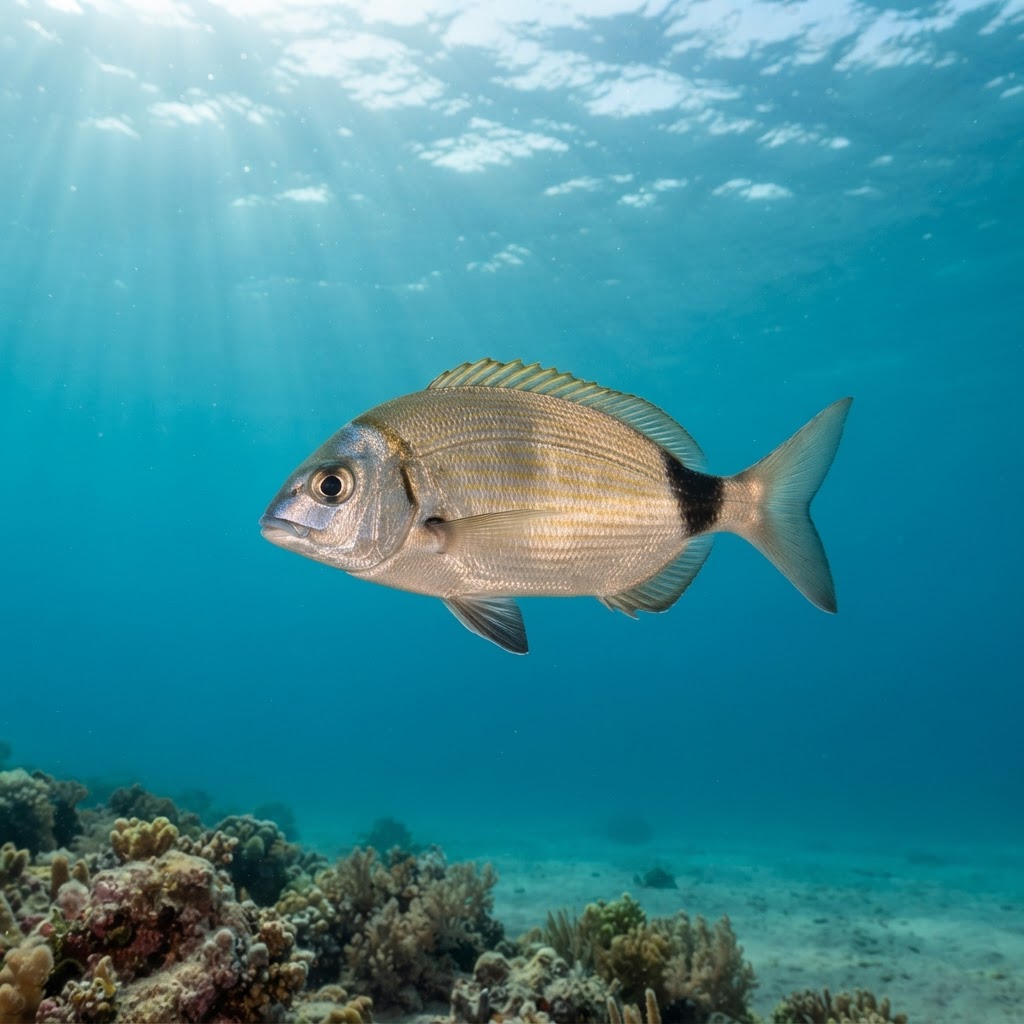
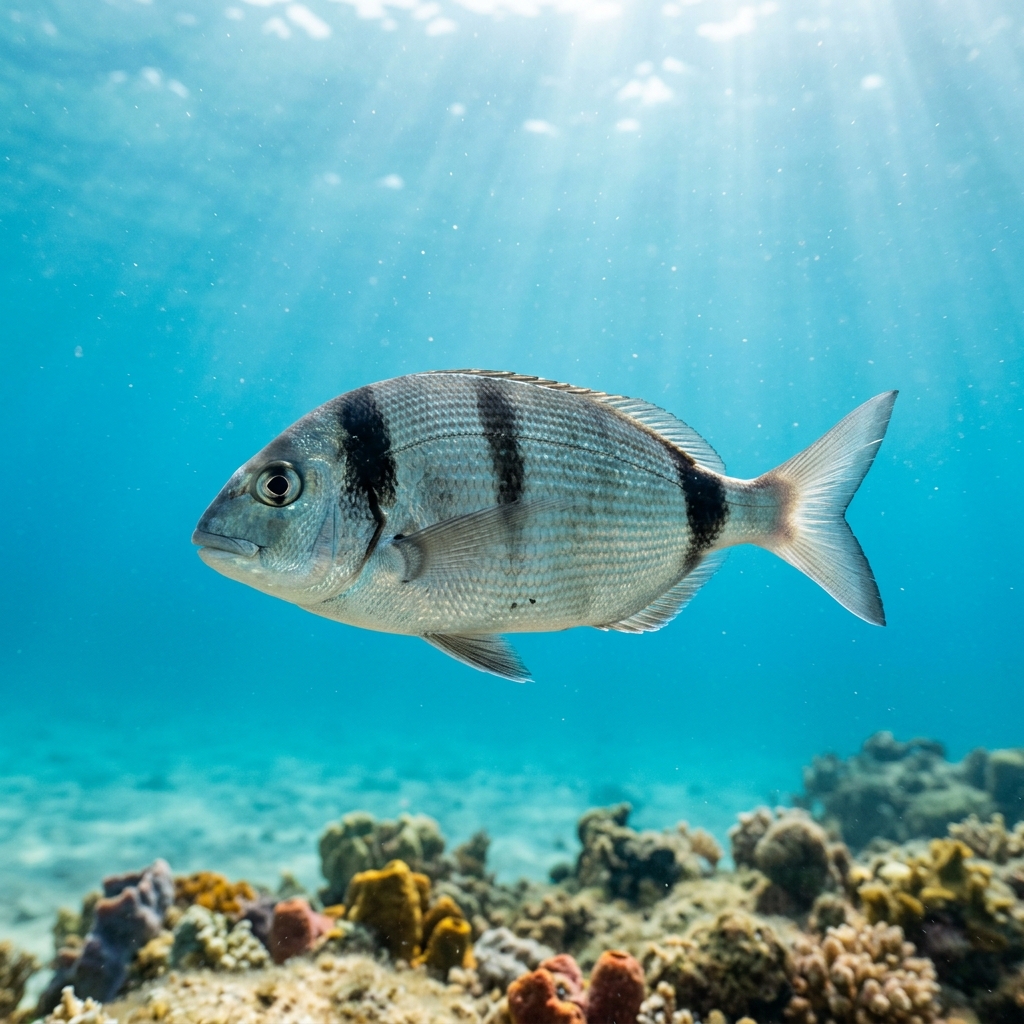
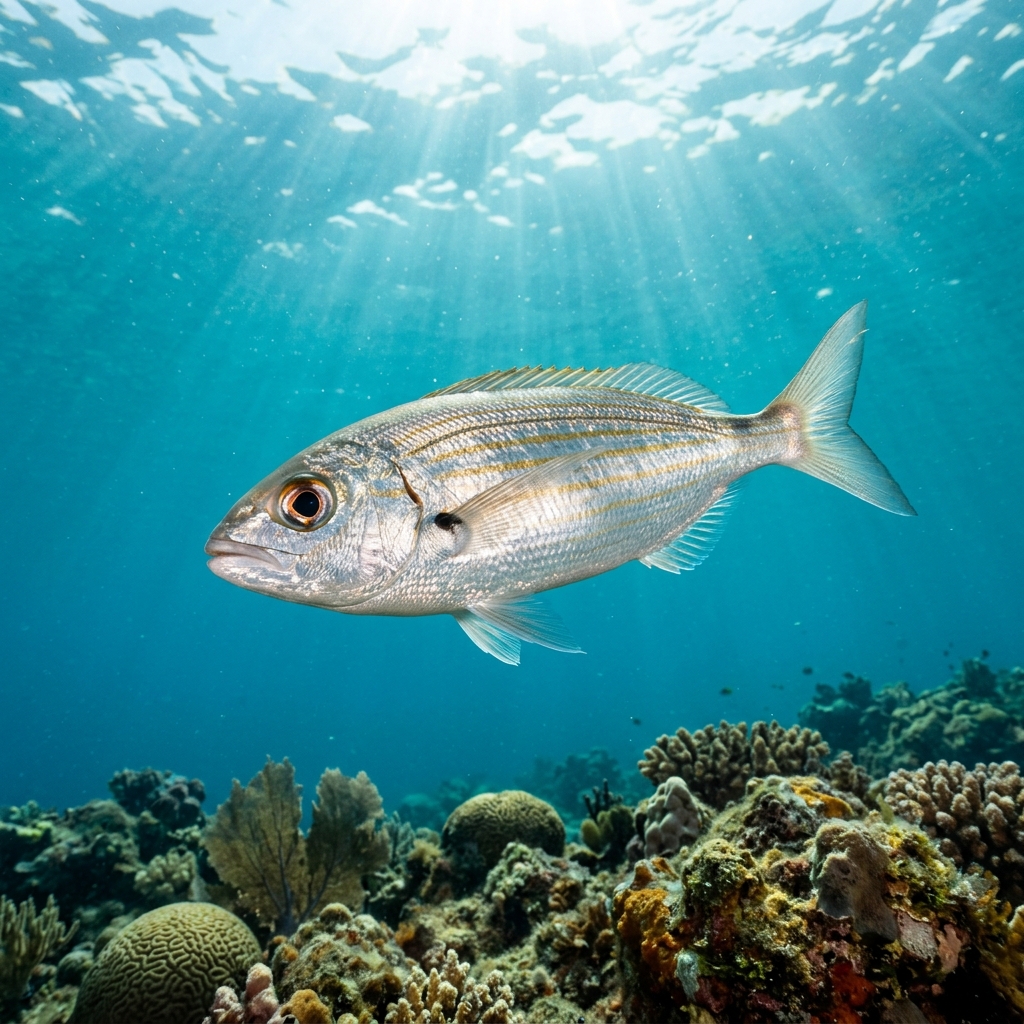
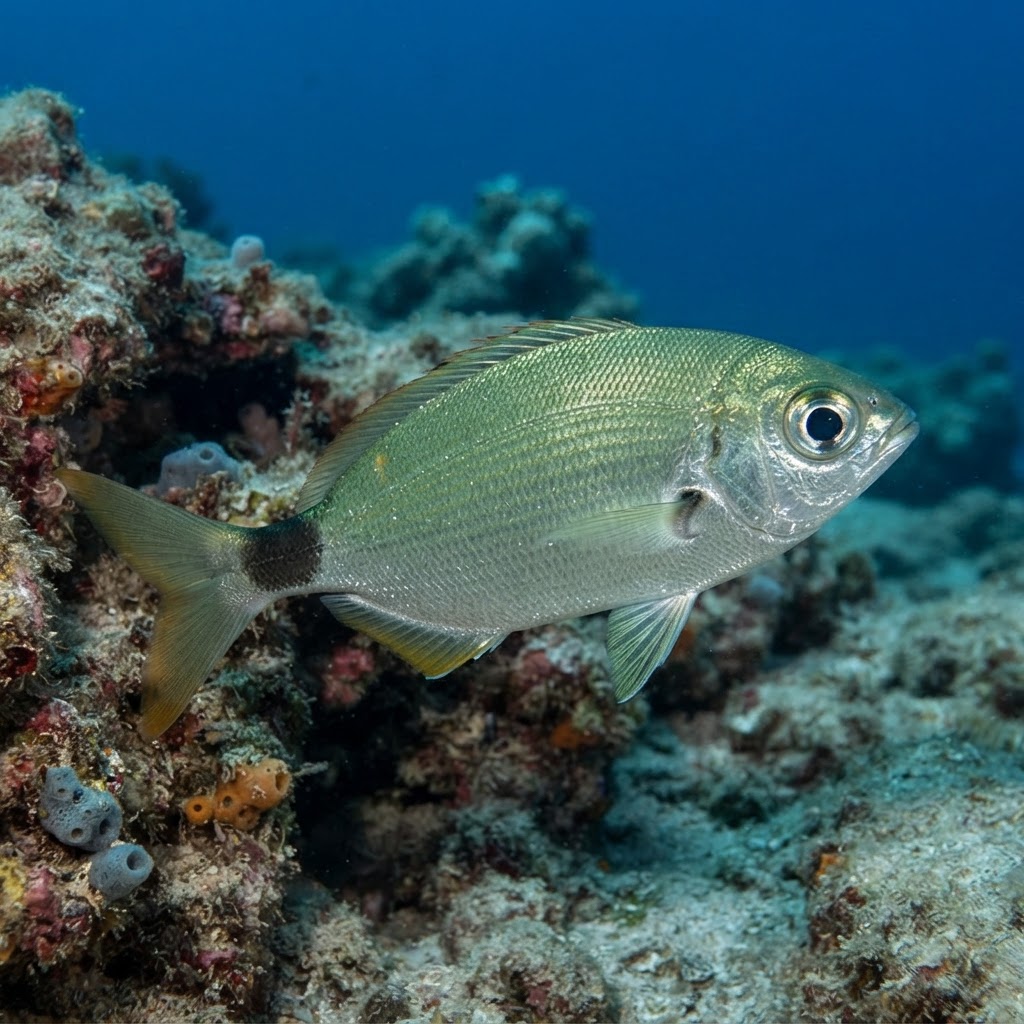
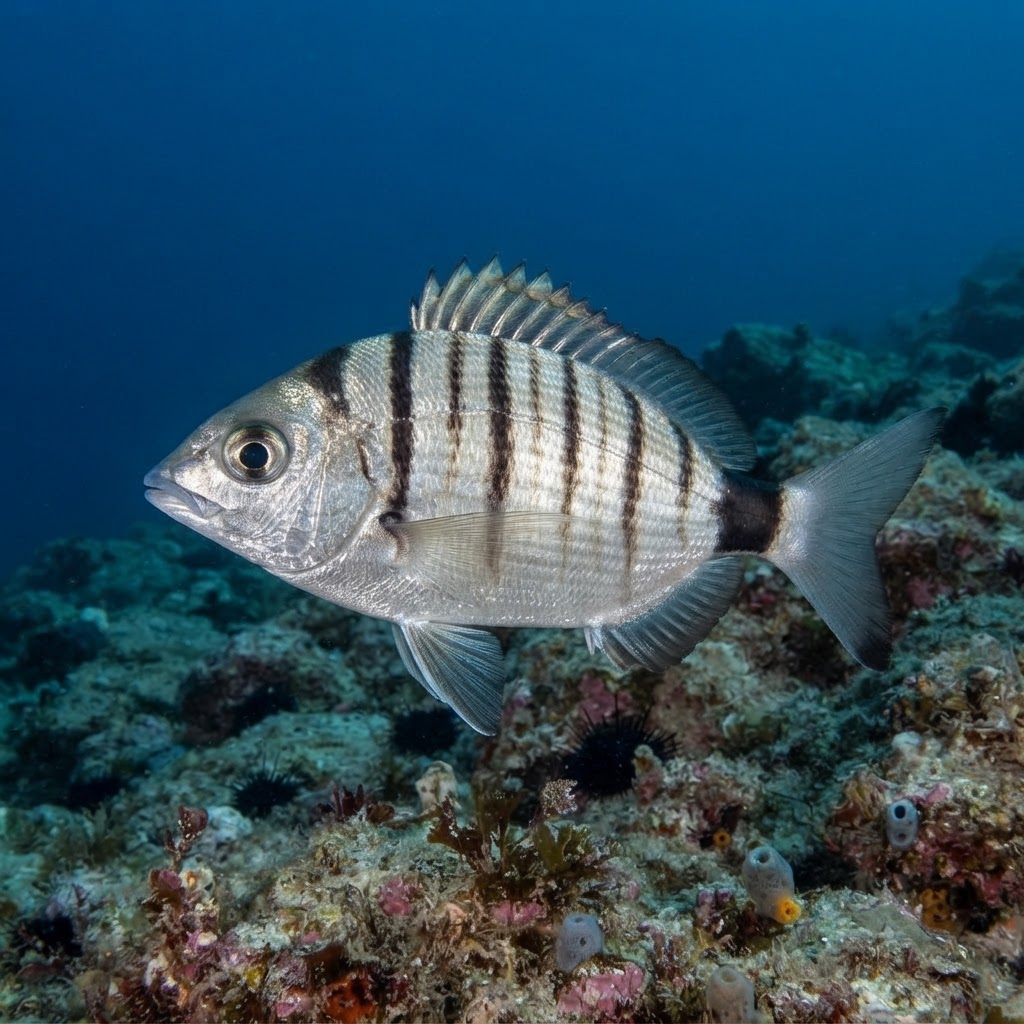
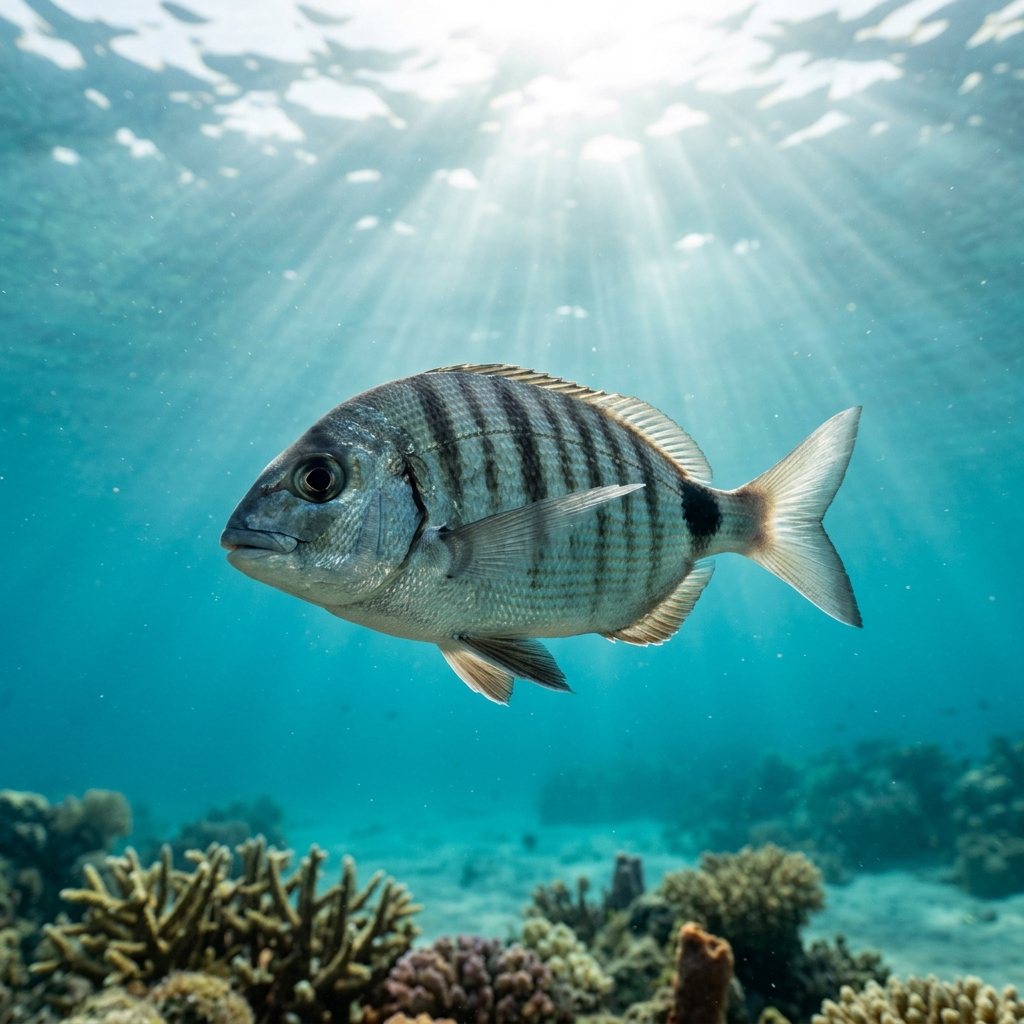
A stocky, deep-bodied bream around 30 cm long, silver-white with a series of faint dark vertical bars running down the flanks. The key mark underwater is the distinct black saddle patch across the base of the tail, sitting just before the forked caudal fin. Look also for a dark spot at the shoulder (pectoral fin base) and a black leading edge to the pelvic fins. Juveniles carry bolder, more contrasting bars than adults.
White seabream are demersal (bottom-associated) fish, typically encountered patrolling rocky reefs and seagrass margins in small loose groups or as solitary individuals. They tend to be curious but wary, often shadowing divers at a few metres' distance before resuming foraging over the substrate. Most sightings happen in shallower water during daytime reef dives, where they can be seen pecking at invertebrates and encrusting organisms along rocky walls and rubble.
White seabream are protandrous hermaphrodites in some populations, meaning individuals can start reproductive life as males and later transition to females. This reproductive flexibility is common in the Sparidae family and can make size a rough guide to sex in the field.
In the northern hemisphere, sightings concentrate from April through to November, tracking warmer water conditions across the 15 to 24 °C range these fish favour.
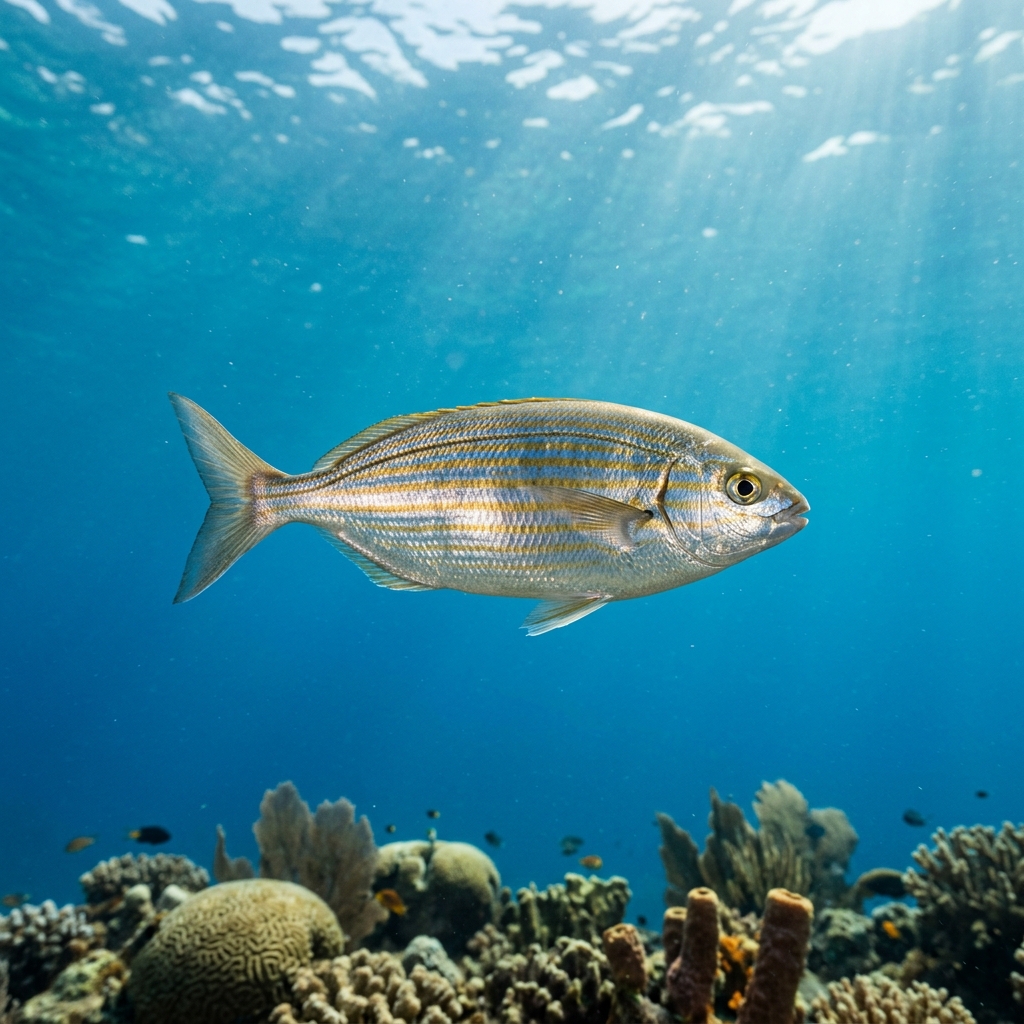
Reef neighbours a diver could mistake it for. Use the identification notes above to tell them apart.
White seabream are most commonly logged across the western and central Mediterranean, with Spain leading by a wide margin, particularly along the Costa Blanca, Costa Brava, and the Balearic Islands. Italy follows closely, with strong sighting records in Sardegna, Tuscany, and Sicily, while France, Greece, and Croatia round out the core range. The French Riviera and Provence region tops the site counts across all of Europe.
Mapping where White Seabream is logged…
They are most reliably encountered across the Mediterranean. Spain is the top country for sightings, especially along the Costa Blanca, Costa Brava, and Balearic Islands. Italy, France, Greece, and Croatia also have strong records, with the French Riviera and Provence region coming out on top across all logged sites.
In the Mediterranean and other northern hemisphere locations, April through November is the productive window. Sightings drop off in the colder winter months, reflecting the species' preference for water temperatures between around 15 and 24 °C.
Look for a stocky silver fish around 30 cm long with faint dark vertical bars along the flanks and a clear black saddle at the tail base. A dark shoulder spot helps confirm the ID. The tail saddle is the most reliable single feature to look for.
Most individuals divers encounter are around 30 to 35 cm. Larger specimens up to about 45 cm exist but are less common in heavily dived areas.
Yes, at least in some populations. White seabream belong to the Sparidae family, several members of which are protandrous hermaphrodites, beginning life as males and potentially transitioning to females as they grow larger and older.
Site and sighting data is aggregated from diver logs, iNaturalist and GBIF. For taxonomy and conservation status:
Saddled Bream
2,510 sites