Boops boops
Spot Bogue across the French Riviera, Costa Blanca and Canary Islands from April to December. Here's how to find and identify Boops boops underwater.
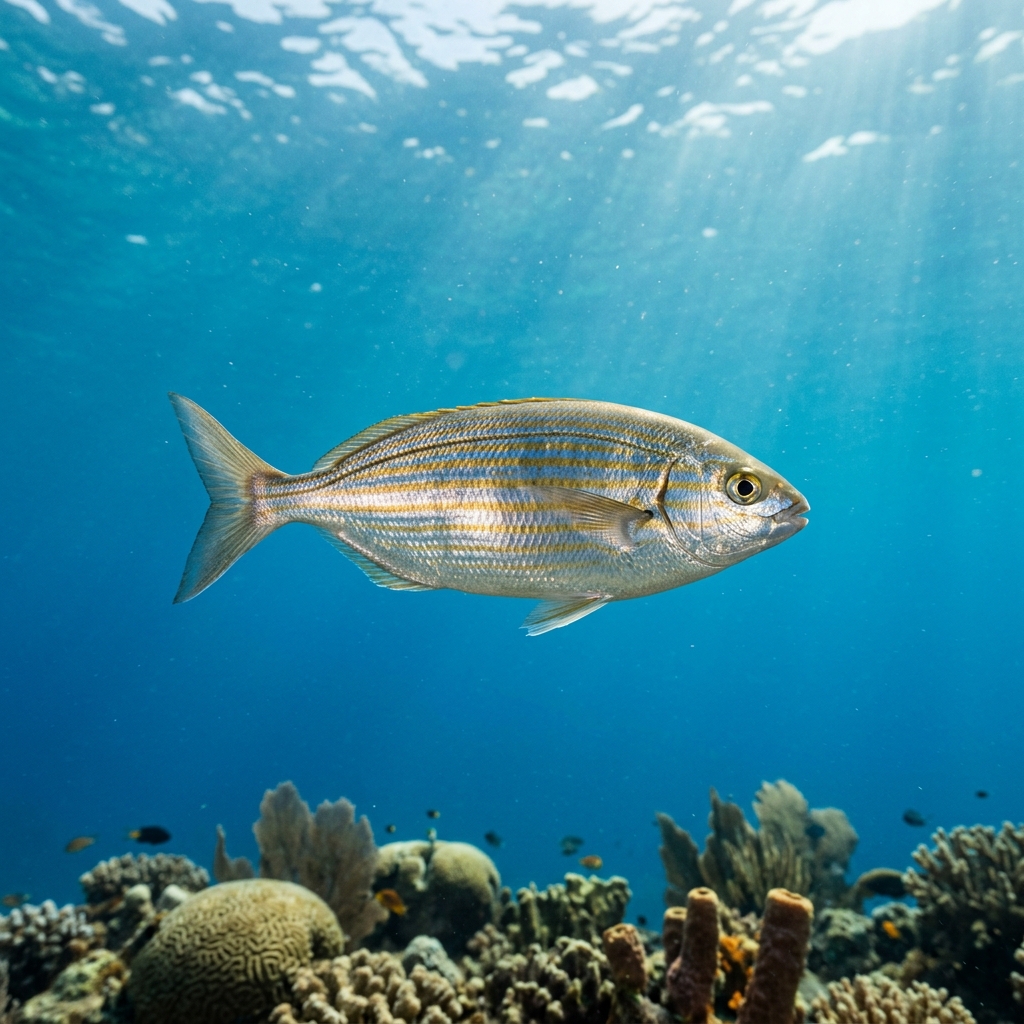
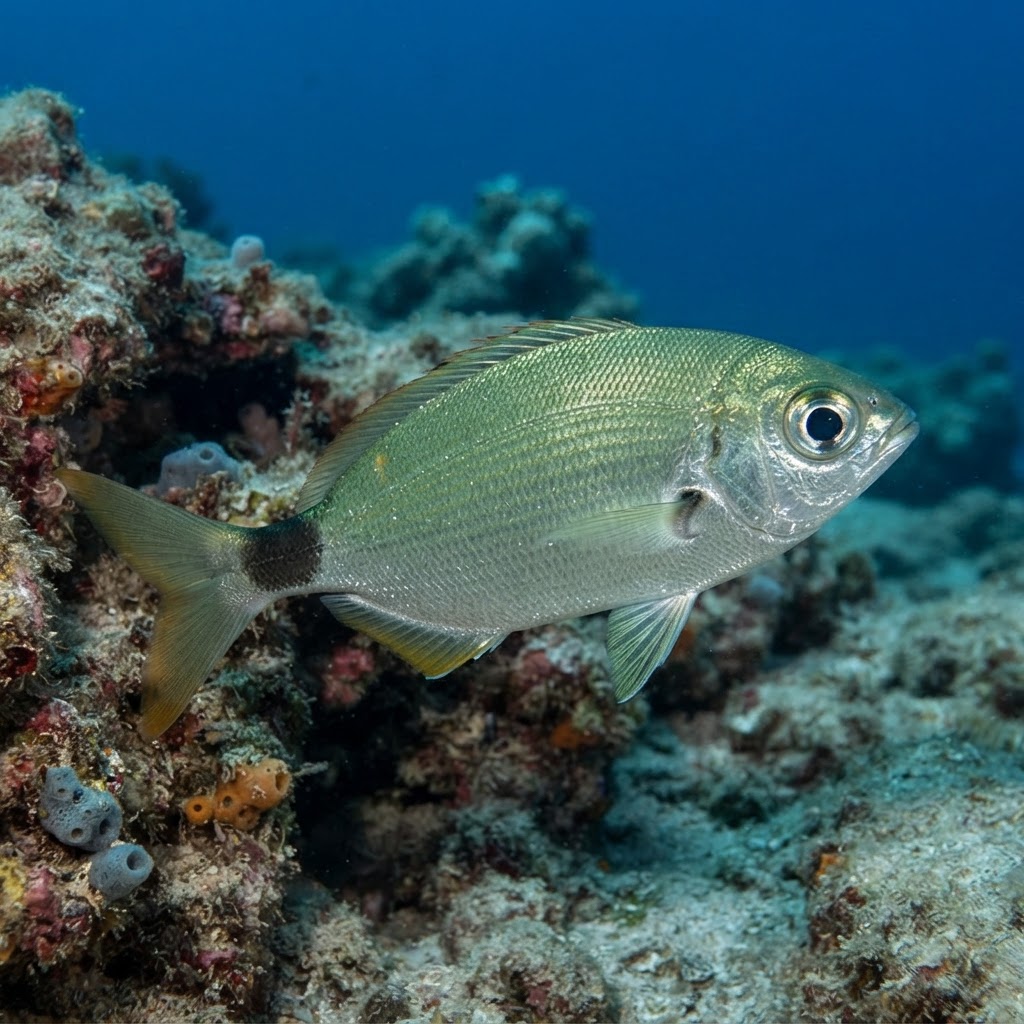
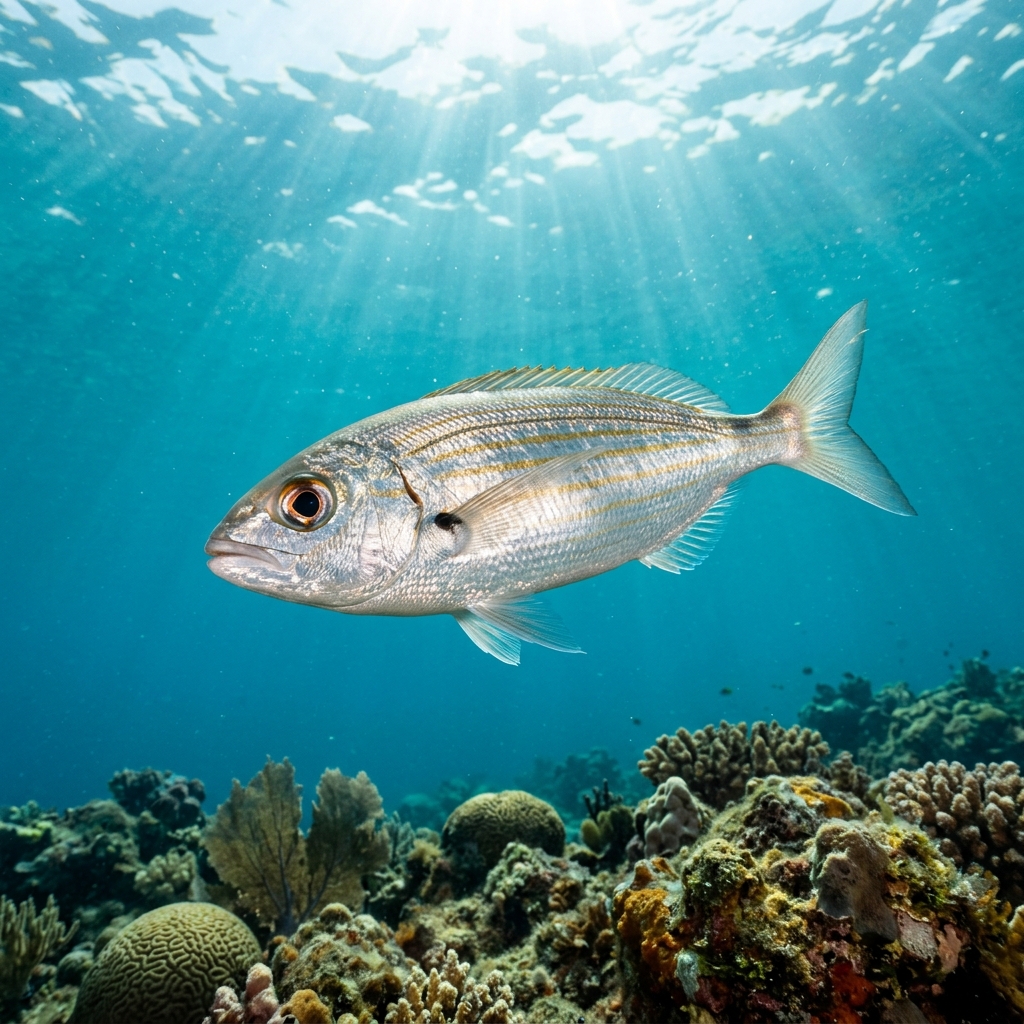
A slender, silvery fish around 28 cm long with a distinctly large eye relative to its head size and a subtly forked tail. Look for three or four faint yellowish-gold horizontal stripes running along the flanks, which catch the light and help separate it from chunkier breams. The body shape is more elongated and torpedo-like than most of its sparid relatives, and the mouth is small and slightly underslung. Colouration can look washed-out or almost iridescent depending on depth and ambient light.
Bogue tend to form loose to dense shoals (schools) in open water just above rocky reefs and seagrass meadows, often seen mid-water rather than hugging the bottom. They are quick to drift away if you approach directly, so moving slowly and laterally keeps them within view for longer. Feeding activity is most visible during daylight hours when shoals actively pick at small invertebrates and planktonic prey in the water column.
Bogue is a protandrous hermaphrodite, meaning individuals typically begin life as males and can later transition to female. This means that larger, older fish in any shoal you encounter are more likely to be female.
In the Northern Hemisphere, sightings concentrate between April and December, with the warmer months from late spring through autumn giving the best chances. Water temperatures across observed sites range from about 12 to 28 °C, so the species tolerates cool conditions but is most reliably encountered when the sea warms up.
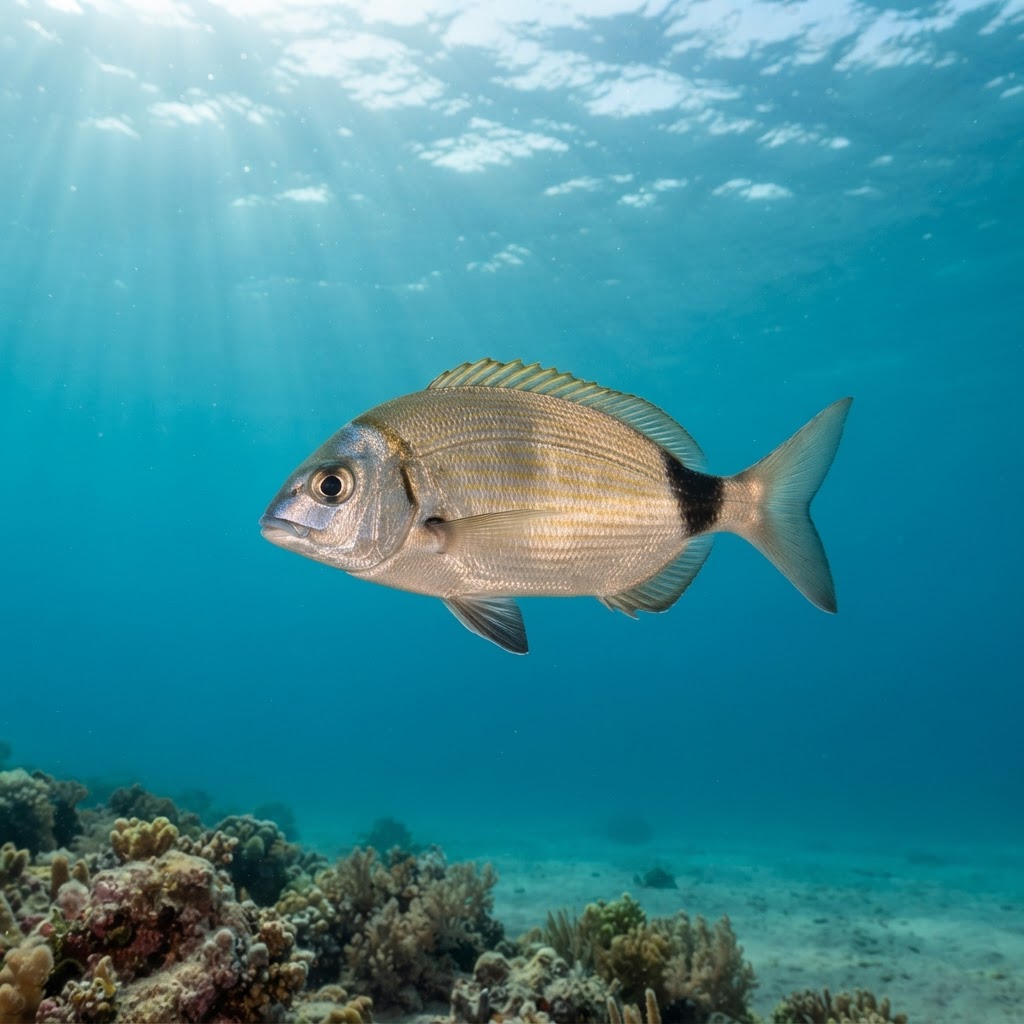
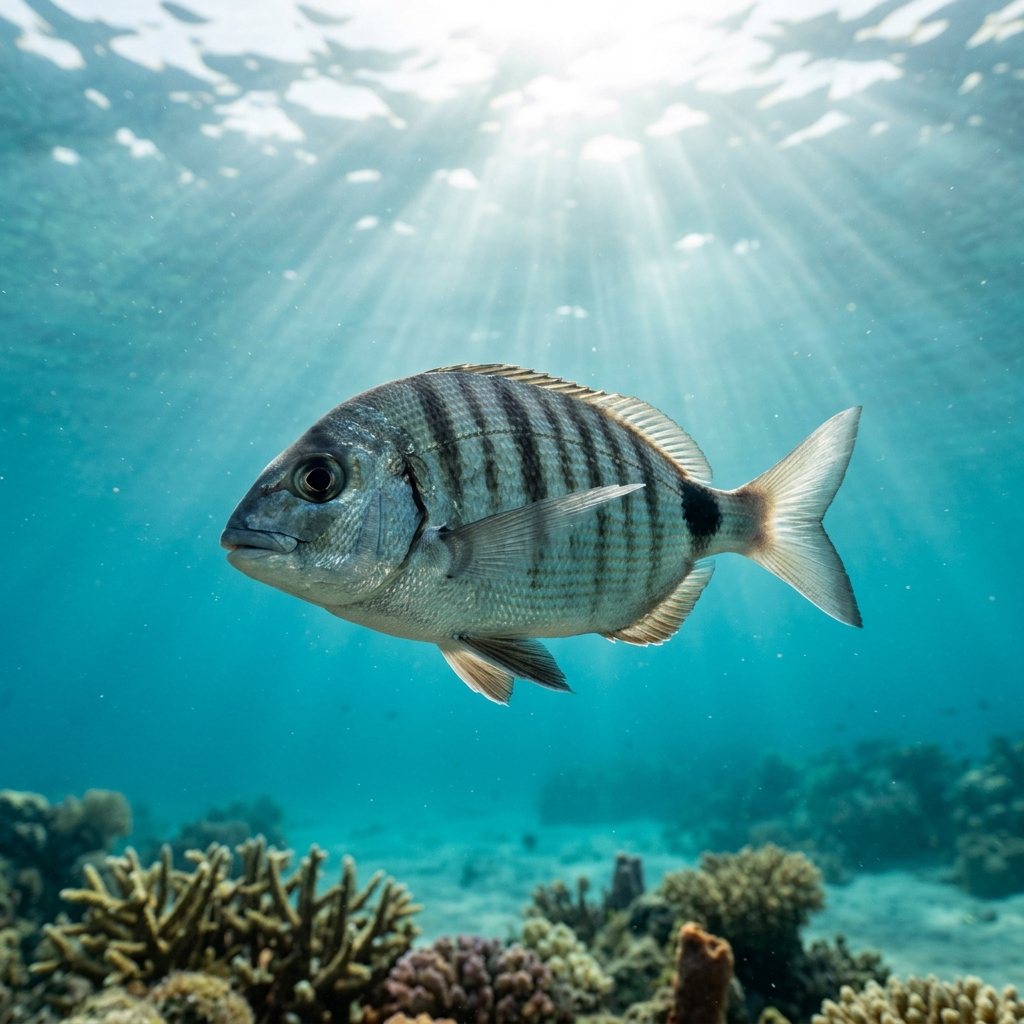
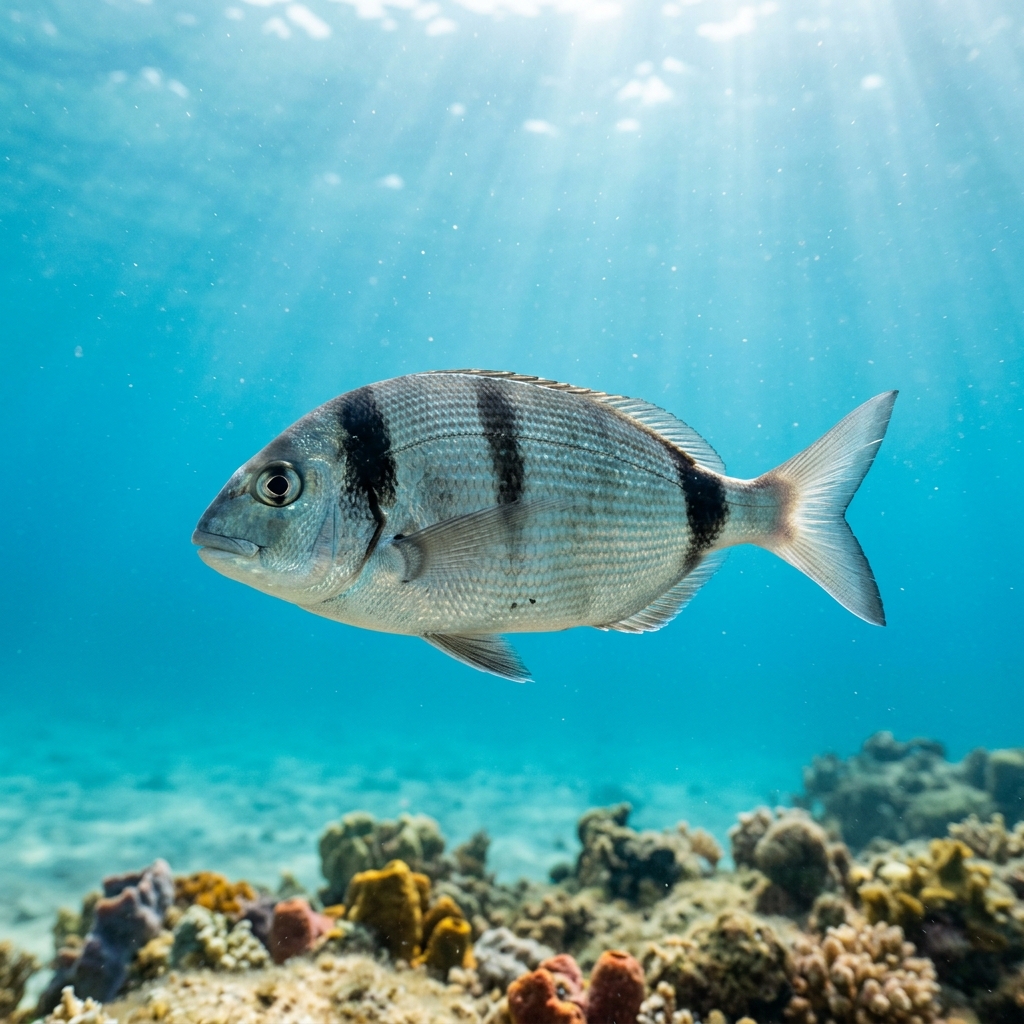
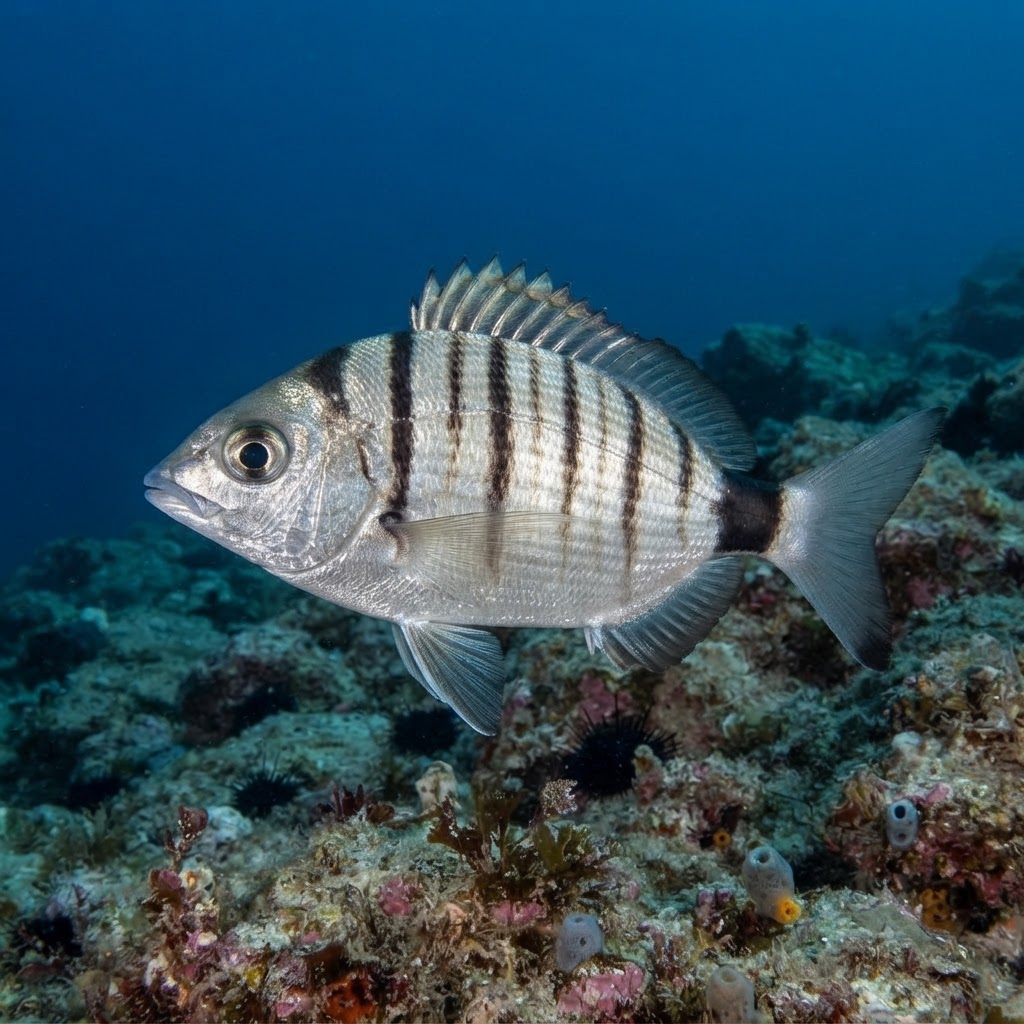
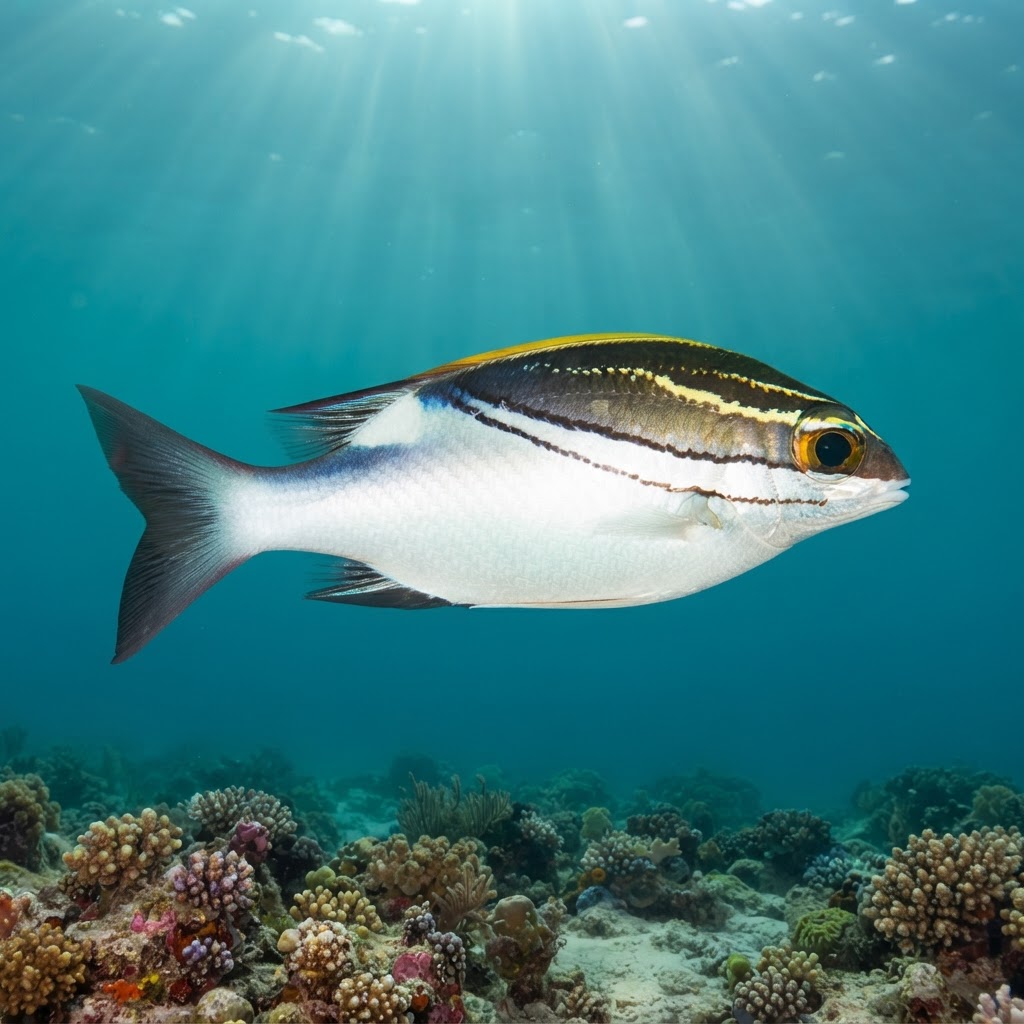
Reef neighbours a diver could mistake it for. Use the identification notes above to tell them apart.
Bogue is most commonly logged across the Mediterranean and eastern Atlantic, with the strongest records from Spain, France, Italy, Greece, and the Canary Islands. The French Riviera and Provence, the Costa Blanca, and Costa Brava consistently produce the most sightings, followed closely by Sardinia, Tenerife, and Croatia. It also turns up along the coasts of the United Kingdom and Turkey, reflecting how broadly it ranges across its Atlantic and Mediterranean range.
Mapping where Bogue is logged…
Bogue is most reliably encountered across the Mediterranean, with strong populations along the French Riviera, Costa Blanca, Costa Brava, and in Sardinia and the Canary Islands. It also appears regularly in Greece, Croatia, and Turkey, and even shows up along the United Kingdom's coastline.
In the Northern Hemisphere, sightings are concentrated between April and December. The warmer months from late spring through early autumn offer the most reliable encounters, though the species can tolerate quite cool water so early and late season dives can still produce sightings.
Look for a slender, silvery fish around 28 cm long with a noticeably large eye and three or four faint yellowish-gold horizontal stripes along its sides. Its more elongated body and smaller mouth help separate it from stockier breams like the Two-banded or White Seabream. It usually travels in loose shoals mid-water above rocky reef.
Most individuals divers encounter are around 28 cm, though they can grow somewhat larger. In the water they look like a medium-sized, slender bream, noticeably smaller and more streamlined than a White Seabream.
At sites where it is recorded, Bogue is most often described as uncommon rather than common, so a sighting is worth noting. Your best chances are in the French Riviera, along the Spanish coasts, and around the Canary Islands between spring and autumn when sighting rates are highest.
Site and sighting data is aggregated from diver logs, iNaturalist and GBIF. For taxonomy and conservation status:
Saddled Bream
3,846 sites