Diplodus cervinus
Dark vertical bands over silver, most reliably logged around Tenerife and Murcia in cool 13-18C water year-round.
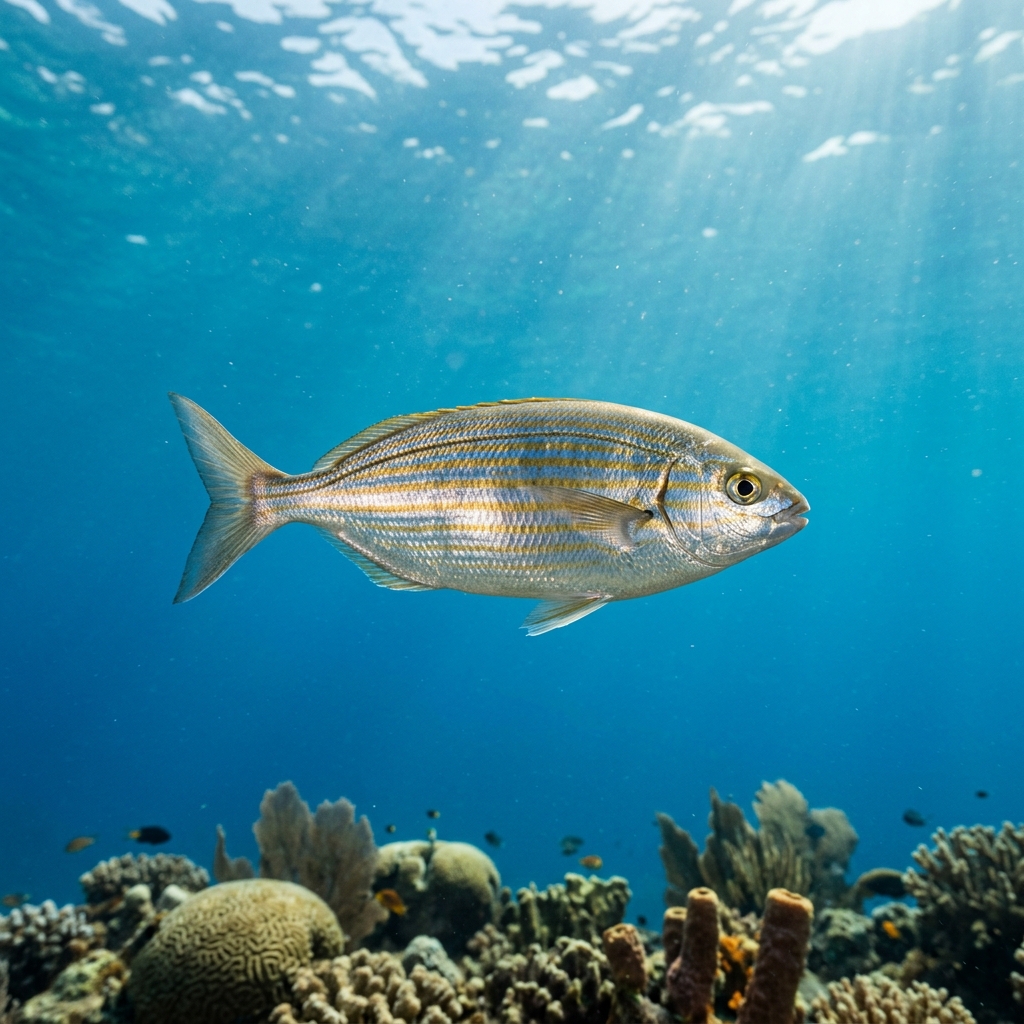
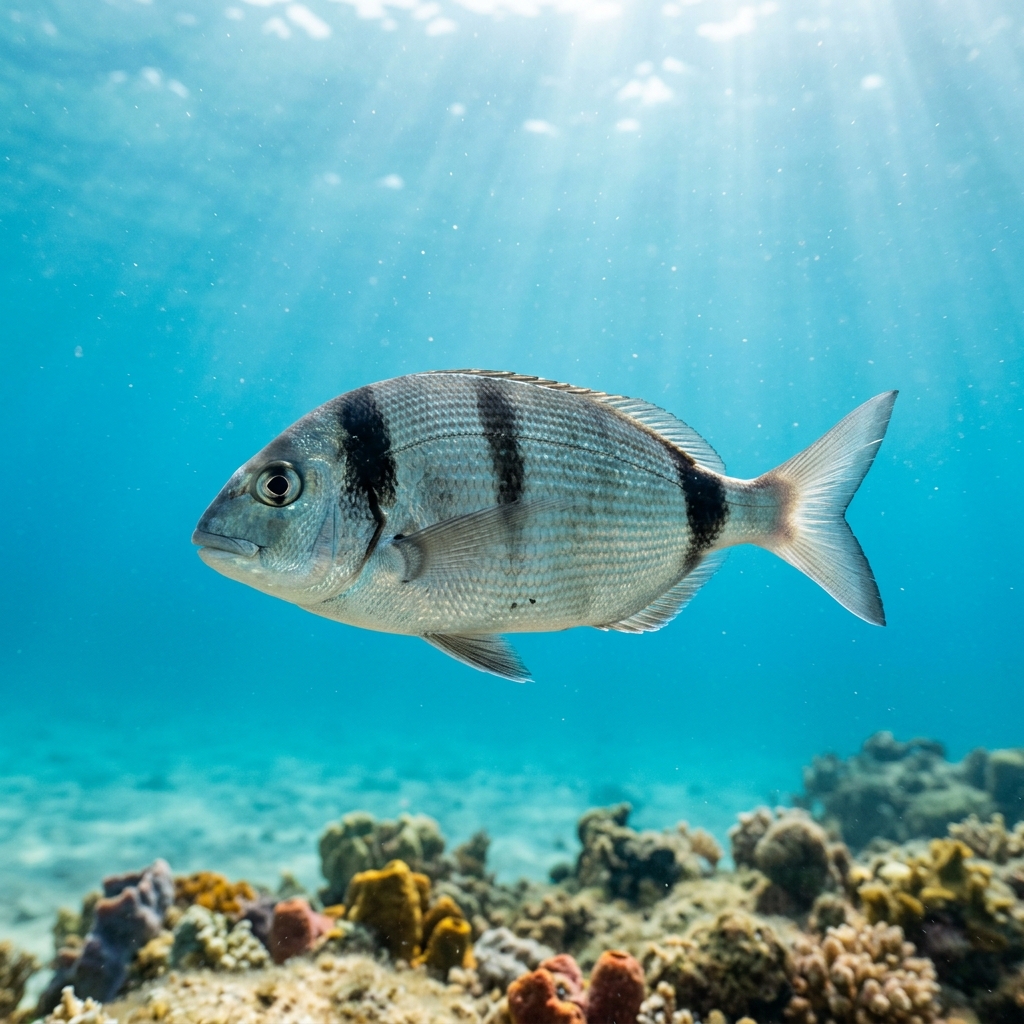
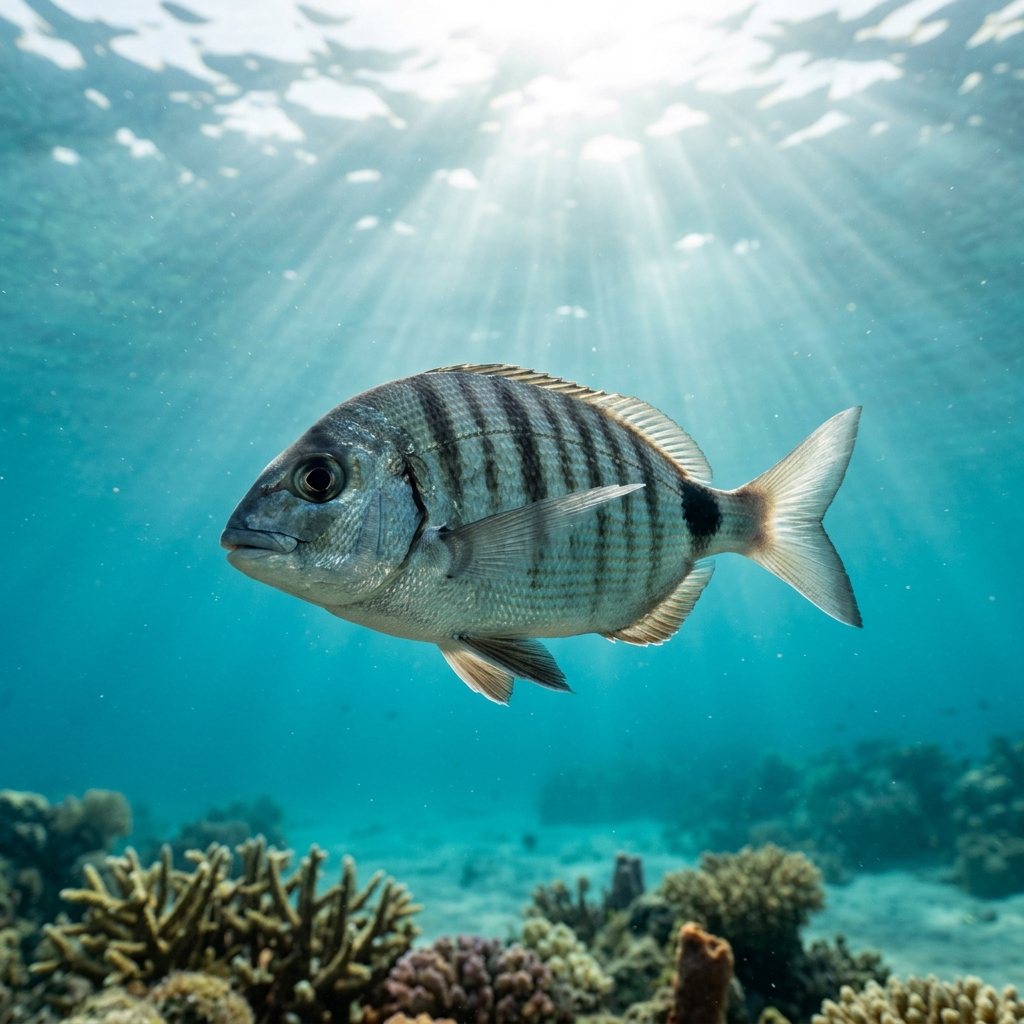
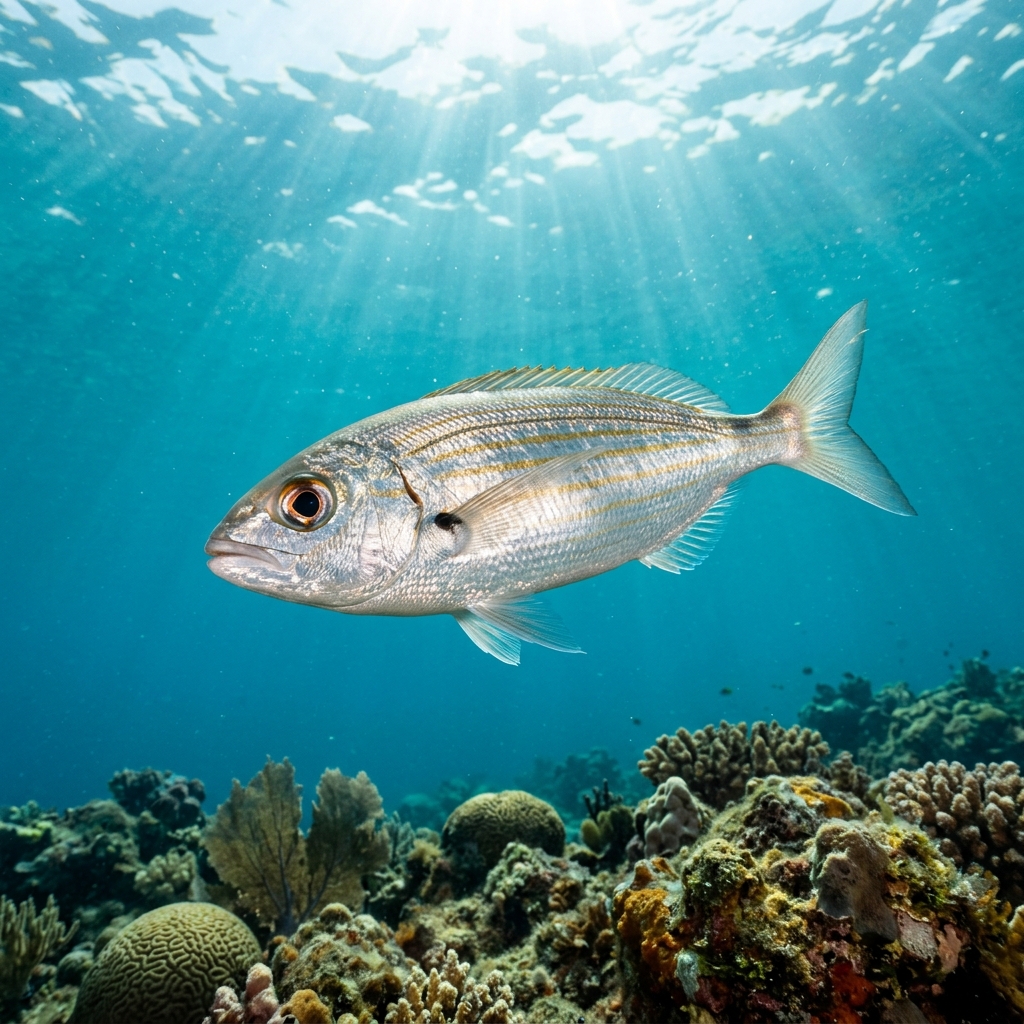
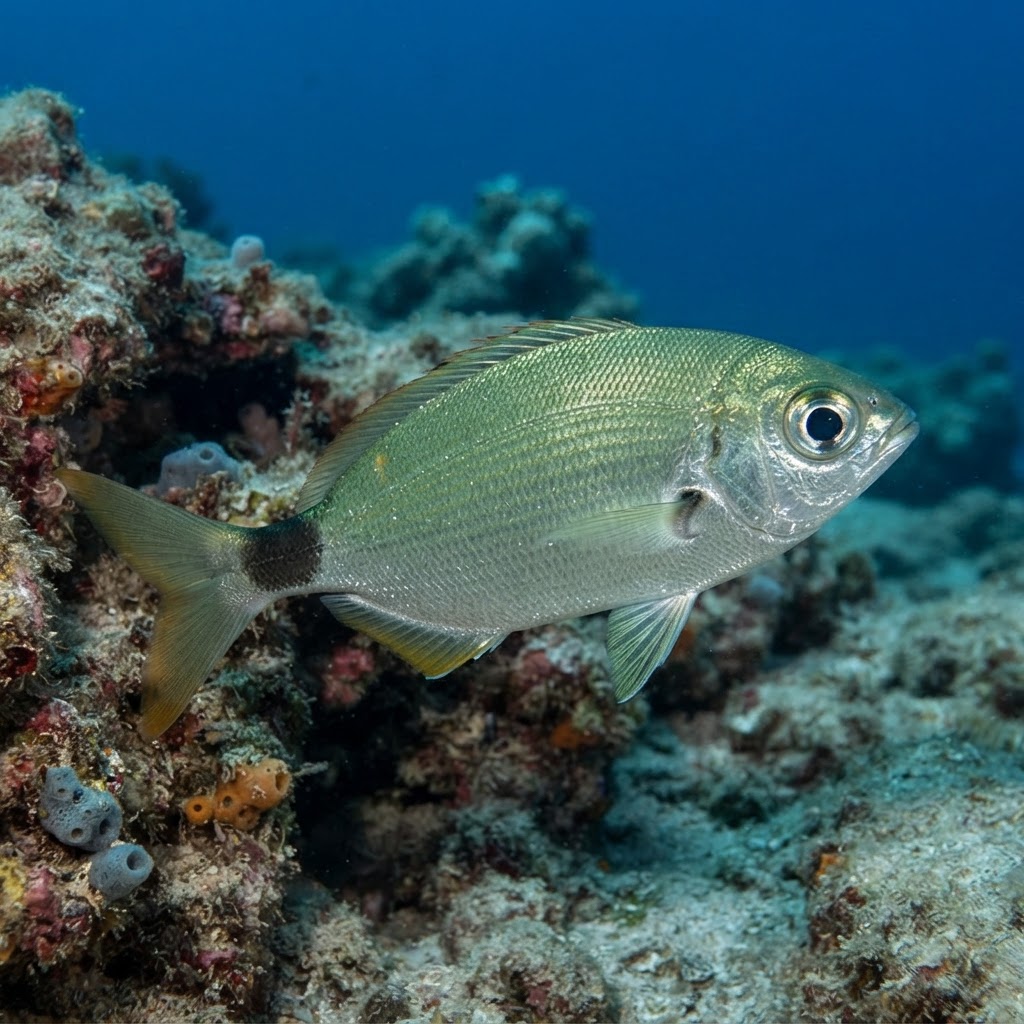
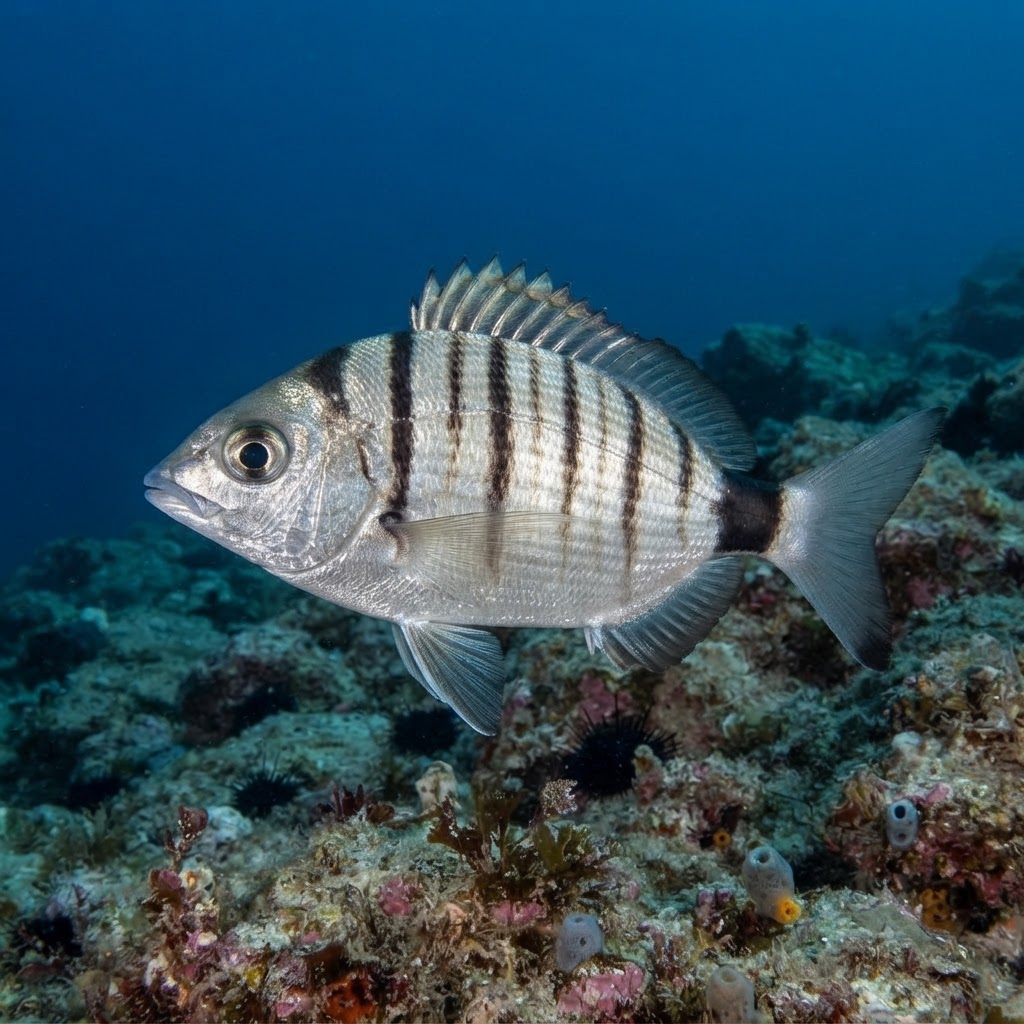
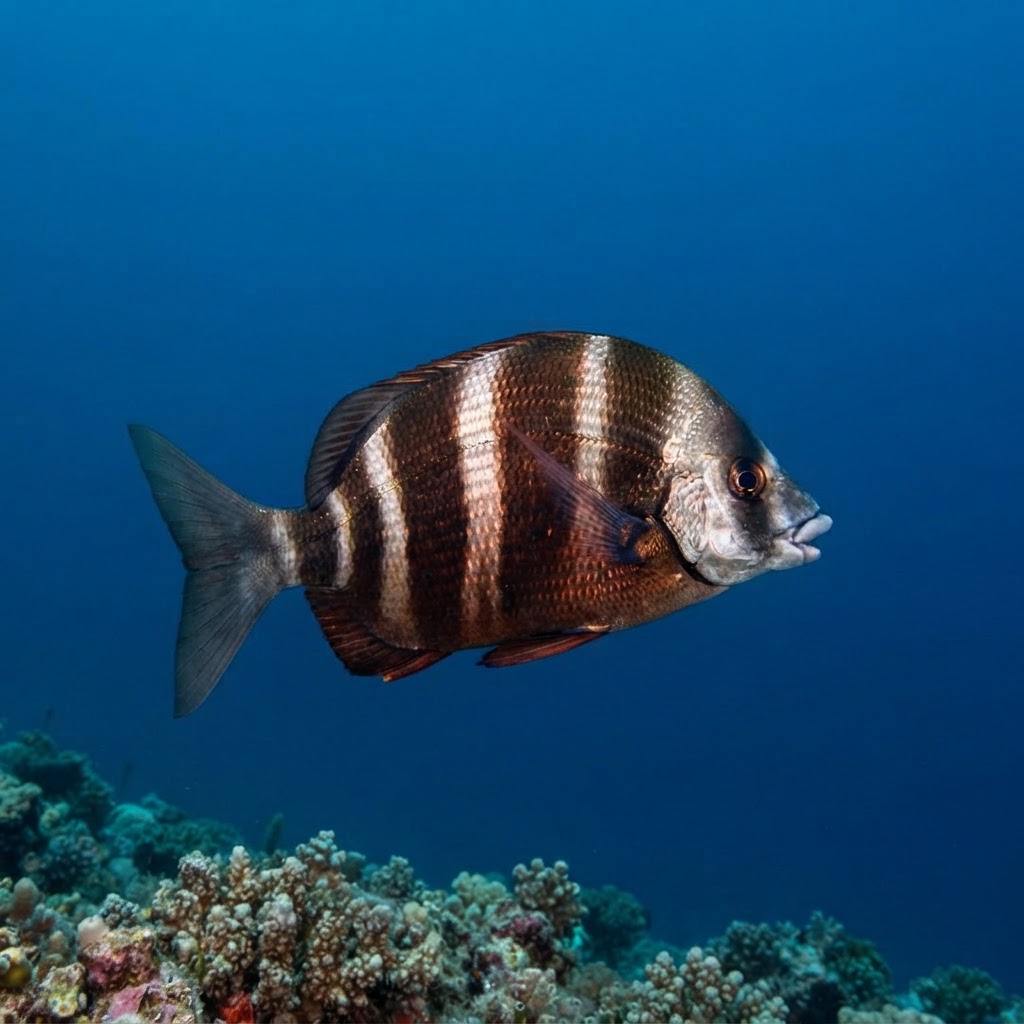
Look for a silvery-grey body crossed by five or six dark vertical bands, strongest over the back and fading toward the belly, on a deep-bodied fish that reaches around 38cm. The tail fin often carries a dark trailing edge, and the bands can fade or sharpen depending on the fish's mood and the light, which is the main reason divers second-guess the ID against other sea breams. It usually hangs close to rock and reef structure rather than out in open water, moving with slow, deliberate strokes.
Divers most often find it patrolling low over rocky reef and boulder terrain, sometimes alone and sometimes in loose groups, picking over the substrate for food rather than schooling in open water. It tends to keep a cautious distance rather than approach, drifting off along the rock face if you close in too fast, though it will often hold position long enough for a decent look if you stay still.
Its diet of invertebrates picked off rock and reef surfaces means it is usually found working the same stretch of structure rather than roaming open water, so a patient diver can often relocate the same fish on a repeat dive at a known site.
Sightings are logged across the calendar with no clear seasonal spike, which fits a fish comfortable in the 13 to 18C range typical of Atlantic-influenced Iberian and Canary Islands waters most of the year. Plan around your usual dive season for these regions rather than chasing a particular month.
This is very much a Spanish and Canary Islands fish on the logs, with Tenerife, Gran Canaria, Lanzarote and Fuerteventura all producing steady sightings, alongside strong numbers from Murcia, Catalonia and Andalusia on the Spanish mainland. Portugal's Algarve region and Madeira also turn it up regularly, with smaller pockets reported from French and Italian sites and a few from Senegal.
Mapping where Zebra Seabream is logged…
The most reliable spots are around the Canary Islands, especially Tenerife, Gran Canaria, Lanzarote and Fuerteventura, plus mainland Spanish regions like Murcia, Catalonia and Andalusia. Portugal's Algarve and Madeira also produce consistent sightings.
There is no strong seasonal pattern in the sighting data, so it can turn up year-round in its core Spanish, Canary Islands and Portuguese range. Water temperature in these areas typically sits in the 13 to 18C band it favours across most of the year.
Check for a silvery-grey, deep-bodied fish with five or six dark vertical bands running down its flanks and a dark-edged tail fin. It hugs rocky reef structure rather than swimming in open water, usually alone or in small loose groups.
They typically reach around 38cm in length, a solidly medium-sized reef fish rather than a giant, making the striped pattern easy to pick out at normal dive distances.
No, it poses no danger to divers. It is a carnivorous but harmless reef fish that keeps its distance and shows no aggressive behaviour toward people underwater.
It is logged most often as an uncommon to common find at sites within its range, rather than something you are guaranteed to see on every dive. Rocky reef sites in the Canary Islands and Murcia tend to offer the best odds.
Site and sighting data is aggregated from diver logs, iNaturalist and GBIF. For taxonomy and conservation status:
Boga
2,853 sites