Lithognathus mormyrus
Silvery, dark-barred bream common on sandy seabeds from Murcia to Tenerife, seen year-round in 17-27.5C water.
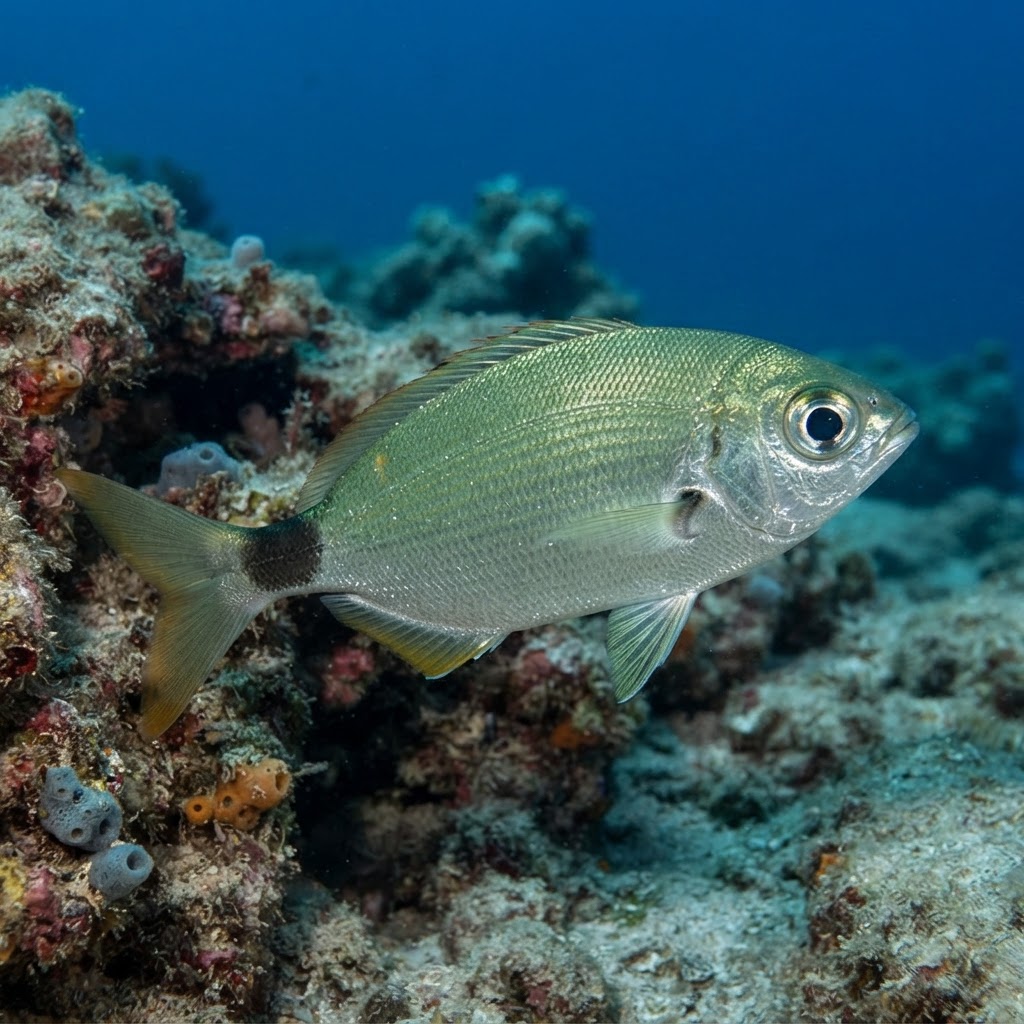
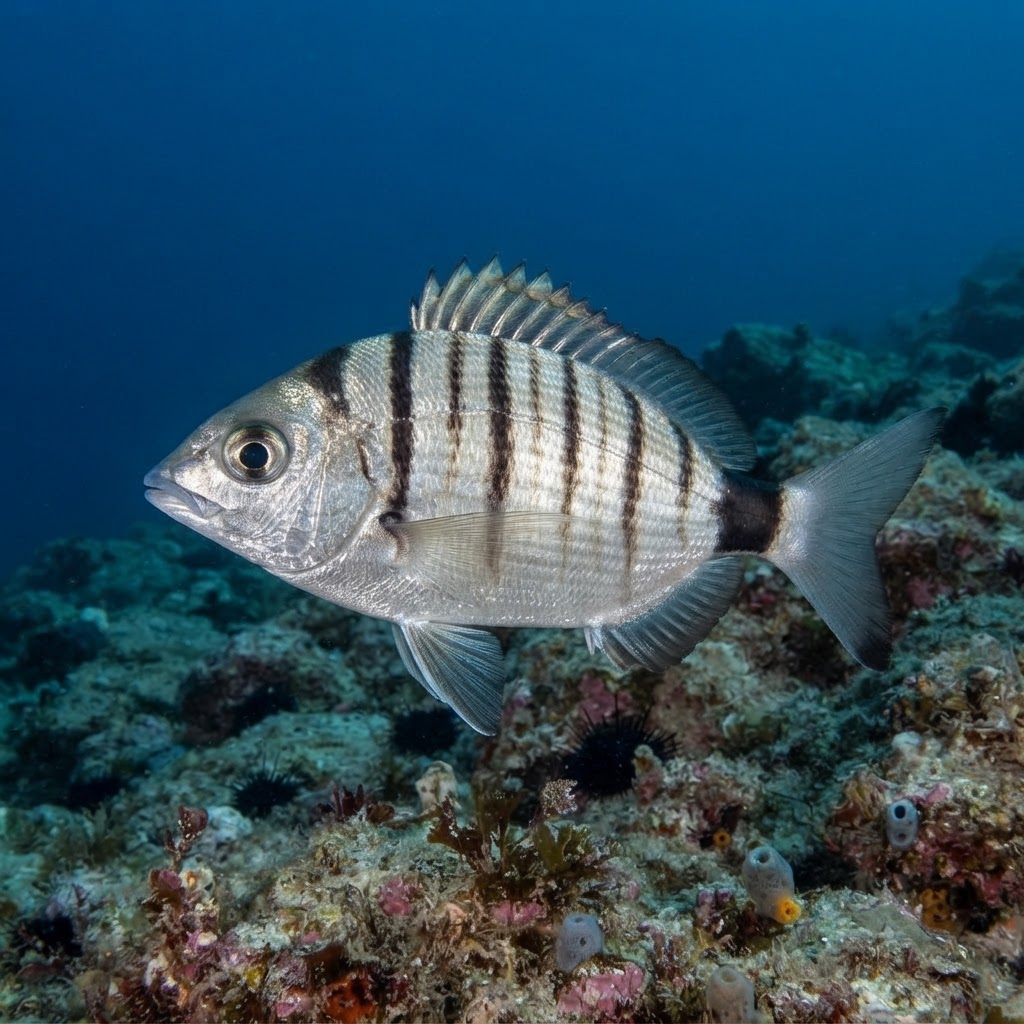
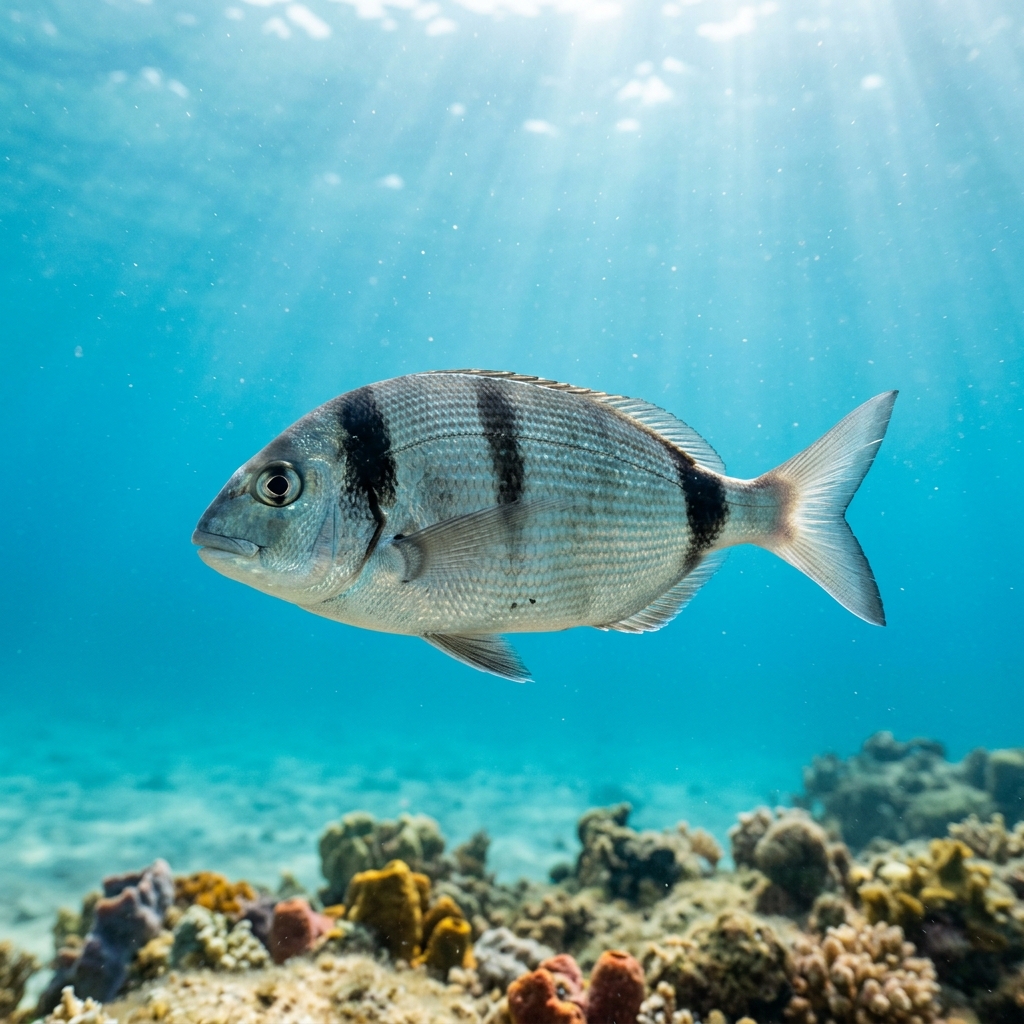
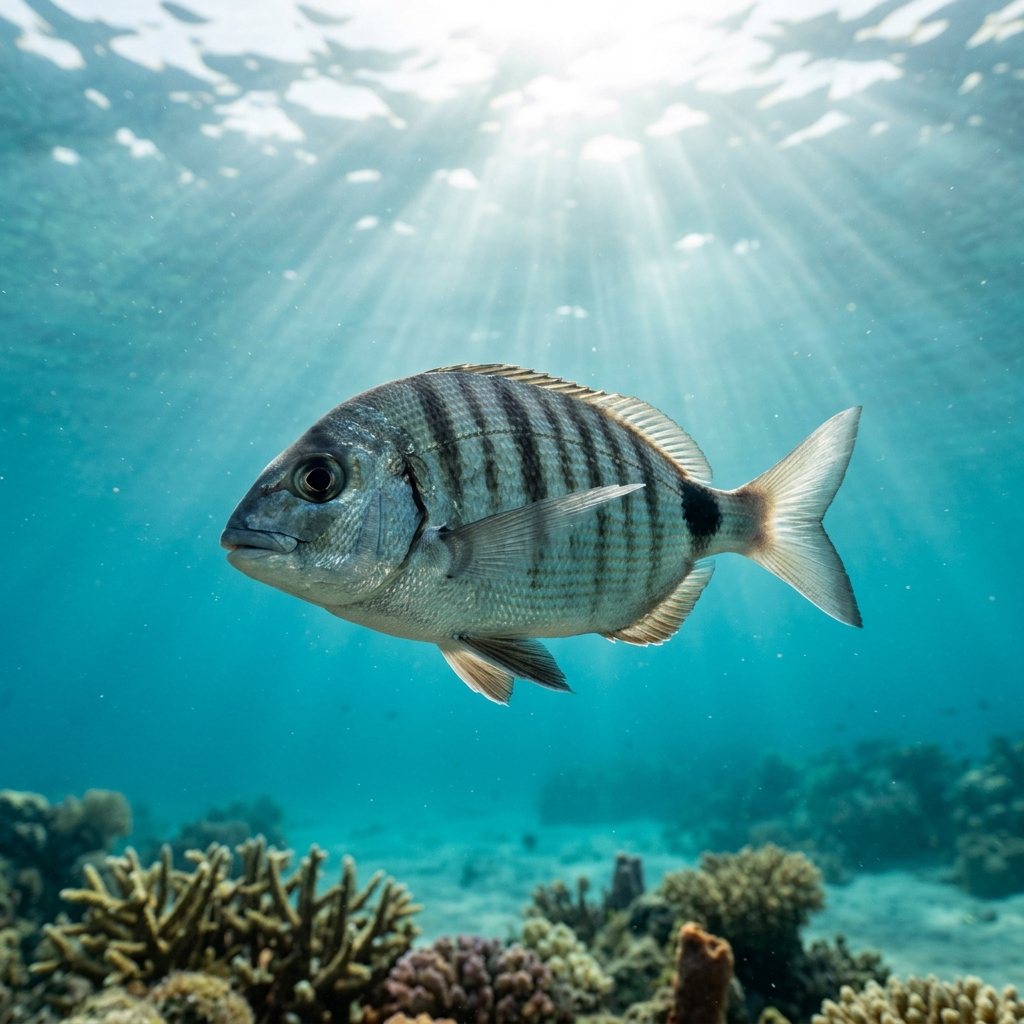
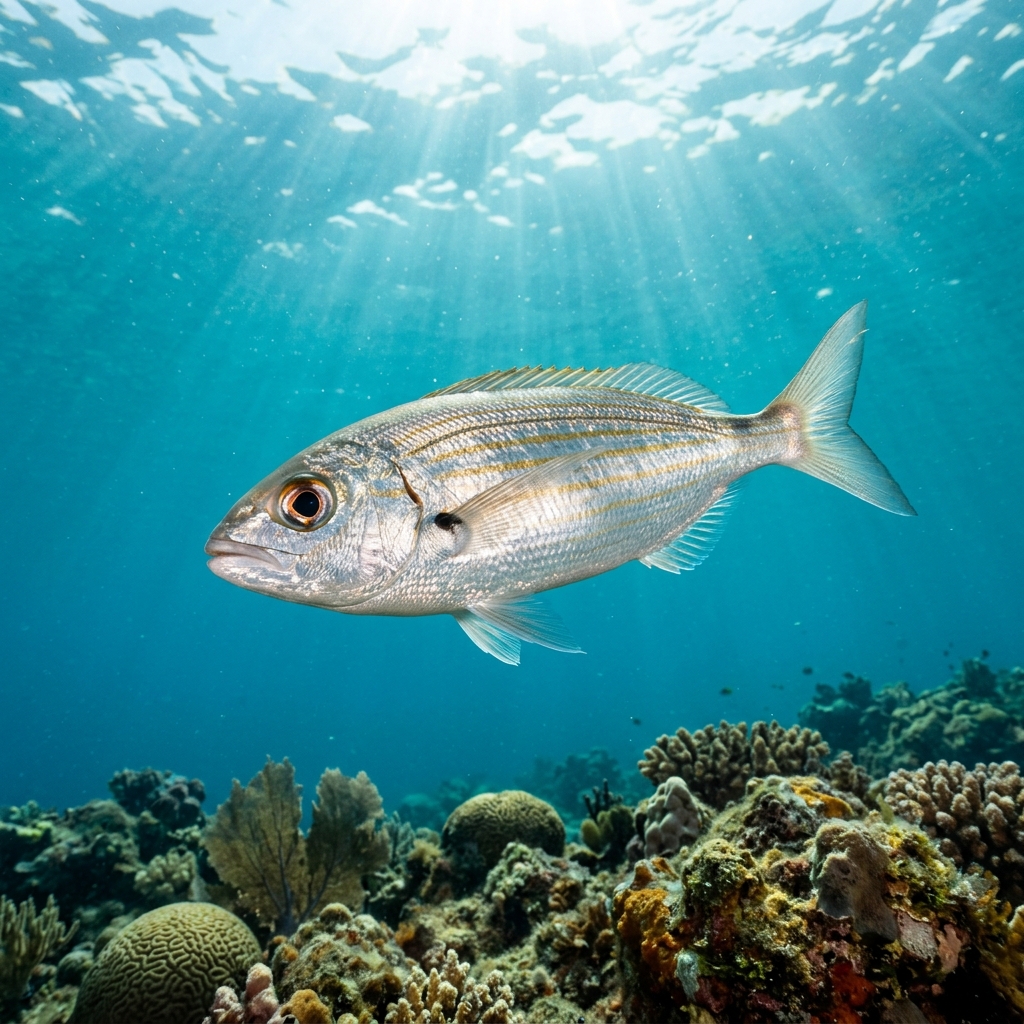
Elongate, silvery body marked with a series of dark vertical bars running down its flanks, which is where the common name comes from. Grows to around 38 cm, with a pointed snout adapted for probing sand for food and a slightly downturned mouth. Often seen close to the seabed, singly or in loose small groups, rather than schooling tightly like some other breams.
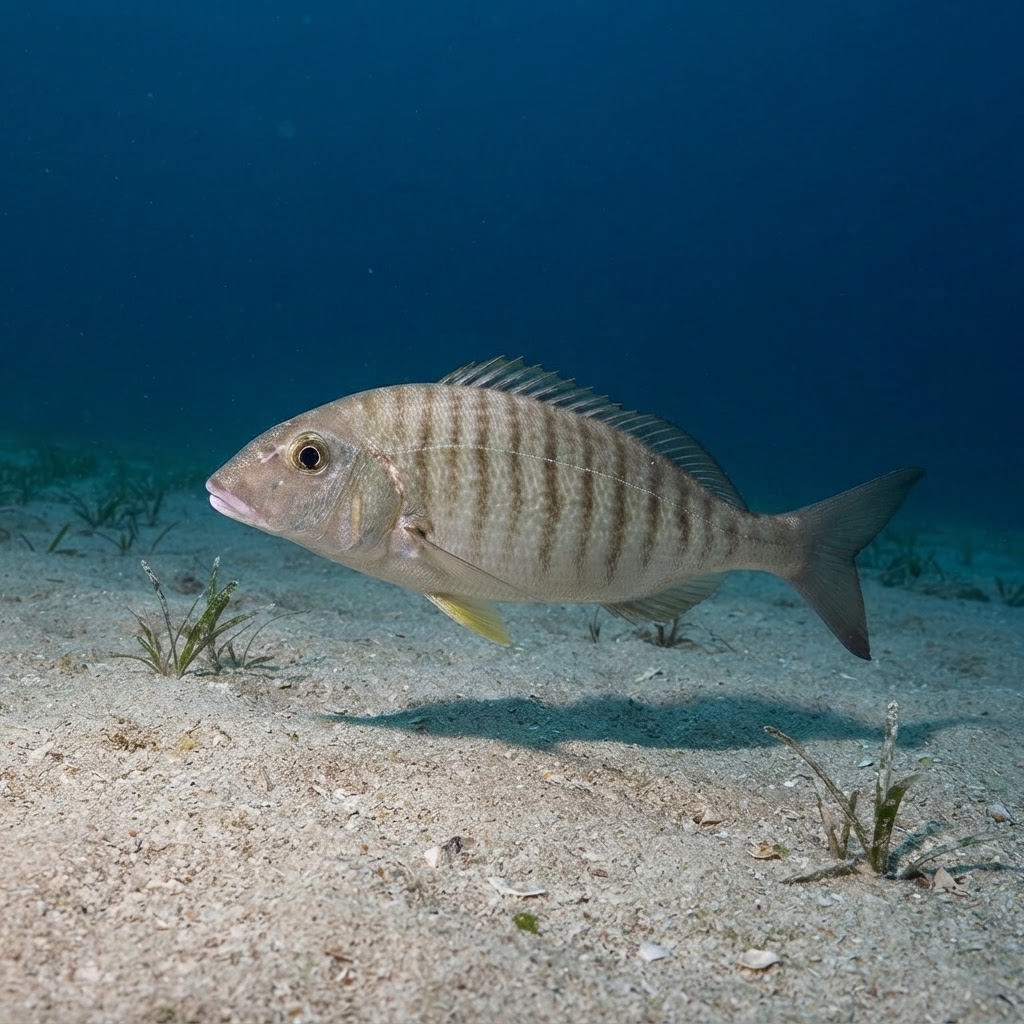
Divers most often find it cruising low over sand or sediment patches near reef edges, tilting nose-down to poke around for buried prey. It tends to be unbothered by divers at a normal distance, drifting off slowly rather than bolting, and is usually logged as an uncommon rather than everyday sighting even at its strongest sites.
Its pointed, slightly protruding snout is built for rooting through sand for buried invertebrates, a feeding style that sets it apart from bream that graze harder reef surfaces.
Sightings show no detected seasonal pattern, and its comfort range of 17.1 to 27.5C spans most Mediterranean and Canary Islands dive seasons, so it is a fair bet on any dive at these sites year-round.
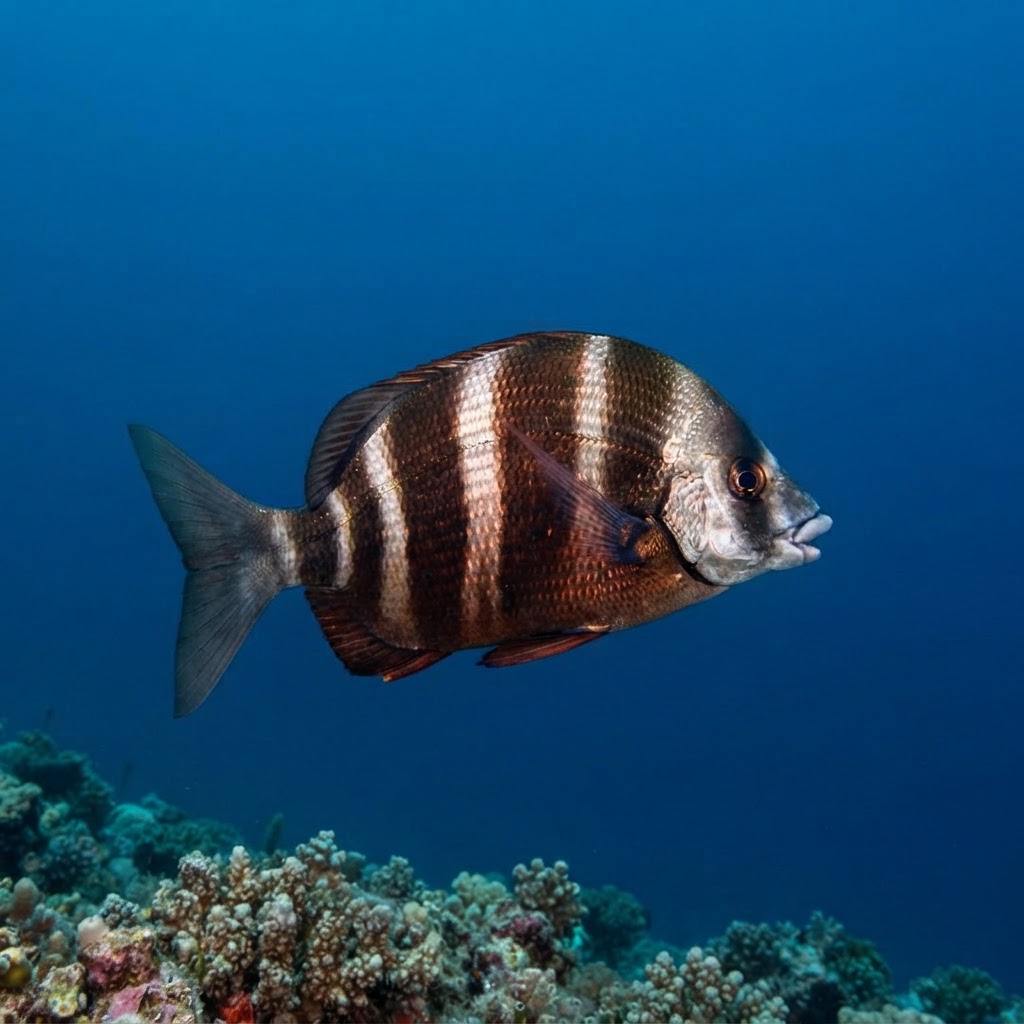
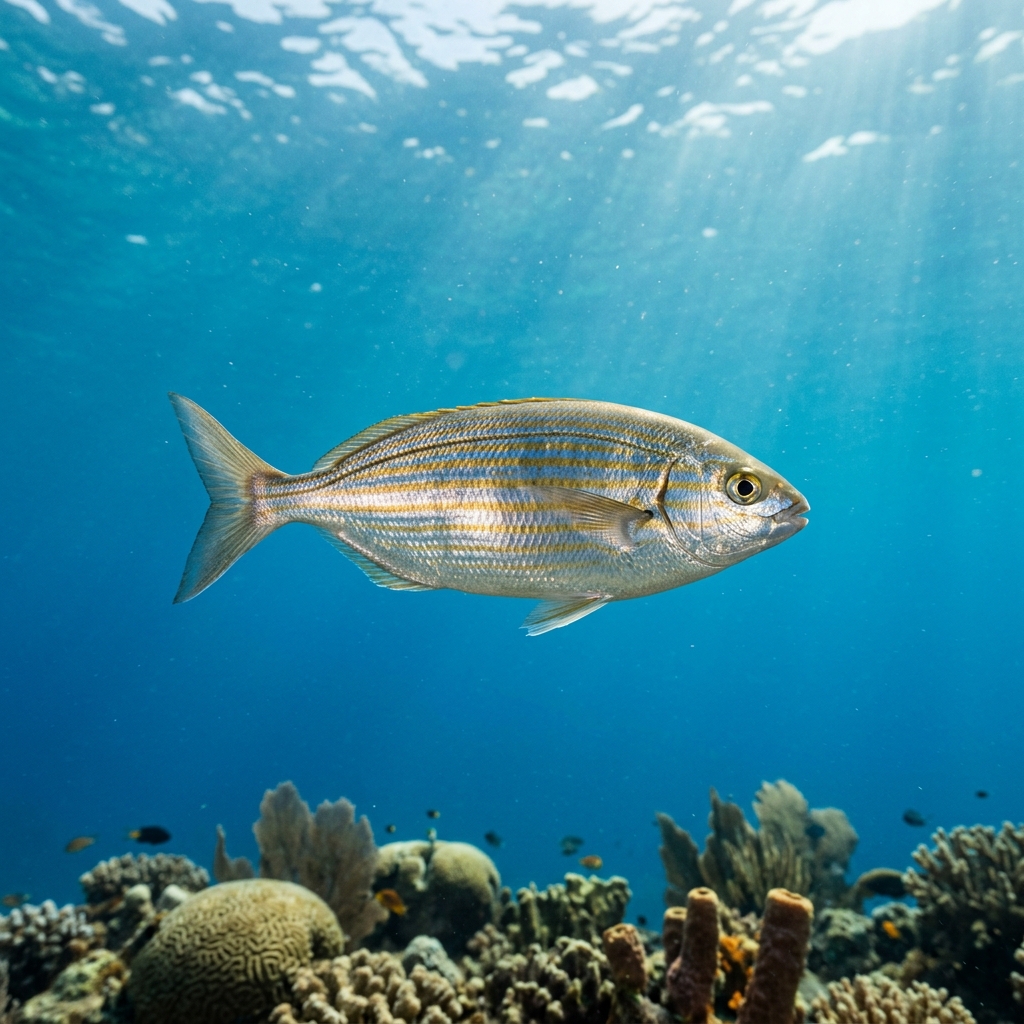
Reef neighbours a diver could mistake it for. Use the identification notes above to tell them apart.
Most reliably logged around Spain and the Canary Islands, with strong numbers in Murcia, Andalusia, Tenerife and Lanzarote, and also a common find in Italy, France, Greece, Croatia, Malta and Turkey. Regional hotspots include the French Riviera and Provence, Catalonia, Istria in Croatia, and the Ionian Islands in Greece, generally over sandy or mixed sediment close to reef structure.
Mapping where Striped Seabream is logged…
Spain and the Canary Islands are the strongholds, especially Murcia, Andalusia, Tenerife and Lanzarote. It also turns up reliably in Italy, France, Greece, Croatia, Malta and Turkey, usually over sand patches near reef structure.
There is no strong seasonal pattern in sightings, and its temperature range of 17.1 to 27.5C covers most of the diving calendar at Mediterranean and Canary Islands sites, so it can turn up on any dive through the year.
Look for a silvery, elongate fish around 38 cm with a row of dark vertical bars along its sides and a pointed snout angled toward the sand. It is usually seen alone or in small loose groups hovering just above the seabed rather than in tight schools.
They typically reach about 38 cm in length, making them a mid-sized bream easily distinguished from bulkier reef fish by their slim, elongate shape.
Their standout trait is a pointed snout used to root through sand for buried invertebrates, a feeding technique that keeps them close to the seabed rather than up in the water column like many reef fish.
Site and sighting data is aggregated from diver logs, iNaturalist and GBIF. For taxonomy and conservation status:
Saddled Bream
3,846 sites