Scarus frenatus
Spot Sixband Parrotfish on reefs across the Maldives, Red Sea and Indo-Pacific. Most sightings fall Jul, Dec in the north. Here's what to look for.
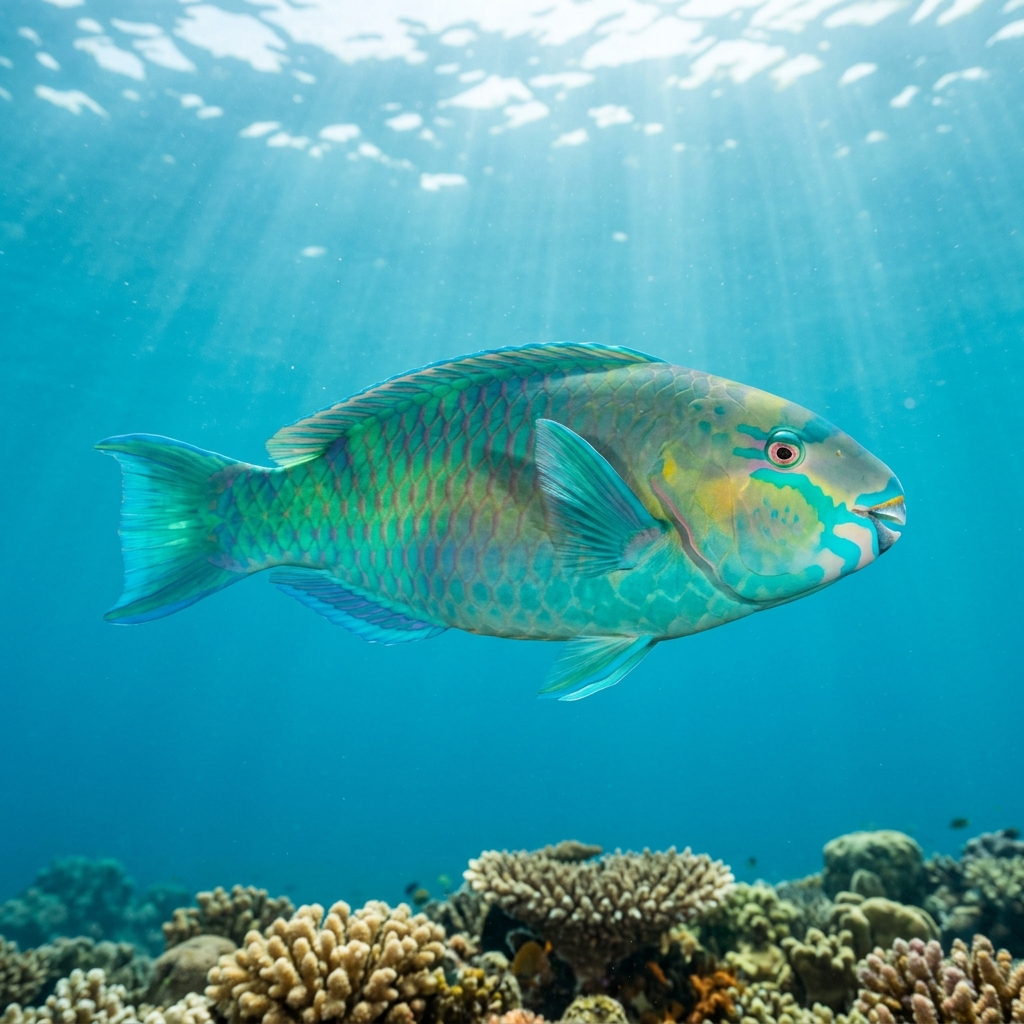
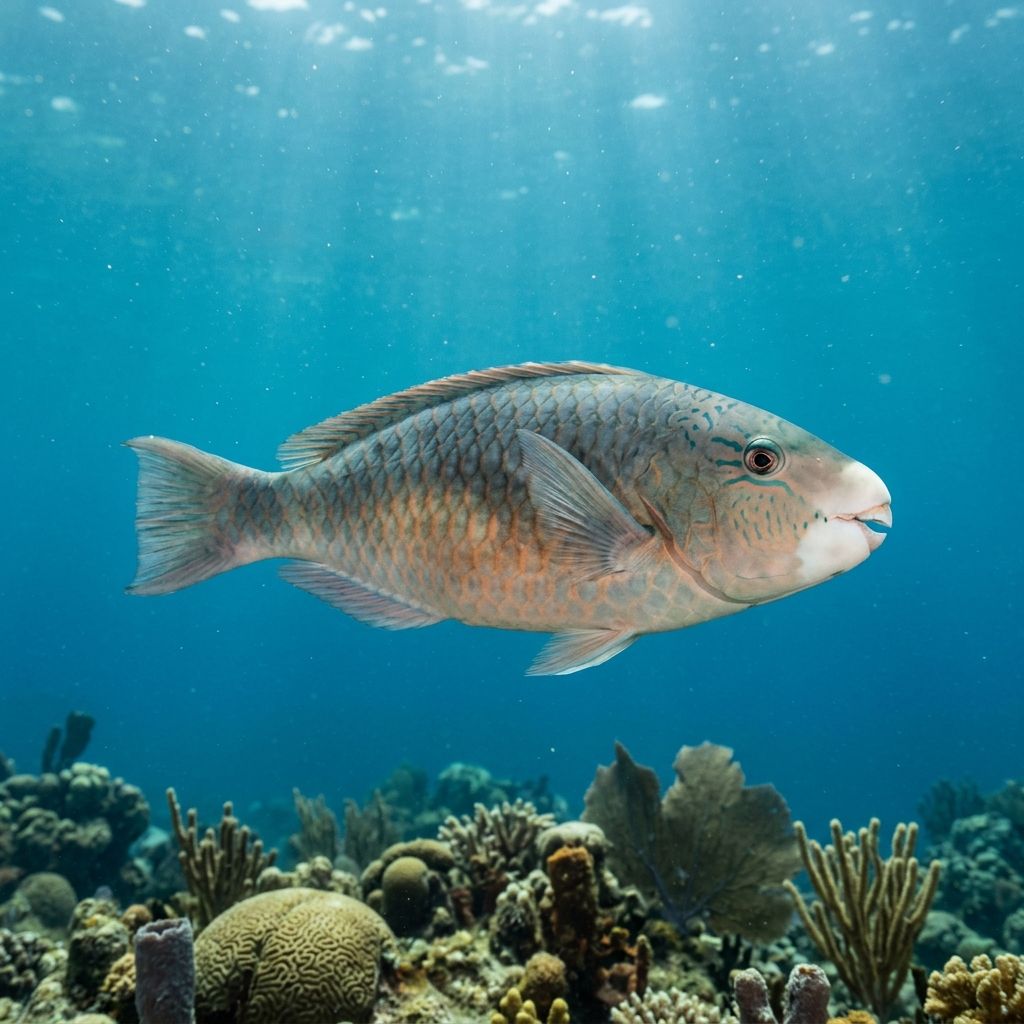
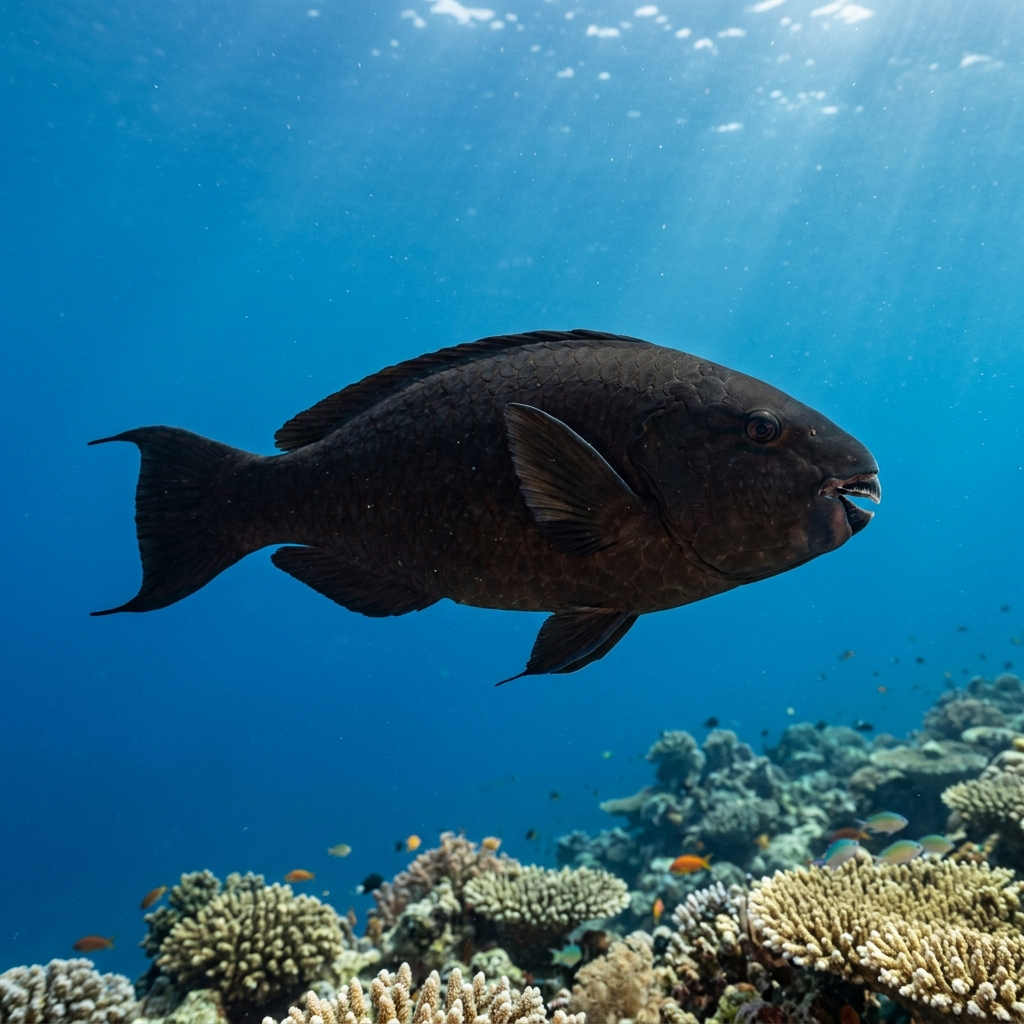
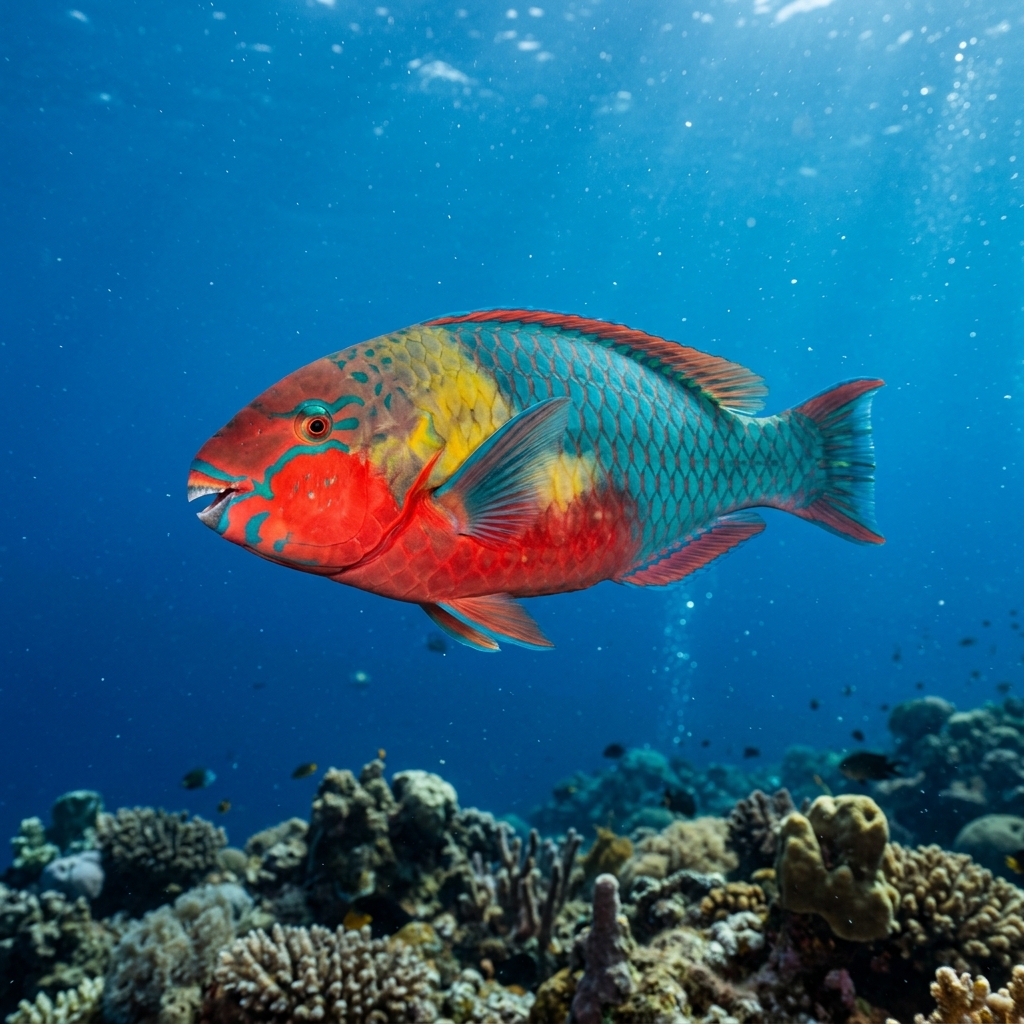
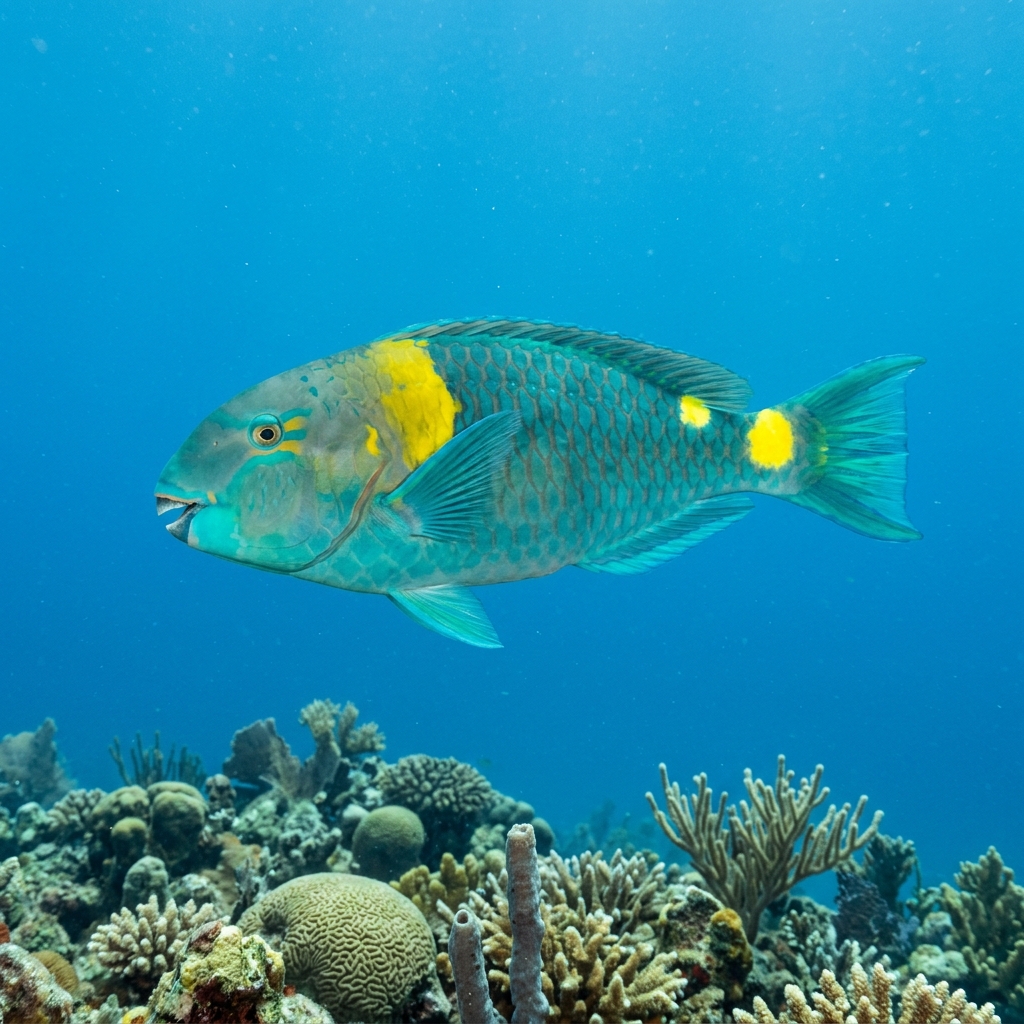
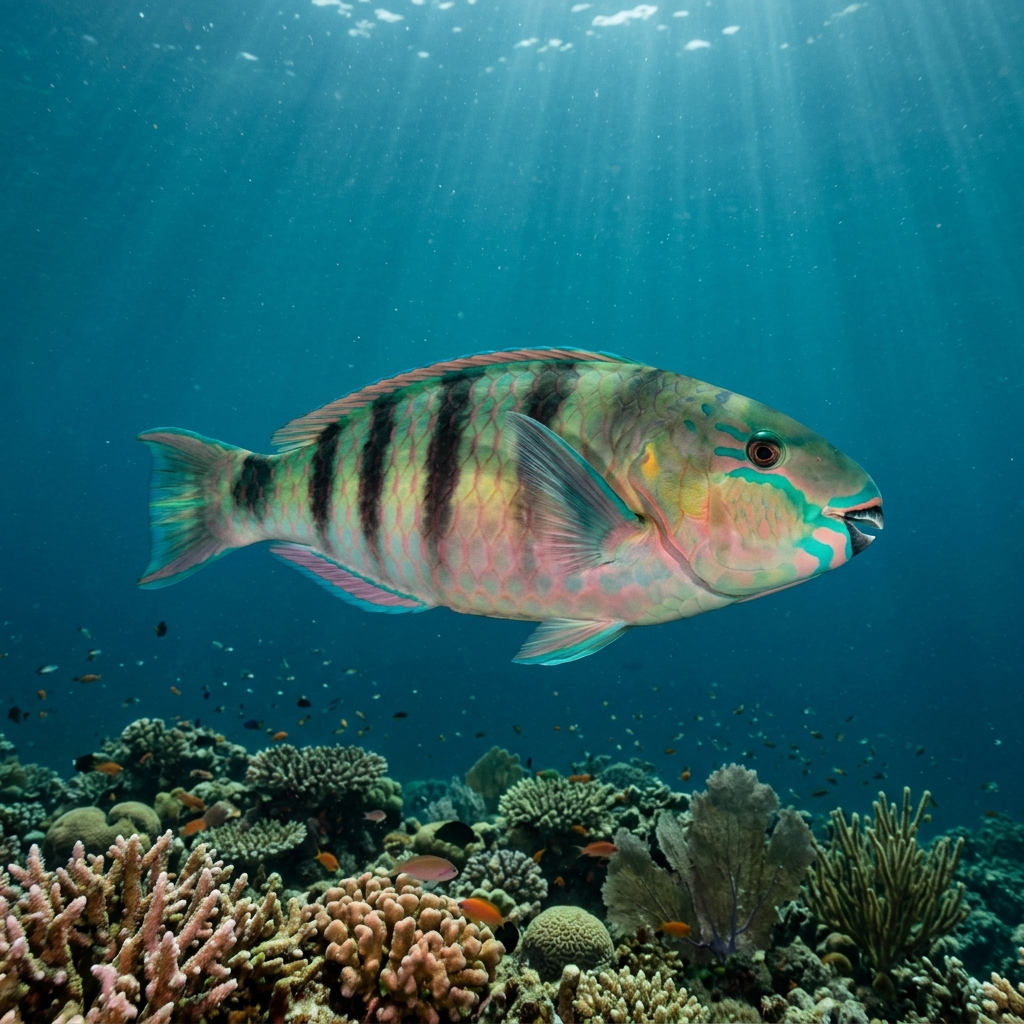
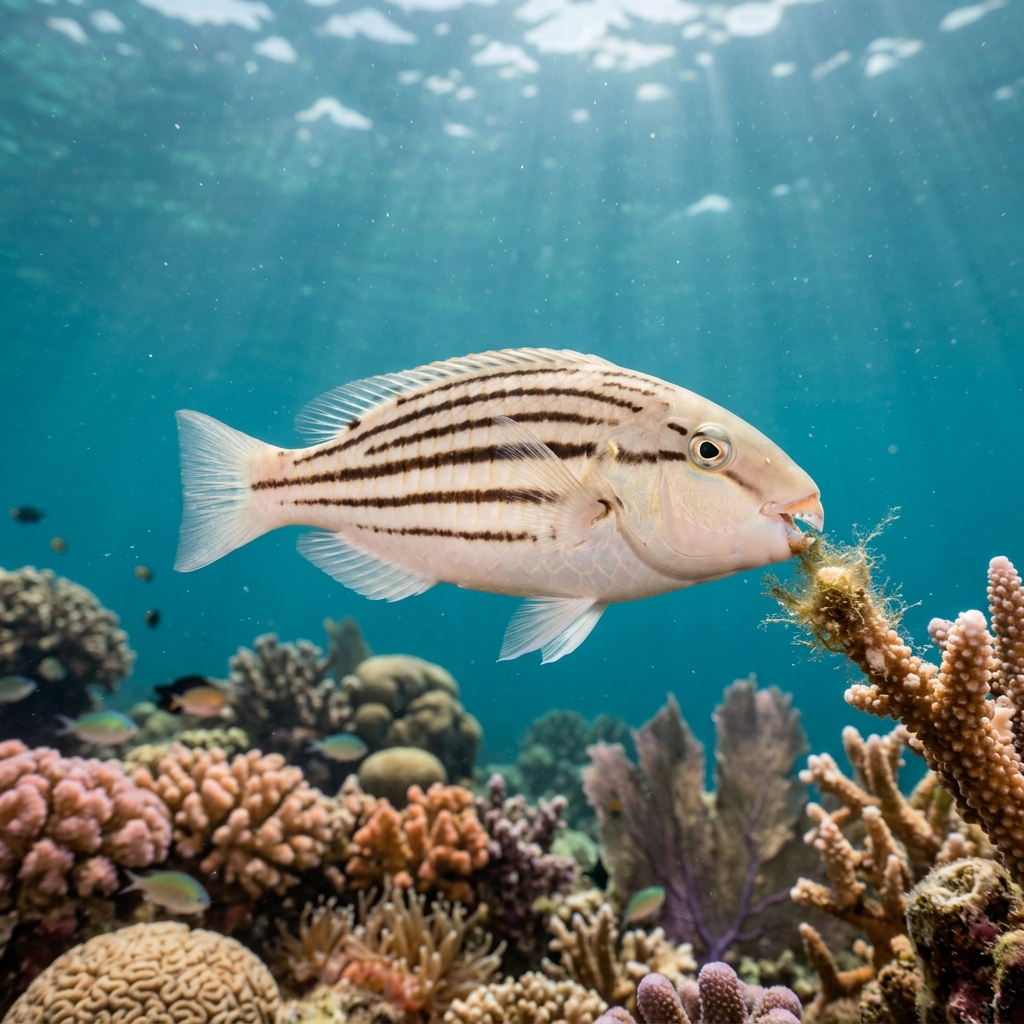
At around 30 cm, this is a mid-sized parrotfish with the chunky, beak-fronted body shape typical of the family. Terminal-phase (dominant) males are the most striking, showing vivid blues and greens, while initial-phase fish, females and some males, wear duller reddish-brown or mottled tones that can blend surprisingly well with the reef. The banded patterning on the body is the key field mark to hold onto, though colours vary considerably between phases. Juveniles are a different animal altogether: pale or whitish with dark horizontal stripes running the length of the body.
Sixband parrotfish are relaxed around divers and rarely break off feeding when you approach, they have better things to do, namely scraping algae off hard coral and rock. You will often hear them before you see them: the distinctive crunching sound of a parrotfish beak at work carries well underwater and is one of the defining sounds of a healthy shallow reef. They forage individually or in loose groups during daylight hours, most active on the shallowest parts of the reef where algal growth is densest.
All that crunching produces something tangible: parrotfish excrete the ground-up coral skeleton as fine white sand, contributing meaningfully to the sandy sediment on many tropical reefs. A single parrotfish can produce hundreds of kilograms of sand per year.
In the Northern Hemisphere, sightings concentrate from July through December, making the second half of the year the most productive across the Red Sea and tropical Pacific. Southern Hemisphere records peak during September to January and again March to June, aligning with the warmer end of its observed 24-29 °C temperature range.
Reef neighbours a diver could mistake it for. Use the identification notes above to tell them apart.
Most commonly logged in the Maldives, where both Male and Ari Atolls and the North and Central Atolls produce consistent records, and across the Indo-Pacific more broadly in Australia, Indonesia, and the Philippines. The Egyptian Red Sea, particularly Sharm el Sheikh, is the standout location outside of the Indo-Pacific, making this a species that rewards divers from nearly every major tropical destination. Thailand, Malaysia, and the Philippines round out a strong regional presence across Southeast Asia.
Mapping where Sixband Parrotfish is logged…
The Maldives leads all destinations for logged sightings, with strong records from both Male and Ari Atolls and the North and Central Atolls. The Indo-Pacific is the core range, covering Australia, Indonesia, the Philippines, Thailand, and Malaysia. The Egyptian Red Sea, especially Sharm el Sheikh, is the top spot outside of tropical Asia.
In Northern Hemisphere locations such as the Maldives, Red Sea, and Southeast Asia, sightings are most frequent from July through December. In the Southern Hemisphere, records are strongest from September to January and again from March to June.
Look for a mid-sized parrotfish around 30 cm long with banded patterning and a fused beak. Terminal-phase males are vivid blue-green; initial-phase fish are reddish-brown and mottled. Striped, pale juveniles look quite different from adults and can cause confusion. The banded body pattern is the most reliable marker across phases.
They typically reach around 32 cm in length, solidly mid-sized for a parrotfish. They are chunky in build, which combined with the prominent beak makes them easy to place in the family even if the colour phase throws you off.
They are herbivores that scrape algae from hard coral and rock using their fused beak-like teeth. The crunching sound this produces is audible underwater and is a reliable clue that a parrotfish is nearby. The ground-up coral material passes through and is excreted as fine sand, making parrotfish important contributors to reef sediment.
Site and sighting data is aggregated from diver logs, iNaturalist and GBIF. For taxonomy and conservation status:
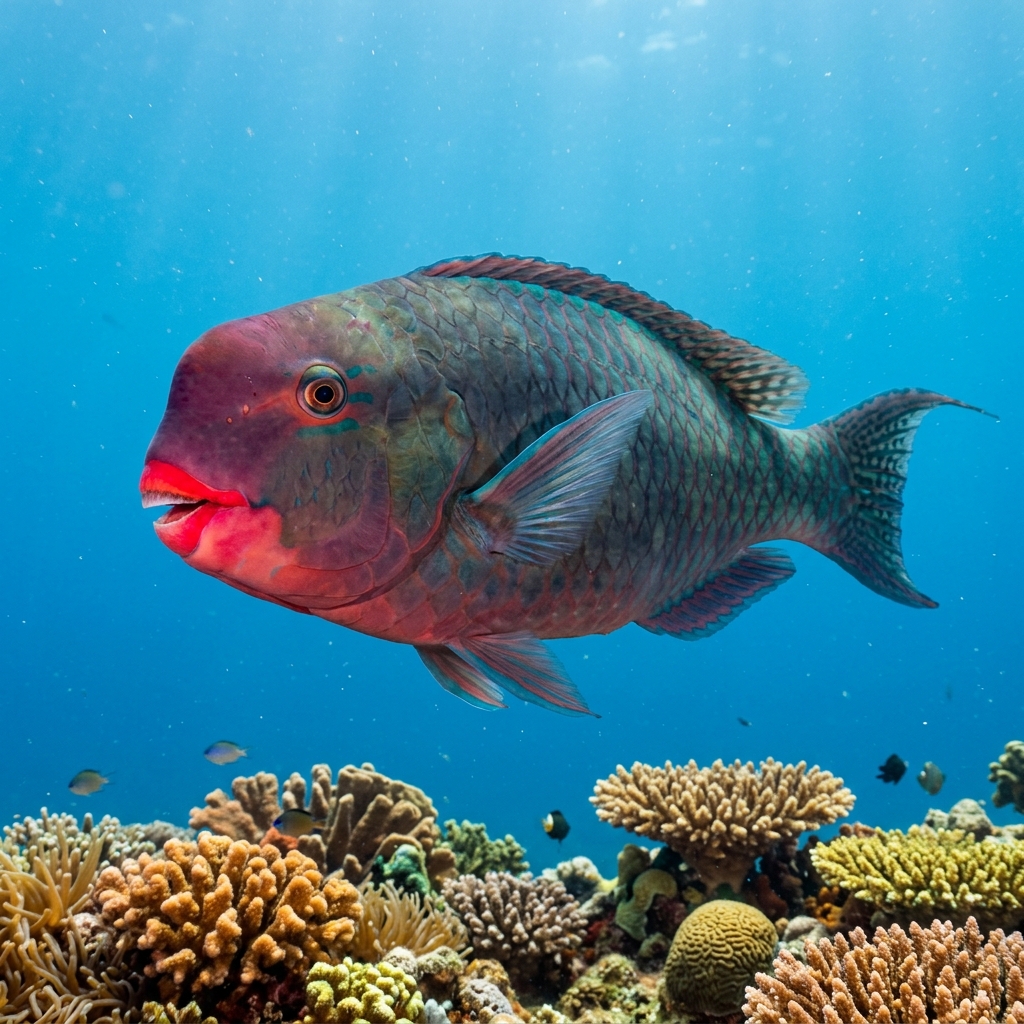
Redlip Parrotfish
2,789 sites