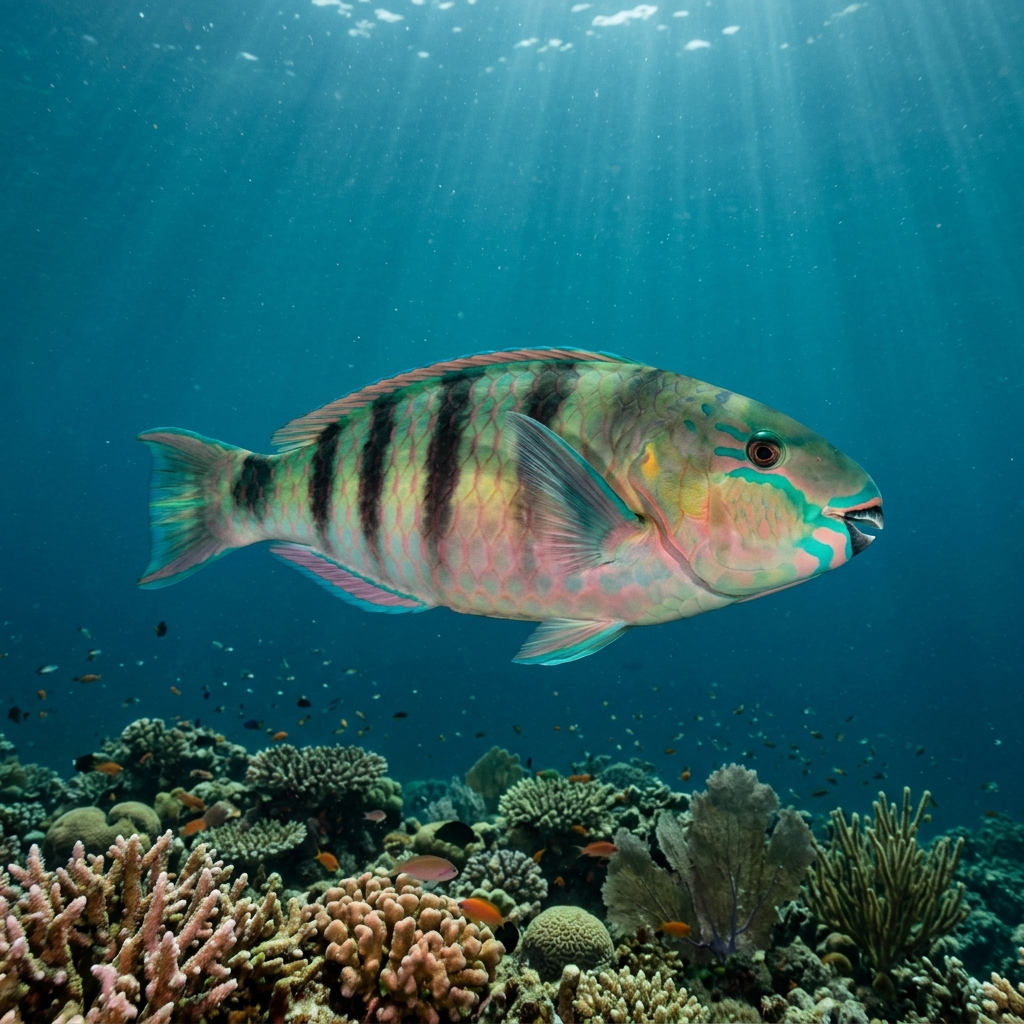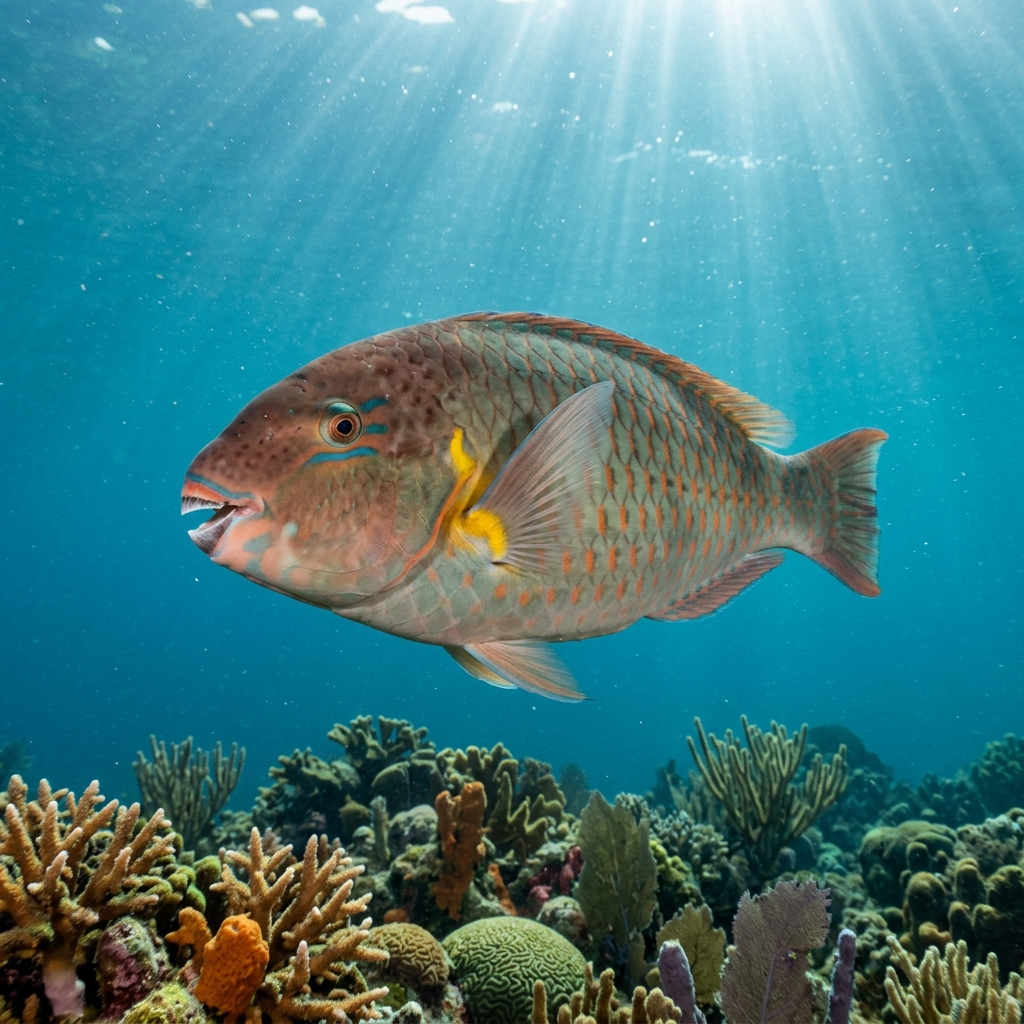
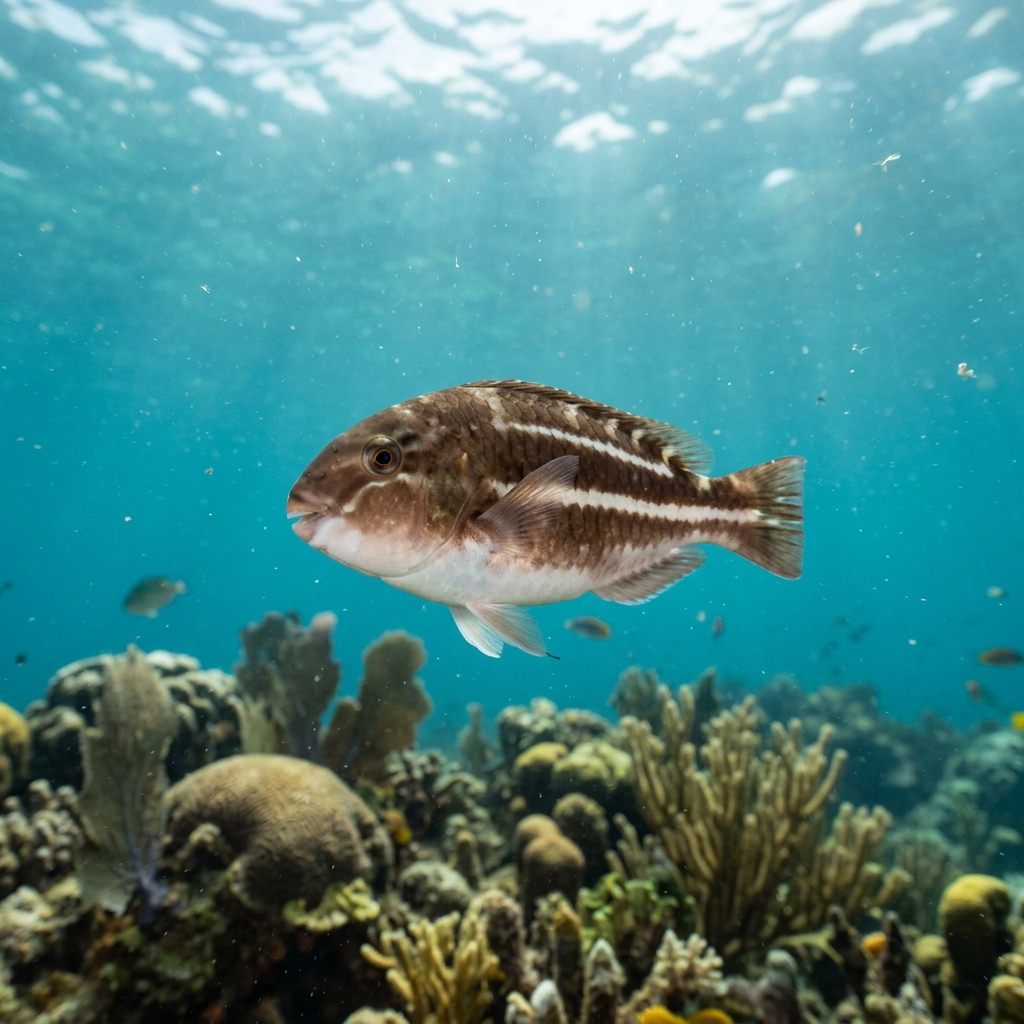
Sparisoma aurofrenatum
Spot the Redband Parrotfish on Caribbean reefs from Roatán to Bonaire. Year-round presence, warm 26-28 °C water, and a distinctive red facial band make it unmistakable.
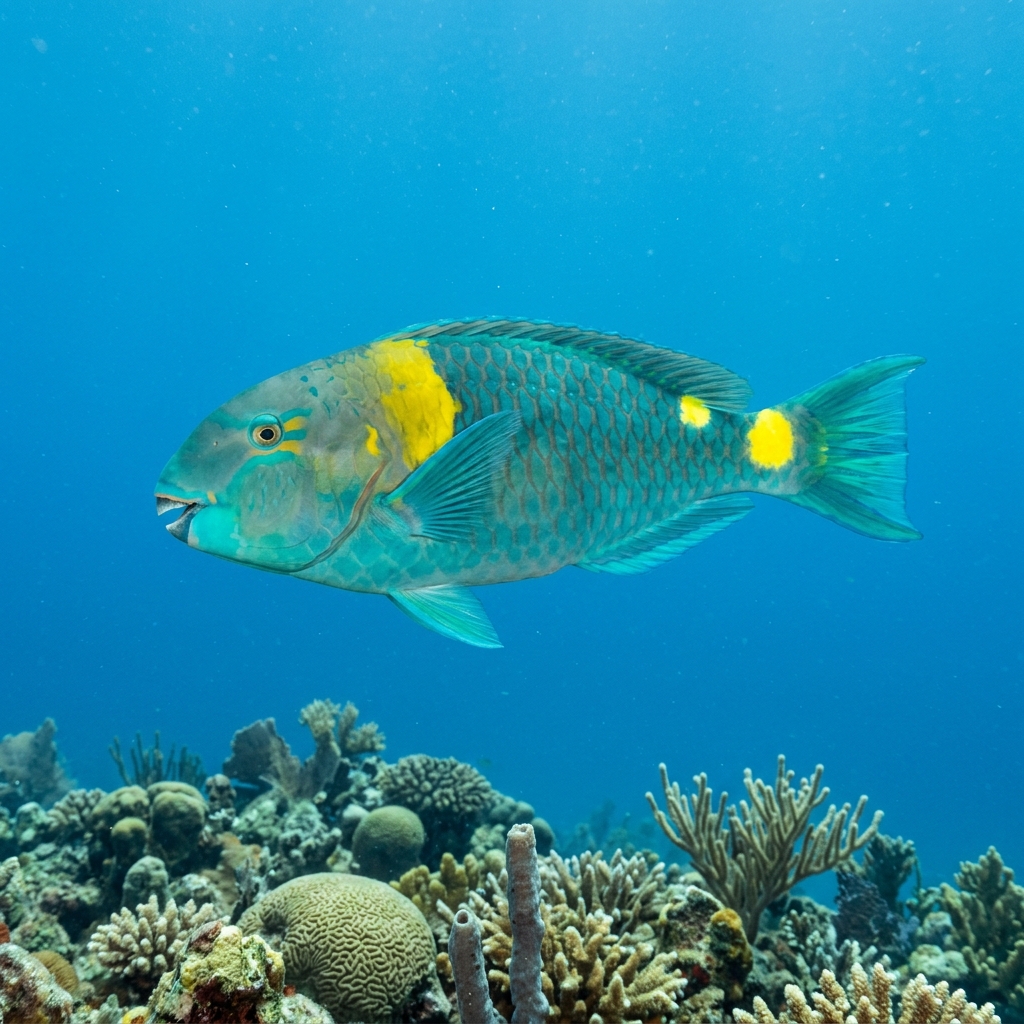
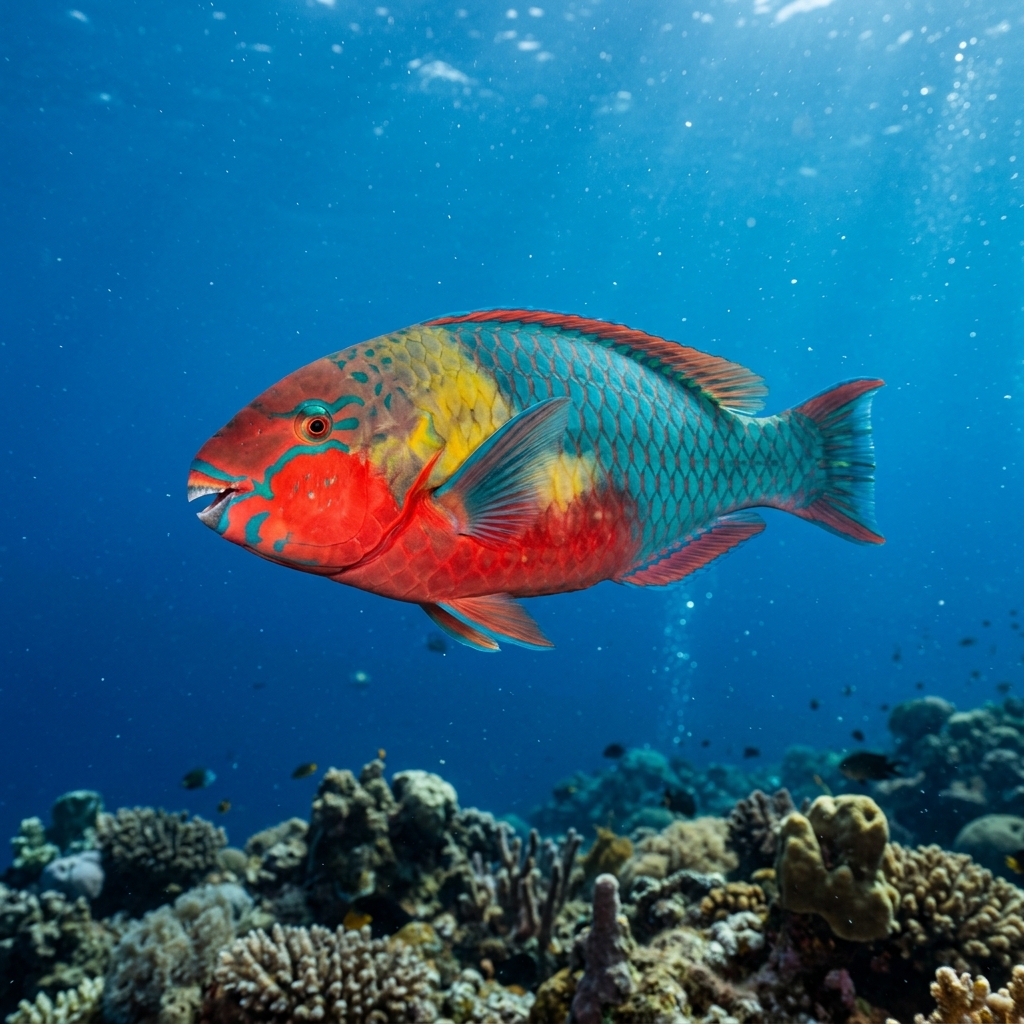
A compact, roughly 19 cm parrotfish most easily keyed on the vivid red-orange band across the face, running from the mouth toward the eye, the feature that earns its name. Terminal-phase (dominant) males wear bright green and blue-green scales in bold contrast, while initial-phase fish, including females, show a duller brownish body that still carries that diagnostic red facial marking. The fused beak-like teeth, typical of parrotfish, are obvious when you watch it scraping the reef. Juveniles are brown with two white horizontal stripes and look little like the adults.
Day-active and generally relaxed around divers, it typically carries on scraping algae from hard surfaces even when you move close, giving good observation time. You will hear as well as see it: the beak produces an audible crunch with each bite. If you crowd its feeding patch too closely it may drift a short distance away, but it rarely bolts entirely.
Like other parrotfish, it excretes the calcium carbonate it ingests while scraping algae, a single individual can produce a meaningful volume of fine white sand per year, making parrotfish a significant source of the sandy substrate on Caribbean beaches and reef flats.
Present year-round on tropical Caribbean reefs, it thrives in the 26-28 °C water typical of the region across all seasons, so there is no single peak window to aim for.
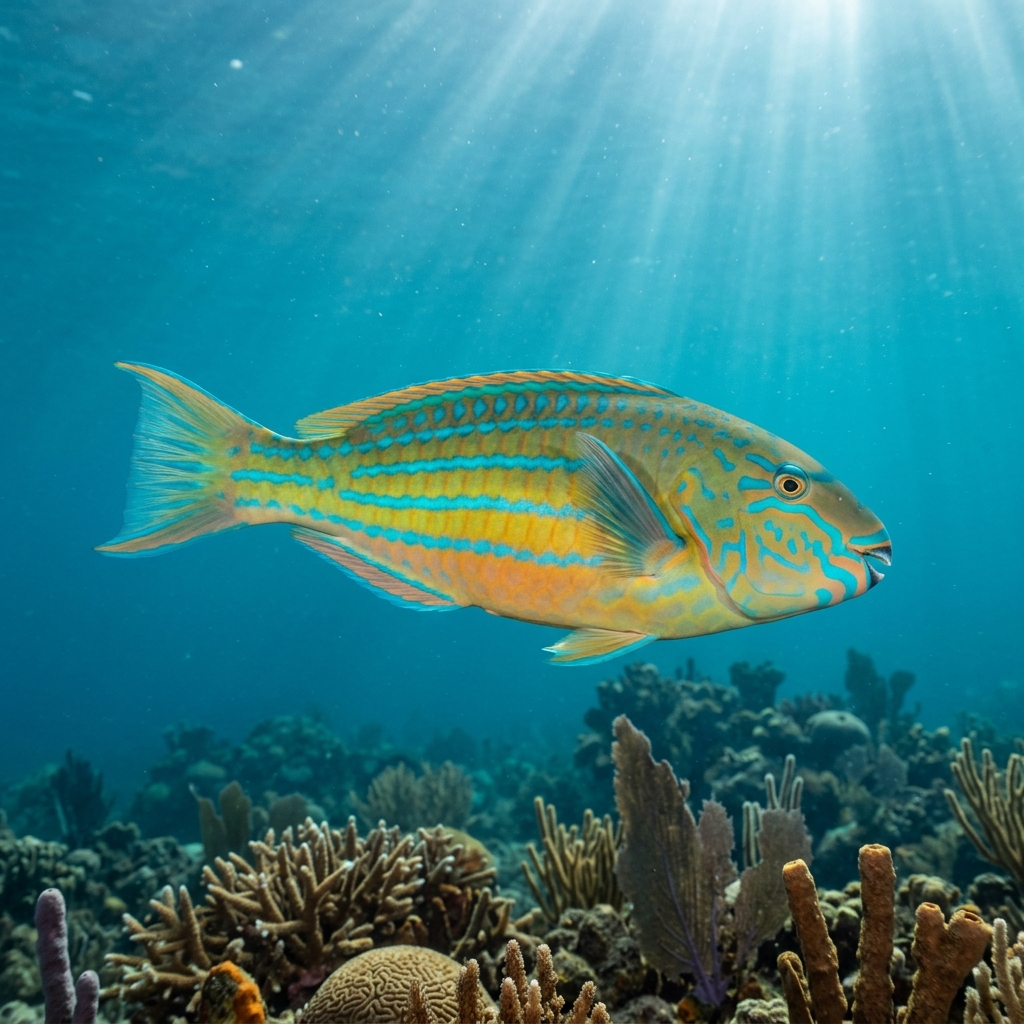
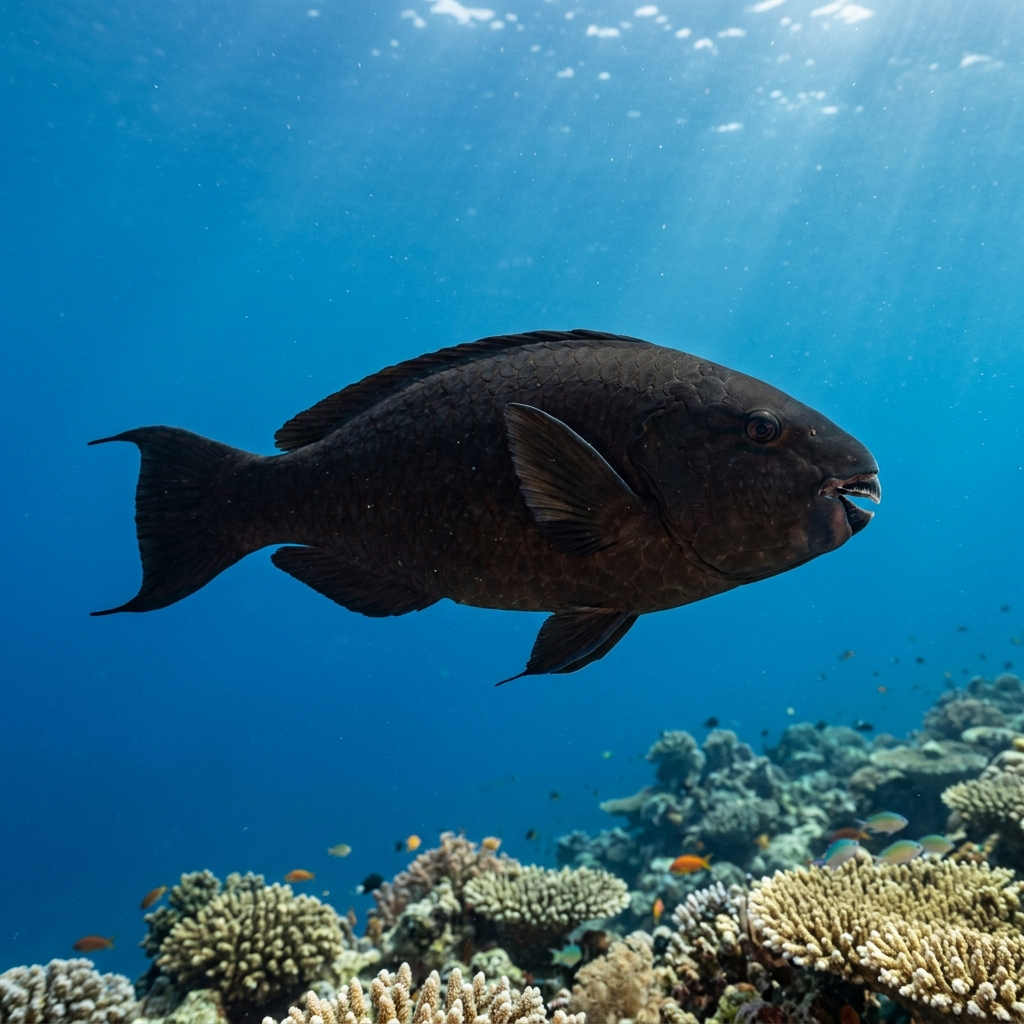
Reef neighbours a diver could mistake it for. Use the identification notes above to tell them apart.
Most consistently logged across the wider Caribbean, with particularly strong representation in Florida and the US Southeast, Roatán in Honduras, and Grand Cayman. Bonaire, Curaçao, and the Bahamas also show reliable sightings, and populations extend through Colombia, Cuba, and the British and US Virgin Islands.
Mapping where Redband Parrotfish is logged…
They are most commonly logged in the Caribbean and surrounding Atlantic waters. Top spots include Roatán in Honduras, Grand Cayman, Bonaire, Curaçao, the Bahamas, and sites throughout Florida. Coverage extends to Cuba, Colombia, and the US and British Virgin Islands.
There is no concentrated season, they are present on Caribbean reefs all year. The species is comfortable in water between roughly 26 and 28 °C, which describes most shallow Caribbean reef environments in every month.
Look for the red-orange band across the face near the mouth, that marking is present on both sexes and is the quickest field identifier. Males are green and blue-green; females and initial-phase males are brownish but still carry the red facial band. At around 19 cm they are noticeably smaller than many other Caribbean parrotfish.
They are a relatively small parrotfish, typically around 19 cm. That compact size helps distinguish them from larger Caribbean species like the Stoplight Parrotfish when you are trying to make a quick ID on the reef.
They scrape algae directly off hard coral and rock using fused, beak-like teeth. In doing so they ingest calcium carbonate, which they grind up and excrete as fine sediment, contributing meaningfully to sand production on Caribbean reefs and beaches. Their grazing also keeps algae from overgrowing coral.
Site and sighting data is aggregated from diver logs, iNaturalist and GBIF. For taxonomy and conservation status:
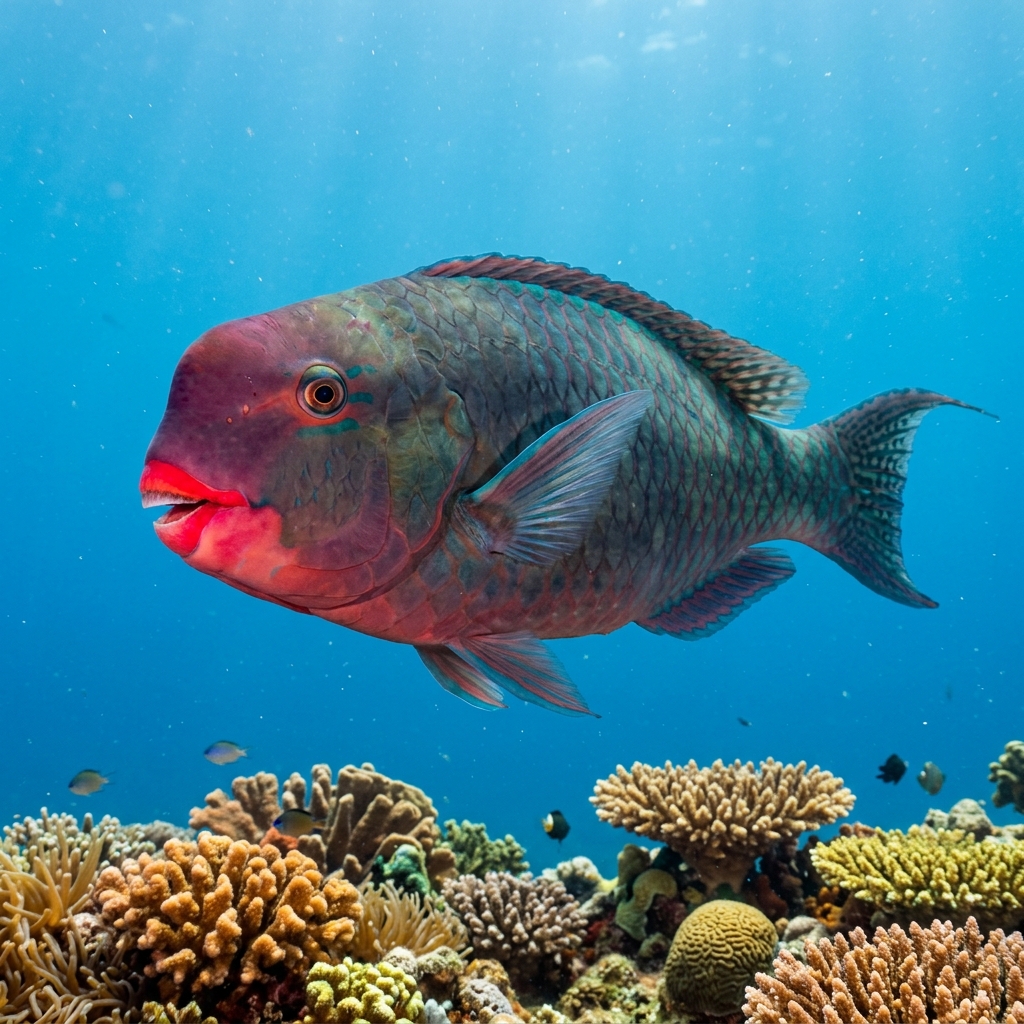
Redlip Parrotfish
2,789 sites