Scarus iseri
Spot Striped Parrotfish on Caribbean reefs from Florida to Roatán, most reliably Nov, Aug in warm 26-28 °C water. Learn how to ID them underwater.
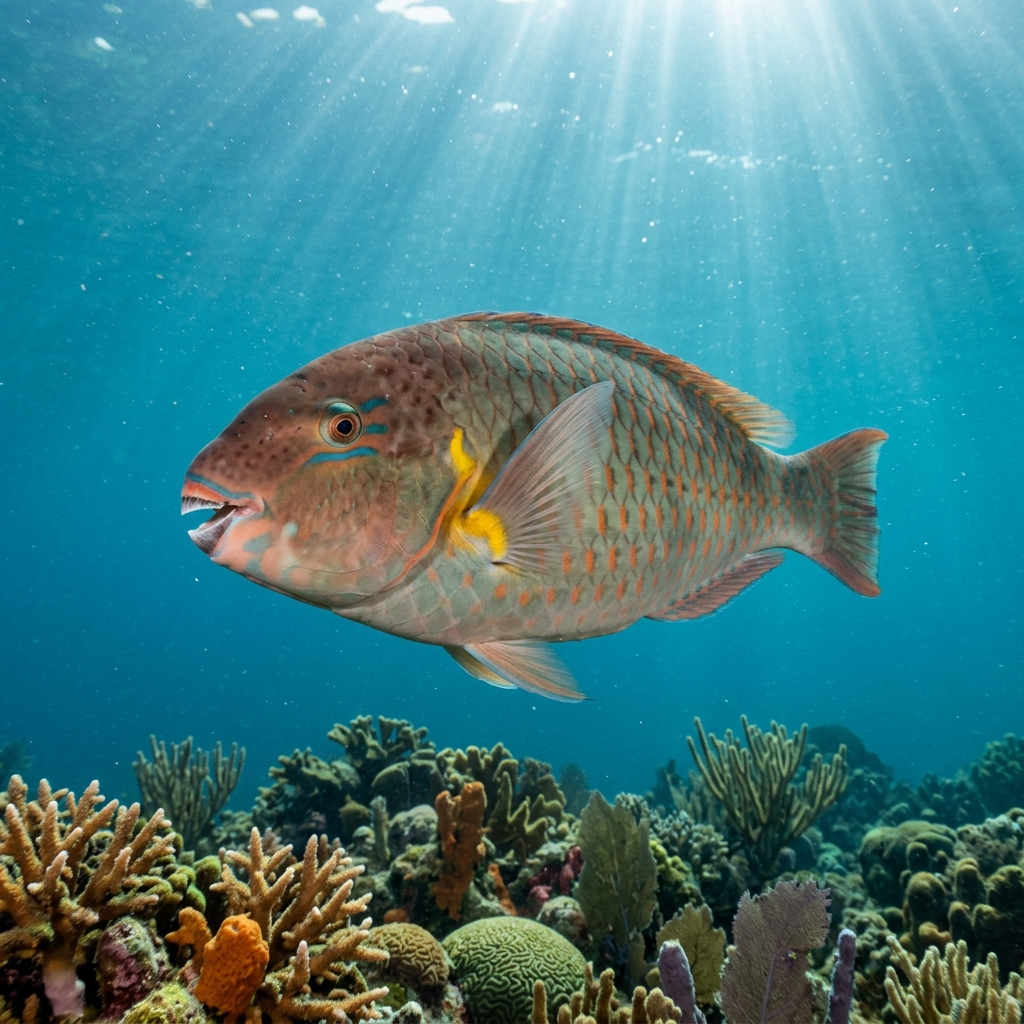
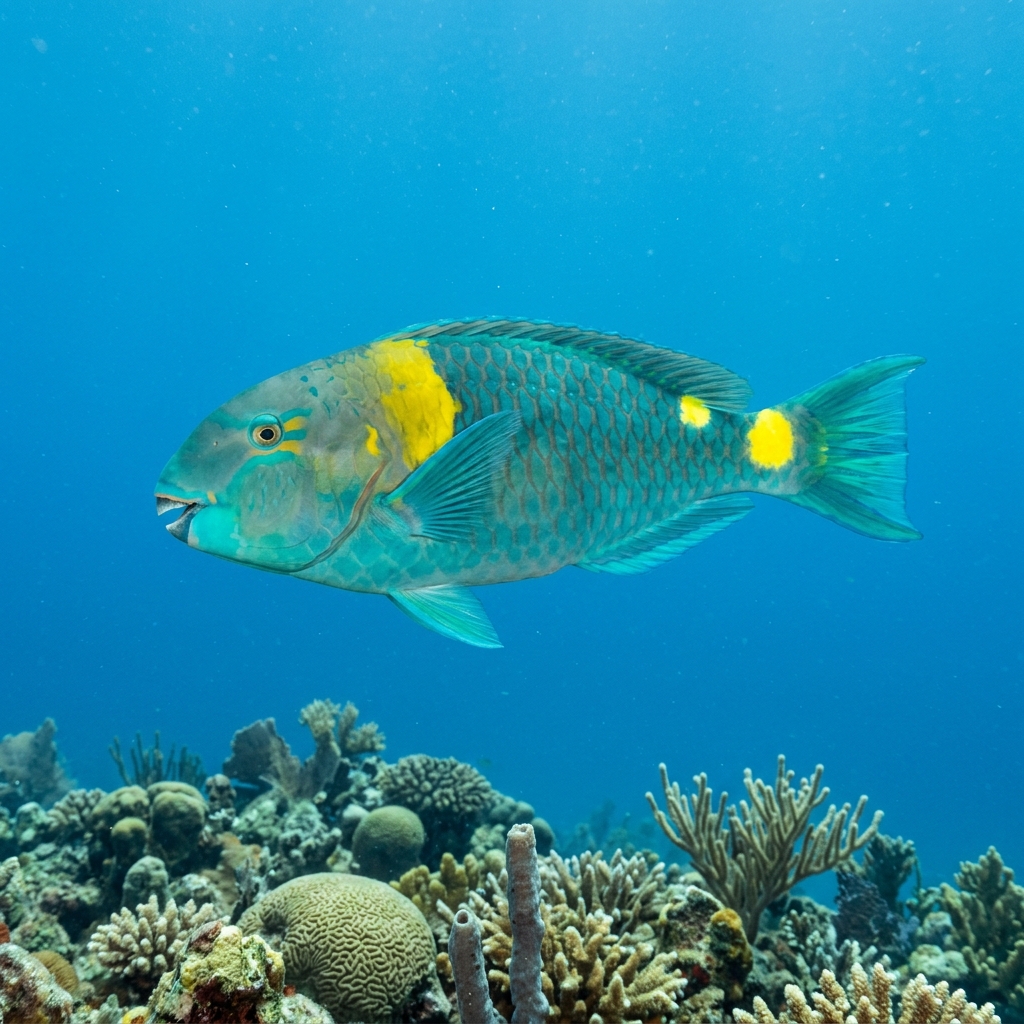
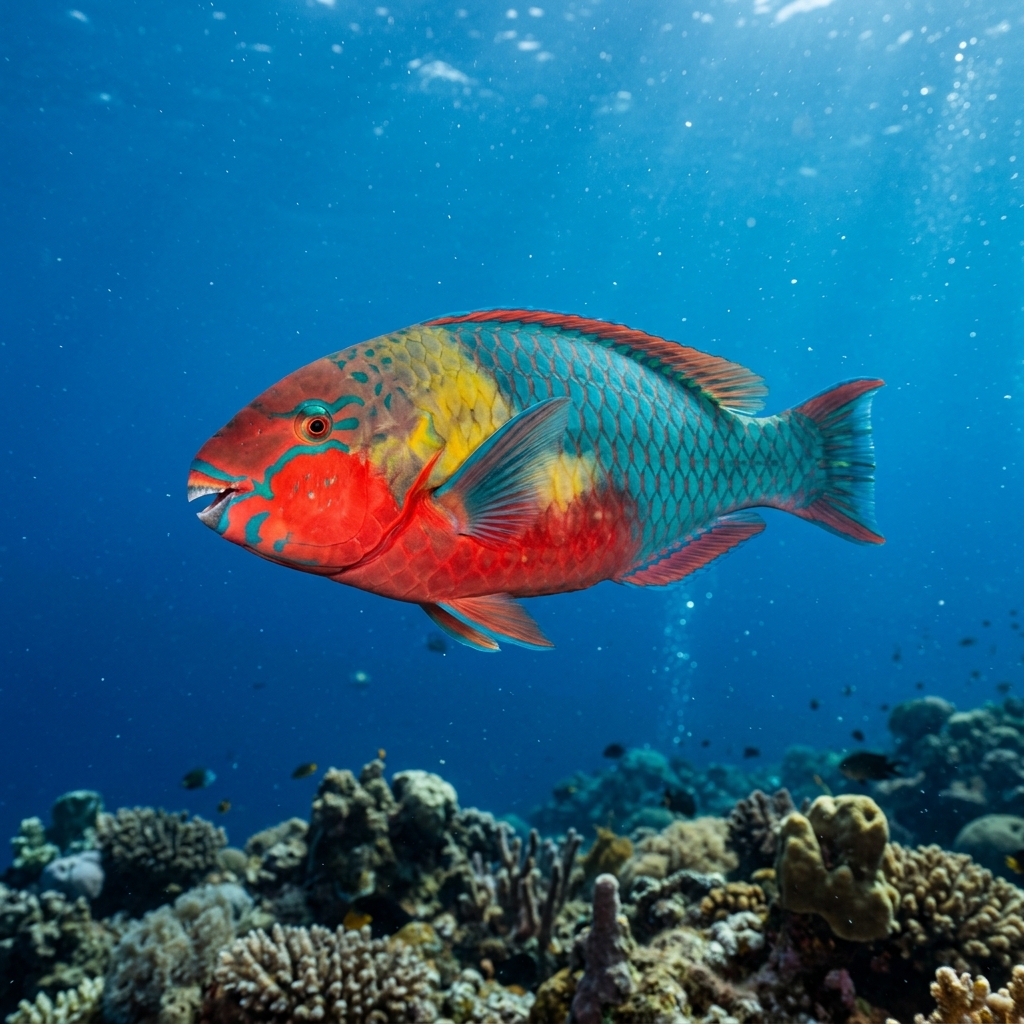
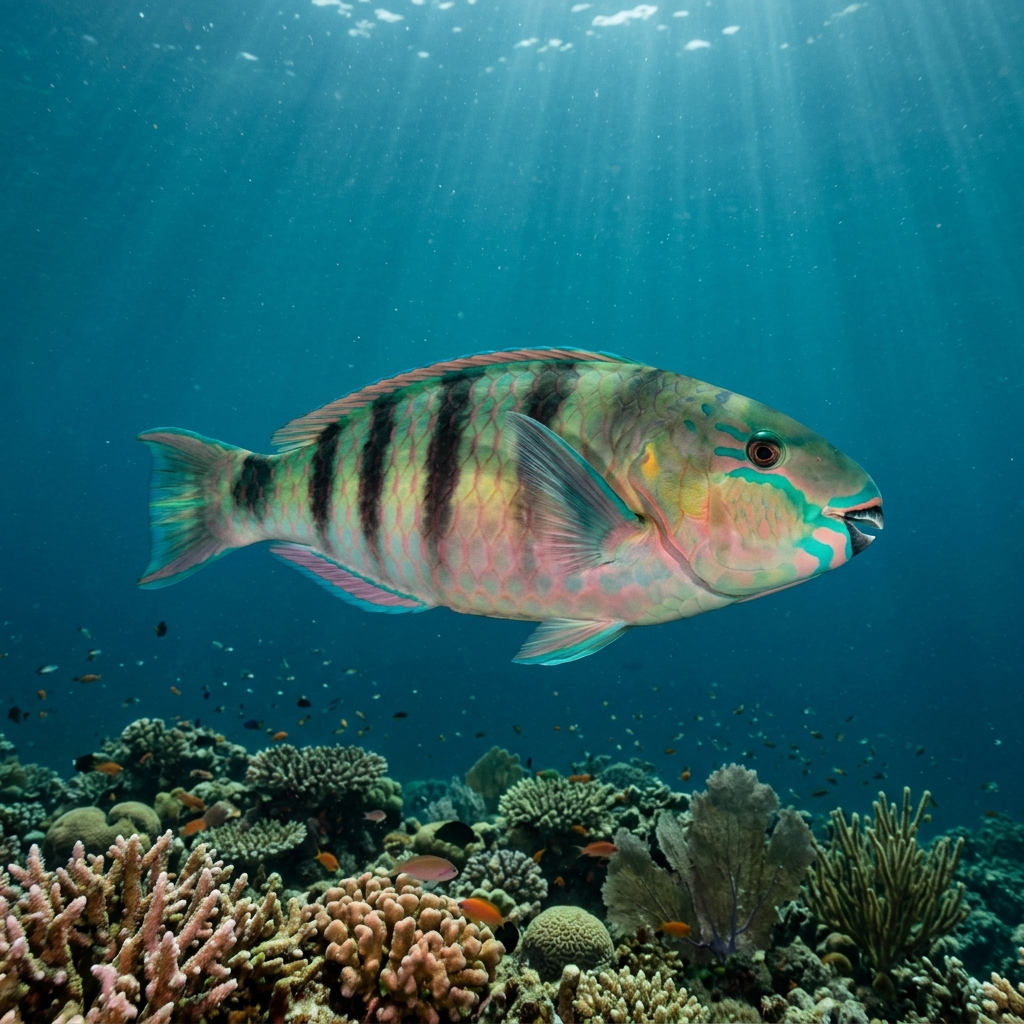
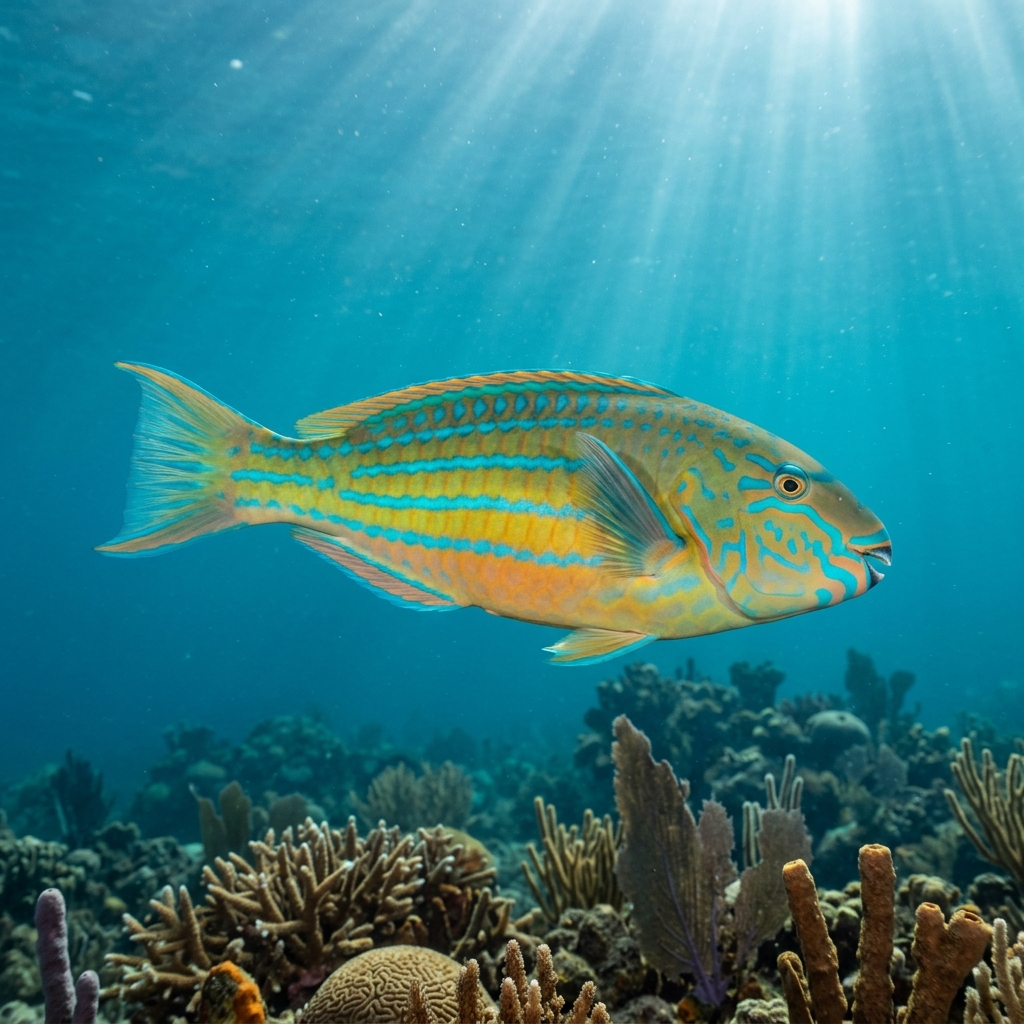
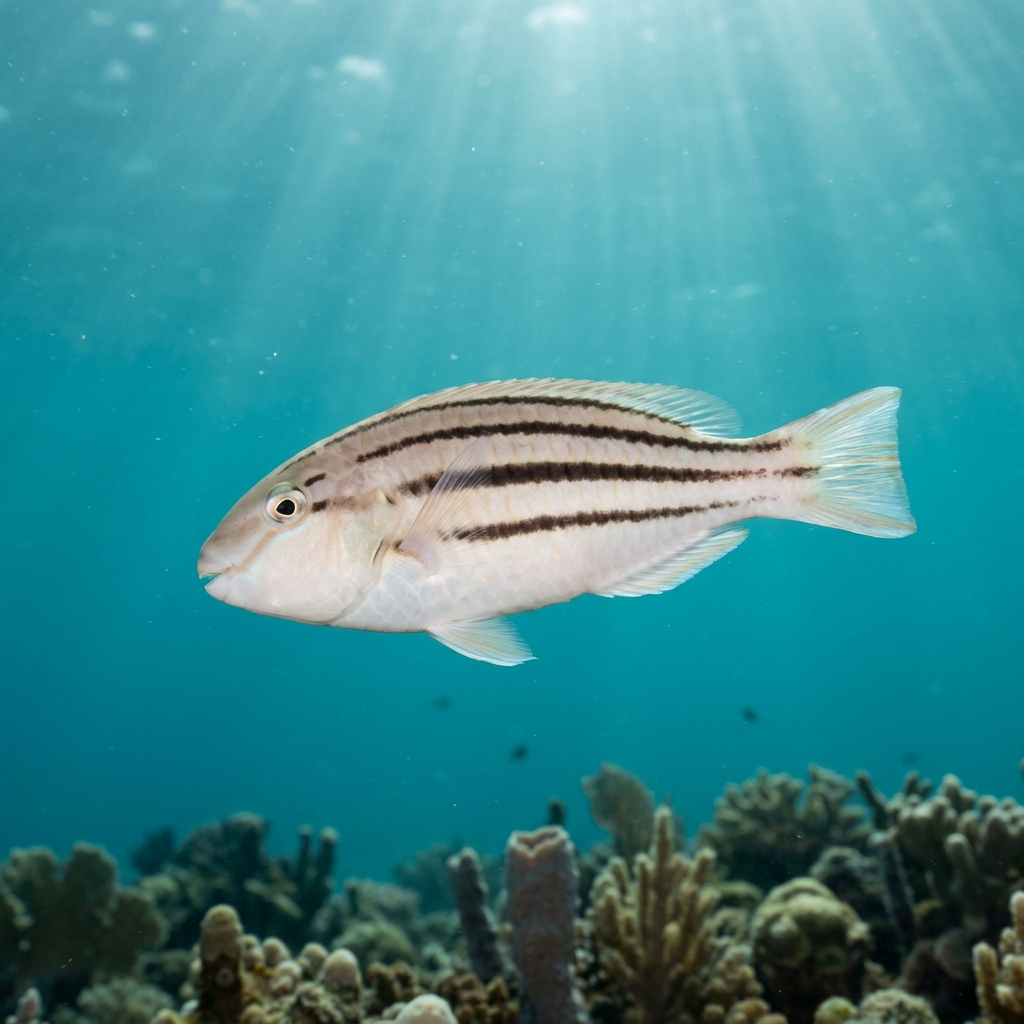
Around 24 cm long, this parrotfish has the fused beak (parrotfish beak) that makes the family instantly recognisable, and adults split sharply by sex: males wear vivid blue-green scales edged with pink, while females and initial-phase fish are brownish-red and far more subdued. The striped pattern on juveniles, pale cream with three bold dark-brown horizontal stripes from snout to tail, looks so different from the adults that you could easily think you are looking at a different species. On the reef, the beaked head angled towards the substrate and the constant forward motion are the quickest ID cues regardless of colour phase.
You will often hear striped parrotfish before you see them, the audible crunching as they scrape algae from the reef surface carries through the water column and signals feeding activity nearby. They are largely unbothered by divers, typically continuing to graze right in front of you rather than bolting, which makes close-range observation easy. They are active during daylight hours, working across shallow to mid-depth reef terrain, and will occasionally chase off rival parrotfish while being entirely indifferent to people.
All that crunching has a by-product: the calcium carbonate (reef rock) they ingest while scraping algae passes through their digestive system and is excreted as fine white sand, making parrotfish meaningful contributors to the sandy seafloors found around Caribbean reefs.
Northern Hemisphere sightings concentrate from November through August, suggesting a lighter presence in the late-summer months of September and October. The species sits comfortably in 26-28 °C water, so tropical reef destinations in this range hold fish throughout most of the year.
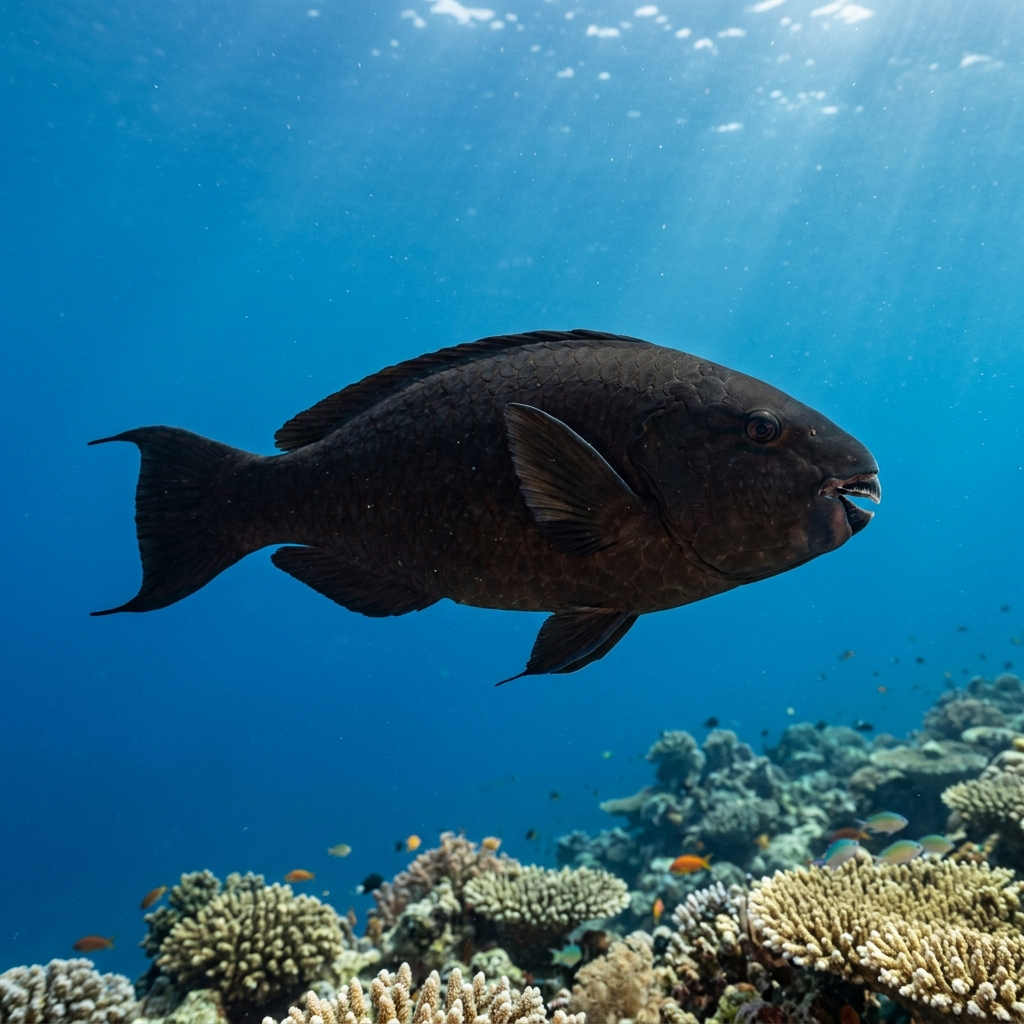
Reef neighbours a diver could mistake it for. Use the identification notes above to tell them apart.
Most consistently logged across the Caribbean, with the strongest sighting records in Florida, the Bahamas, Honduras (especially Roatán), Cuba, and Bonaire. The Cayman Islands, US Virgin Islands, and the southern coast of Curaçao are also well-documented hotspots, and populations extend into northeast Brazil, making this a Caribbean-basin species with a broad reach.
Mapping where Striped Parrotfish is logged…
They are a Caribbean and western Atlantic species, most reliably seen in Florida, the Bahamas, Roatán in Honduras, Cuba, and Bonaire. The Cayman Islands, US Virgin Islands, Colombia, and northeast Brazil are also well-documented locations. Shallow reefs between about 3 and 25 metres are their home territory.
Sightings concentrate from November through August across Northern Hemisphere sites, so late autumn through summer is the most productive window. They favour water temperatures around 26-28 °C, which Caribbean destinations maintain for most of the year.
Look for a fused beak and a forward-grazing posture on the reef. Males are blue-green with pink scale edges; females and initial-phase fish are brownish-red and plainer. Juveniles are cream with three dark-brown horizontal stripes and look quite different from adults. The audible crunching as they feed is also a useful giveaway.
They are a mid-sized parrotfish, typically reaching around 24 cm. That makes them noticeably smaller than some Caribbean relatives like the rainbow parrotfish, and roughly similar in bulk to the stoplight parrotfish you might see sharing the same reef.
They are herbivores that scrape algae from reef surfaces using their fused beak, which also takes in rock. The reef material is digested and excreted as fine white sand, a process that contributes measurably to the sandy sediment around Caribbean reefs and helps keep algae from overgrowing coral.
Site and sighting data is aggregated from diver logs, iNaturalist and GBIF. For taxonomy and conservation status:
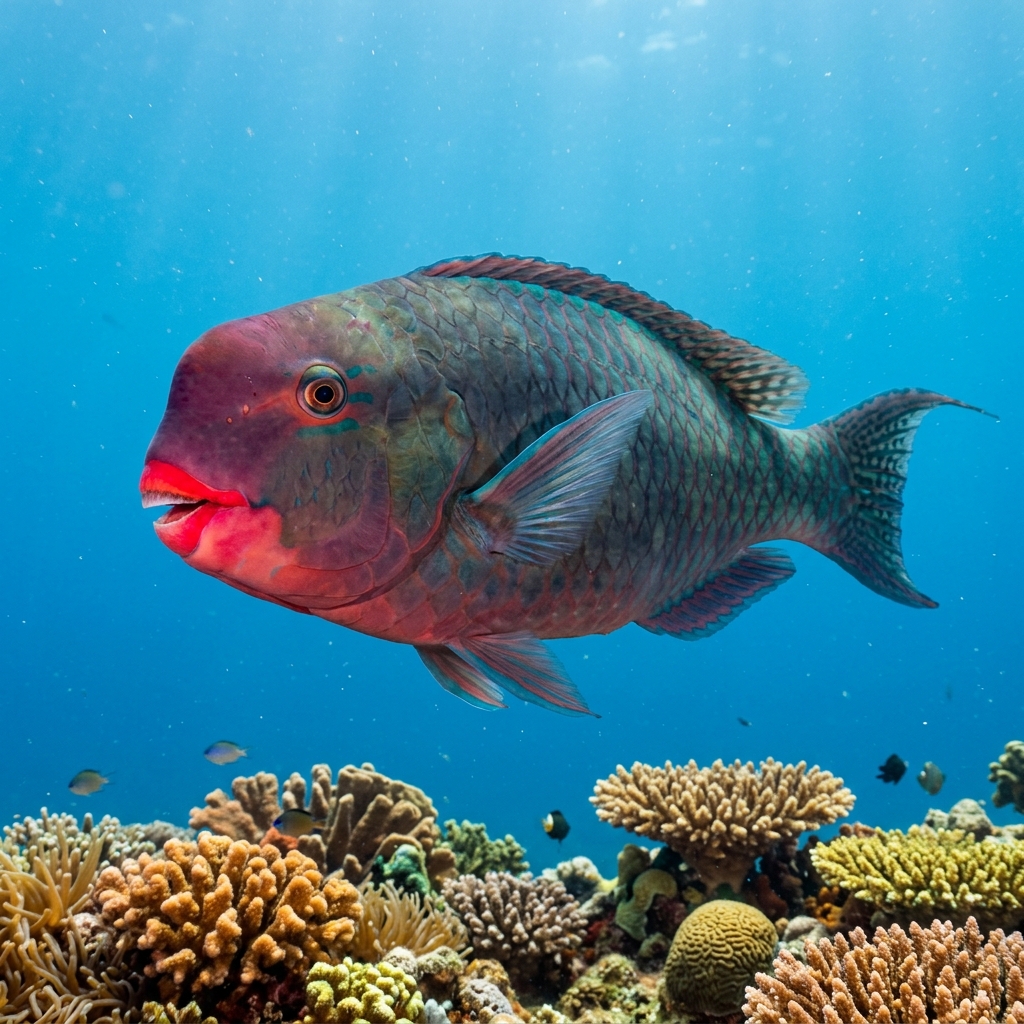
Redlip Parrotfish
2,789 sites