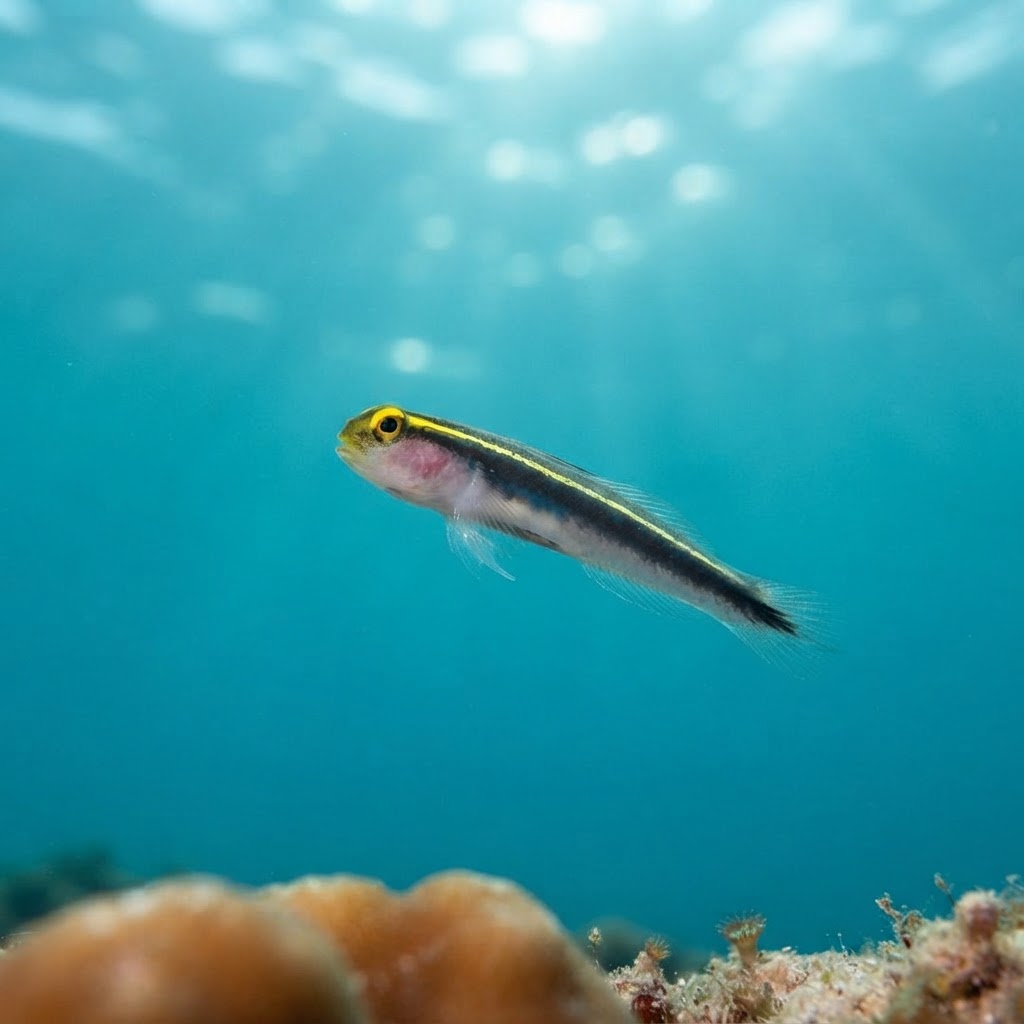
Elacatinus horsti
A pea-sized, blue-striped goby perched on sponges around East Coast Bonaire, easiest to find if you slow down and look at coral heads, not open water.
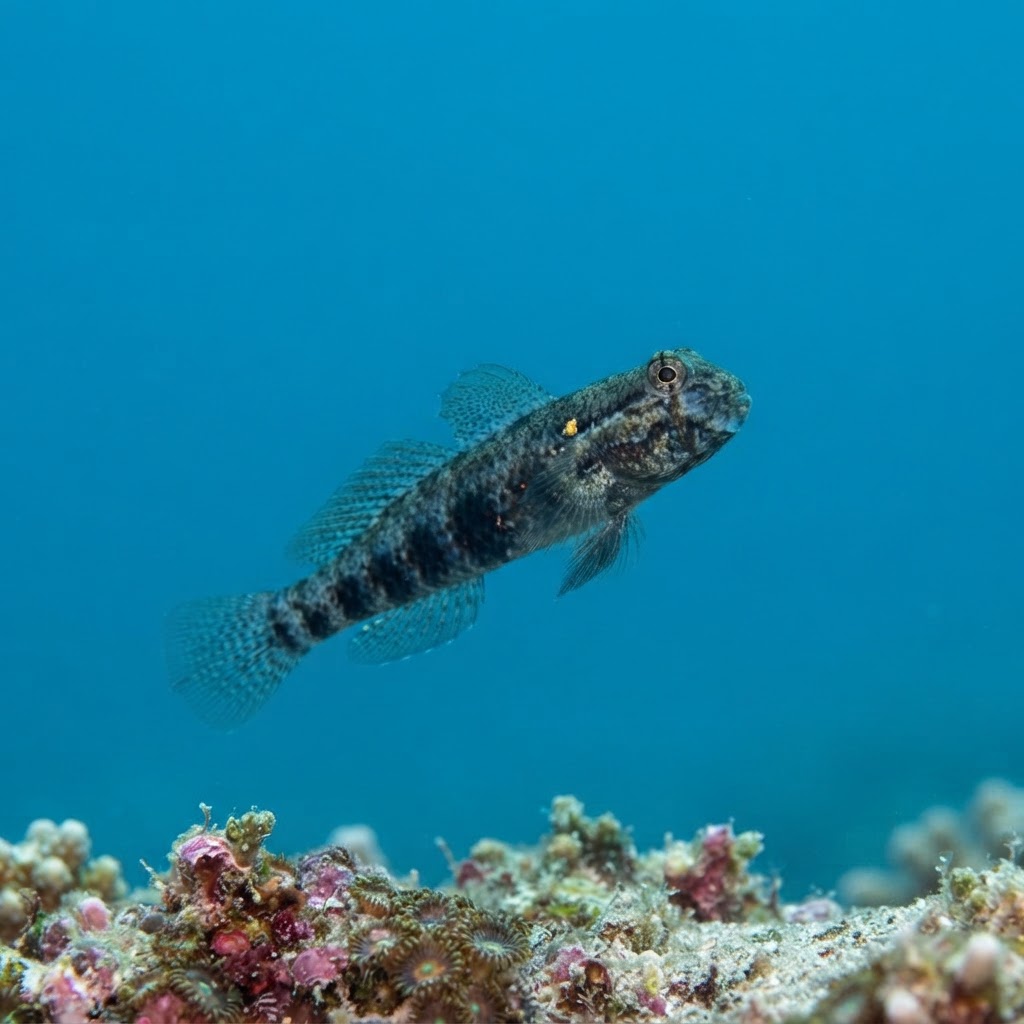
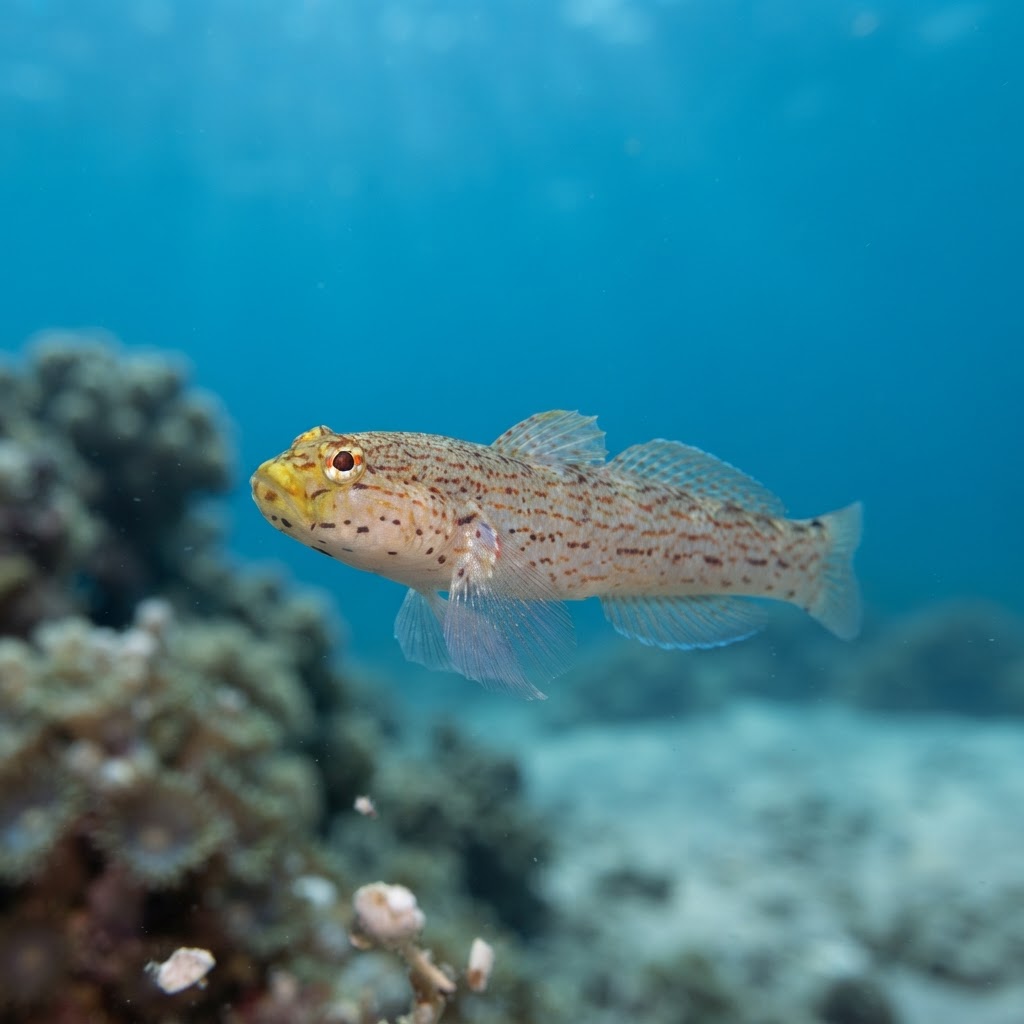
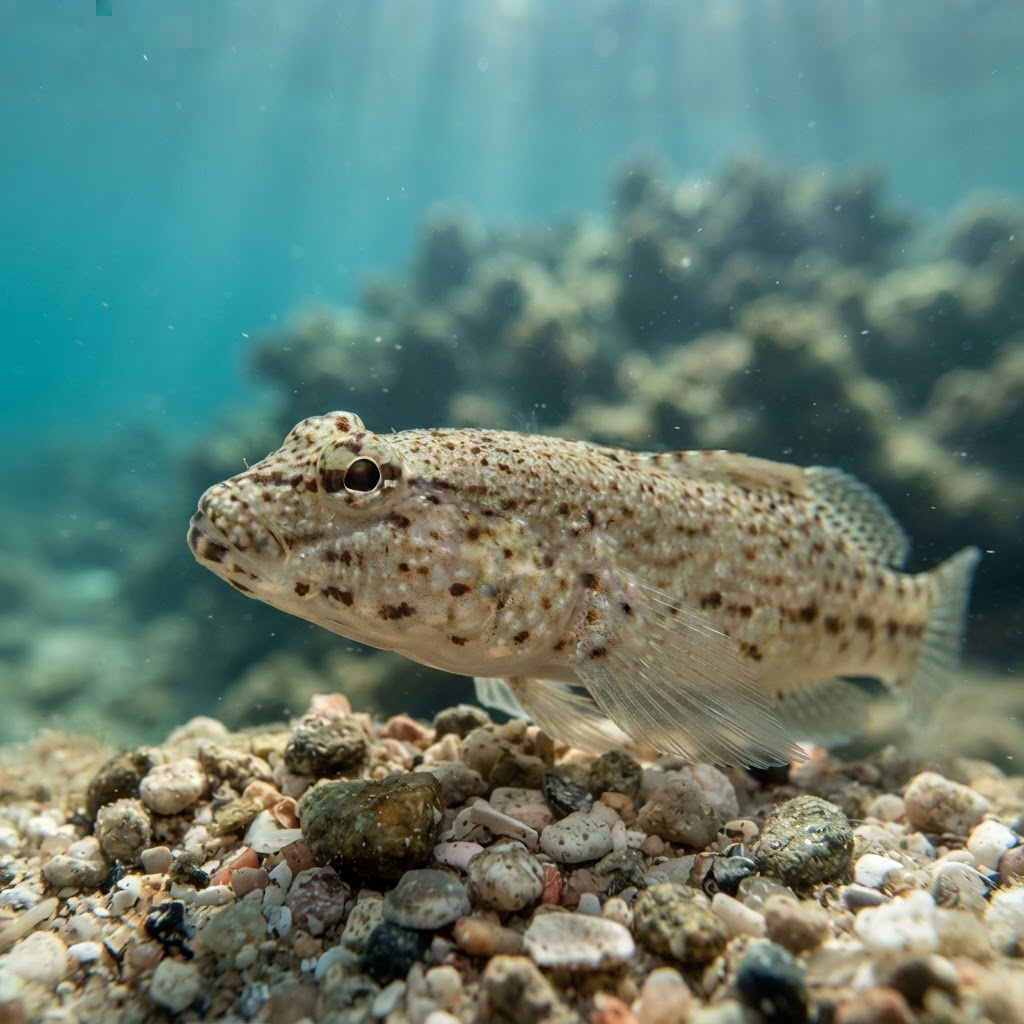
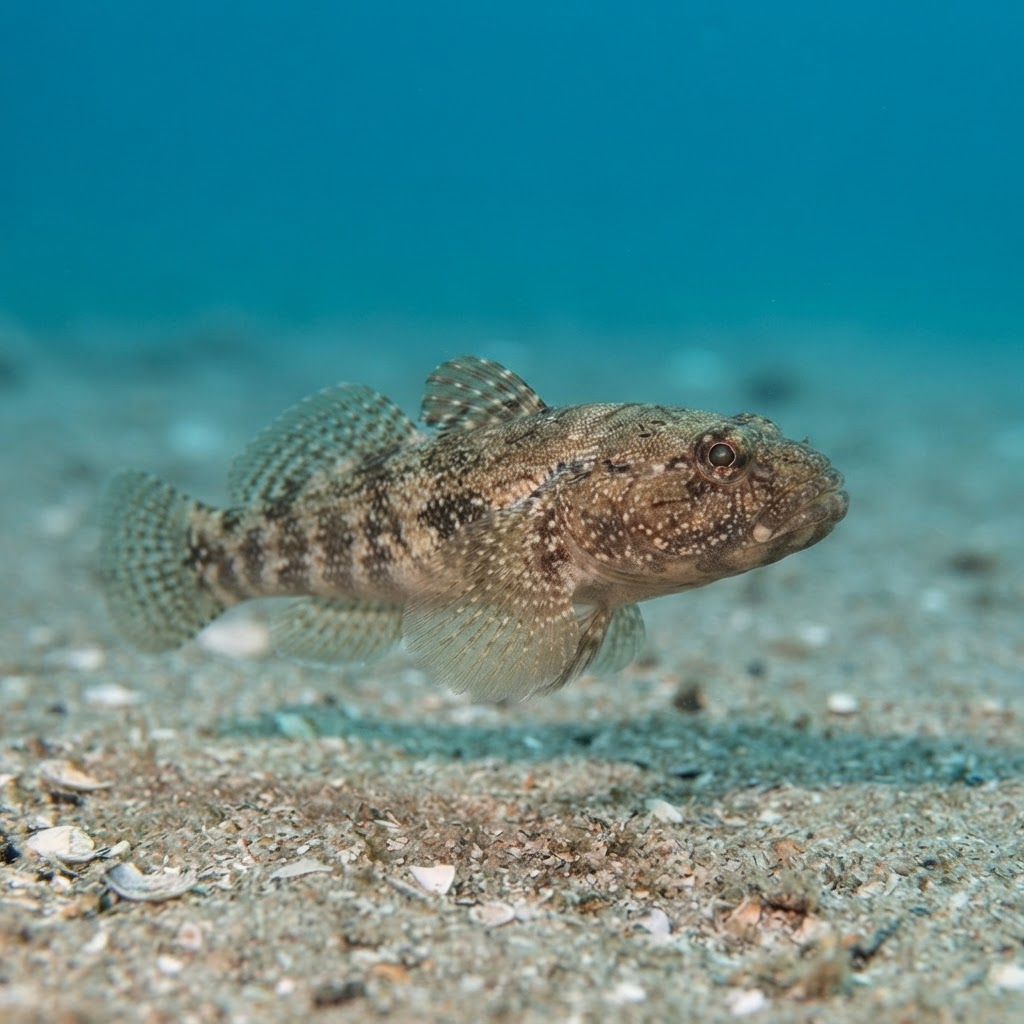
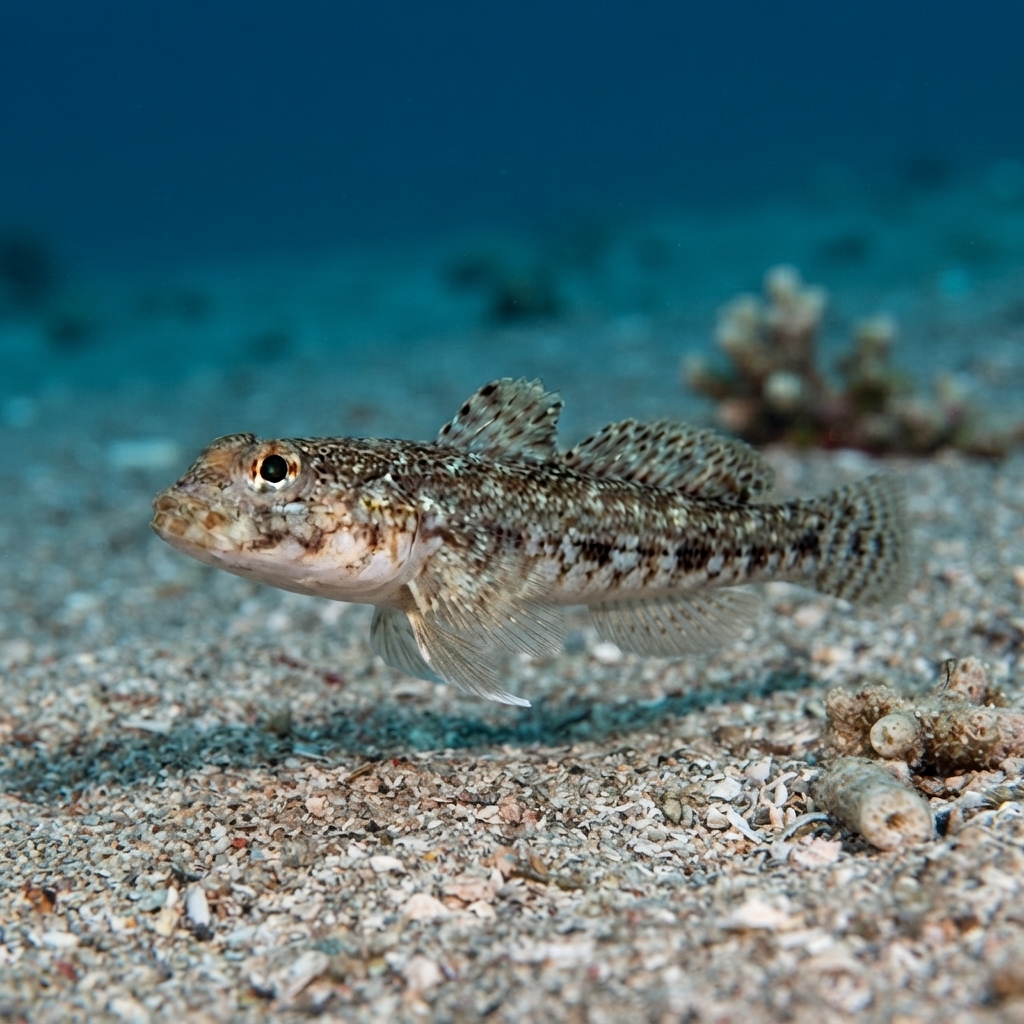
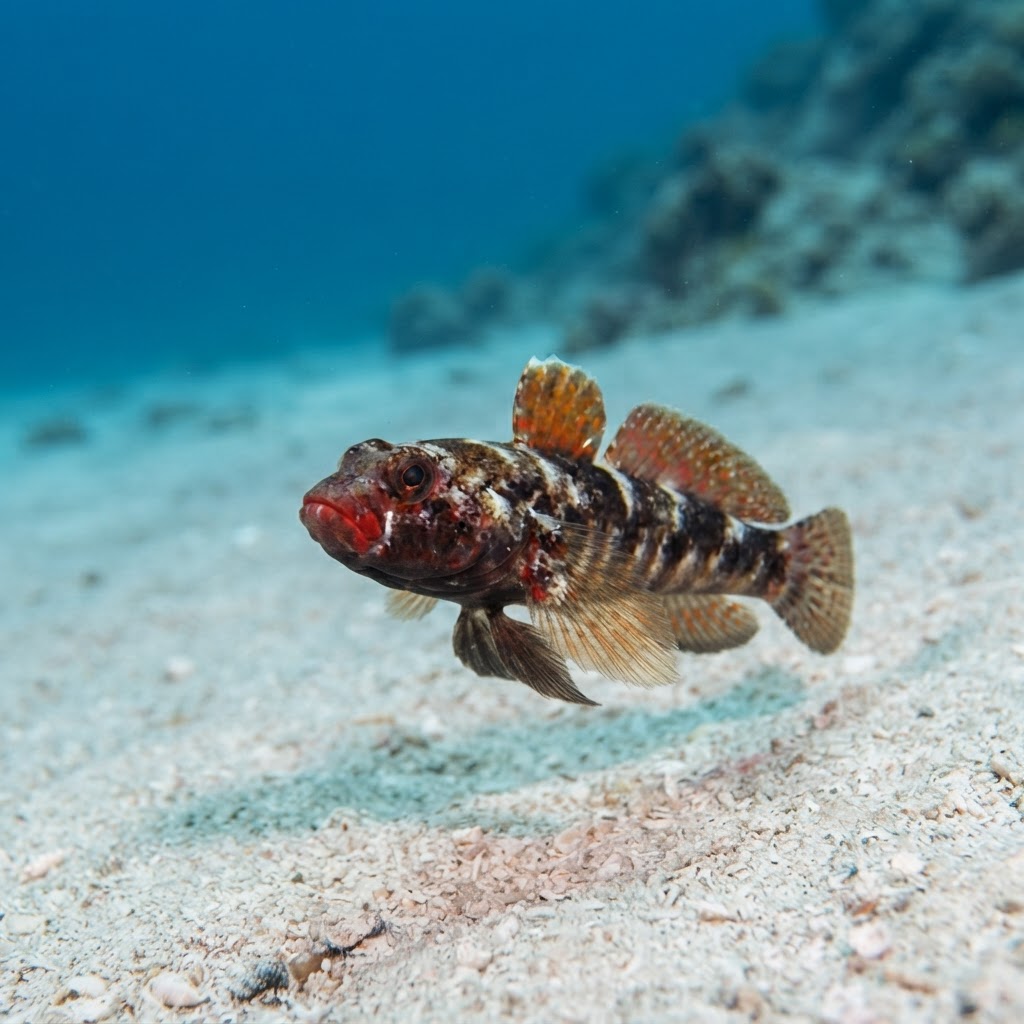
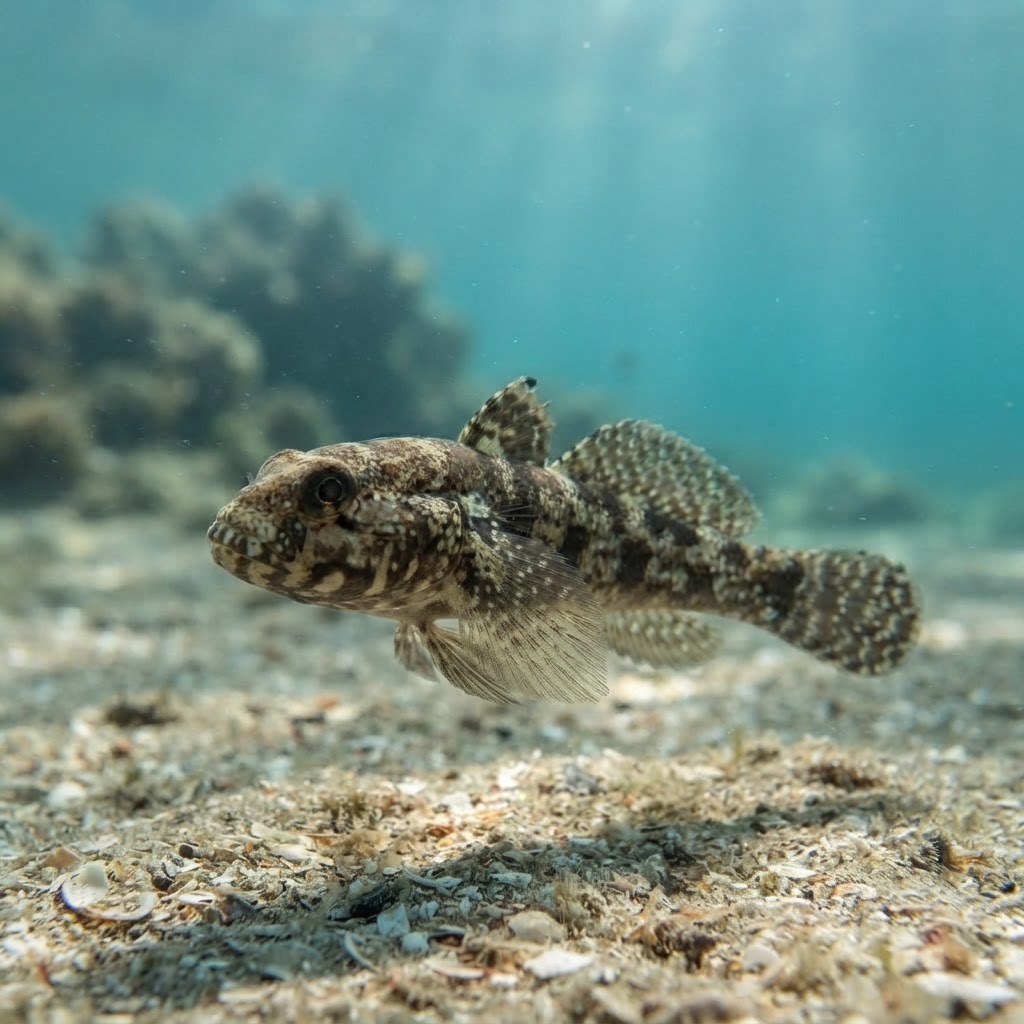
Barely 4cm long, this goby is a slender, translucent-bodied fish with a bright yellow stripe running from nose to tail flanked by iridescent blue lines. It perches rather than swims freely, propped on its pelvic fins on sponges, coral rubble or ledges, and stays still enough that the stripe pattern is the giveaway once you spot it. There is no reported difference between males and females in the field.
Expect to find it holding a fixed spot on a sponge, coral head or rubble patch rather than cruising the reef, often close to a cleaning station or crevice it can dart into. It tolerates a hovering diver reasonably well if you stay still and keep your torch beam off its face, but a fast approach sends it into hiding within seconds. Most sightings come from divers working slowly along the reef face rather than mid-water.
Like other Elacatinus gobies, it likely does cleaning duty for passing fish, picking parasites off larger reef residents that pause near its perch, though this hasn't been specifically documented for this species.
No clear season shows up in the sightings, and the 25.5 to 28.2C range it is found in matches Bonaire's reefs pretty much year-round, so any month is fair game. Look for it whenever conditions are right for slow, close-focus diving rather than targeting a particular month.
Reef neighbours a diver could mistake it for. Use the identification notes above to tell them apart.
Bonaire is by far the strongest bet, with sightings concentrated along East Coast Bonaire and the Leeward Coast, and it has also turned up at East Point and Klein Curacao on Curacao. Across all these sites it is logged as a rare to occasionally uncommon find, so this is a fish for divers hunting macro life on Dutch Caribbean reefs rather than a species that turns up everywhere in the region.
Mapping where Yellowline Goby is logged…
Bonaire is the reliable spot, especially East Coast Bonaire and the Leeward Coast, with an additional record from Curacao's East Point and Klein Curacao area. It is not a species reported widely outside the Dutch Caribbean.
There is no detected season, and the water temperatures it is found in, roughly 25.5 to 28.2C, hold steady on Bonaire's reefs most of the year, so it can turn up on any dive.
Look for a tiny, 4cm fish perched motionless on sponge or rubble with a bold yellow stripe down its back flanked by thin blue lines. It does not swim in open water like many reef fish, which helps separate it from similarly striped species.
About 4cm long, making it one of the smaller gobies divers spot in the Caribbean and easy to swim straight past if you are not looking closely at the substrate.
No. It is a harmless, tiny fish that poses no risk to divers and will simply retreat into cover if approached too quickly.
Site and sighting data is aggregated from diver logs, iNaturalist and GBIF. For taxonomy and conservation status:
Slender Goby
806 sites