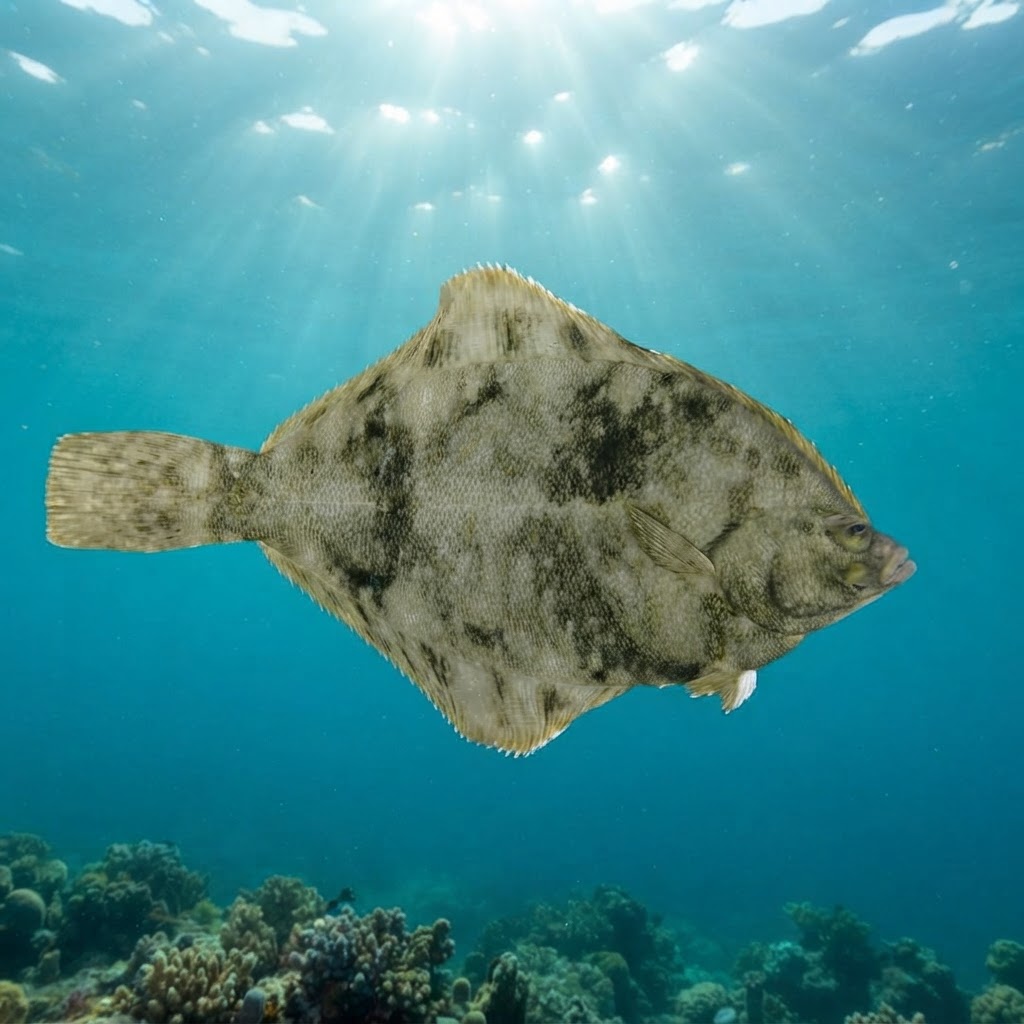
Pseudopleuronectes americanus
Cold-water flatfish common off Nova Scotia and the US Northeast, found year-round in waters as cold as 0.7 to 13 C.
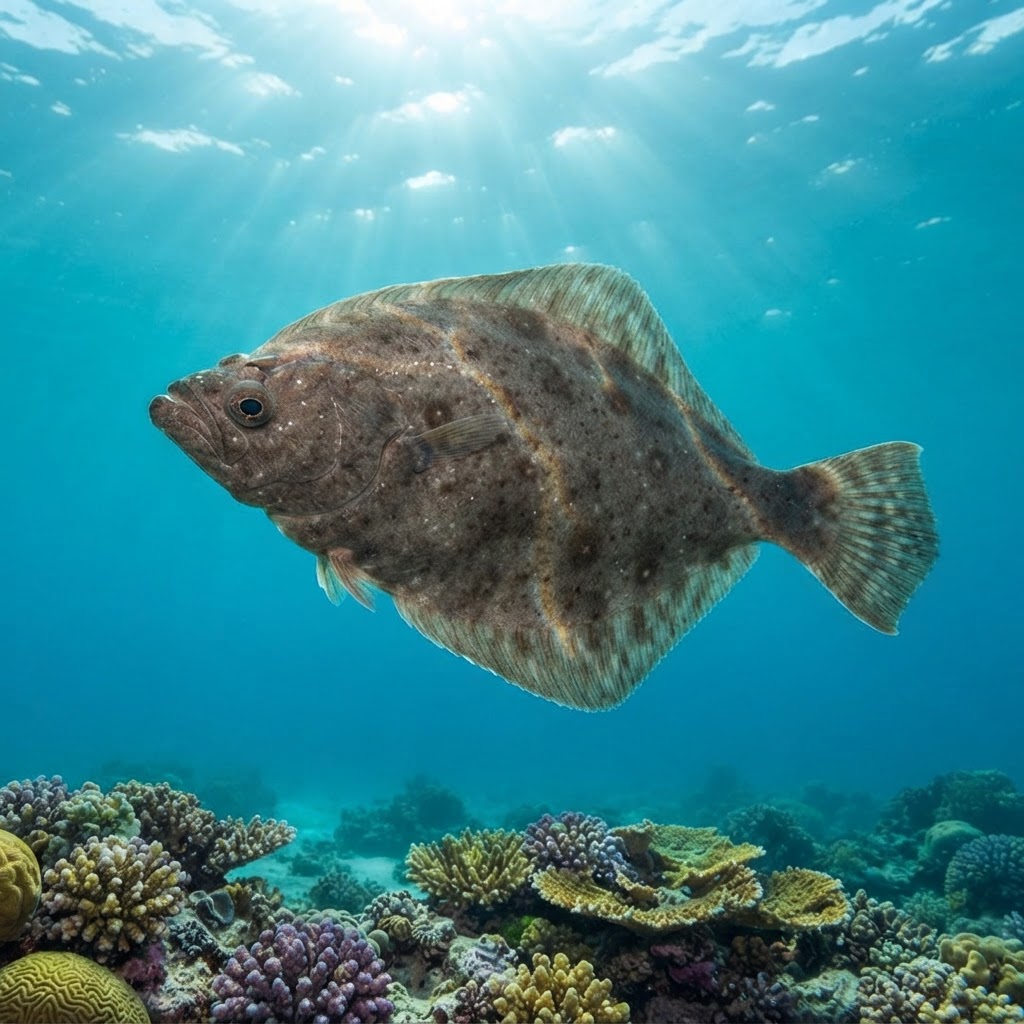
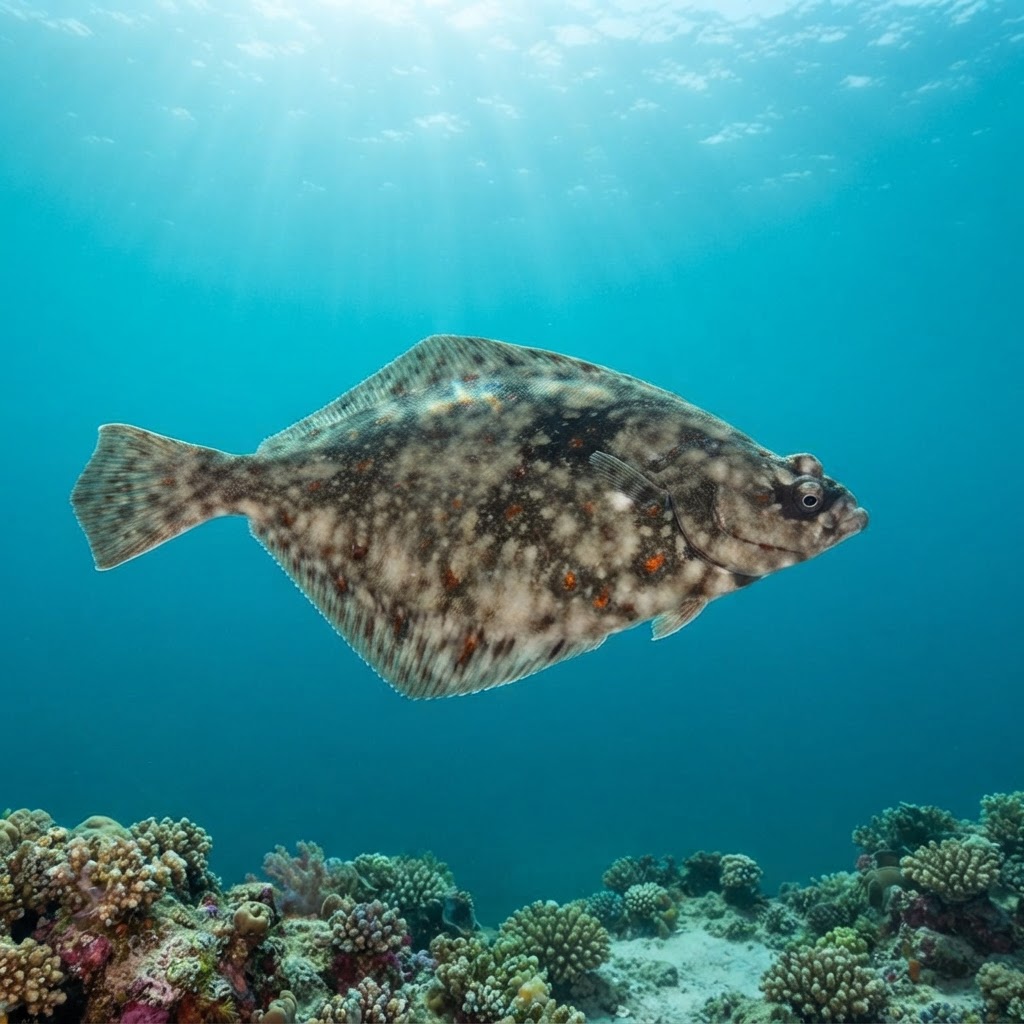
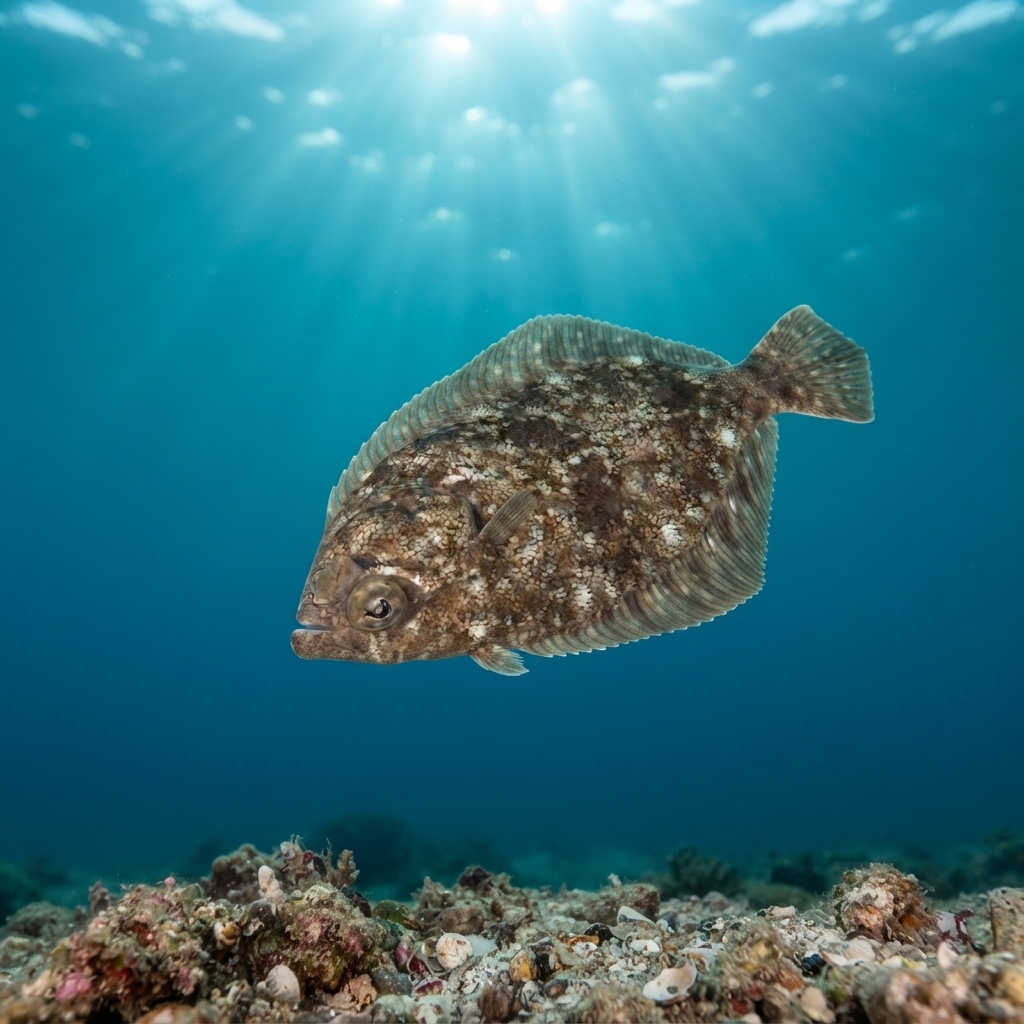
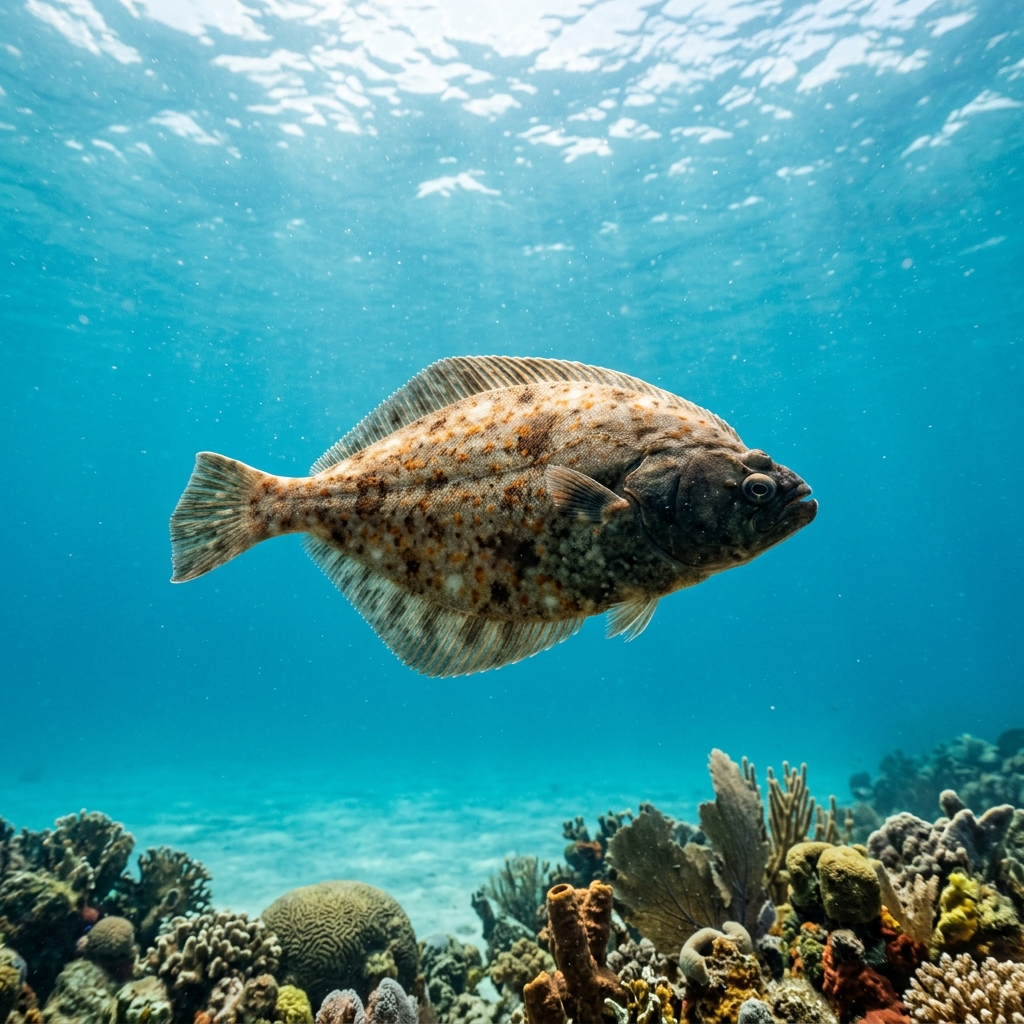
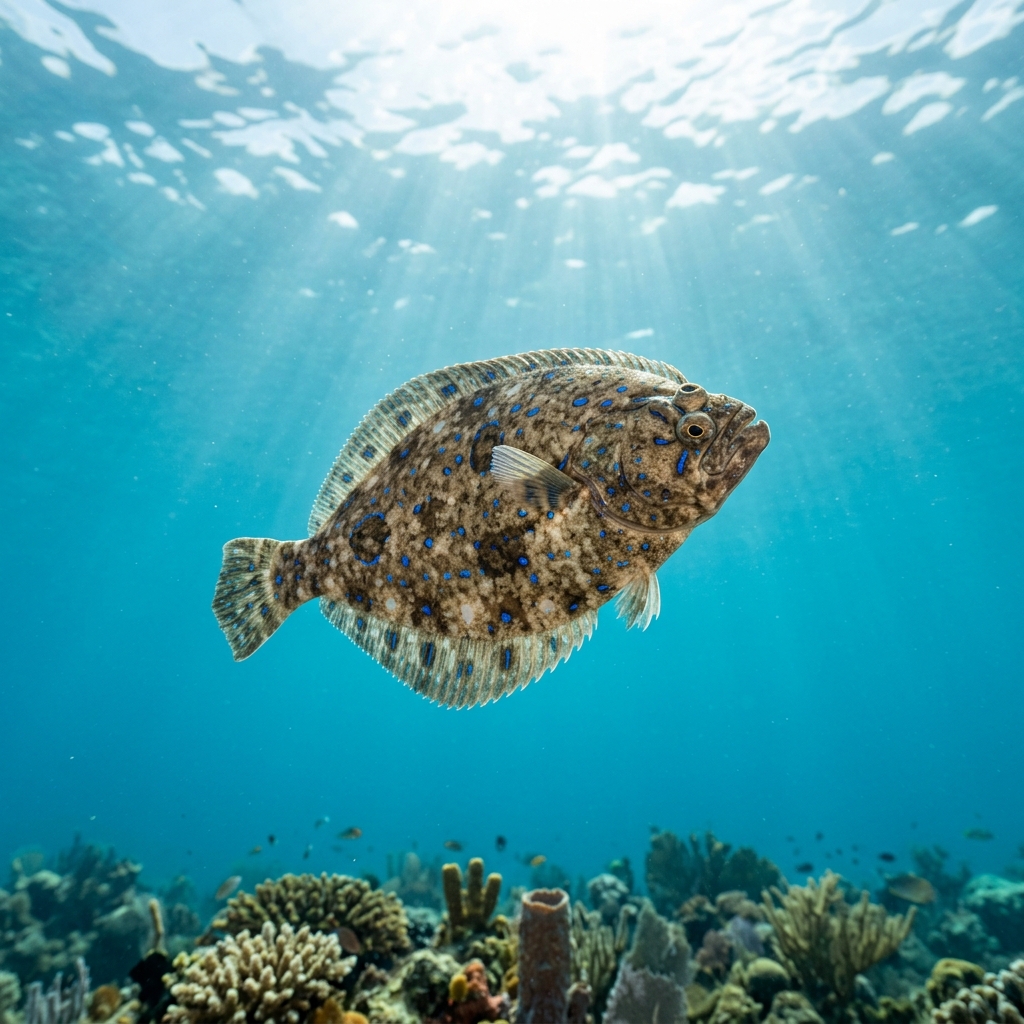
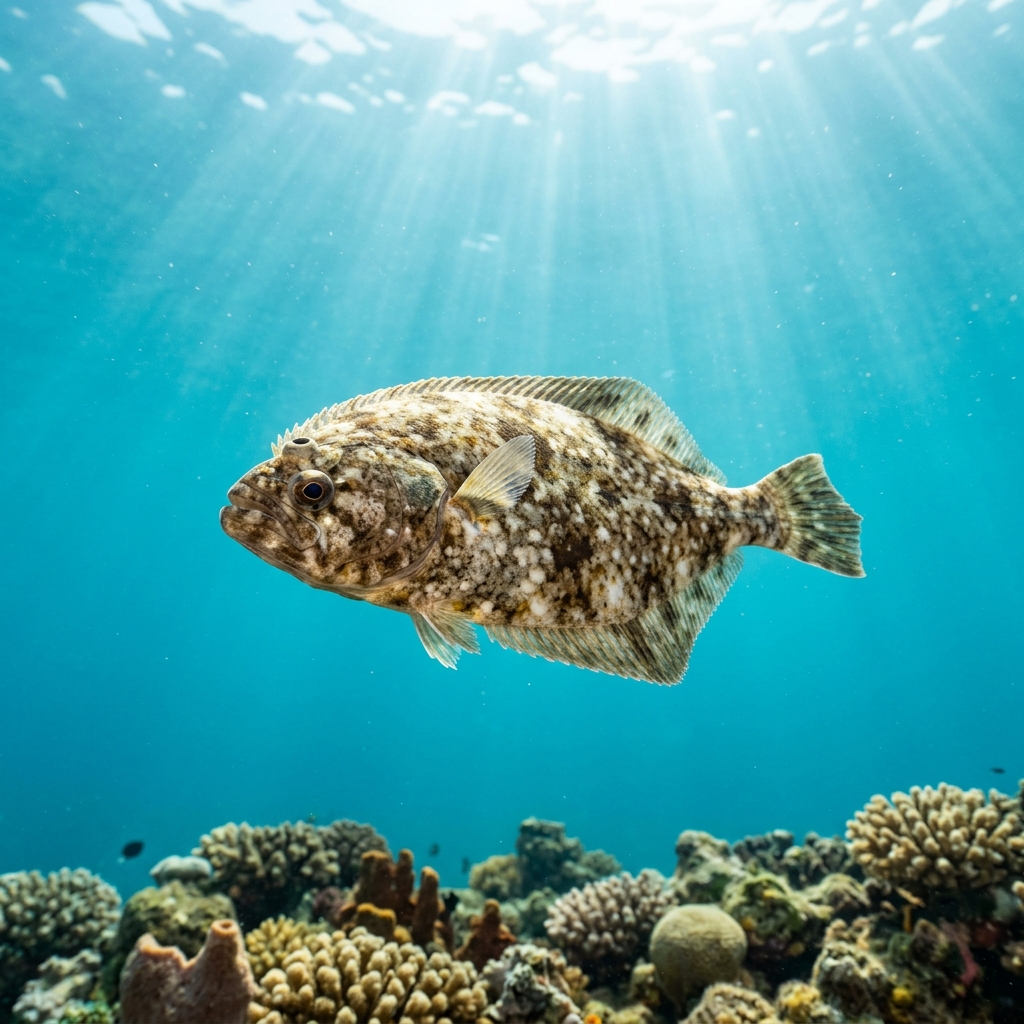
Grows to around 45cm, with a rounded, thick-bodied shape flatter and more oval than many other flatfish. Colour runs from reddish-brown to olive or slate grey, mottled to match the sand or mud it lies on, with a pale underside. Both eyes sit on the right side of the head, and it often lies almost buried, only the eyes and outline visible against the seabed.
Spends most of its time lying flat on sand or mud, often partly covered in sediment with just the eyes exposed, ambushing small prey that wanders past. Divers most often find it motionless rather than swimming, and it tends to hold still or flick a short distance away rather than bolt when approached. Most logs describe it as uncommon to common rather than abundant, so a slow scan of open sand patches is the best way to spot one.
Like other flatfish it starts life swimming upright with an eye on each side of its head, then one eye migrates across the skull as it settles onto the seabed and takes up its flattened, bottom-dwelling life.
Sightings show no clear seasonal pattern, and the species tolerates a wide range from 0.7 to 13.1 C, so it turns up on dives year-round in its Northeast US and Atlantic Canada range.
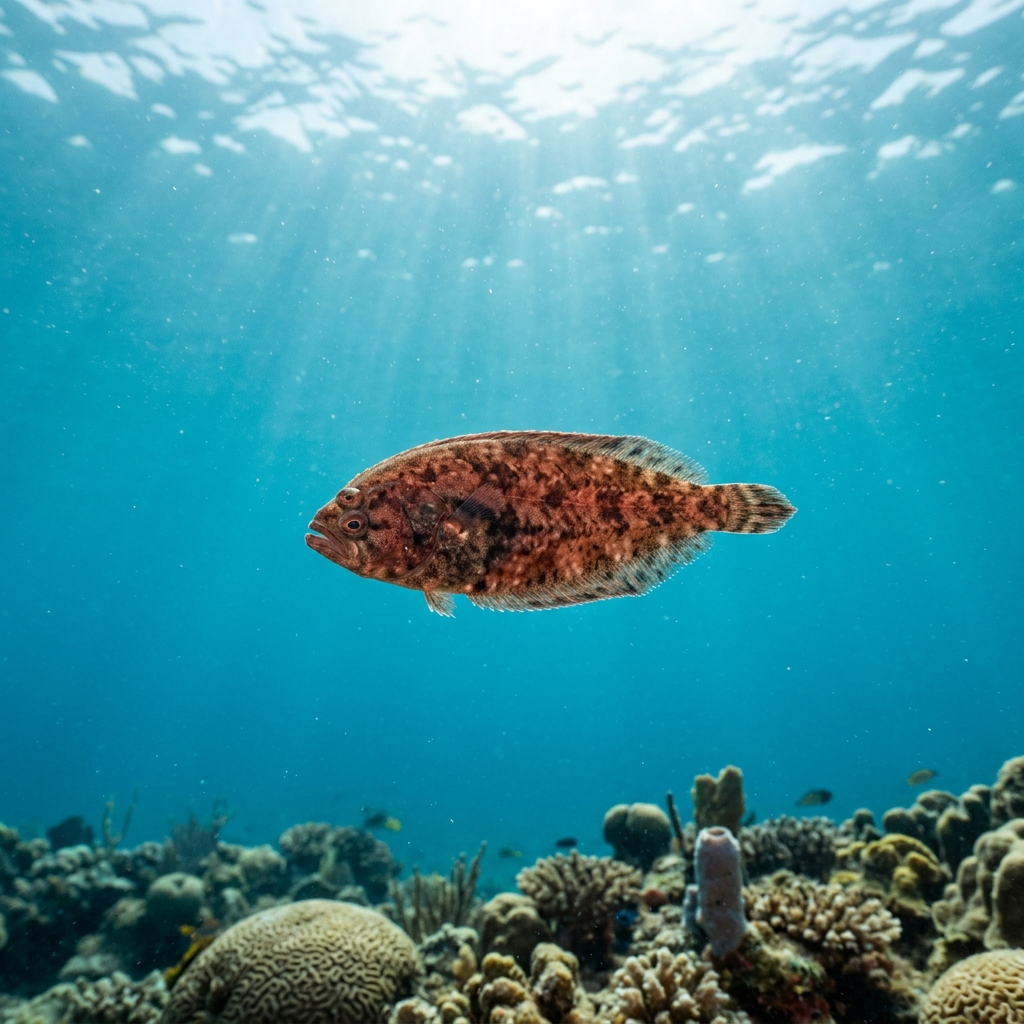
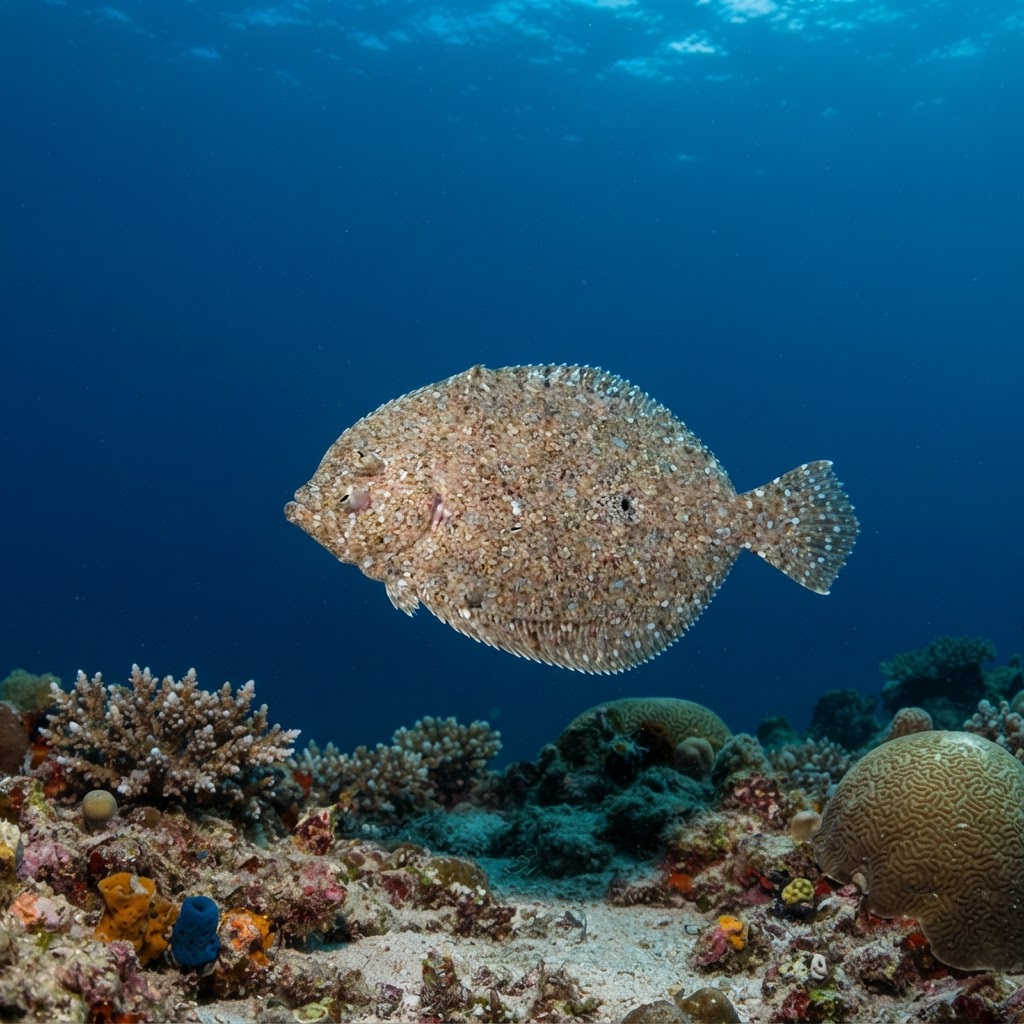
Reef neighbours a diver could mistake it for. Use the identification notes above to tell them apart.
Most reliably logged off the Northeast United States and Nova Scotia, with additional sightings from Prince Edward Island and New Brunswick, Canada. This is a cold-water Atlantic species, so look for it on sand and mud patches on dive sites across these regions rather than on tropical reefs.
Mapping where Winter Flounder is logged…
It is most commonly logged off the Northeast United States and Nova Scotia, Canada, with further sightings in Prince Edward Island and New Brunswick. Look for it on sandy or muddy bottoms rather than rocky reef.
There is no strong seasonal signal in sighting data, and it tolerates water from near freezing up to about 13 C, so divers report it across the year in its Northeast US and Atlantic Canada range.
Look for a rounded, thick flatfish up to about 45cm long, mottled brown to olive to blend with sand or mud, usually lying still with both eyes on its upper right side.
They typically reach around 45cm in length, making them a mid-sized flatfish compared to many other coastal flounders.
No, they pose no threat to divers. They are bottom-dwelling and rely on camouflage and stillness rather than any defensive behaviour toward divers.
Like all flatfish, juveniles start out swimming upright with a symmetrical, fish-shaped body and one eye on each side, then one eye migrates across the head as the fish settles flat onto the seabed for life.
Site and sighting data is aggregated from diver logs, iNaturalist and GBIF. For taxonomy and conservation status:
Wide Eyed Flounder
1,624 sites