Bothus pantherinus
Mottled and flat on the sand from the Maldives to Marsa Alam, this flounder hides in plain sight year-round in 24-28C water.
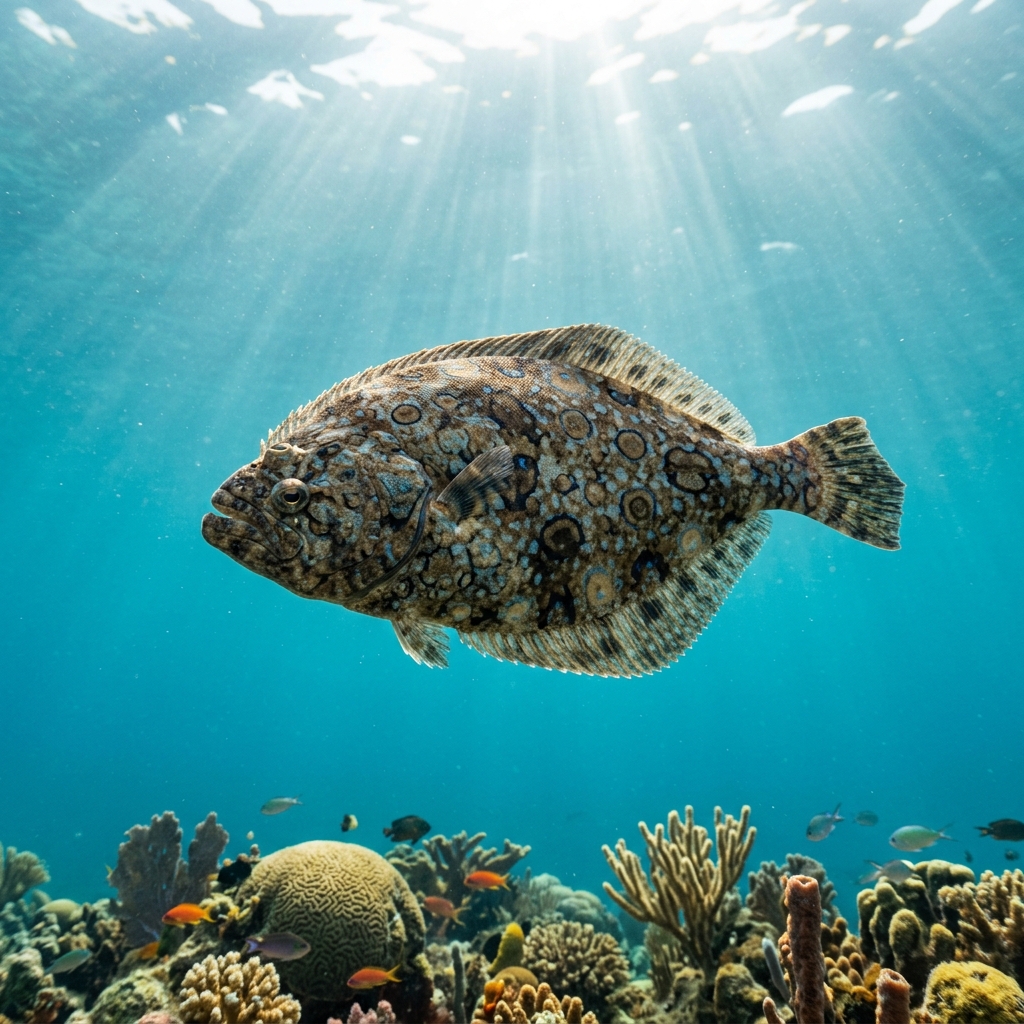
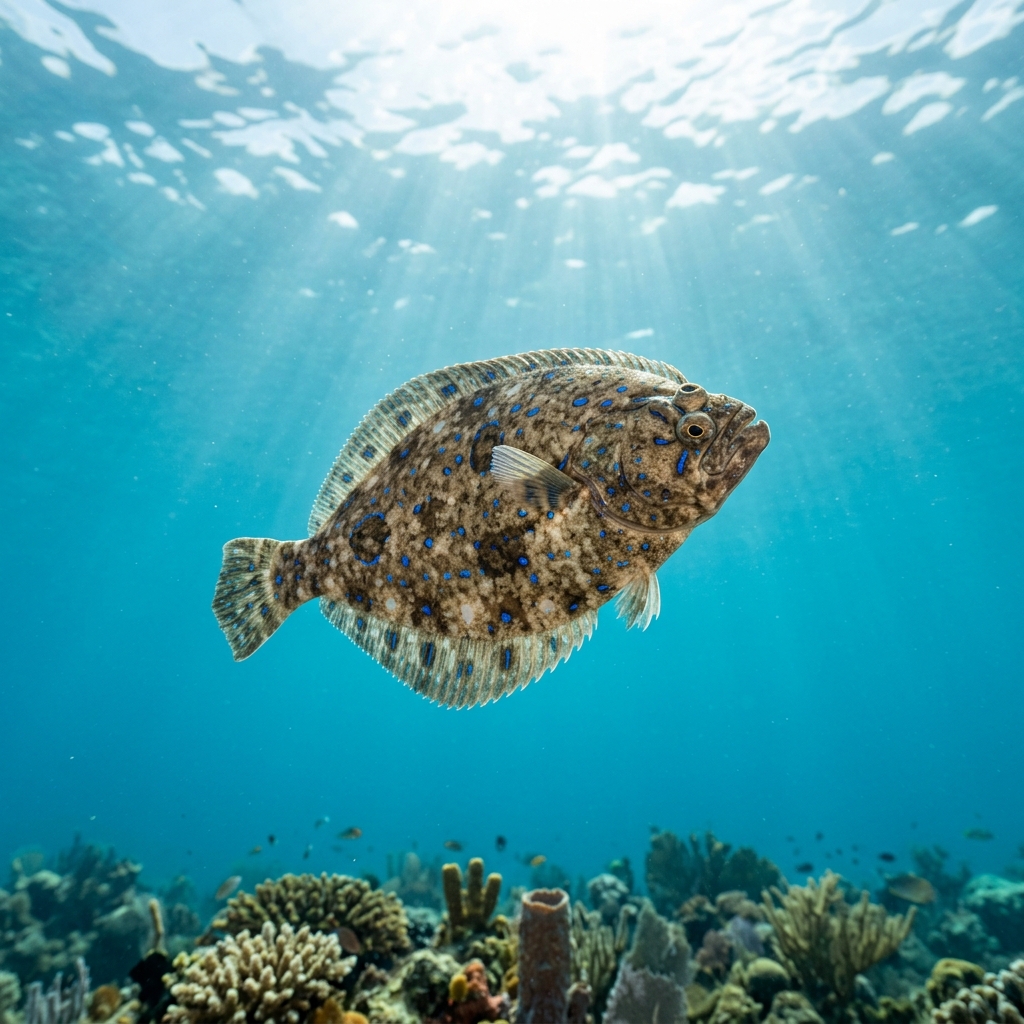
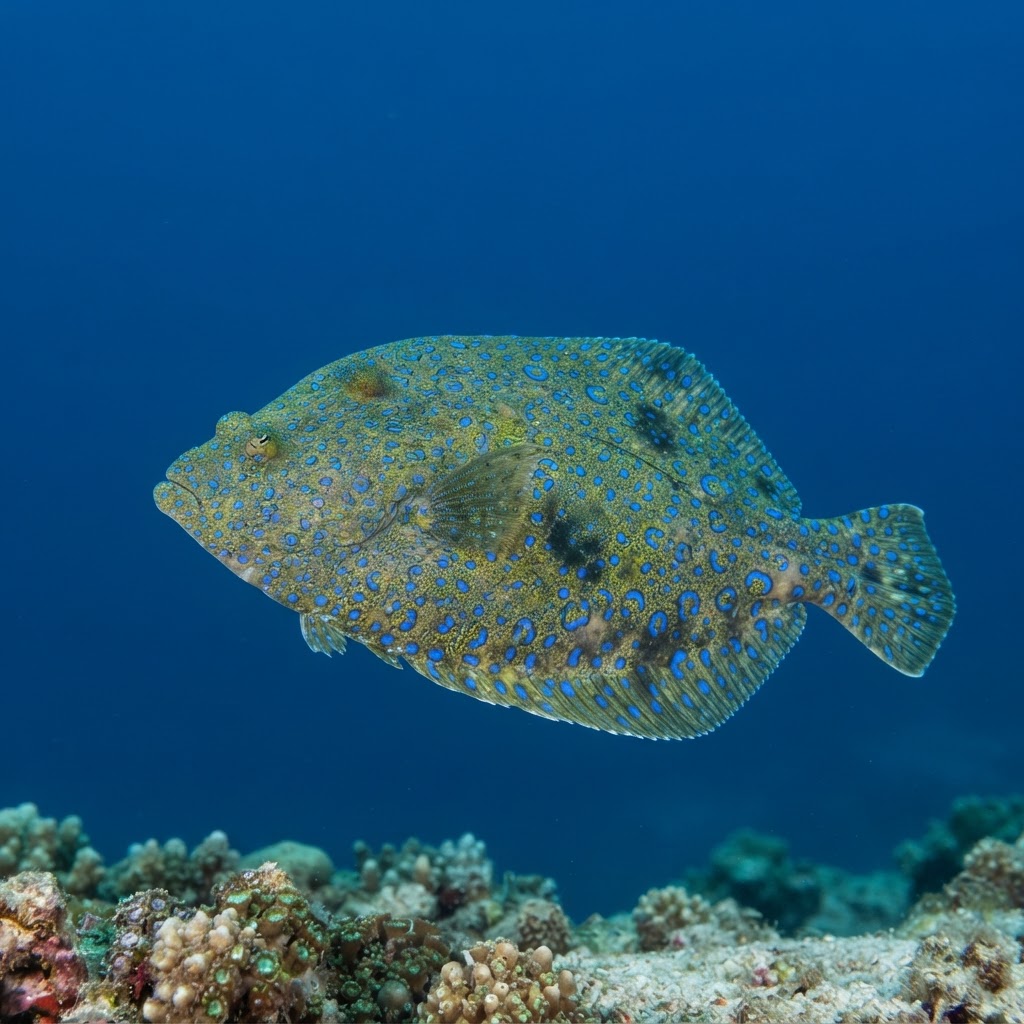
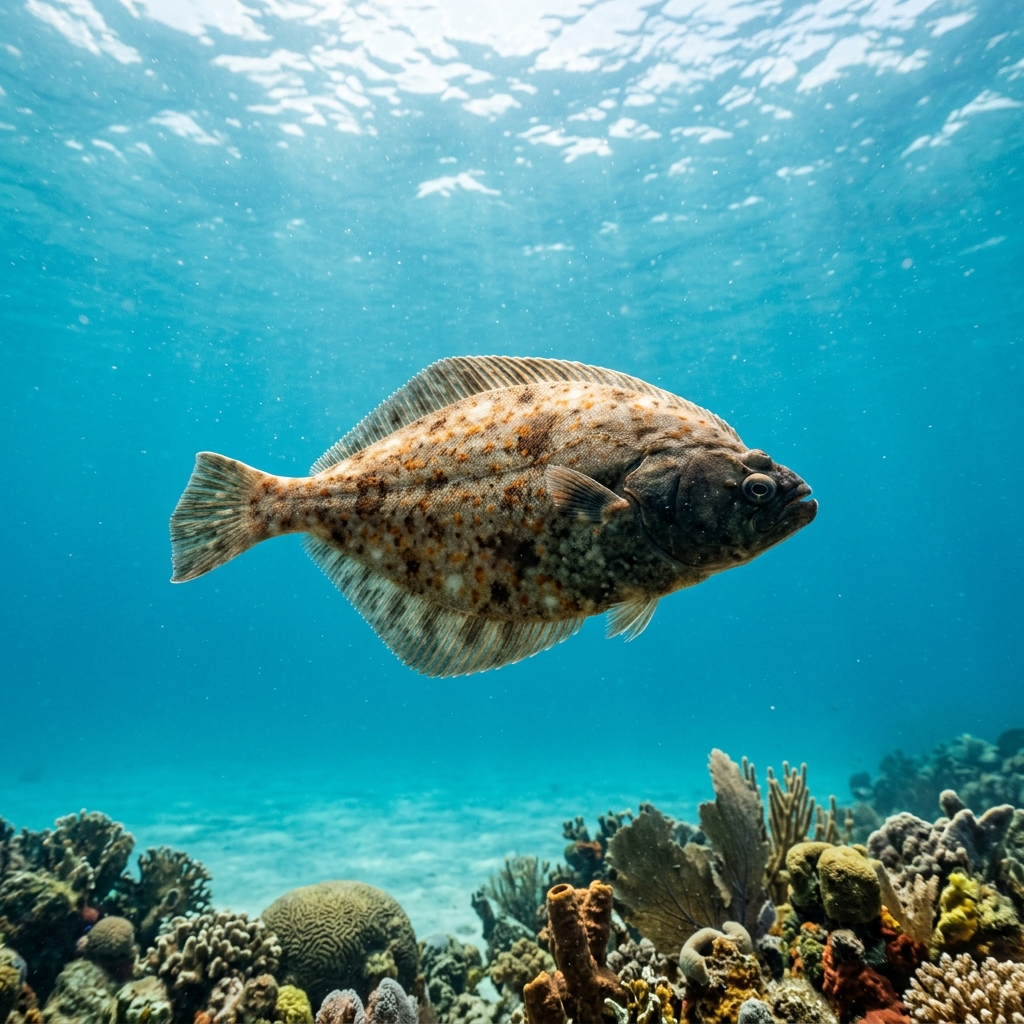
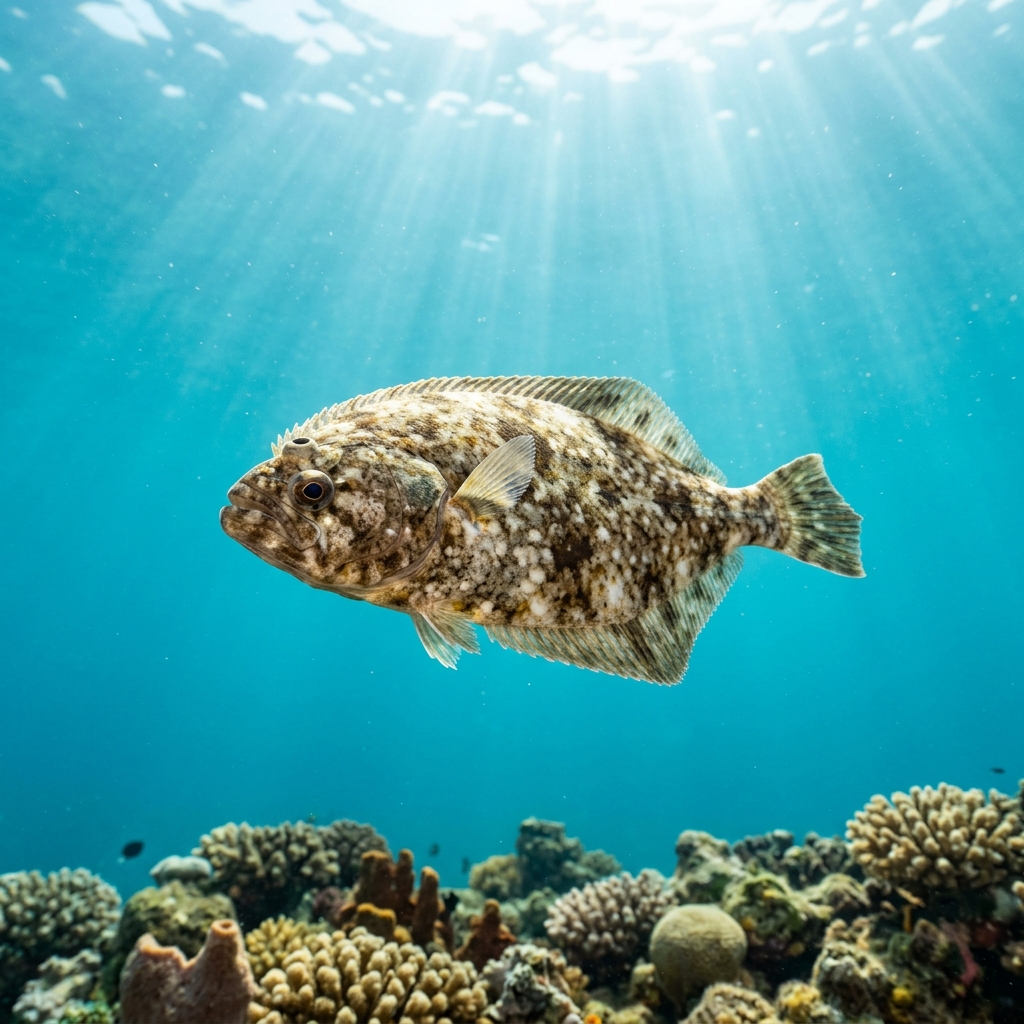
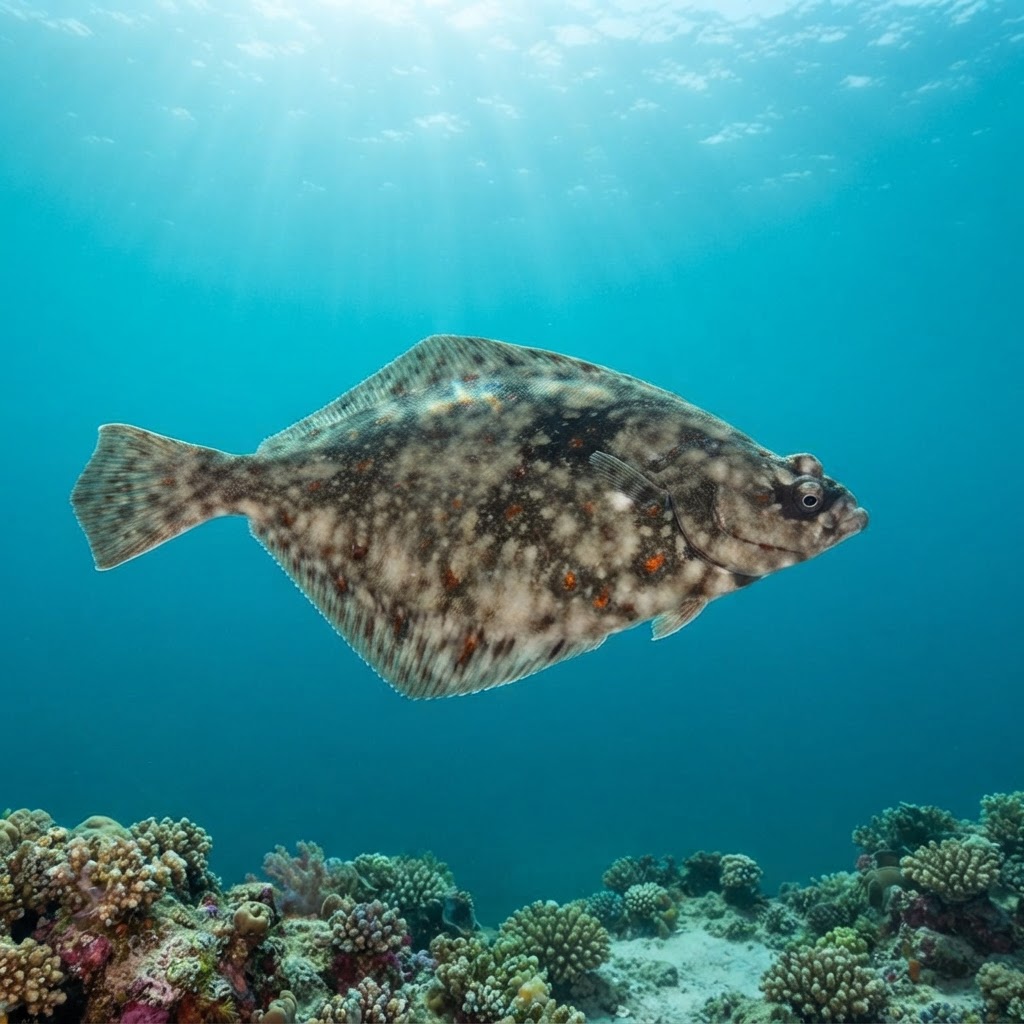
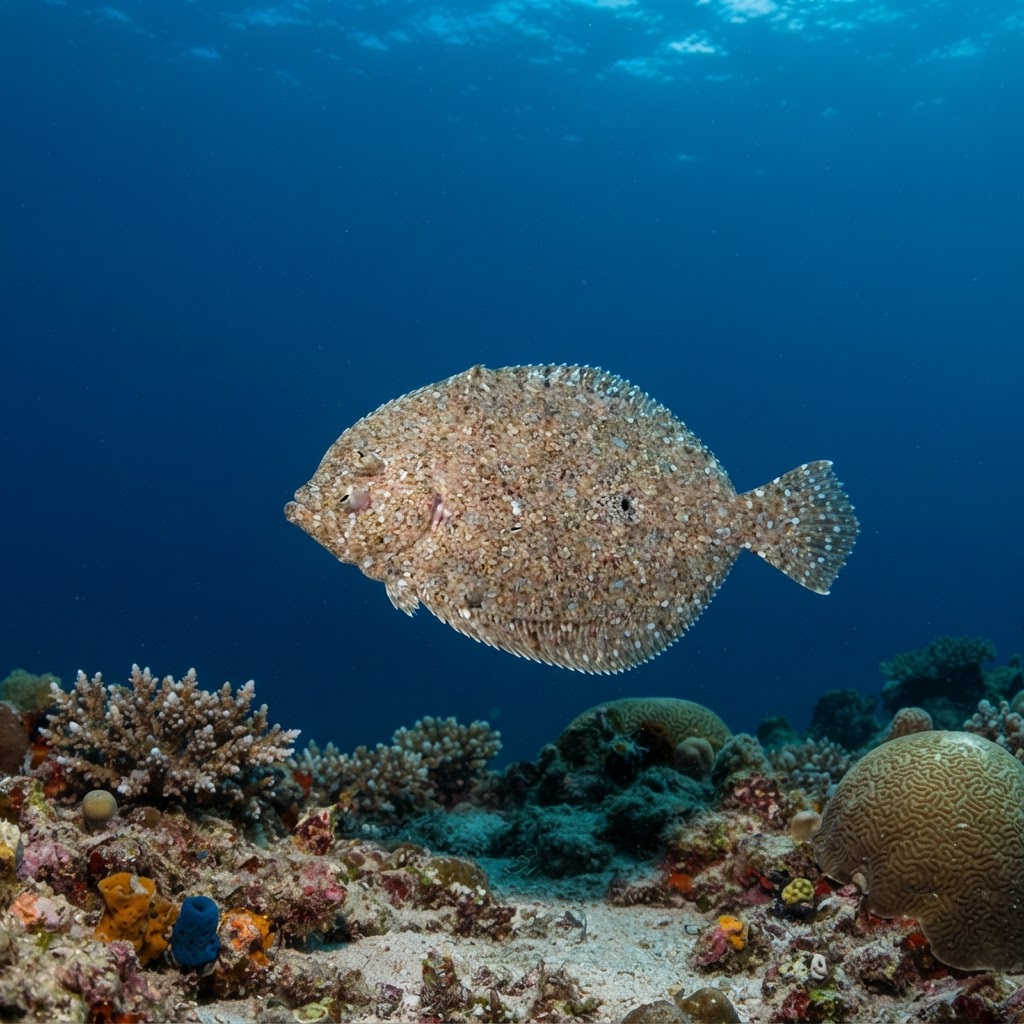
Grows to around 27 cm and lies flat against sand or rubble, so the first thing most divers notice is the leopard-print pattern of dark spots and blotches over a sandy brown to grey body. Both eyes sit on the same side of a diamond-shaped body, and it can shift its colour and pattern slightly to blend with the substrate it is resting on. The giveaway in the water is usually movement: a puff of sand as it darts a short distance and resettles, revealing an outline that would otherwise be invisible.
Spends most of its time motionless on sand, rubble, or fine reef sediment, relying on camouflage rather than flight to avoid attention. When a diver gets too close it tends to flick away in a short burst, kicking up a small cloud of sand before settling again a metre or two off, often changing its shading slightly to match the new spot. It is most often noticed by accident, at cruising depths well within recreational range, rather than sought out.
Like other flatfish, it starts life swimming upright with an eye on each side of its head, then one eye migrates across the skull as it matures into the flattened, bottom-lying adult form divers actually see.
No clear seasonal pattern shows up in the data, and its comfort range of roughly 18.6 to 28.3C spans the conditions found on tropical reefs year-round, so any month works at the sites above.
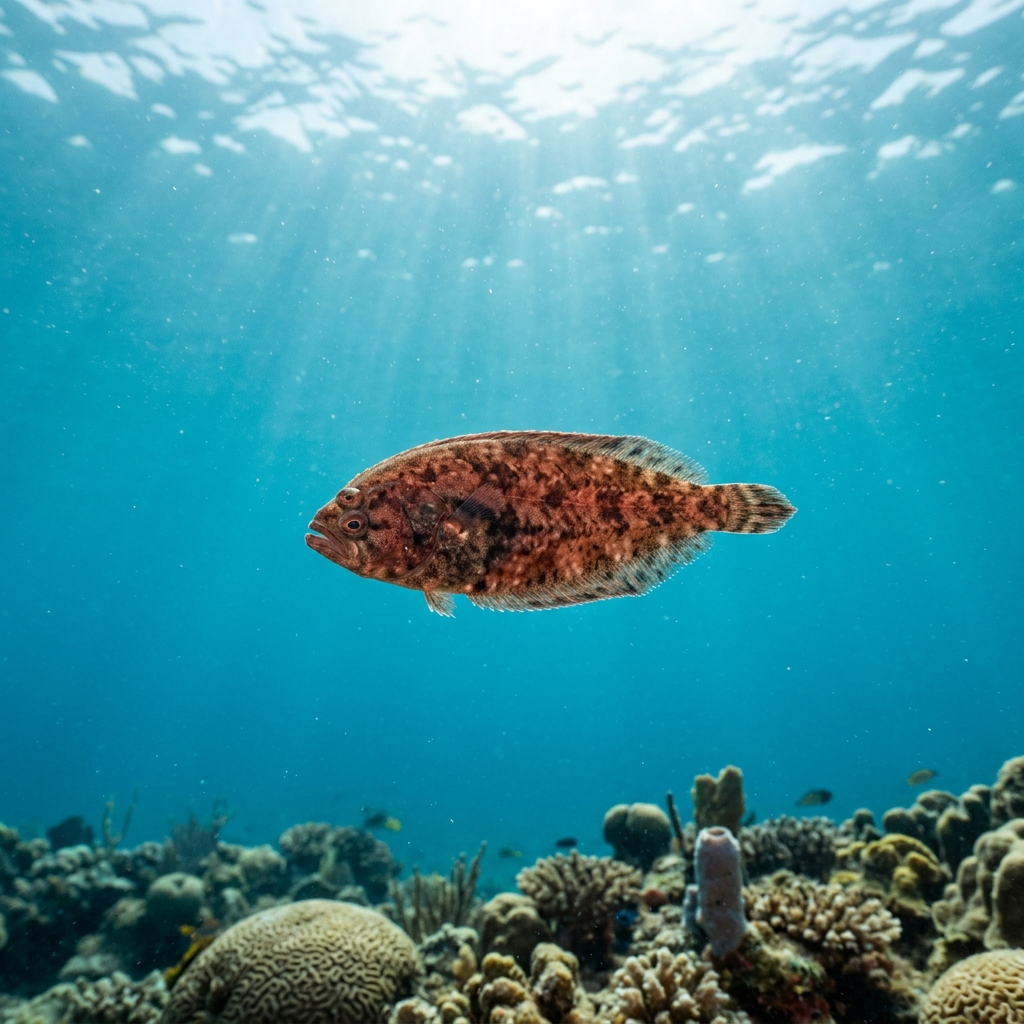
Reef neighbours a diver could mistake it for. Use the identification notes above to tell them apart.
Most consistently logged in the Maldives, especially across the Central Atolls, and a reliable sighting in Egypt's Red Sea sites around Marsa Alam and the Deep South and the Red Sea Riviera further north. Beyond the Red Sea and the Maldives it turns up regularly in the Philippines (Luzon), Hawaii, Timor-Leste around Dili, and Indonesia's Sulawesi, with smaller but steady counts from Okinawa in Japan.
Mapping where Leopard Flounder is logged…
The strongest sightings come from the Maldives' Central Atolls and Egypt's Red Sea coast around Marsa Alam and the Red Sea Riviera. It is also logged regularly in the Philippines, Hawaii, Timor-Leste, and Indonesia's Sulawesi.
There is no strong seasonal signal in sightings, and its temperature range of about 18.6 to 28.3C covers year-round conditions on the reefs where it is found, so it can turn up in any month.
Look for a flat, diamond-shaped fish lying on sand or rubble with a mottled leopard-spot pattern in browns and greys, both eyes on one side of the head. It usually gives itself away by darting a short distance when disturbed, kicking up sand as it resettles.
They typically reach around 27 cm in length, making them a small to medium-sized flatfish that is easy to swim right past if it is not moving.
No, it poses no danger to divers. It relies entirely on camouflage and a quick dart away from disturbance rather than any defensive strike.
It starts life as a normal, upright-swimming juvenile with one eye on each side of its head, then one eye migrates around the skull as it settles into its flattened, bottom-dwelling adult life.
Site and sighting data is aggregated from diver logs, iNaturalist and GBIF. For taxonomy and conservation status:
Wide Eyed Flounder
1,621 sites