Platichthys flesus
Sandy-bottomed and easy to miss: find European Flounder in Galicia, Scotland and Schleswig-Holstein at 7-14 C, year-round.
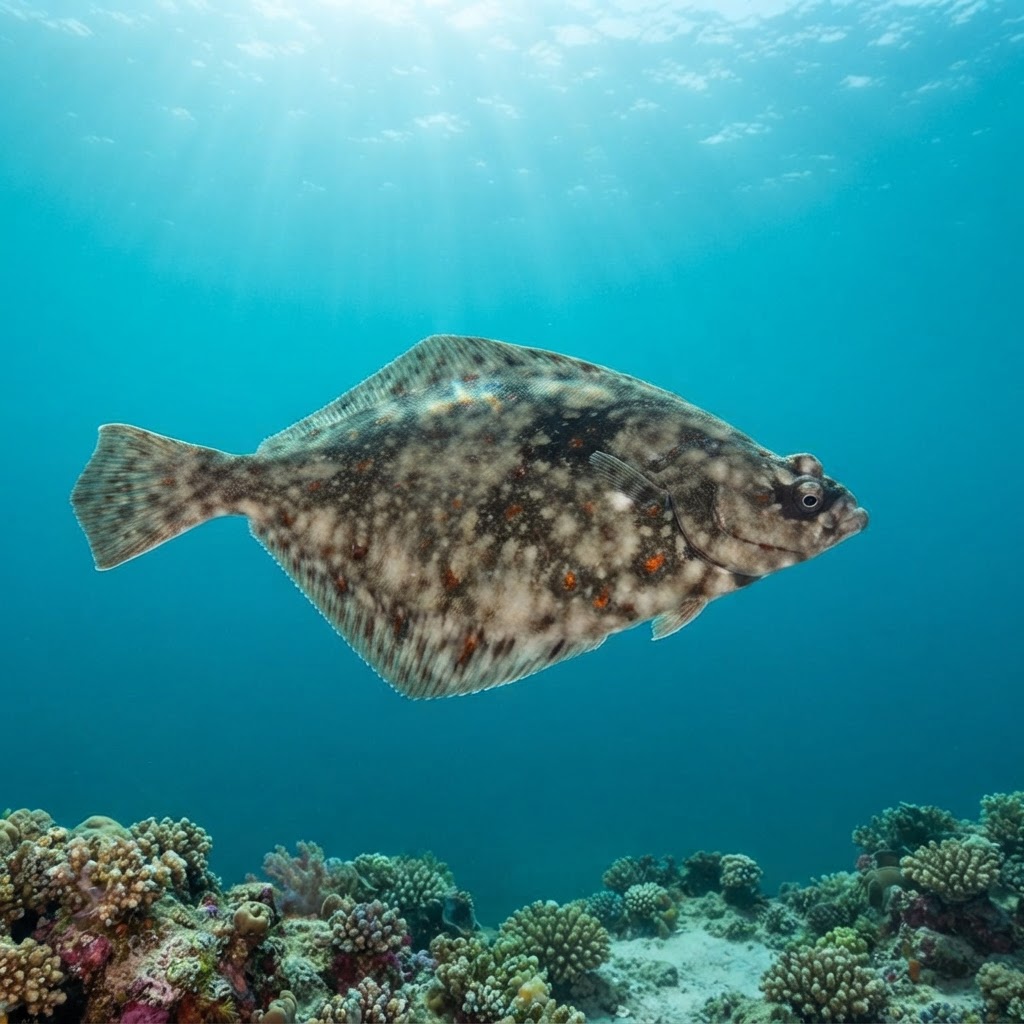
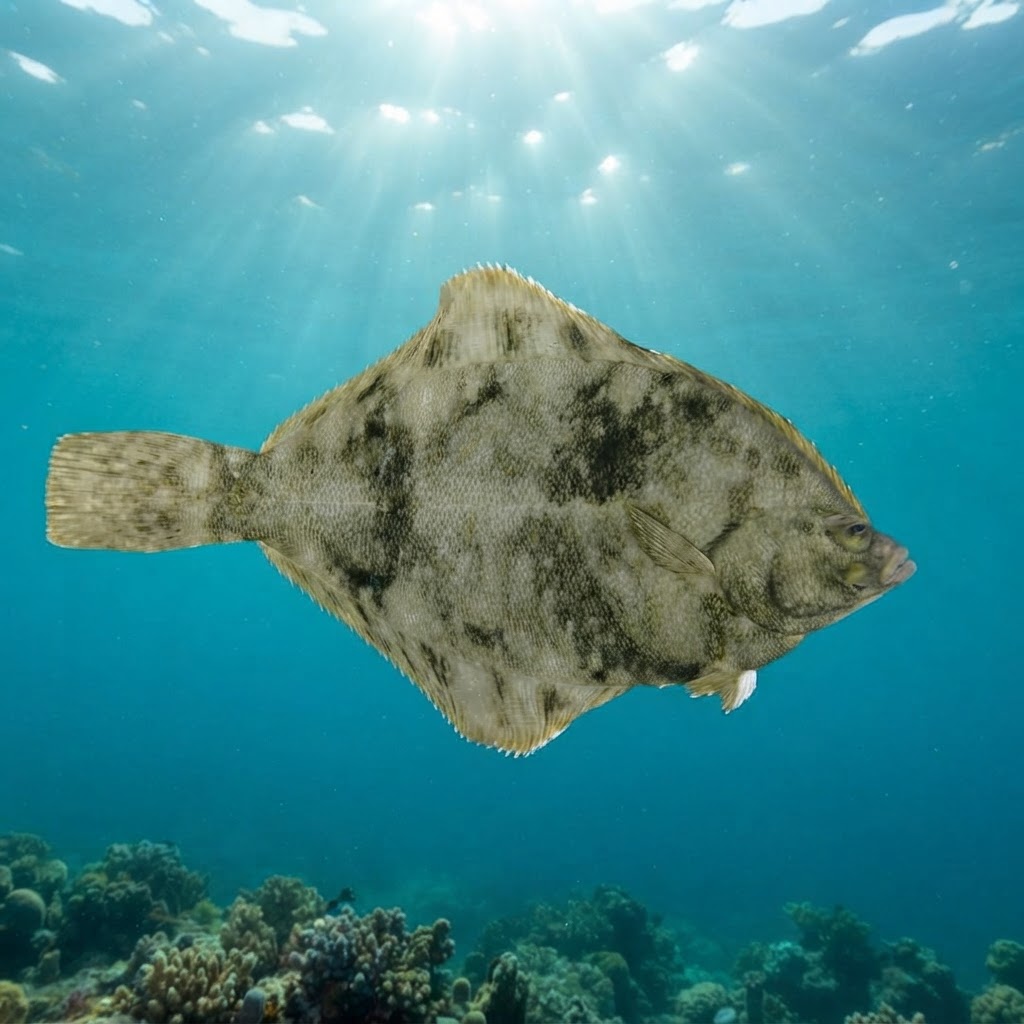
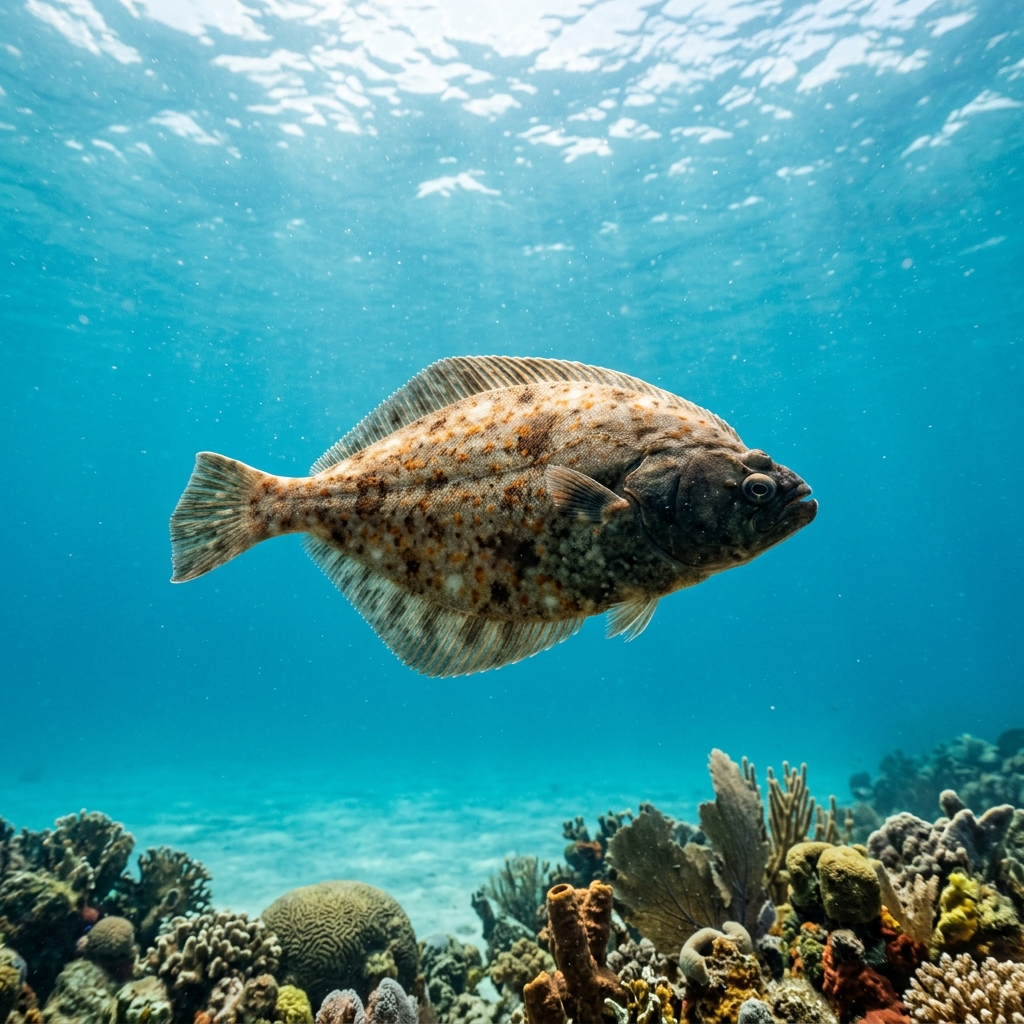
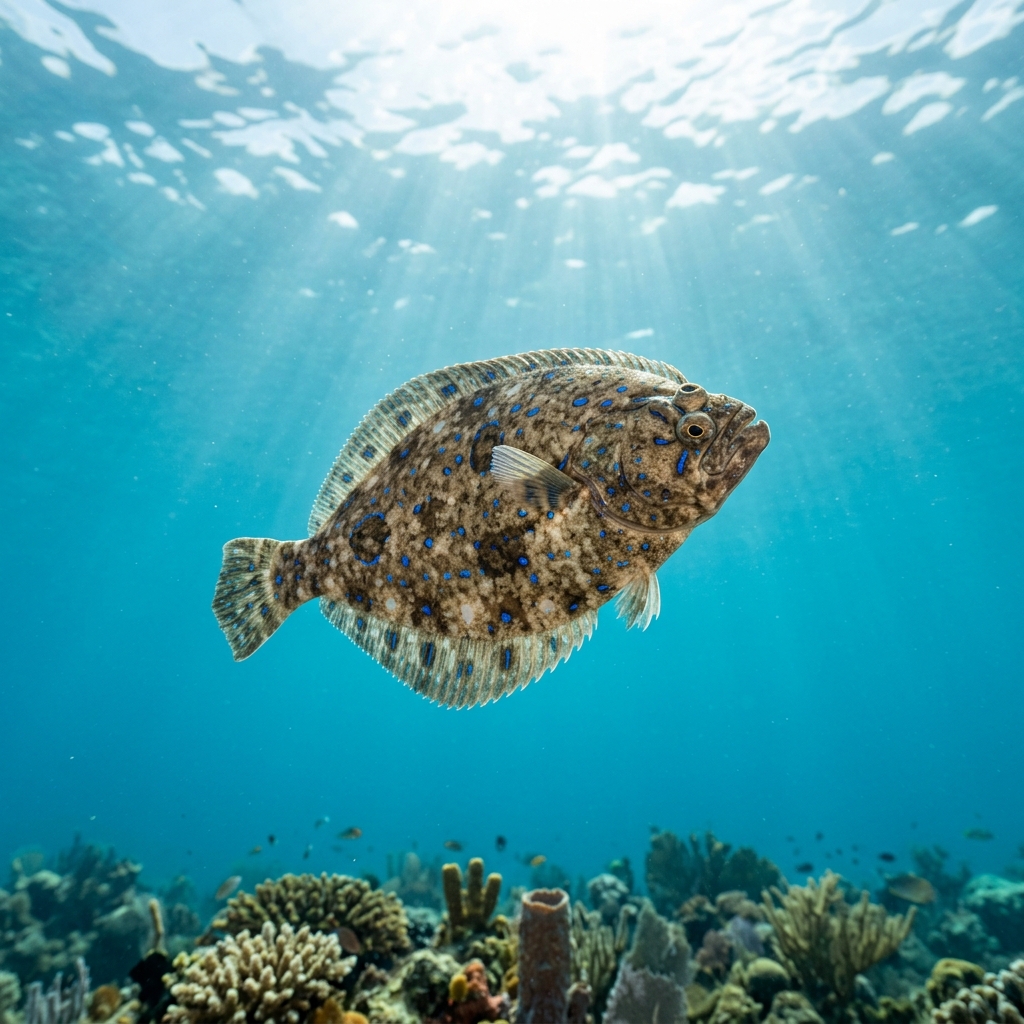
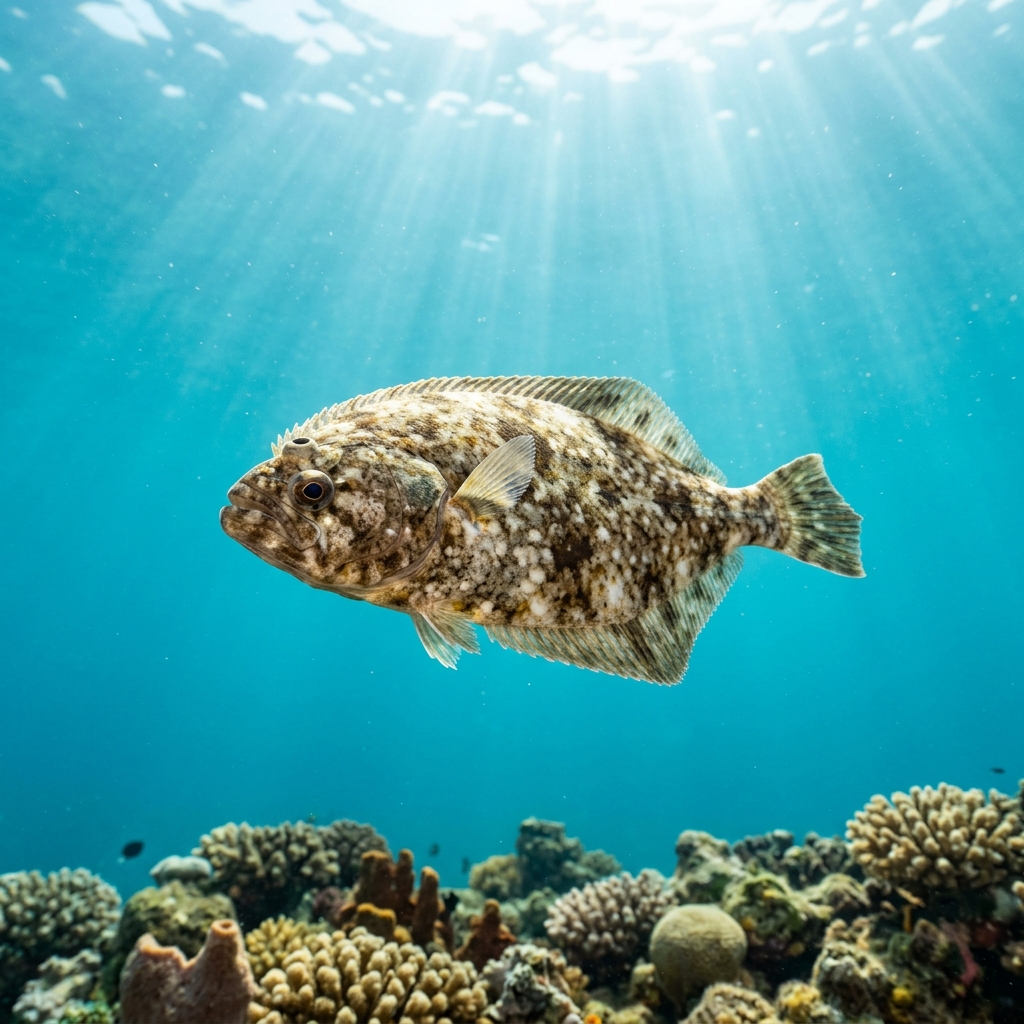
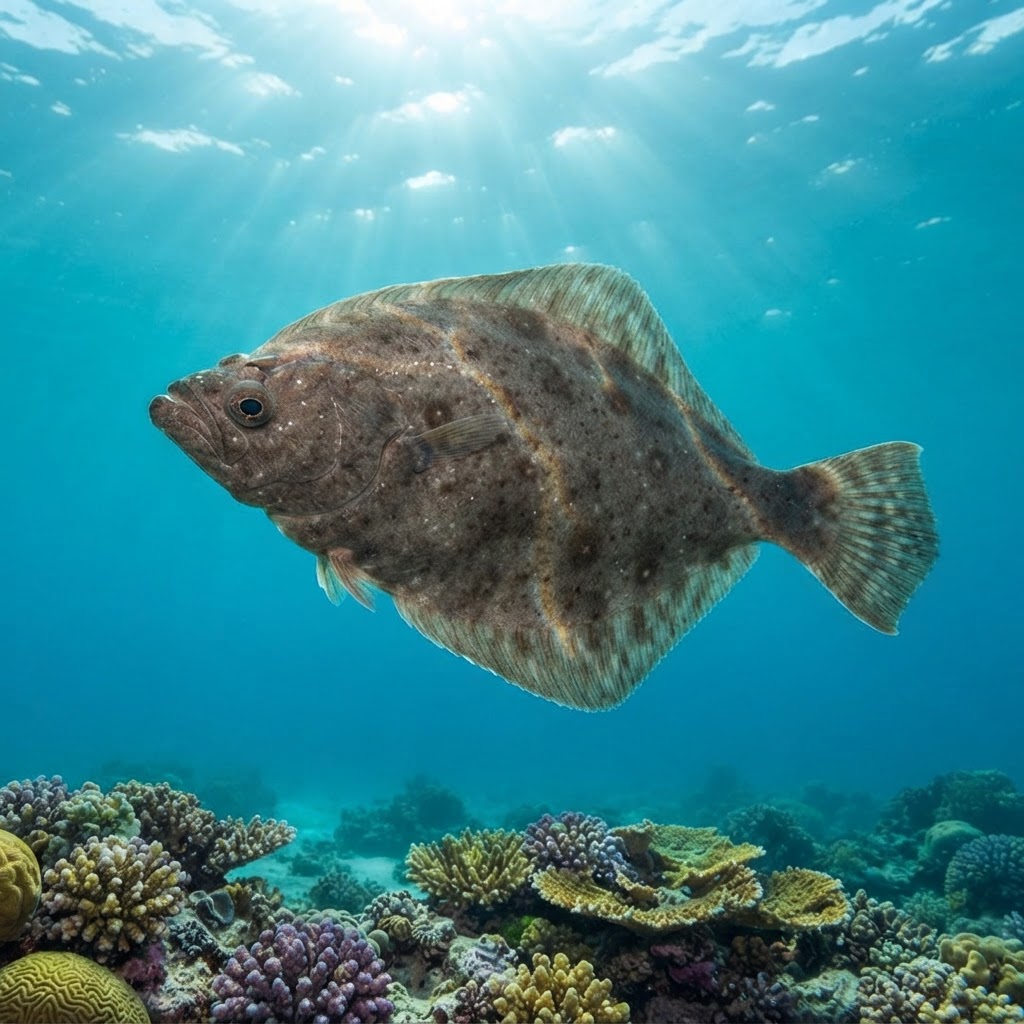
Lies flat on sand or mud with both eyes on the right side of its head, body mottled brown and grey to match the seabed, growing to around 42 cm. Small bony tubercles run along the base of the dorsal and anal fins and along the lateral line, a detail worth checking if you get close. Most of the body stays buried or half-buried, so often the first thing you notice is the outline or the eyes tracking you.
Spends most of its time lying still on sand, mud or fine gravel, often with just the eyes and outline visible above the substrate. Divers tend to spot it only when it flicks away in a short burst to resettle a metre or two further on, usually after being disturbed rather than approached directly. It shows no interest in divers beyond that startle response, and is easiest to find by scanning flat, featureless bottoms rather than reef structure.
Like other flatfish, it starts life swimming upright and symmetrical like any other fish larva, then one eye migrates across the head as it matures into the flattened, bottom-living adult form.
Sighting data shows no strong seasonal pattern, and with a comfortable range of 7.2 to 14.2 C it's a year-round find on the cool sandy and muddy bottoms it favours. Expect the same uncommon-but-steady chance of a sighting whenever you dive these sites.
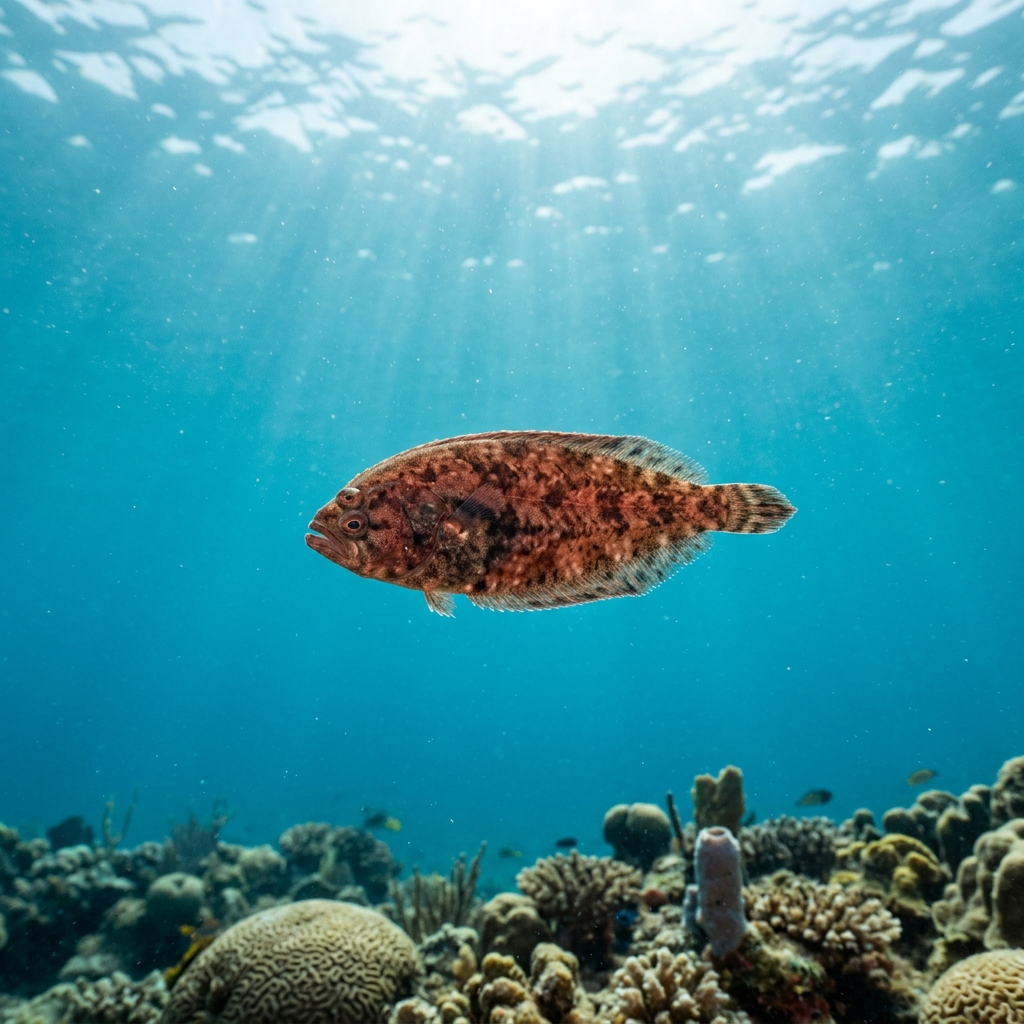
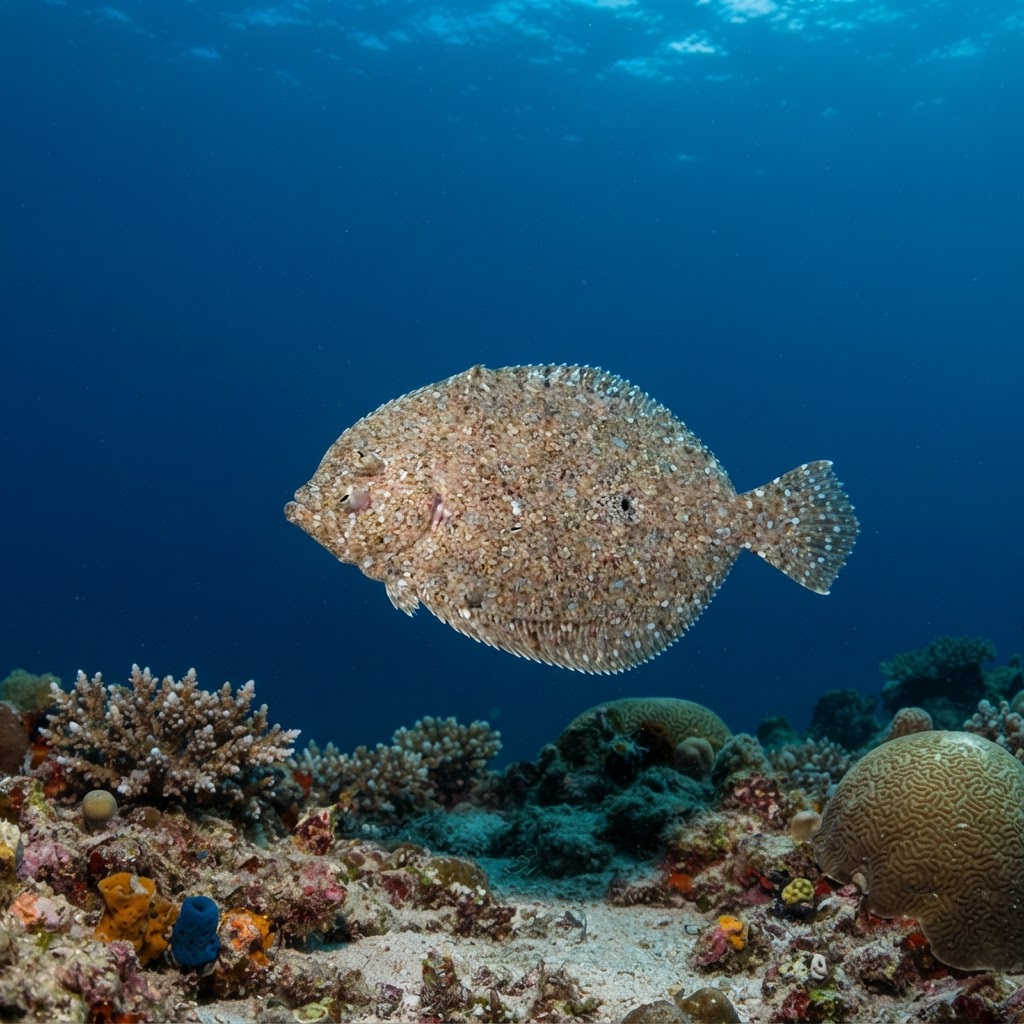
Reef neighbours a diver could mistake it for. Use the identification notes above to tell them apart.
Most reliably logged in Galicia, Spain and Scotland, United Kingdom, with strong numbers also from Schleswig-Holstein in Germany and both Jutland and Zealand in Denmark. Smaller but real populations turn up in Bohuslän, Sweden, Zeeland in the Netherlands and Brittany, France, so it's a fixture of cool-water sand and mud sites across northern Europe.
Mapping where European Flounder is logged…
Best logged in Galicia (Spain) and Scotland (UK), with solid numbers too from Schleswig-Holstein (Germany) and Jutland and Zealand (Denmark). It favours sandy and muddy bottoms rather than reef structure at these sites.
There's no clear seasonal pattern in the sighting data, so it's a year-round target. Water temperatures of 7.2 to 14.2 C at the sites it's found suit it fine across the year.
Look for a flat, mottled brown and grey body lying on sand or mud with both eyes on one side of the head. Small bony bumps along the fin bases and lateral line are a useful close-up check against similar flatfish.
Typically around 42 cm, though individuals vary with age and location. They're a mid-sized flatfish, not a giant, so scale can make them easy to miss on a sandy bottom.
They hatch looking like an ordinary symmetrical fish, then one eye slowly migrates across the top of the head as the fish flattens and settles onto the seabed to live on its side.
Site and sighting data is aggregated from diver logs, iNaturalist and GBIF. For taxonomy and conservation status:
Wide Eyed Flounder
1,624 sites