Bothus podas
Spot Wide Eyed Flounder year-round across the French Riviera, Costa Brava and Canary Islands. Here's where divers log it most and how to recognise it.
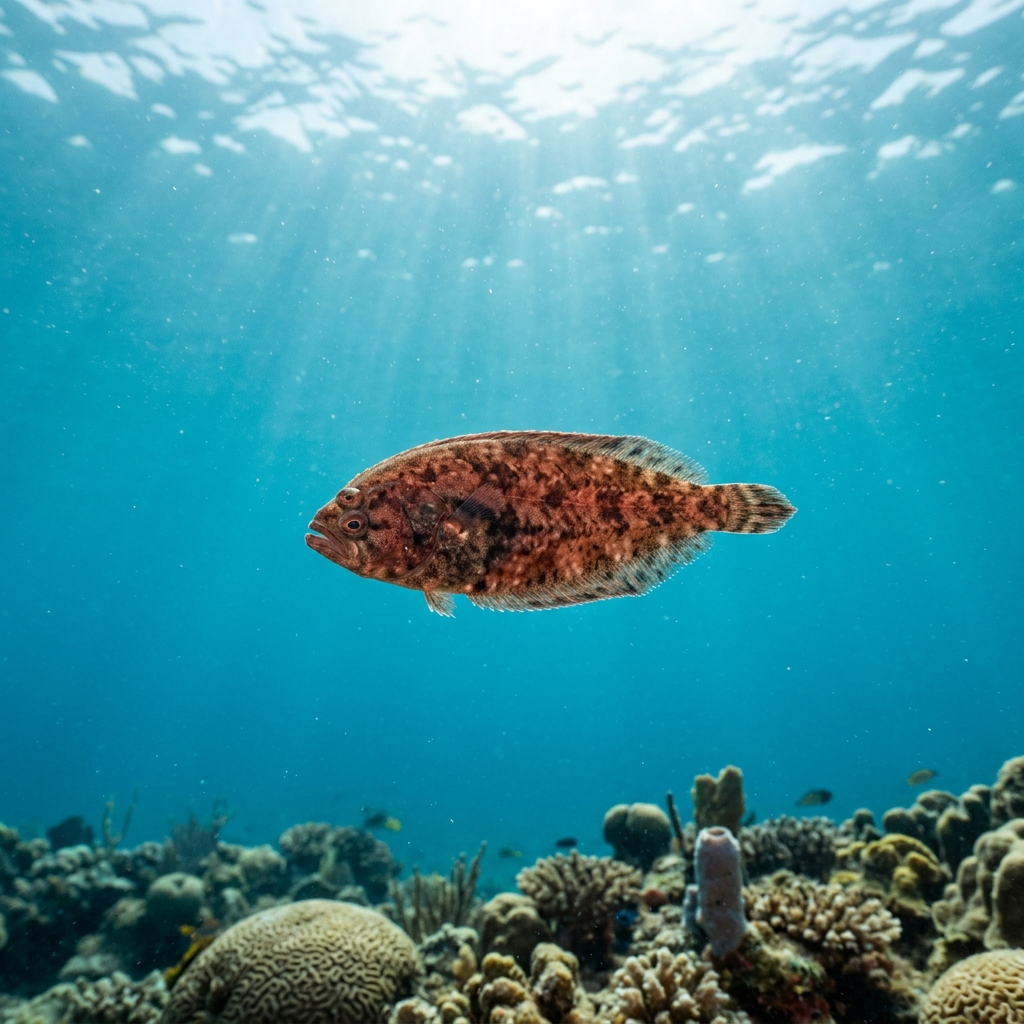
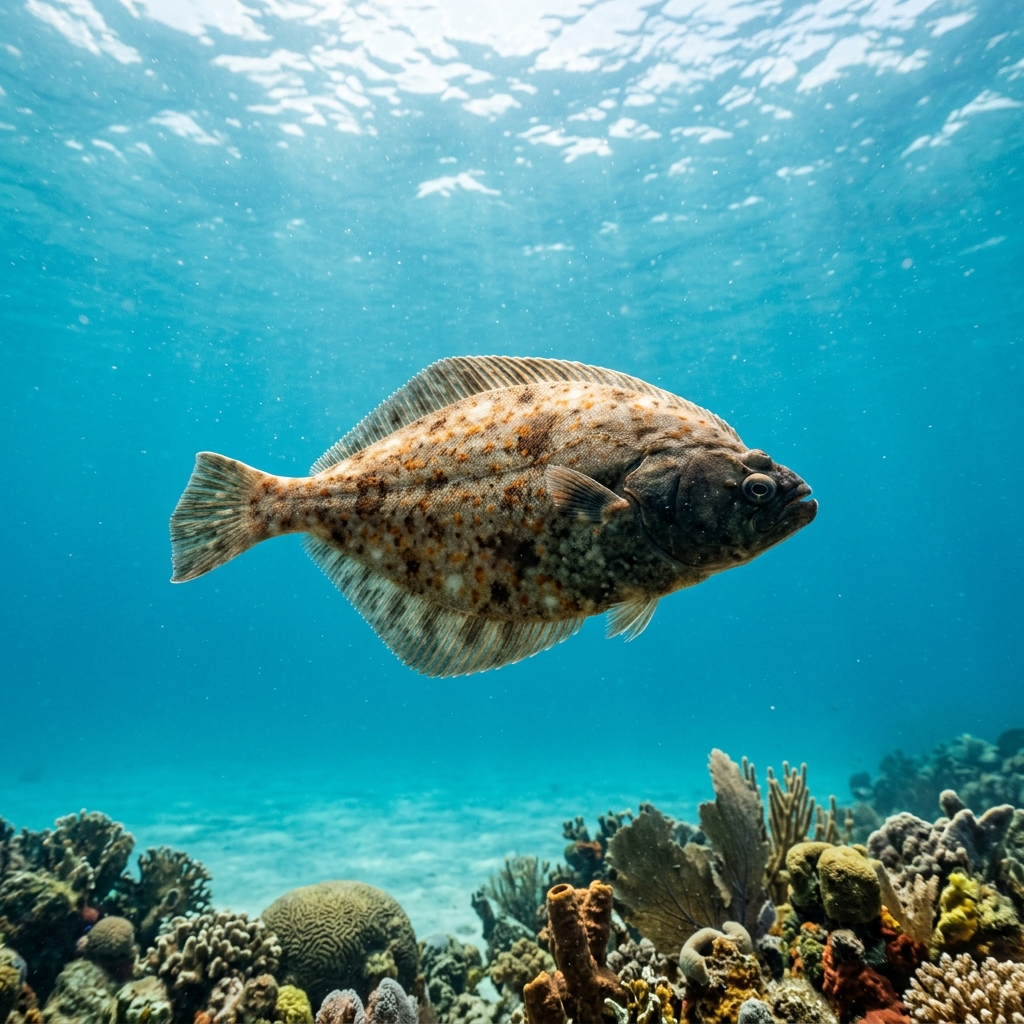
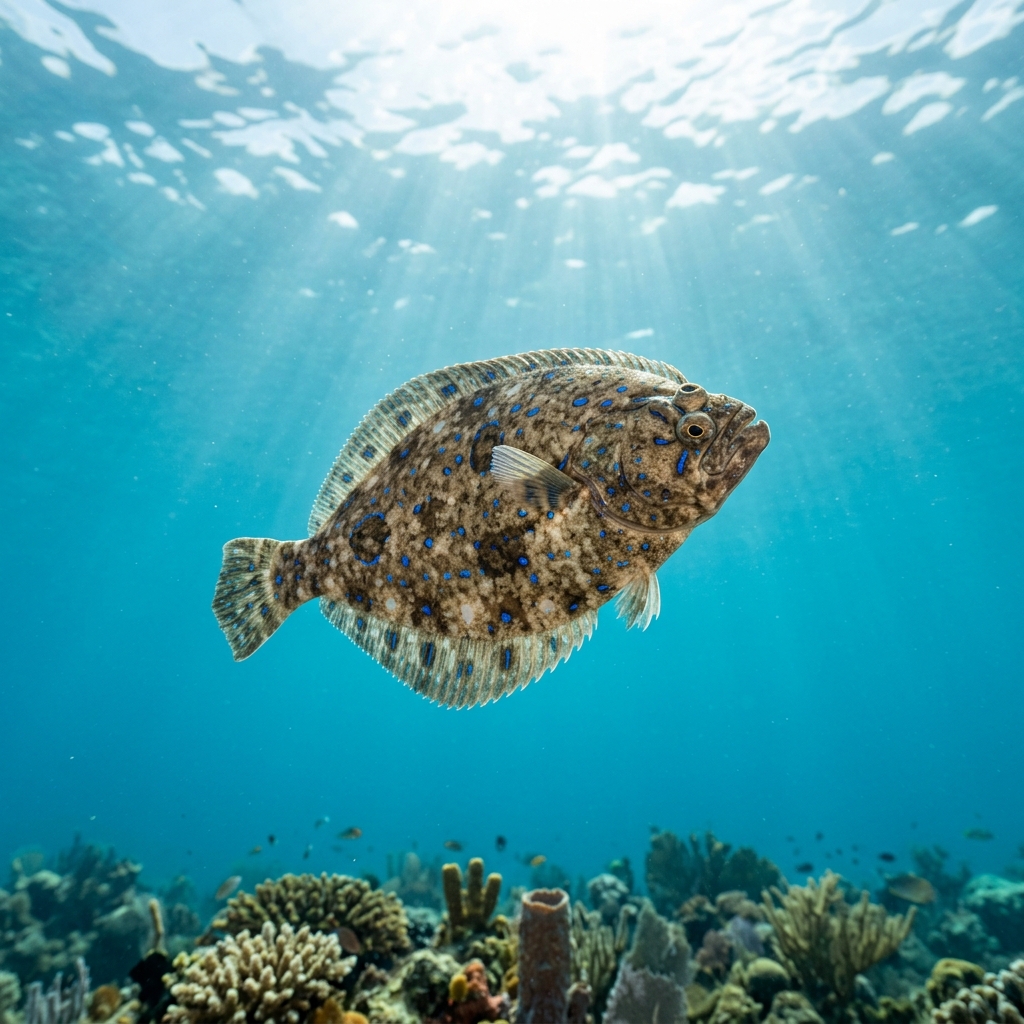
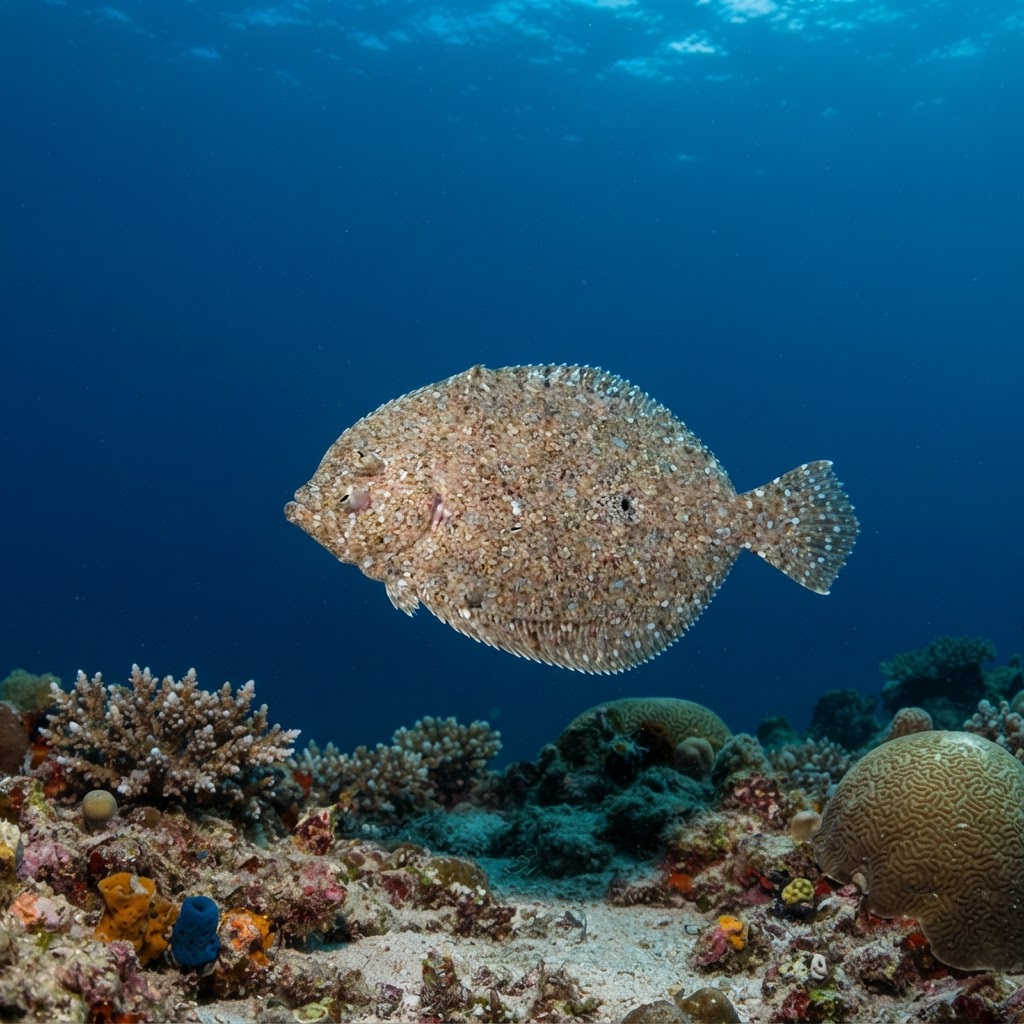
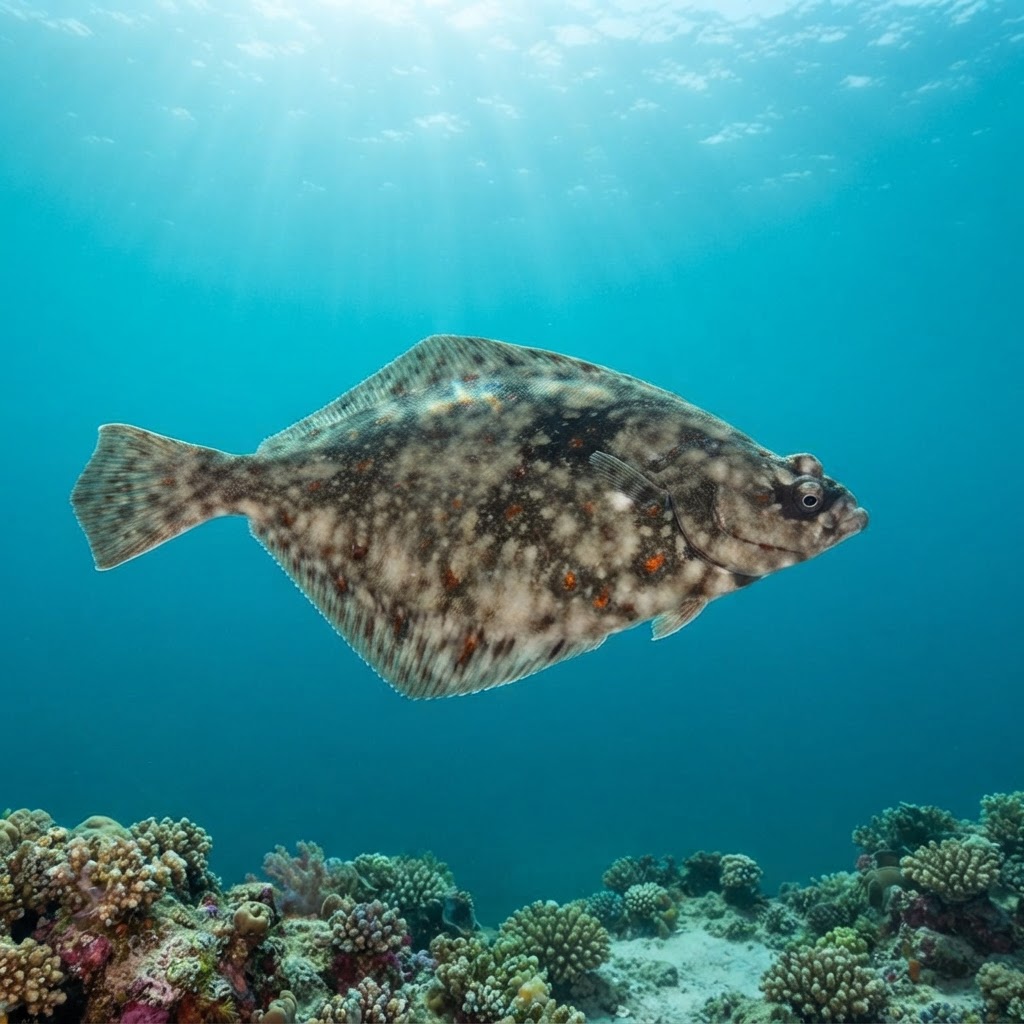
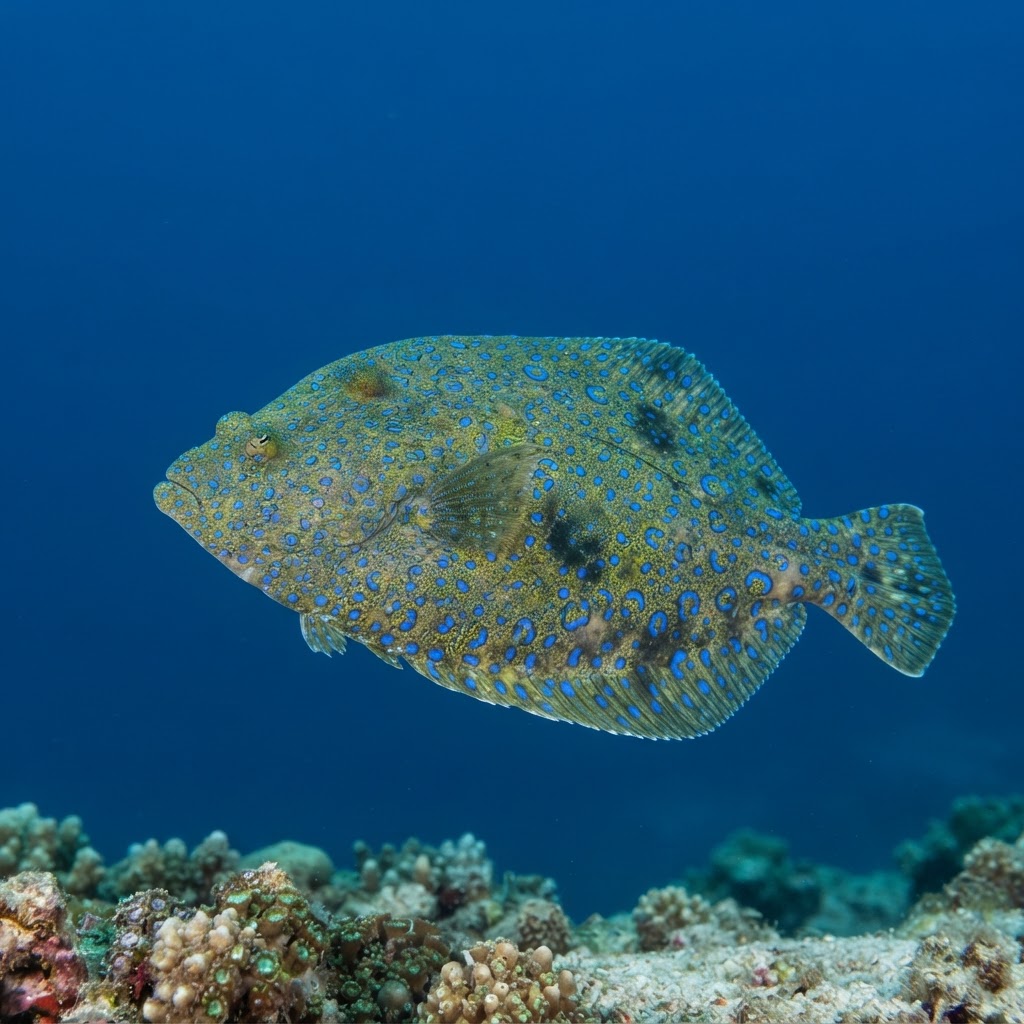
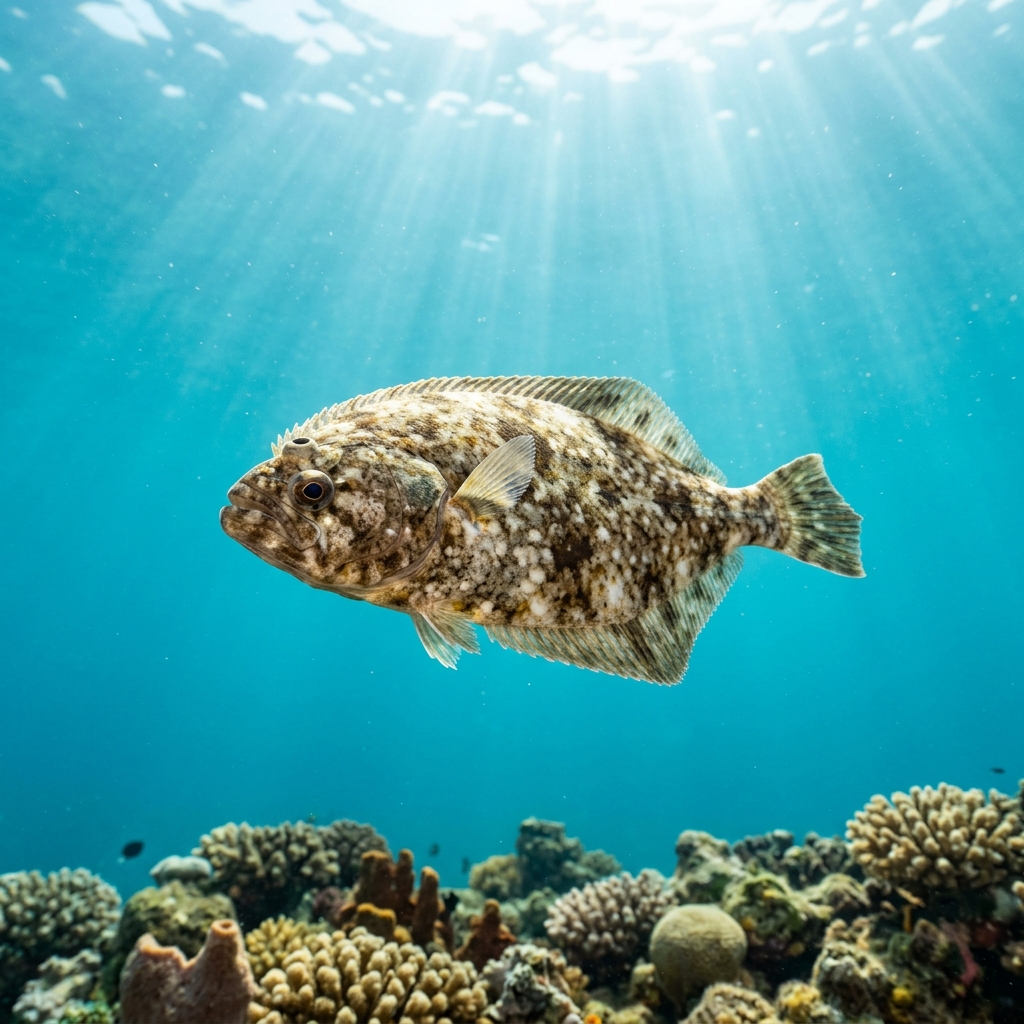
A flat, oval-bodied fish around 30 cm long, lying motionless on sand or soft substrate with both eyes sitting prominently on its upper (left) side. The body is pale brown to beige, patterned with irregular darker spots and small rings that break up its outline against the seabed. Look closely and you may notice the eyes are set unusually far apart, giving the species its common name. In males, the snout is notably longer and the eyes are spaced even more widely than in females, a difference worth checking on a slow approach.
Almost always encountered stationary on sandy or silty seabed, relying on camouflage rather than flight when approached. Divers who move slowly and stay low can often get very close before it shuffles a short distance away and resettles. It hunts small fish and invertebrates from the bottom, so watch for short, rapid dashes if prey passes nearby.
Like all bothid flounders, wide eyed flounders are born swimming upright with one eye on each side of the head; during larval development one eye migrates across the skull to join the other on the left side, permanently changing the fish's relationship with the world.
Sightings are recorded year-round with no concentrated season, which fits the species' preference for cooler temperate waters in the 13 to 18 °C range found throughout the Mediterranean and eastern Atlantic.
Most commonly logged across the western Mediterranean and eastern Atlantic, with France, Spain and the Canary Islands accounting for the majority of recorded sightings. The French Riviera and Provence coastline and Costa Brava in Spain are the standout regions, while Tenerife and Gran Canaria in the Canary Islands offer reliable encounters further south. Italy (especially Sardegna and Tuscany), Greece, and the Azores round out the best options.
Mapping where Wide Eyed Flounder is logged…
The species is most reliably logged in the western Mediterranean and eastern Atlantic. The French Riviera, Costa Brava, Costa Blanca, and the Canary Islands (particularly Tenerife and Gran Canaria) are the top regions. Sardegna, Greece, the Azores, Turkey, and Cyprus also produce regular sightings.
Sightings are recorded throughout the year with no peak season. The species tolerates the cooler temperatures typical of the Mediterranean and eastern Atlantic, so there is no need to time a trip specifically around it.
Look for a flat, pale brown oval fish about 30 cm long lying on sandy or silty bottom. The most useful feature is the pair of eyes sitting prominently on the upper surface with an unusually wide gap between them. The body is mottled with darker spots and pale rings, blending well with the seabed.
Adults typically reach around 31 cm in length. Underwater they can look smaller because they press flat against the substrate; viewing from directly above gives the clearest sense of their true size.
Larvae hatch with one eye on each side like a normal fish. As the fish matures, one eye physically migrates across the skull to sit beside the other on the left side of the body, which becomes the upper surface when the fish settles on the seabed. It is one of the more dramatic transformations in the fish world.
Site and sighting data is aggregated from diver logs, iNaturalist and GBIF. For taxonomy and conservation status:
Leopard Flounder
165 sites