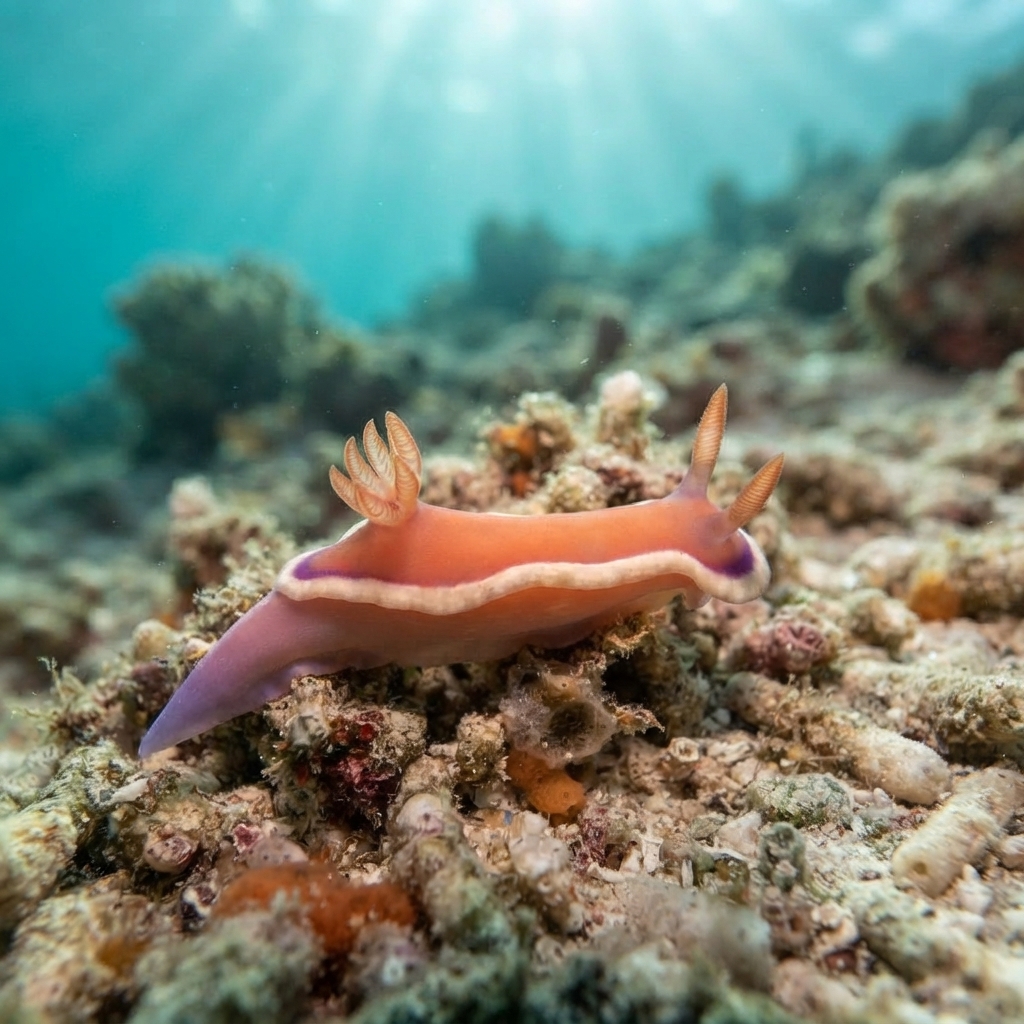
Thorunna halourga
A small, uncommon rainbow dorid best logged in Bali's reefs at 26 to 32°C, present year-round with no clear peak season.
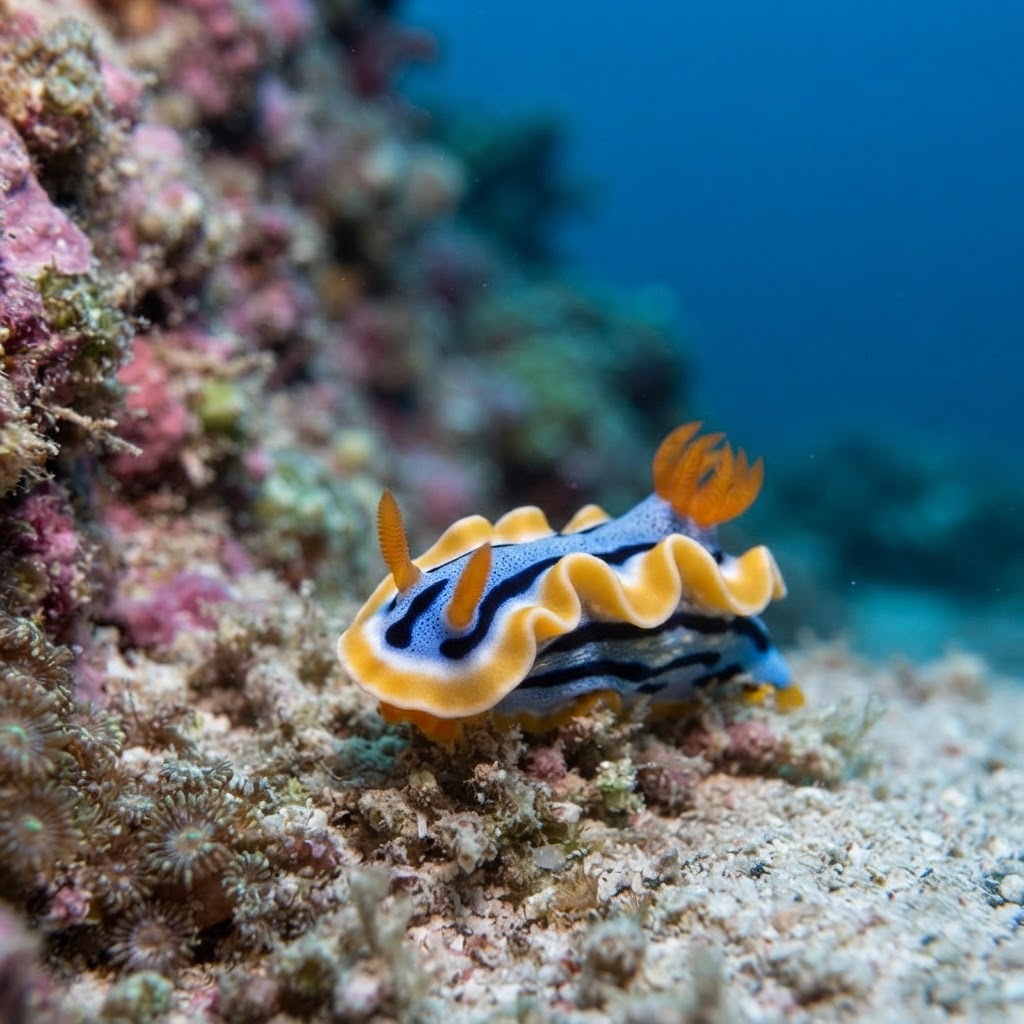
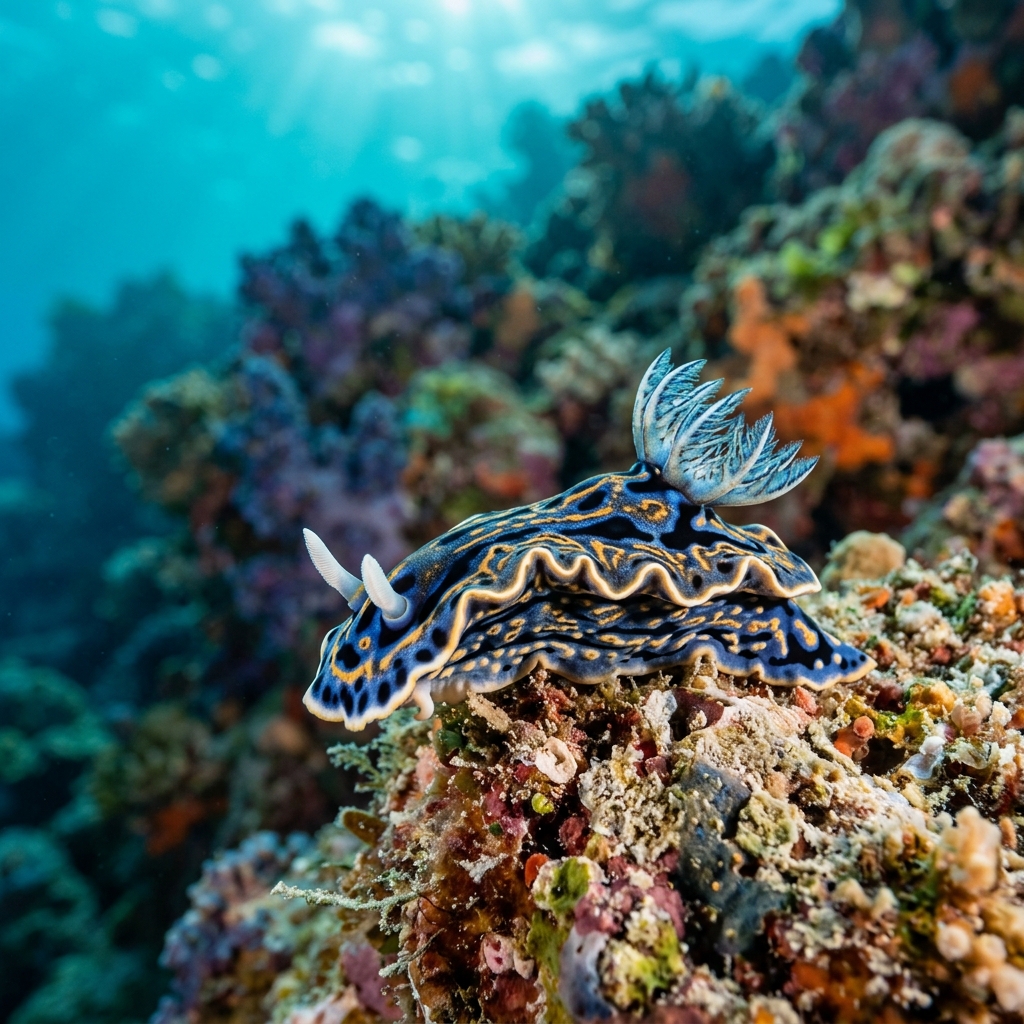
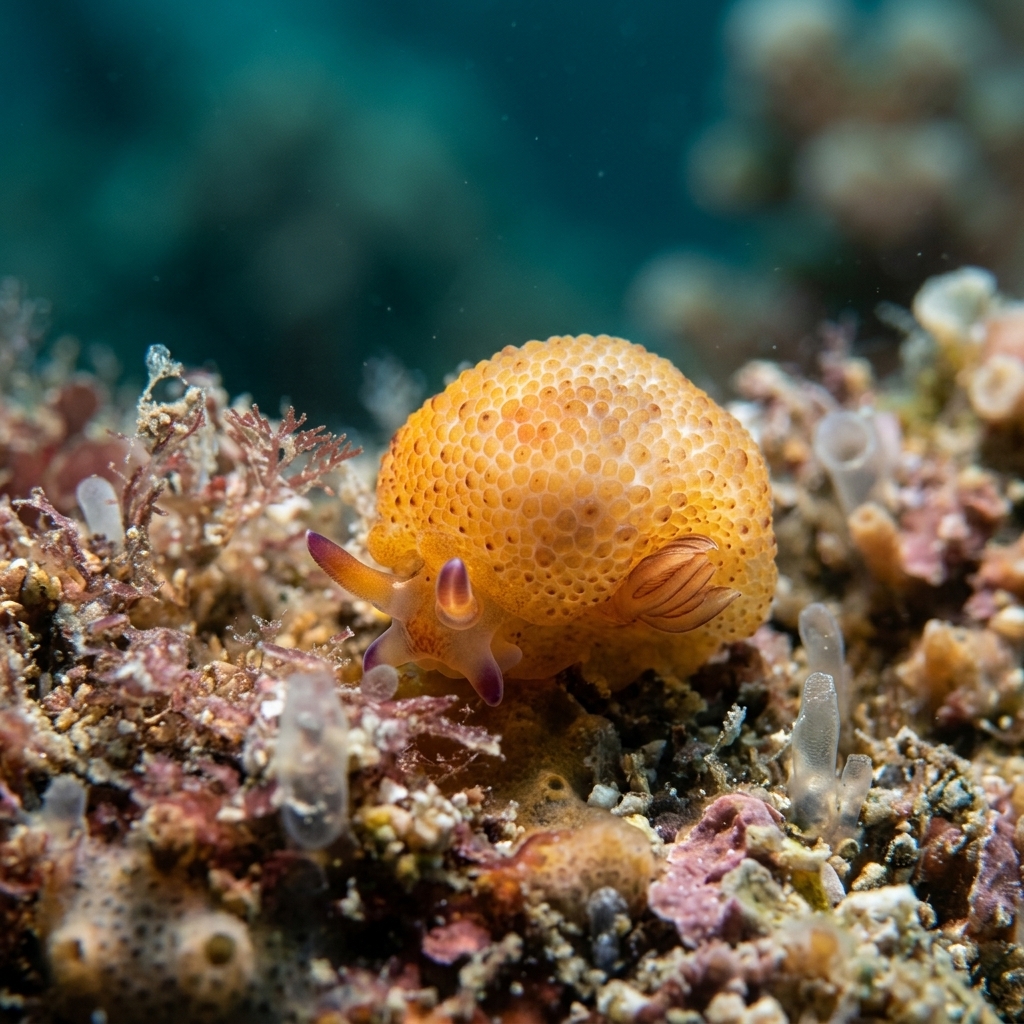
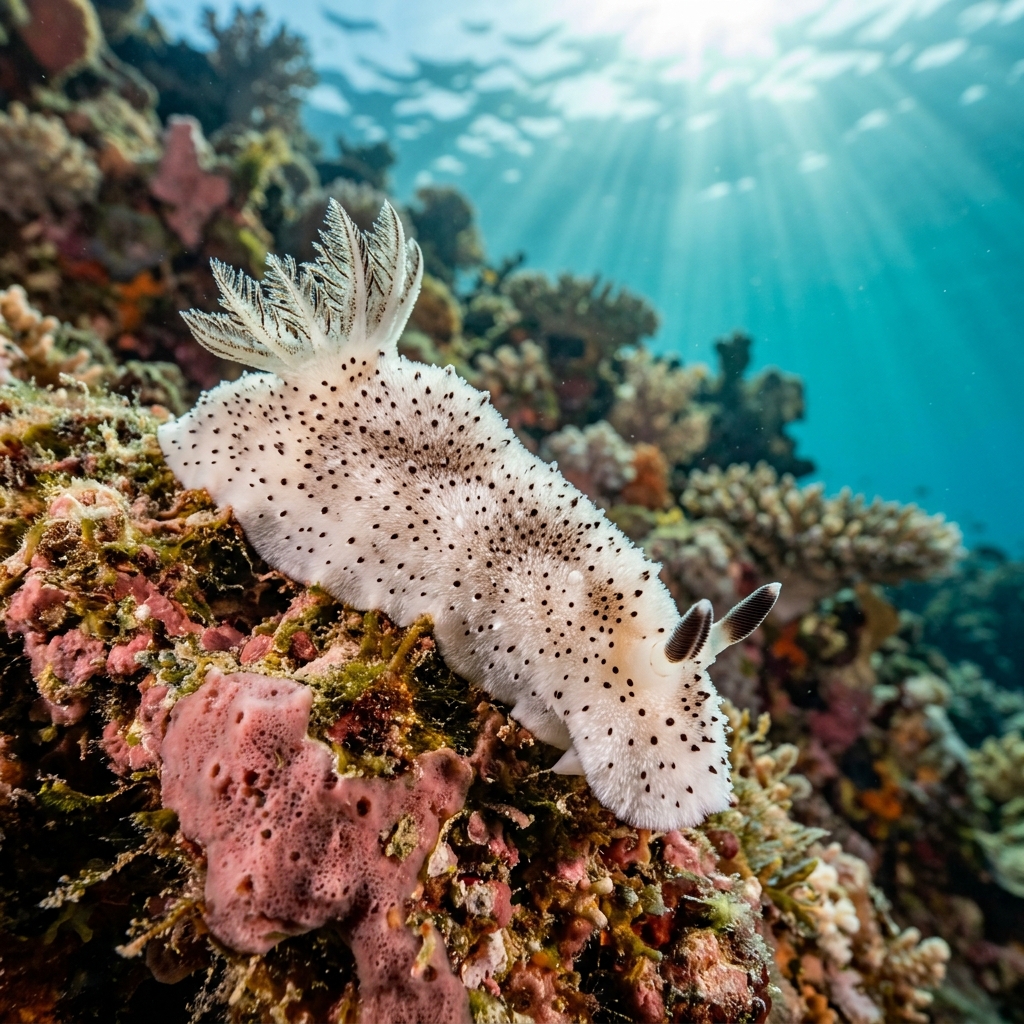
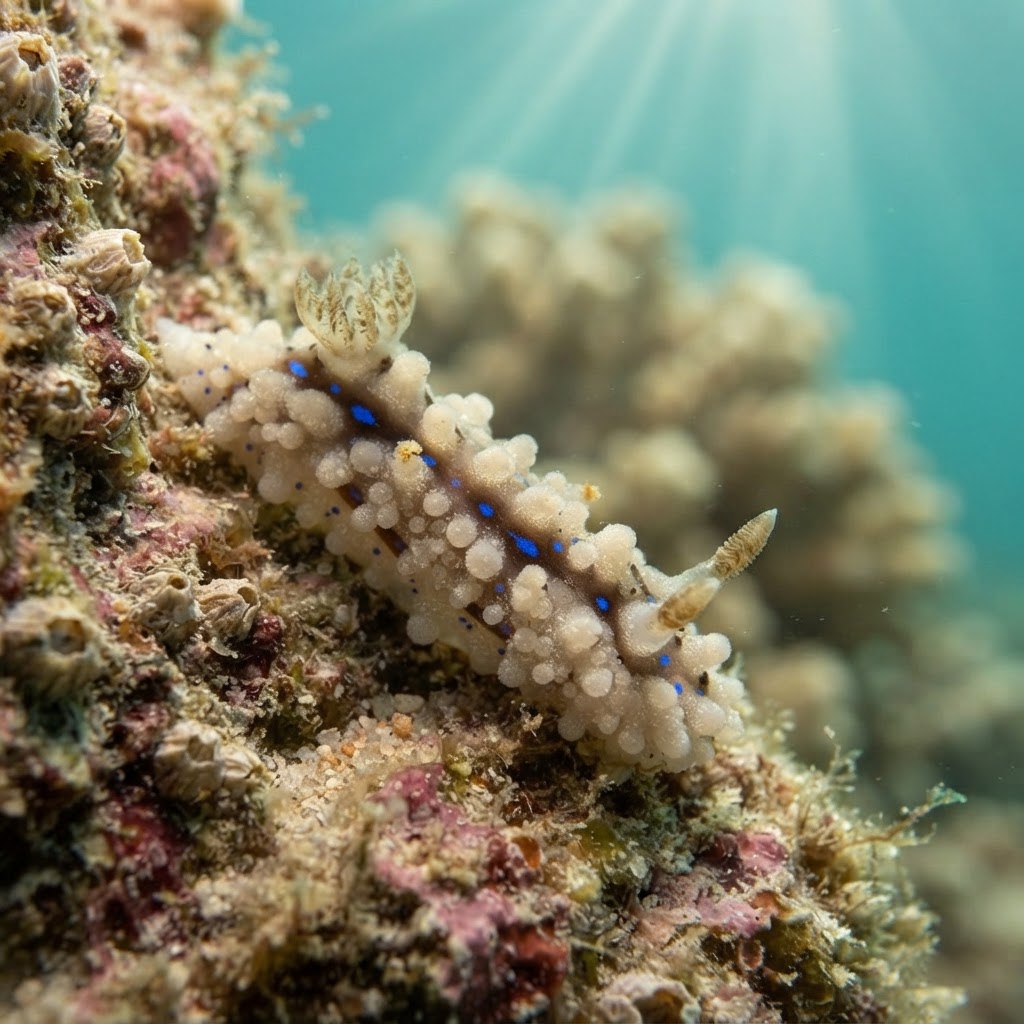
A slender, translucent-bodied nudibranch with a purple to violet margin running the full edge of its mantle, often with a paler or whitish central stripe down the back. It stays small and easy to overlook against reef rubble and sponge, so most divers spot it only when a guide points a torch at it. The orange-tipped rhinophores (the paired sensory horns on the head) and gill cluster near the tail help confirm the ID against similarly coloured slugs.
Found crawling slowly over rubble, sponge, and encrusting growth on the reef floor, usually during daytime dives when muck and reef-macro specialists are working the substrate close with a torch. It shows no reaction to divers beyond continuing its slow grazing pace, and like other dorids it relies on being unpalatable rather than fleeing when approached.
Like other members of the Chromodorididae family, it likely feeds on sponges and stores chemical compounds from that diet in its tissue as a defence against predators, which is part of why its bright colouring can afford to be so conspicuous.
No clear seasonal pattern shows up in the sighting data, and its comfort range of roughly 25.6 to 31.6°C matches warm tropical reef water year-round, so any month is fair game. Dive Bali's macro sites whenever conditions suit you rather than chasing a season.
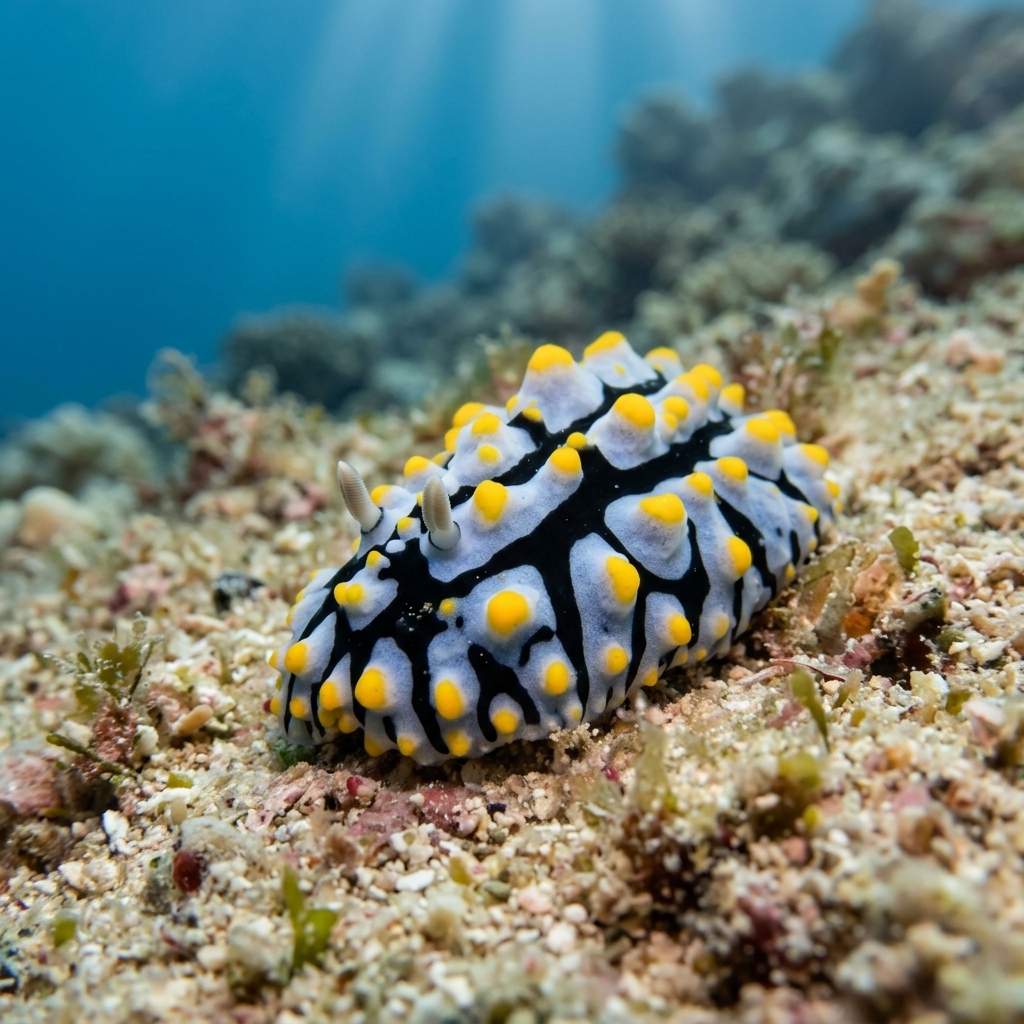
Reef neighbours a diver could mistake it for. Use the identification notes above to tell them apart.
Most consistently logged in Bali, Indonesia, which accounts for the bulk of confirmed sightings, with an additional record from Luzon in the Philippines. Treat it as a Bali specialty first, with the Philippines as a secondary possibility on the right reef.
Mapping where Wide-margined Rainbow Dorid is logged…
Bali, Indonesia is the most reliable region for this species, with a single additional record from Luzon in the Philippines. It is considered uncommon even at the sites where it does turn up, so treat any sighting as a highlight rather than a given.
There is no detected seasonal pattern, and its warm-water niche of about 25.6 to 31.6°C is available on tropical reefs all year. It is a year-round possibility on Bali macro dives rather than a species tied to a particular month.
Look for a small, translucent-bodied nudibranch with a continuous purple to violet edge running around the mantle and orange-tipped rhinophores on the head. It moves slowly over rubble and sponge, so a slow, close look with a torch is usually needed to spot it.
Exact size data is not available for this species, but as with most Thorunna and related dorids it stays small, likely only a few centimetres long. Expect to need a close, careful look rather than spotting it from a distance.
No, it poses no danger to divers. Like other nudibranchs it relies on stored chemical defences against predators rather than any threat to people, so it is safe to observe up close without disturbing it.
Site and sighting data is aggregated from diver logs, iNaturalist and GBIF. For taxonomy and conservation status:
Blue Dragon
3,163 sites