Chromodoris spp.
Spot Chromodoris nudibranchs across the Philippines, Indonesia and the Red Sea. Here's where to find them, when to go, and how to tell them apart.
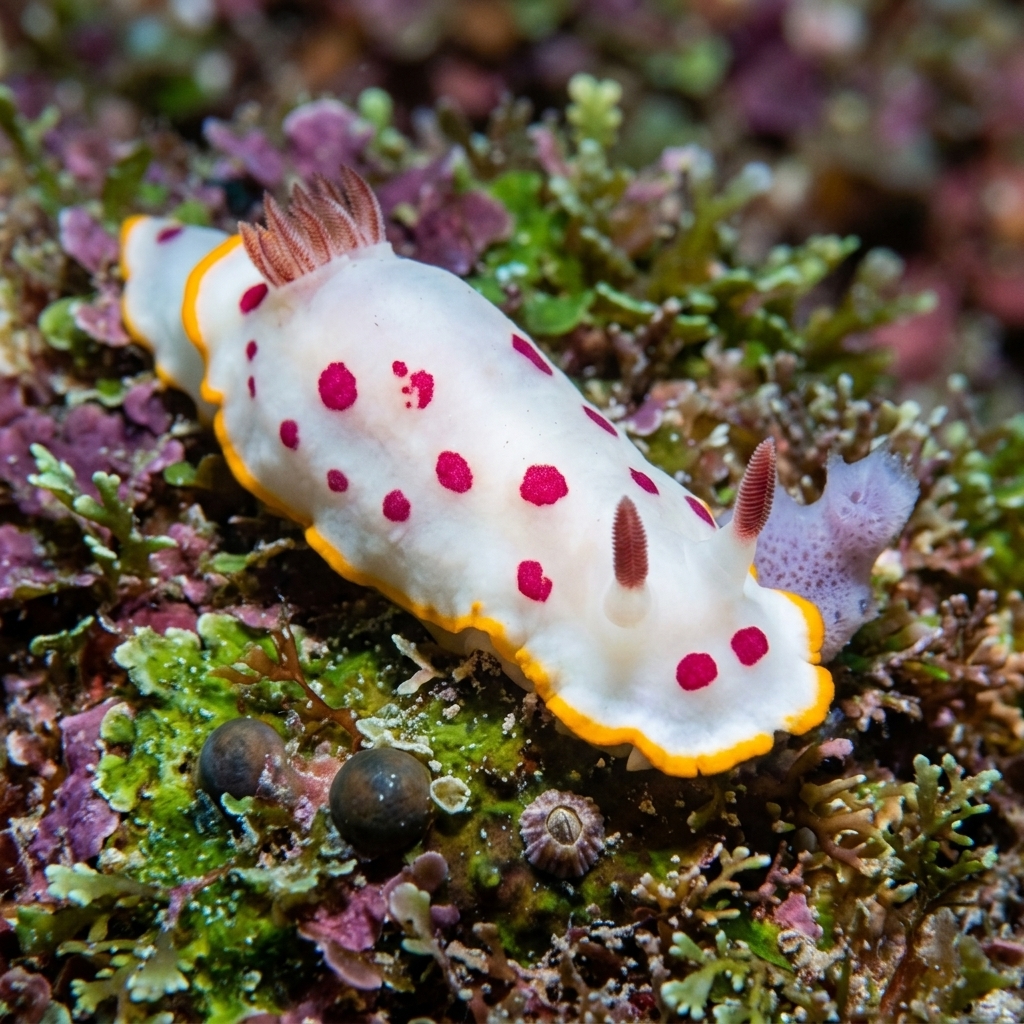
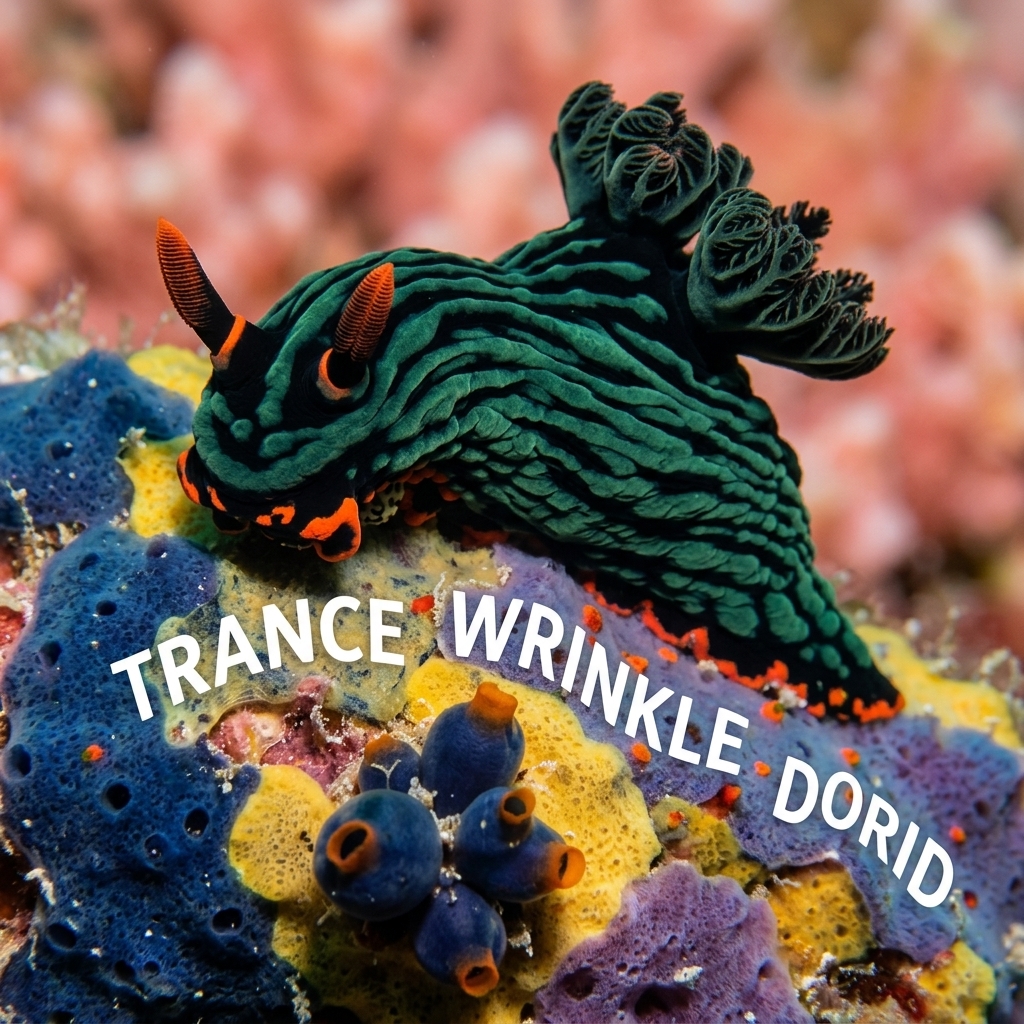
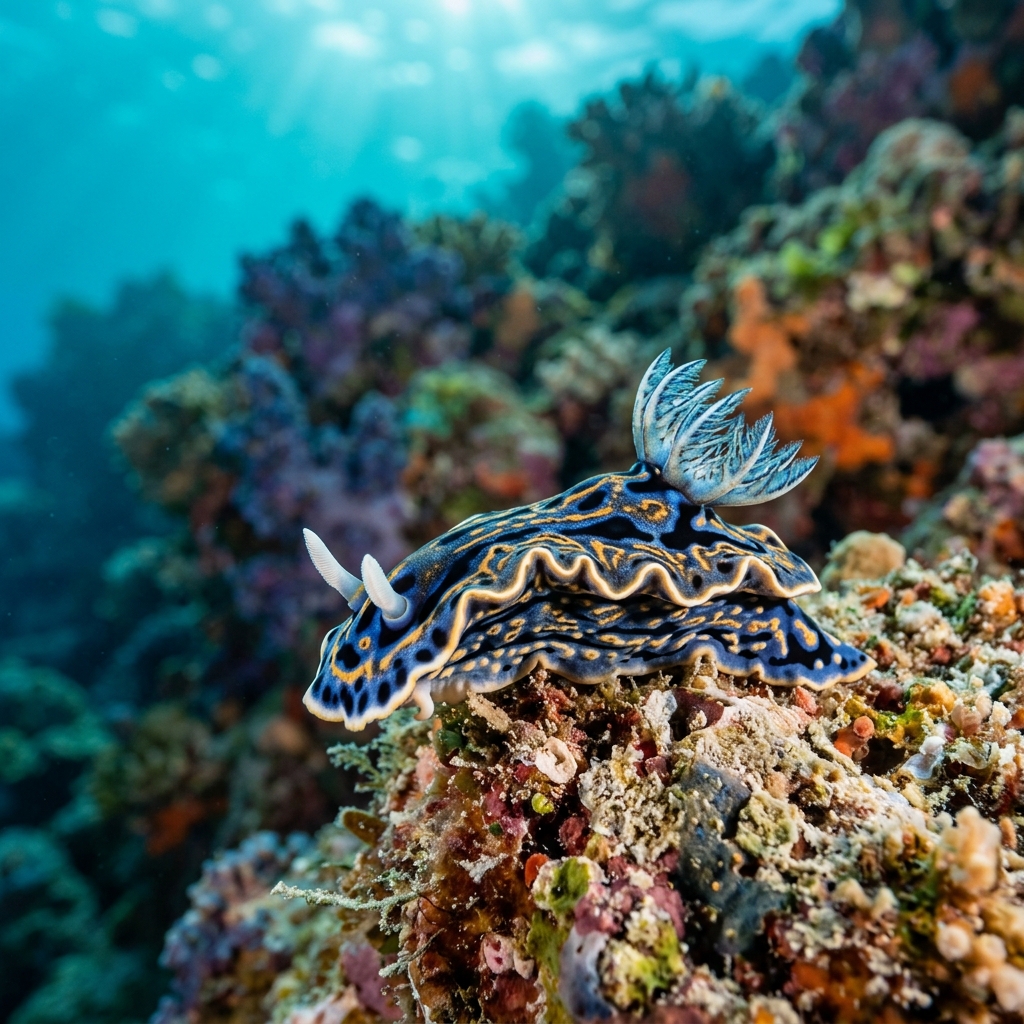
Chromodoris nudibranchs are small, soft-bodied sea slugs most easily keyed on their bold colour patterns: vivid combinations of blue, white, black, purple, orange, or yellow arranged in stripes, spots, or bands along a flattened, elongated body. Two prominent sensory organs (rhinophores) project from the head, and a cluster of feathery gills crowns the rear of the back, both often colour-matched to the body. As a group they tend to be slow-moving and conspicuous against the reef, typically only a few centimetres long, which means you need to look closely at rubble, sponge, and encrusting algae to find them. The enormous variety of patterns across the genus means the first task is confirming it is a Chromodoris before trying to pin down the species.
When you find one, it is almost always moving slowly across a surface, grazing on the sponges or encrusting organisms it feeds on. They show little reaction to divers and will continue their business even with a torch or camera close by, which makes them popular with underwater photographers. Look on reef rubble, under ledges, and on sponge-covered walls, particularly during a relaxed, unhurried dive where you are scanning centimetre by centimetre.
Many Chromodoris species sequester toxic or distasteful chemical compounds from the sponges they eat and store them in their own tissues, making the bright colours a warning to potential predators rather than mere decoration.
In the Northern Hemisphere they are present year-round with no concentrated season, consistent with their comfort in water temperatures from around 19 to 29 °C across tropical and subtropical reefs. Southern Hemisphere divers see sightings concentrate from August through May, so austral winter through late autumn is the prime window in places like Australia.
Reef neighbours a diver could mistake it for. Use the identification notes above to tell them apart.
Chromodoris nudibranchs are most commonly logged across the Philippines, particularly in the Visayas and Palawan, and throughout Indonesia, especially around Sulawesi. Strong populations are also well documented in Australia, Malaysia, and the Egyptian Red Sea around Sharm el Sheikh, making this one of the most widely encountered nudibranch groups in the tropical Indo-Pacific and Red Sea. Japan and the Maldives also produce reliable sightings.
Mapping where Chromodoris Nudibranch is logged…
The Philippines leads globally, with the Visayas and Palawan being particularly productive. Indonesia, Australia, Malaysia, Egypt's Red Sea, Japan, and the Maldives all have strong records. If you are diving anywhere in the tropical Indo-Pacific, there is a very good chance Chromodoris species are present.
In the Northern Hemisphere they appear year-round with no clear peak season. In the Southern Hemisphere, sightings are most concentrated from August through May. On tropical reefs generally, their broad temperature tolerance means you can encounter them on almost any dive if you look carefully.
Look for a small, flattened sea slug with vivid stripes, bands, or spots in combinations of blue, white, black, orange, or purple. Two upright rhinophores at the head and a flower-like gill rosette at the rear are the key structural features. The bold colour patterning is usually the first thing that catches the eye on an otherwise cryptic reef.
Most species in the genus are small, typically ranging from around 2 to 6 centimetres in length, though a few species can reach closer to 10 cm. Their small size means you often need to slow down and search carefully rather than spot them from a distance.
Not at all. They are completely harmless to divers and make no attempt to flee or defend themselves when approached. While many species do contain chemical defences acquired from their sponge diet, these are only relevant to animals that try to eat them, not to divers observing them.
Their vivid patterns are a form of warning colouration called aposematism, signalling to potential predators that they are unpalatable or toxic. They accumulate defensive compounds from the sponges they eat and advertise this through colour rather than relying on camouflage. It is also part of what makes them so photogenic on the reef.
Site and sighting data is aggregated from diver logs, iNaturalist and GBIF. For taxonomy and conservation status:
Blue Dragon
3,163 sites