Pteraeolidia spp.
Feathery blue-grey nudibranchs grazing hydroids across Luzon, Sulawesi and Queensland reefs, year-round in warm shallow water.
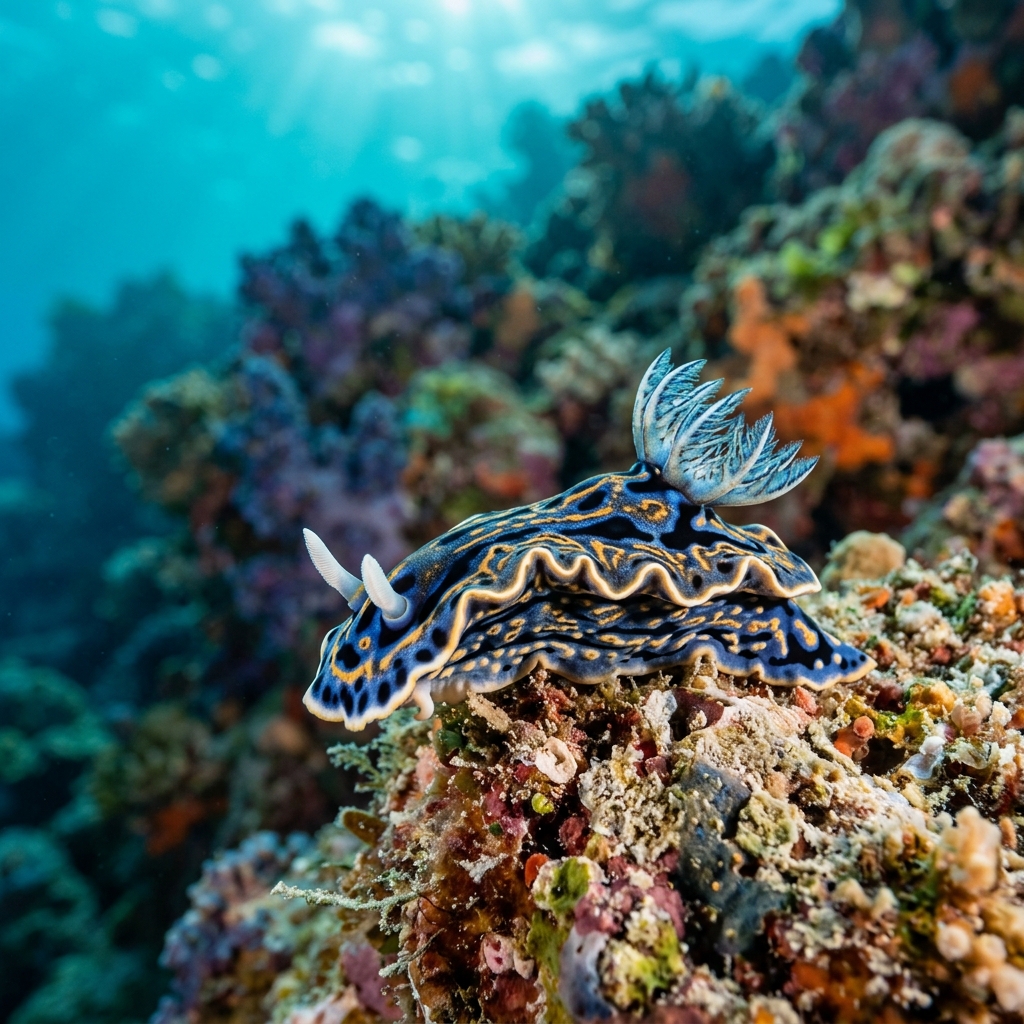
Look for a slender, elongated body covered in dense, finger-like projections (cerata) that give it a shaggy, feathery look rather than a smooth nudibranch profile. Colour runs from pale blue-grey to a deeper electric blue, often with a faint iridescent sheen along the cerata tips depending on the light. Size and exact colour intensity vary a fair bit between individuals, since some of that blue comes from algae living inside the tissue rather than fixed pigment. It moves slowly across rubble and sand, usually found sitting on or right beside the hydroid colonies it feeds on.
Divers usually find it during slow, methodical searches of rubble patches, sand flats, and low-profile reef, grazing quietly on the hydroids it depends on. It moves at its own unhurried pace and generally ignores torches and close approaches, which makes it one of the easier subjects to photograph in detail without spooking it. Sheltered, shallow sections of a site during early morning or late afternoon dives tend to turn up the best finds.
Its blue-grey colour often comes partly from algae it farms inside its own tissue, harvested from the hydroids it eats, so individuals can shift shade depending on diet and light exposure over time.
Sightings hold steady year-round, consistent with a comfort range of roughly 19 to 29 C that covers most tropical and warm-temperate dive seasons. No single month or hemisphere stands out, so plan around good site conditions rather than a calendar.
Most reliably logged across the Philippines, especially Luzon and the Visayas, and a strong presence through Indonesia's Sulawesi and across Australia, particularly Queensland and New South Wales. Also a regular find in Malaysia (both Sabah and the east coast peninsula), the Maldives' Northern Atolls, and Thailand, making it a genus you can reasonably expect on rubble and reef-flat dives right across the Indo-Pacific.
Mapping where Blue Dragon is logged…
Best chances are in the Philippines (Luzon, Visayas), Indonesia's Sulawesi, and Australia's Queensland and New South Wales coasts. Malaysia, the Maldives' Northern Atolls, and Thailand also produce regular sightings on rubble and reef-flat dives.
There is no strong seasonal pattern, sightings happen year-round on tropical and warm-temperate reefs within its comfortable water-temperature range. Focus on site and visibility conditions rather than a specific month.
Look for a slender body densely covered in feathery, finger-like cerata in blue-grey to blue tones, moving slowly over rubble or sand near hydroid growth. The shaggy, textured outline is the main giveaway compared with smoother nudibranch species.
No, they pose no danger to divers. They move slowly, do not react defensively to a torch or close approach, and can be safely observed and photographed without disturbing the surrounding substrate.
Much of the blue-grey colouring comes from algae the nudibranch incorporates into its own tissue after feeding on hydroids, essentially farming a bit of colour and energy from its diet. That means shade can vary between individuals depending on what they have been grazing on.
Site and sighting data is aggregated from diver logs, iNaturalist and GBIF. For taxonomy and conservation status:
Light-spotted Aegires
3,168 sites