Salarias alboguttatus
Common on the reefs of Nouméa, New Caledonia, this tiny spotted blenny sits still on rock and coral in warm 25-29 C water year-round.
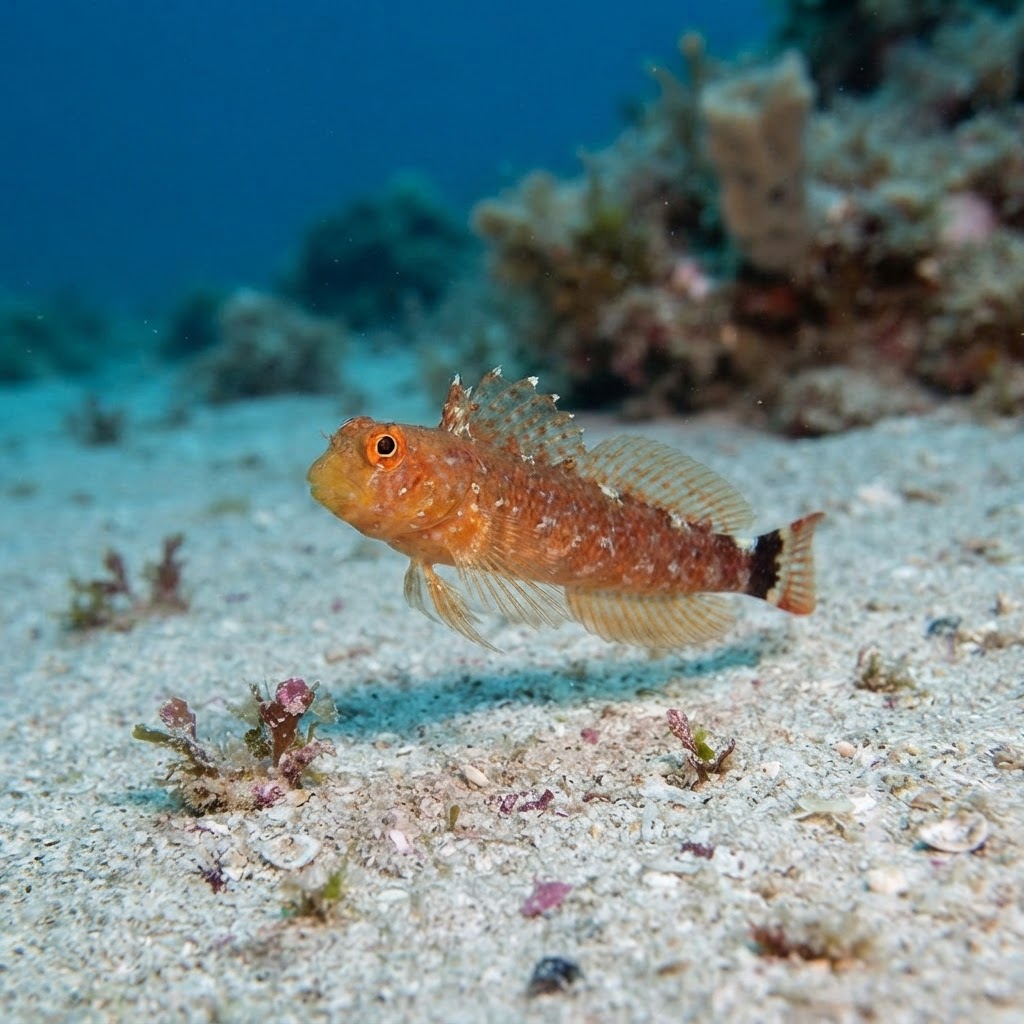
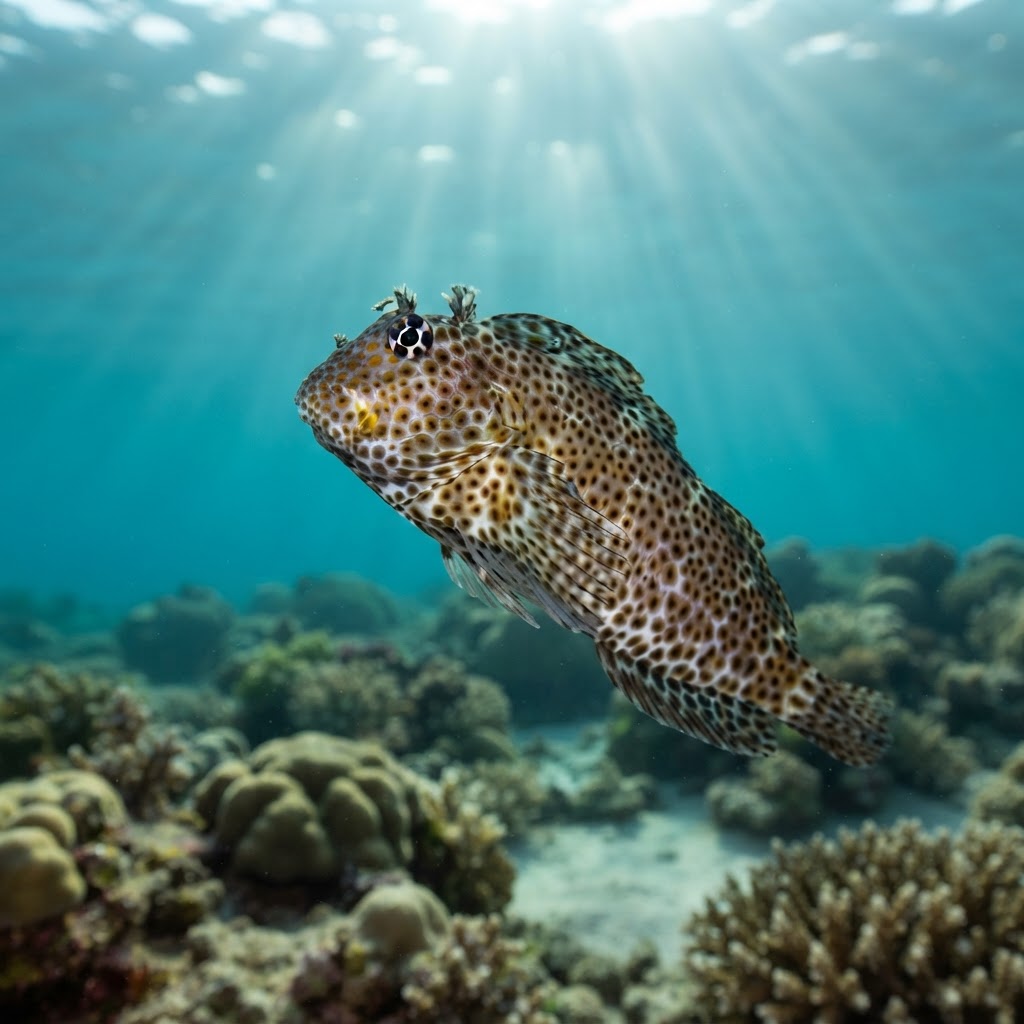
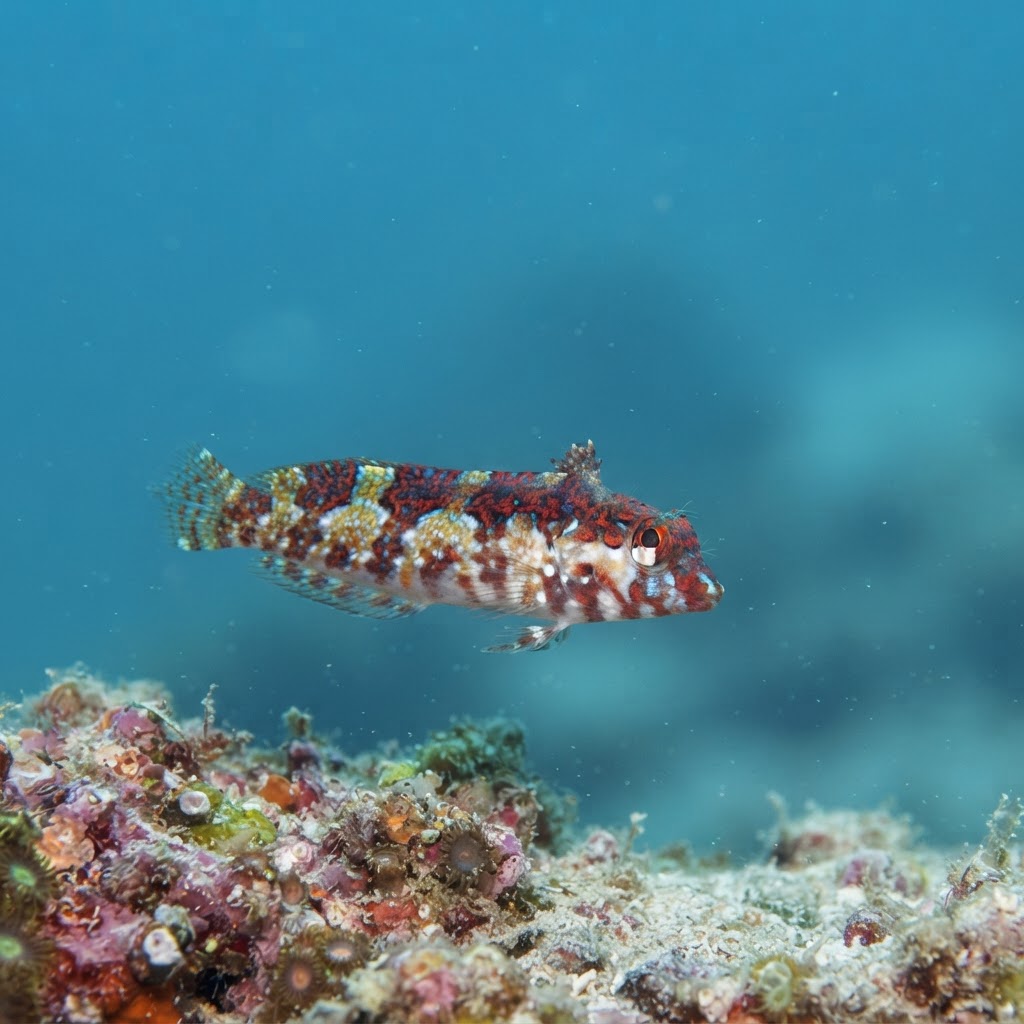
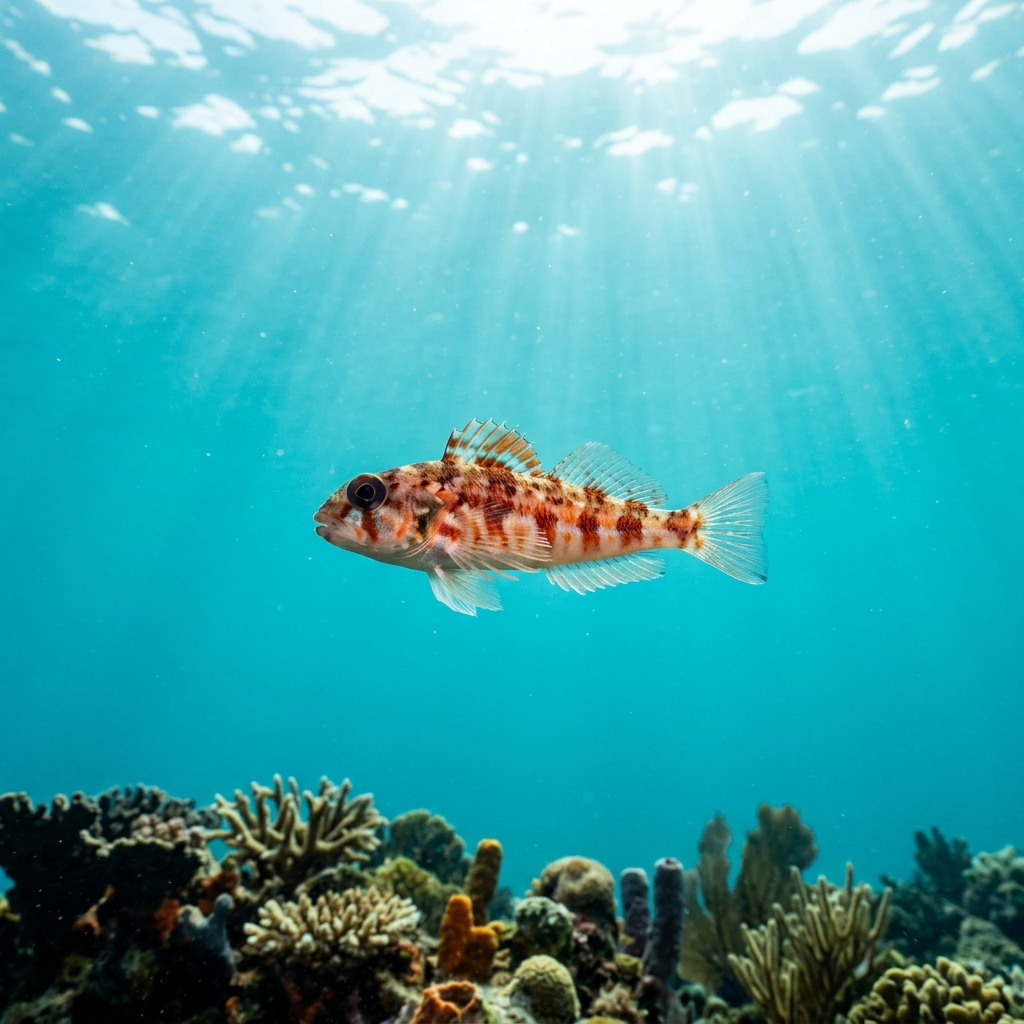
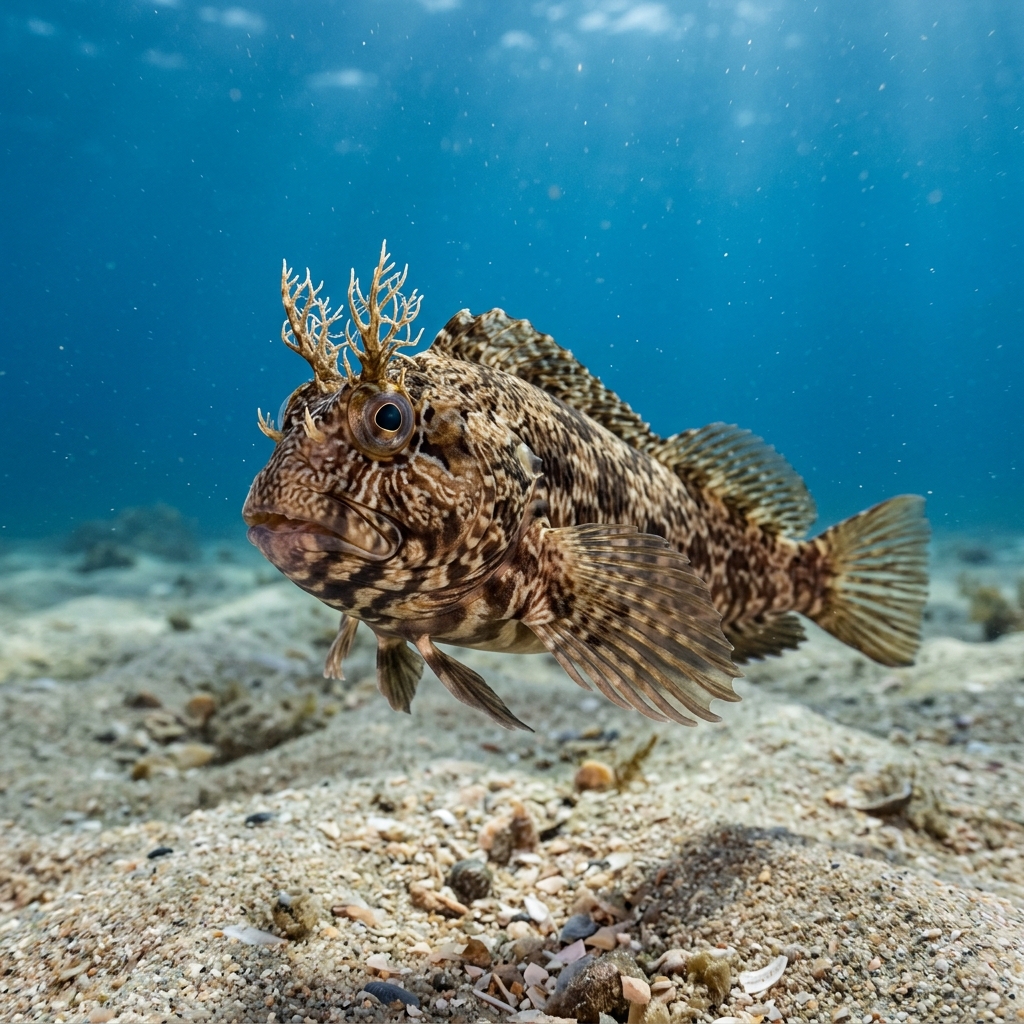
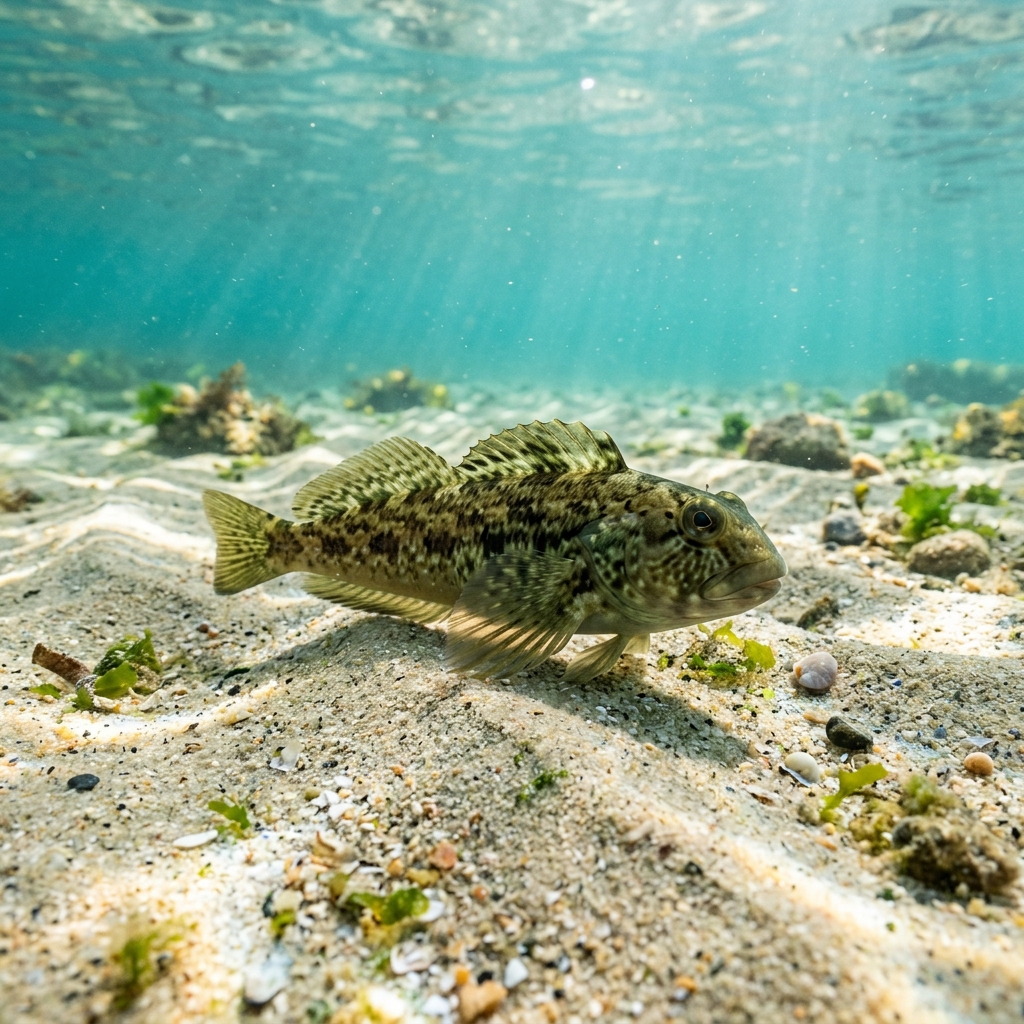
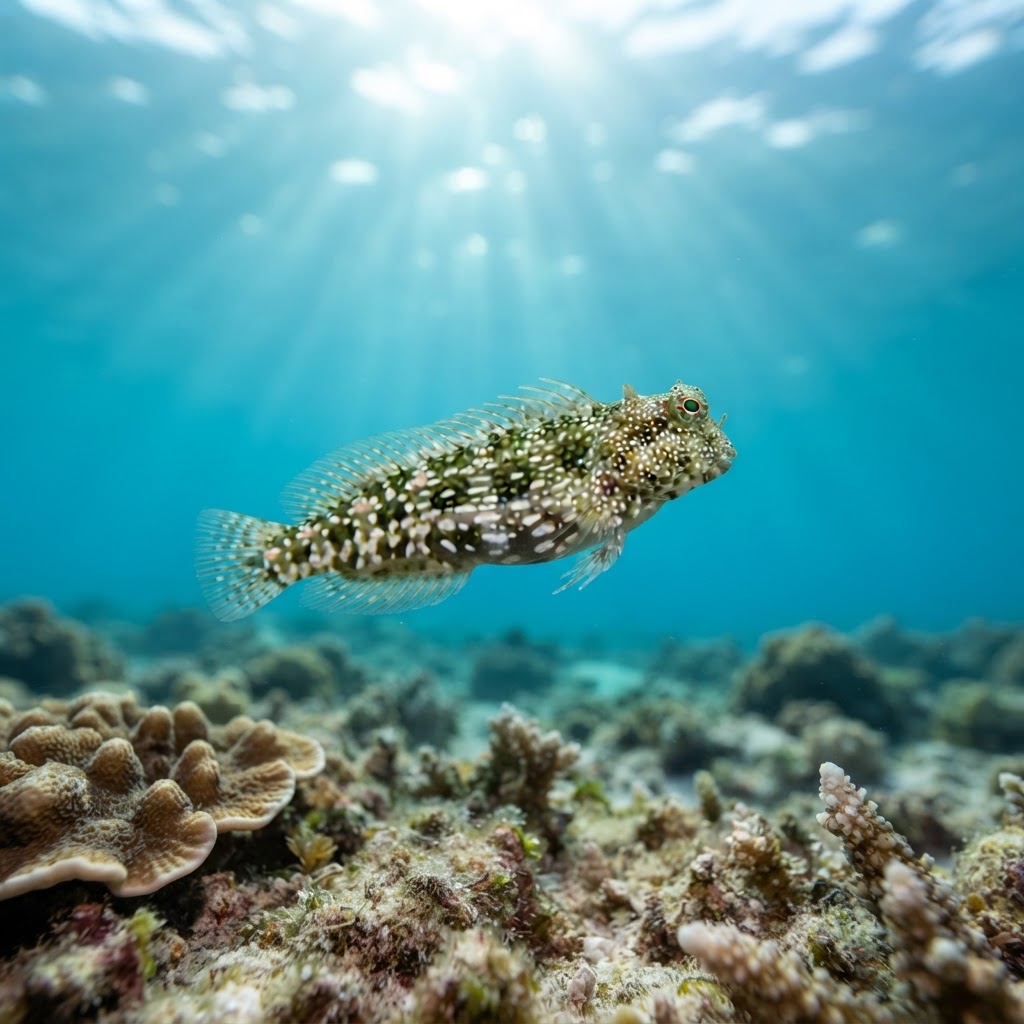
A small, blunt-headed fish around 6 cm long, usually seen perched still on rock, rubble or coral rather than swimming in open water. Body colour is mottled brown to olive, broken up by scattered pale spots that give the species its name. Look for the classic blenny profile: a stubby head, big eyes set high, and a body that tapers to a thin tail, propped up on its pelvic fins like a little tripod.
Expect to find it holding position on a coral head, rock or patch of rubble rather than cruising the reef, grazing algae off the substrate in short bursts. It is unfussed by divers and tends to hold its ground or dart a short distance to another perch rather than bolt, making it an easy subject for a macro lens if you move slowly.
Like other blennies, it grazes algae directly off hard surfaces with comb-like teeth, helping keep those surfaces clear, which is part of why it stays glued to one patch of reef rather than roaming.
No clear seasonal pattern shows up in the sightings, and the water temperature it favours (24.6 to 29.3 C) sits within Nouméa's year-round tropical range, so any month is a reasonable bet.
Reef neighbours a diver could mistake it for. Use the identification notes above to tell them apart.
This one is most reliably logged around Nouméa in New Caledonia, where it turns up as a common sighting at the majority of sites divers have recorded it. Data outside New Caledonia is thin, so treat this as the go-to region for a confident encounter for now.
Mapping where Whitespotted Blenny is logged…
The strongest and most consistent sightings come from around Nouméa in New Caledonia, where it is logged as common at most sites divers have surveyed. Records elsewhere are currently too sparse to point to other regions with confidence.
There is no detected season for this species, and it lives in warm water between roughly 24.6 and 29.3 C year-round, so it should be findable on any dive trip to its range regardless of month.
Look for a small, roughly 6 cm fish with a mottled brown body scattered with pale spots, perched motionless on rock or coral rather than swimming freely. The blunt head and high-set eyes are typical blenny features that separate it from slimmer reef fish nearby.
They stay small, topping out around 6 cm, which is typical for reef blennies and one reason they are easy to overlook without a close look at the substrate.
No, they pose no threat to divers. They have no venomous spines or aggressive behaviour towards people and will simply hold still or shuffle away if approached.
Site and sighting data is aggregated from diver logs, iNaturalist and GBIF. For taxonomy and conservation status:
Rusty Blenny
2,605 sites