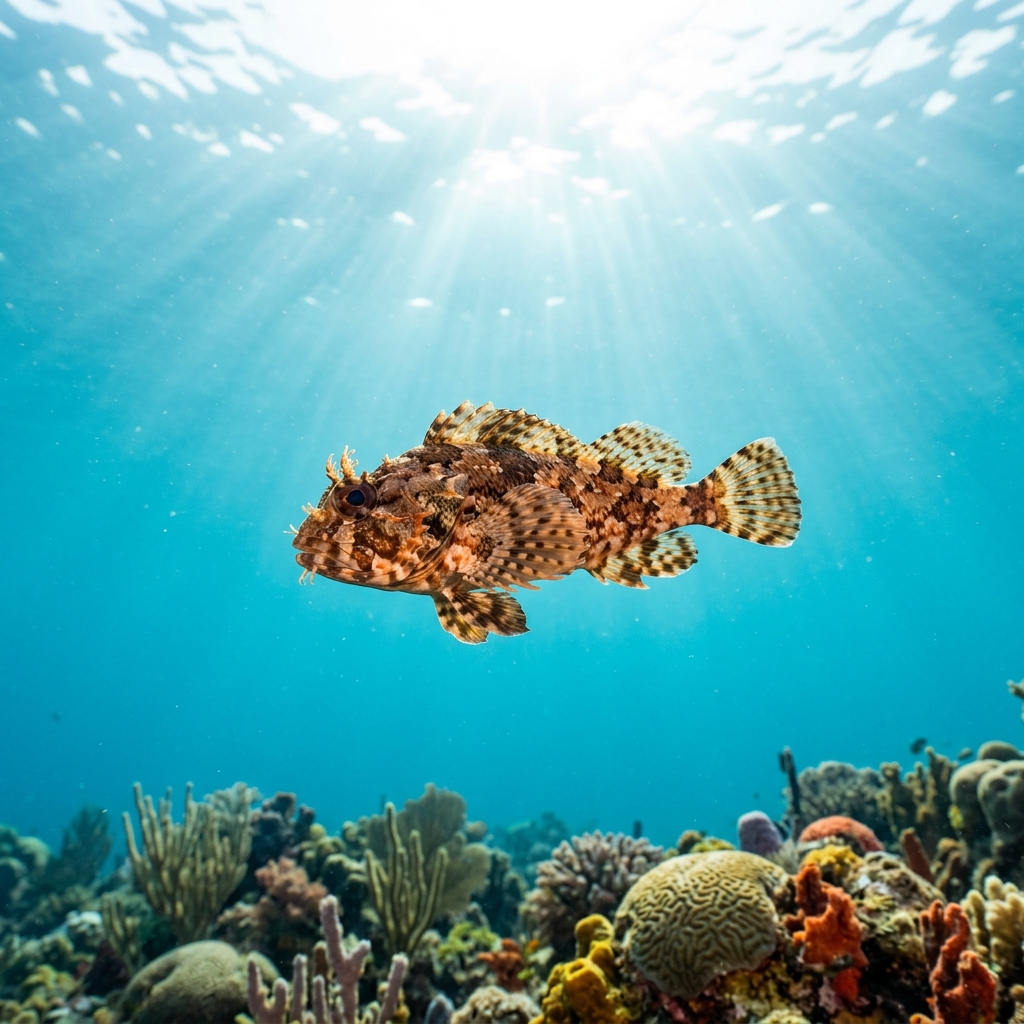
Clinidae spp.
Spot klipfish on rocky reefs from the Western Cape to the Izu Peninsula. Best seen May, Jan in the north, Nov, May in the south, in cool 13-22 °C water.
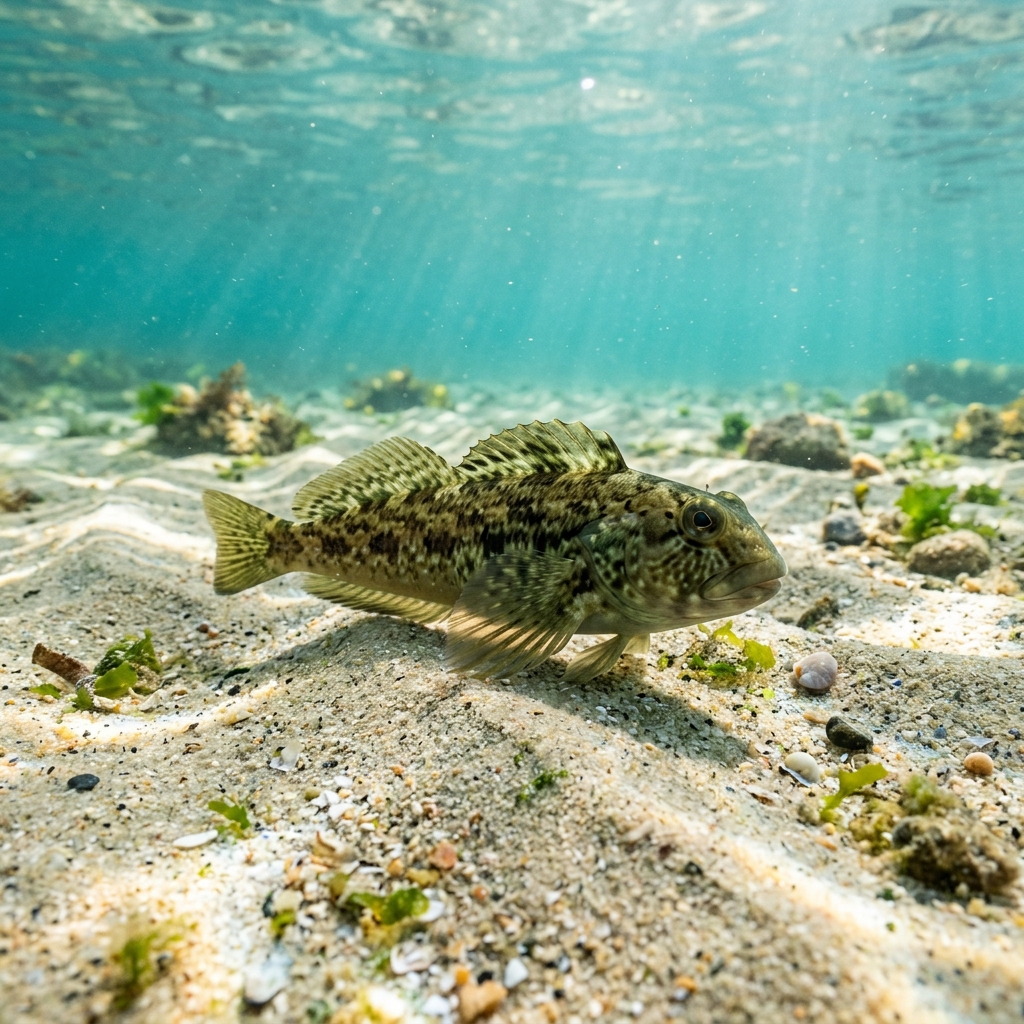
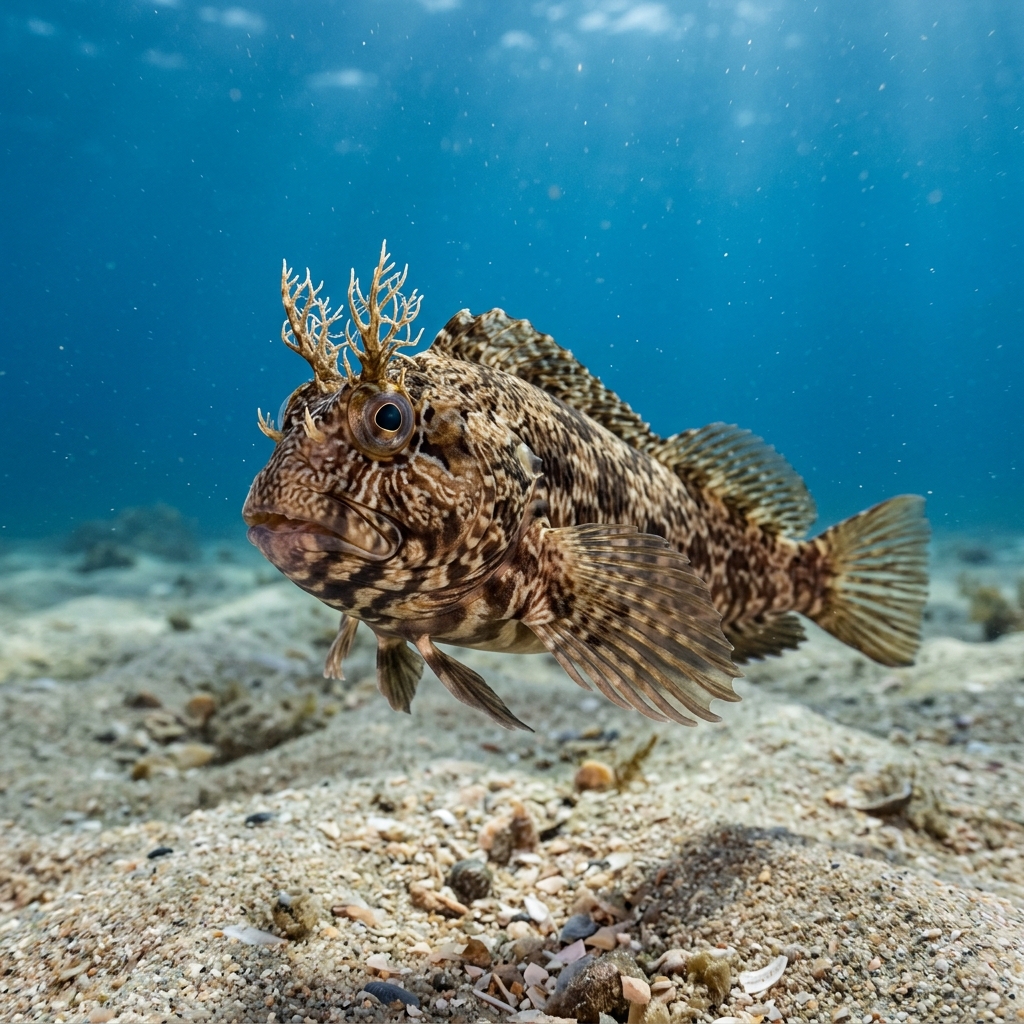
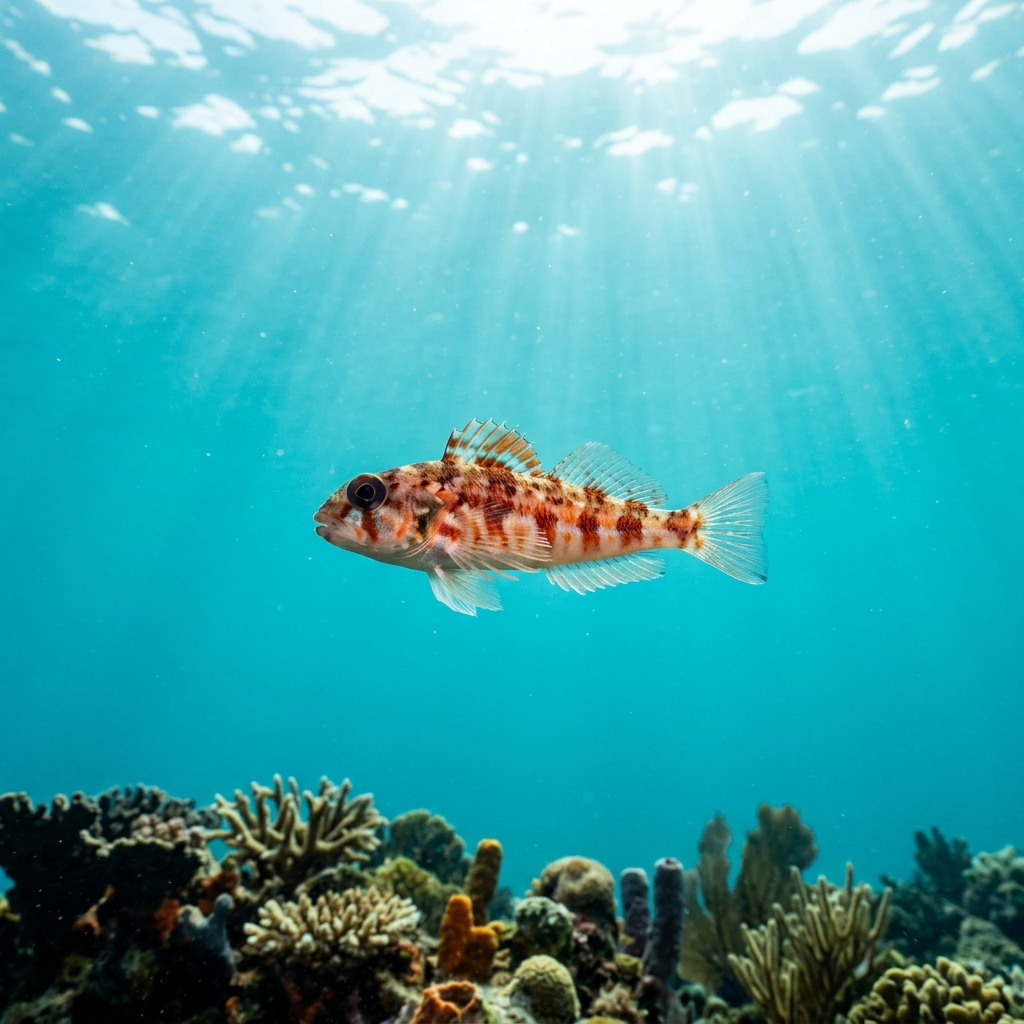
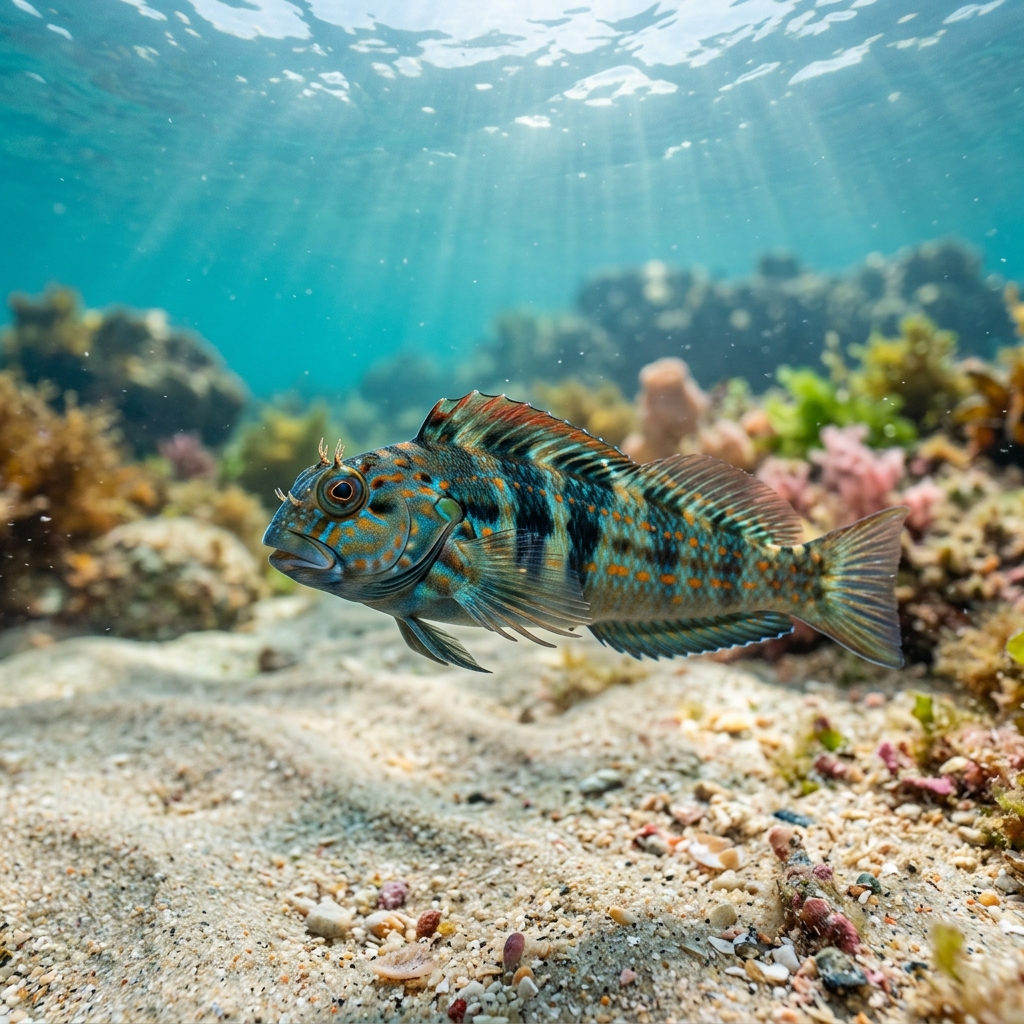
Klipfish are small, elongated blennies that press themselves flat against rocky or weedy reef surfaces, relying heavily on camouflage rather than swimming away. Most species wear a base colour of mottled brown, olive, or green broken by irregular darker blotches, making them look uncannily like the encrusted rock beneath them. The long continuous dorsal fin (the fin running along the back) and a slightly flattened, broad-headed profile are the key shapes to lock onto when scanning for them. In several species, males develop brighter, more contrasting patterns, while females stay in earthy, cryptic tones.
You will almost always find klipfish sitting motionless on the reef rather than in open water; they perch in crevices, among algae, or directly on bare rock, scanning for small invertebrates. When approached, they tend to hold position and rely on camouflage first, edging slowly into a crack only if a diver gets very close. They are shallow-water animals by preference, so slow, low, eye-level searching along rocky substrate pays off far more than hovering above the reef.
Several klipfish species are viviparous, meaning females give birth to live young rather than scattering eggs, an unusual trait for a reef fish that gives the juveniles a head start in the wave-swept rocky habitats the family favours.
In the Northern Hemisphere, sightings concentrate from May through January, covering late spring, summer, and autumn. Southern Hemisphere divers in places like South Africa's Western Cape find them most reliably from November through May.
Reef neighbours a diver could mistake it for. Use the identification notes above to tell them apart.
Klipfish are most commonly logged along the US Pacific Coast and in Florida, with strong records across the Mediterranean, particularly Italy, Greece, Turkey, Croatia, and Spain. Outside those hotspots, the Western Cape of South Africa and Japan's Izu Peninsula stand out as reliable regions where real diver observations back up the range model.
Mapping where Klipfish is logged…
Klipfish turn up across a wide range of temperate and subtropical rocky reefs. The US Pacific Coast and Florida lead the sighting records, followed by the Mediterranean, especially Italy, Greece, Turkey, and Croatia. South Africa's Western Cape and Japan's Izu Peninsula are also reliable spots backed by real diver observations.
In the Northern Hemisphere, klipfish are most reliably spotted from May through January. In the Southern Hemisphere, the concentrated season runs November through May. Their cool-water preference, roughly 13 to 22 °C, means they are most active during temperate seasons rather than peak summer heat.
Look for a small, elongated fish sitting flat on rocky or weedy substrate, with mottled brown, olive, or green blotching that matches the reef almost perfectly. The long continuous dorsal fin and broad, flattened head are the key shapes. Males can show brighter or more contrasting colouring than the more cryptic females.
Klipfish are generally small fish, with most species reaching somewhere in the range of 5 to 15 cm depending on the species. Their compact size combined with excellent camouflage is exactly why they are so easy to overlook on a casual pass over the reef.
Yes, several klipfish species are viviparous, meaning the female retains fertilised eggs internally and gives birth to live young. This is uncommon among reef fish and is thought to be an adaptation to the energetic, wave-swept rocky shores where the family typically lives.
Site and sighting data is aggregated from diver logs, iNaturalist and GBIF. For taxonomy and conservation status:
Rusty Blenny
2,605 sites