Exallias brevis
Spotted, stubby reef fish poking out of coral heads in South Sinai and Hawaii, comfortable in 25-29C water year-round.
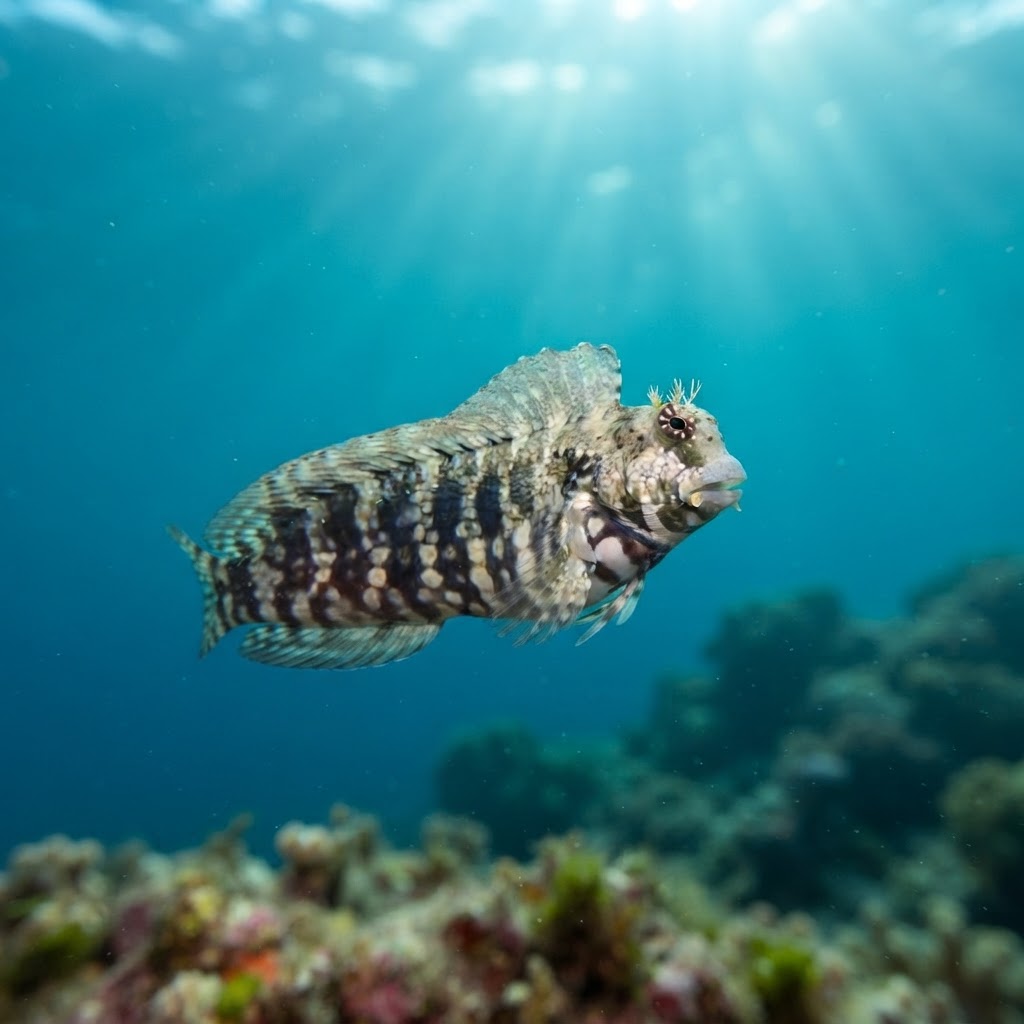
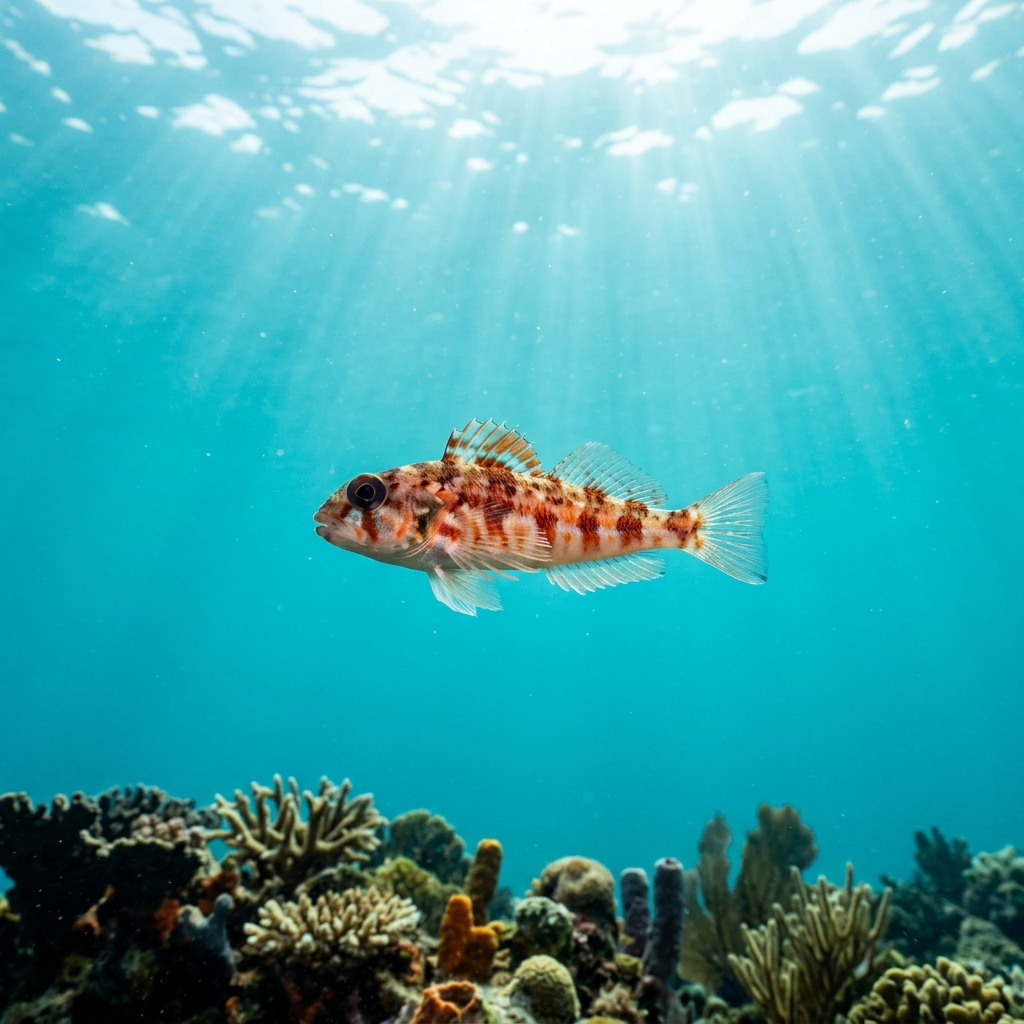
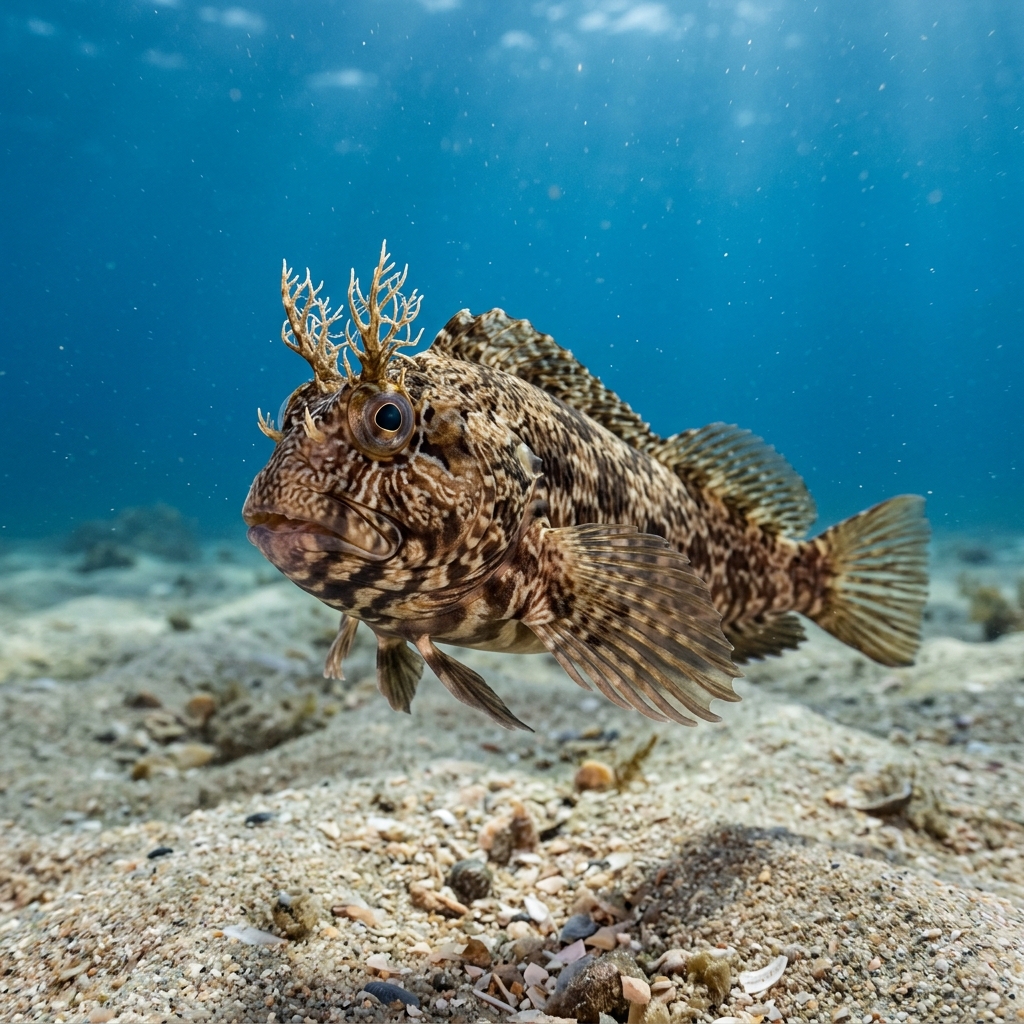
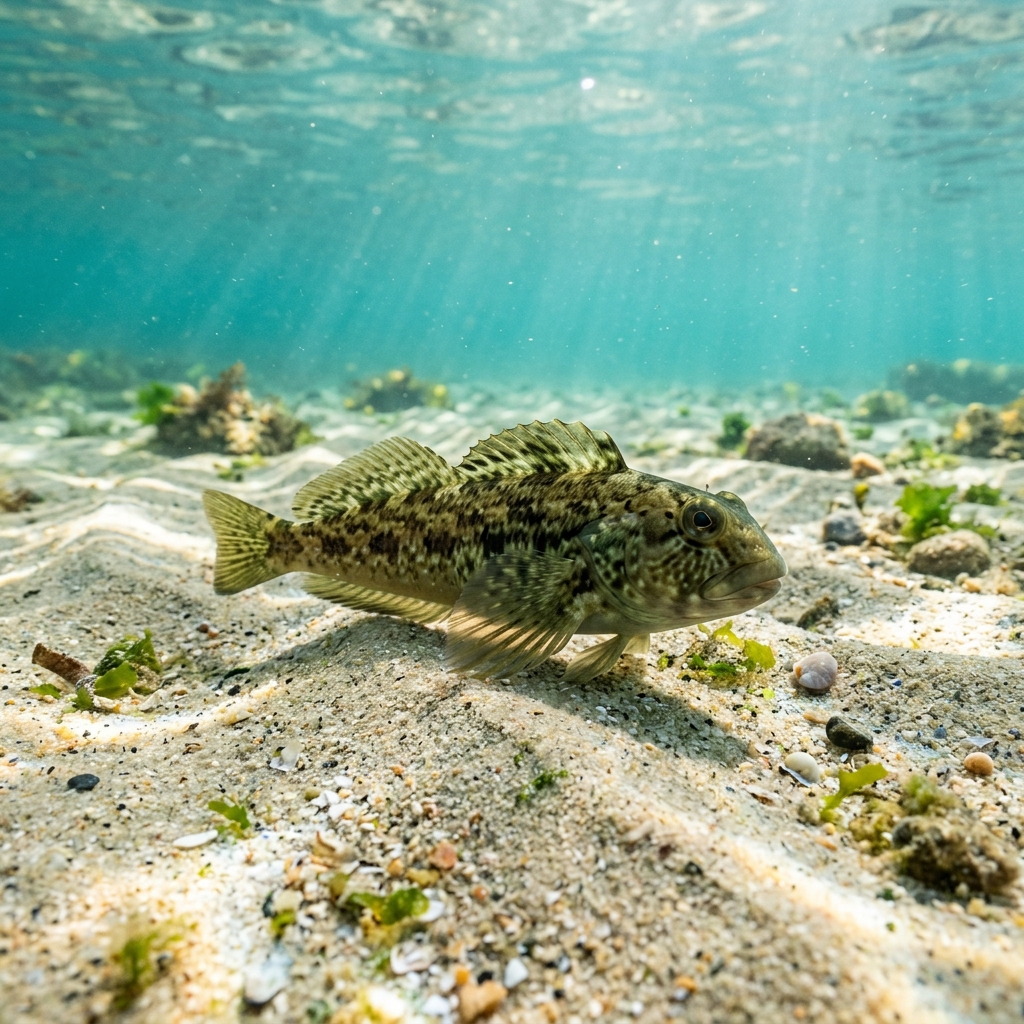
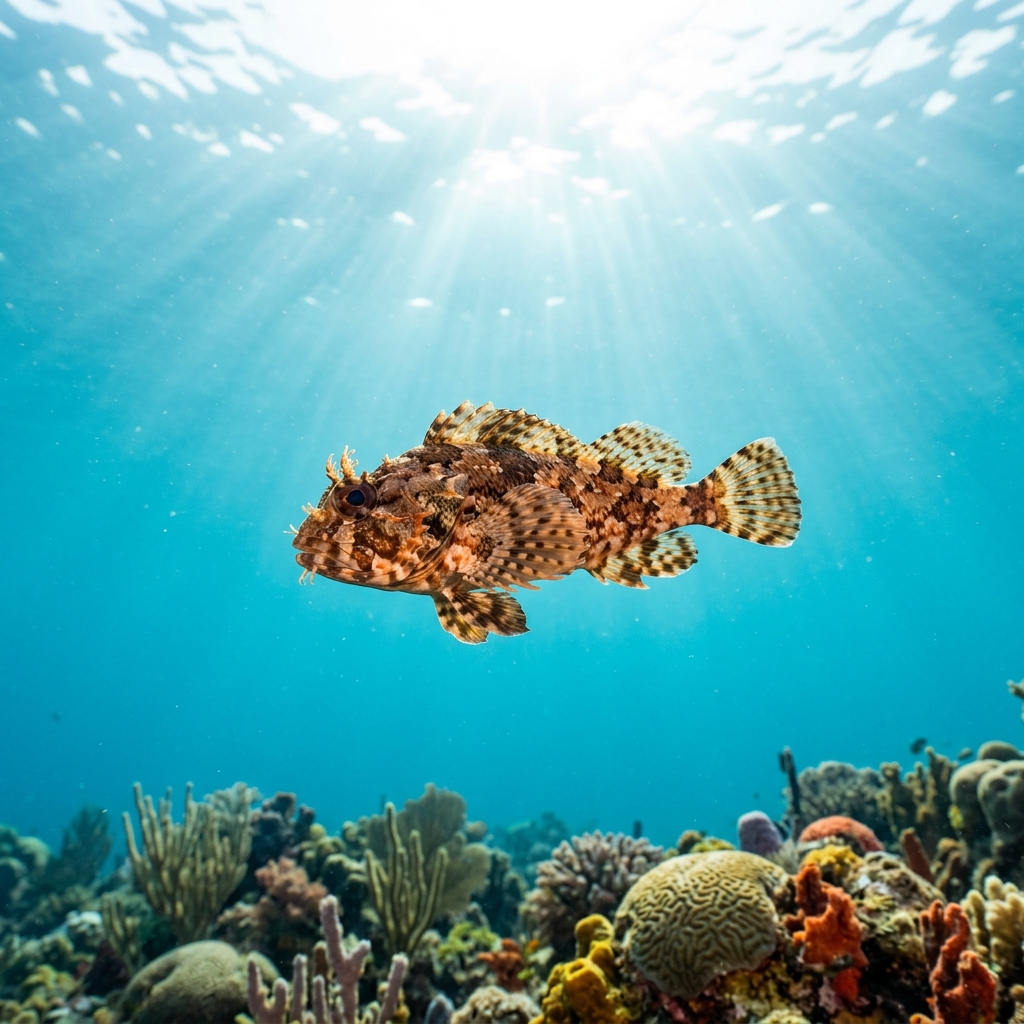
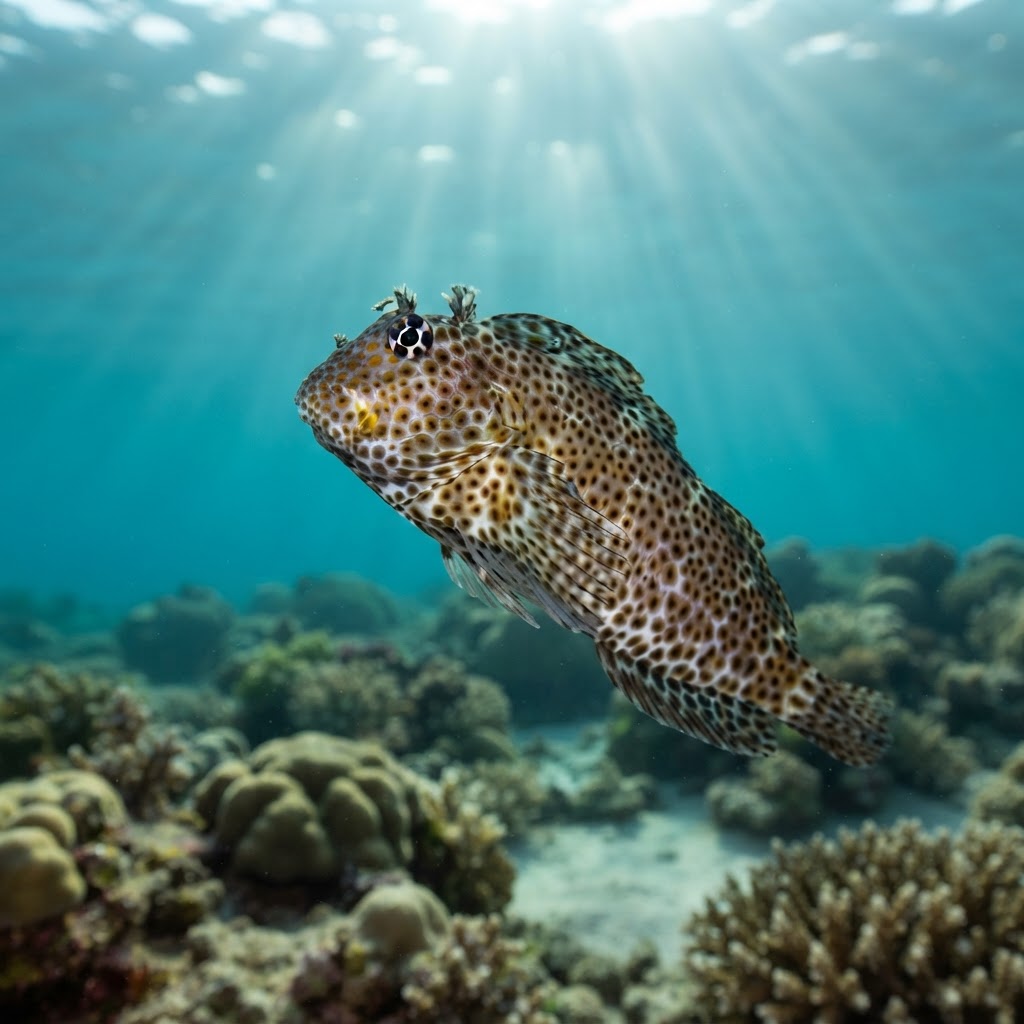
A stubby, big-eyed fish only about 9 cm long, almost always seen with just its head or forequarters poking out of a hole in a coral head rather than swimming free. Body colour ranges from pale grey-brown to reddish, covered in dense white to pale spots that give it the leopard-print look its name suggests. Females tend to show a plainer, more mottled pattern while males can flush darker with bolder spotting when guarding eggs, but both share that spotted, hole-dwelling look that separates it from most other blennies on the reef.
Look for it wedged into a hole or crevice in living coral, usually a coral head with dead, algae-covered patches nearby where it grazes on coral polyps and tissue. It rarely strays far from its chosen coral colony and tends to retreat deeper into the hole rather than bolt when a diver gets close, so a slow approach and a bit of patience usually gets you a good look. Most sightings are on shallow to mid-depth reef, between about 3 and 20 metres, during the day when it is out feeding.
Feeds directly on live coral polyps, making it one of the few blennies considered a coral-tissue specialist rather than a grazer of algae, and pairs often defend and tend eggs laid inside the same coral head they live in.
No clear seasonal pattern shows up in sightings, and with a comfortable range of roughly 25 to 29C, it sits happily on tropical reefs all year round. Plan the dive around the site and depth rather than the calendar.
Reef neighbours a diver could mistake it for. Use the identification notes above to tell them apart.
Most reliably logged in Egypt's Red Sea, especially South Sinai and the Red Sea Riviera around Marsa Alam, and in Hawaii, where it turns up on reef sites across the islands. Aqaba in Jordan and Reunion's Saint-Leu and Saint-Paul coasts also produce steady sightings, with smaller but real populations recorded in Fiji, South Africa, Israel, and Guam.
Mapping where Leopard Blenny is logged…
Best chances are in Egypt's Red Sea, particularly South Sinai and Marsa Alam, and across Hawaii's reefs. Aqaba in Jordan and Reunion's Saint-Leu and Saint-Paul coasts are also solid options.
There is no strong season in the sighting data, and it tolerates a wide warm-water range of about 25 to 29C, so it is present on reefs year-round.
Look for a small, spotted fish poking its head out of a hole in a coral head rather than swimming openly. Its body is covered in dense pale spots on a grey-brown to reddish base, giving the leopard-print effect the name refers to.
They stay small, typically around 9 cm long, so most of what you see underwater is just the head and shoulders emerging from a coral crevice.
Unlike most blennies that graze algae, this species feeds directly on live coral polyps and tissue, and pairs guard their eggs inside the same coral colony they call home.
No, it poses no threat to divers. It is a shy, hole-dwelling fish that retreats into coral rather than confronting anything nearby.
Site and sighting data is aggregated from diver logs, iNaturalist and GBIF. For taxonomy and conservation status:
Rusty Blenny
2,605 sites