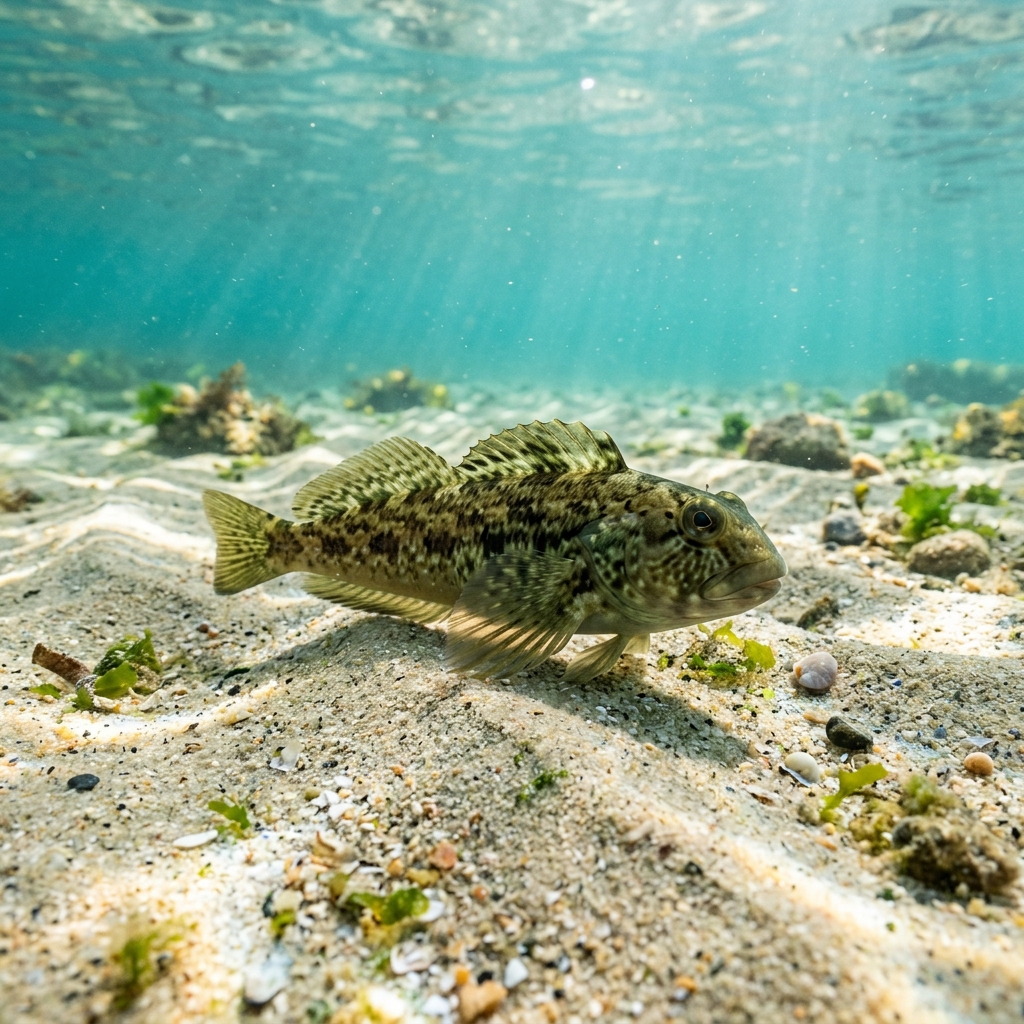
Lipophrys pholis
Spot shannies across the UK, France and Brittany from January to August in cold Atlantic shallows. Here's where, when and how to recognise them.
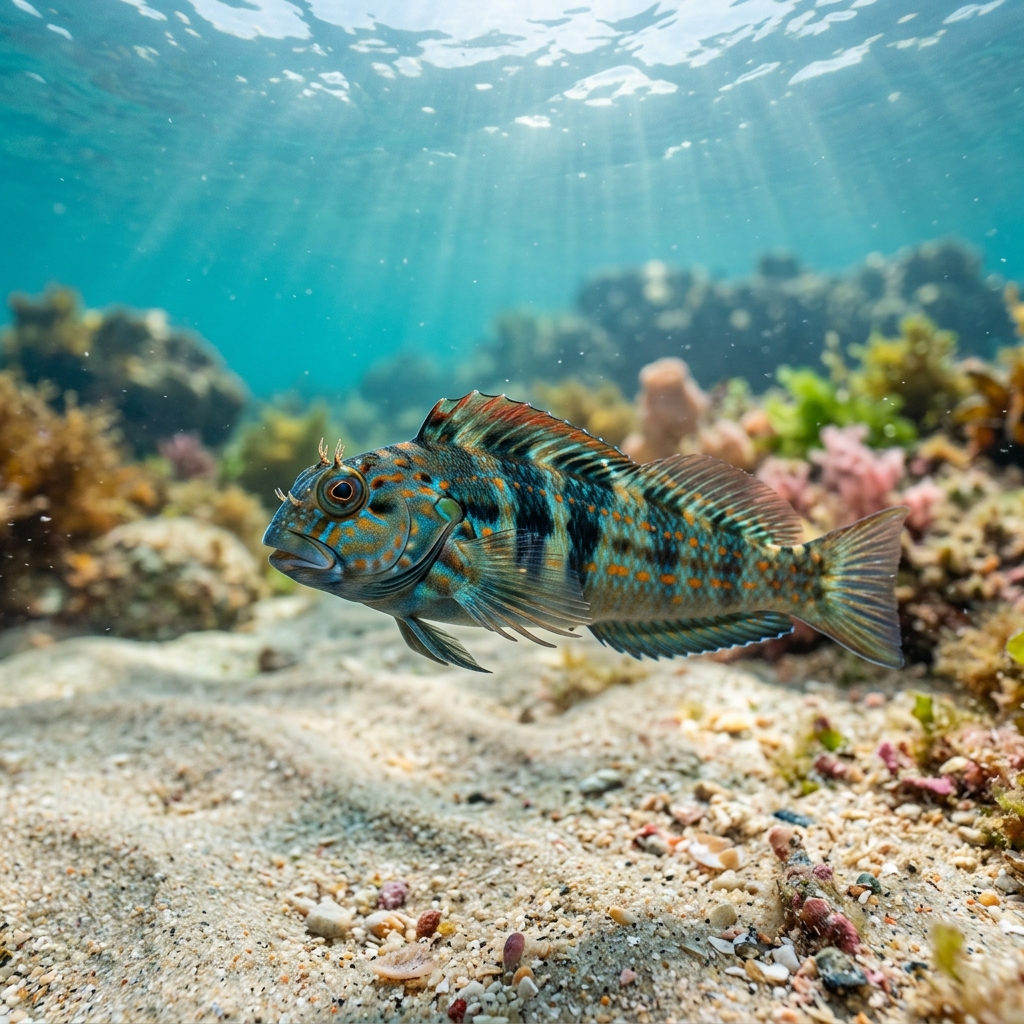
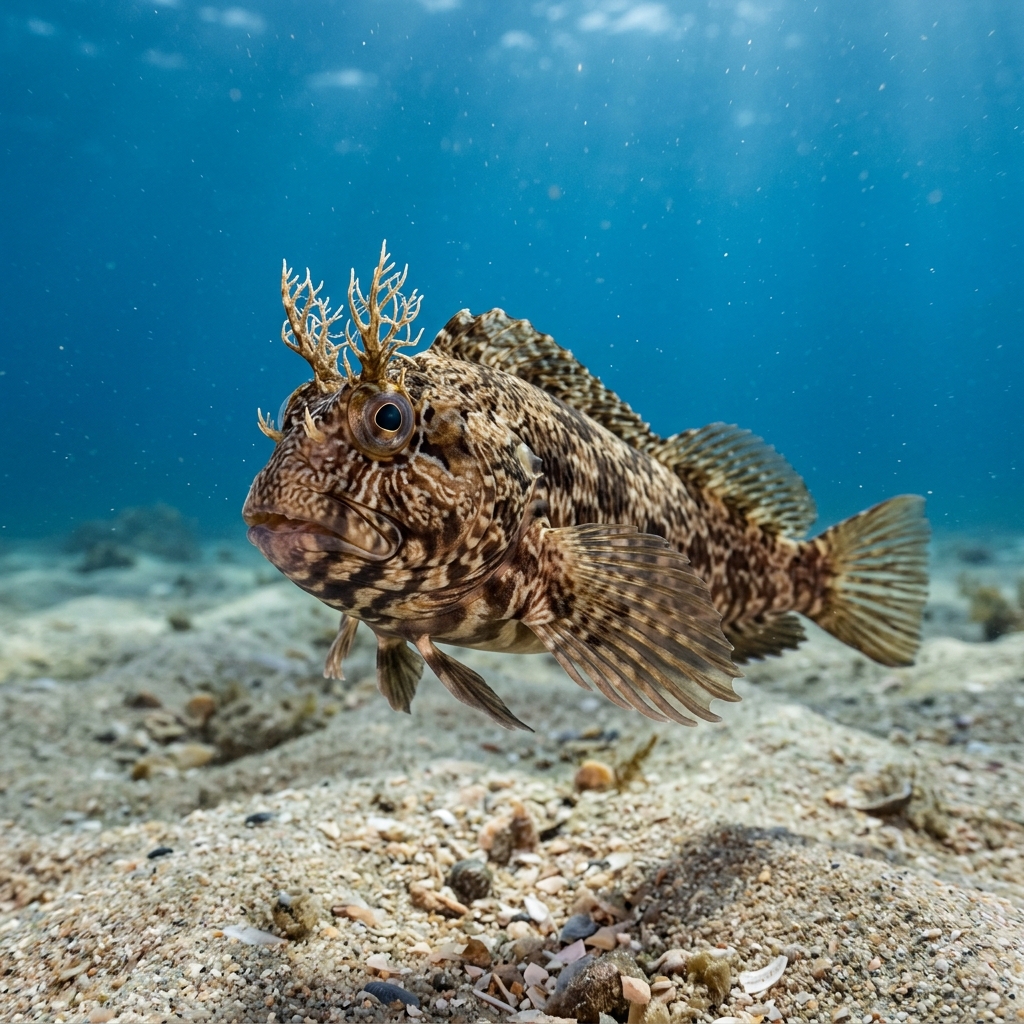
A small, torpedo-shaped blenny, typically around 11 cm, with mottled olive-brown patterning that blends convincingly into rocky substrate. Look for the blunt head, prominent fleshy eyes, and smooth scaleless skin that distinguishes it from many other reef fish at a glance. During breeding season, males turn strikingly dark, with near-black colouration on the head and throat, while females keep the mottled brown pattern across the whole body. It's almost always seen pressed close to or sitting directly on rock in the shallowest water you'd find yourself diving.
Shannies have a refreshing boldness about them; rather than bolting for cover, they'll often hold their ground and swivel those big eyes your way when you approach. They're active hunters during the day, making short, jerky dashes between rocks as they chase down small crustaceans and invertebrates. Males are territorial, especially in the breeding season, and may posture aggressively toward rivals, which can make for entertaining watching in a patch of reef you revisit.
Shannies are one of the few fish regularly found in the intertidal zone (the band of shore exposed at low tide), surviving out of water for extended periods by breathing through their damp skin. This means snorkellers and even rockpoolers encounter them in just centimetres of water.
Sightings in the Northern Hemisphere concentrate between January and August, so late winter through to summer is your best window. The shanny thrives in cold to cool Atlantic water between roughly 10 and 19 °C, which fits the temperate seasonality of its core UK and French strongholds.
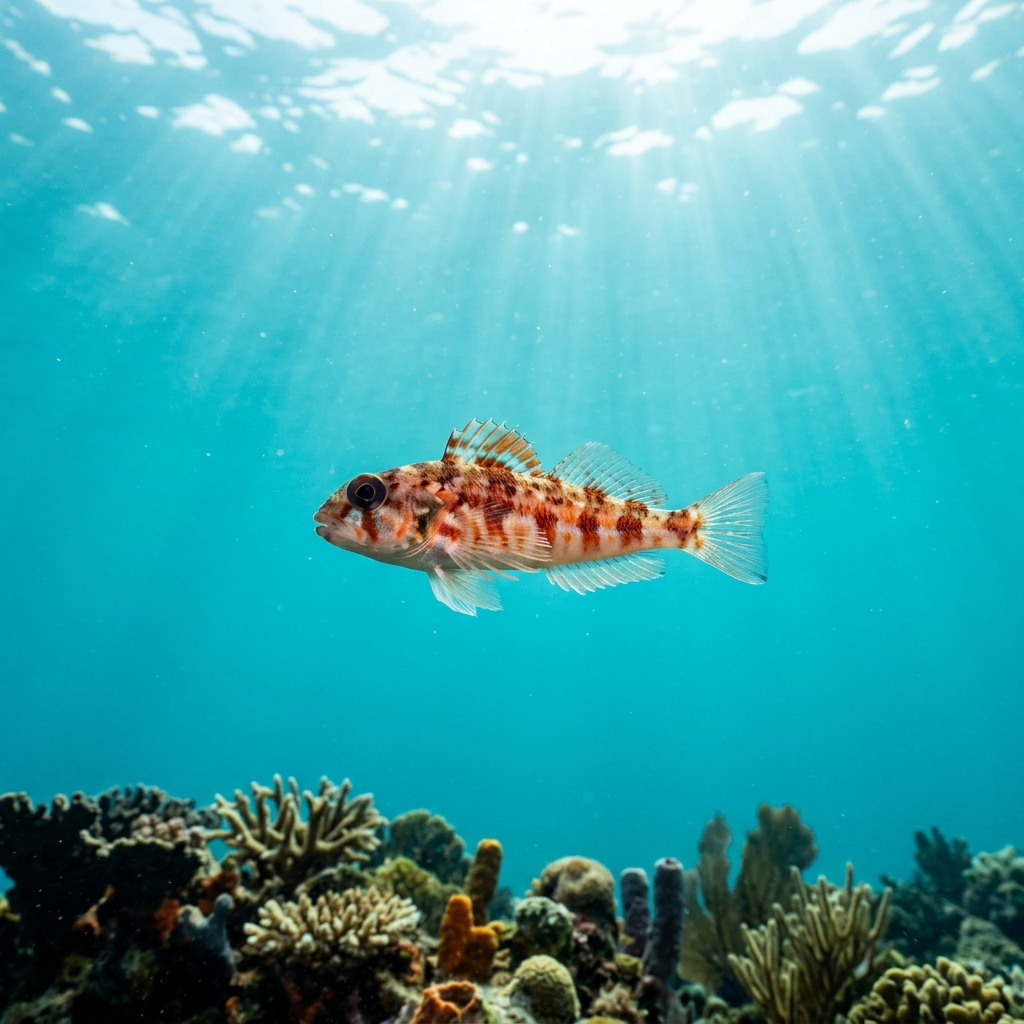
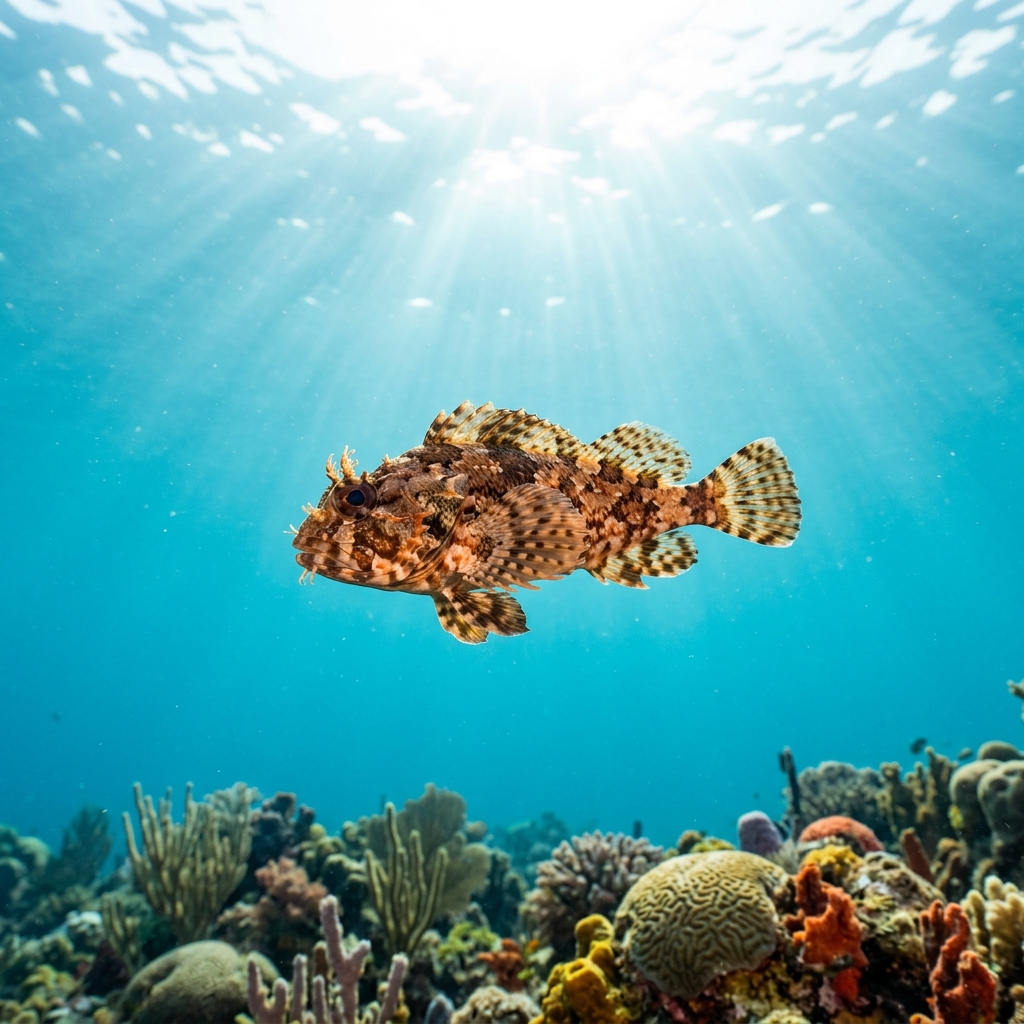
Reef neighbours a diver could mistake it for. Use the identification notes above to tell them apart.
Most commonly logged across the United Kingdom, France, and the wider north-east Atlantic, with particularly strong records from Brittany and Normandy, the South Coast of England, and Northern Ireland. Scotland's west coast and the Algarve in Portugal also produce regular sightings. It has a broad European range extending into the Mediterranean, with notable records from Italy, Spain, Greece, and Croatia.
Mapping where Shanny is logged…
Shannies are most reliably found along the north-east Atlantic coastline. The UK leads the records, with strong sightings from the South Coast of England, Northern Ireland, and Scotland's west coast. Brittany and Normandy in France are also productive, and they turn up along the Algarve in Portugal and into the Mediterranean as far as Italy and Greece.
Diver sightings in the Northern Hemisphere concentrate from January through August. They favour cool Atlantic water, so late winter through early summer is a solid window if you're diving UK and French coasts. They don't disappear entirely outside that period but are logged far less frequently.
Look for a small, blunt-headed fish about 11 cm long with mottled olive-brown skin, sitting directly on rock in very shallow water. The smooth, scaleless body and prominent fleshy eyes are key tells. Breeding males are hard to miss: the head and throat turn near-black while the rest of the body stays brown.
Shannies typically reach around 11 cm in length. They're small enough to tuck neatly into a crevice, which is worth bearing in mind when you're scanning rock in shallow water.
Yes, and it's one of their most remarkable traits. Shannies are true intertidal fish, routinely stranded in rockpools or on damp rock at low tide. They can breathe through their moist skin for a period out of water, which is why snorkellers and rockpoolers encounter them where most fish simply couldn't survive.
Site and sighting data is aggregated from diver logs, iNaturalist and GBIF. For taxonomy and conservation status:
Rusty Blenny
2,605 sites